
Pantry Organization
25 Spice Rack Ideas for Small Kitchens and Growing Collections
A good spice rack should make the jar you want obvious without taking over the kitchen. The right choice depends on more than the number of bottles: drawer height, cabinet depth, label direction, and room to move all matter.
These 25 spice rack ideas range from simple shelf inserts to fitted storage worth planning during a renovation. Start by measuring your largest jars and the opening you want to use. Follow McCormick’s storage guidance by keeping spices tightly capped and away from heat, moisture, and direct sunlight; a convenient spot beside the range may be the wrong storage location.
This article contains affiliate links. If you buy through them, Havelyo may earn a commission. As an Amazon Associate I earn from qualifying purchases.
1. Use a three-tier riser inside a wide cabinet
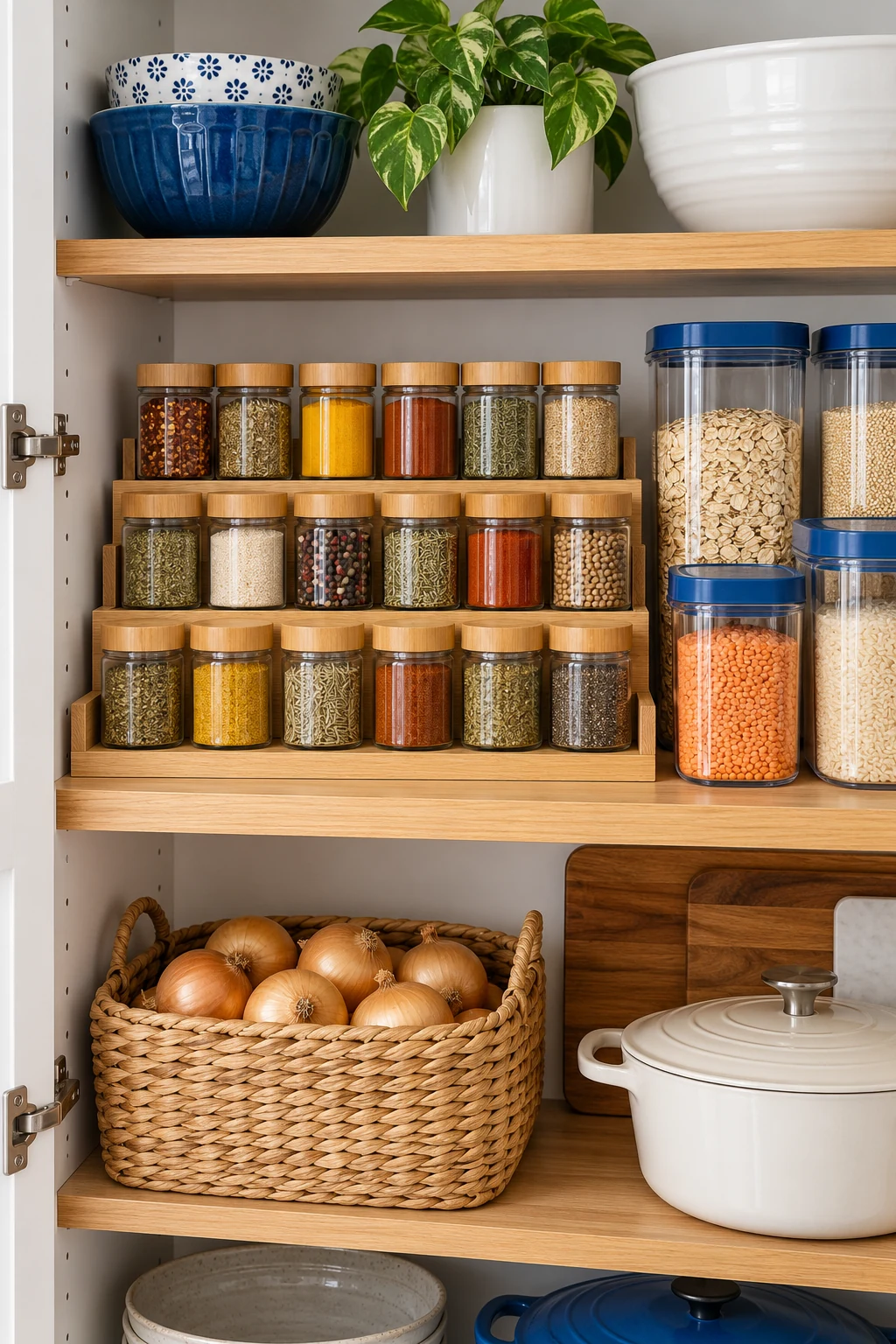
A stepped rack is a straightforward way to make a few rows of spice jars visible. Set it on a level cabinet shelf and keep the shortest jars toward the front. It works well when you want to retain your original bottles instead of decanting the entire collection.
The Copco 3-Tier Spice Rack Organizer, 15-Inch, White/Gray is 15 inches wide, 9 inches deep, and 3 inches high before you add jars. Its roughly 2.75-inch-deep tiers need to support each bottle base fully. Check rear-row headroom and avoid buying by an advertised jar count alone.
2. Bring rear spices forward with pull-down drawers
A pull-down organizer can suit a deeper cabinet where jars keep disappearing behind the front row. Each drawer comes forward and lowers so you can inspect the bottles. Position the unit above a clear work area rather than an appliance that blocks its movement.
The YouCopia SpiceStack Adjustable Spice Organizer, 24-Bottle has three pull-down drawers and adjustable dividers for different bottle sizes. Check its 11-inch closed depth and the space used when a drawer is open. Oversized refill jars still need a separate home; the stated bottle count is not a promise for every collection.
3. Use flat channels in a shallow drawer
If your drawer is too shallow for an angled spice tray, let bottles lie flat in individual channels. Point the ingredient names upward and line up the caps so a quick glance shows the collection. The drawer becomes its own low-profile rack.
The YouCopia SpiceLiner Spice Drawer Organizer, Gray, 10-Foot Roll is a cut-to-fit foam roll for this kind of arrangement. Account for its 0.4-inch height beneath the jars when checking closure. Test your largest bottle first and confirm that it stays below the drawer’s moving frame.
4. Tilt labels toward you with an angled drawer insert
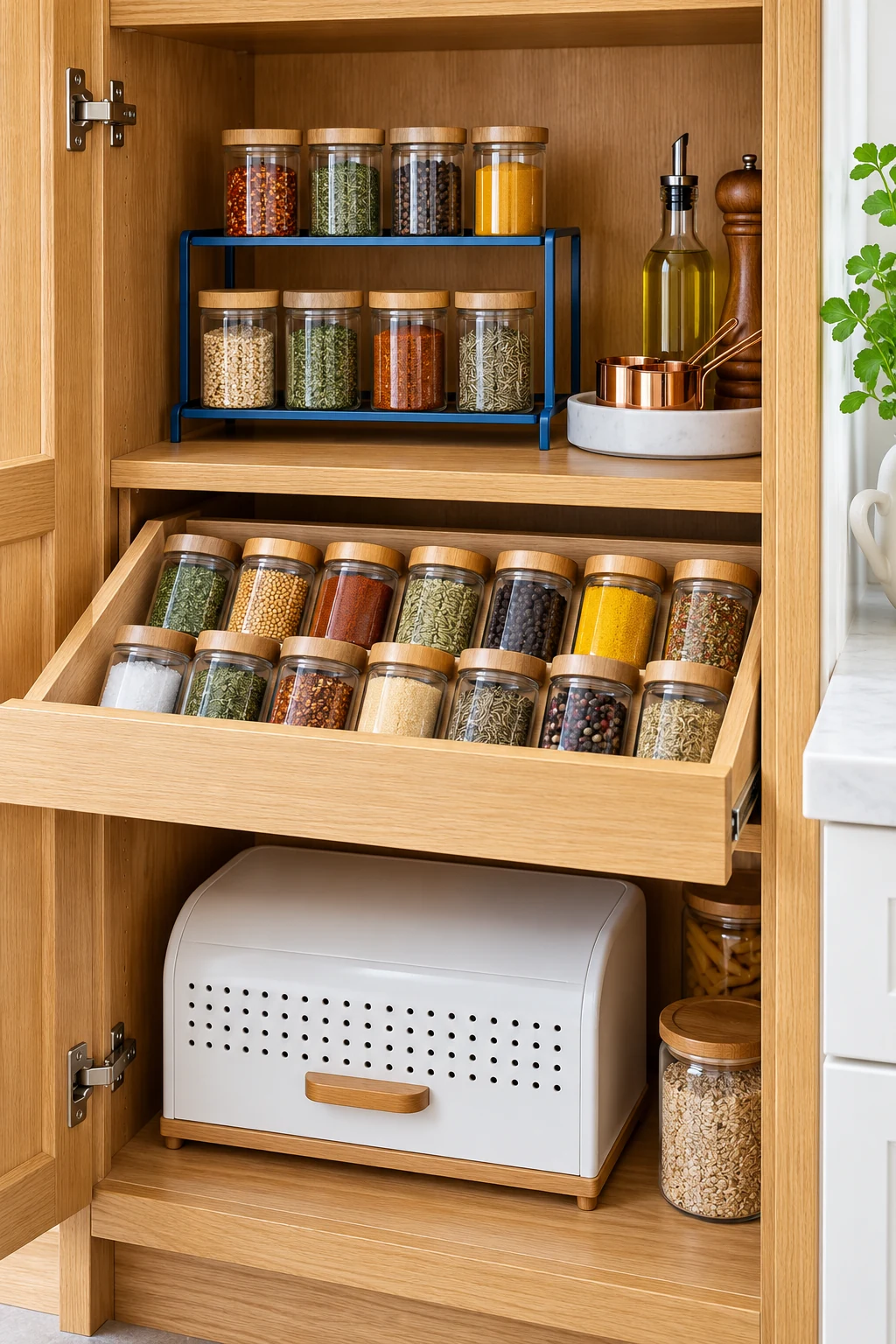
An angled insert can make a drawer of similarly sized bottles easier to read from above. Arrange the jars in shallow overlapping rows, with the labels pointing toward the drawer front. This keeps the collection contained without taking counter or upper-cabinet space.
Measure the total height with a jar resting on the incline, since the tray alone may look deceptively low. Check that the back row clears the cabinet when the drawer closes. If jars vary widely in size, a flat liner may be a better fit.
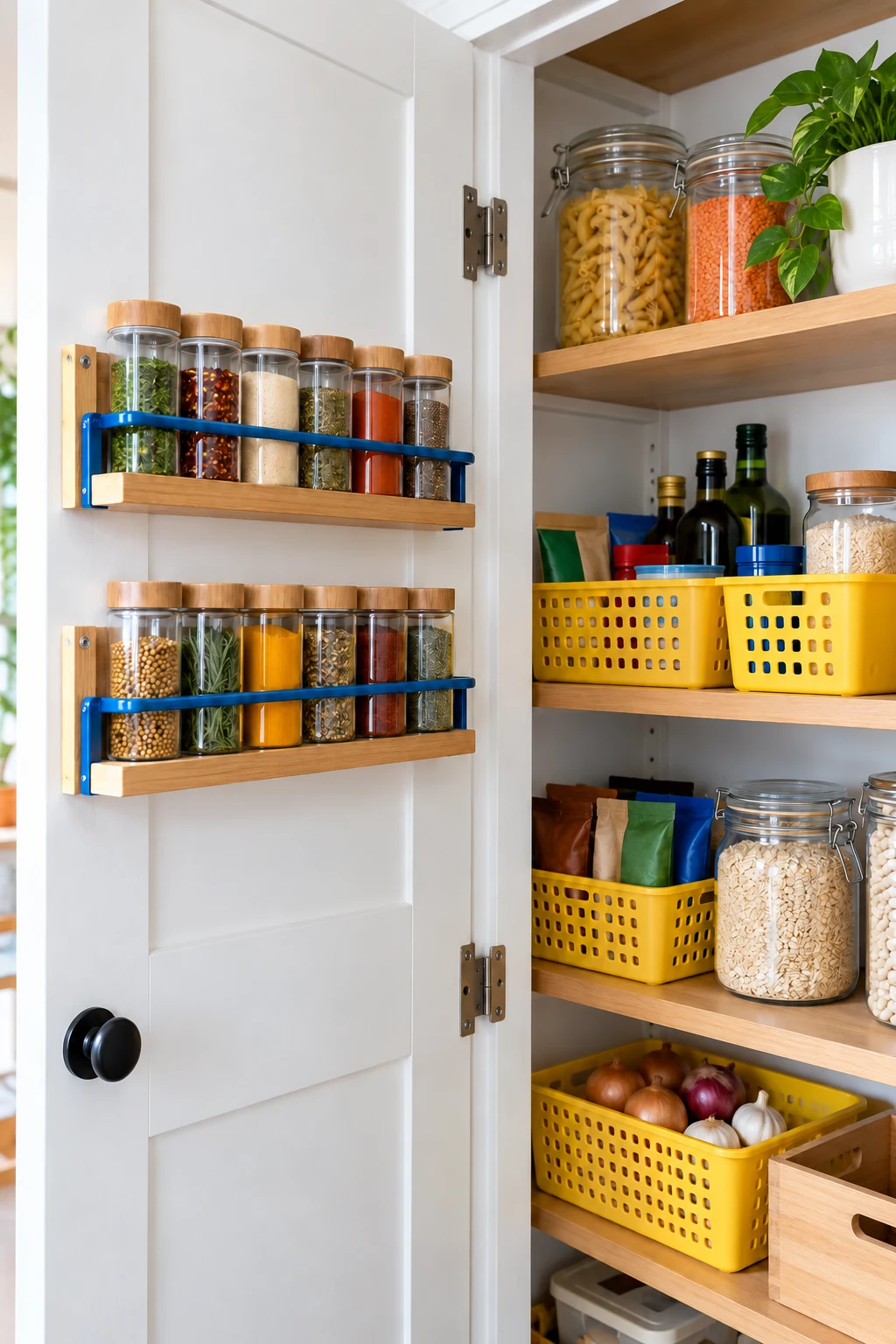
5. Stand square jars in a deep drawer
A deep drawer can hold upright spice jars when their lids carry clear labels. Square bases make the rows easy to align, and simple dividers can keep the layout from drifting. Leave a little room around each jar so you can lift it without pinching neighboring bottles.
The Simple Houseware Square Glass Spice Bottles, 6-Ounce, 12-Pack are larger 6-ounce-volume bottles, each listed at 4.5 inches high. They may suit spices you use often, but measure the closed drawer clearance before buying. Keep the original ingredient, allergen, date, and lot information with every transferred spice.
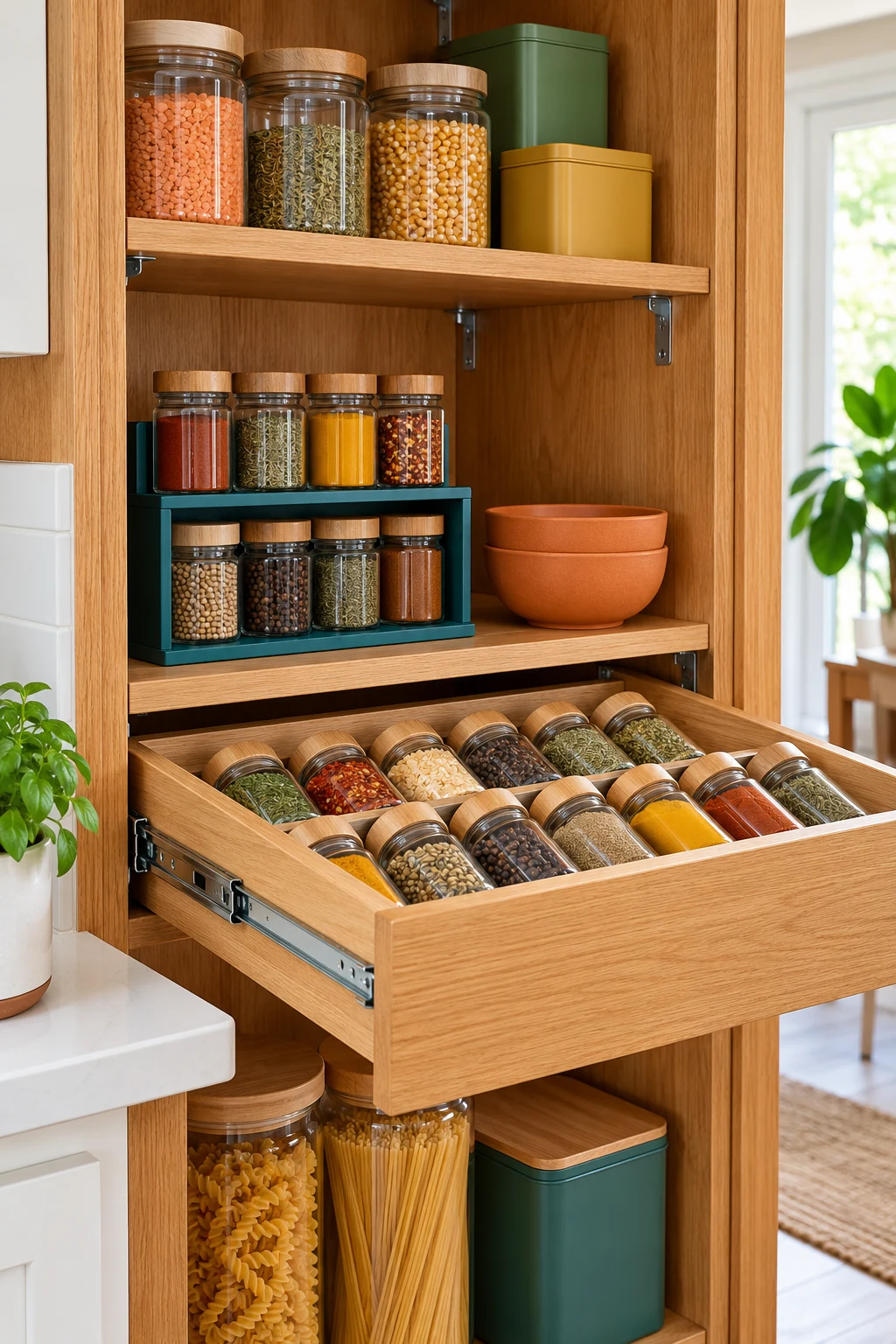
6. Use a small turntable for a compact collection
A turntable can work well when you have a modest number of spices in a cabinet corner. Arrange jars around the outer edge so their labels turn toward you. Keep the center lightly filled so you do not trade a hidden back row for a hidden middle.
The Copco Nonskid Lazy Susan Turntable Organizer, 12-Inch has a 12-inch diameter to compare with your cabinet. Leave room for the loaded tray to rotate without hitting hinges or nearby jars. This layout favors a small working collection; a packed disc of tiny bottles becomes difficult to scan.
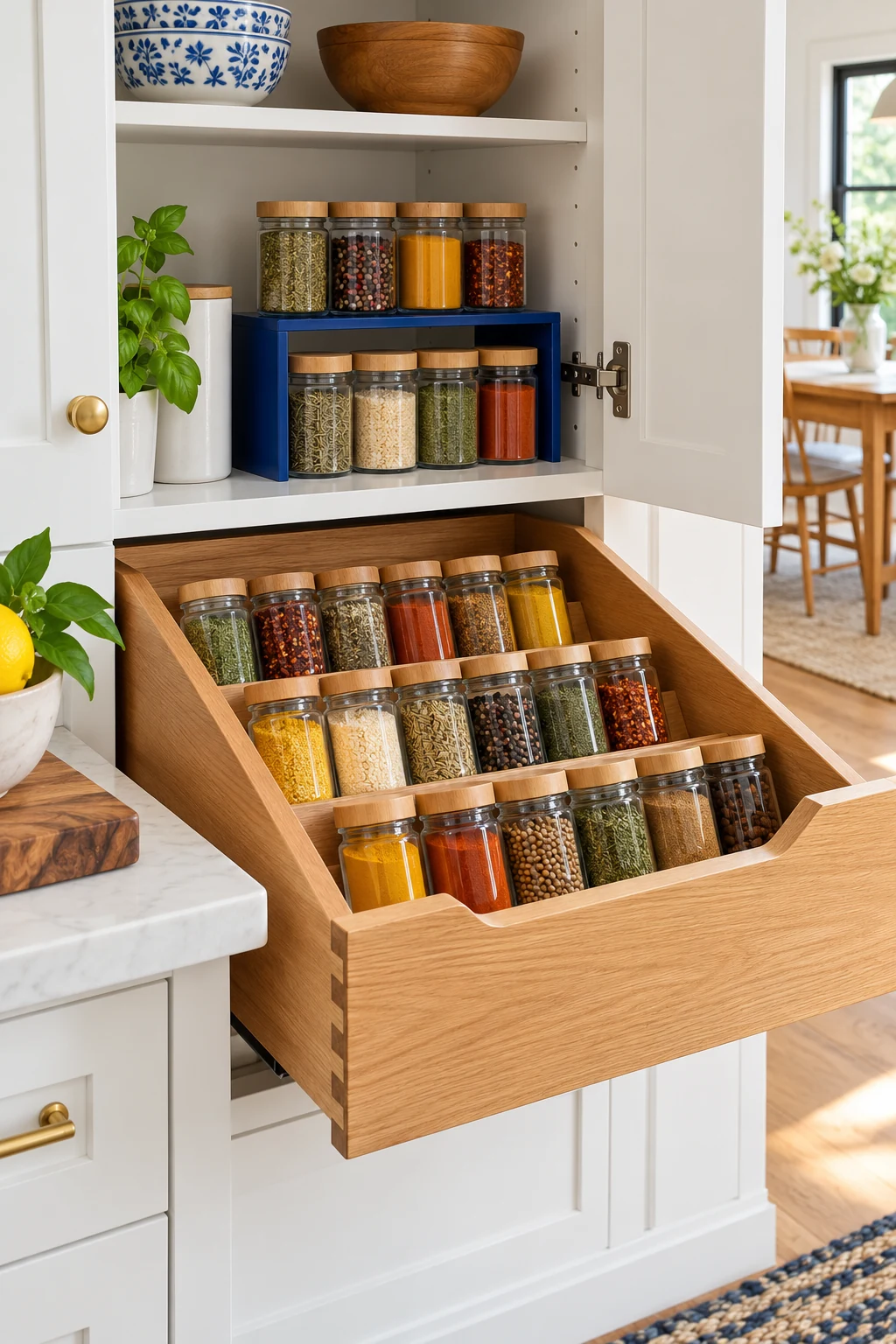
7. Try two rotating levels when height is available
A two-tier turntable can use a tall cabinet opening without spreading the spice collection across the whole shelf. Put jars on each level according to the available clearance, keeping the lower row easy to grasp. Taller bottles usually need an open upper position.
Check the space between tiers as well as the overall height and diameter. A tall upper row must still clear the shelf above. Choose a purpose-built two-tier unit and follow its load guidance instead of balancing a second turntable on a makeshift stand.
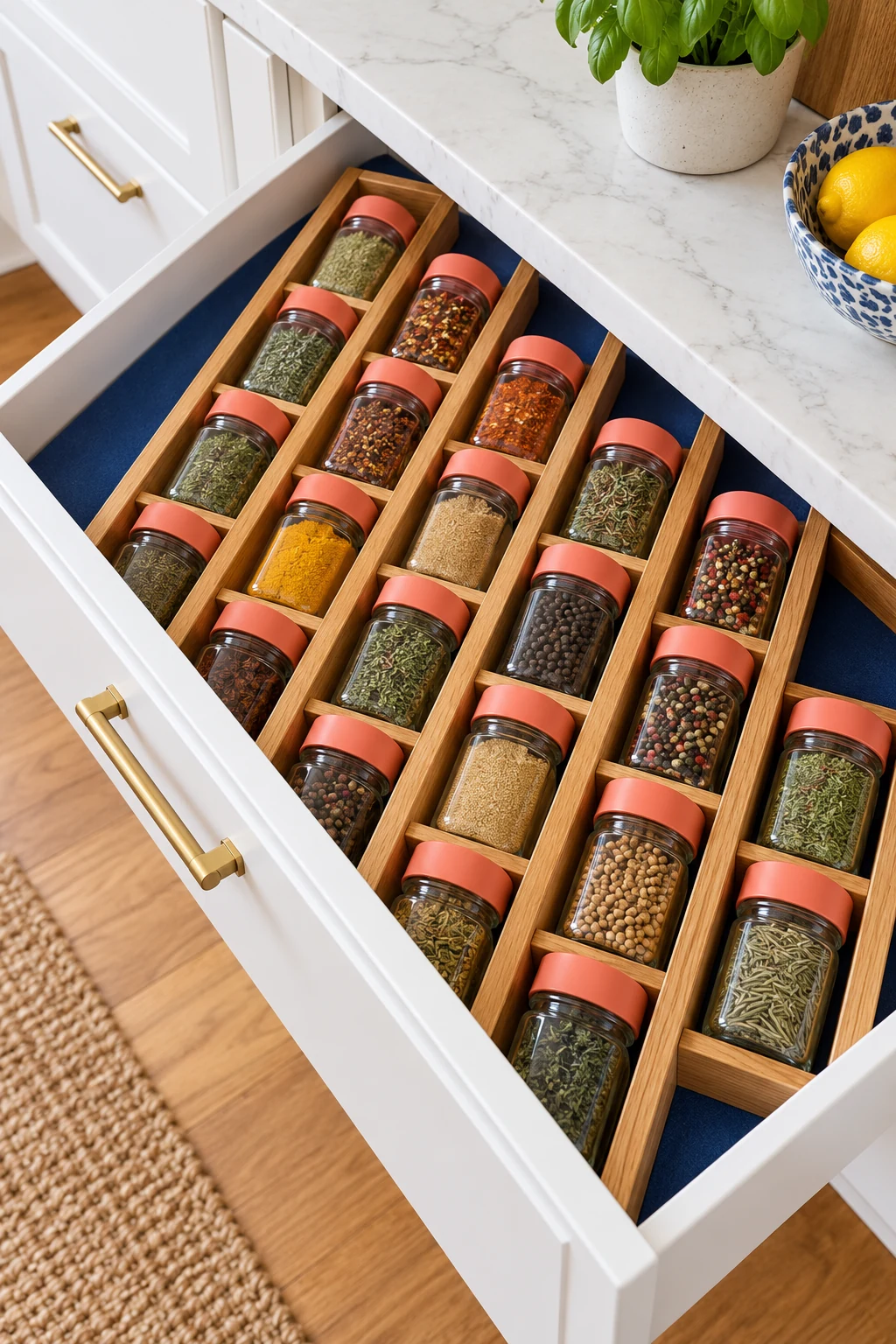
8. Make a two-level shelf for short spice jars
A small freestanding shelf can create two accessible rows when the jars are shorter than the cabinet opening. Keep the lower row close to the front and the upper row visible above it. Leave a separate open area for bottles too tall to fit beneath the shelf.
The Simple Houseware Expandable Stackable Kitchen Counter Shelf Organizer, White, Metal Top can divide a section of cabinet space without permanent mounting. Measure the clear height below the metal top, not just the organizer’s outside dimensions. Use its supported configuration and do not pile extra loose racks on top.
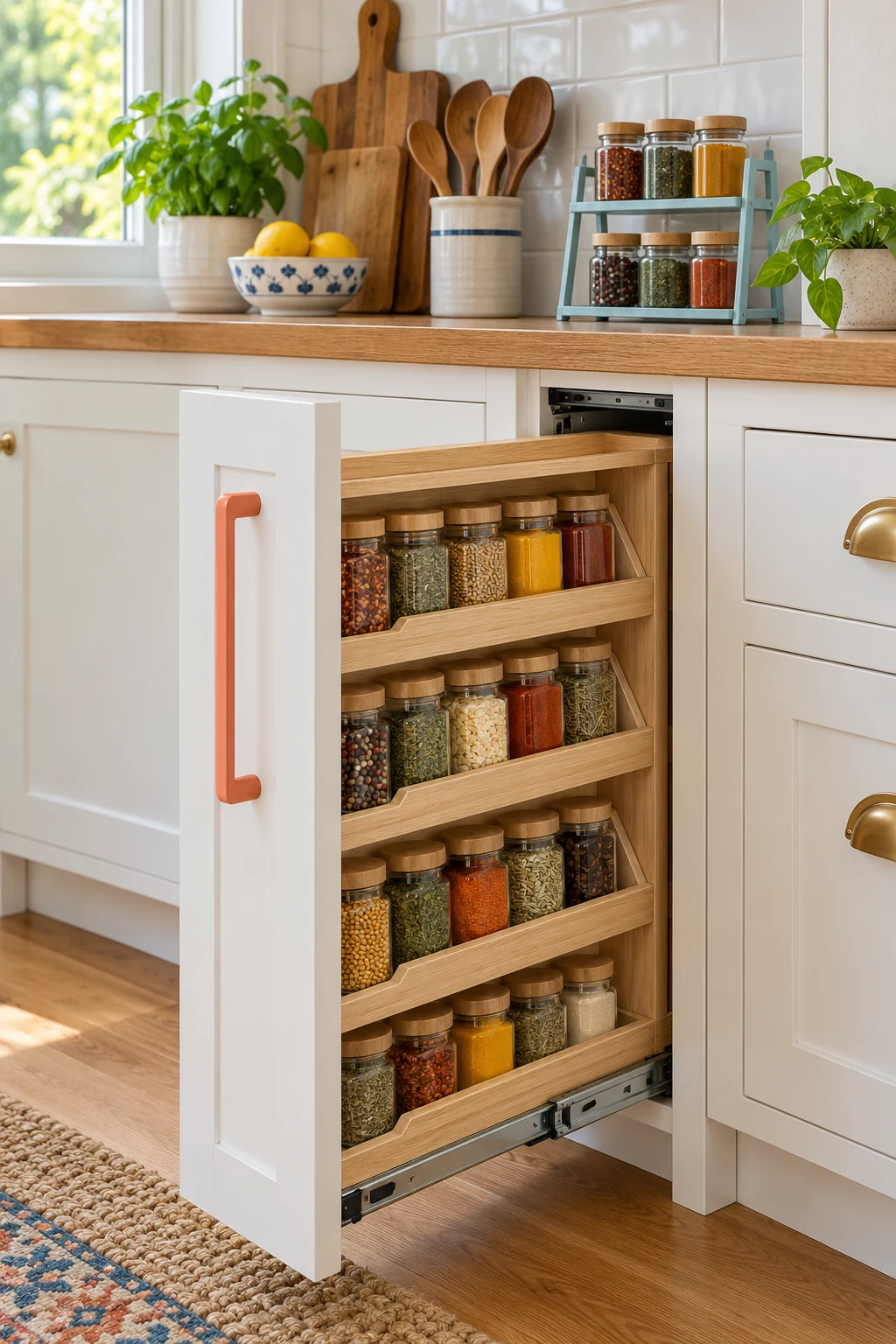
9. Fit a pull-out spice shelf inside a lower cabinet
A fitted pull-out shelf brings a low spice collection out where you can look down at the lids. Use shallow sides or dividers that keep jars upright while the shelf moves. This may be helpful when upper storage is hard to reach.
Measure the cabinet opening, hinge projection, and full extension path before choosing a system. Installation and load limits depend on the exact cabinet and hardware. Keep the motion smooth and avoid filling the shelf so tightly that jars rub or tip as it closes.
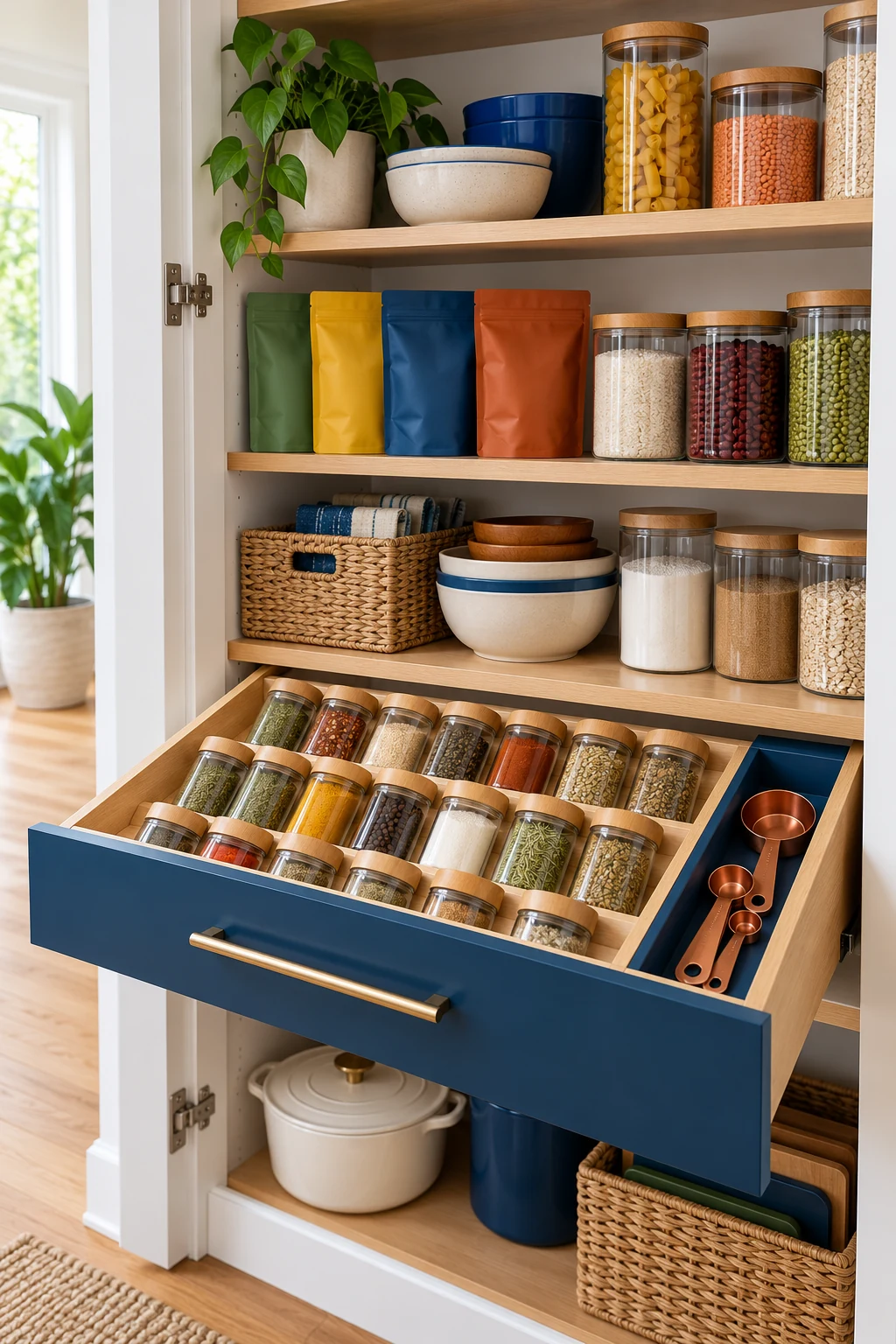
10. Plan a narrow vertical pull-out for a fitted kitchen
A purpose-built narrow pull-out cabinet can hold spices in several guarded levels. It can be useful in a kitchen renovation where there is a slim space between wider cabinets. Plan the internal racks around actual bottle heights rather than assuming all jars are standard.
Choose a location away from excessive appliance heat and follow the cabinetry and slide manufacturers’ requirements. These units need careful fitting, secure installation, and clearance for the handle and door. Treat this as a cabinetry project rather than a universal insert for any spare gap.
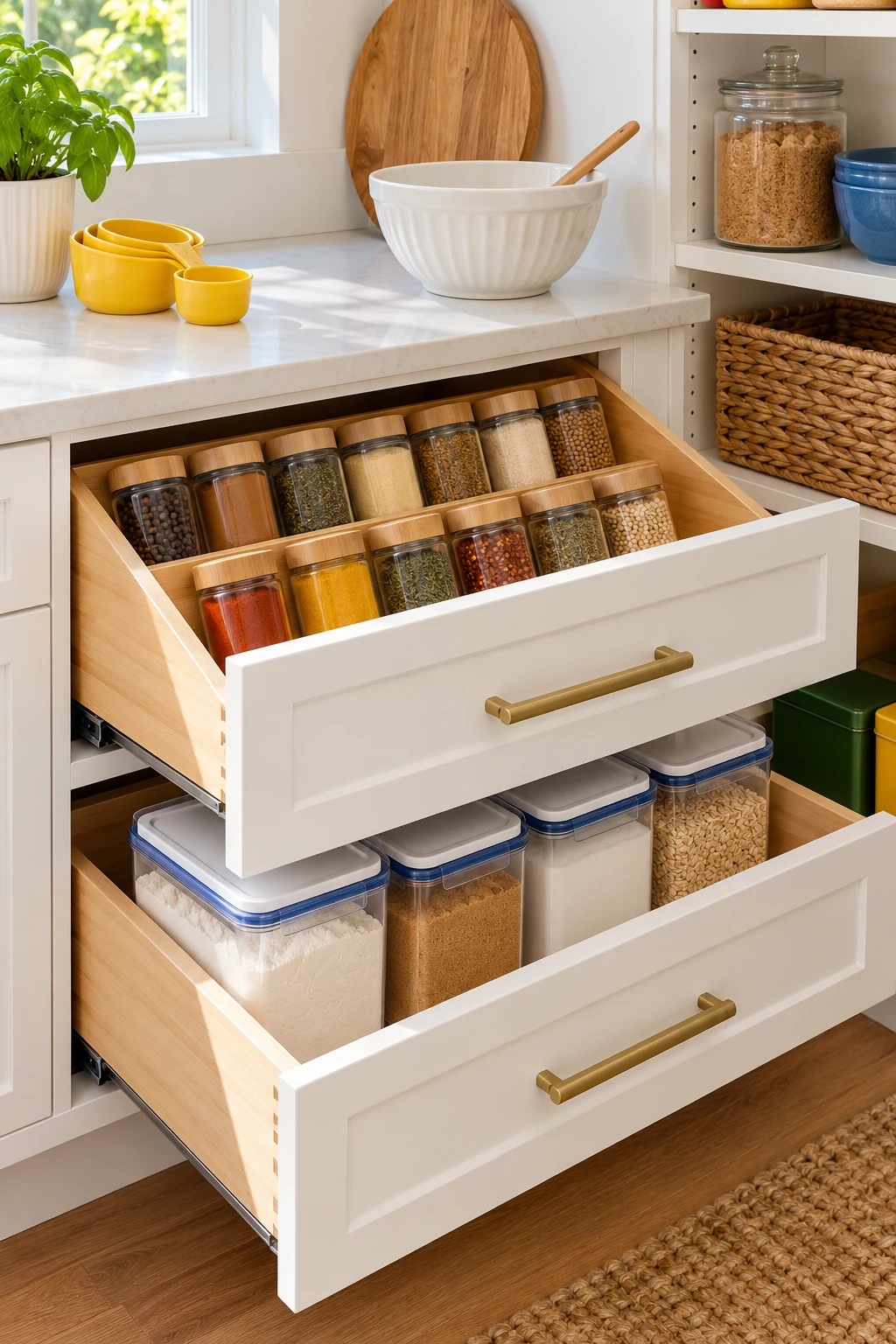
11. Mount one shallow shelf for a small working set
A single shallow shelf can keep a handful of everyday spices in view without building a large display. Place it near a useful prep surface, away from steam, direct sun, and the stove. Choose depth around the bottles you own, including their widest bases.
Use a shelf with suitable retaining features if the location risks accidental bumps, and install it with appropriate hardware. Keep the row one jar deep so labels stay readable. A small open shelf works best when the rest of the collection has another clear home.
12. Space separate wall racks around different jar heights
Individual wall-mounted racks let you leave a tall gap for grinders and a shorter one for ordinary spice jars. Lay out the heights with the actual bottles before marking the wall. The result can look tidy without forcing every container into the same opening.
Use fixings suited to the wall and follow each rack’s load instructions. Keep the lowest rack clear of the work surface and the highest within reach. Confirm that rack rails do not cover the label area you need to read.
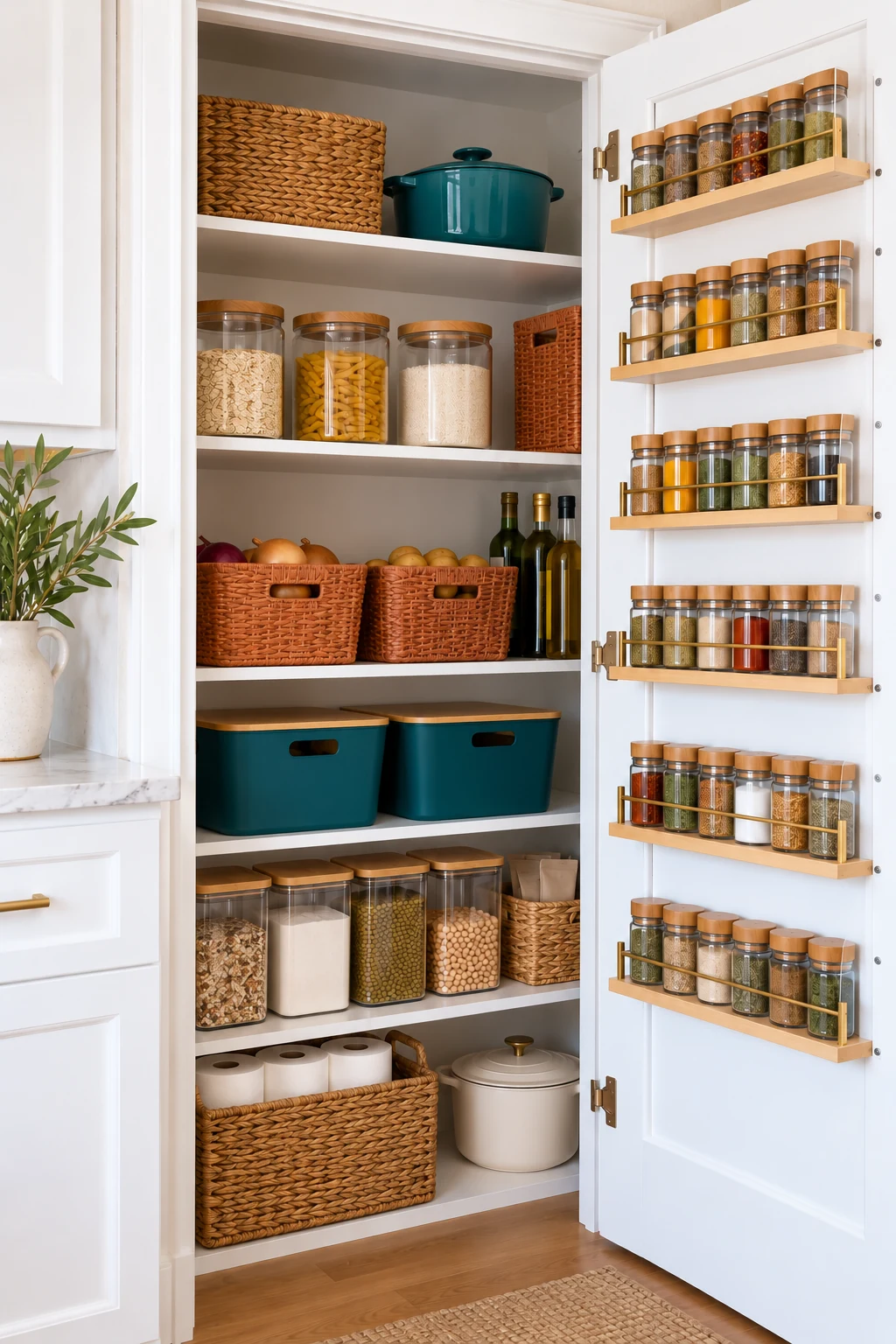
13. Add shallow racks inside a suitable cabinet door
The inside of a cabinet door can hold a light spice collection if the door and hardware are designed for the load. Position the racks between the cabinet’s shelf fronts so they do not collide when the door closes. Test the full swing before filling them.
Check door thickness before drilling and follow the selected organizer’s mounting directions. Adhesive options have their own surface and removal limits, and are not automatically damage-free. Keep the heaviest or fragile jars on a shelf if the door setup does not explicitly support them.
14. Use a magnetic shelf on a compatible metal surface
A magnetic spice shelf may use an exposed refrigerator side when it is magnetic, stays suitable for food storage, and does not obstruct appliance ventilation. Test the empty rack’s placement first. Keep it out of the path of handles, nearby doors, and people passing through.
Follow the rack’s surface and load requirements, and check that the appliance maker permits accessories in that area. Do not assume every stainless finish is magnetic or scratch-resistant. A small load is easier to manage than a full shelf of large glass jars.
15. Keep a counter rack against the back of the work area
A compact countertop rack can be useful when cabinets and drawers are already spoken for. Put it toward the back of a dry prep area while keeping enough clear counter in front to work. Choose a layout that presents labels instead of hiding a second row behind tall jars.
Measure the footprint with the rack loaded, including any handles or projecting feet. Keep it well away from a hot range and steaming appliances. If you constantly move the rack to cook, a smaller everyday set or a different location will serve you better.
16. Fit a small rack to an awkward shelf corner
A purpose-shaped corner rack can make sense when a square unit leaves unusable space or blocks access. Look for a layout that keeps jars facing the opening, with the rear corner holding only what you can reach comfortably. Try a paper footprint before ordering.
Do not judge the fit from the widest edge alone; measure the corner angle, shelf depth, and door opening. A triangular rack can still hide its back jar. Keep the collection small enough that you can retrieve each bottle without dismantling the front row.
17. Use an expandable rack where cabinet width is unusual
An expandable rack can fill part of a cabinet that is wider than a small fixed organizer but narrower than a large one. Set it to the width your current collection needs, leaving room to grasp the end jars. Expansion is useful when it remains easy to see every row.
Check the minimum and maximum width along with the shelf depth at the overlap. Follow the maker’s support and loading directions at the chosen extension. Avoid stretching an organizer to its limit merely to fill a gap when a smaller arrangement gives better access.
18. Build a pegboard spice area with compatible holders
A kitchen-suitable pegboard can support small spice shelves and baskets in a flexible arrangement. It is useful when you want to change the spacing without repeatedly relocating separate wall racks. Keep the spice area focused so cooking tools do not knock against the jars.
Use a coordinated pegboard and holder system installed for the wall and intended load. Confirm that holders lock in place as required, and keep bottles within their guards. Choose a cool, dry wall away from steam; decorative display should not override storage guidance.
19. Consider a purpose-built under-cabinet drop-down rack
A drop-down rack beneath an upper cabinet can tuck spices away and lower them for selection. This is a more involved option when neither counter nor drawer space is available. Plan enough clear space for the whole rack to swing and for your hand to reach the jars.
Use a product intended for that mounting position and follow its cabinet-thickness, fastener, and load instructions. Keep it away from heat and steam-producing appliances. Never adapt a wall rack by simply turning it sideways or suspend glass jars from improvised fittings.
20. Give spice packets their own upright organizer
Flat seasoning packets and refill pouches behave differently from jars. Keep them upright in a small divided holder beside the main spice rack so they do not slide underneath it. Leave the original directions, ingredients, and lot information on each package.
The YouCopia ShelfBin Packet Organizer, Four-Tier, Speckled White creates four stepped sections for a modest packet collection. Check pouch width and the loaded height before placing it on a shelf. Larger bulk bags may need a separate bin, especially if their openings cannot be closed securely after use.
21. Keep oversized spice bottles on an open-height shelf
Large bottles, grinders, and tall tins need a different opening from everyday small jars. Give them a simple shelf section with enough height to lift them straight out. Keeping this group separate makes the regular rack easier to size and use.
Measure the tallest cap and the widest base before arranging the row. Avoid forcing a large bottle into a guard that grips its label or lid. If only one jar is unusually tall, leave a small open bay beside the rack instead of replacing the entire system.
22. Use a narrow tray as a lift-out spice rack
A shallow tray with suitable dividers can hold a small recipe group that comes to the counter together. Try it for a few baking spices or a specific set you use often. Choose sides low enough to read labels but high enough to keep the jars contained.
Test the tray’s filled weight and carry it level with both hands when needed. Keep it on a reachable shelf rather than overhead. Return the jars promptly after cooking, and do not leave the tray beside a steaming pot for the sake of convenience.
23. Separate the working rack from refill storage
Keep one active jar of each regularly used spice in the main rack. Place unopened duplicates and larger refill packages in a second clearly identified area. This protects the useful rack space from becoming a display of several nearly identical bottles.
Check the reserve before buying another jar, and retain each refill’s identifying information when transferring it. Avoid topping up an old batch with a new one. The second area should be easy to inspect, not a hidden box that quietly collects duplicates.
24. Expand sideways with a second matching module
When a collection grows, a second low module beside the first can be easier to browse than a taller tower. Keep both units within comfortable reach and give each a clear range of spices. Check whether the cabinet still allows jars to be removed from the outer edges.
Choose compatible modules whose individual dimensions fit the remaining space. Do not assume a rack can be stacked unless its manufacturer allows it. Before expanding, review what you actually use so the new section has a purpose rather than merely storing forgotten duplicates.
25. Give every rack section an easy return point
A rack stays useful when a jar has an obvious place to return after cooking. Use a simple alphabetical run, a few broad cooking groups, or a short everyday section followed by the rest. Keep the system consistent across separate shelves or modules.
Add removable shelf-edge labels where they genuinely help, and leave a little open space for new jars. Avoid decorating the rack so heavily that the ingredient names become hard to see. Revisit the order when your cooking habits change instead of adding another rack automatically.
Try the simplest rack that lets you see and remove every jar comfortably. Use your largest bottle to test the fit, then build around the collection you cook with today. Leave a little room to grow without losing the easy access you wanted in the first place. Sign up for Havelyo emails for more practical kitchen storage ideas. Subscribe to the Havelyo email list for more small-space decorating and organization ideas.