
Pantry Organization
24 Spice Drawer Organizer Ideas to Keep Seasonings Within Reach
A spice drawer is useful when opening it shows what you have. It is less useful when jars roll over, tall lids catch the cabinet, or three half-used bottles hide under the measuring spoons.
These 24 spice drawer organizer ideas work from the drawer’s actual dimensions and the way you cook. Start by sorting the collection, then choose flat rows, angled rows, or upright jars according to clearance. Keep the drawer cool and dry, and use matching containers only when they solve a genuine fit problem.
This article contains affiliate links. If you buy through them, Havelyo may earn a commission. As an Amazon Associate I earn from qualifying purchases.
1. Measure the drawer when it is fully closed
Measure the usable width and depth, then check the vertical space between the drawer base and the cabinet above. The tallest point of a loaded spice rack matters more than the empty organizer height.
Test with your largest jar before arranging the rest. Watch for an inner drawer lip, screws, or a drawer-within-a-drawer that reduces clearance, and make sure the drawer can close without touching a cap.
2. Sort the collection before choosing inserts
Lay out the spices you use, matching duplicates and checking labels. Note which jars are tall, which are wide, and which packages cannot lie on their side without leaking.
Set aside anything you cannot identify confidently and review old products according to the maker’s guidance. Buying a large organizer before this sort can preserve a cluttered collection rather than creating a useful cooking drawer.
3. Choose a drawer away from heat and steam
A spice drawer should be convenient to your preparation area while staying away from strong heat, direct sunlight, and moisture. A drawer immediately beside an oven or steaming appliance may be less suitable than one a step farther away.
McCormick recommends keeping spices tightly closed in cool, dry conditions and away from steam. Check the cabinet environment as you cook; proximity is helpful only when it does not compromise the storage conditions.
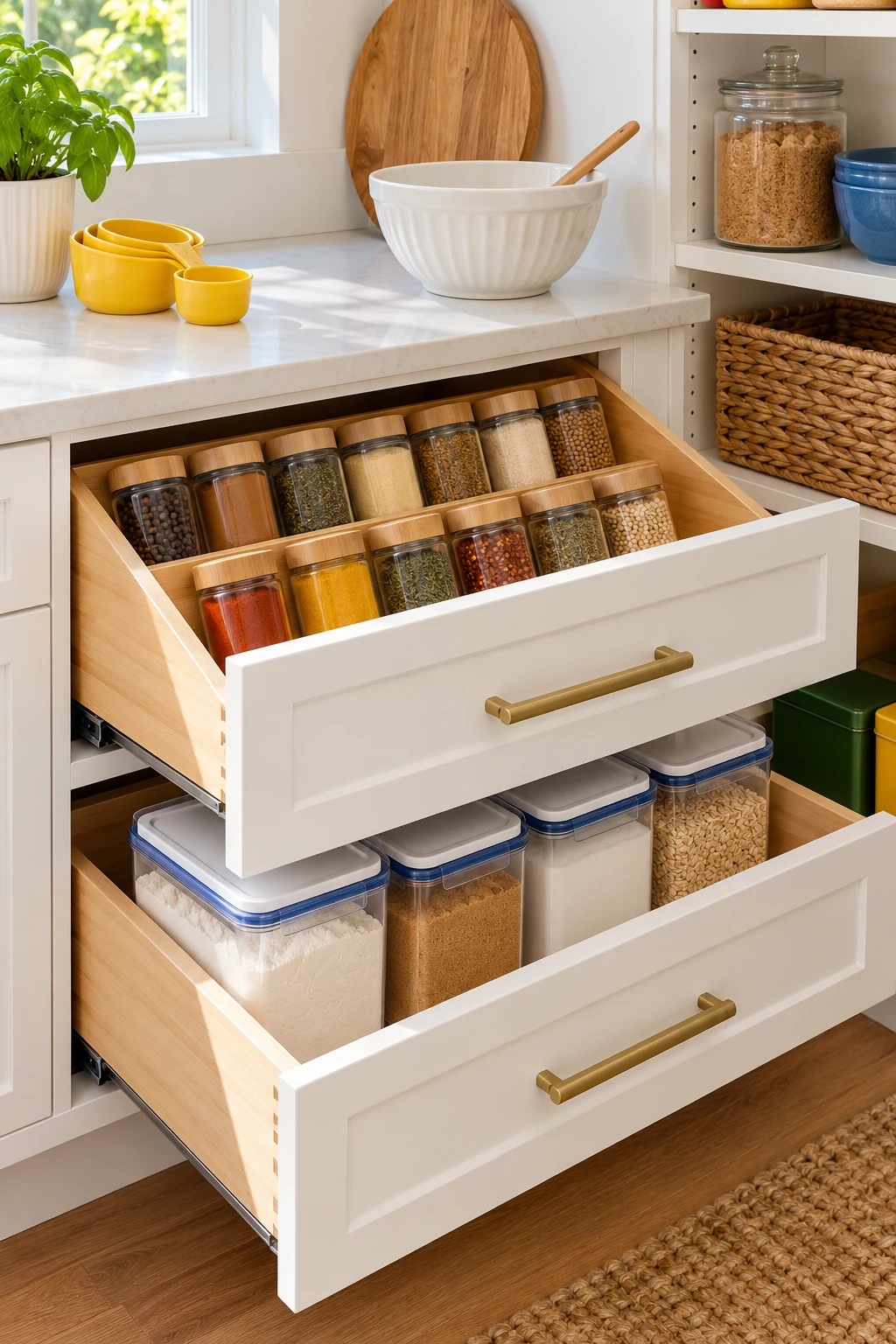
4. Angle jars so front labels are visible
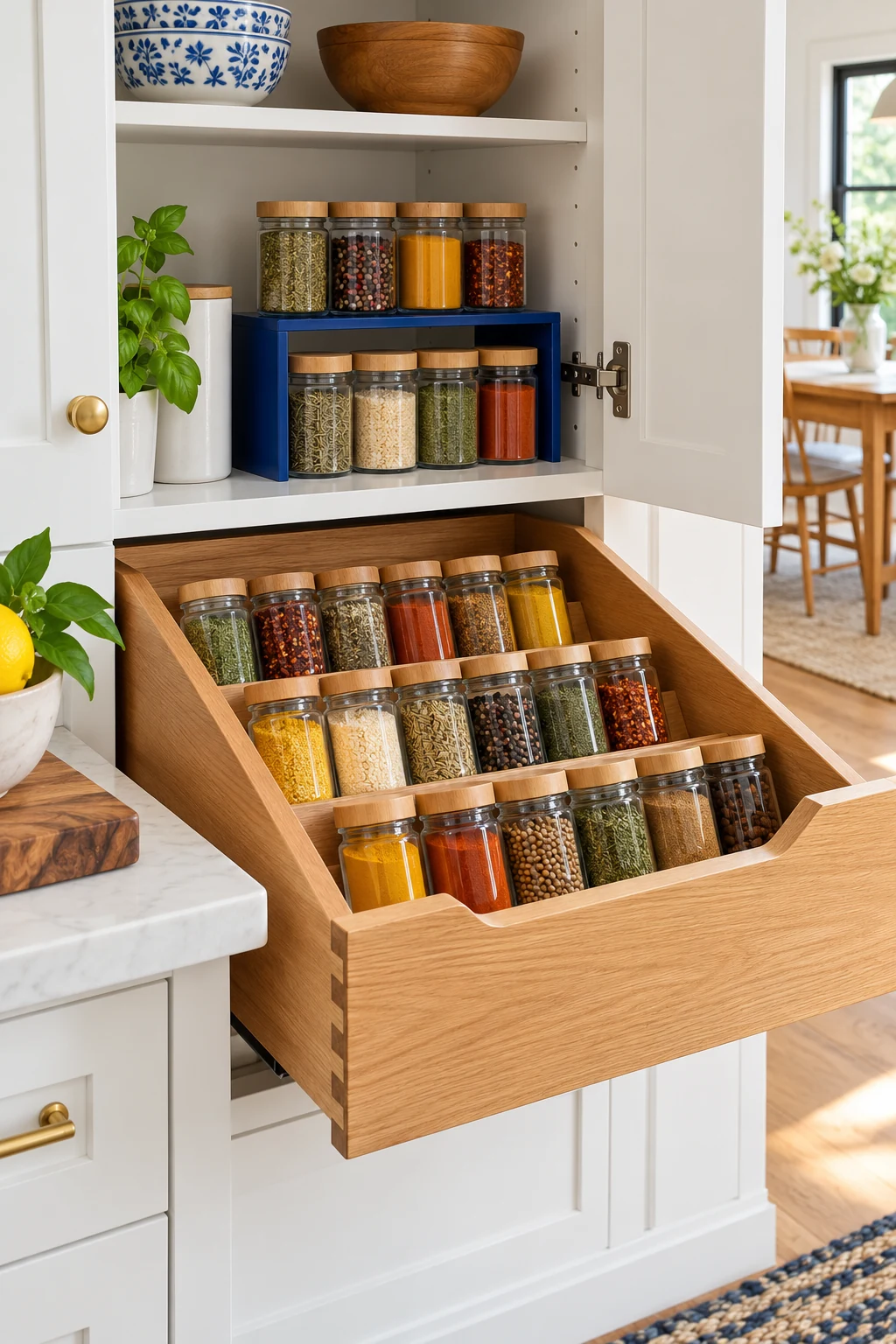
A shallow tiered insert can tilt closed spice jars toward you when the drawer opens. Put the label on the visible side and keep each jar seated within its intended channel.
The OXO Good Grips Compact Spice Drawer Organizer has a tiered shape, nonslip feet, and a removable tray. Compare its selected footprint and loaded jar height with the drawer before buying; no organizer fits every bottle shape. View on Amazon.
5. Use a low liner when a rack is too tall
If your jars fit lying down but not on an angled rack, a channel-style liner may use less height. Cut and position it according to its instructions, allowing jars to rest without rolling into each other.
YouCopia SpiceLiner comes in a 10-foot roll that is 2.5 inches wide and 0.4 inch high. Measure the jar-plus-liner height and keep cut pieces flat; the roll length does not tell you how many jars your drawer will hold. View on Amazon.
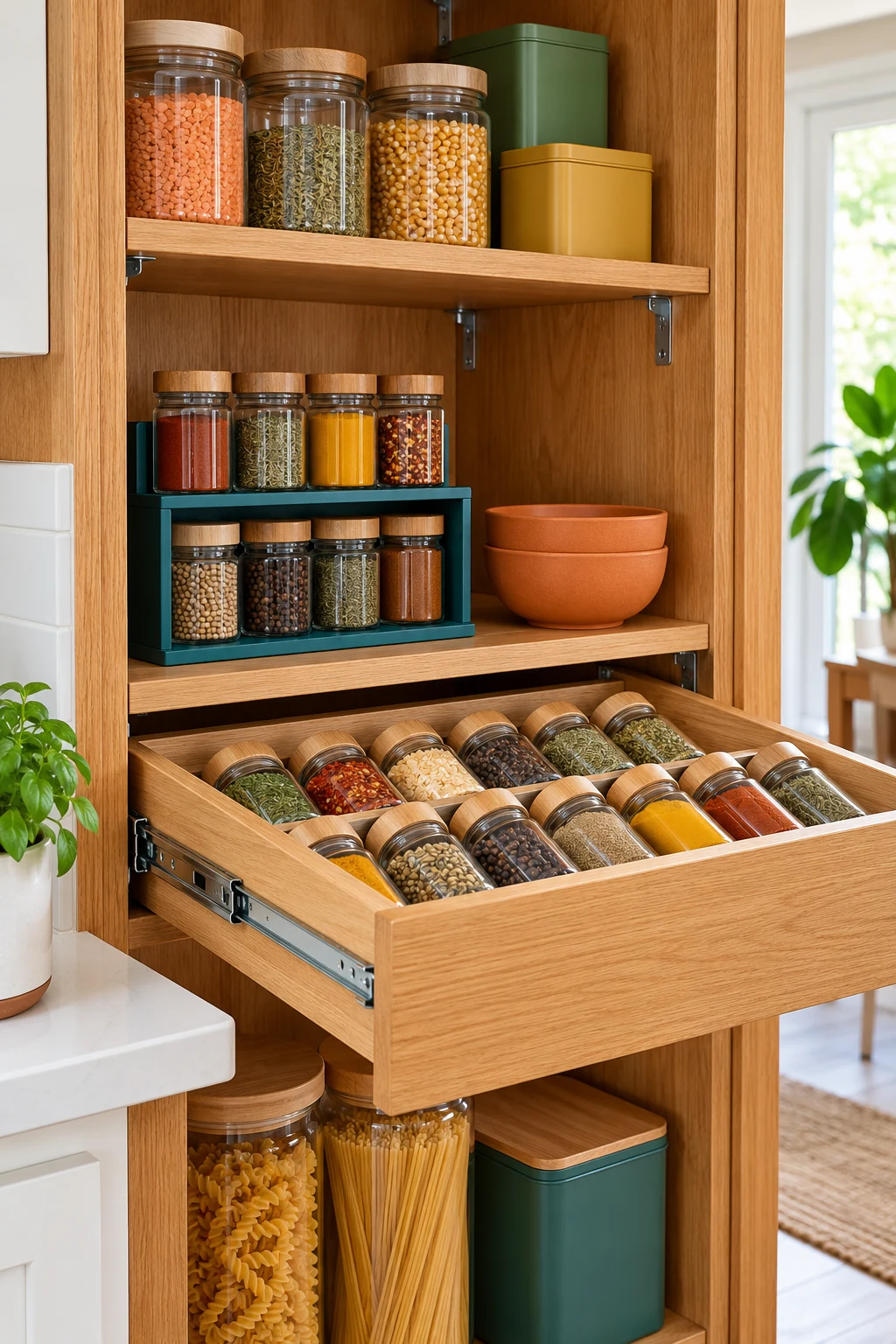
6. Stand jars upright in a deeper drawer
A deeper drawer may work better with upright jars than tilted rows. Arrange them in a single visible layer so you can lift a jar without pulling up neighboring containers.
Check that the tallest lid clears the cabinet during the entire slide motion. Keep bottles secure and avoid an overfilled layout where one missing jar causes the remaining row to lean or crash together.
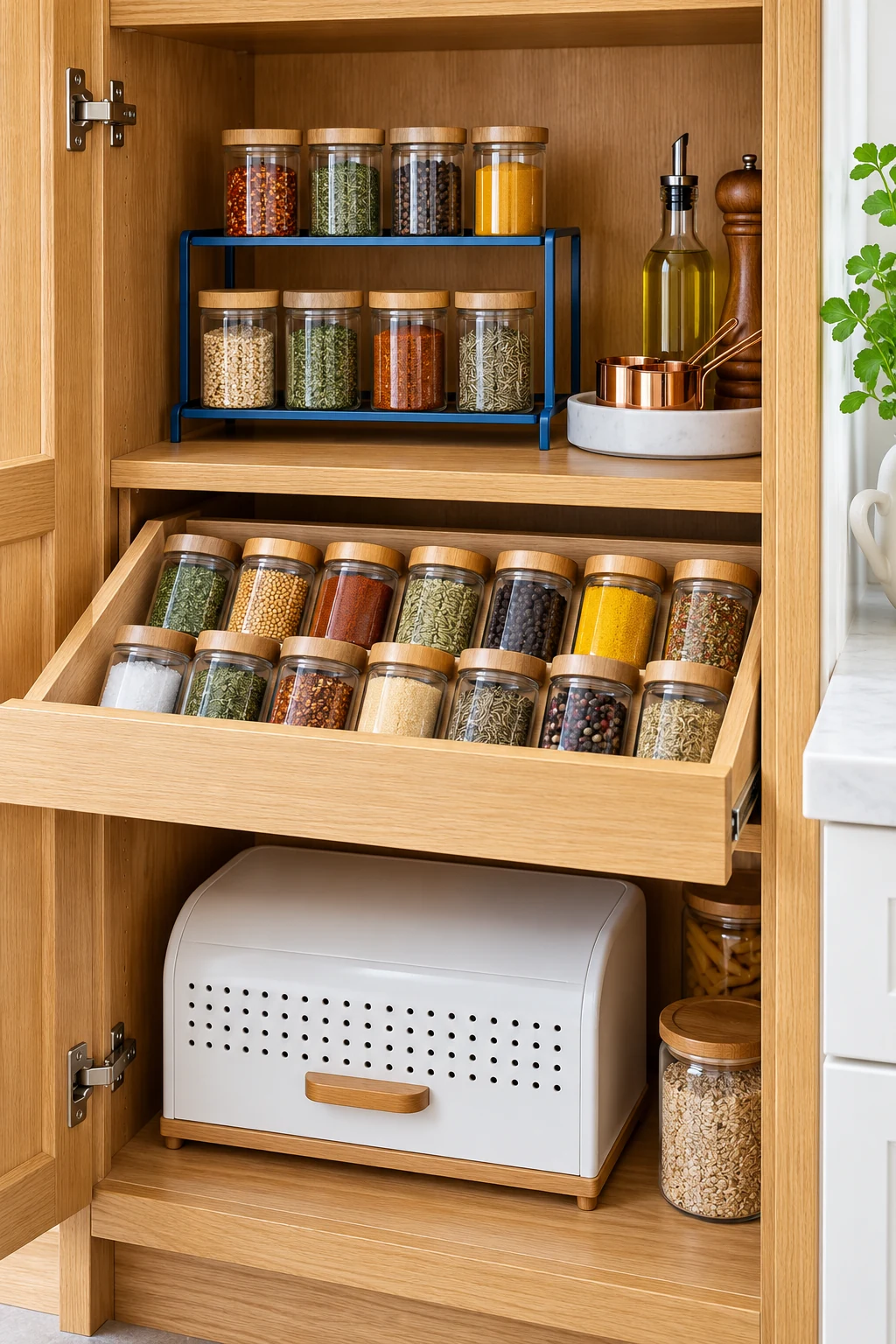
7. Put names on lids for a top-down view
For upright jars, a readable lid label lets you scan the drawer without lifting every bottle. Use the name you naturally search for, and keep the wording large enough to read from your usual standing position.
Clean the lid surface before applying a compatible removable label and leave opening mechanisms unobstructed. Pair unusual spice names with a familiar descriptor only if it is accurate, rather than shortening different ingredients into confusingly similar labels.
8. Keep front labels facing up in flat rows
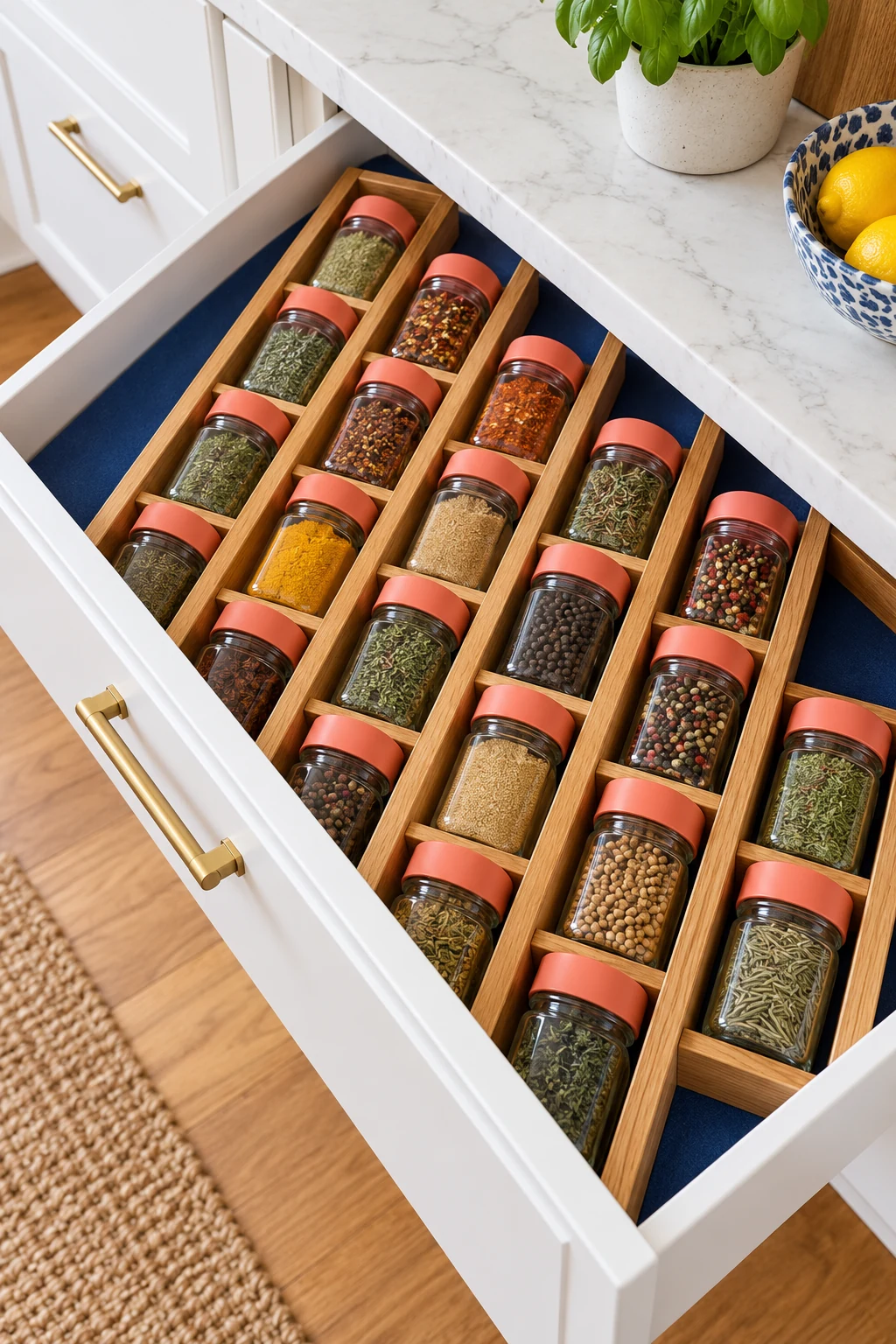
For lying or angled jars, rotate each bottle so the name faces the same direction. Consistent orientation makes a mixed collection easier to use even when you keep the original containers.
Do not decant solely to create matching labels if the existing jars already work. Preserve the original ingredient information, especially on blends, and choose an organizer around the containers you actually want to keep.
9. Try alphabetical order for a large collection
Alphabetical order can make sense when you regularly use many different individual spices. Keep the whole collection in one sequence, moving across the drawer in a direction you find natural.
Leave a little space for a new jar rather than filling every channel completely. If alphabetical order makes everyday cooking slower, keep a small daily-use row in front and alphabetize the remainder.
10. Group seasonings by cooking routine
For a smaller collection, broad groups such as baking, everyday savory cooking, and grilling may be easier than a strict alphabet. Arrange those groups in the order you normally reach for them.
Avoid overlapping categories that make you wonder where a jar belongs. A spice used for several types of cooking needs one reliable home, with a label or divider that makes the boundary clear.
11. Create one short row for everyday favorites
Put the few seasonings used in most meals nearest the front. This reduces the need to scan the whole drawer when you are seasoning a quick lunch or weekday dinner.
Keep that row intentionally small and return jars after cooking. If everything becomes an everyday favorite, the front zone stops helping; move less-used bottles into the remaining organized rows.
12. Keep unopened duplicates outside the main drawer
Store backup spices in a clearly marked pantry section, following the same cool, dry storage requirements. The working drawer needs the open jar, not every spare bottle you have purchased.
Note backups on a simple inventory before shopping. Do not mix old and new spices in a working jar just to make a duplicate disappear; keep each product’s identity and dating information clear.
13. Leave a dedicated lane for tall bottles
Large seasoning bottles can consume disproportionate space if they are forced across several small-jar rows. Try a separate lane along one side of a sufficiently deep drawer, or keep them in suitable nearby storage.
Measure the bottle cap as well as the body. If the tall bottle must lie down, check that its closure is secure and intended to contain the contents in that position without leaking.
14. Support small tins with modular trays
Short spice tins can be difficult to keep aligned in a drawer designed around round bottles. A few small trays give the tins a defined space while preserving enough room to read their labels.
The STORi SimpleSort Six-Piece Set includes paired 3-by-3, 6-by-3, and 9-by-3-inch tray footprints. Check their height and interior dimensions before choosing a layout; do not assume every tray must be used in the same drawer. View on Amazon.
15. Give sealed spice packets a separate compartment
A packet of dried herbs or a small refill envelope can slide beneath a row of jars. Store packets together in a shallow compartment with the names visible and seals protected.
Joseph Joseph Blox offers ten separate trays that clip together in different arrangements. Use only the pieces that fit your packet sizes and drawer; its self-adhesive feet are part of the tray setup, not mounting hardware for another surface. View on Amazon.
16. Use a divider to protect a mixed-use drawer
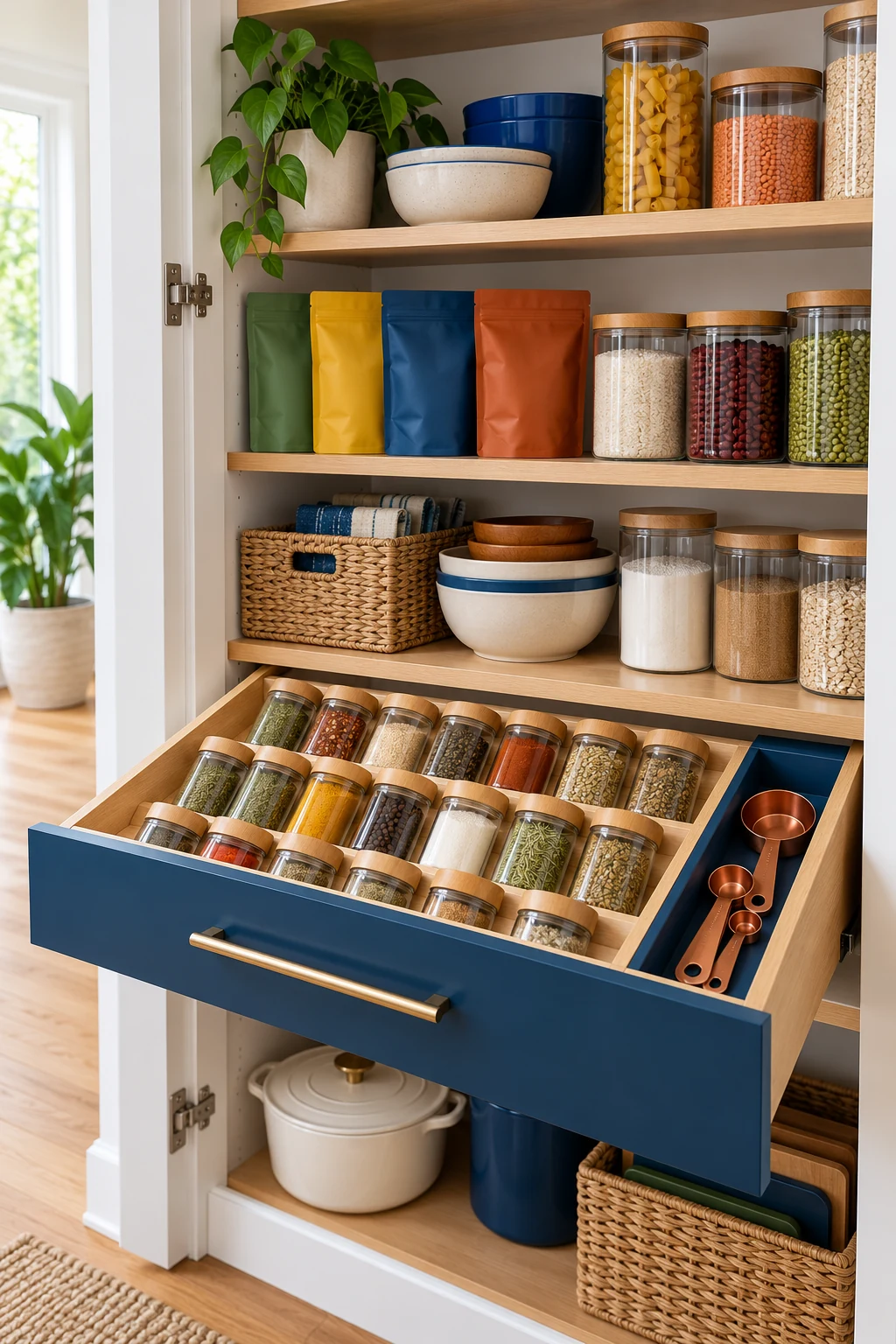
If spices share a drawer with measuring tools, give each category its own lane. A divider can prevent spoons from sliding against jars without requiring a full-width specialty insert.
Utoplike Bamboo Kitchen Drawer Dividers are an option when their selected adjustment range and height match the drawer. Check the current exact-variant measurements and follow the tension instructions; do not force a divider against thin or damaged drawer walls. View on Amazon.
17. Choose a uniform jar only for a real fit problem
Matching jars can help when bulky original containers prevent a sensible drawer layout. Decide on jar capacity from the quantity you normally buy, and test one size against the organizer before transferring the whole collection.
The Simple Houseware Six-Ounce Square Glass Spice Bottles are listed at 2 inches square and 4.5 inches high. Six fluid ounces describes volume rather than spice weight; check loaded clearance, cap care, and the suitability of each ingredient. View on Amazon.
18. Keep the original ingredient and lot information
When decanting, keep the original label information associated with the new jar. This is especially important for blends whose contents, allergens, or cooking directions are not obvious from a short front label.
A dated photo of the package plus a clear container identifier can help, or retain the original panel in a labeled file. The information must remain easy to connect with the right jar when you need it.
19. Refill on a clean, dry work surface
Take the jar out of the drawer and use a clean, fully dry funnel or spoon to transfer spices. Filling over the drawer can scatter powder beneath organizers and onto neighboring labels.
Follow the jar maker’s cleaning and drying instructions before a refill. Do not add fresh spices over an old unidentified remainder, and keep wet utensils away from dry seasonings.
20. Keep lids closed while you cook
Return a closed jar to its place instead of leaving open bottles around a steaming pot. Measure seasonings away from steam so the drawer remains a dry storage destination.
A drawer near the preparation surface makes this routine easier. Avoid shaking a jar directly over a hot pan if steam can enter it, and wipe a dirty exterior before putting it back among clean containers.
21. Separate homemade blends with clear names
Give a homemade blend a label with its actual ingredients and the date you mixed it. Place it near the cooking category where you use it, rather than hiding it among vaguely labeled jars.
Use clean, dry containers and follow suitable ingredient storage guidance. Do not invent a universal shelf life for every homemade mixture, and do not label a blend allergy-safe based only on its location in the drawer.
22. Use a flexible space for seasonal baking spices
Reserve a small section for spices that become popular only during a particular season. Bringing them forward temporarily can make holiday baking easier without rebuilding the permanent everyday arrangement.
Return them to an appropriate labeled section afterward and review the quantity left before buying more. Keep the flexible zone visible so it does not become a place where unused jars accumulate indefinitely.
23. Lift inserts out for a proper cleanup
Periodically remove the jars and lift out any removable insert to clear spilled powder underneath. Clean the drawer and organizer according to their separate care requirements.
Let everything dry completely before replacing jars. Check for torn labels, loose lids, and liner edges that curl up, then fix those small problems before the drawer starts catching or leaking.
24. Check the drawer before buying another spice
Look through the labeled rows and the backup section while making your shopping list. Note both what is missing and what you already have in a quantity that suits the next recipe.
If you repeatedly overlook a spice, change its label or position rather than buying a second jar. The most useful drawer is the one you can scan accurately in a few seconds and restore after cooking.
Pick a layout that lets you read names and remove one jar without disturbing the row. A measured insert, a few clear labels, and a quick check before shopping can be enough to make the spice drawer work much better. Subscribe to the Havelyo email list for more small-space decorating and organization ideas.