
Pantry Organization
24 Pantry Shelving Ideas to Make Better Use of Every Shelf
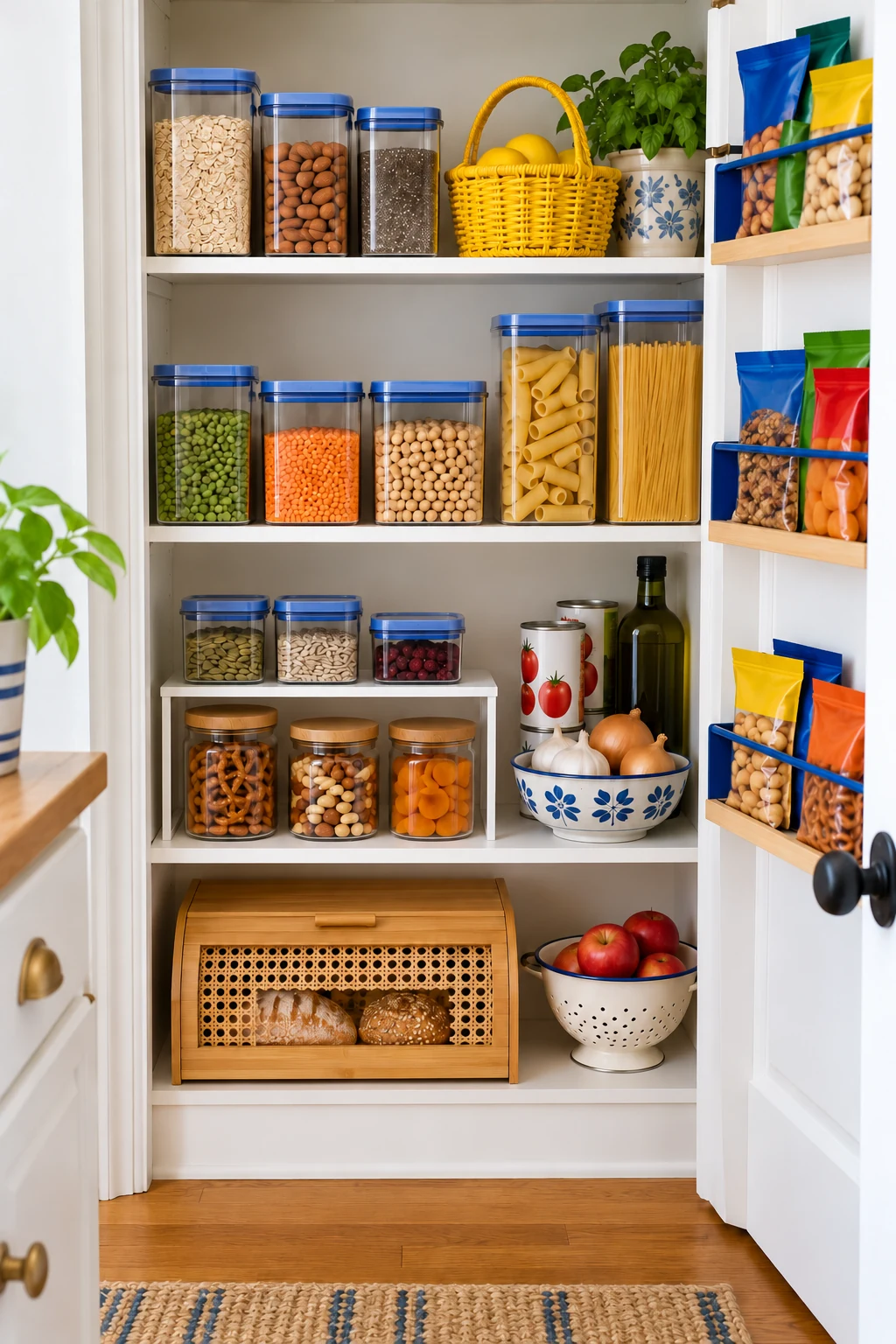
Pantry shelves work hardest when their depth and spacing suit what goes on them. A tall gap above short jars or a deep corner full of loose packages can hide useful space. Changing one level may be more helpful than buying a pantry full of bins.
These 24 pantry shelving ideas focus on fit, visibility, and safe access. Measure the shelves and their openings, then test the layout with your groceries. Keep the existing shelf system’s load and installation instructions in mind, and choose food-storage locations that stay cool, dry, and appropriate for the package directions.
This article contains affiliate links. If you buy through them, Havelyo may earn a commission. As an Amazon Associate I earn from qualifying purchases.
1. Plan each shelf around one package height
Set a few real packages on the counter and sort them into short, medium, and tall groups. This shows where a pantry needs tight shelf spacing and where it needs an open bay. Include the height of the lid, handle, and your hand when judging each group.
Use the measurements to sketch a shelf profile before moving hardware. You might need several short-can levels and only one tall cereal level. Leave a little flexibility for changing package sizes so a single new purchase does not require rebuilding the entire arrangement.
2. Use shallow shelves for ingredients you want to see at once
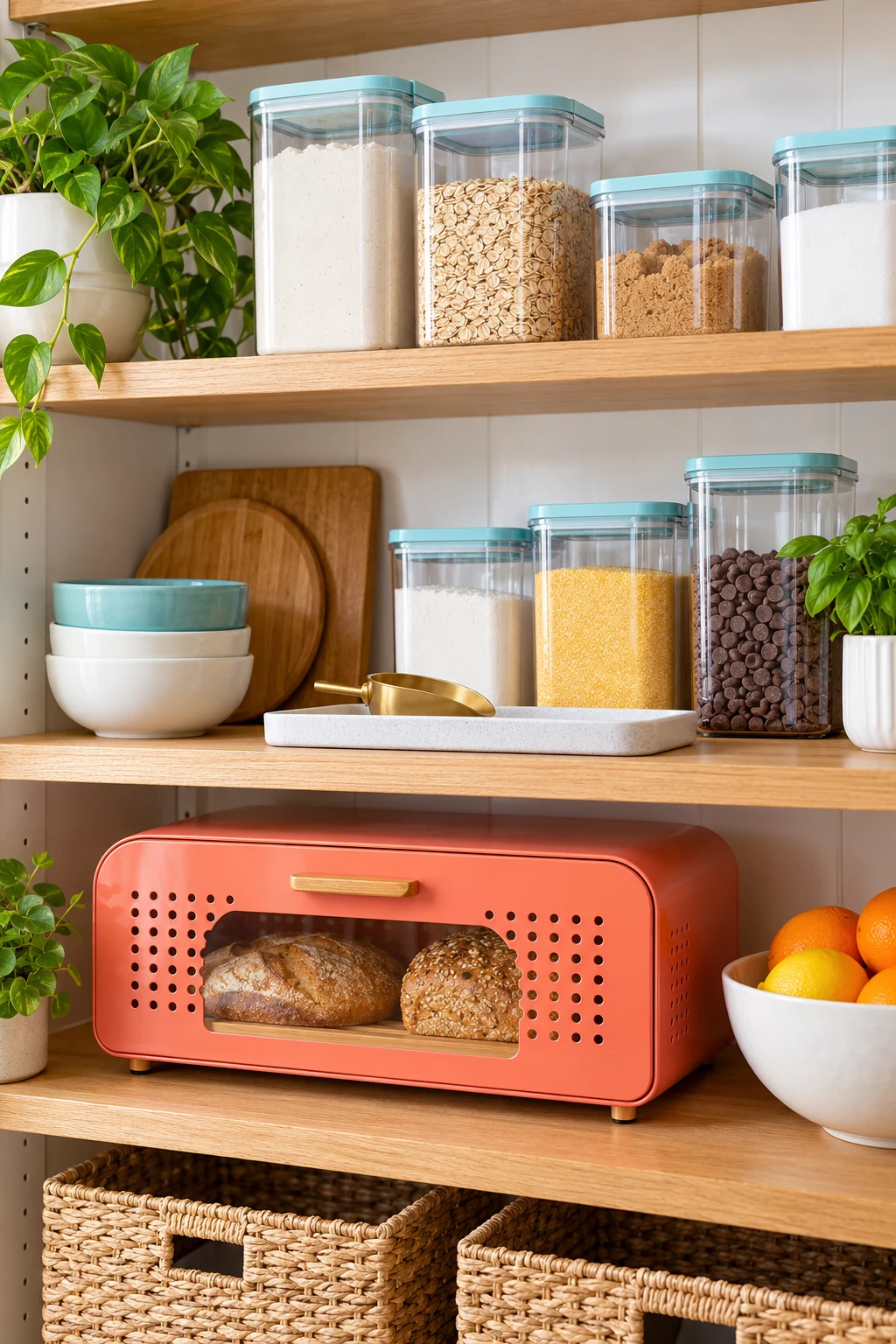
A shallow shelf can make a single row of jars easy to scan. It works well for a narrow pantry wall or a collection of small everyday ingredients. Measure the deepest container you want to keep there before choosing the shelf depth.
Allow room for secure support without letting jars overhang the front. A shallow shelf is not the right home for every bulk package, so plan a deeper section elsewhere when needed. Check the selected shelf system’s load and fixing requirements before installation.
3. Vary the gaps instead of repeating one shelf spacing
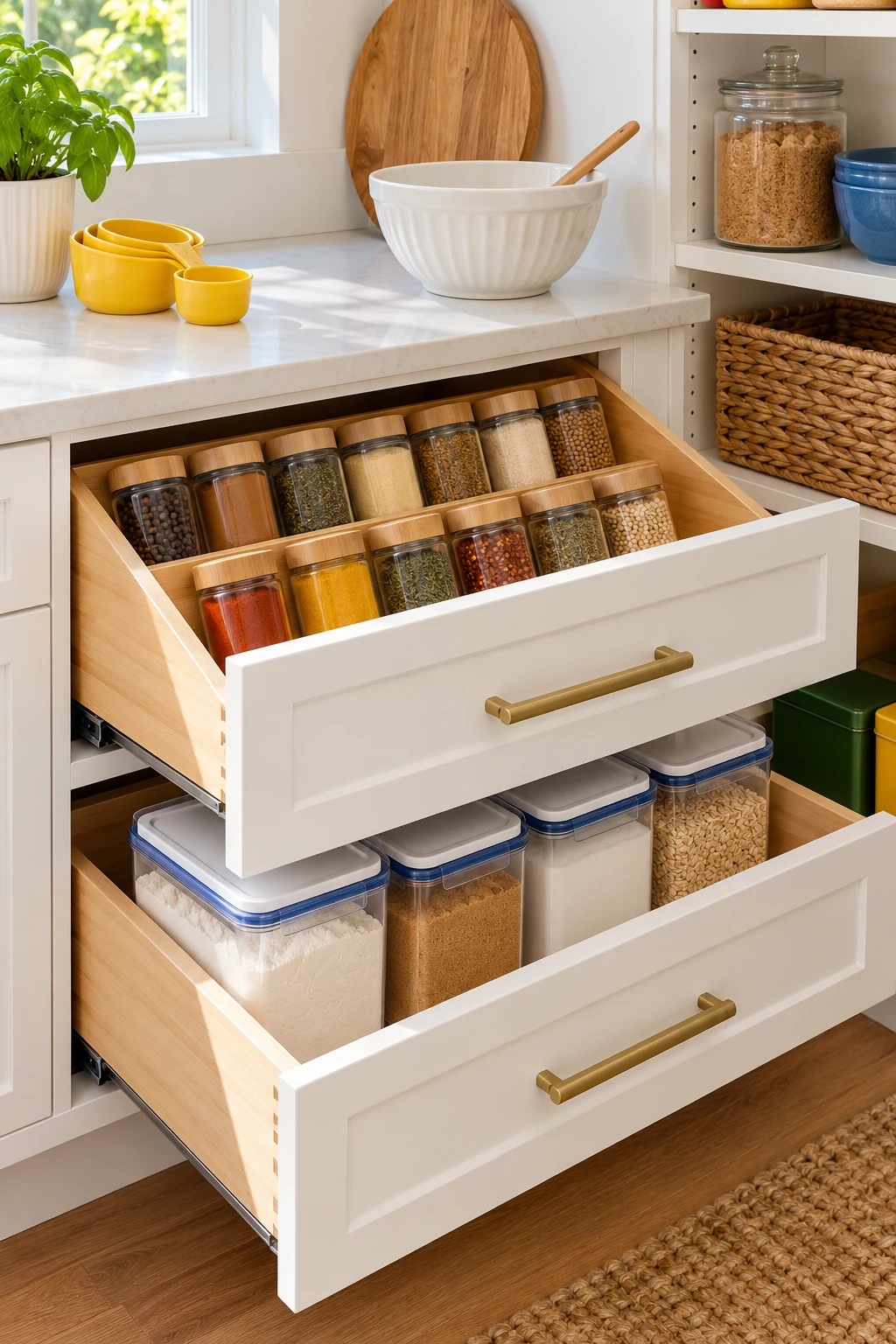
Equal shelf gaps look tidy in an empty pantry but can waste space once food moves in. Give short cans smaller openings and leave a taller gap for upright cereal or long pasta. Keep the most-used categories in the reach range that works for you.
If the existing shelves adjust, test the arrangement with actual groceries before filling every level. Confirm that the pins or brackets remain fully supported in approved positions. A useful gap still needs space to remove a container without rubbing the shelf above.

4. Add one properly supported shelf in a tall opening
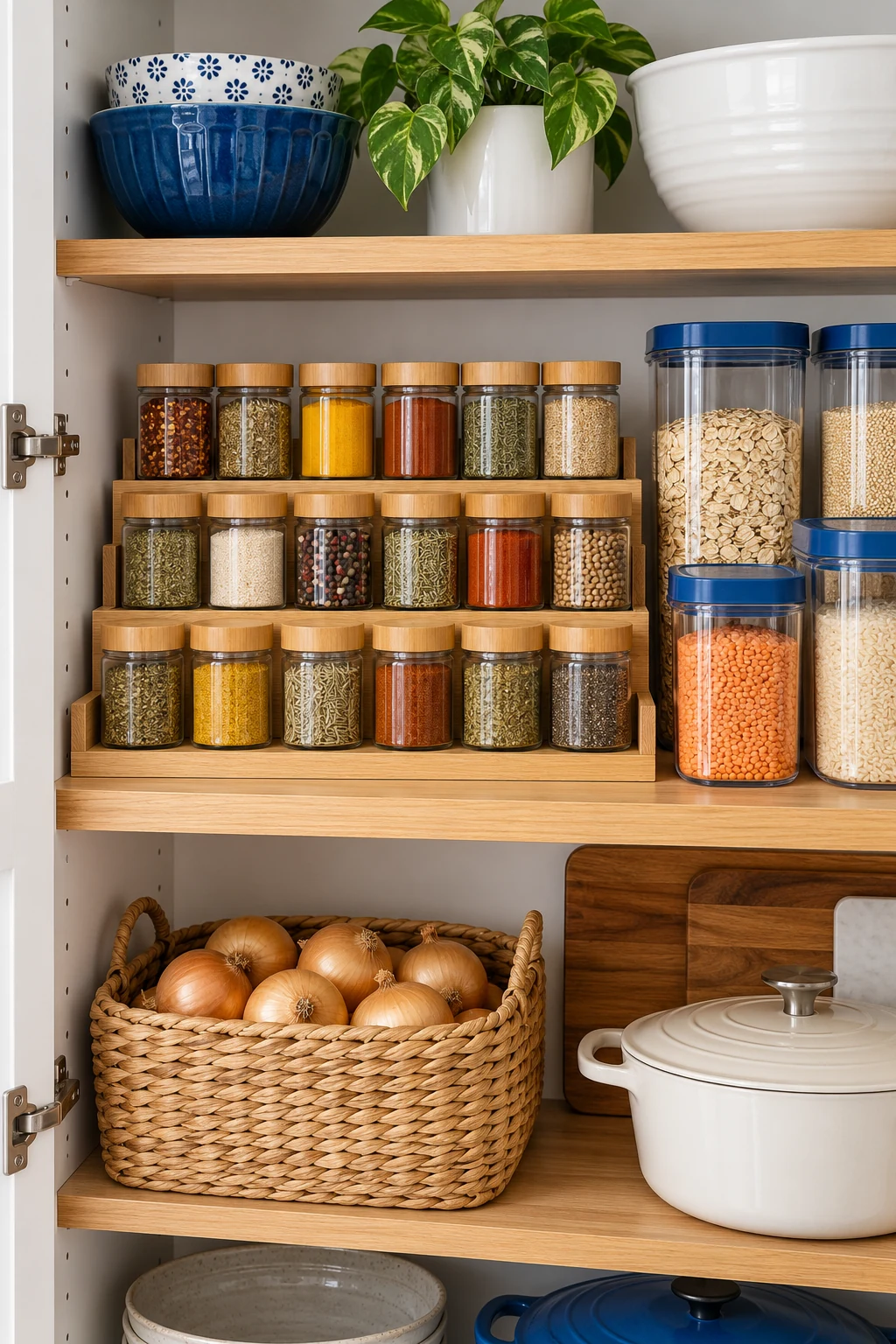
A pantry with a large unused gap may benefit from one additional shelf. Choose the position around a recurring category, such as a row of small baking ingredients, rather than dividing the space exactly in half. Preserve at least one taller opening if your groceries need it.
Use materials, supports, and fixings suited to the pantry construction and intended load. An extra board resting on improvised blocks is not a reliable upgrade. Follow the shelving system’s instructions or ask a qualified installer to assess a custom addition.

5. Choose adjustable tracks for a pantry that changes
An adjustable track-and-bracket system can help when pantry needs shift over time. Shelf positions can change for bulk groceries, a new baking routine, or shorter containers without rebuilding every level. Plan the range of shelf depths and heights before choosing a system.
Install the tracks and shelves exactly as specified for the wall and intended load, including required studs or suitable anchors. Do not mix unrelated components just because they appear to fit. The system’s flexibility is useful only when its supports are installed correctly.

6. Create a second level over short foods
A removable shelf insert can divide part of an existing pantry shelf into two useful levels. Keep short boxes below and light jars above, leaving the rest of the shelf open for taller items. This creates a mixed-height arrangement without moving built-in shelves.
The Simple Houseware Expandable Stackable Kitchen Counter Shelf Organizer, White, Metal Top includes two different-size metal pieces for a small layered section. Measure their external footprints and the clear space below each top. Use an approved arrangement and avoid stacking extra furniture-like layers beyond the maker’s instructions.
7. Use a stepped shelf to reveal jar labels
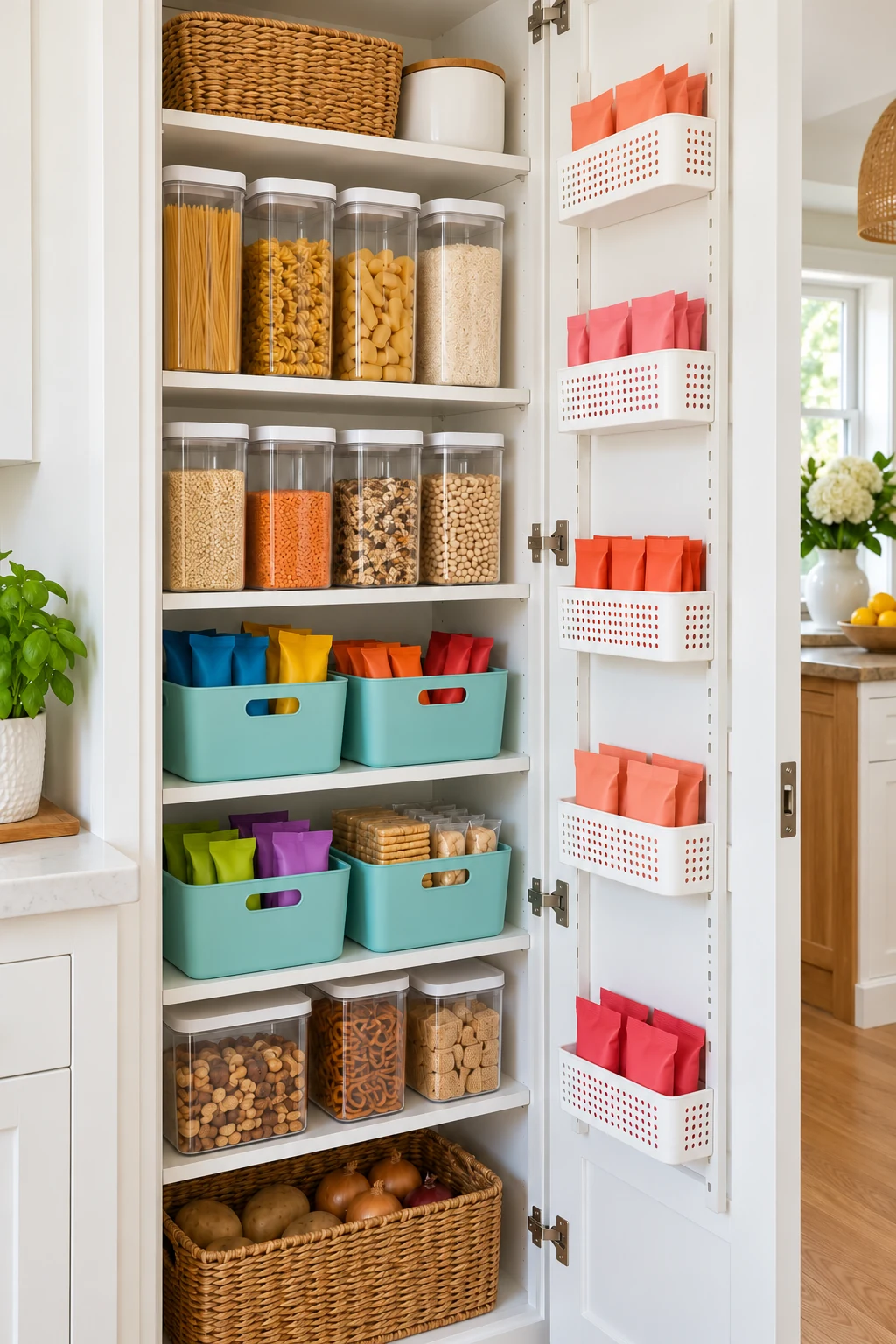
Small jars at the back of a deep shelf need elevation if you want to read them without lifting the front row. A stepped organizer creates a compact display for those jars. Place the tallest jars at the rear only when their labels remain easy to read.
The Copco 3-Tier Spice Rack Organizer, 15-Inch, White/Gray has three levels within a 15-by-9-inch footprint. Its approximately 2.75-inch-deep steps suit bases that fit fully on them. Add the jar height to the riser’s height, and leave enough space above the rear row to lift a jar out.
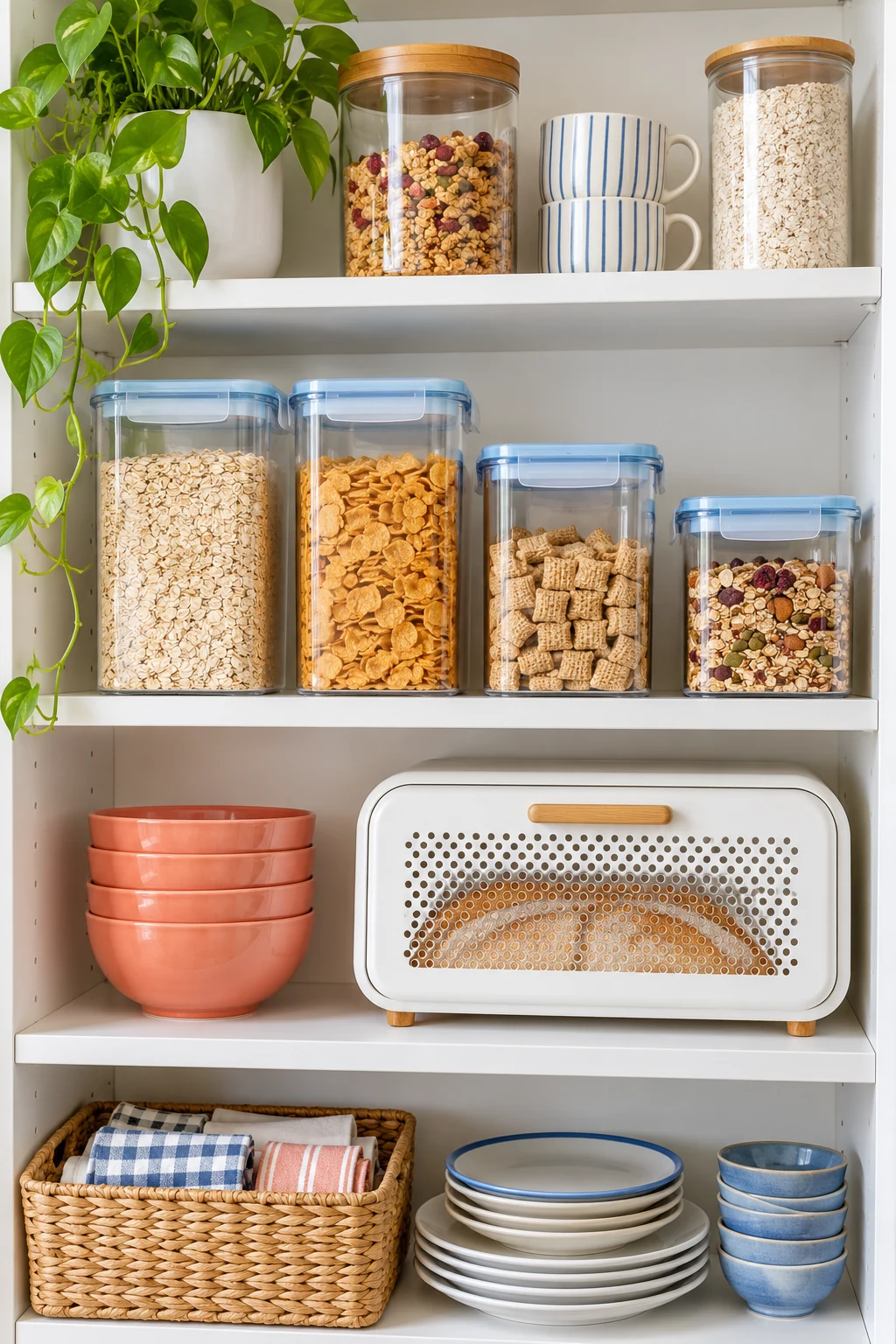
8. Put a turntable on a reachable corner shelf
A corner shelf can be easier to use when a small set of bottles rotates toward the opening. Group similar bottle heights so a tall container does not hide everything else. Check that you can turn the tray comfortably without reaching past a heavy front row.
The Copco Nonskid Lazy Susan Turntable Organizer, 12-Inch needs space for its 12-inch diameter plus clearance around the loaded items. Keep labels facing outward and stop the tray before removing a bottle. A turntable makes a corner easier to browse, but it does not use every square inch of a rectangular shelf.
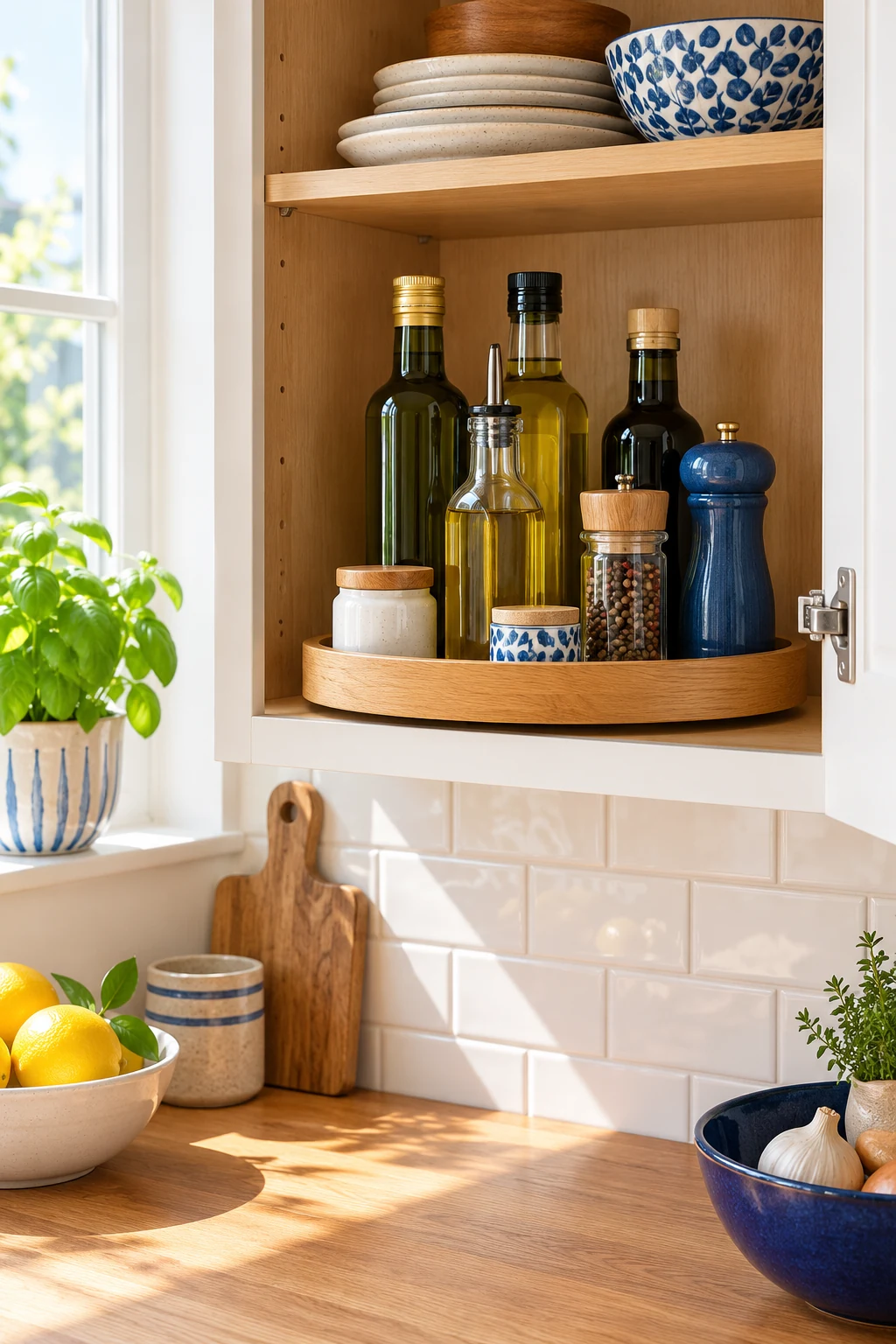
9. Match bin depth to the shelf opening
On a deep shelf, a handled bin can bring a whole category forward. Choose one deep enough to use the space but short enough that its handle stays accessible. Check the shelf supports and door opening, since either can stop a bin that technically fits behind them.
Keep the filled bin manageable and give it a smooth, stable path out. Two narrow bins may be easier to lift than one broad basket. If the bin must tilt to clear the opening, lower the contents or choose a different shape before loading it with glass.
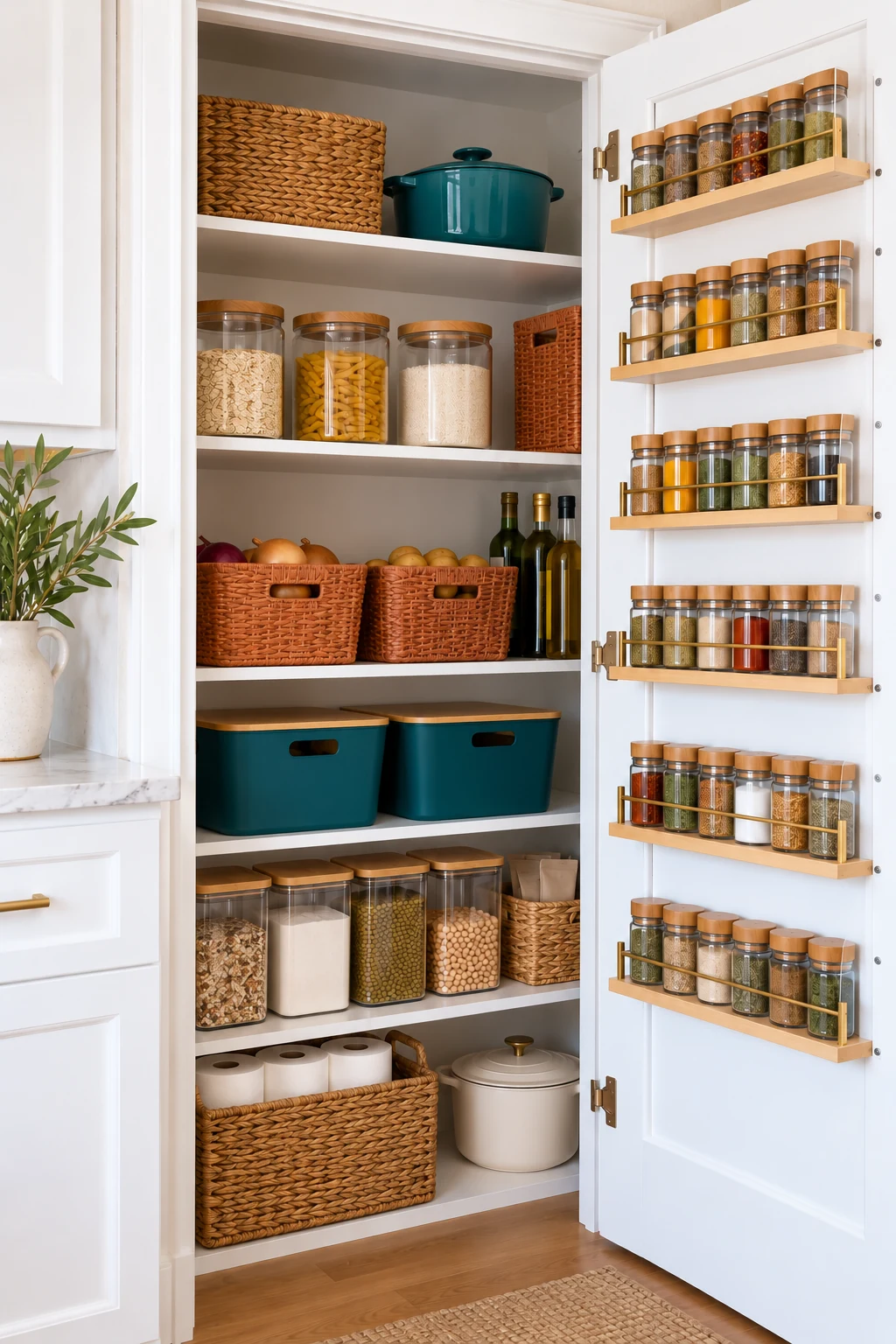
10. Choose low containers for low shelf gaps
A short shelf opening can be useful when the container shape matches it. Low rectangular canisters spread contents over a wider base, making them easier to see from above. Leave finger room at the sides so the container does not have to be dragged by its lid.
The Rubbermaid Brilliance Pantry Storage Container, 7.8-Cup, Clear is a 7.8-cup option to compare with your shelf measurements. Check the space needed to release its latches if you plan to open it in place. Its shape can help with a low opening, but a larger footprint means fewer containers across the shelf.
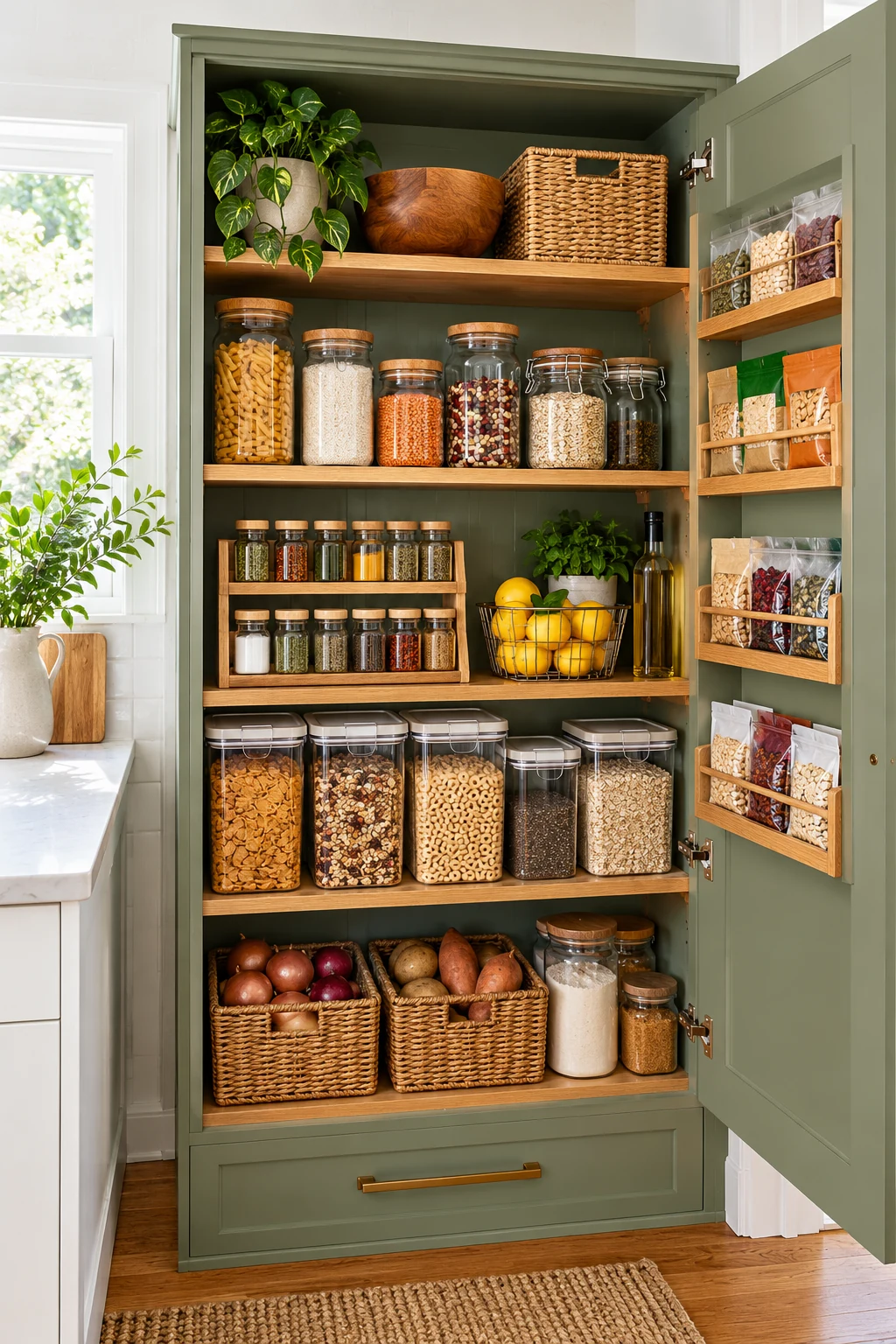
11. Build a canister row around a repeatable footprint
For frequently used dry staples, a row of similar-footprint containers can make shelf planning simpler. Choose the base size first, then use different heights only where your ingredient quantities call for them. Keep each container visible instead of hiding a second unrelated row behind it.
The OXO Good Grips POP Container, Big Square Medium, 4.4-Quart provides one 4.4-quart option for that kind of pantry row. Do not assume every container in a brand shares the same lid or footprint. Measure the exact models, retain food-package details, and use only as many canisters as your routine justifies.

12. Give packets a supported shelf section
An open shelf is a difficult place for thin packets because they slide flat or fall behind larger foods. A small divided section gives them a stable edge to lean against. Keep the packet tops visible and group them by how you use them.
The YouCopia ShelfBin Packet Organizer, Four-Tier, Speckled White raises the rear compartments and can be carried off the shelf by its handle. Compare its listed 10.7-inch depth with your shelf. Keep the packets intact so their preparation and allergen information stay with the food.
13. Create thin shelf levels for flat wrap boxes
Foil and parchment boxes need little height but can make a clumsy stack on a broad pantry shelf. Give them thin horizontal levels so you can remove one box without lifting the rest. Keep the cutting edges accessible only when you deliberately pull out the box.
The YouCopia UpSpace Adjustable Box Organizer, Original, White has adjustable levels that suit this low-box arrangement. Check your longest box against its 10.8-inch depth and the cabinet’s available space. This rack is a freestanding insert, so keep the surrounding shelf level and follow the stated loading guidance.
14. Use a pull-down spice organizer on one middle shelf
A mid-height pantry shelf can hold spices in a system that brings the back jars toward you. This is useful when the shelf is deep enough to swallow several loose rows. Keep the area in front clear so the organizer can move as intended.
The YouCopia SpiceStack Adjustable Spice Organizer, 24-Bottle uses three drawers that pull out and lower for viewing. Measure the 11-inch closed depth and then check the extra working space. Avoid putting the unit so high that the lowered drawer is still difficult to reach.
15. Stabilize small jars on wire shelves
Wire shelving can leave narrow jar bases or bottle feet perched unevenly. Add a compatible flat shelf liner or a shallow stable tray beneath the small items. Keep the support surface smooth so the containers stand level without catching on a ridge.
Choose something you can remove and clean, and let it dry before replacing food. A liner does not improve a shelf’s weight rating or repair damaged wires. Leave food inside its own appropriate container instead of using a decorative shelf covering as a food-contact surface.
16. Use a shallow under-shelf basket for light supplies
A suitable under-shelf basket can make use of a small gap without adding a full shelf. Consider it for lightweight sealed packets or clean paper supplies that would otherwise lie loose. Keep the opening visible so you can see what is already inside.
Check shelf thickness, attachment style, and the basket’s load limit before installing it. Its support arms may affect items on top, and its bottom reduces clearance below. Skip the basket if it makes either neighboring level harder to use or interferes with the door.
17. Keep an L-shaped corner from becoming a hidden overlap
Where two pantry shelves meet, the corner can turn into a place for forgotten duplicate food. Give that overlap one clearly defined purpose, such as a light lift-out bin you use regularly. Keep the shelf ends beside it visible rather than building two rows that collide.
Test access from both sides before loading the corner. A long deep shelf may look generous on paper but still be difficult to reach at the junction. If the corner is awkward, leave more of it open instead of filling it merely because it exists.
18. Balance opposing shelves with enough standing room
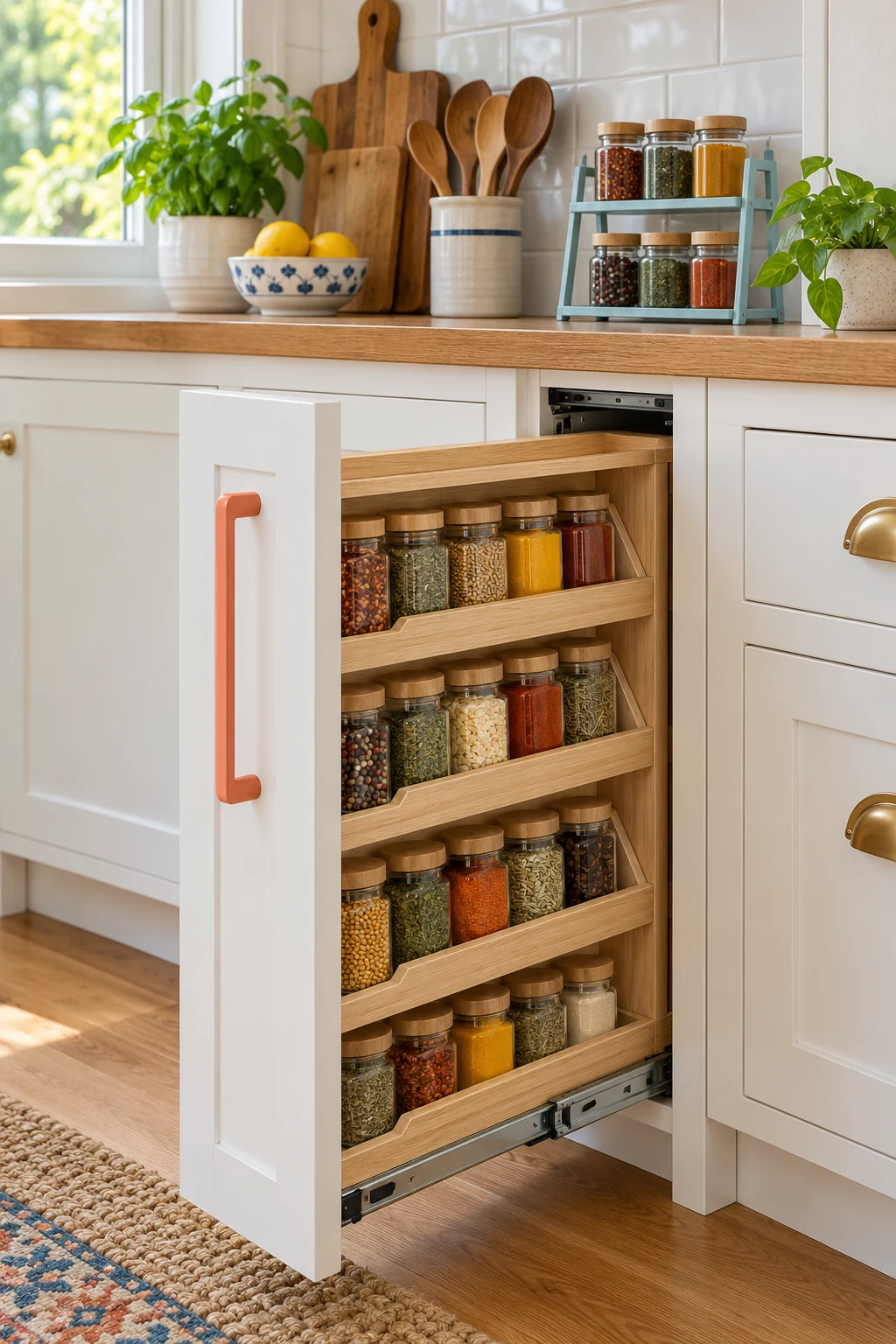
In a small pantry with shelves on both sides, depth has a direct effect on the space where you stand. Use shallower shelves on one side if that makes it easier to turn and lift a container. Plan the path with the largest usual item in your hands.
Account for any baskets or pull-outs extending into the aisle as well as the shelves themselves. Keep the doorway and exit clear. There is little benefit in adding storage that forces you to twist around obstacles or unload one side to reach the other.
19. Use short return shelves for small ingredients
A short wall beside the pantry entrance can hold shallow return shelves when the opening stays clear. Small jars or a few sealed packages can fit here more naturally than deep baskets. Keep the contents within the shelf edge and away from the moving door.
Check the wall and any concealed services before mounting hardware, and follow a suitable shelf system’s instructions. Avoid projecting a shelf into shoulder or head space at the entrance. If the route feels tight, preserve the opening rather than adding the extra shelf.
20. Put dense pantry goods on a well-supported lower shelf
Heavy jars and dense food bags need both a manageable lifting height and adequate shelf support. Keep them on a suitable lower level where you can bring the load close to your body. Spread the weight across the shelf rather than piling it in the center.
Follow the shelf and cabinet ratings, including any restrictions on the mounting system. If you see bowing, loose brackets, or damaged material, unload the shelf and have the cause addressed. Adding a decorative bin cannot make an overloaded shelf safe.
21. Keep the top shelf light and simple
An upper shelf is useful for light supplies you need occasionally, such as a small paper-goods box or empty food-storage containers. Limit it to a few easy-to-identify items so the shelf does not become a hidden attic above the pantry.
Keep stacked containers low enough to remove without balancing other items. Use a suitable stable step stool and maintain a clear place to stand. Daily food and heavy canisters are better kept lower, where checking and lifting them does not require extra equipment.
22. Support a long shelf instead of accepting a sag
A long pantry shelf may need intermediate support depending on its material, thickness, mounting, and load. Look for the shelf maker’s span guidance before filling a long run with cans. A center support can preserve usable storage while dividing the shelf into practical bays.
Do not guess at structural capacity from appearance or copy a weight limit from a different product. Unload any shelf that is already bowing and have the support plan checked. Use the resulting bays intentionally, with a manageable category on each side.
23. Light the shelf fronts so labels are readable
Deep or dim shelves are harder to organize because labels disappear into shadows. A suitable light placed to illuminate the shelf fronts can help you see the food without rearranging everything. Check the view from your normal reach position before deciding where it belongs.
Choose lighting designed for the location and install it according to its instructions, keeping heat, wiring, and batteries away from food contact. Do not route loose cords across a doorway or moving shelf. A brighter room light may be enough before adding any fixtures.
24. Leave a small shelf landing area for the next grocery trip
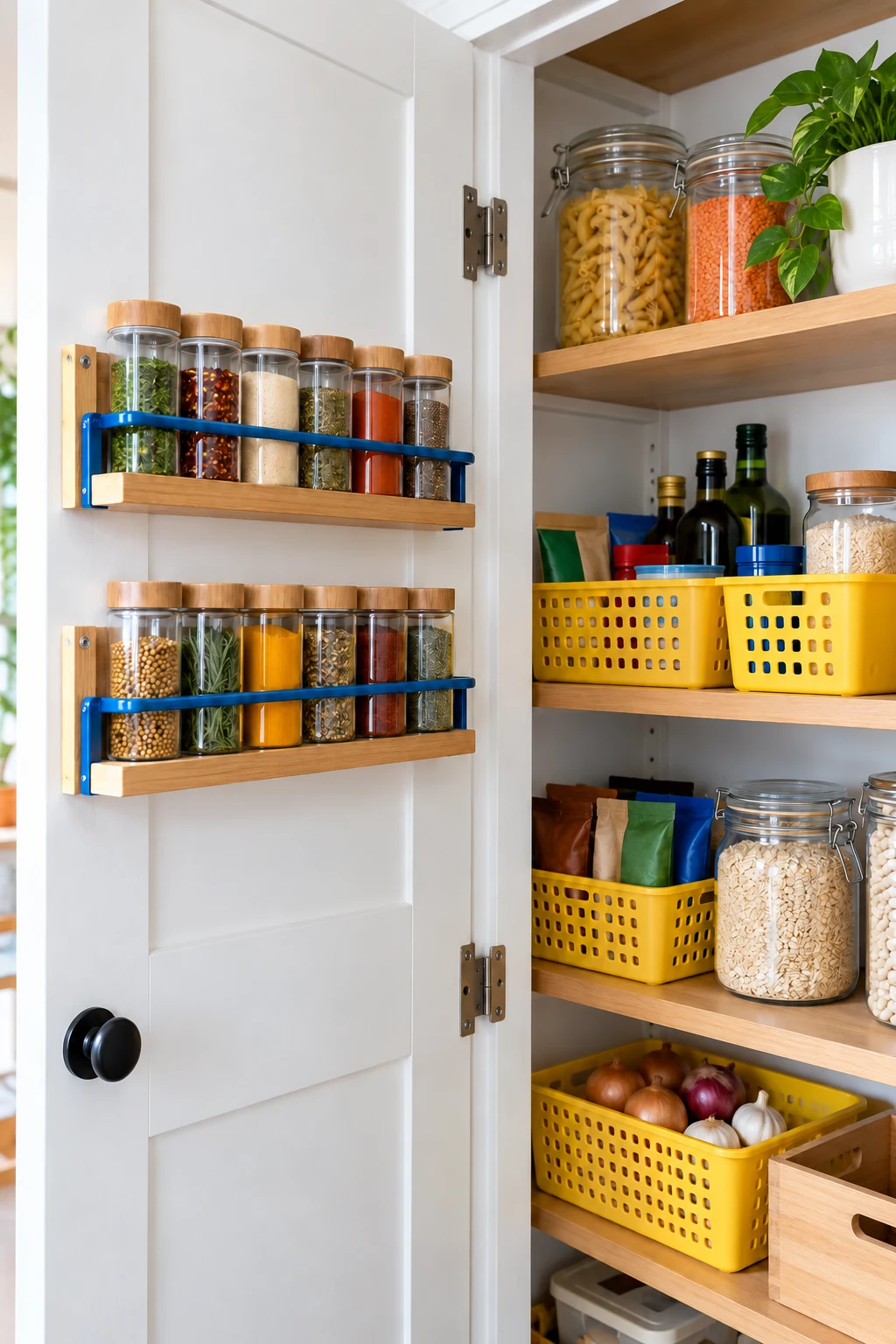
A little open shelf space helps when you put away groceries or adjust a category. Keep a small reachable area clear enough to set down a packet bin or move a canister while checking the row behind it. This working space makes the pantry less awkward to use.
Choose the area deliberately so it does not fill with unrelated odds and ends. If it disappears every week, review the nearby category sizes or shopping quantities. Better shelf use includes room to move things safely, not just room to store them.
Choose one shelf that wastes height or hides its back row, then change its layout before tackling the whole pantry. Test the new arrangement with full containers and real groceries. The most useful shelf is one you can see, reach, and refill comfortably. Subscribe to Havelyo for more useful shelf layouts and home organization ideas. Subscribe to the Havelyo email list for more small-space decorating and organization ideas.