
Pantry Organization
22 Pantry Door Organizer Ideas to Add Storage Behind the Door
The back of a pantry door can hold the small things that disappear on shelves: snack packets, measuring spoons, tea, and spare bag clips. The trick is choosing storage the door can support while still opening and closing normally.
These 22 pantry door organizer ideas start with fit, then turn the available space into useful little zones. Measure the door, its frame gap, and the room behind it before buying anything. Keep loads modest and follow the door and organizer manufacturers’ instructions for mounting and weight.
This article contains affiliate links. If you buy through them, Havelyo may earn a commission. As an Amazon Associate I earn from qualifying purchases.
1. Check the door before choosing an organizer
Measure door width, thickness, and the gap above it, then identify whether the door is solid, hollow, or part of a cabinet. An over-door hook and a screw-mounted rail have different requirements.
Check the door and organizer instructions before adding weight. Do not assume that supplied screws suit a hollow-core door or that a hook will fit without rubbing the frame; a damaged or poorly closing door needs attention before extra storage.
2. Map what sits behind the closed door
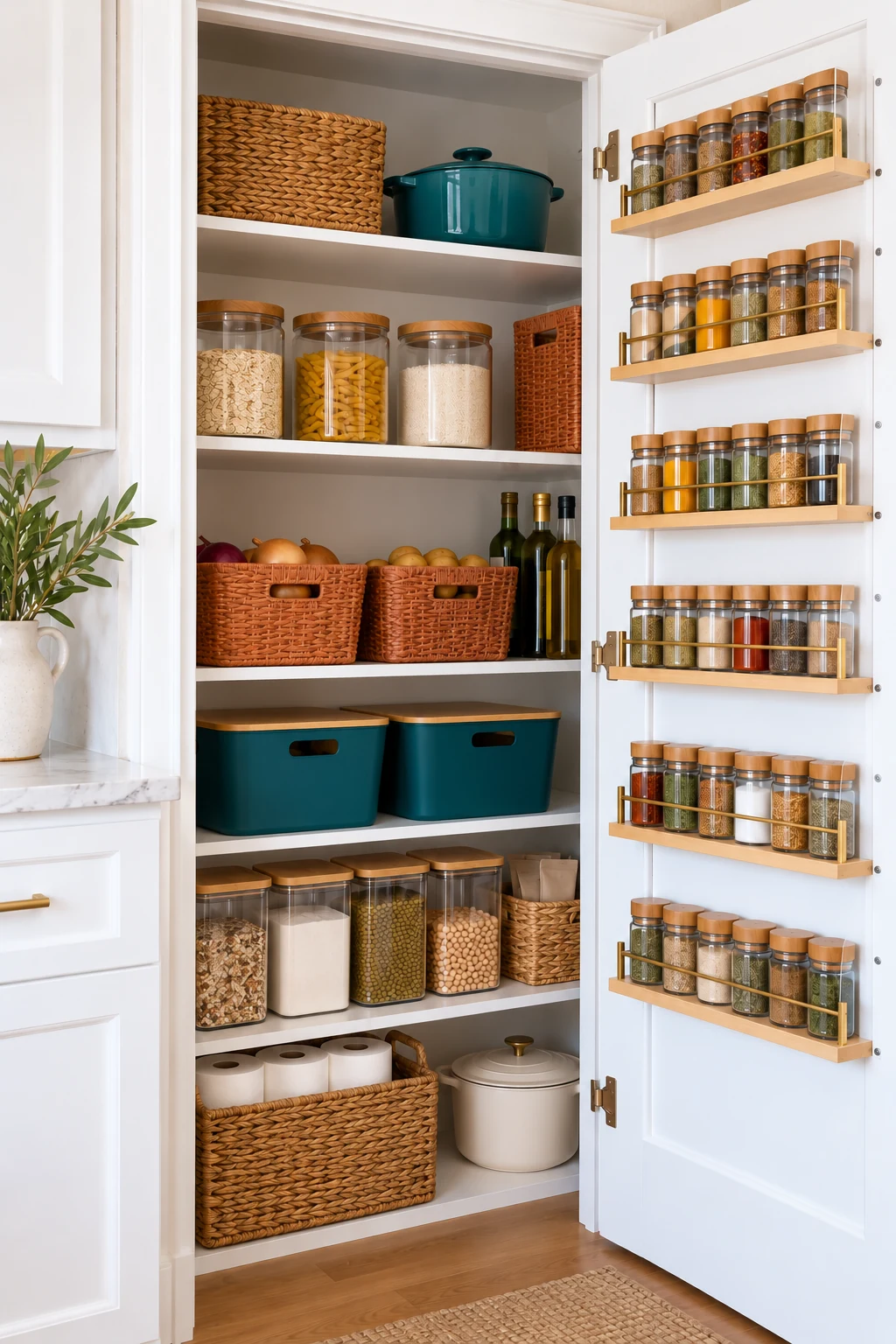
Measure the distance between the inside door surface and the nearest shelf edge or pantry item. Include the organizer, its contents, and any basket lip in that depth.
Tape a lightweight paper outline to the proposed position and gently test the swing before installation. Keep clear of hinges, knobs, latches, and switches, and never force a door closed over a basket that is too deep.
3. Use adjustable baskets for mixed package heights
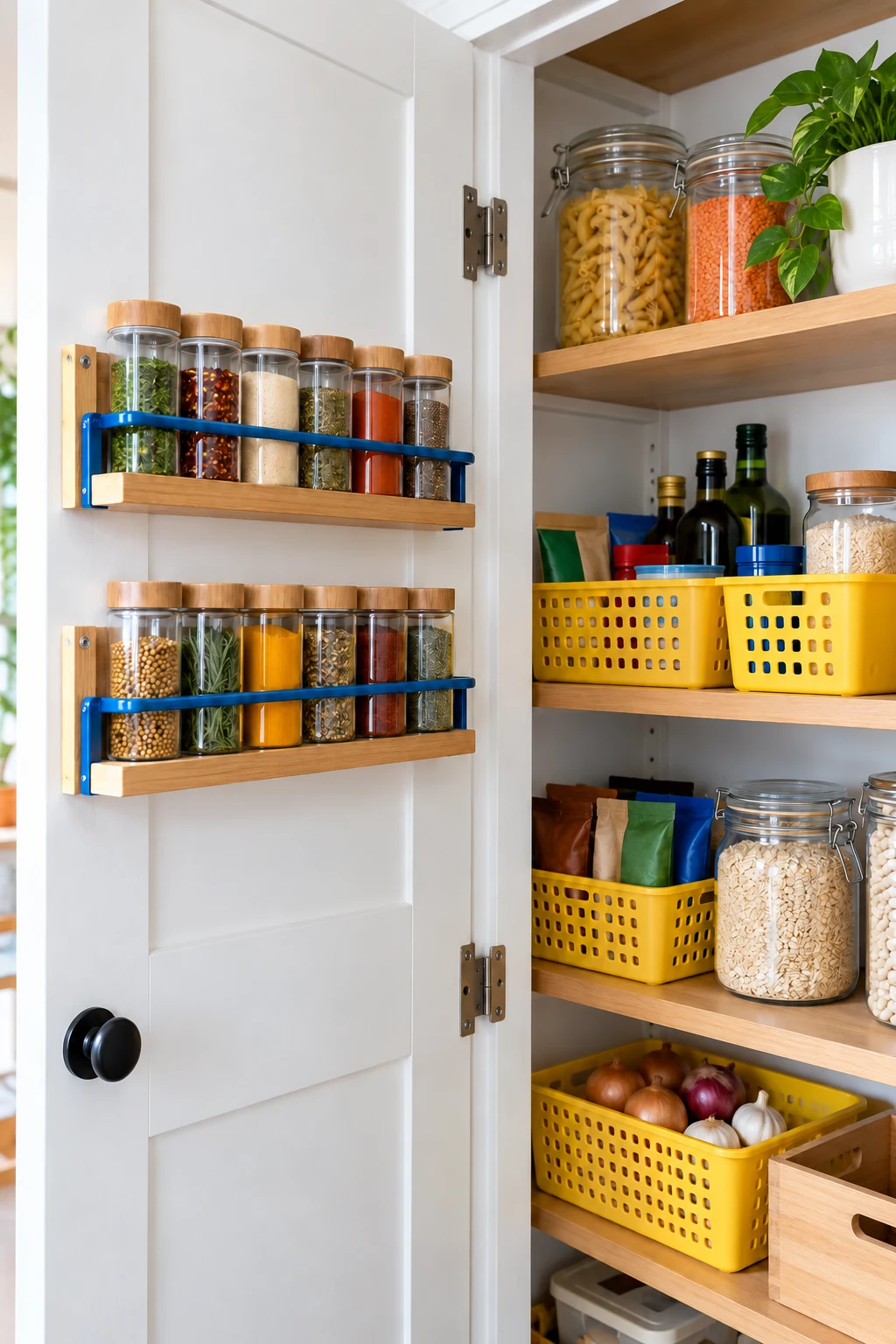
A basket system with movable levels can hold short packets and taller lightweight boxes on the same door. Space it around your actual packages so you can lift them out without catching the basket above.
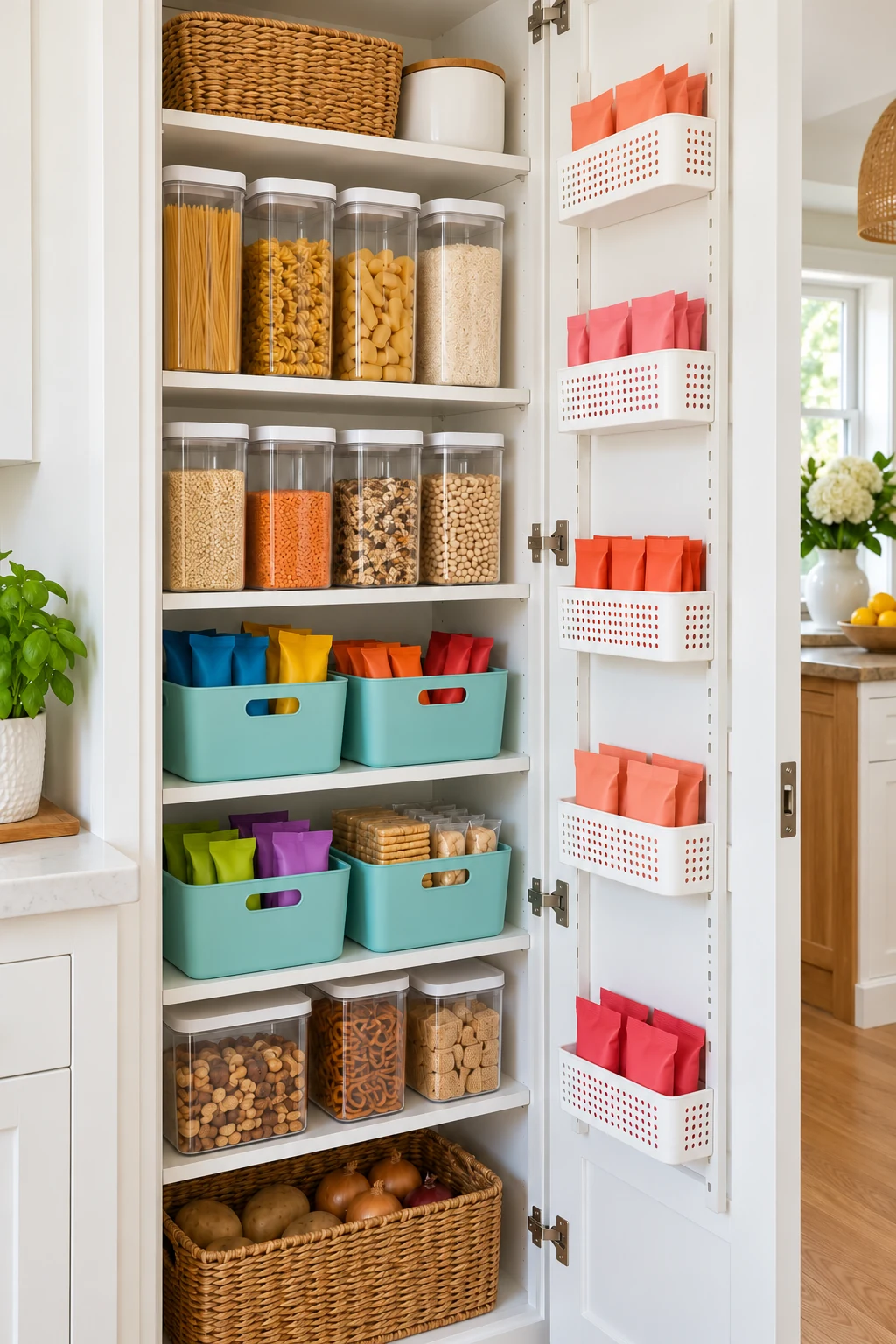
The small white Delamu Six-Tier Pantry Door Organizer measures 12 inches wide by 52.1 high by 5 deep. Verify the exact mounting method and weight limits in its instructions; do not borrow capacity claims from other products shown on the same listing. View on Amazon.

4. Choose fabric pockets for light wrapped snacks
Fabric pockets can keep snack packets separate while using relatively little door width. Pick a style with a visible front so a small item does not disappear into an opaque pouch.
The Simple Houseware Six-Pocket Clear Window Organizer measures 13 inches wide by 52 high by 4.5 deep. Check the door-hook fit and load guidance, and keep the pockets for lightweight packaged items rather than loose food or heavy jars. View on Amazon.

5. Try one shallow basket on a pantry cabinet
A small cabinet-door basket may suit a pantry built into kitchen cabinetry better than a full-height room-door rack. Place it where it clears the shelf behind it throughout the entire closing motion.
The Simple Houseware Over Cabinet Door Organizer has a listed basket interior about 11.8 inches wide by 2.9 deep. Its overall projection is larger, so measure the complete unit and choose lightweight contents that remain contained when the door moves. View on Amazon.
6. Reserve comfortable reach for everyday items
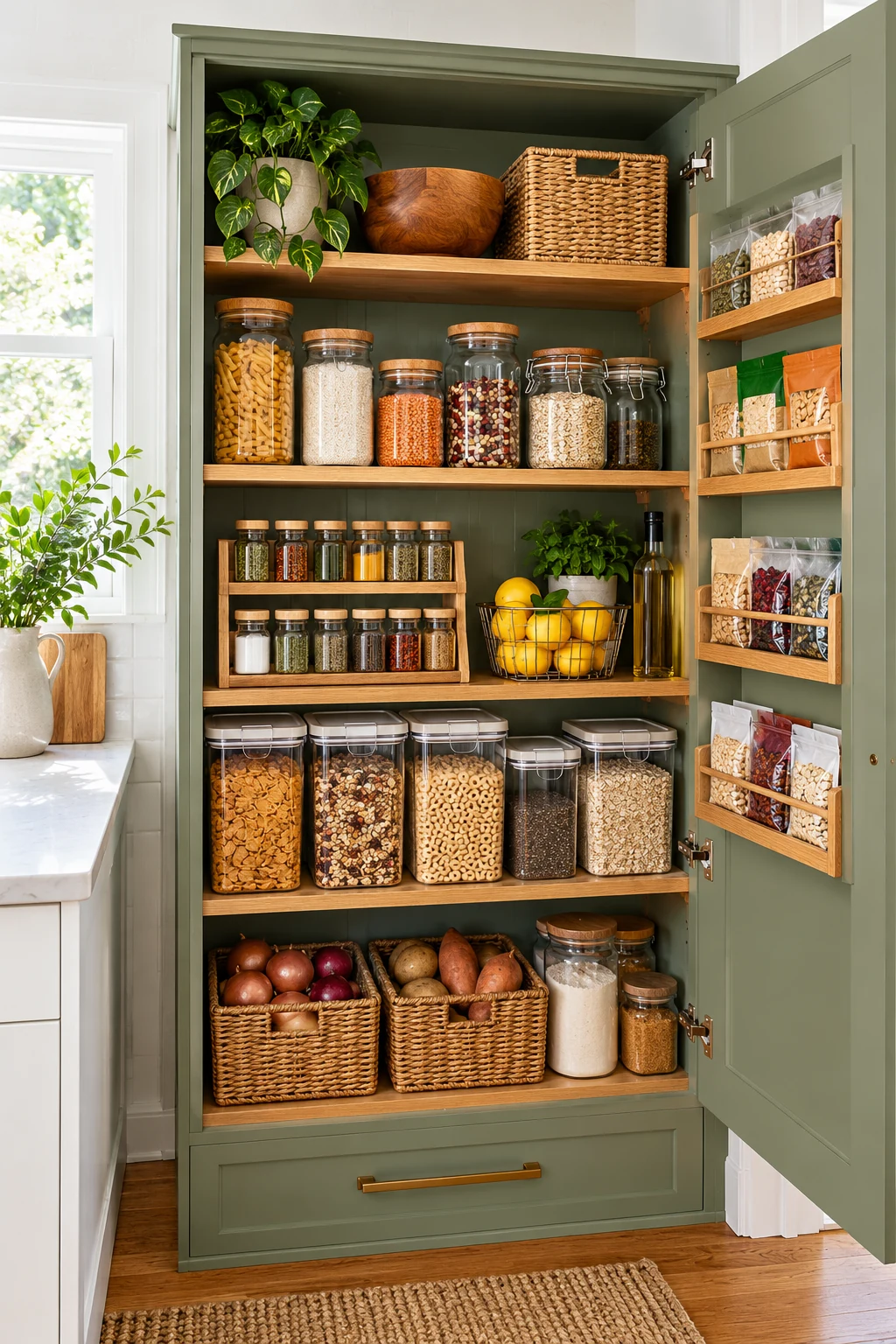
Place frequently used snacks or small ingredients near the height where you naturally reach. A full-height organizer does not need every compartment filled equally.
Assign upper sections to light occasional items and keep the lowest section clear if it catches shoes or cleaning tools. Position heavy goods on fixed pantry shelving instead of using a moving door as a second can stockroom.
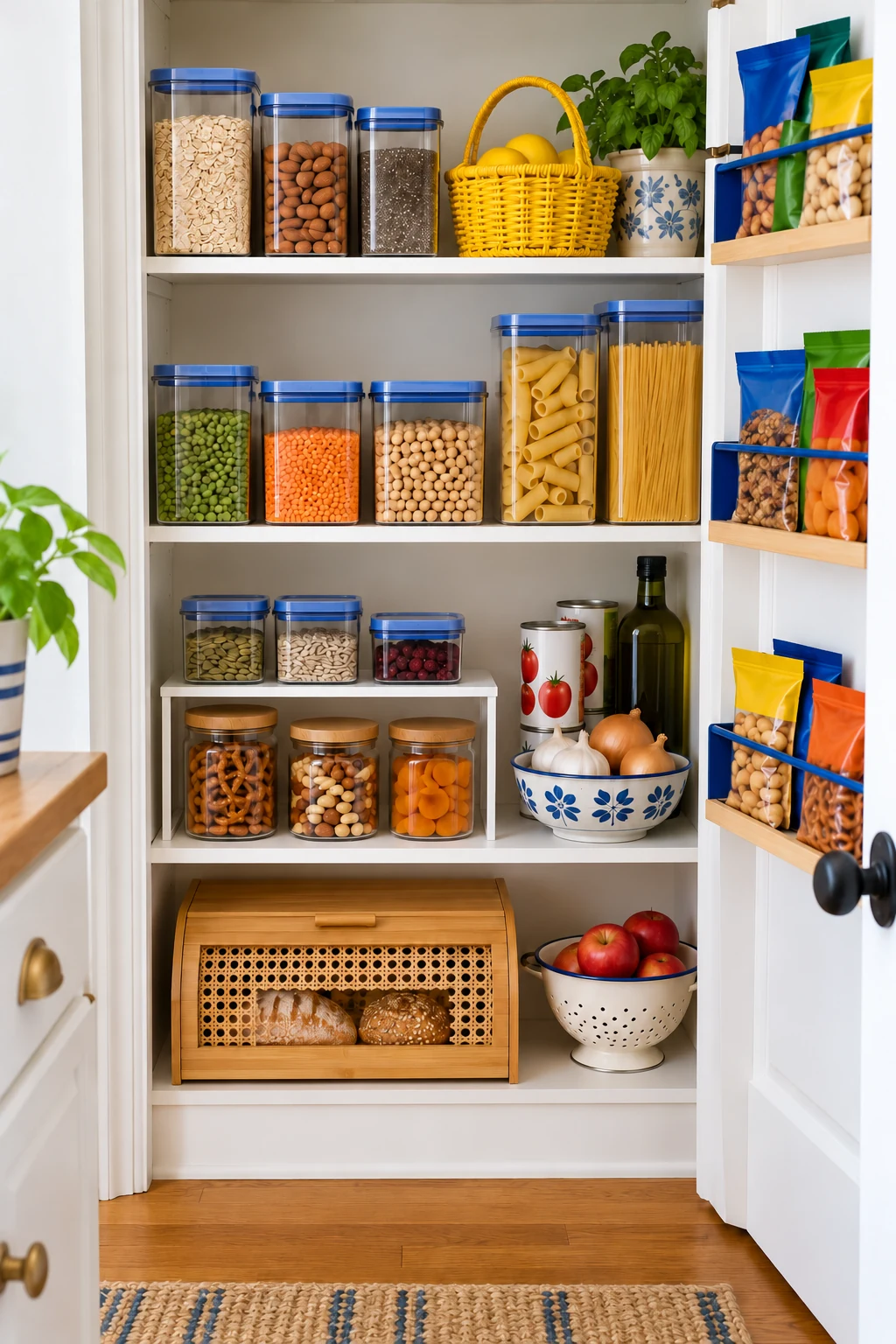
7. Build a single grab-and-go snack row
Put a modest selection of individually wrapped snacks together in one basket or pocket. Keep labels visible and leave space to reach into the row without pulling several packages out.
Refill from a separate backup area rather than packing the door with the entire multipack. Follow storage directions and household needs; the snack row should make selection easier, not encourage every package to be opened at once.
8. Stand seasoning packets where their tops show
Place dry seasoning envelopes upright in a shallow door compartment. Group similar packets so a quick glance tells you what is available before cooking starts.
Avoid bending the sealed edge around a basket rail or covering the ingredient and preparation panels with a permanent label. If the compartment is too deep to read packet tops, use a shallower level rather than filling the bottom with unstable objects.
9. Give tea packets a dry door compartment
Store individually wrapped tea bags or small closed tea packages in a dedicated pocket, away from heat and dampness. A separate compartment can stop a light cardboard box from being crushed on a busy shelf.
Keep the original outer packaging when it supplies useful information, and follow the tea maker’s storage directions. Unwrapped tea should remain in a suitable food container rather than sitting directly against fabric or an open wire basket.
10. Separate wrapped lunch supplies from ingredients
Use a pocket for clean, dry lunch napkins and another for suitable wrapped utensils. These lightweight items are easy to lose between food boxes but do not need prime ingredient shelving.
Keep reusable utensils in appropriate clean storage and inspect the pocket regularly for crumbs or spills. Do not mix food-preparation supplies with cleaning cloths, chemical bottles, or bags that have carried leaking food.
11. Hang light measuring tools individually
A shallow door area may fit a few measuring spoons or a lightweight funnel when a basket would project too far. Space hooks so tools hang quietly without tangling or striking a shelf.
Command Small Wire Hooks are rated at 0.5 pound each on compatible surfaces. Follow the exact preparation, waiting, and removal instructions, and do not combine hooks to invent a larger load capacity or call adhesive mounting automatically damage-free. View on Amazon.
12. Keep spare bag clips in one pocket
Give unused clips a small visible home so opened food packages are easy to close properly. A shallow existing cup inside a secure compartment can work without needing another mounted accessory.
OXO Good Grips Magnetic All-Purpose Clips have a hanging hole and rear magnet. Use a compatible storage surface or a pocket, keep small pieces away from young children, and do not rely on a clip alone to make packaging airtight. View on Amazon.
13. Contain a limited grocery-bag supply
A dedicated bag dispenser can stop loose bags from spilling off a pantry shelf. Install it on a suitable surface away from food-contact tools and keep only the quantity you will realistically reuse.
The simplehuman Wall Mount Grocery Bag Dispenser loads from the top and dispenses through the front. It offers screw or adhesive mounting; check the installed depth and approved surface, follow its instructions, and remember that adhesive removal can affect finishes. View on Amazon.
14. Store folded reusable shopping bags flat
Fold clean reusable bags into a shallow compartment with handles tucked inside. A flat row is easier to retrieve than a bundle hanging from the pantry doorknob.
Avoid stuffing so many bags into a pocket that its front bows outward and hits the shelves. Keep the organizer’s permitted load in mind, wash bags as their care instructions direct, and return them only when dry.
15. Keep lightweight baking decorations together
Group sealed cupcake liners, decorating bags, and small packaged baking accessories in one upper compartment. These occasional supplies often suit a door better than a deep shelf where they disappear.
Preserve packaging for any edible decorations and follow their storage directions. Keep small tips and sharp accessories in a secure container rather than loose in a pocket that someone may reach into without looking.
16. Use a narrow rack for compatible wrap boxes
A properly sized door basket can hold lightweight foil or bag boxes vertically, freeing a small shelf elsewhere. Measure the longest box and confirm that the basket supports it without relying on the pantry shelf for stability.
Keep sharp cutter edges from facing hands or snagging neighboring packages. If a box must be squeezed into place or comes loose when the door moves, store it in a fixed organizer instead.
17. Choose retained baskets for small bottles
Where the door and rack permit it, a basket with a front retaining rail can hold a few short, lightweight bottles whose labels allow pantry storage. Keep them upright and do not fill the rack with heavy glass.
Measure the loaded projection and open the door slowly when testing the setup. A retaining rail is not a guarantee against falls, so relocate anything that tips, rattles, or puts too much load on the moving door.
18. Add labels that face the person opening the door
Put short category labels on the front lip of baskets or the clear panel of pockets. Choose words that help everyone put things back, rather than a decorative label for every individual snack.
Test removable labels on a discreet area and keep them away from product information. Wait until the arrangement works before labeling permanently, especially on a rental door or an organizer you may reconfigure.
19. Leave the lower edge easy to clean around
Keep the bottom of a full-height organizer clear of the floor, threshold, and nearby trash can. The lowest basket should stay accessible without scraping the wall or being kicked as someone enters.
If the organizer is too long, choose a shorter design or an approved alternative configuration. Do not cut support rails or remove stabilizers in a way the manufacturer does not permit.
20. Keep the rack stable without improvising the mounting
Install any supplied stabilizing components exactly as directed so the organizer does not swing against the door. Check that baskets and hooks engage fully before adding lightweight contents.
Do not use random tape, extra screws, or suction cups to compensate for a poor fit. If the intended mounting will not work with the door or the landlord’s rules, choose another location rather than accepting an unreliable installation.
21. Keep chemicals off the food-storage door
Use the pantry door for food-related categories and move cleaning products to a separate suitable, secured storage location. This avoids treating every empty pocket as a place for whatever has no home.
Keep cleaners in original labeled containers and follow child- and pet-safety guidance. A visually tidy organizer does not justify mixing detergents with snacks, or storing chemical bottles above food where a leak could contaminate it.
22. Do a slow close-and-open test after restocking
After refilling, close the door gently and reopen it to check for shifted packages, rubbing hooks, and collisions with pantry shelves. A layout that worked when half empty may behave differently when full.
Remove weight or relocate the offending item immediately if the door sags, no longer latches, or catches. Keep the organizer only as full as it remains safe and pleasant to use; unused pockets can be useful clearance space.
Start with one lightweight category and test the door with the organizer loaded. If it closes freely and the contents stay easy to reach, you can add another small section without turning the door into an overloaded moving shelf. Subscribe to the Havelyo email list for more small-space decorating and organization ideas.