
Closet Organization
25 Closet Shelving Ideas to Make Room for More
A shelf can be full of clothing while much of its useful space goes to waste. Tall stacks topple, deep corners hide things, and a basket that fits perfectly can still be difficult to pull through the closet opening.
These 25 closet shelving ideas focus on making what you store visible and easy to retrieve. Start with one troublesome shelf, check its measurements and support, and try a new fold or container arrangement before adding more hardware. The most useful change may be a better opening above the stack rather than another shelf.
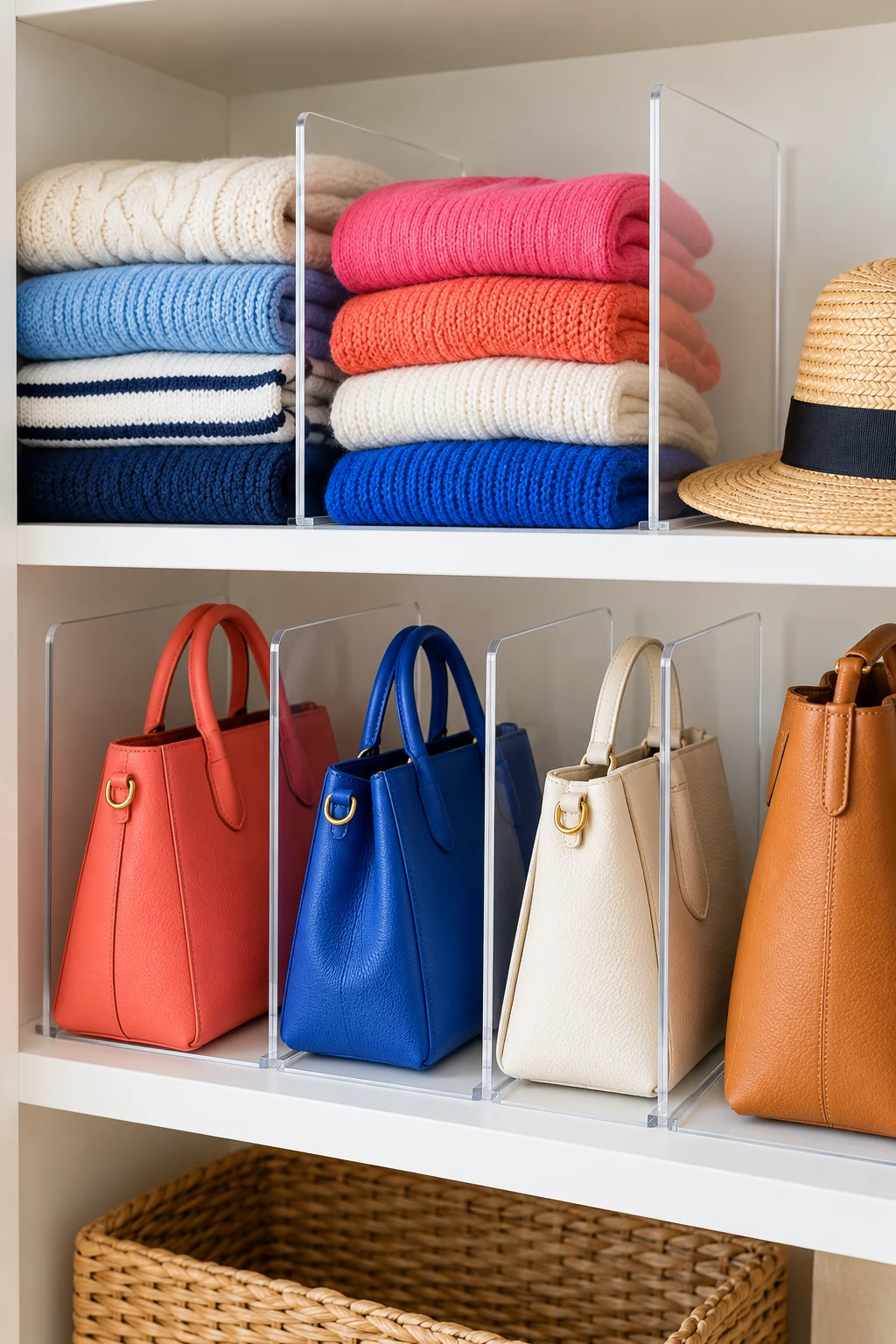
This article contains affiliate links. If you buy through them, Havelyo may earn a commission. As an Amazon Associate I earn from qualifying purchases.
1. Measure the space you can actually use
Before adding a shelf or buying a bin, measure the shelf depth, width, and open height. Note support brackets, a front lip, and the part of the shelf hidden behind the closet frame. These details reduce the space available even when the overall measurements look generous.
Next, check how an item comes off the shelf. A basket must pass through the doorway and leave room for your hands. For a proposed new shelf, consider the loaded depth and door movement as well as the empty board; clothing should not be pressed against the closed door.
2. Let the fold fit the shelf depth
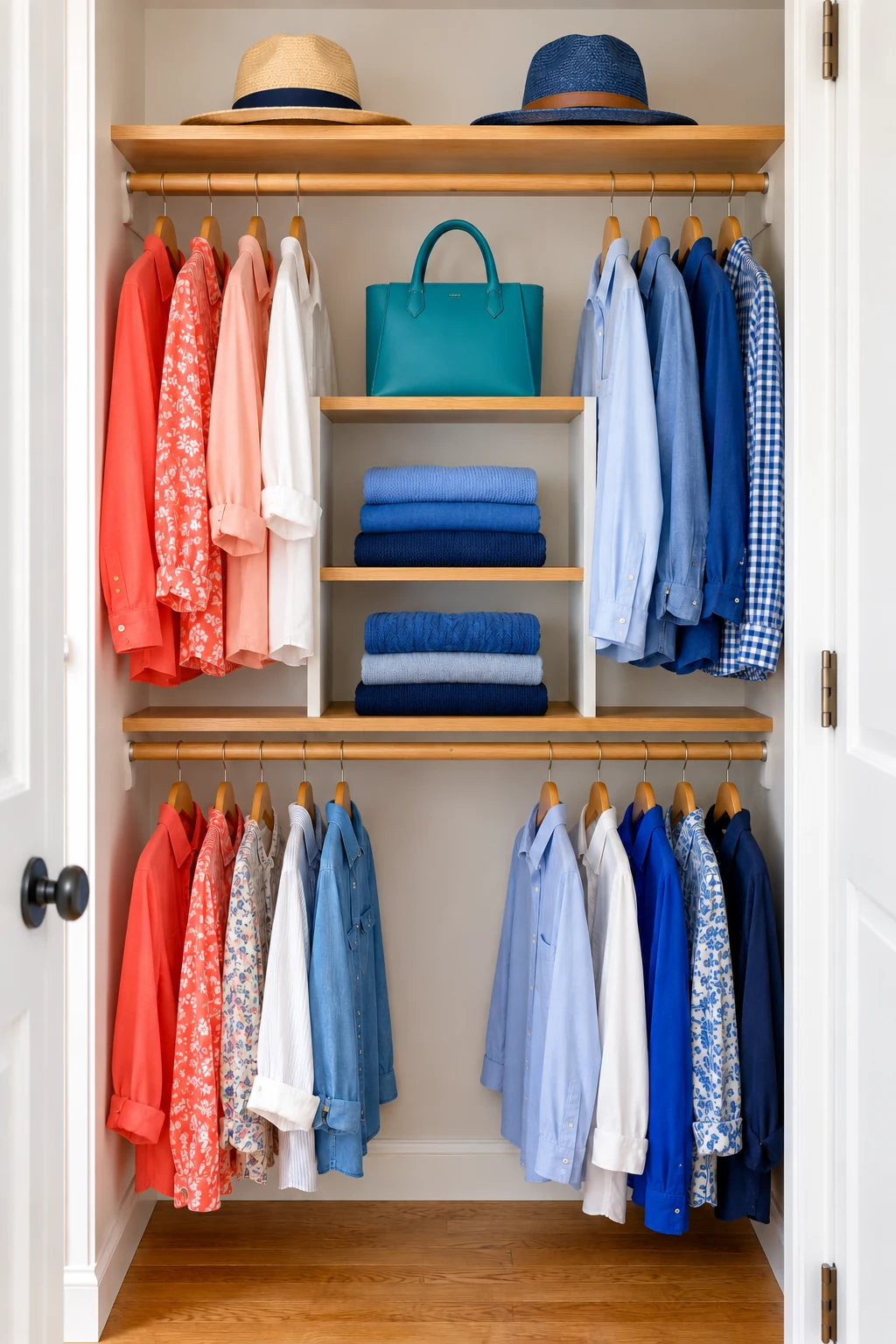
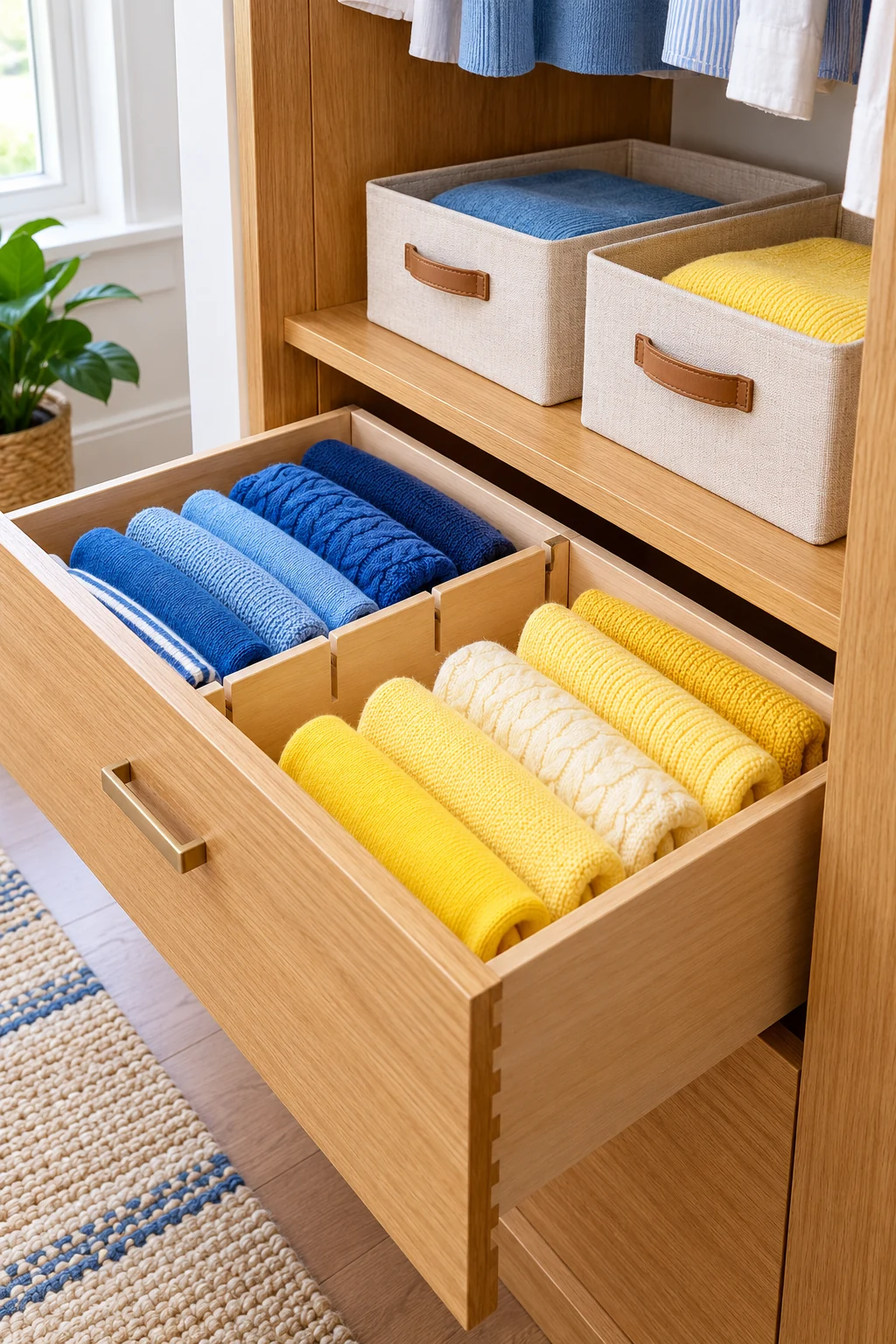
Choose a fold that uses the shelf without leaving sleeves or hems hanging over its front edge. Try one item from each category because a thick sweatshirt and a thin tee may need different folds. The aim is a stable footprint you can repeat easily.
Avoid folding something unusually small just to fit an attractive container. Extra folds can make a stack thick and harder to identify. If most of a category overhangs the shelf, use a wider fold turned in the other direction or choose a different storage location.
3. Vary the space between shelves
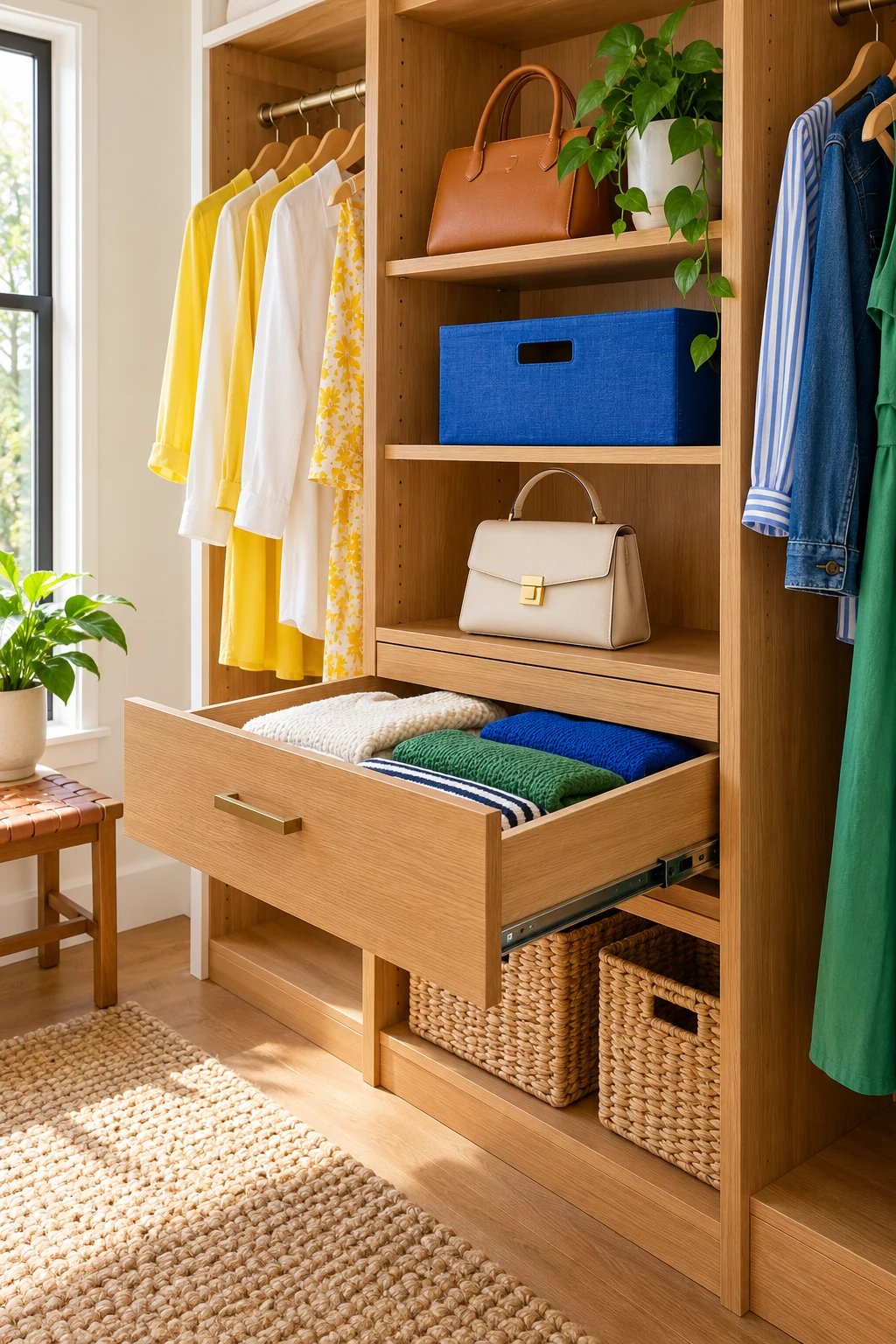
Identical shelf spacing can waste room when the contents are different heights. Put closely spaced shelves around low stacks of tees and leave taller openings for handbags or bulkier knitwear. Adjustable positions make this easier to change later.
Always leave room to grasp what you store. An opening that barely fits a stack may force you to slide everything out to reach one sweater. Follow the shelving system’s bracket and support instructions, and check its permitted loads when changing the arrangement.
4. Use an adjustable track system for changing needs
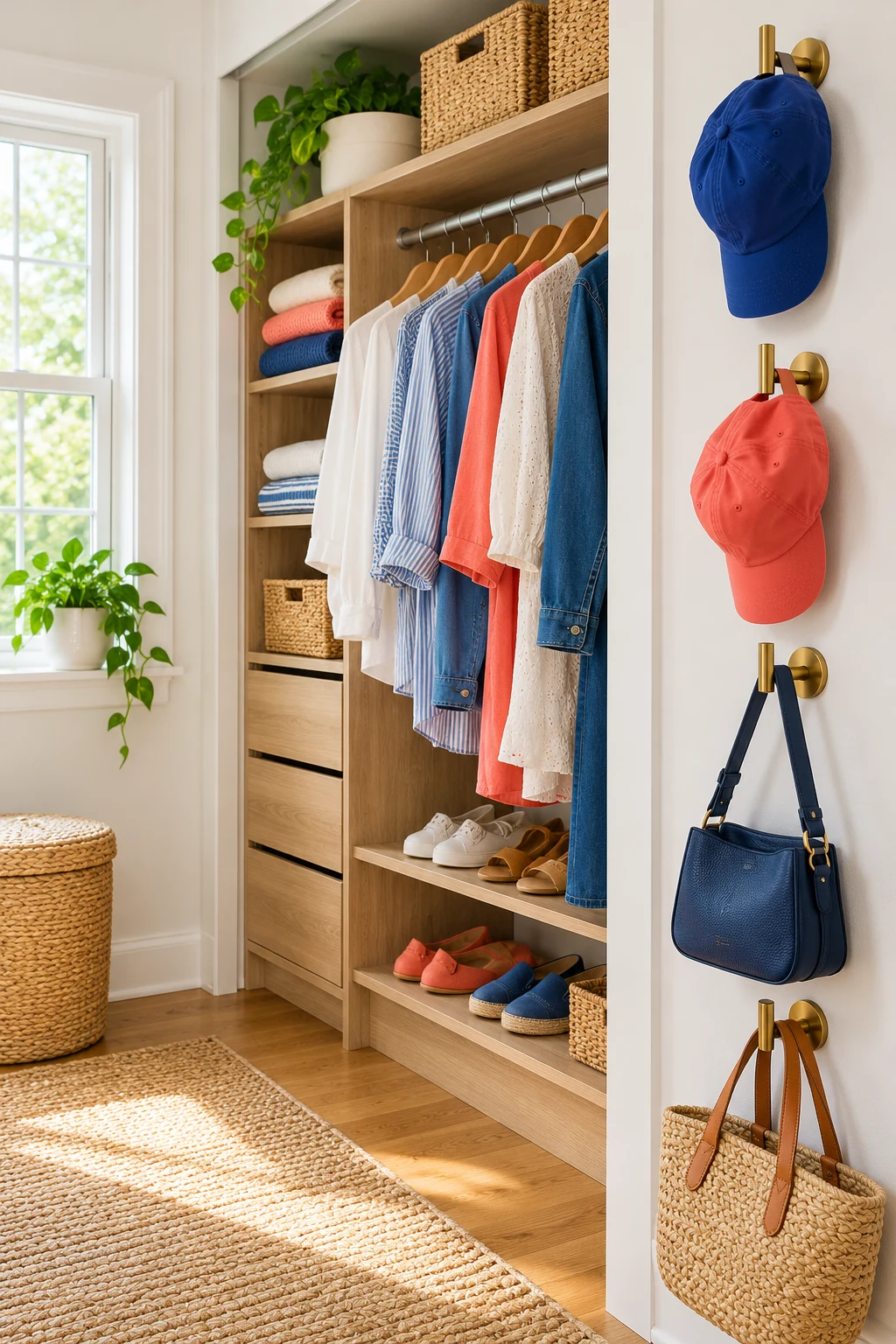
Wall-mounted tracks can make shelf heights easier to rearrange as your wardrobe changes. A folded-clothing section today might need a taller shoe opening next season. Plan the placement of the uprights around the categories you own and the door opening.
The Titanium Rubbermaid Configurations Deluxe Custom Closet Kit for 4-to-8-foot closets combines adjustable wire shelving with hanging rods. The stated width range is only a starting fit check. Review the current installation instructions for your wall, fastening, and layout; included hardware is not a guarantee that every wall is suitable. View on Amazon.
5. Add hanging shelves where a rod has spare width
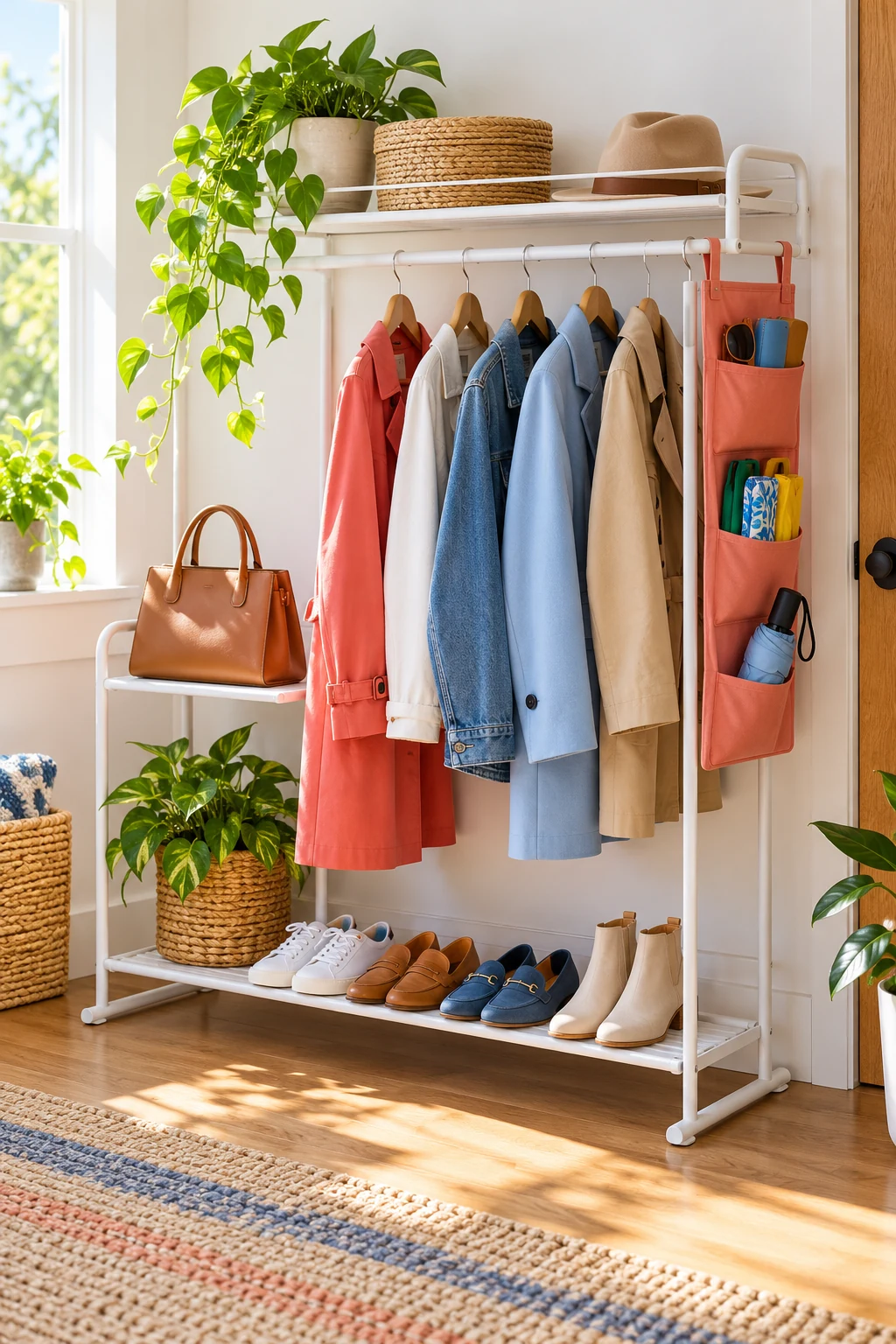
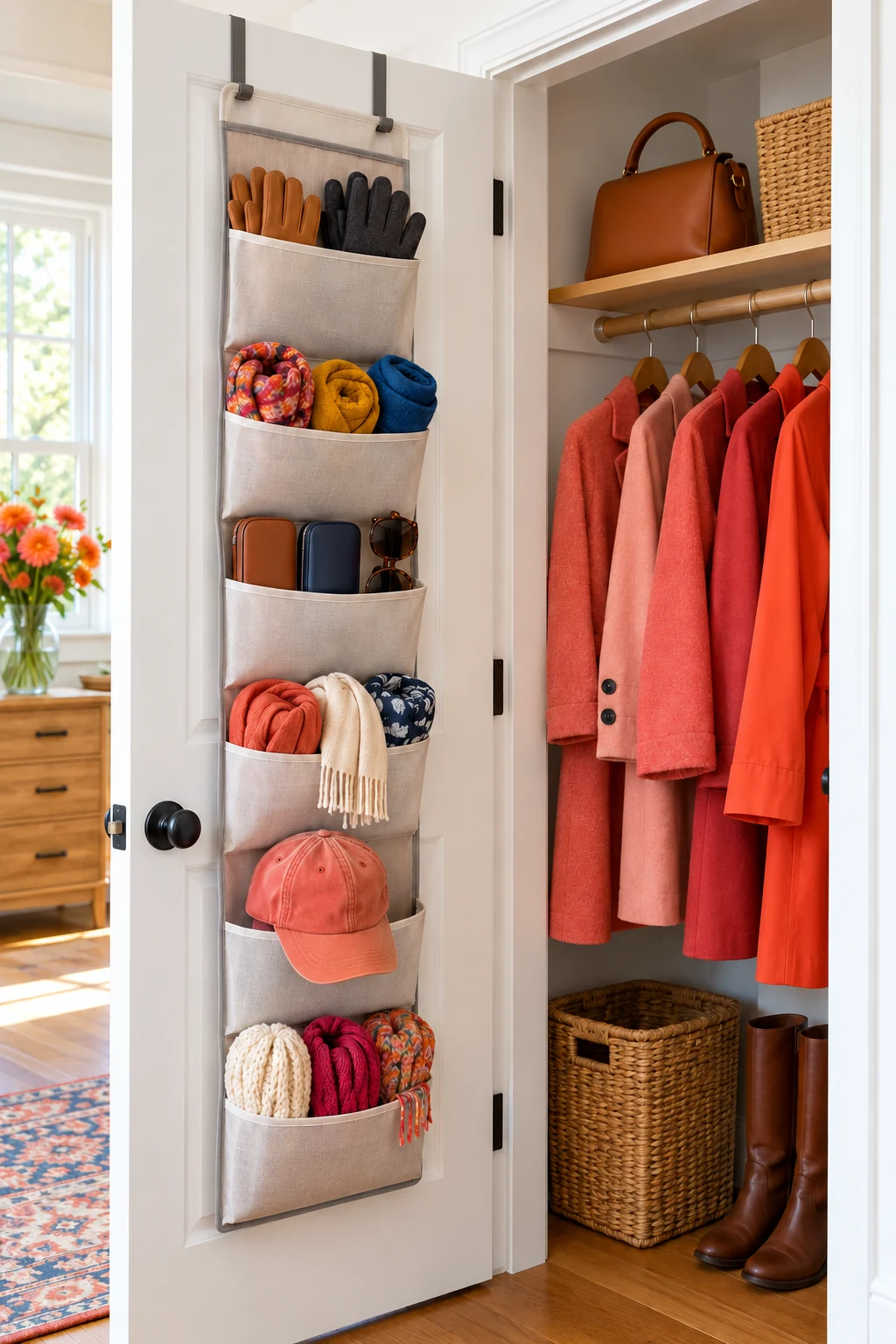
When a closet has one long rail and almost no shelves, a hanging column can add folded storage without rebuilding the whole interior. Use the compartments for lightweight clothes that benefit from being visible. Keep each group small enough to remove without spilling the next one.
The StorageWorks 6-Shelf Hanging Closet Organizer is a fabric option with side pockets. It takes up hanging width and places its load on the existing rod, so check both tradeoffs. Confirm the current variant’s measurements and instructions before buying because the manufacturer and listing have shown different dimensions. View on Amazon.
6. Separate neighboring stacks with shelf dividers
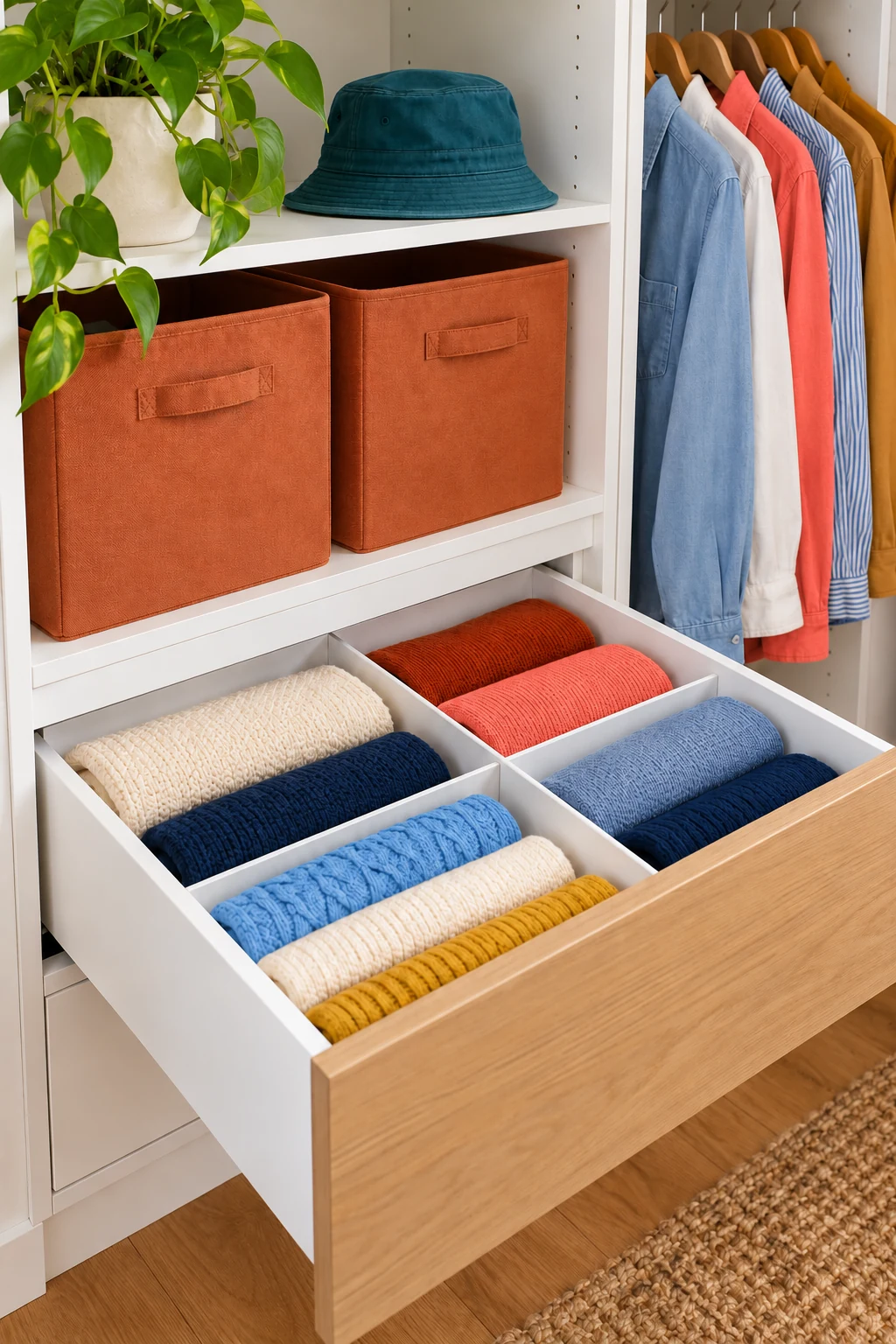
A divider is useful when two categories keep leaning into each other. Try one beside folded sweaters or between a bag row and a clothing stack. Position the boundary around the contents rather than dividing the shelf into equal sections automatically.
The white two-piece LYNK Professional Home Tall Shelf Divider set slides onto compatible solid wood shelves up to 7/8 inch thick. Check that thickness and the shelf’s exposed mounting edge first. This model is not a recommendation for wire shelving, and the stacks still need to remain low enough for easy access. View on Amazon.
7. Use smaller open bins for soft accessories
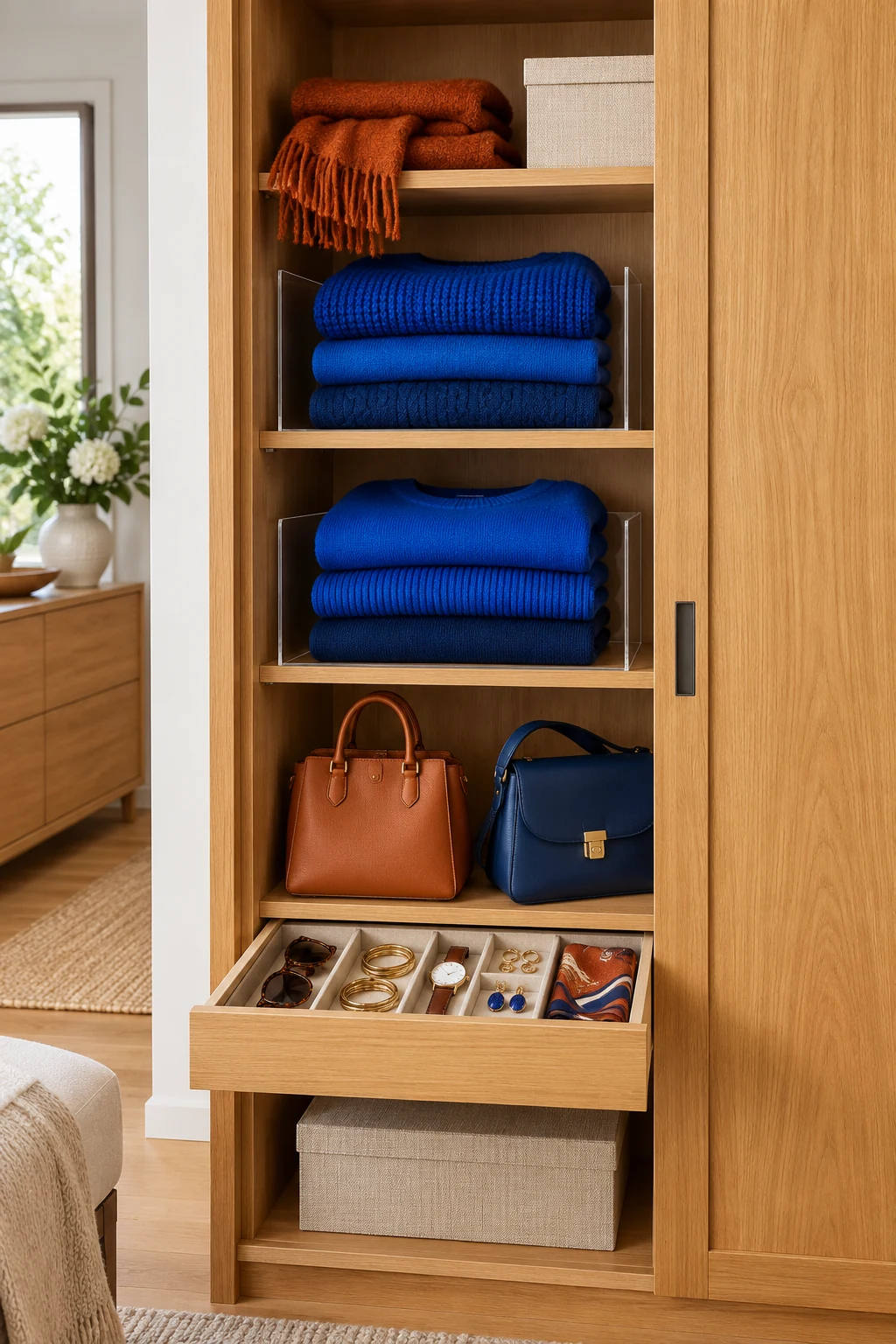
One oversized shelf basket can become a place where scarves, hats, and gloves disappear together. Several smaller bins let you choose a category and bring it into view. Test the grouping with existing boxes before choosing matching containers.
The Gray Simple Houseware Underwear Drawer Organizer set of six also provides open fabric bins for a suitable closet shelf. The bins come in three sizes and are listed at 5.25 inches high. Check each footprint and leave lifting room; these lightweight compartments are for organizing, not supporting another shelf. View on Amazon.
8. Keep tiny accessories in shallow clear trays
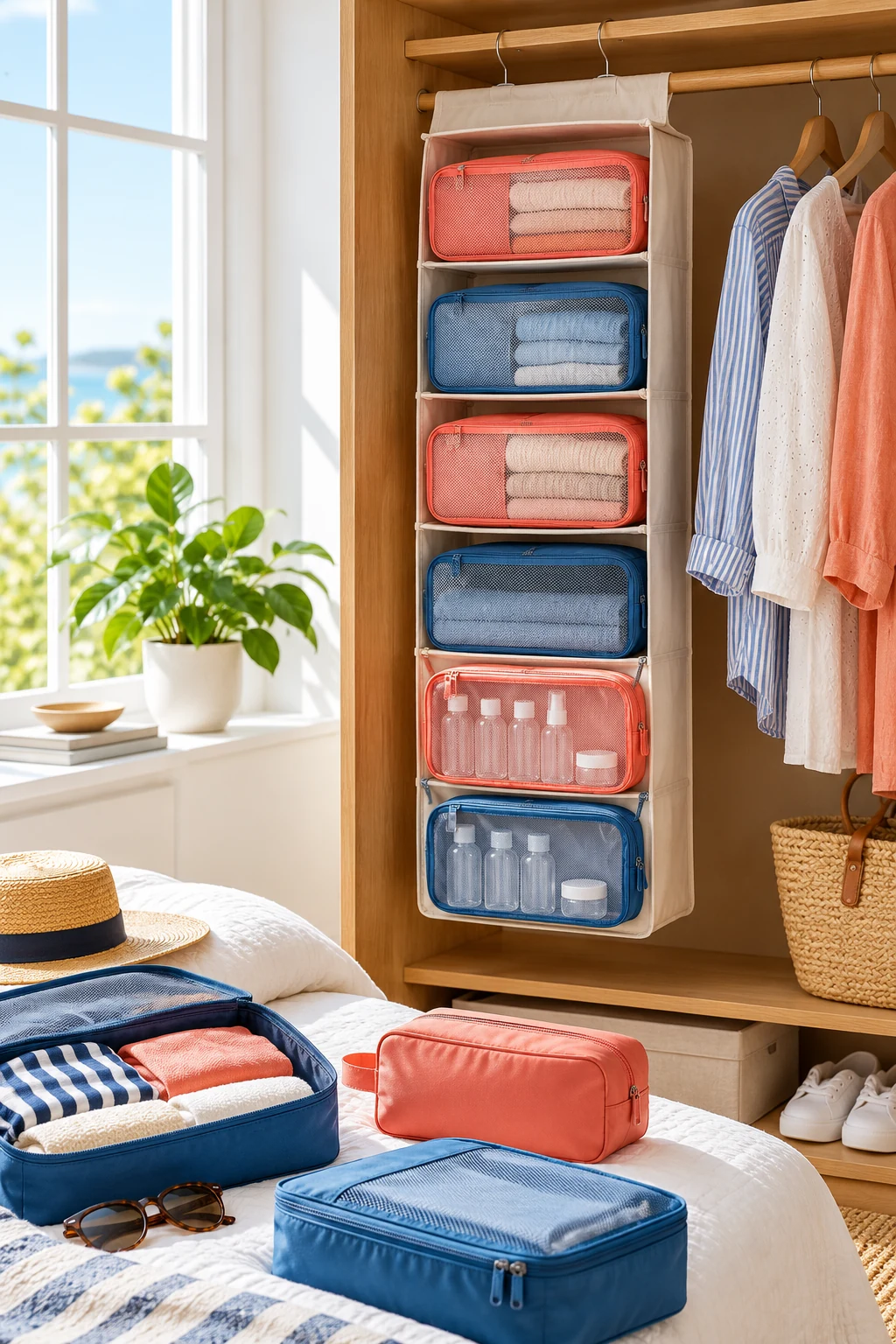
Little accessories can spread across a shelf even when the surrounding clothing looks orderly. A shallow tray gives hair ties, plain clips, or other sturdy small items an obvious boundary. Put the tray at a comfortable viewing height so the transparent sides are actually useful.
The Vtopmart 25 PCS Clear Plastic Drawer Organizers Set includes trays in four sizes, which can also organize a reachable shelf. Use only the pieces you need instead of filling the shelf with a whole set. Delicate jewelry still needs storage appropriate to its materials rather than a general plastic tray. View on Amazon.
9. Try a riser inside an overly tall shelf opening
If a shelf opening is much taller than its contents, a small freestanding riser can create a second level for light accessories. Try a small tray underneath and soft folded pieces above. Both levels should remain easy to reach without shifting the riser.
The SONGMICS Cabinet Organizer Shelf set of two, model UKCS02NB in Ink Black + Natural Beige, is one option for this kind of removable arrangement. Check the dimensions of both pieces and assemble them as instructed. Use a stable solid supporting shelf, include the riser in its total load, and avoid a tall stacked setup. View on Amazon.
10. Use a low freestanding shelf for everyday shoes
Shoe shelving does not have to be built into the closet. A low rack can make a useful separate layer beneath short hanging clothing or beside a taller shelf tower. Choose shelf spacing that lets you lift your regular footwear out without catching another pair.
The Bronze Simple Houseware 3-Tier Stackable Metal Panel Shoe Rack is a freestanding option that requires assembly. Its listing has shown differing width measurements, so confirm the current dimensions against your space. Use your own shoes to judge capacity and keep tall boots outside the low shelf openings. View on Amazon.
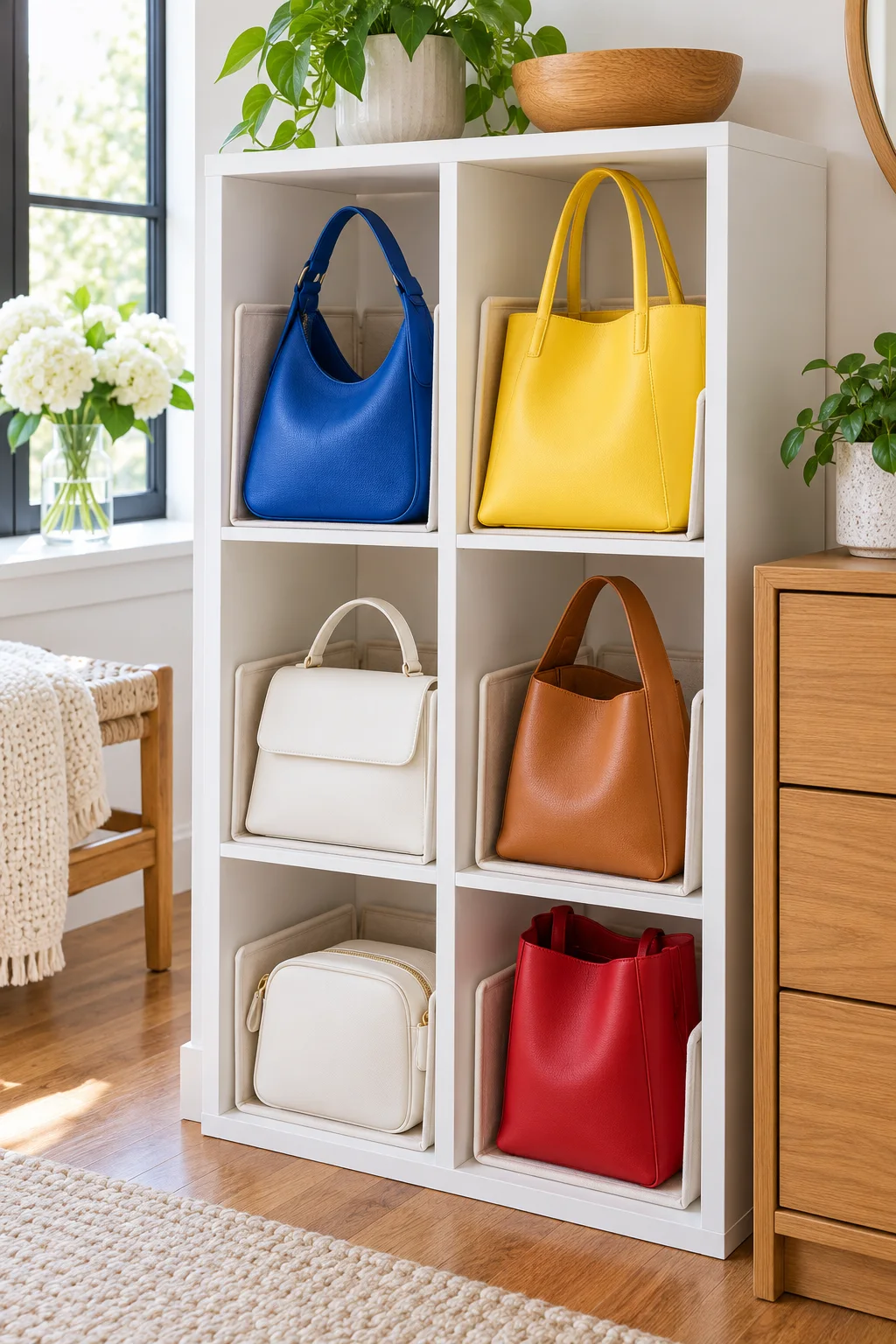
11. Stand handbags in a single visible row
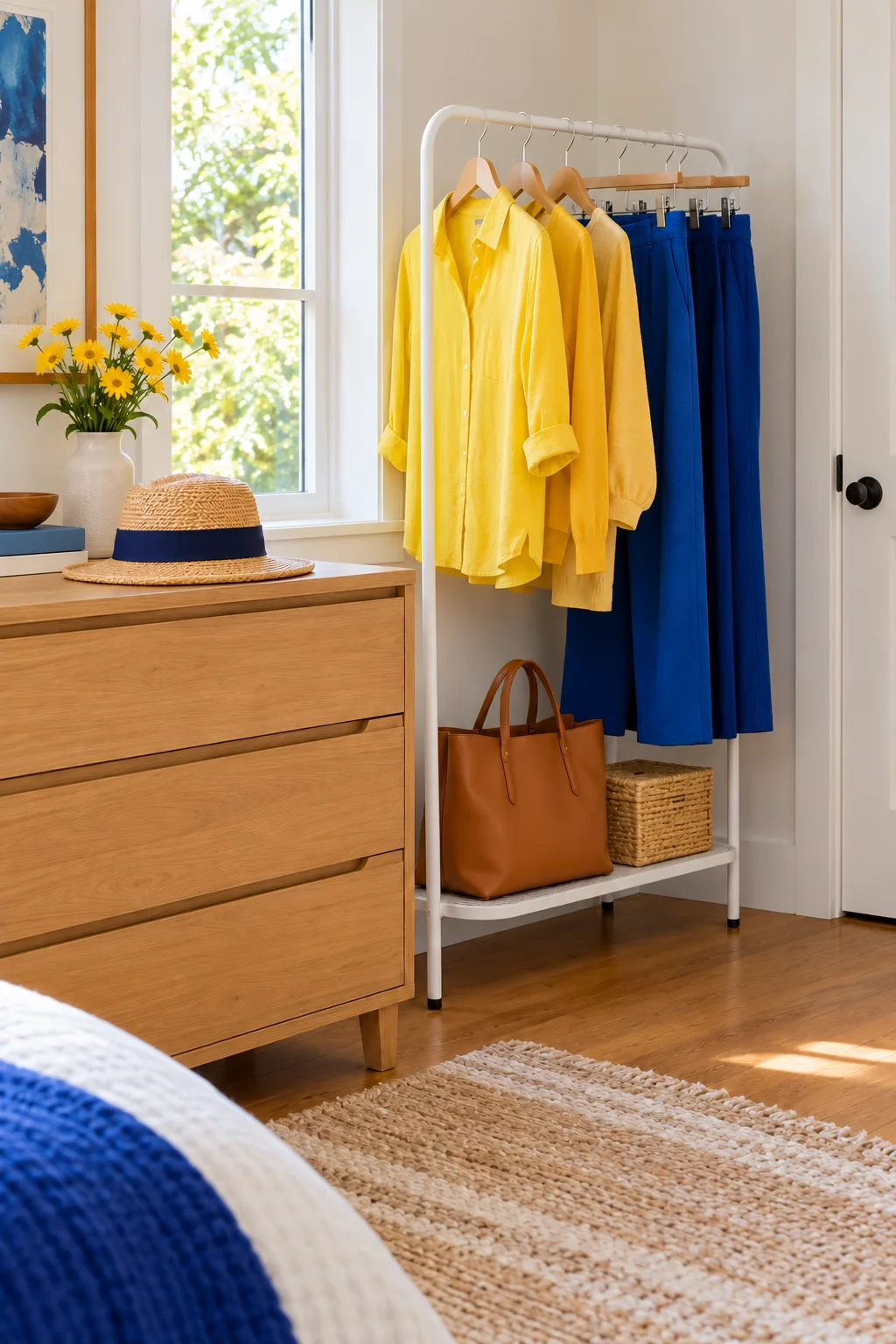
Give bags enough shelf width to stand independently instead of nesting every handle into one pile. A row lets you compare colors and sizes before choosing the day’s bag. Keep the bags you use most at the easiest point to reach.
Follow each bag’s care instructions for support and dust covers, particularly during long-term storage. Leave room for hardware so one bag does not scratch another. If a tote will not hold its shape upright, give it appropriate support rather than wedging it into a tight gap.
12. Store clutches vertically between smooth boundaries
Small clutches and pouches can be easier to browse when they stand like slim books. A suitable file-style organizer or divider can separate them while keeping the edges visible. This works best for pieces whose structure supports upright storage.
Check that the organizer’s edges are smooth and that its openings do not pinch delicate finishes. Keep embellished bags from rubbing together. If a piece slumps or loses its shape, lay it in its own shallow space instead of forcing it to stand.
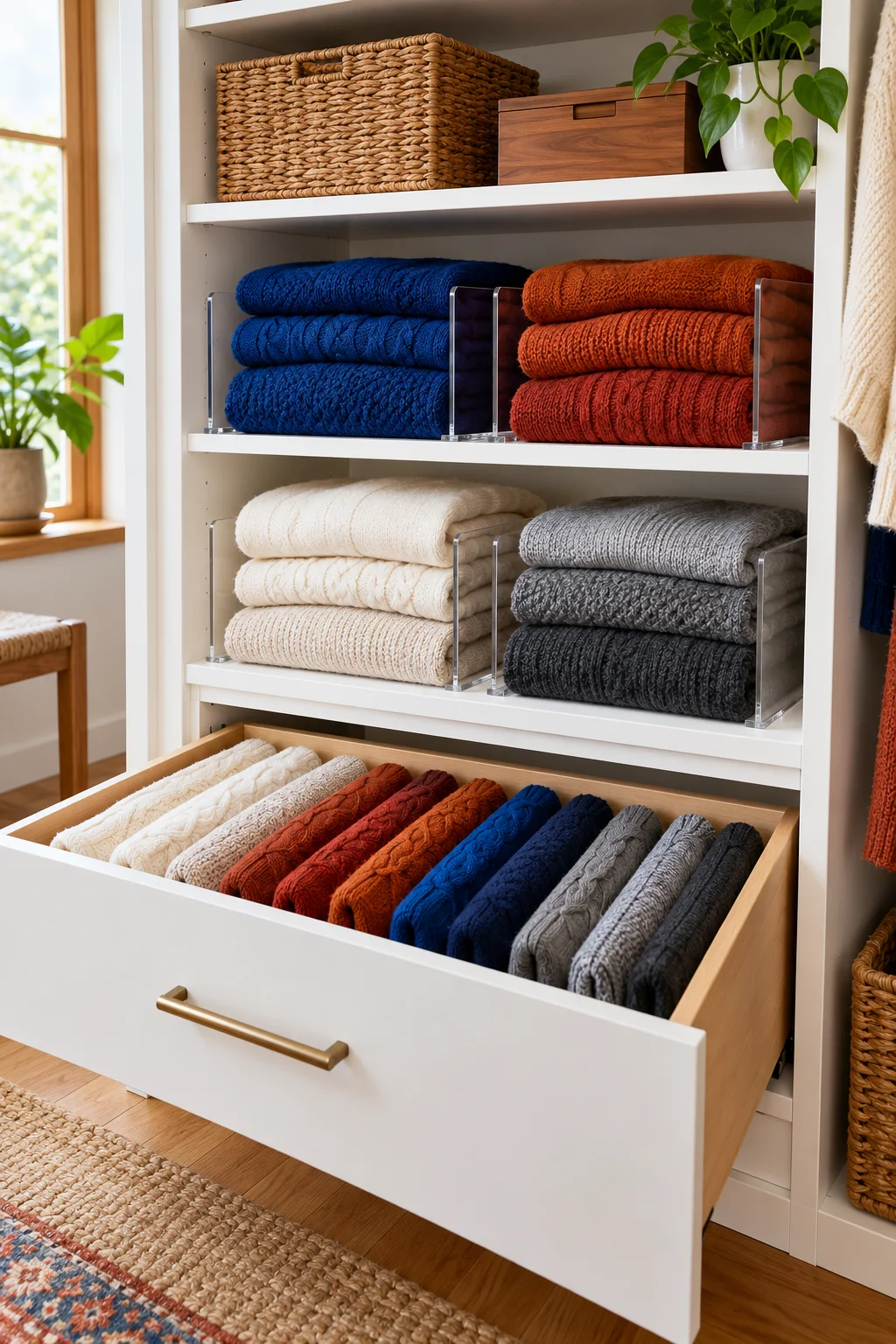
13. Keep denim in a lower shelf zone
Jeans can make a substantial stack, so give them a reachable lower shelf instead of an overhead position. Fold them to a consistent footprint and separate styles if that helps you find the pair you need. Short stacks are easier to return after laundry.
Check the shelf’s load guidance, especially when storing several dense clothing stacks side by side. Leave enough space that the bottom pair can be removed without dismantling a tower. If you prefer upright folded denim, a removable bin may make a deeper shelf easier to browse.
14. Give bulky knits more width and less height
Bulky sweaters often behave better in broad low stacks than in a narrow tall pile. Let the knit lie comfortably and avoid compressing the sleeves into a tiny footprint. A shelf dedicated to thick layers can also prevent heavier pieces from crushing lighter ones.
Keep frequently worn sweaters at a height where you can lift the top items with control. If a stack repeatedly tumbles, reduce its height or split it across another section. A little open shelf width can save more daily effort than an extra unstable layer.
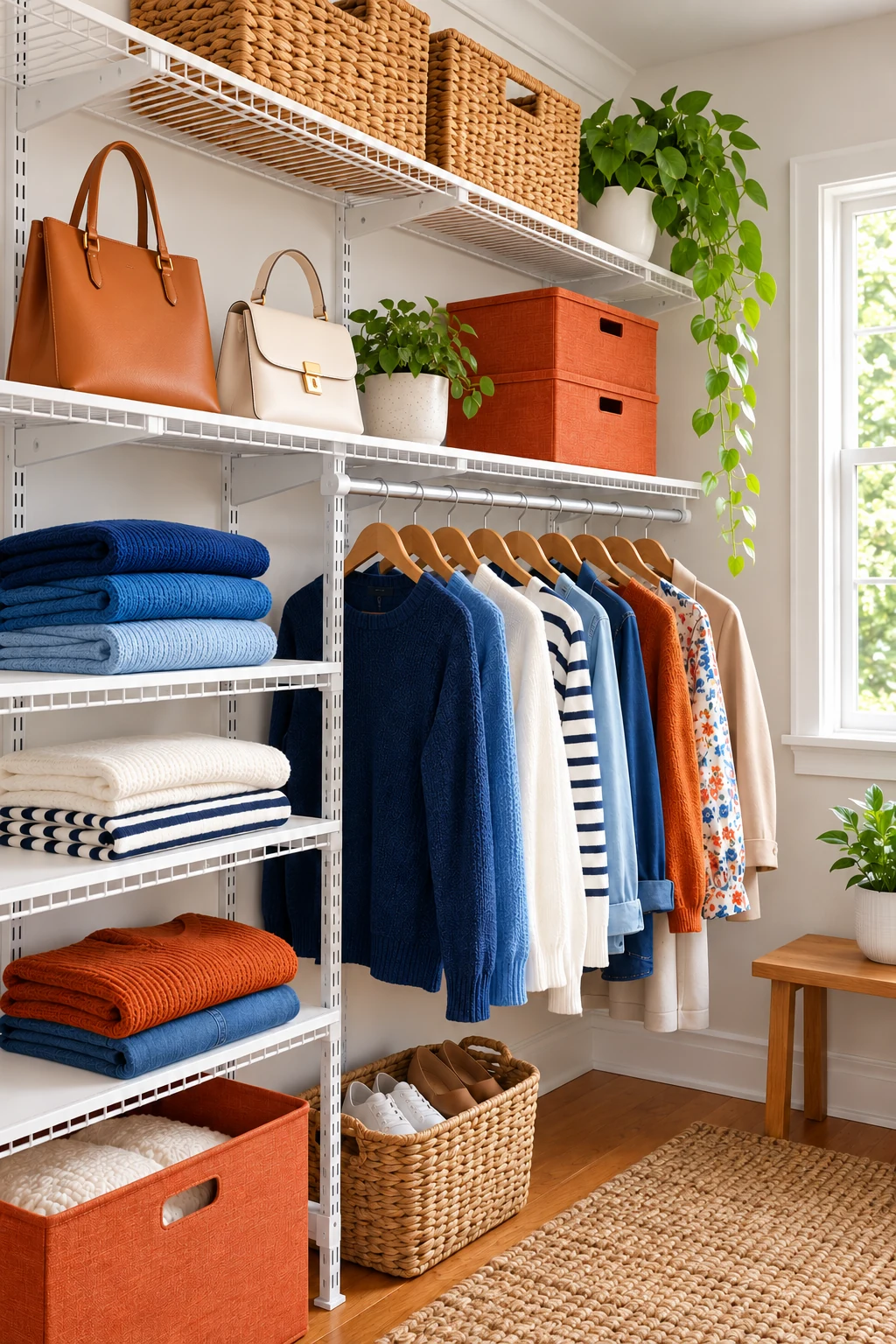
15. Make a supported shelf spot for structured hats
Give structured hats a clear surface that keeps pressure off the crown and brim. A small collection can occupy one shelf opening with the shapes visible. Keep soft knit hats in a separate container rather than using them to fill the gaps around a delicate brim.
Check storage recommendations for the specific hat material and avoid placing heavy boxes above it where they can fall or press down. If dust covers or hat boxes are recommended, allow room to remove them. Do not sacrifice shape simply to make the shelf look uniformly full.
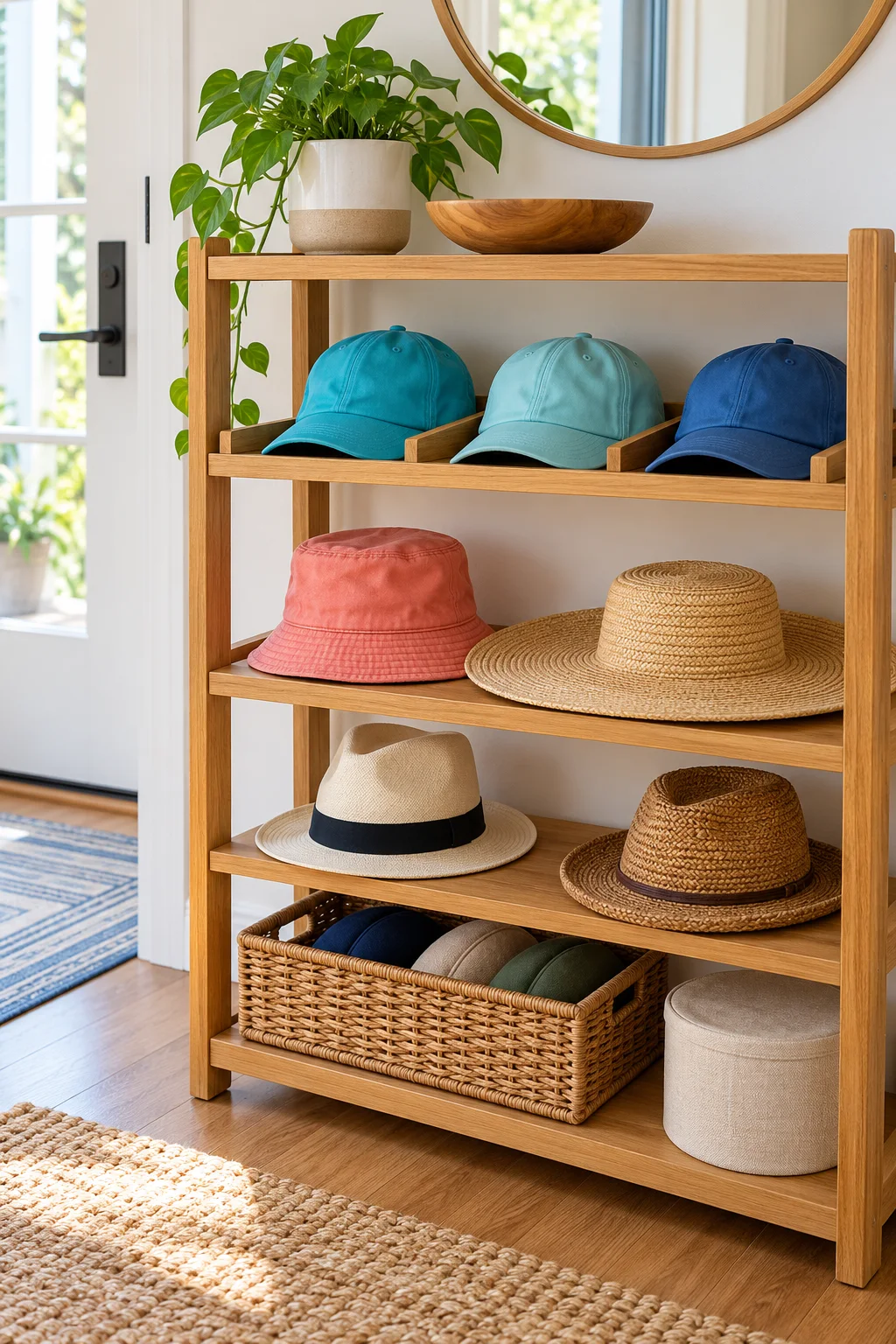
16. Put labels on the shelf as well as the bin
A shelf-edge label can mark where a category belongs even when its basket is elsewhere. This is helpful for shared closets or removable containers used while getting dressed. Use simple category names that match what people actually look for.
Try removable labels compatible with the shelf finish and place them where they are visible from the doorway. You do not need to label obvious stacks of clothing. Focus on opaque storage or similar-looking bins that would otherwise cause unnecessary searching.
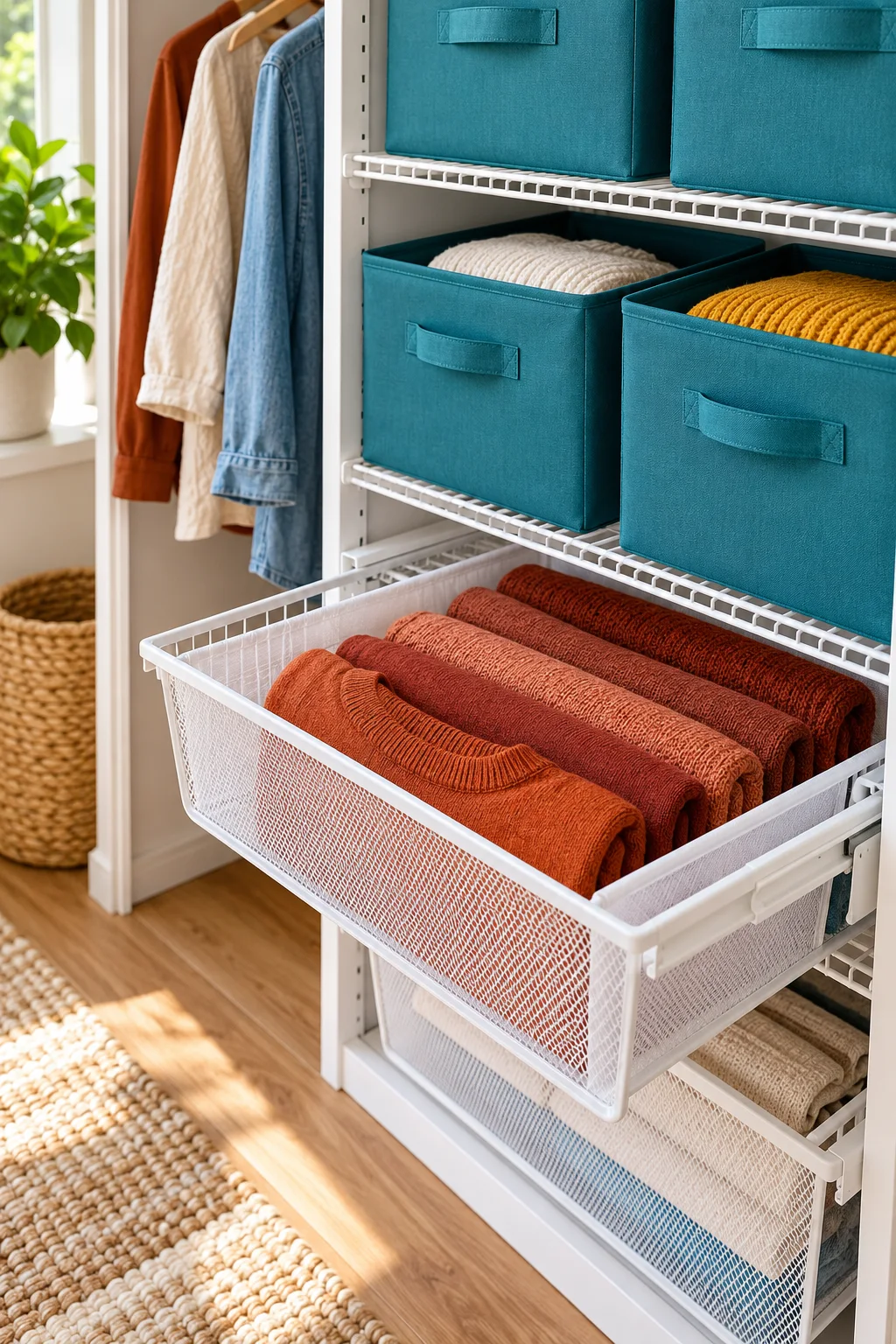
17. Use the back row only for occasional items
Deep shelves can hold more than one row, but everyday clothing often gets lost behind the front stack. Reserve the rear for light occasional-use items and keep a short contents note at the front. Make the forward row easy to lift away when needed.
If you retrieve the back items often, give them a separate removable tray or find a shallower shelf. The extra depth should not require a full shelf reset every time you need something. Avoid heavy containers at the rear of a high shelf where reaching becomes awkward.
18. Give the corner one clear approach
Where two shelving runs meet, decide which side provides access to the corner. An open corner shelf may suit a light basket or occasional bag, provided you can pull it out directly. Let the other run stop where it will not trap the contents.
Draw the loaded shelves from above before ordering components. Full-depth units on both walls can overlap into a hard-to-reach pocket. Use compatible corner parts or a professionally planned installation, and keep daily items out of a space that requires awkward reaching.
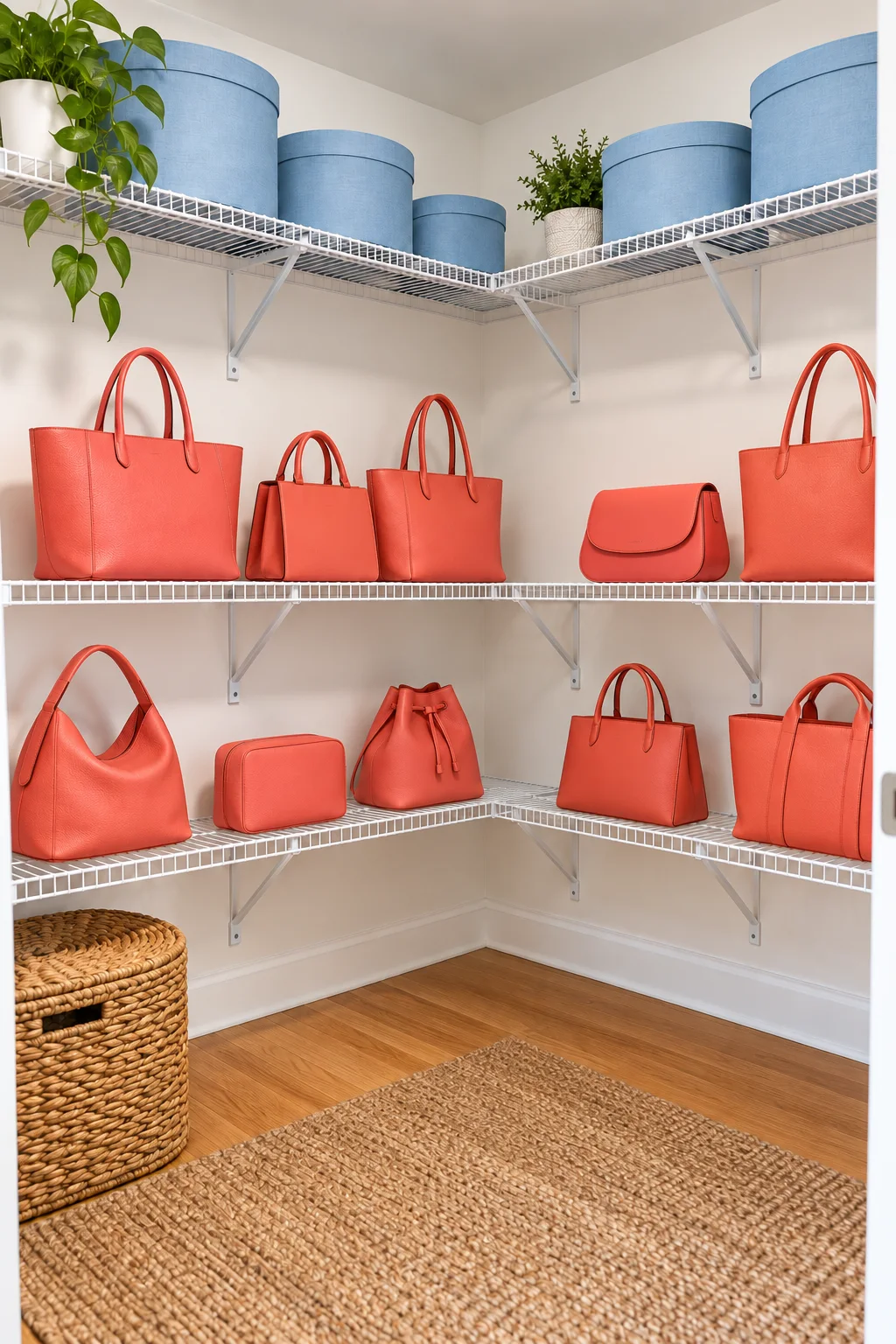
19. Use narrow side shelves for compact categories
A side wall near the closet opening may suit shallow shelves for compact items such as small bags or folded accessories. Keep their depth modest enough that they do not collide with clothing on the main rail or narrow the useful doorway.
Measure with the closet fully loaded and the door moving through its normal path. New shelves require suitable supports and fixings for the wall and load; renter permission may also be needed. If the side wall is inaccessible in daily use, leave it clear instead of adding storage you cannot reach.
20. Limit the upper shelf to light occasional storage
Use the highest shelf for things you need infrequently and can safely lift down. A soft travel tote, light seasonal accessories, or an empty bag may fit that role. Keep the containers separate rather than stacking them into an unstable pile.
Leave a handhold and enough clearance above each container to retrieve it. Use a suitable stable step stool when needed, following its instructions, and never climb the shelves. If an item is heavy or awkward when lifted, move it to a lower location.
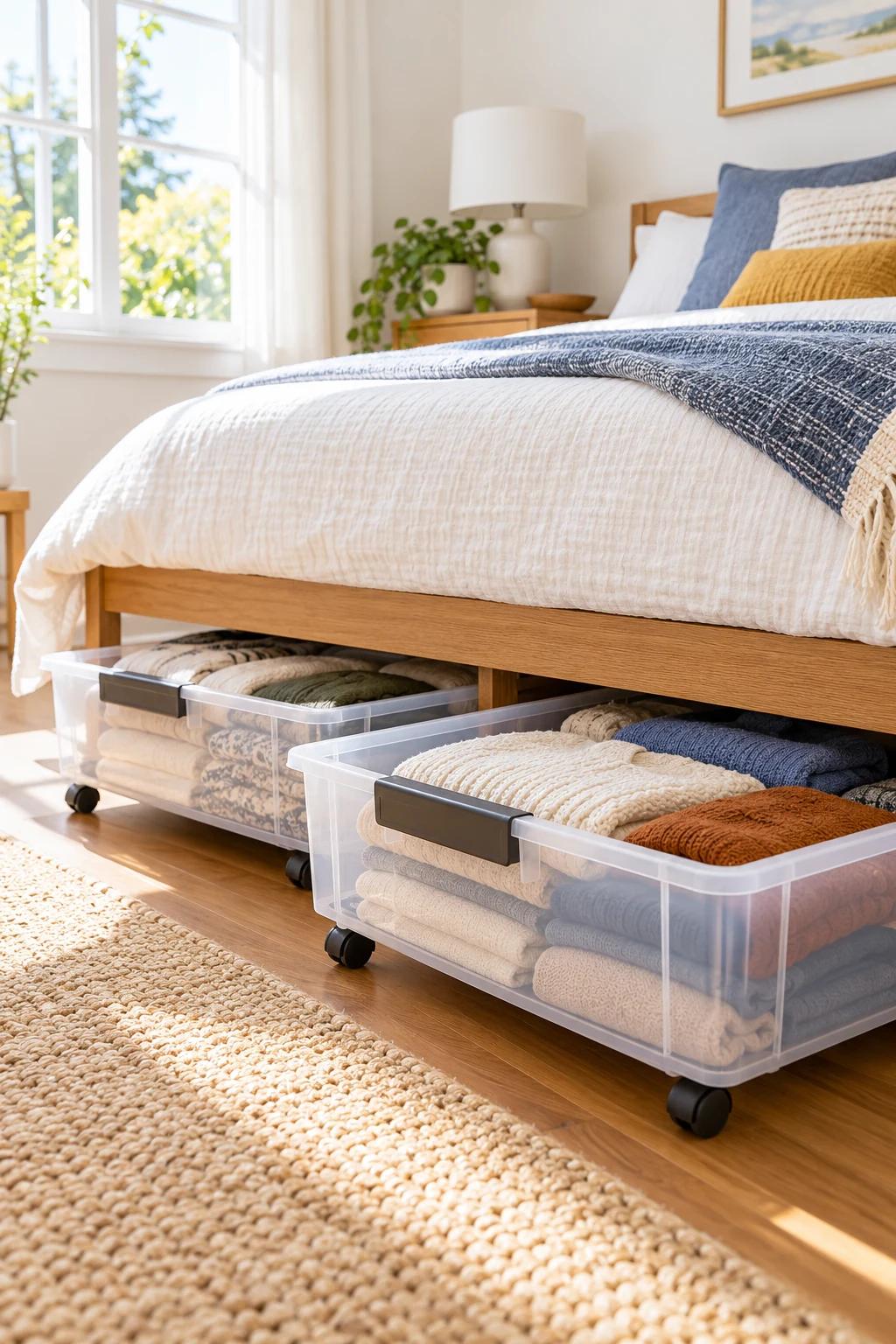
21. Keep the lowest shelf clear of routine floor cleaning
A little separation between stored clothing and the floor can make vacuuming or wiping the closet easier. Plan the lowest shelf around the cleaning method you actually use. Do not leave a narrow gap that collects dust but cannot be reached.
If the shelving system goes to the floor, use its intended base and keep the surrounding area accessible. Do not raise furniture on improvised blocks or remove required support parts. A removable low basket may be easier to clean around than a permanently packed floor bay.
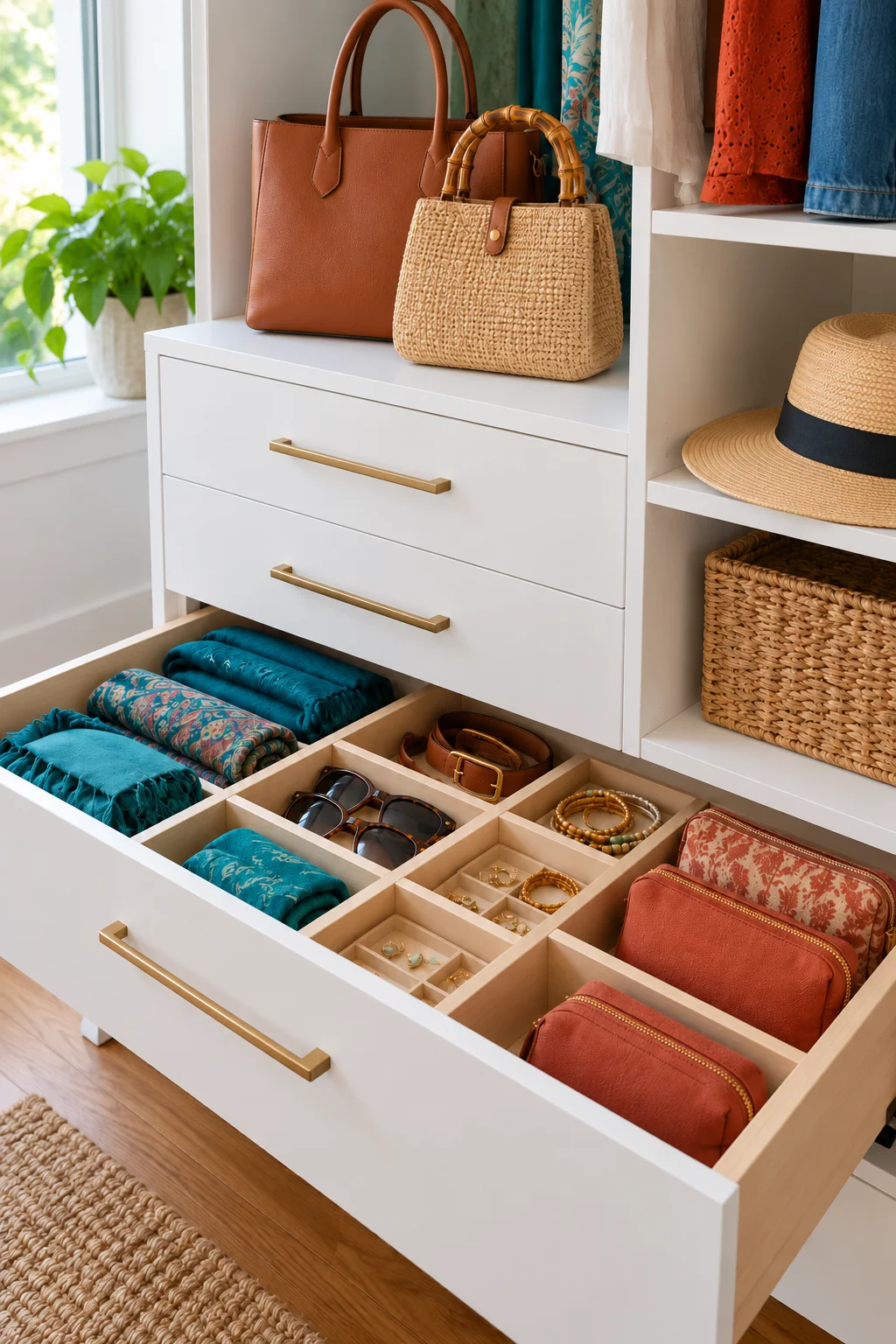
22. Keep a folded activity outfit together
A shallow shelf bin can hold clothing used for one repeated activity, such as a workout top and leggings. Keep the pieces together if you regularly wear them as a set. This reduces the need to open several storage sections for the same routine.
Limit bundles to combinations that are genuinely useful. If you mix and match most of your wardrobe, separate categories may be easier to maintain. Keep clean sets loosely folded and check that the container still fits when every piece is back from the wash.
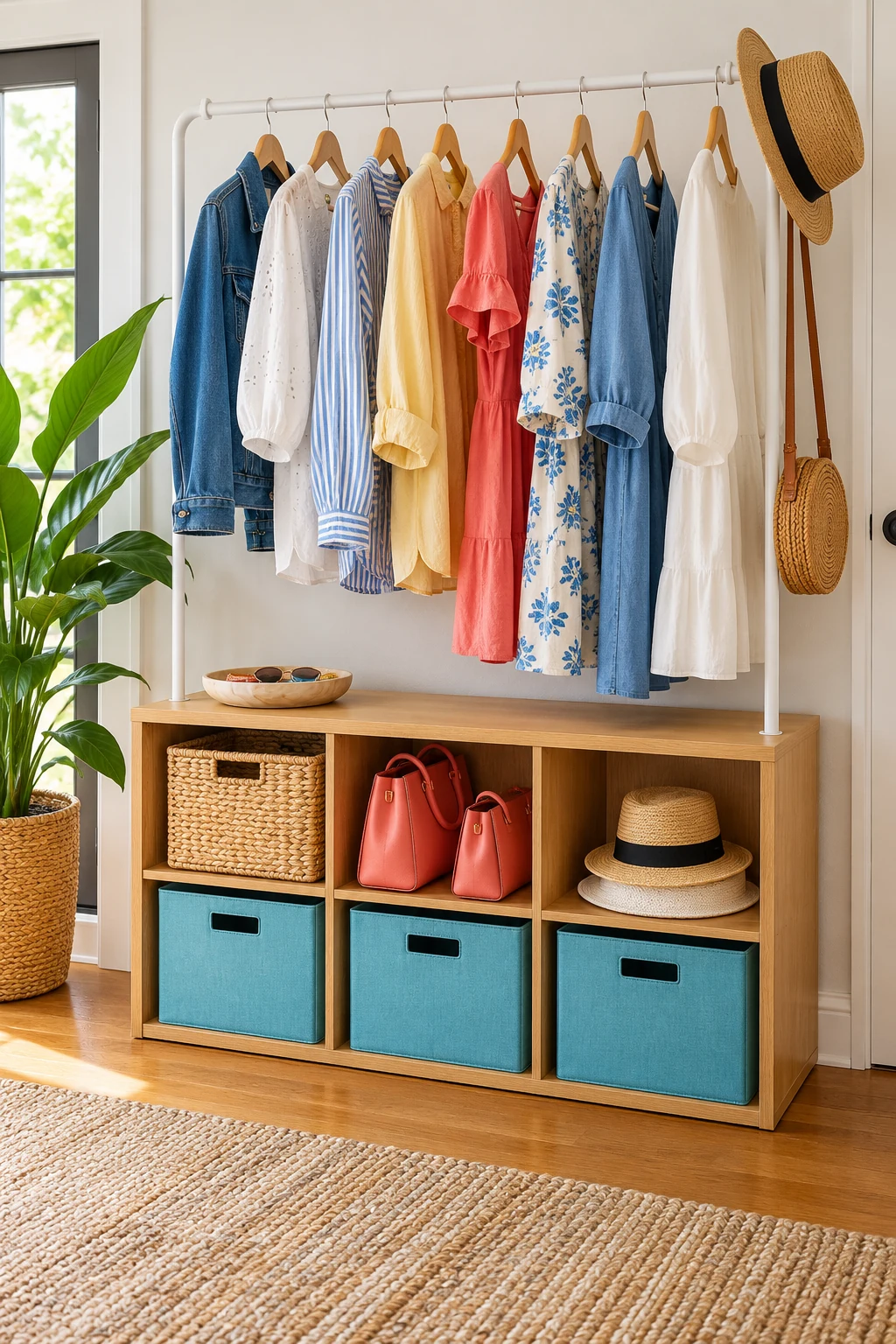
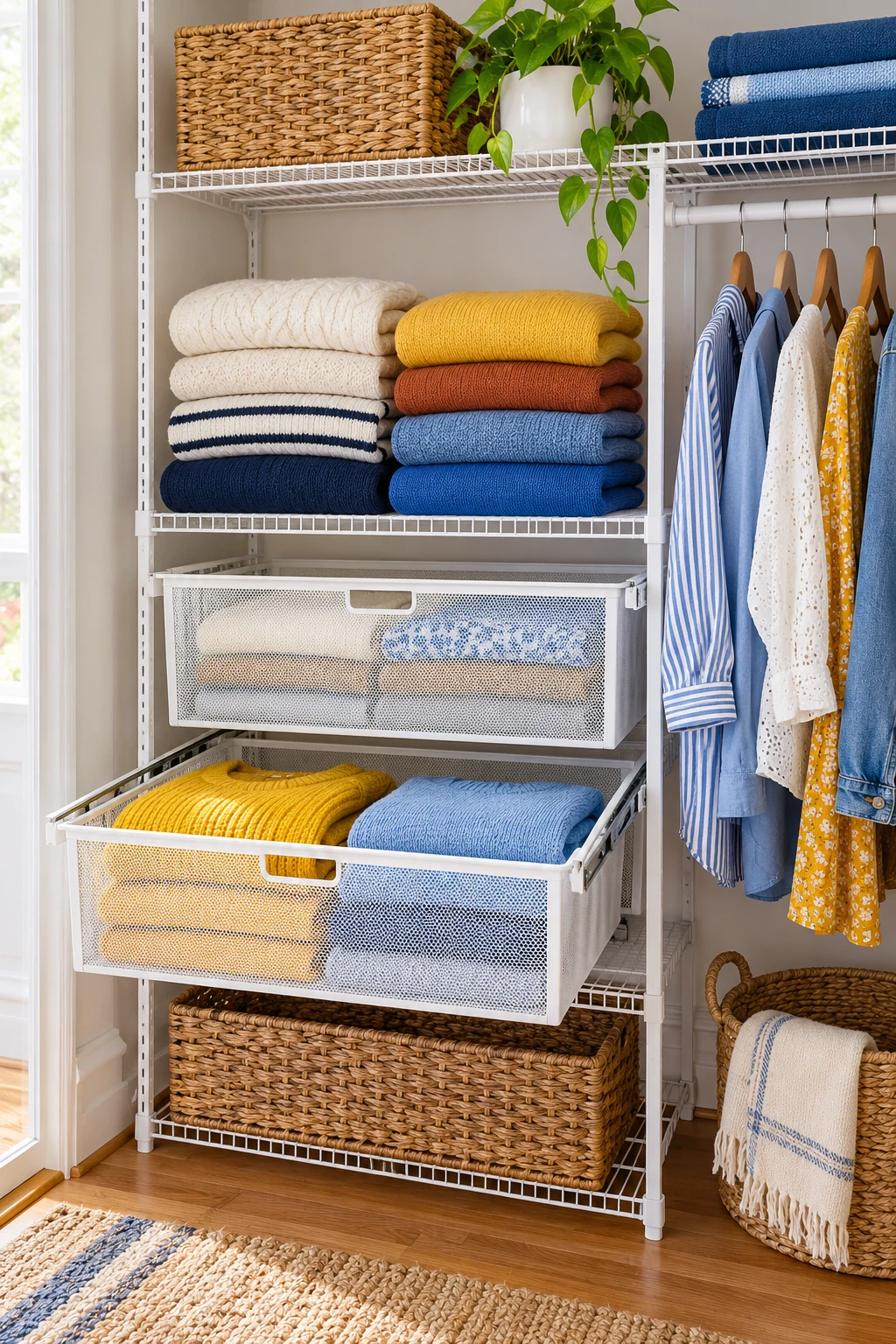
23. Consider a compatible pullout for difficult lower shelves
A pullout shelf or basket can help when a deep lower shelf is hard to see into. Bring the category toward you rather than kneeling and reaching behind other items. Before choosing one, measure the door opening and full travel path.
Use hardware and a pullout designed for the cabinet or closet system. Drawer slides and fasteners need suitable support, and their rated load includes the stored contents. Keep the pullout level during planning and seek qualified installation help when the existing structure or fastening is uncertain.
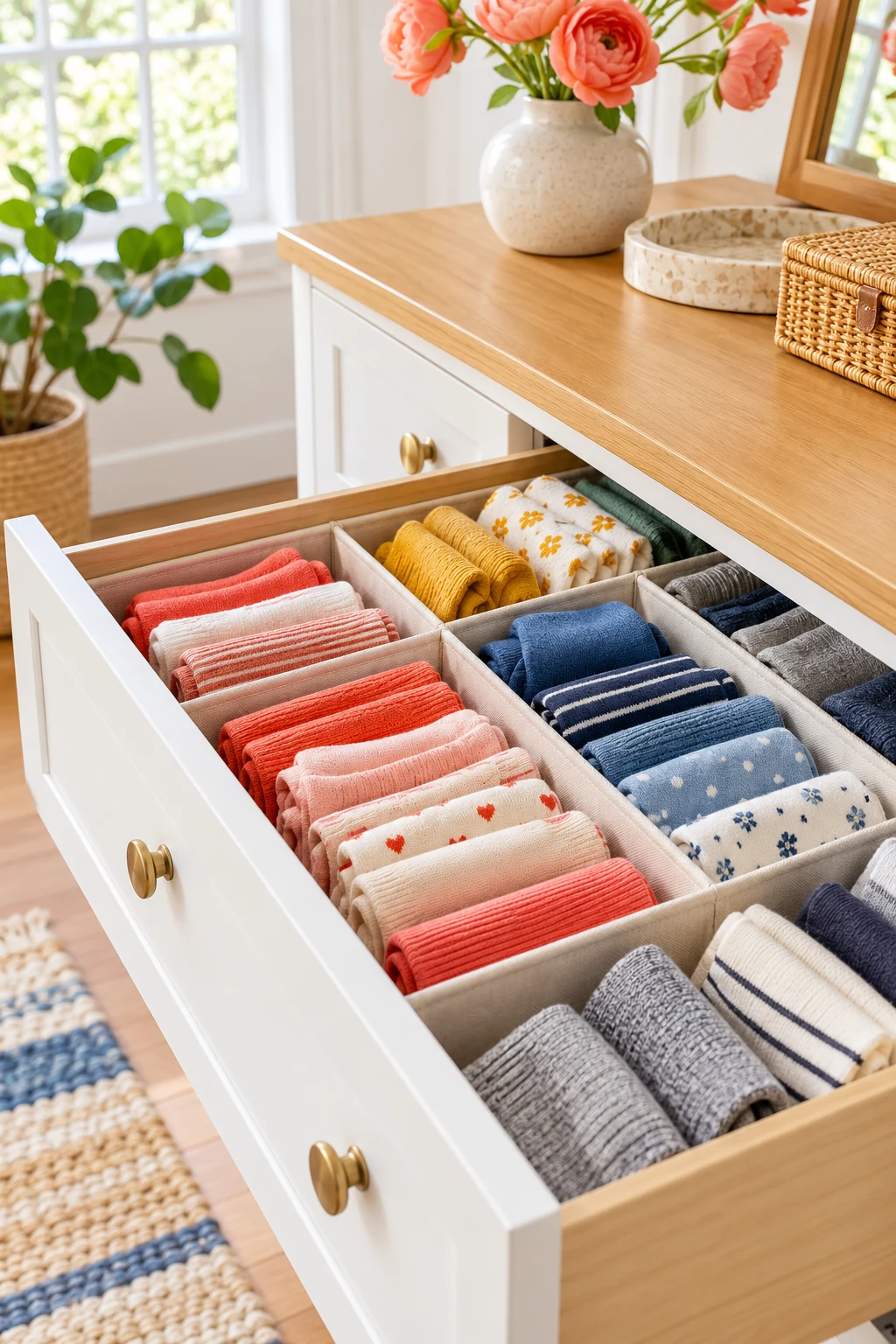
24. Use an approved liner where wire shelves need a flatter surface
Small containers and some folded items can sit more neatly on a suitable liner over wire shelving. Check whether the shelf manufacturer offers a liner or specifies a compatible material. A smooth supported surface can help keep small pieces from dipping between the wires.
Keep the liner within the shelf edges and make sure it does not interfere with brackets or the system’s intended use. A liner does not increase the shelf’s load capacity. Avoid heavy improvised boards or loose materials that can slide when you pull out a bin.
25. Leave one flexible space for changes in the wardrobe
An empty part of a shelf can be useful during laundry day, travel packing, or a seasonal switch. You can set down a clothing stack while arranging the rest without putting it on the floor. Treat this space as part of the plan instead of a gap that needs another bin.
When the flexible area stays full, look at which category has expanded and adjust deliberately. You might move an occasional item, reduce an overcrowded stack, or change one shelf height. A shelf system works better when it can absorb real life without becoming permanently jammed.
Choose one shelf and make it easier to use from front to back. Adjust the spacing, keep the stacks manageable, and give the contents a clear home before expanding the project. Subscribe to the Havelyo email list for more practical storage and small-space decorating ideas.