
Closet Organization
30 Closet Organizer Ideas for Clothes, Shoes, and Accessories
A closet organizer is useful when it solves a specific problem: socks mixing together, shoes hiding behind one another, or handbags falling into a pile. Buying a matching set before sorting those problems can leave you with plenty of containers and the same daily search.
These 30 closet organizer ideas work through clothes, shoes, and accessories one category at a time. Start with an item you struggle to find or put away, try a simple arrangement, and check the measurements before shopping. Many ideas can begin with a tray, box, or basket you already own.
This article contains affiliate links. If you buy through them, Havelyo may earn a commission. As an Amazon Associate I earn from qualifying purchases.
1. Test one category with a container you own
Choose the category that repeatedly ends up loose: scarves, workout socks, or little bags. Gather only those items and try an empty shoe box, basket, or tray you already have. The test tells you how much space the category needs before you buy an organizer.
Use it for several days and notice what makes putting things away awkward. A lid might be unnecessary, a tall side might hide everything, or the box might be too large to lift from the shelf. Buy a replacement only when you can name the feature your trial container lacks.
2. Make everyday hanging clothes easier to scan
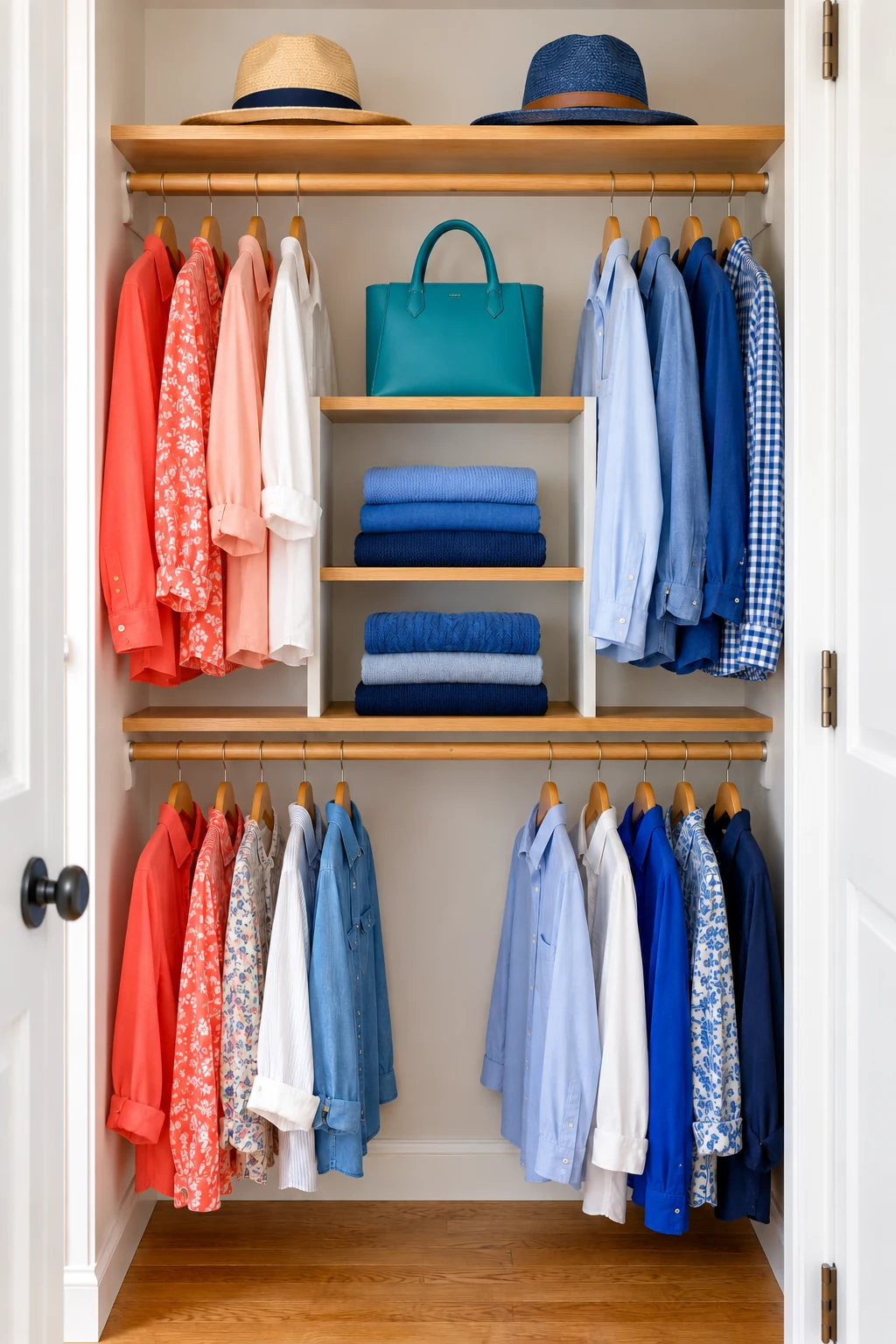
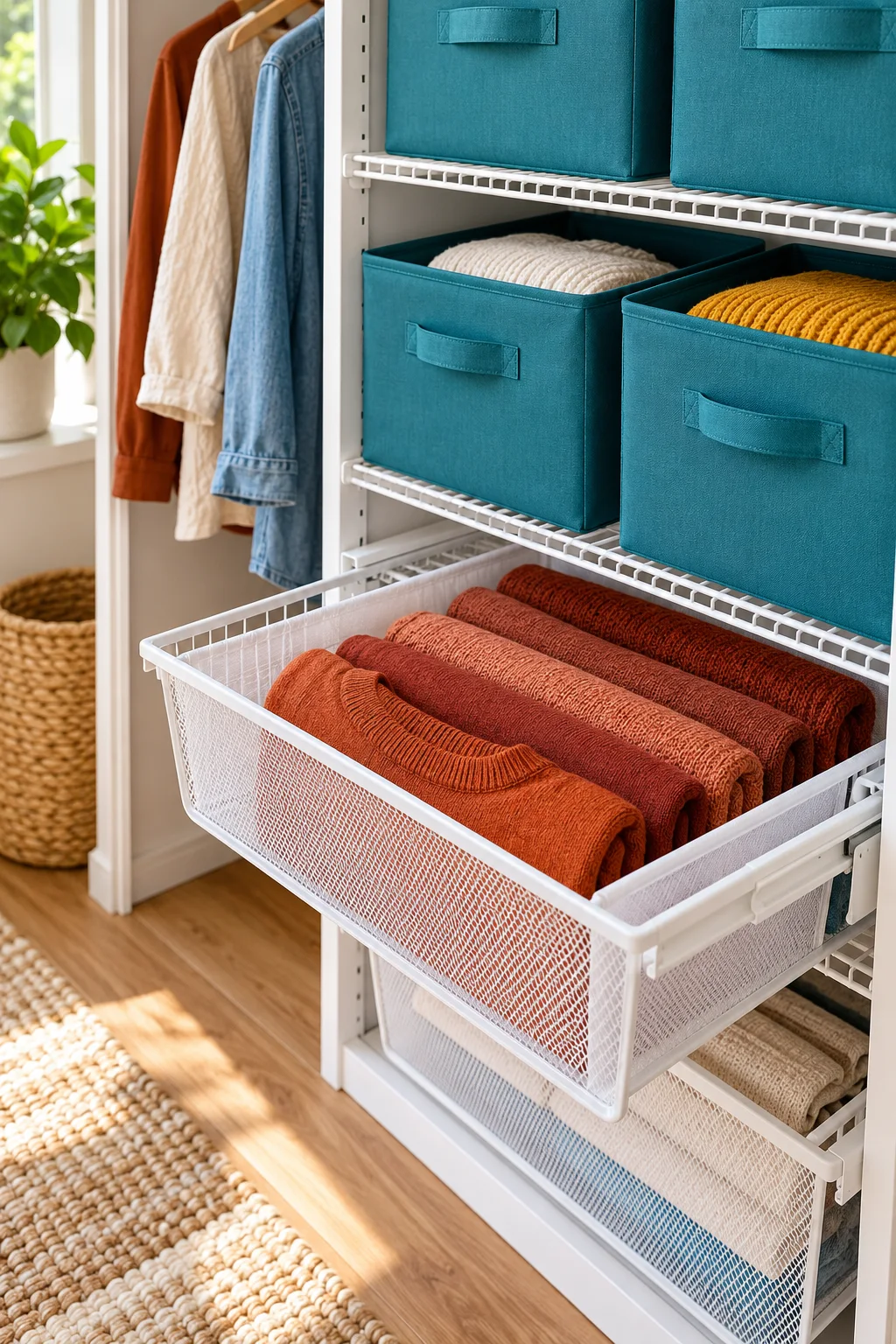
Group hanging garments by type and use a similar hanger shape within each group. A row of shirts becomes easier to browse when the hooks face one way and bulky spare hangers are not wedged between sleeves. Leave enough room to pull out one item comfortably.
The Black/Silver 30-pack of Amazon Basics Slim Velvet Suit Hangers is an option for standardizing everyday pieces. Its velvet surface and notched shoulders suit many garments, but a uniform look is not a reason to abandon specialty support for tailored jackets or other clothing that needs it. View on Amazon.
3. Use an extra rail for a short-clothing category
A lower rail can give skirts, folded pants, or short tops their own place beneath an upper row. Choose one category so the new space stays easy to understand. Check the longest item in both rows before loading the rail.
The Chrome Simple Houseware Adjustable Closet Hanging Rod hangs from an existing rod and adjusts horizontally from 18 to 30 inches. It can help where you want to try a second level, but it adds weight to the existing supports. Verify that support and the full hanging drop before installing it. View on Amazon.
4. Turn spare rod width into soft cubbies
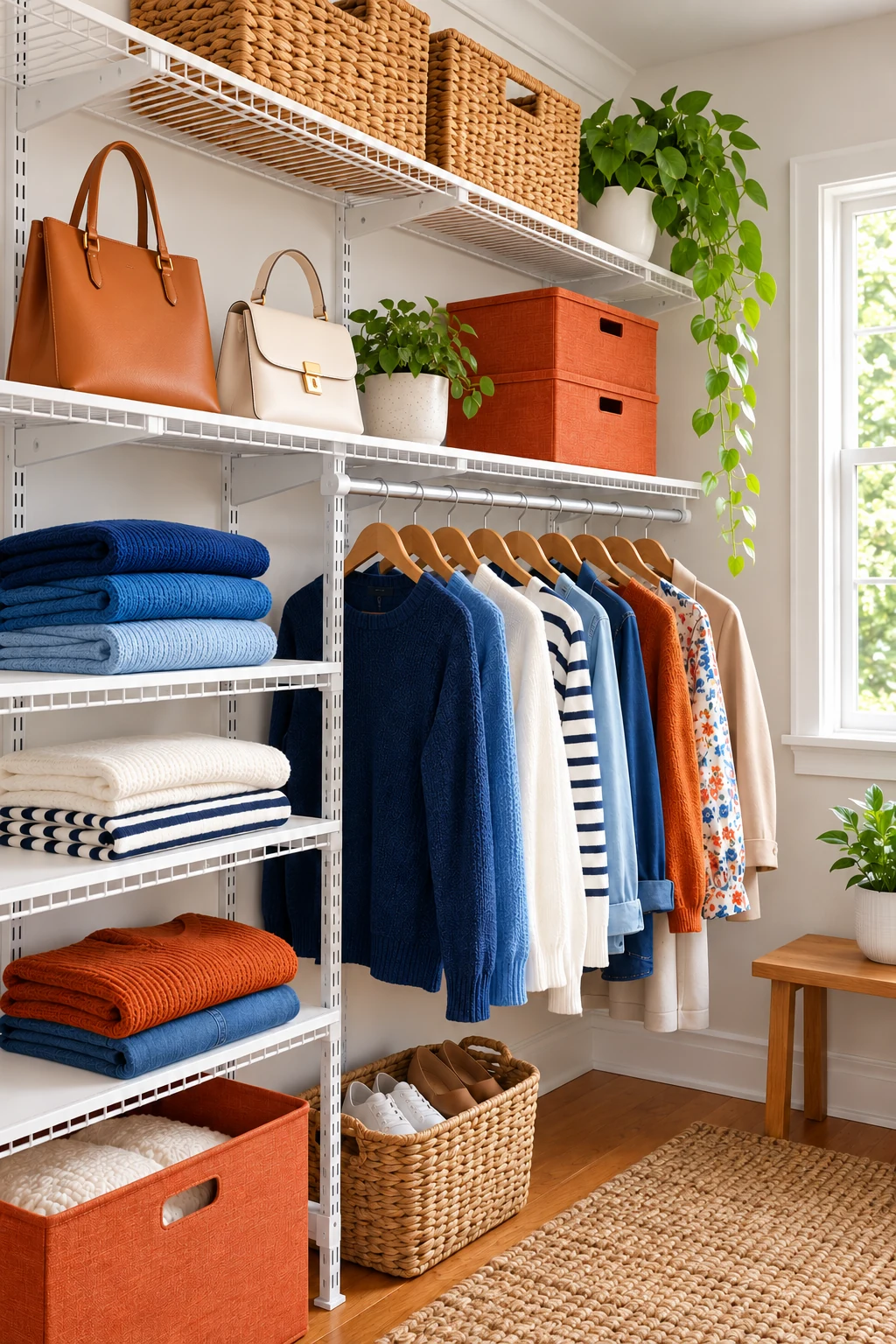
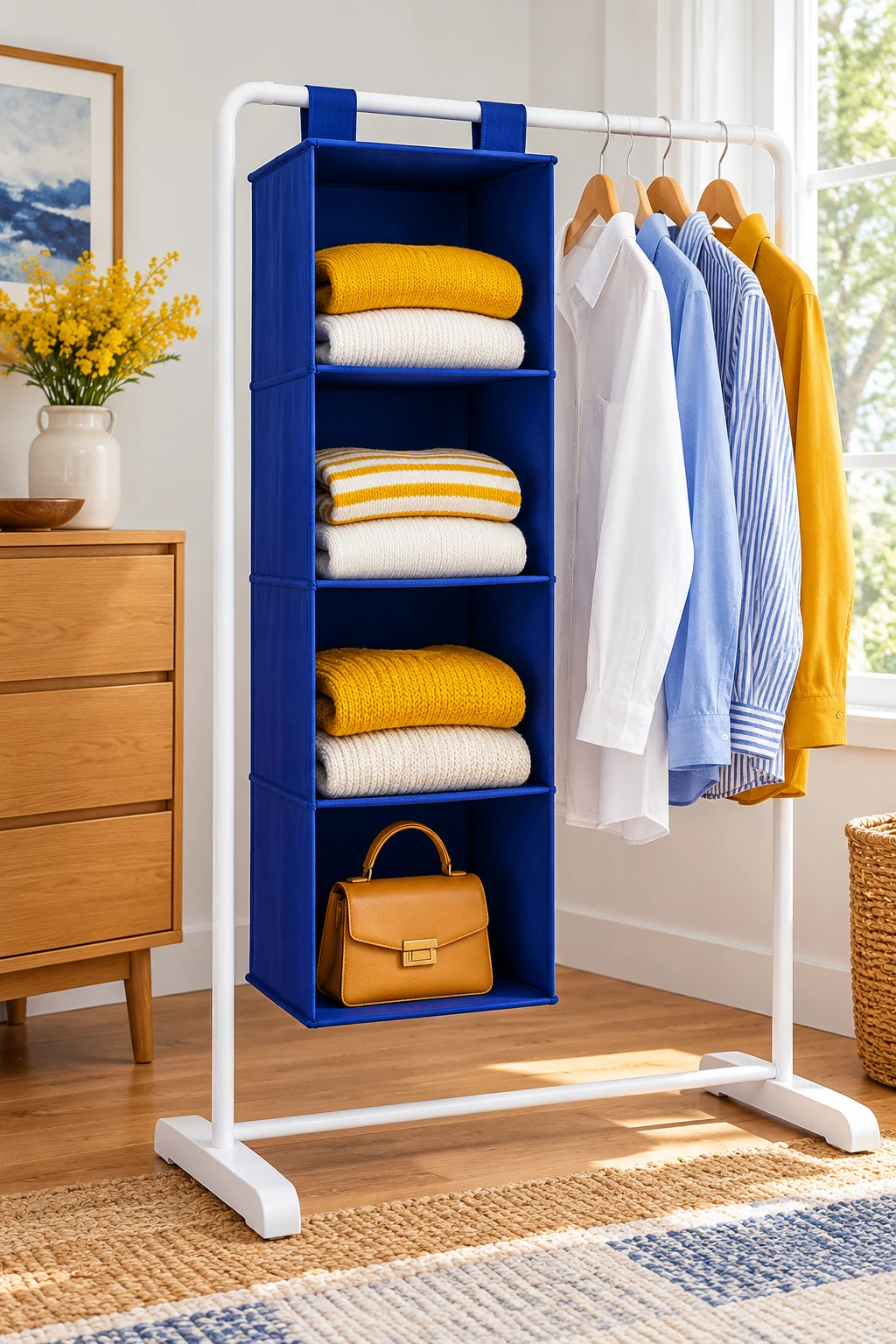
A hanging organizer can be useful when folded clothes have no shelf but part of the rod sits unused. Put light tees, sleepwear, or workout clothing in separate compartments. Keep stacks low enough that you can see what is behind the front item.
The StorageWorks 6-Shelf Hanging Closet Organizer offers fabric compartments and side pockets. Compare the hanging width it uses with the folded storage you gain, and follow its current setup and load instructions. Exact published measurements vary between sources, so confirm the selected variant against your closet before ordering. View on Amazon.
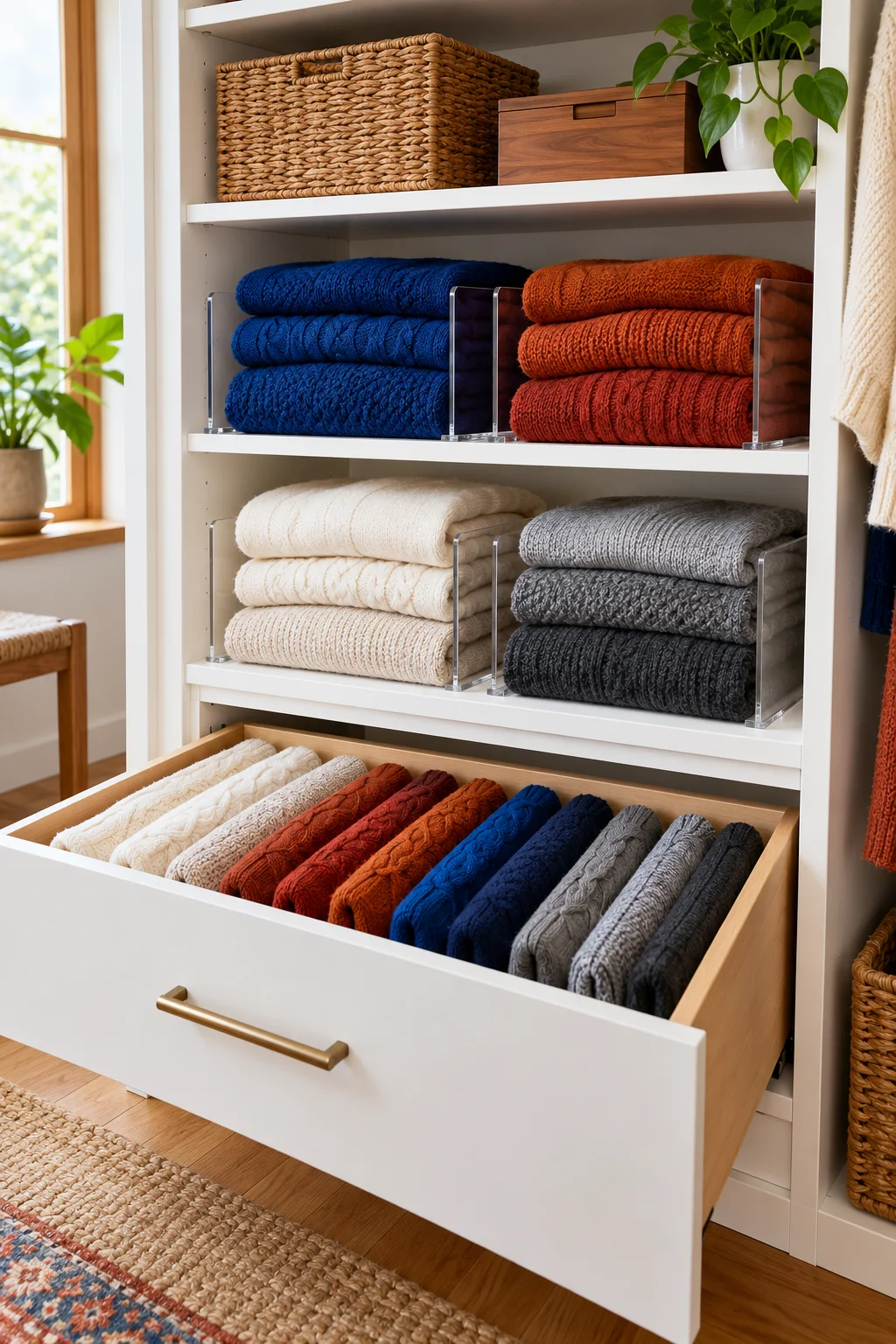
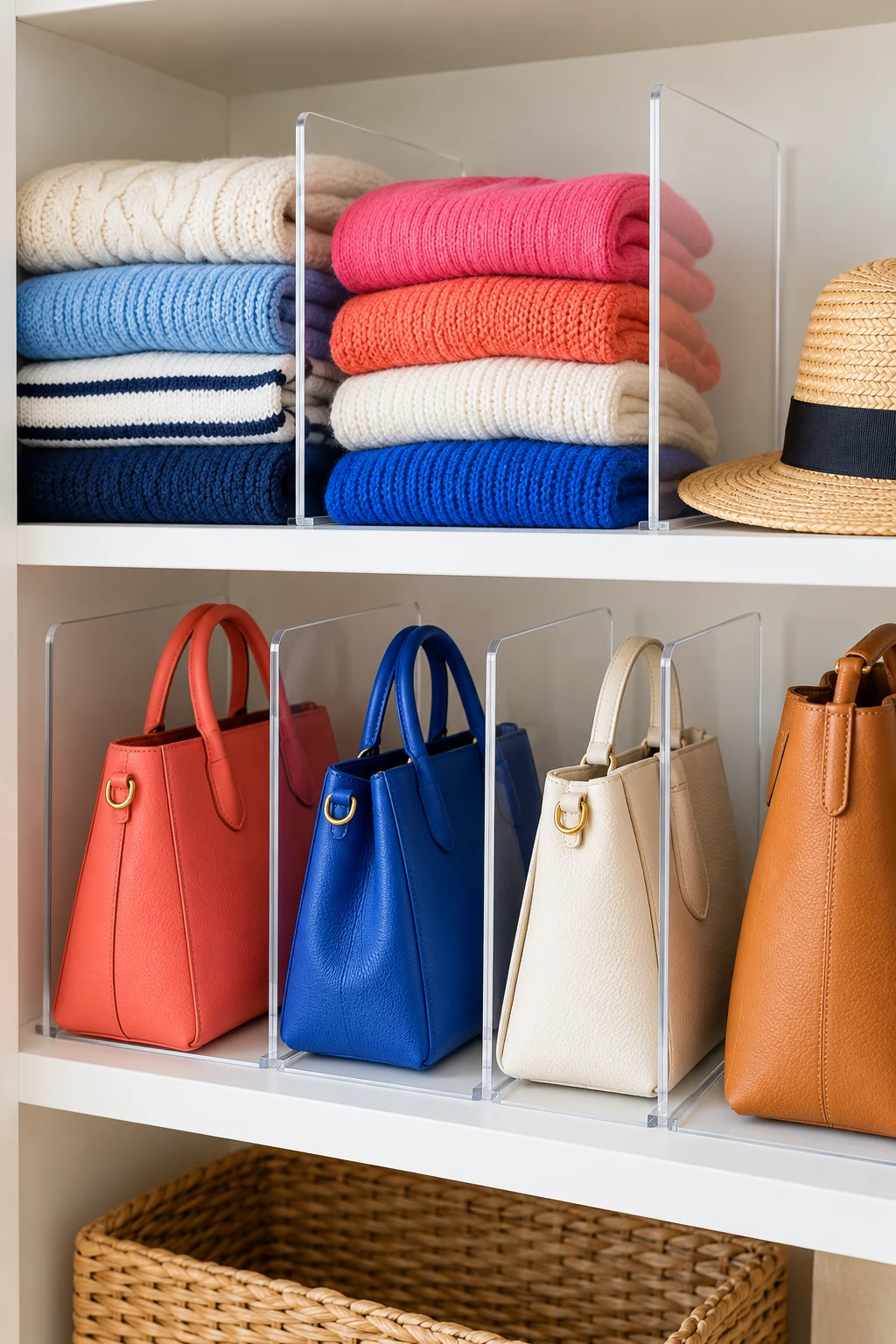
5. Give sweater stacks a boundary
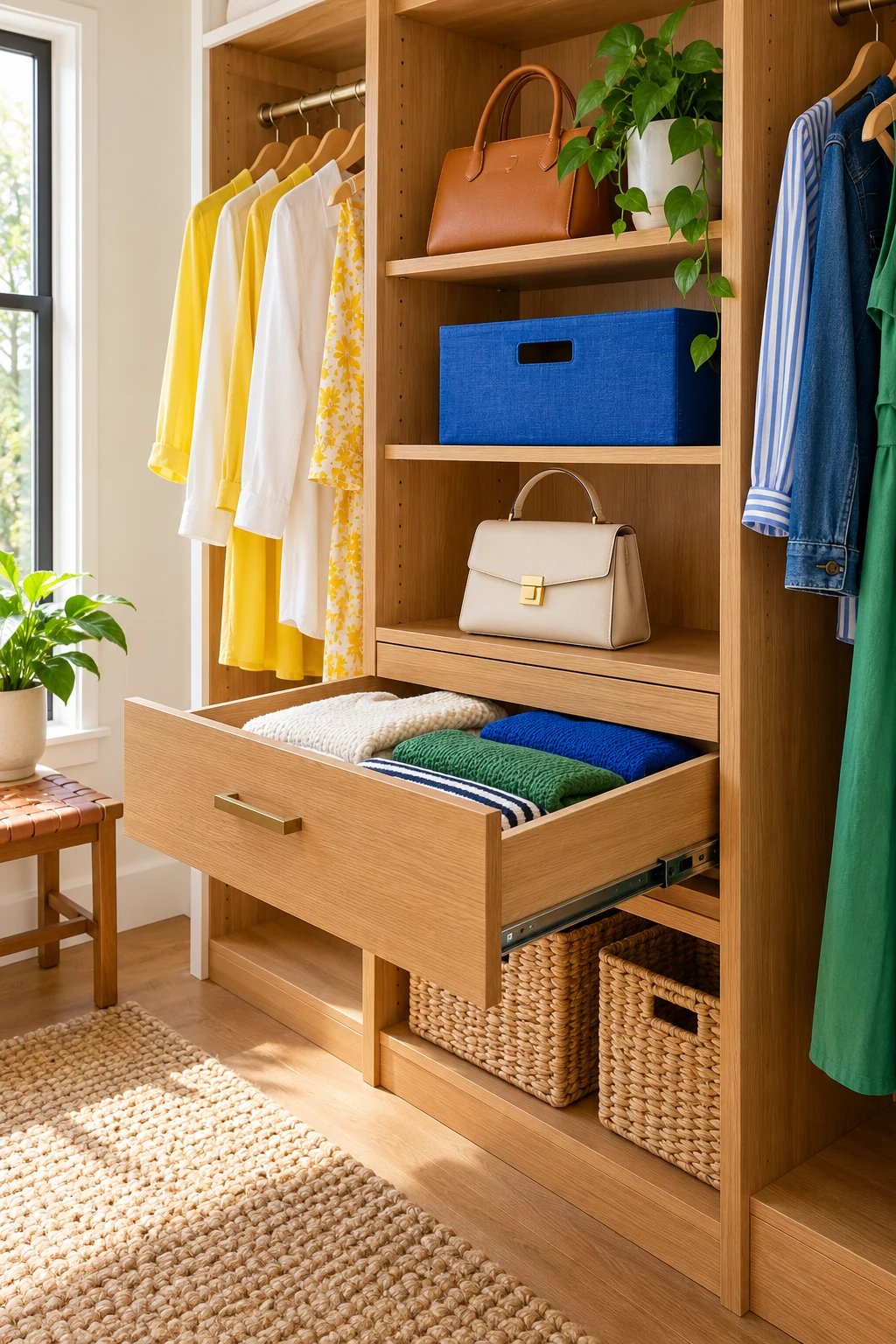
A shelf divider can stop one folded category from leaning into the next. Try it between sweaters and jeans or beside a short row of bags. You still need manageable stacks; a divider cannot make a tall pile easy to search.
LYNK Professional Home Tall White Shelf Dividers come in a two-piece set and attach by sliding over a compatible solid wood shelf. The listing specifies shelves up to 7/8 inch thick. Check that your shelf edge is accessible and suitable, and choose a different design for wire shelving. View on Amazon.
6. Use open bins for soft items that will not stack
Loose scarves, knit caps, and soft lounge shorts rarely stay in a tidy tower. An open bin gives these pieces a shared home without requiring a precise fold. Keep one broad category in each bin so you can browse its contents in a moment.
Choose a size you can pull out and set down comfortably when full. Handles help only if there is room to get your fingers around them. Avoid packing a heavy bin above eye level, and use a container with a smooth interior that will not snag the fabric.
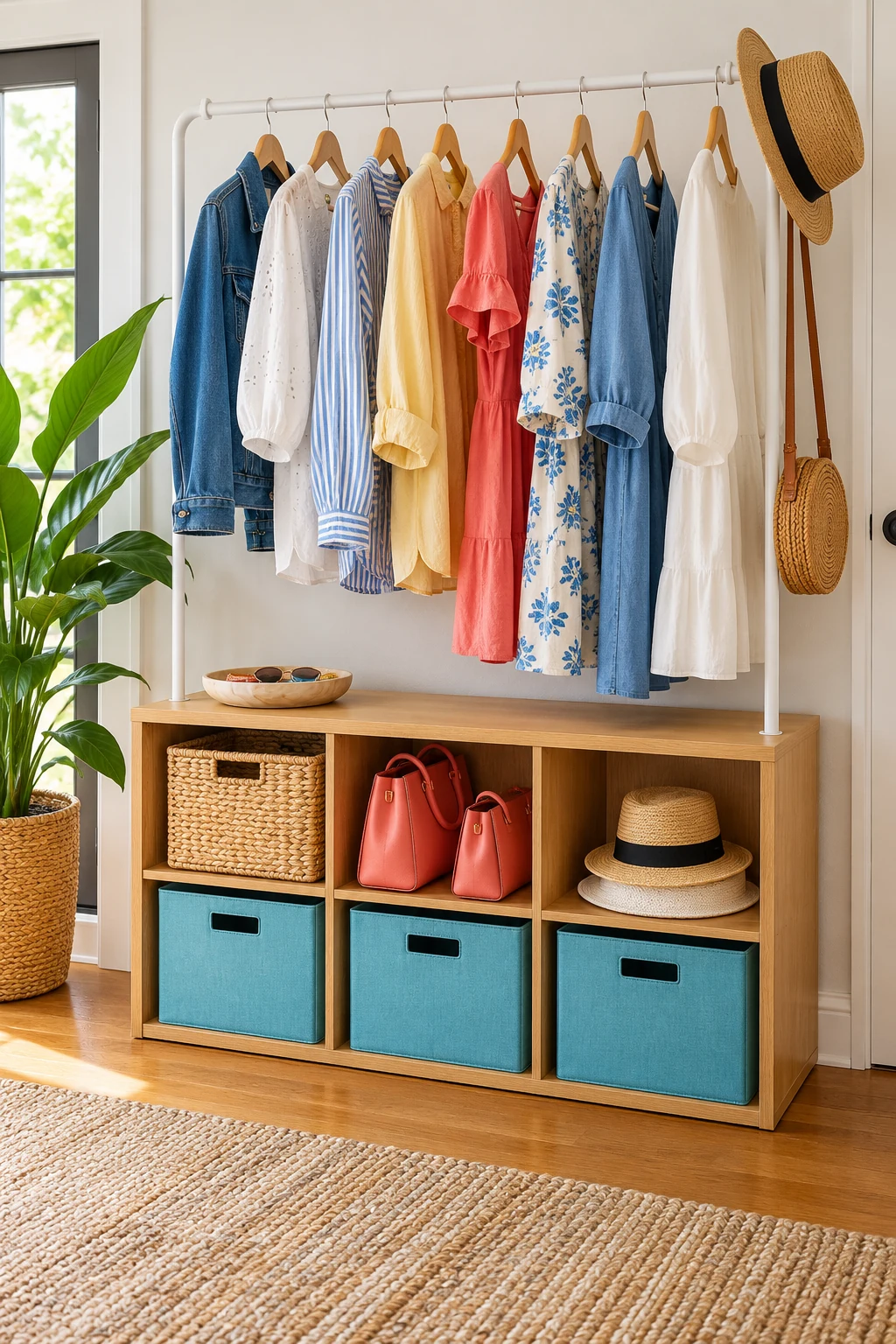
7. Bring the back of a deep shelf forward with a tray
A removable tray can turn a deep shelf into a single accessible group. Try it for small clutches or folded scarves that otherwise drift behind larger items. Pull out the tray to browse instead of reaching blindly behind the first row.
Measure the doorway as well as the shelf before choosing a tray. You need to remove it without tipping the contents or scraping the frame. A tray is not a drawer slide, so keep the weight modest and support it with both hands as it comes off the shelf.
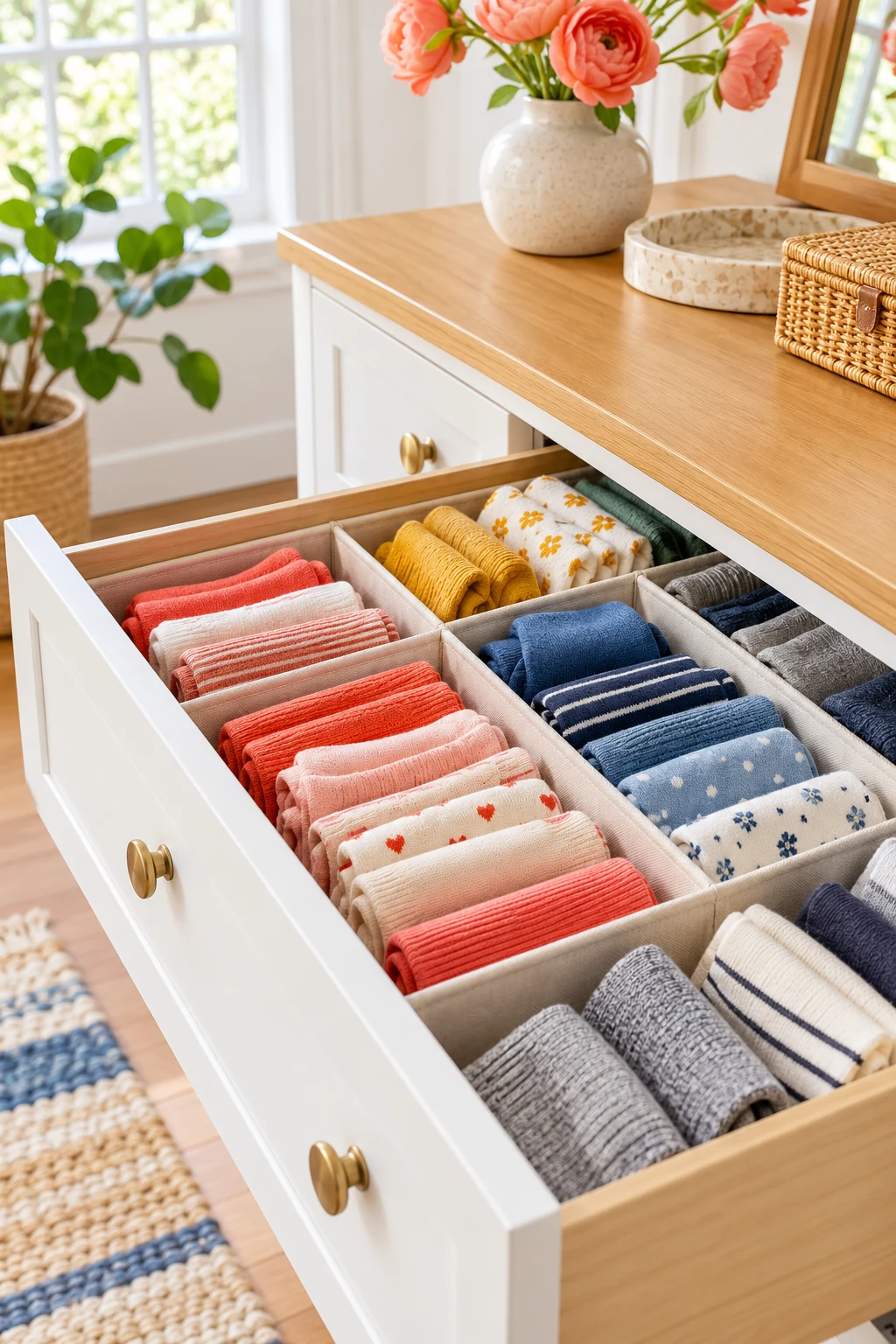
8. Stand flexible clothes upright in a drawer
Fold tees or leggings into shapes that can stand in loose rows with their edges visible. This gives you a view of the category without lifting several layers. Test the height with one garment and close the drawer before refolding the rest.
Soft pieces may need a small open box to keep the row upright when laundry is in use. Do not compress the row until it becomes difficult to return an item. If the fabric will not hold the fold without fuss, a shallow stack may be the simpler choice.
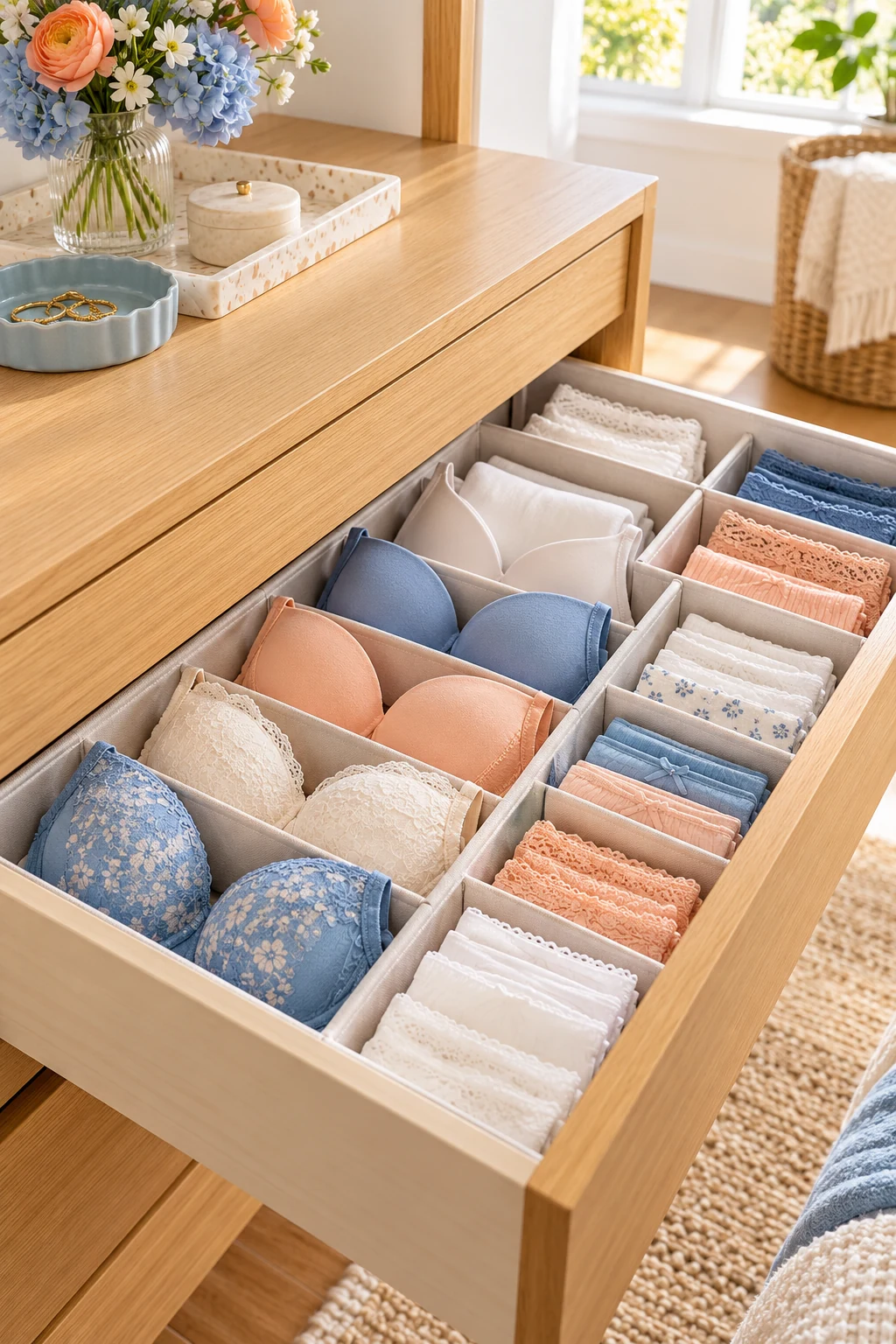
9. Divide socks by the way you use them
Split the sock drawer into categories such as everyday, athletic, and thicker cold-weather pairs. The divisions should reflect what you reach for, not an elaborate system of colors or materials you will not maintain. Keep pairs together without stretching their cuffs unnecessarily.
The Gray Simple Houseware 4-Pack Drawer Organizer Set has several compartment layouts for small clothing. Check the footprint of each insert and its listed 3.5-inch height against your drawer. You can use just one or two pieces and leave open room for bulky pairs. View on Amazon.
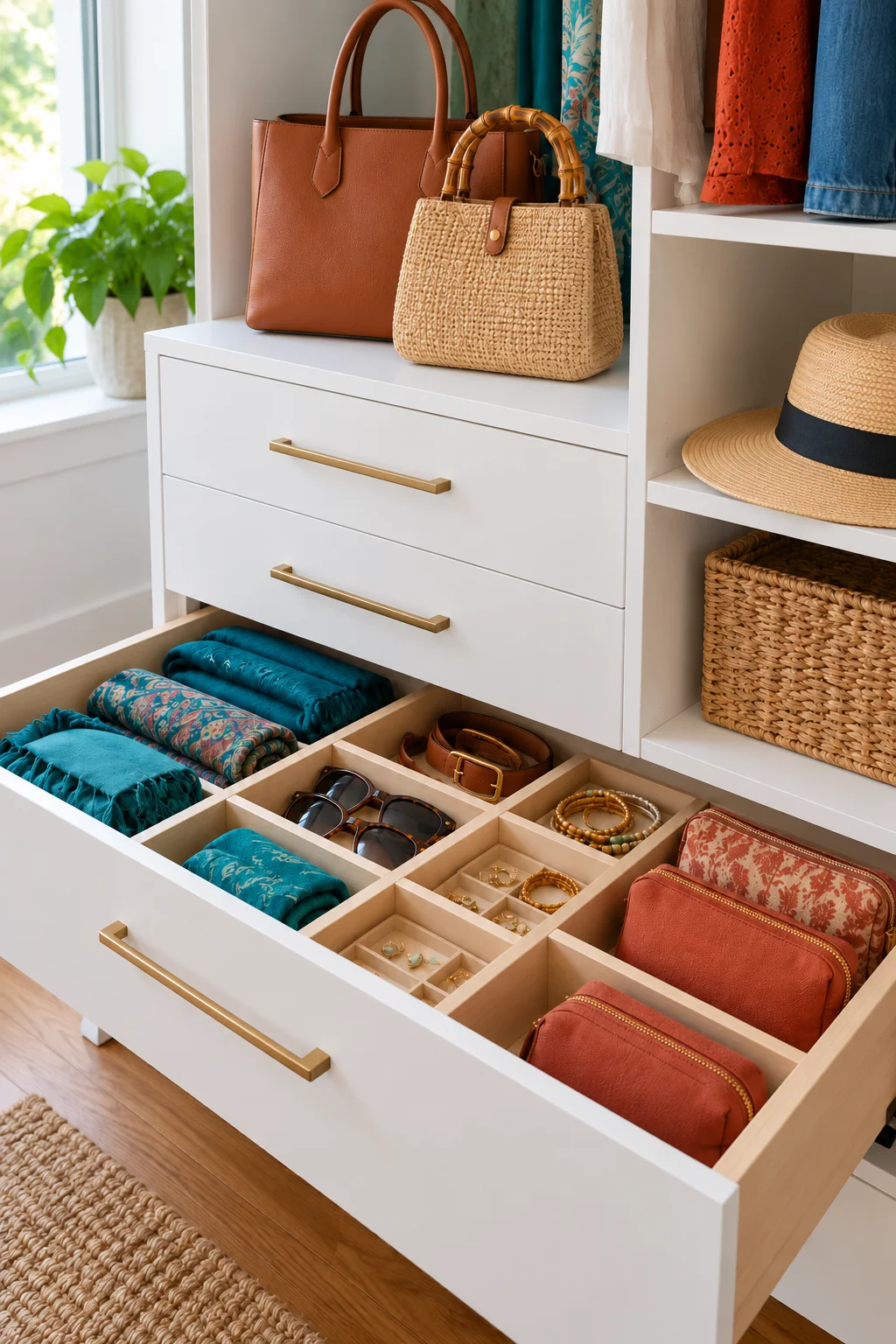
10. Leave a wider compartment for structured bras
A bra with shaped cups may need more room than a small grid cell can provide. Reserve a wider drawer section and arrange pieces according to their care guidance, with the cups supported rather than folded inside out just to fit an organizer.
Keep straps and fasteners from catching neighboring delicate fabrics. Soft bras or bralettes may work in a separate small bin, while structured pieces remain in the open section. Let the garments set the compartment size instead of forcing every item into identical squares.
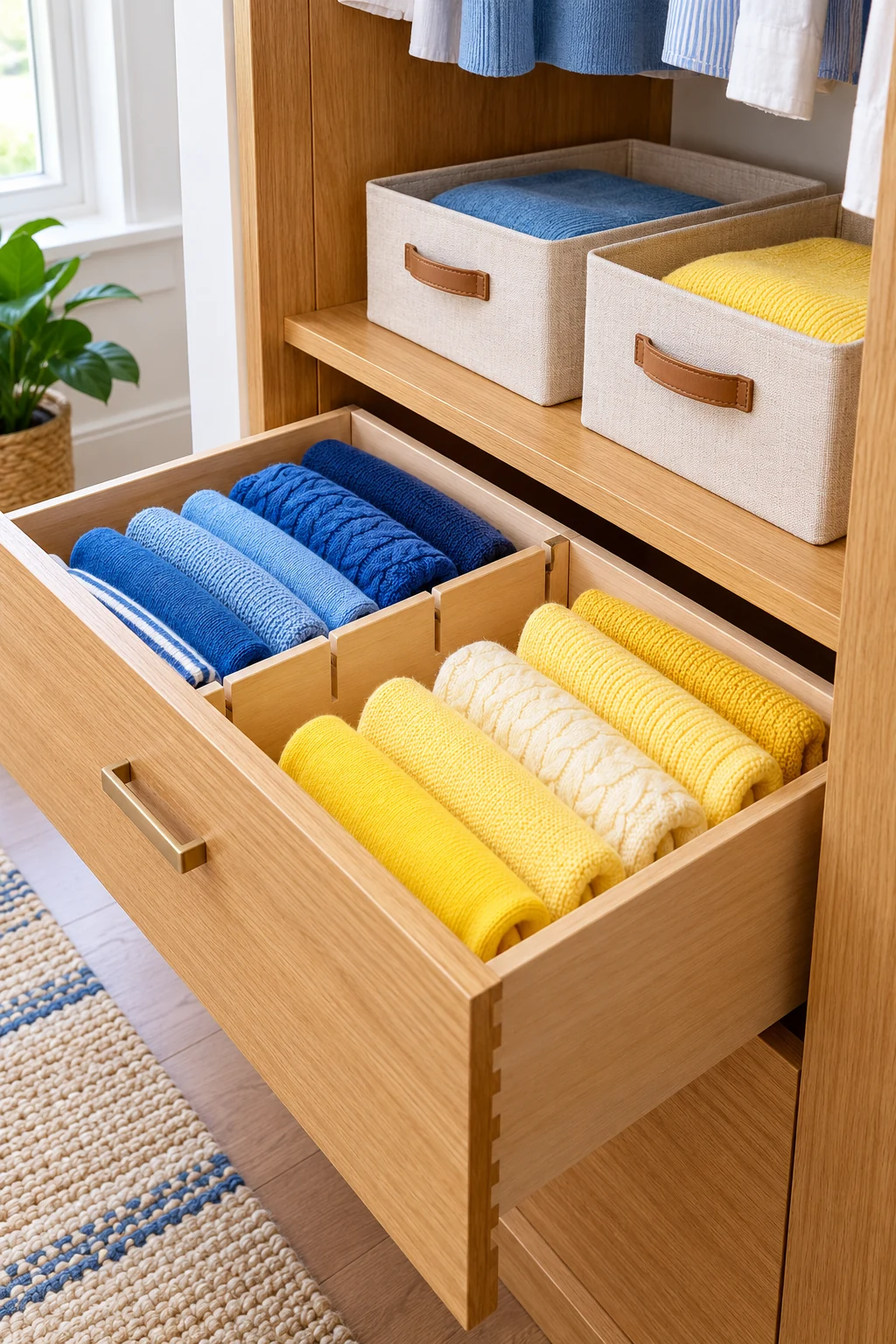
11. Store everyday belts in a shallow row
Coil suitable belts loosely in a shallow compartment so the buckles are visible. If a particular belt should hang according to its care needs, give it an appropriate hook instead. A low tray keeps the group from migrating across a larger shelf.
Leave enough room that removing one belt does not uncoil all its neighbors. Avoid stacking heavy buckles against delicate finishes, and separate dress belts from less-used pieces if the collection becomes crowded. A single row is easier to scan than a deep bowl.
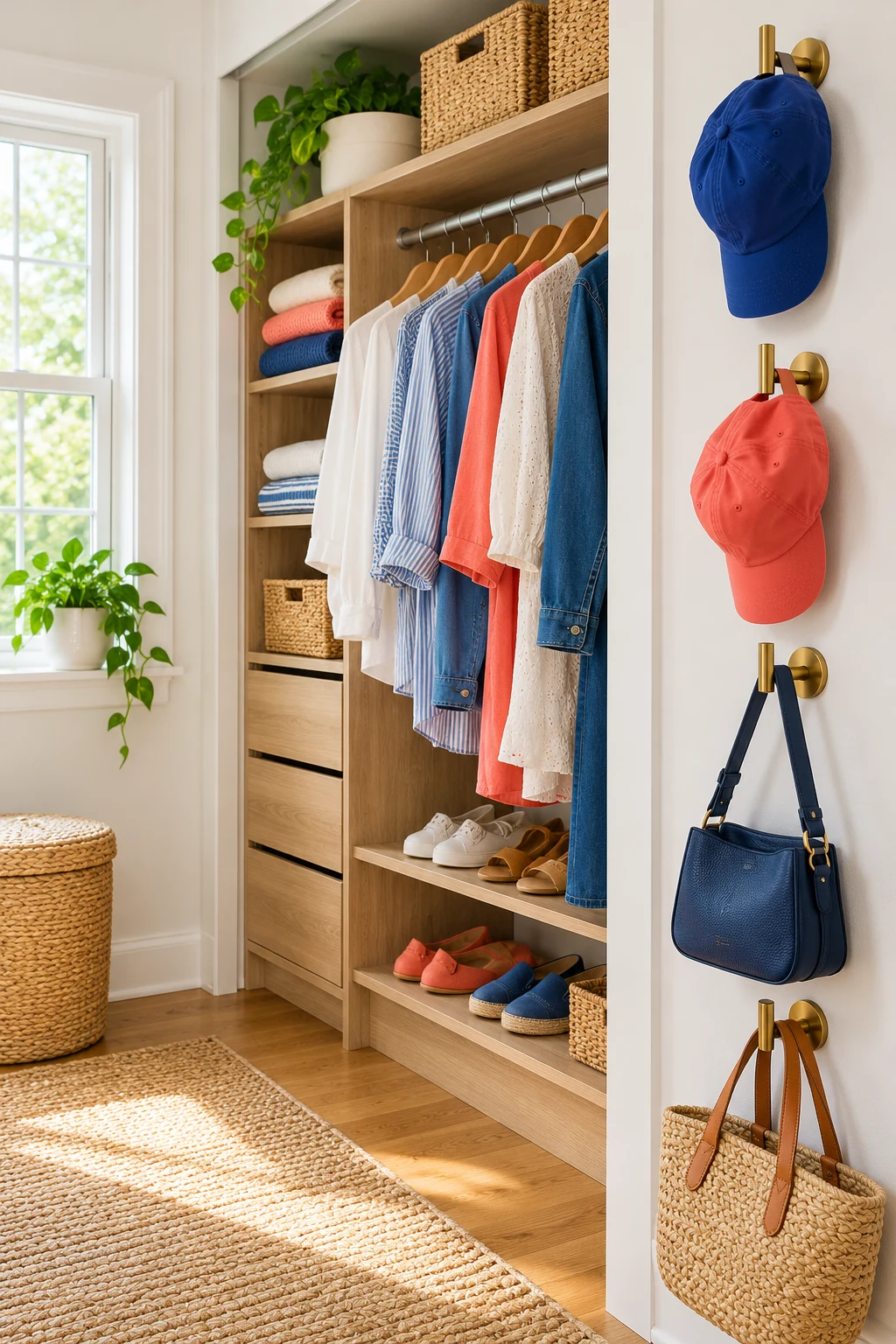
12. Give ties separate spaces
Ties are easier to choose when their patterns remain visible. Hang them on a suitable organizer or lay them in separate shallow sections, following the fabric’s care guidance. Avoid cramming several into one small cell where they become creased or difficult to remove.
Keep the selection near the shirts or jackets you wear with it. If you store a tie organizer on a rod, check that it does not block the adjacent hangers. Leave occasional ties farther back and keep the regular rotation in the easiest positions.
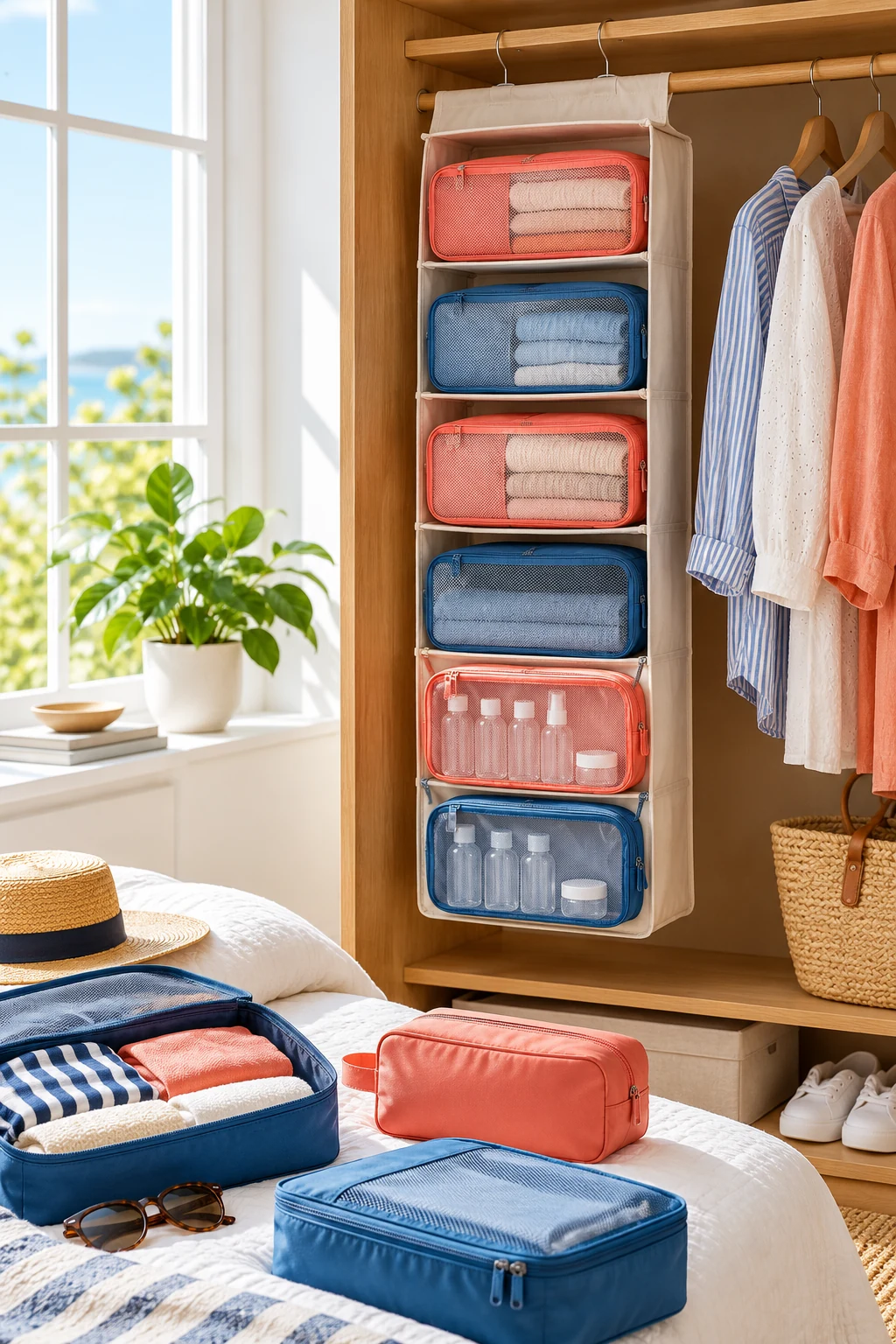
13. Keep small scarves visible without knotting them
Light scarves often vanish inside a large basket. Lay them in a shallow tray or loosely fold them into a small open bin where you can see their colors. Smooth boundaries are helpful for delicate fabrics that catch on rough basket fibers.
Choose a storage method compatible with the material and avoid tight knots that are only there to hold a scarf on an organizer. If you have several similar pieces, separate them by size or use. You should be able to remove one without pulling a tangled bundle into your hands.
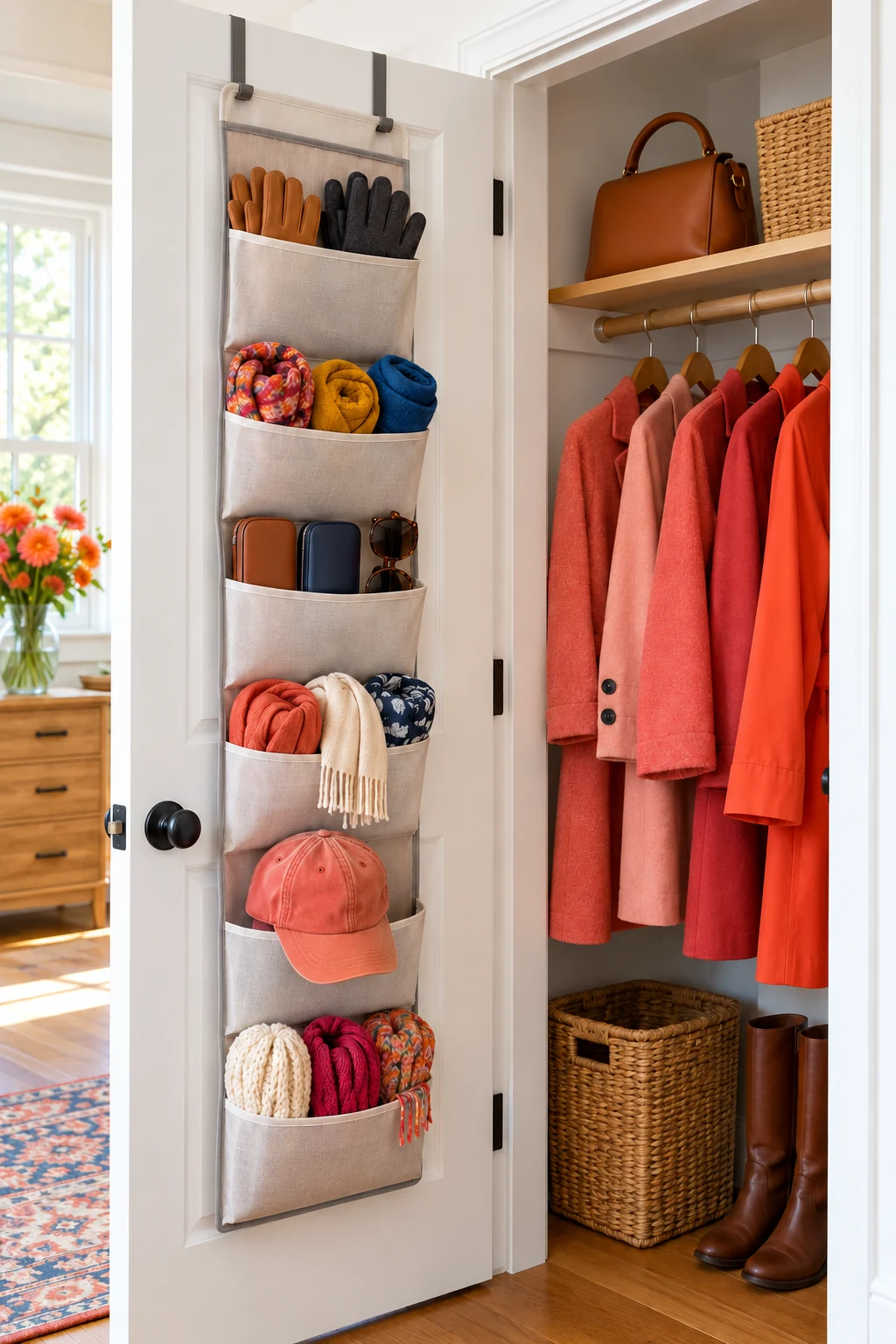
14. Keep cold-weather accessories together
Group a hat, gloves, and scarf used for the same weather in an easy-to-grab bin. This is especially useful during a season when you need the same accessories repeatedly. Put frequently used sets near the closet opening rather than on a high seasonal shelf.
Label an opaque container with simple wording that makes sense to everyone using it. Let wet items dry according to their care instructions before returning them to storage. When the weather changes, move the clean, dry group together instead of rediscovering scattered gloves next winter.
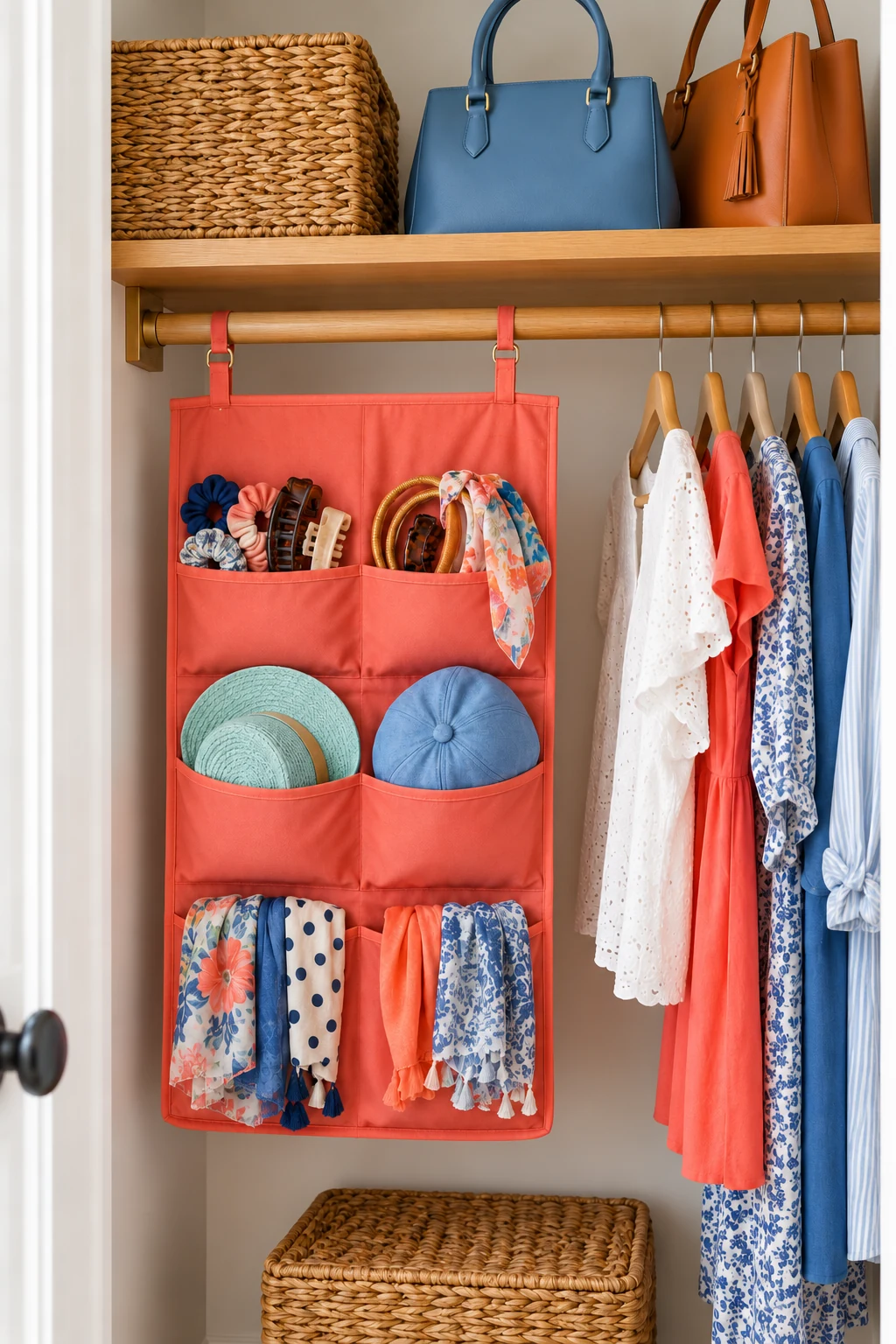
15. Use door pockets for small shoes and accessories
Clear pockets can make a collection visible without occupying drawer space. Use them for suitable small shoes, rolled soft accessories, or other light items that fit comfortably. Keep the most-used pockets at a height you can reach without stretching.
The Gray Simple Houseware 24 Pockets Clear Over the Door Shoe Organizer is listed at 19 inches wide and 64 inches high. Its hooks suit doors up to 1-3/8 inches thick, subject to top-gap and closure clearance. Test a compatible hinged door before filling it; bulky shoes may not fit the pockets. View on Amazon.
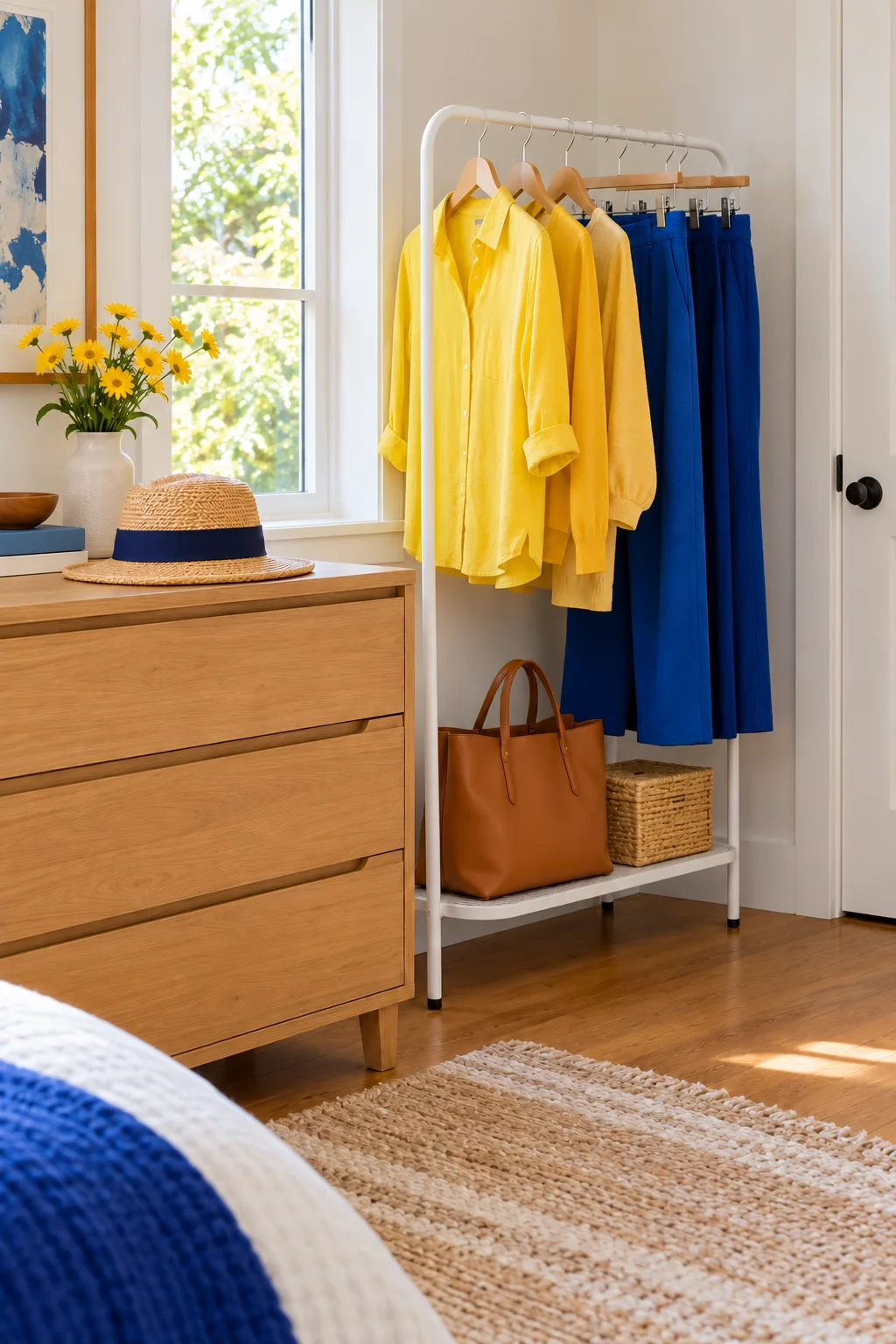
16. Give frequently worn shoes a low rack
A small rack can separate the pairs that otherwise overlap on the floor. Arrange shoes by how often you wear them and keep both shoes in each pair visible. Place it where you can remove a pair without crawling beneath long clothing.
The Bronze Simple Houseware 3-Tier Stackable Metal Panel Shoe Rack is a freestanding, assembly-required option. Compare its current dimensions with your floor space and tallest everyday shoes. Pair capacity depends on the footwear, and this suggestion is for one rack rather than an improvised stack. View on Amazon.
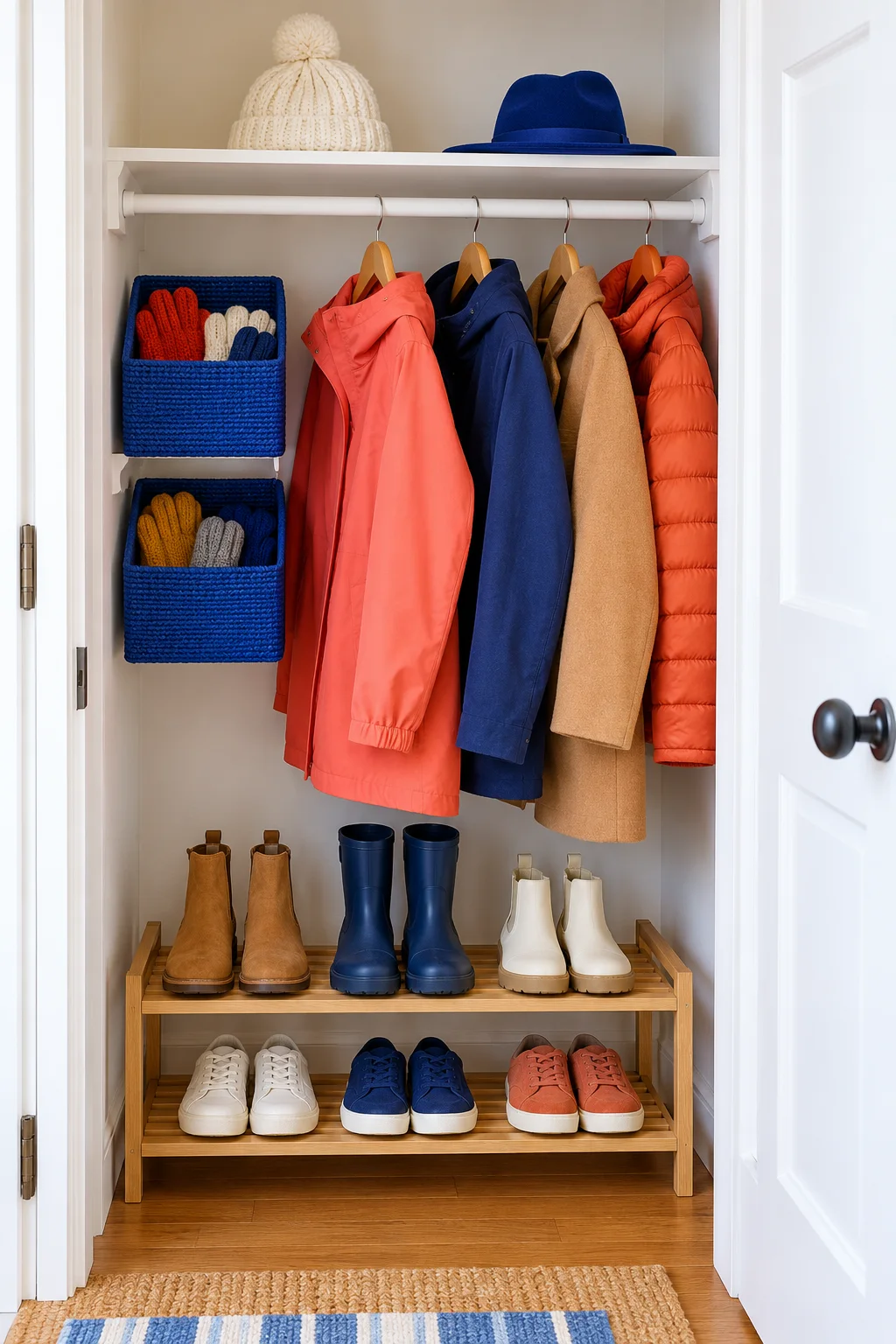
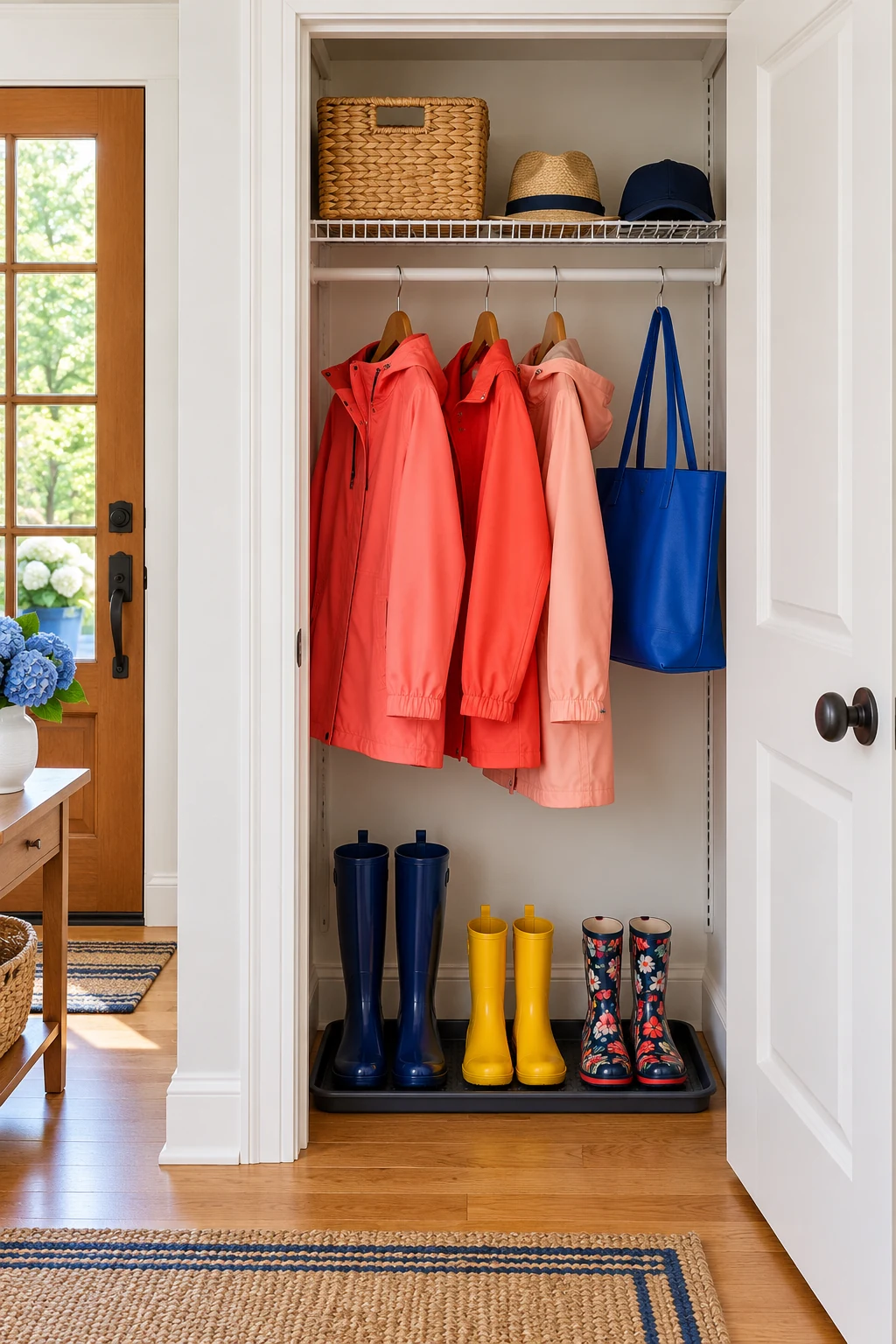
17. Reserve a taller opening for boots
Knee-high or tall boots need vertical space that ordinary shoe shelves may not provide. Keep them upright in a clear bay, using supports only when suitable for their construction and care instructions. A washable tray can make the area easier to clean.
Measure the boots at their actual height before choosing the bay. Keep them clear of long hems, and avoid placing damp footwear directly beneath clean clothing. If this category is seasonal, make the opening useful for another easy-to-move item during the rest of the year.
18. Identify occasional shoes on the box front
Occasion shoes can stay in appropriate boxes if the front tells you exactly what is inside. Use a short label such as black dress shoes or add your own small identification photo. Face the labels toward the direction from which you retrieve the boxes.
Keep stacks low enough to handle safely, with the pairs you use more often near the top or front. Follow the shoes’ care guidance and store them clean and dry. Packaging protects access only when you can reach the right pair without unbuilding a tall tower.
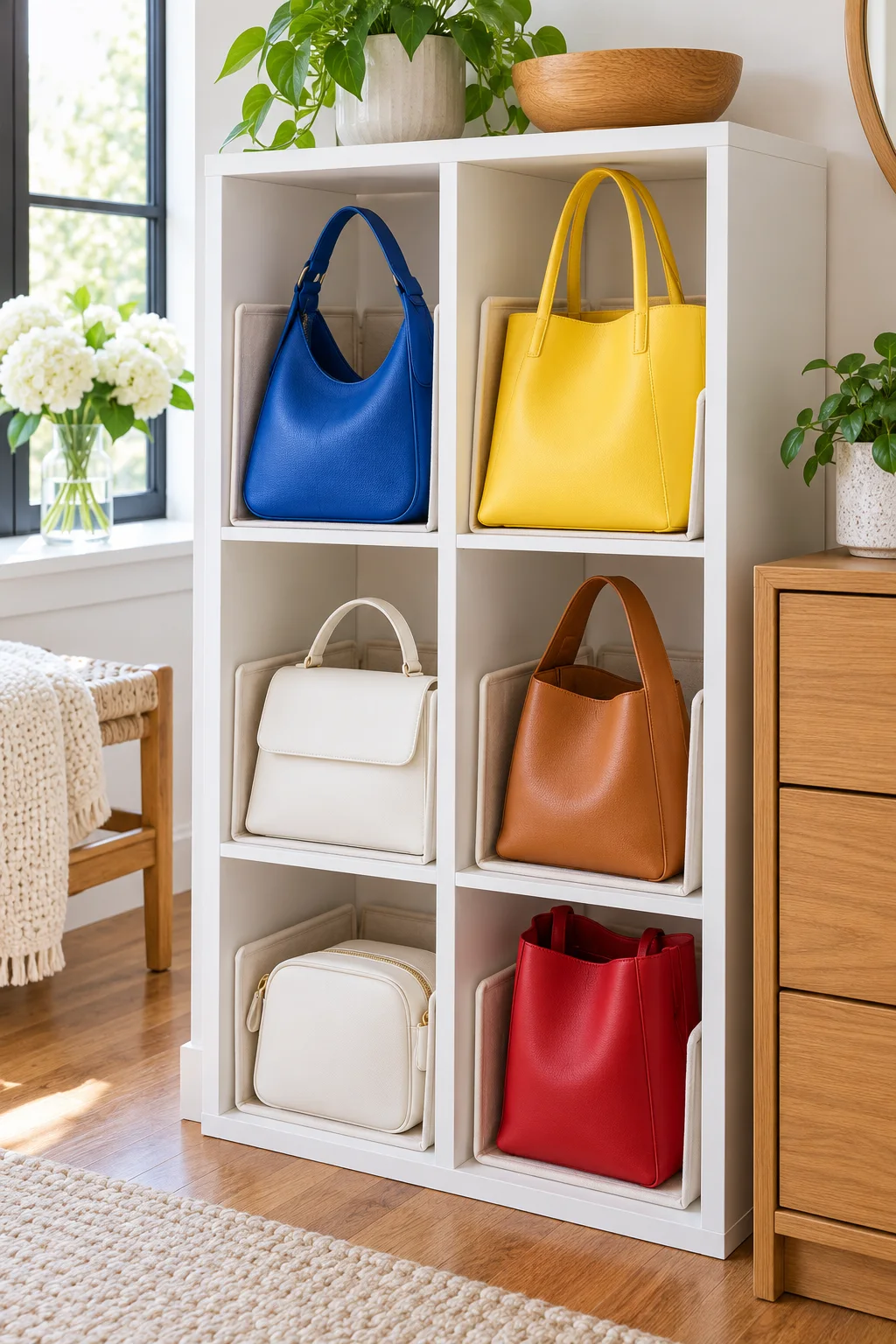
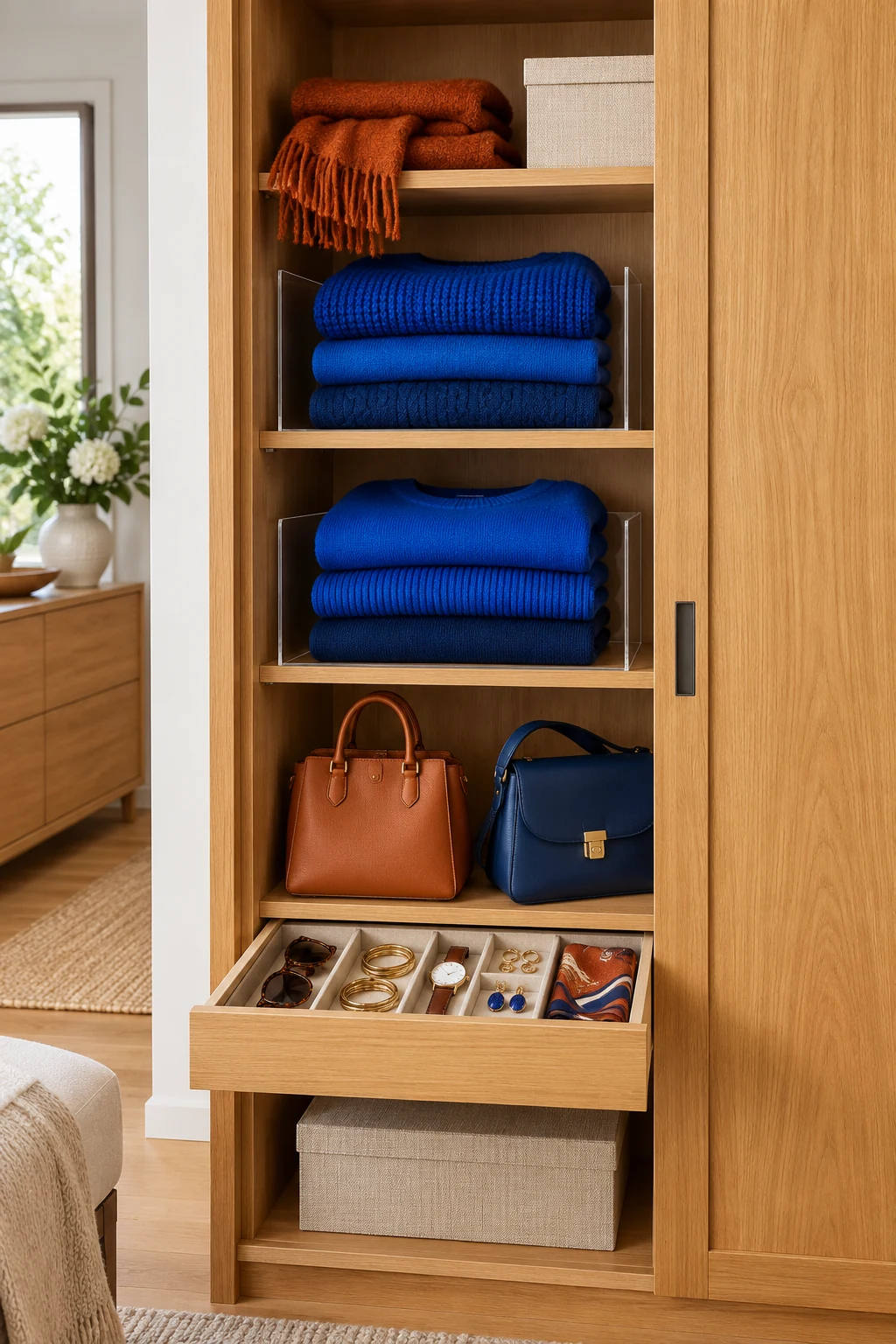
19. Stand handbags in individual shelf spaces
A handbag row makes it easier to pick a bag without unstacking several others. Place structured bags upright if their care instructions support that position. Soft stuffing or a suitable dust cover may be helpful for longer storage, depending on the bag.
Allow room around hardware and handles so bags do not rub against one another. Avoid squeezing a wide tote into a narrow divider or hanging a loaded bag by its handles for storage. Put your current everyday bag where it is easiest to remove.
20. Make bag changes easier with a small essentials pouch
Keep the small things that routinely move between bags in one pouch or removable organizer. It might hold a pen, tissues, and other everyday nonvaluable essentials. Returning this pouch to a visible shelf spot helps prevent several bags from becoming separate collections of forgotten items.
Choose a size that fits the bags you actually alternate between, and do not fill every pocket simply because it exists. Leave items that need specific protection in appropriate cases. Review the contents periodically so the pouch remains useful rather than turning into a portable junk drawer.
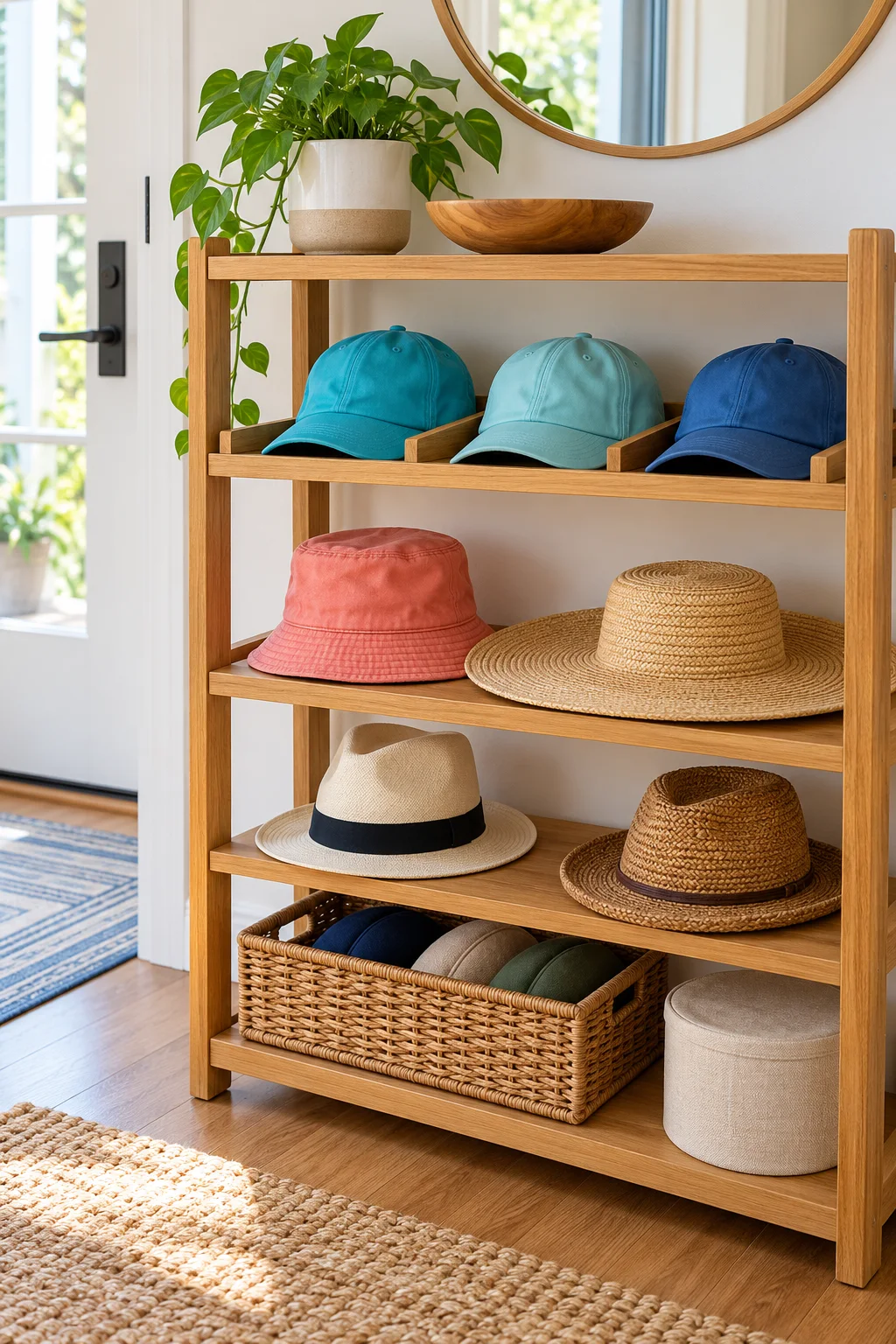
21. Give hats support suited to their shape
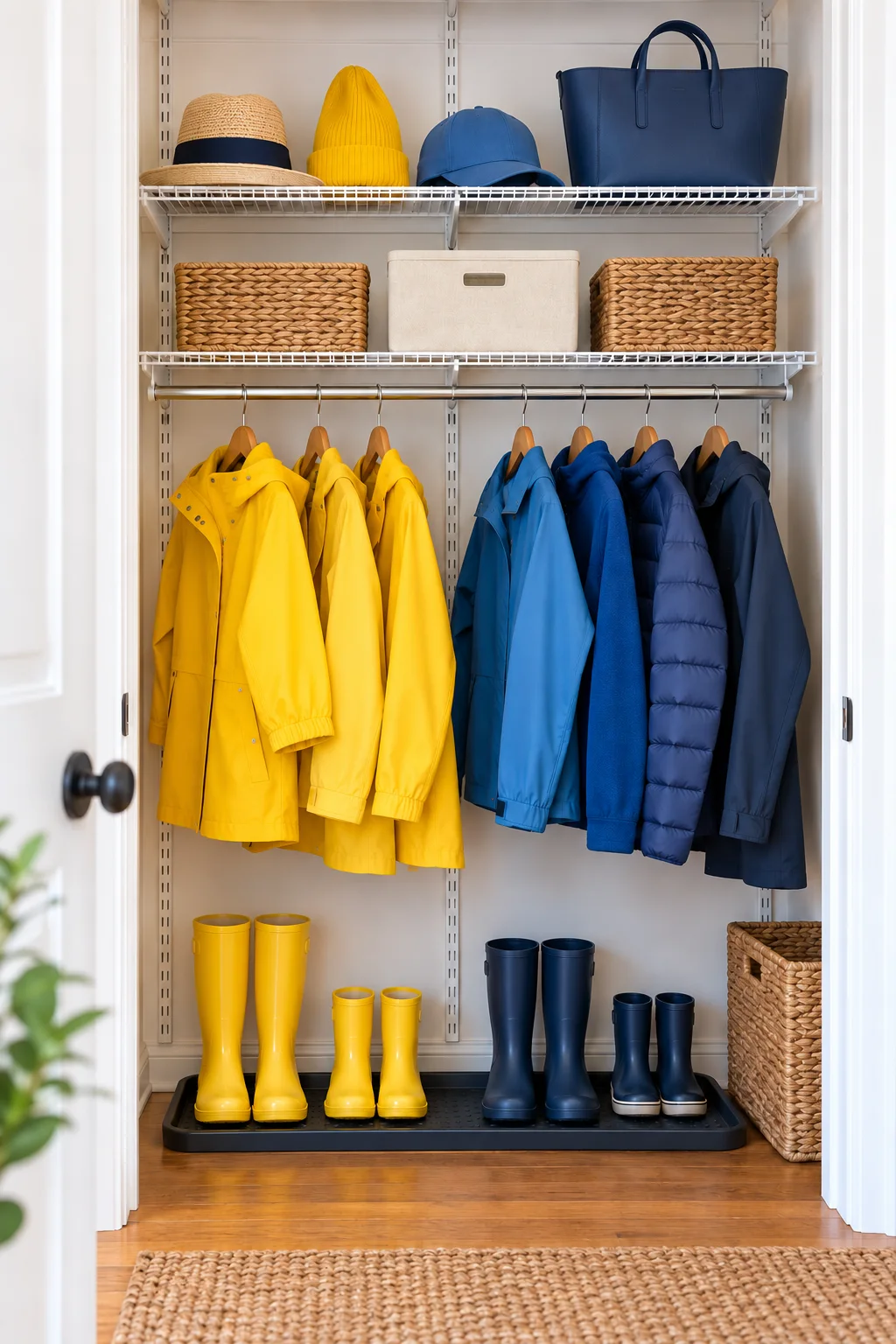
Baseball caps, soft knit hats, and structured hats do not all need the same organizer. Soft hats may work in a bin, while a structured brim needs a shelf or box that supports it without bending. Sort by storage need before buying a matching set of containers.
Keep structured hats away from objects that could press down on the crown. Choose a reachable location if they are part of your regular wardrobe, and follow material-specific cleaning and storage advice. A neat stack is only useful when it does not distort the pieces inside it.
22. Use individual cases for sunglasses
A shallow drawer section can hold glasses in their suitable cases with the case edges visible. This protects the lenses from loose buckles and other hard accessories while making it easy to find the pair you want. Keep cleaning supplies in a separate small compartment.
Measure with the largest case before arranging the drawer. Do not force a hinged case into a space where it cannot open comfortably, and avoid stacking a heavy organizer on top. If the collection is small, one existing tray may be enough to keep the cases together.
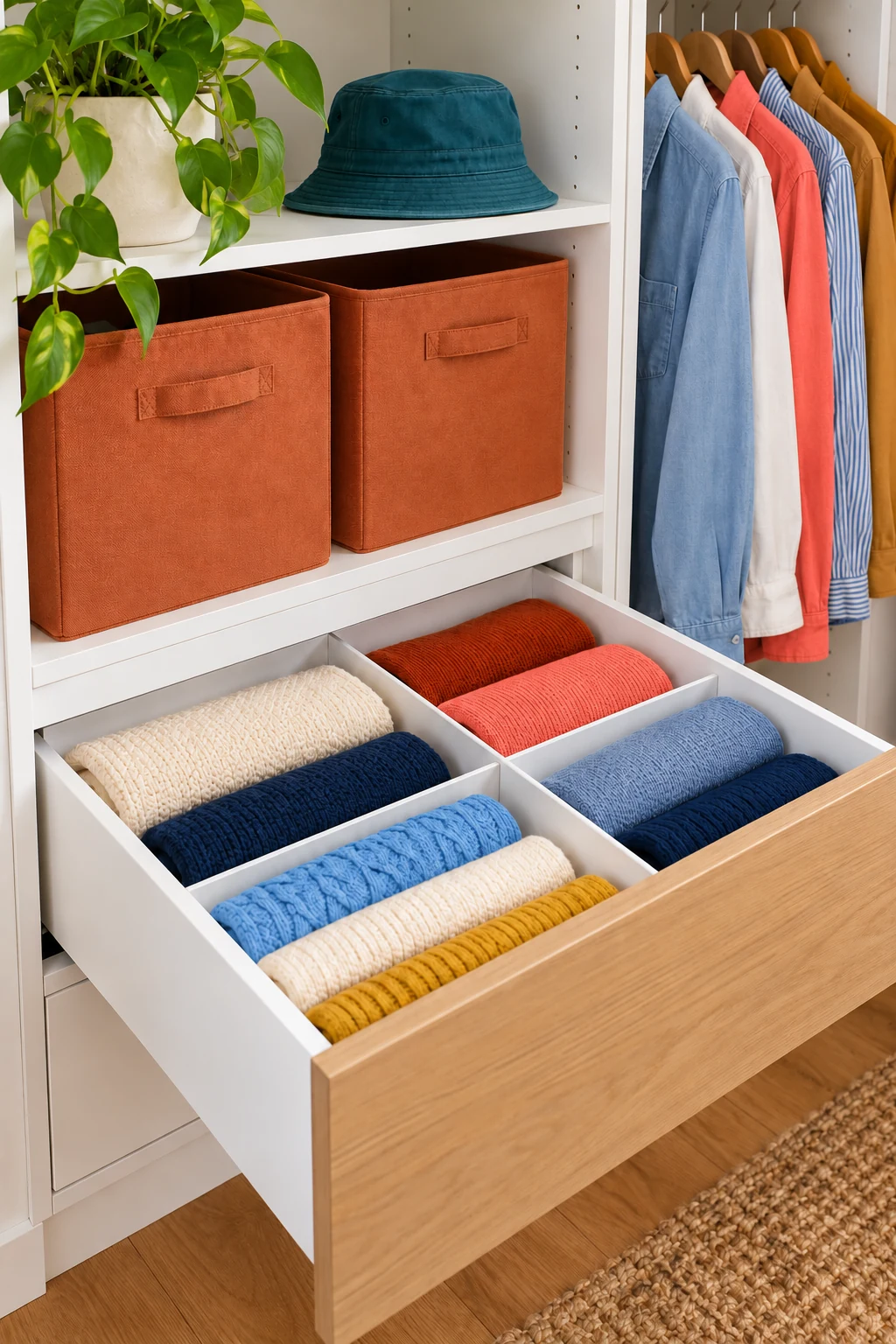
23. Separate necklaces before they tangle
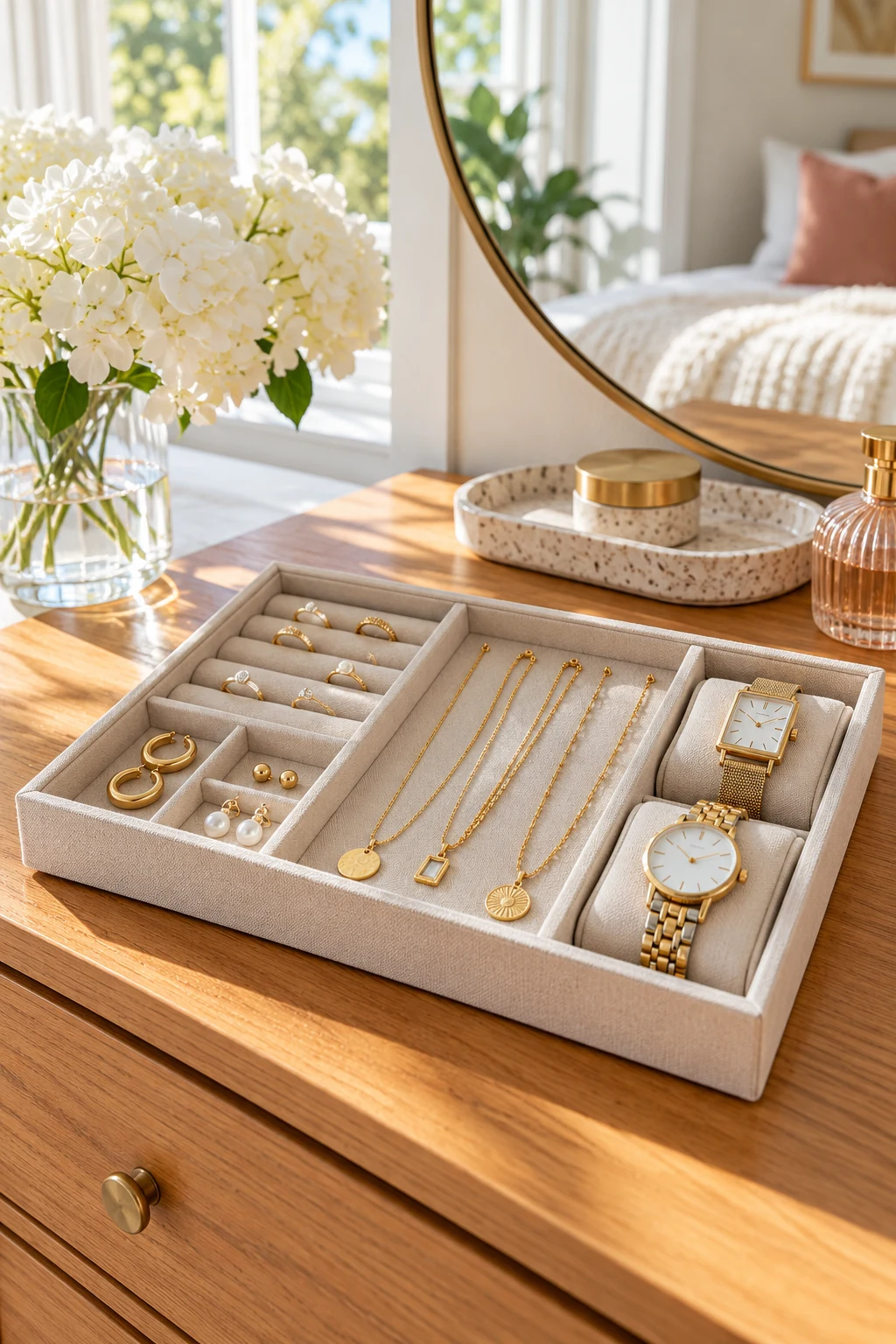
Store fine chains individually in suitable compartments or on an appropriate jewelry holder. Keep enough distance between pieces that their pendants and clasps do not catch one another. The right arrangement depends on the jewelry materials and the storage guidance that comes with them.
Use the closet only if the location suits those care needs and the pieces remain accessible. A general clothing organizer is not automatically protective jewelry storage. Keep delicate items away from rough edges, perfume residue, and other accessories that could scratch them.
24. Keep a few outfit pieces together
Reserve a small temporary spot for the outfit you plan to wear next. Put the relevant garments together and keep the shoes nearby if there is a clear safe place for them. This works particularly well before an early start or a day with a specific dress requirement.
Empty the spot when the outfit changes or the day is over. It should hold a current plan rather than every combination you might wear someday. If you use hooks, install them for the surface and expected load and check that garments stay clear of door movement.
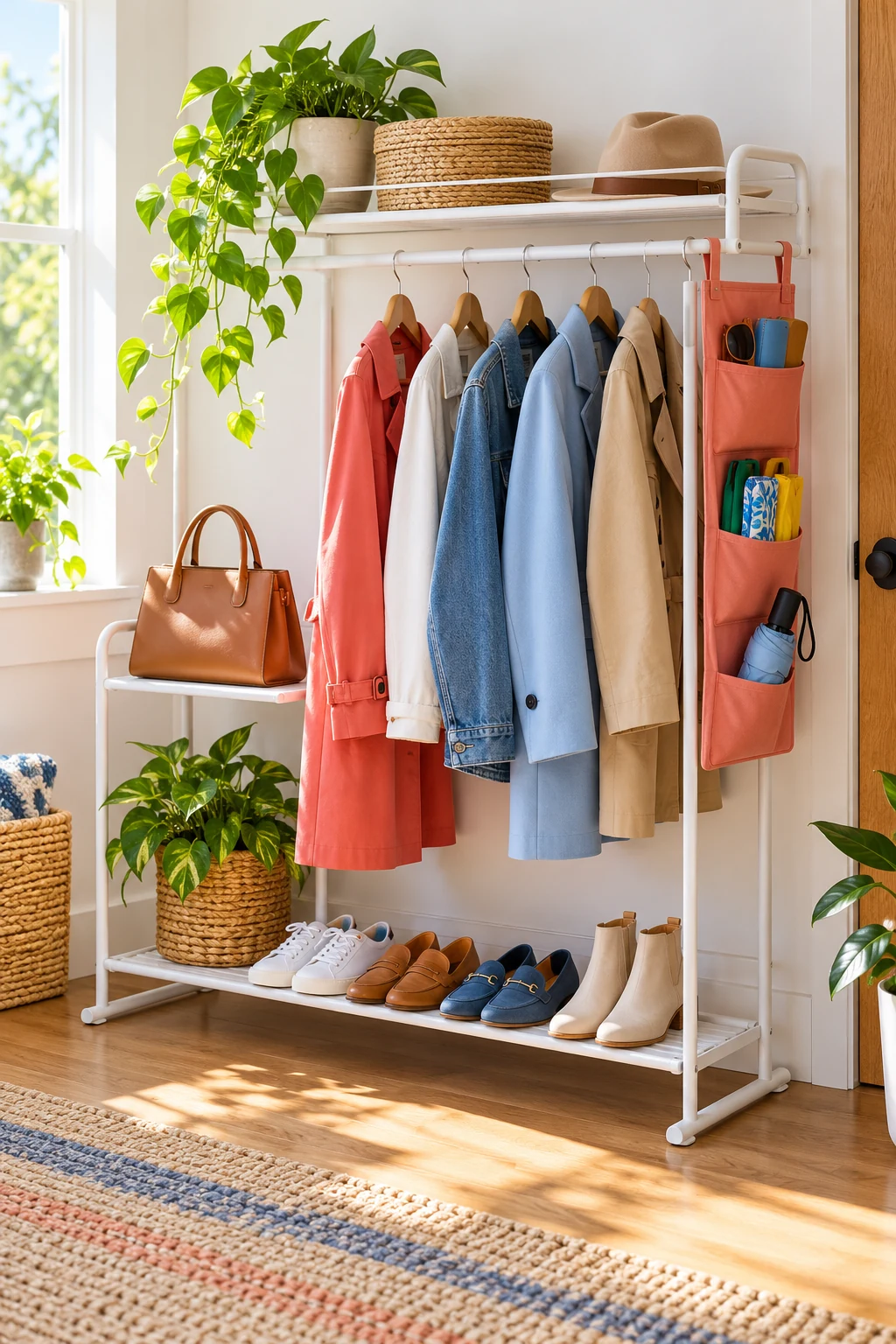
25. Separate clothing you intend to rewear
Briefly worn clothing needs a deliberate place if it is not going straight to laundry. Set aside a few hangers or an appropriate hook for pieces you expect to wear again soon. Keep them apart from fresh laundry so you can inspect and decide before returning them to the main wardrobe.
Avoid a deep closed bin that hides an expanding pile. When this small section is full, make the laundry-or-rewear decision rather than adding another hanger. The point is to replace the chair pile with a visible limit you can maintain.
26. Match the hamper to the route out of the closet
The best hamper location is one you can reach and remove without shifting other storage. Test it when it is filled, not just when it is empty. If the hamper has a lid, leave clearance for opening it without hitting a shelf or hanging garments.
You may find that a spot just outside the closet works better than using the last available floor bay. Keep the path clear and deal with damp clothing according to care guidance. A hamper should simplify laundry collection without blocking the rest of the organization.
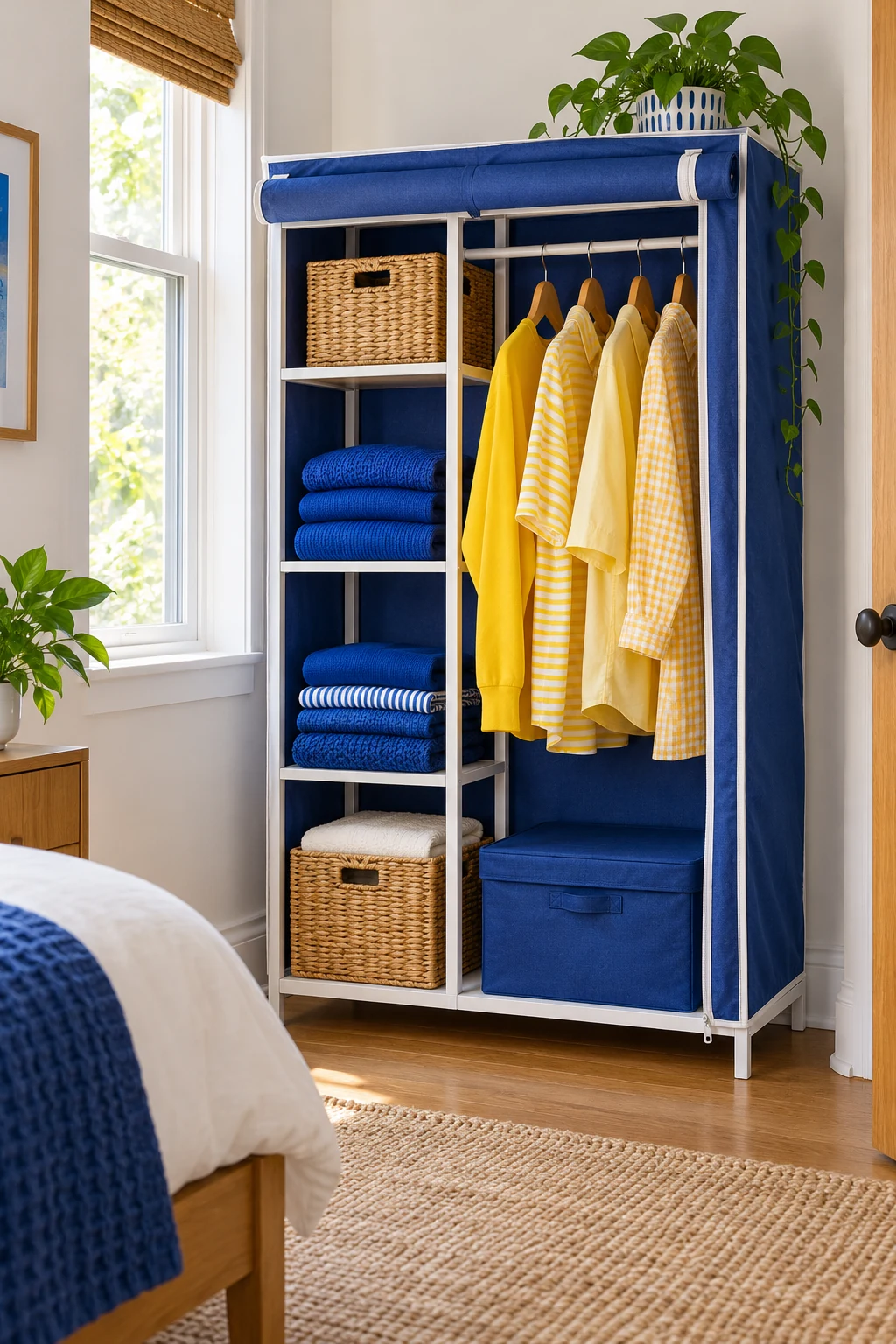
27. Move off-season soft clothing to a separate container
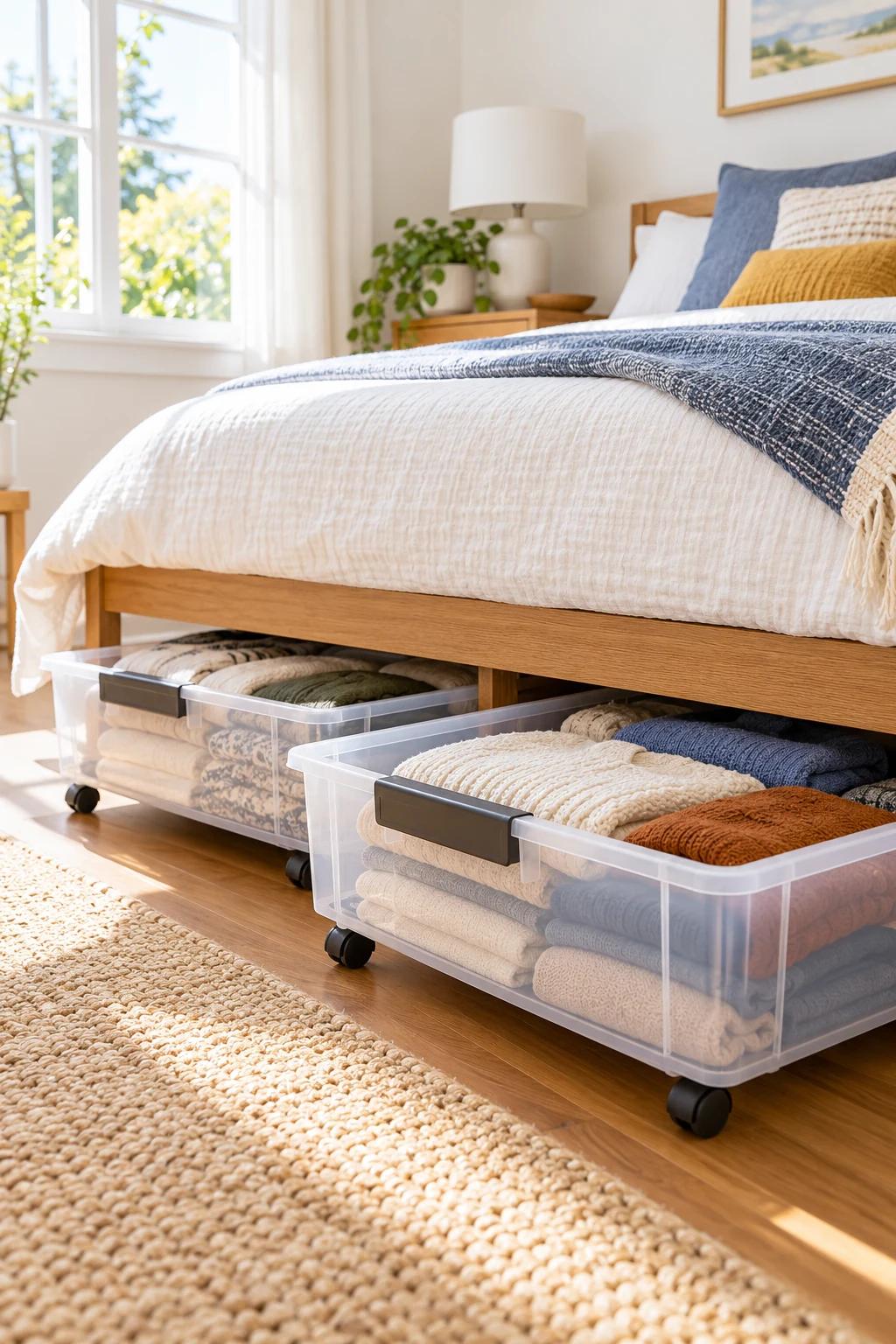
Taking selected seasonal pieces out of the daily closet can make the remaining organizers easier to use. Group clean, fully dry items by season or category and write down what leaves the closet. Keep a few transitional pieces accessible if the weather changes often.
The Gray 2-pack of Amazon Basics Under Bed Storage Bags has clear tops for identifying contents. The selected version is listed at 42 by 18 by 6 inches, so check bed supports and the filled bag’s clearance. These bags are not a verified airtight or waterproof storage solution. View on Amazon.
28. Park empty hangers together
An empty hanger between every two garments makes the closet look fuller and can slow down putting laundry away. Move unused hangers to one short section of the rail or a suitable hanger holder. Keep the shapes facing the same way so they do not tangle.
Limit the reserve to a realistic amount for the clothes currently in the wash and any planned additions. If extra hangers consume useful clothing space, store the surplus elsewhere or pass them on. A small visible supply is more useful than a crowded knot of hooks.
29. Keep repairs and returns out of the wearable wardrobe
Give clothing waiting for a repair, exchange, or decision a clearly identified temporary container. A missing button should not send the same shirt back and forth through the rail all month. Attach the needed action to the item or keep a short list with the container.
Place the container where you will notice it and choose a review date that suits any real return deadline. Keep receipts together without leaving needles or other repair tools loose among clothes. Once the action is finished, return the item to its proper category or move it out.
30. Reset organizers as clean laundry goes back
Putting clothes away shows whether the organizers still fit the wardrobe. Notice which drawer needs forcing, which bin has become mixed, and which shoes have no place. Fix that one problem while the category is already in your hands.
Return misplaced items and remove obvious empty packaging before adding more storage. If a compartment is always difficult to use, simplify the category or choose a better location. An organizer earns its space by making both taking out and putting back easier.
Pick one category and give it an organizer that is easy to see, reach, and refill. Keep the arrangement that makes your daily routine simpler, then tackle the next problem when you are ready. Subscribe to the Havelyo email list for more realistic organizing ideas and small-space decorating inspiration.