
Closet Organization
24 Closet Design Ideas for a More Functional Wardrobe
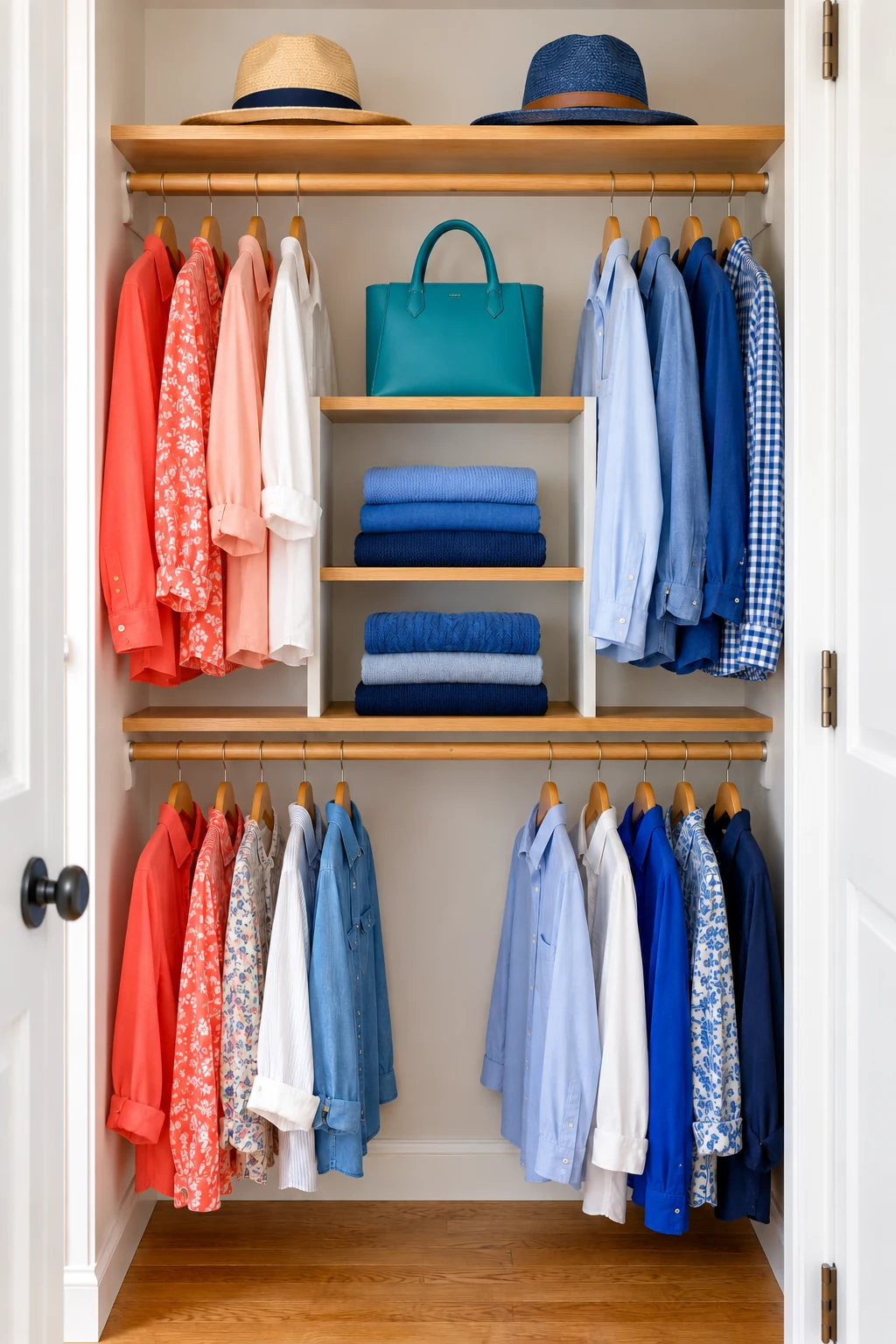
A closet can have plenty of storage and still be awkward to use. A drawer hidden behind a sliding door, a rail that crowds long dresses, or a shelf you cannot reach can make a beautiful design frustrating every morning.
These 24 closet design ideas focus on the decisions that make a wardrobe work: where each category lives, how you reach it, and what happens when laundry comes back. Start by measuring the opening and sorting your clothing by storage type. Then choose the ideas that fit your space, routine, and budget instead of trying to use all of them.
This article contains affiliate links. If you buy through them, Havelyo may earn a commission. As an Amazon Associate I earn from qualifying purchases.
1. Divide the space by what you actually wear
A useful closet layout starts with the balance of your wardrobe. Separate hanging pieces, folded clothes, shoes, and accessories, then compare how much room each category needs. If sweaters outnumber button-down shirts, a wall of rods may leave the hardest storage problem untouched.
Sketch those categories as blocks before choosing a system. Give daily clothing the most accessible blocks and occasional pieces the less convenient ones. Leave a little expansion space rather than designing every section around a tightly packed photograph; laundry should fit when everything is clean.
2. Line up the useful storage with the door opening
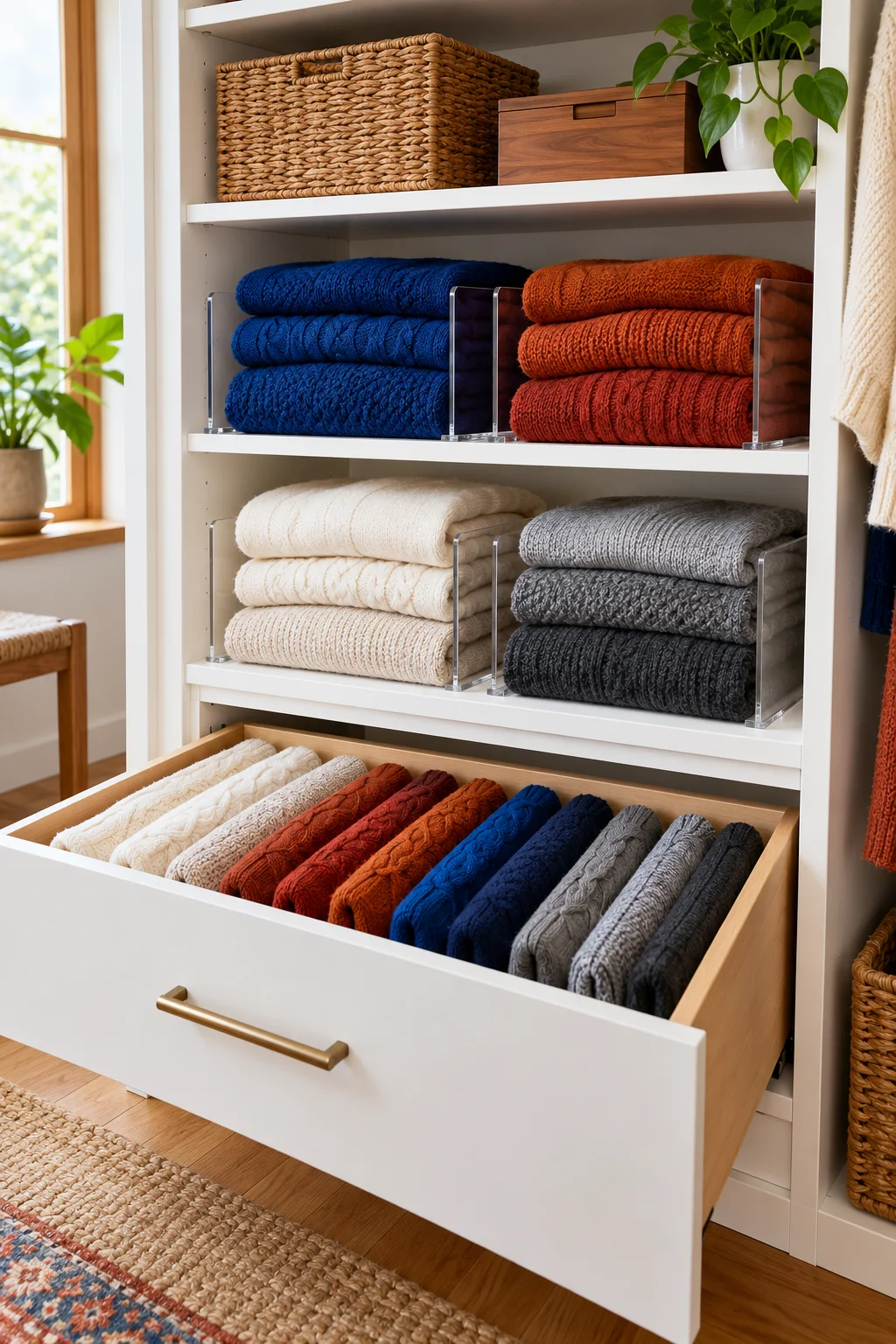
The opening determines what you can reach, even when the closet itself is much wider. In a reach-in with sliding doors, test which sections are exposed at the same time. Put drawers and frequently removed bins where they can travel straight out without hitting a door panel.
Measure the clear opening as well as the interior wall. Include trim, handles, and tracks in your plan, and check hinged doors through their full swing. A shelf tucked behind a return wall can still work for occasional storage, but it is a frustrating location for the drawer you open every morning.
3. Use a center tower to separate different tasks
A shelf tower can divide a wide reach-in into clear sections: folded clothes in the middle, short hanging on one side, and a longer bay on the other. This arrangement gives the eye an easy route through the closet and keeps small items from spreading along an uninterrupted shelf.
Position the tower where its shelves remain accessible with the doors open. Choose its width around your folded clothes, not a standard module simply because it looks balanced. Follow the system maker’s anchoring requirements and check the wall and floor conditions before ordering a tower that must be secured.
4. Keep a full-height bay for long clothing
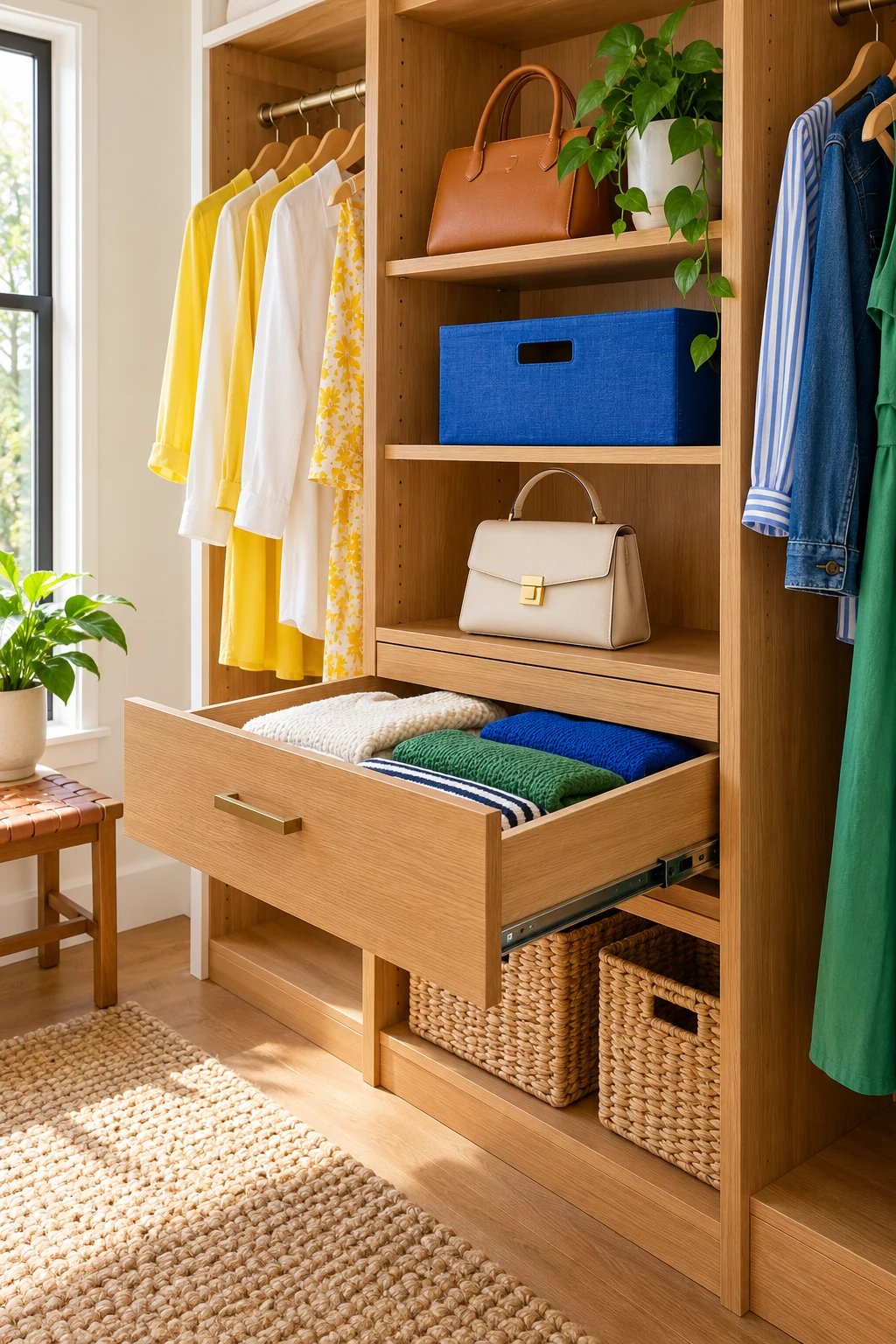
Give dresses, long coats, and jumpsuits a continuous hanging area before filling the floor with storage. Hang a representative long piece on its usual hanger to judge the required drop. The finished layout should leave its hem free rather than resting on a shoe rack or basket.
Place this bay at an end when that leaves a larger uninterrupted area for shorter clothing. If long garments make up most of your wardrobe, let that need lead the design. A narrow decorative long-hang section will not help if you must crowd most of your clothes into it.
5. Create two hanging levels for short pieces
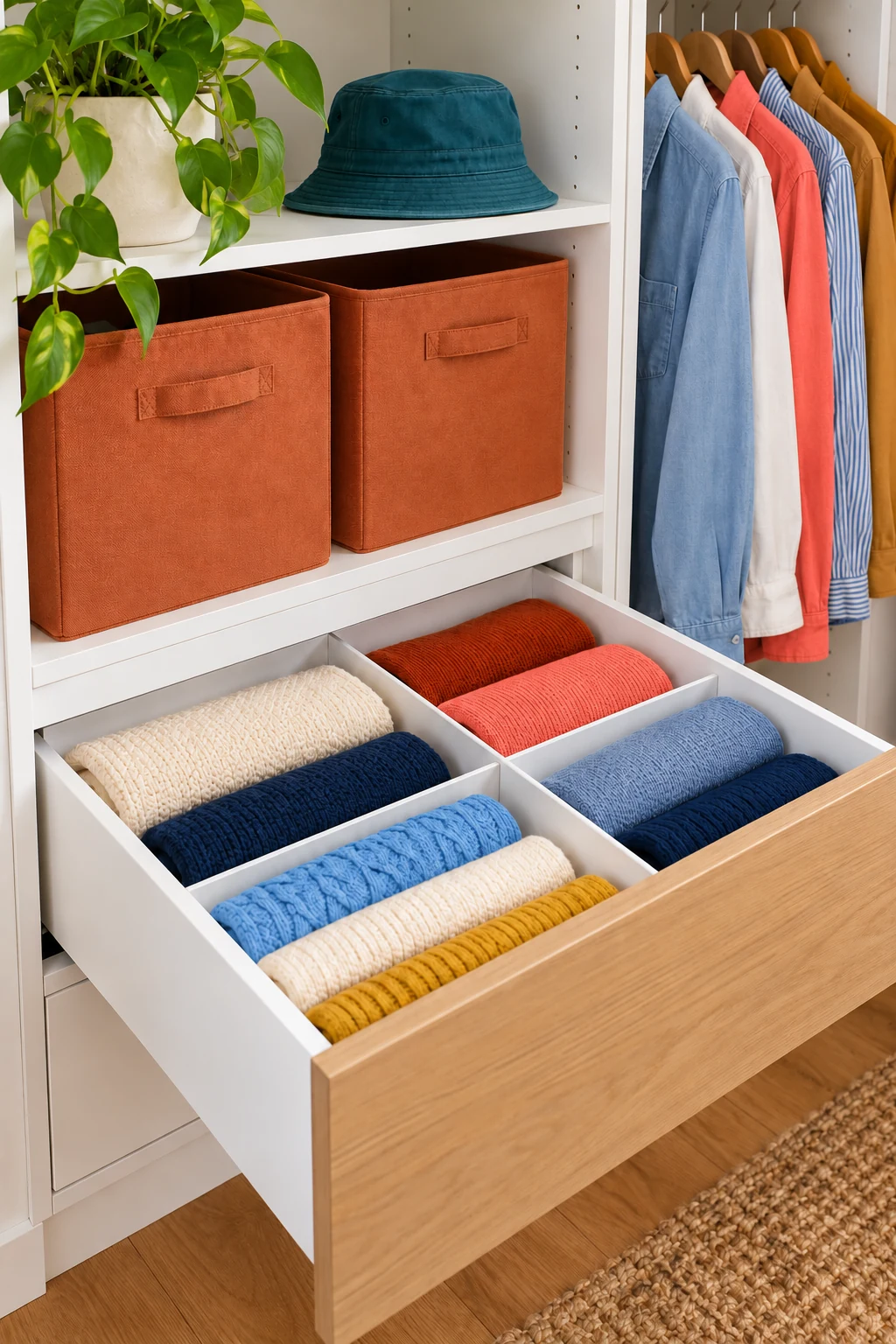
Shirts, folded trousers, and shorter jackets may work on two rails within the same bay. Test both garment lengths before committing: clothing from the upper rail needs to clear the lower rail, and the bottom row needs space above the floor or anything stored there.
The Simple Houseware Adjustable Closet Hanging Rod in Chrome is a hook-on option for trying a lower level without adding a permanently mounted rod. Its listing gives an 18-to-30-inch horizontal adjustment. Confirm the installed drop and the existing rod’s support capacity; the extra rail adds the weight of another clothing row. View on Amazon.
6. Give folded clothing a vertical column
A column of small compartments makes a folded wardrobe easier to scan than one deep pile. Assign a compartment to workout tops, tees, or light lounge clothes, and keep the contents loose enough to remove a piece without pulling out the whole stack.
When there is spare hanging width, the StorageWorks 6-Shelf Hanging Closet Organizer offers a fabric version of this layout. It uses room on the rod and adds weight to that support, so compare it with the hanging space you would give up. Confirm the current variant’s dimensions; published measurements differ between sources. View on Amazon.
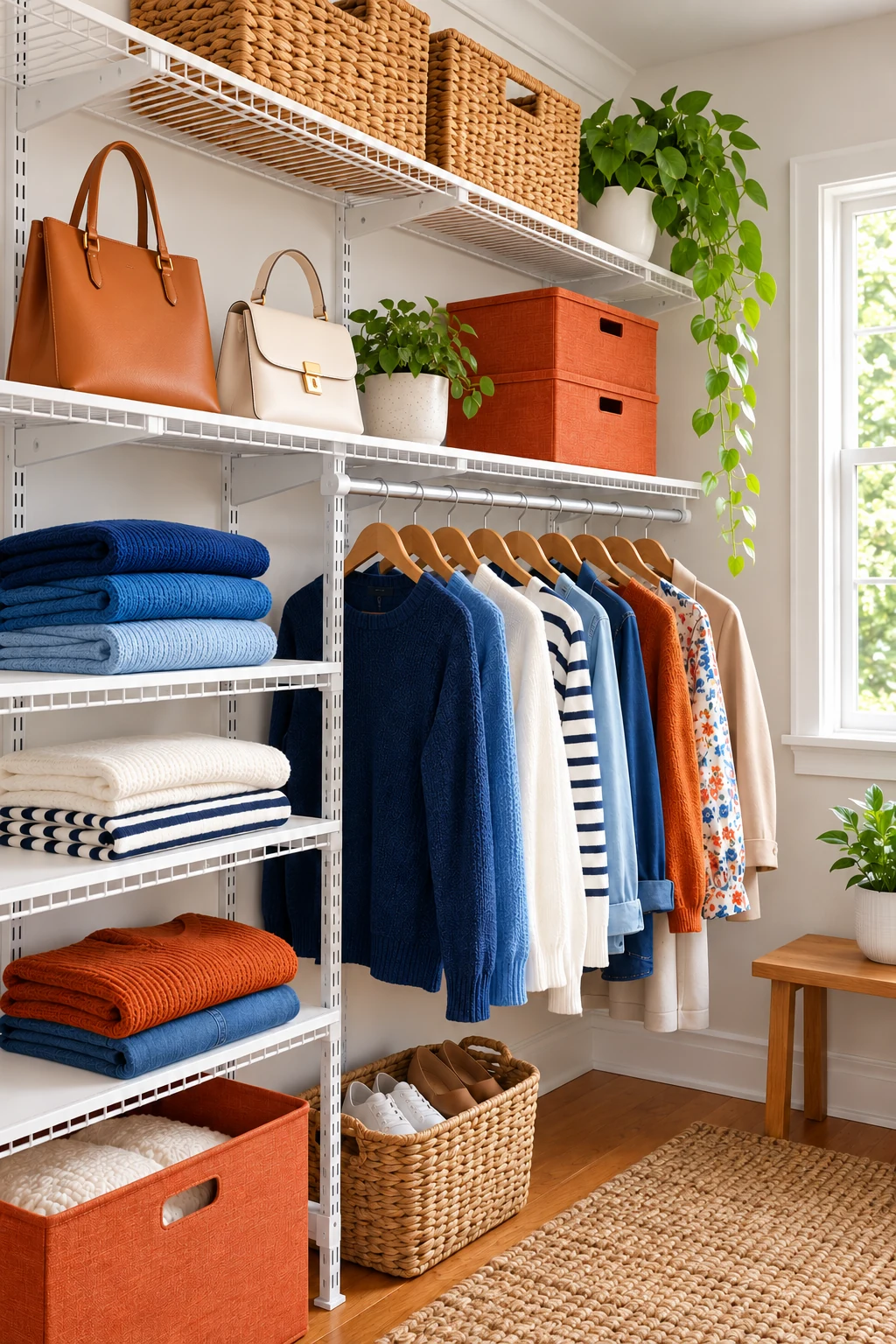
7. Set shelf spacing around the contents
Plan shelf openings with the folded item in hand. A short stack of thick sweaters needs a different opening from a row of clutches or a shallow accessory basket. Adjustable shelves can make those differences easier to accommodate as your wardrobe changes.
Leave enough space above each stack for your hand to lift an item. Very tall openings encourage towers of clothing, while tightly spaced shelves can make retrieval awkward. Check the specific shelf system’s supports, span, and load instructions instead of assuming every opening can hold the same weight.
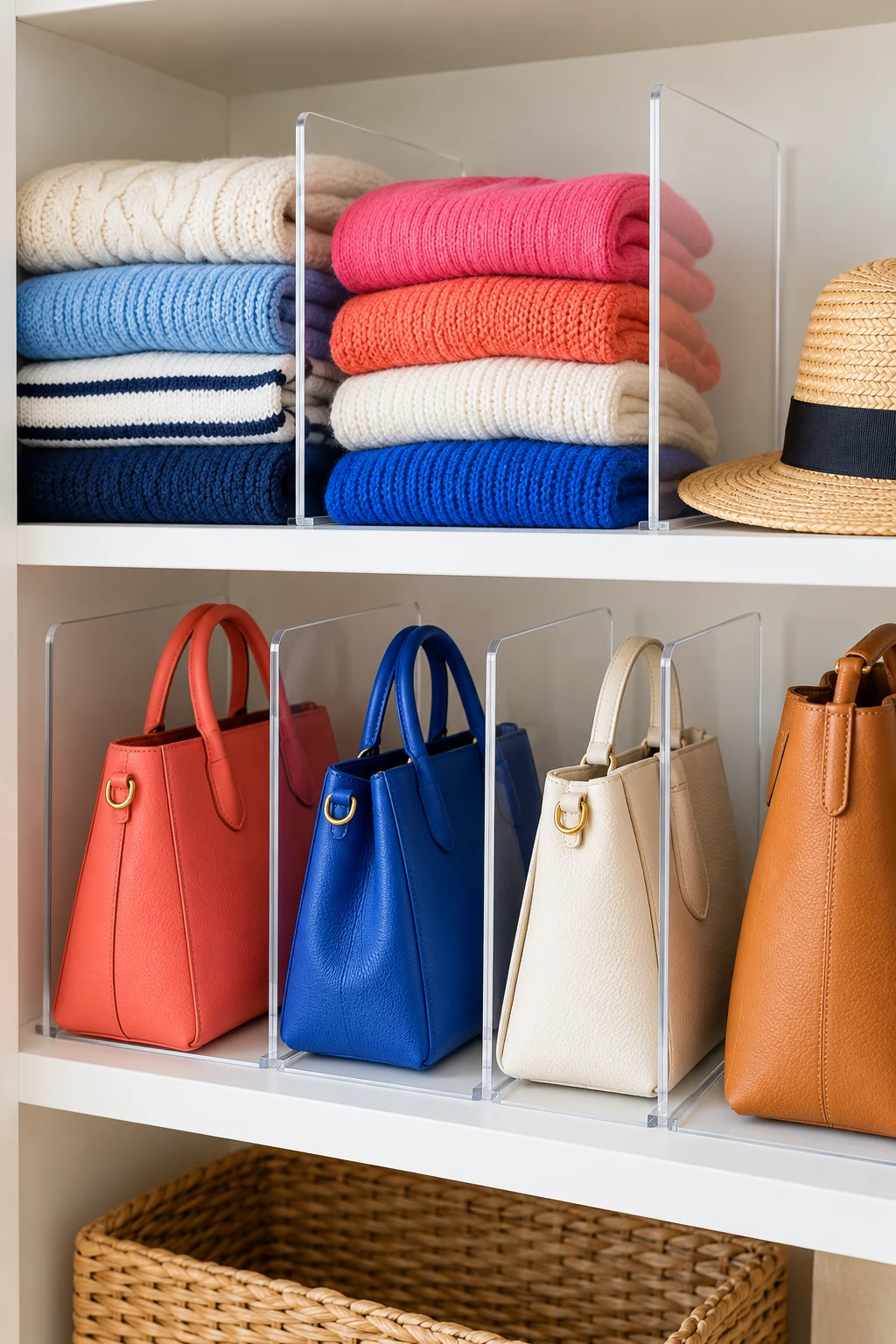
8. Use dividers to organize a wider shelf
One long shelf can hold several categories without becoming several separate cabinets. Add divisions where stacks lean together or a handbag needs its own space. This preserves flexible shelf width while giving each group a visible boundary.
The LYNK Professional Home Tall White Shelf Dividers are a two-piece slide-on option for compatible solid wood shelves up to 7/8 inch thick. Measure the shelf edge before buying; this model is not intended as a universal divider for wire shelves. Allow enough room on each side to lift out the contents. View on Amazon.
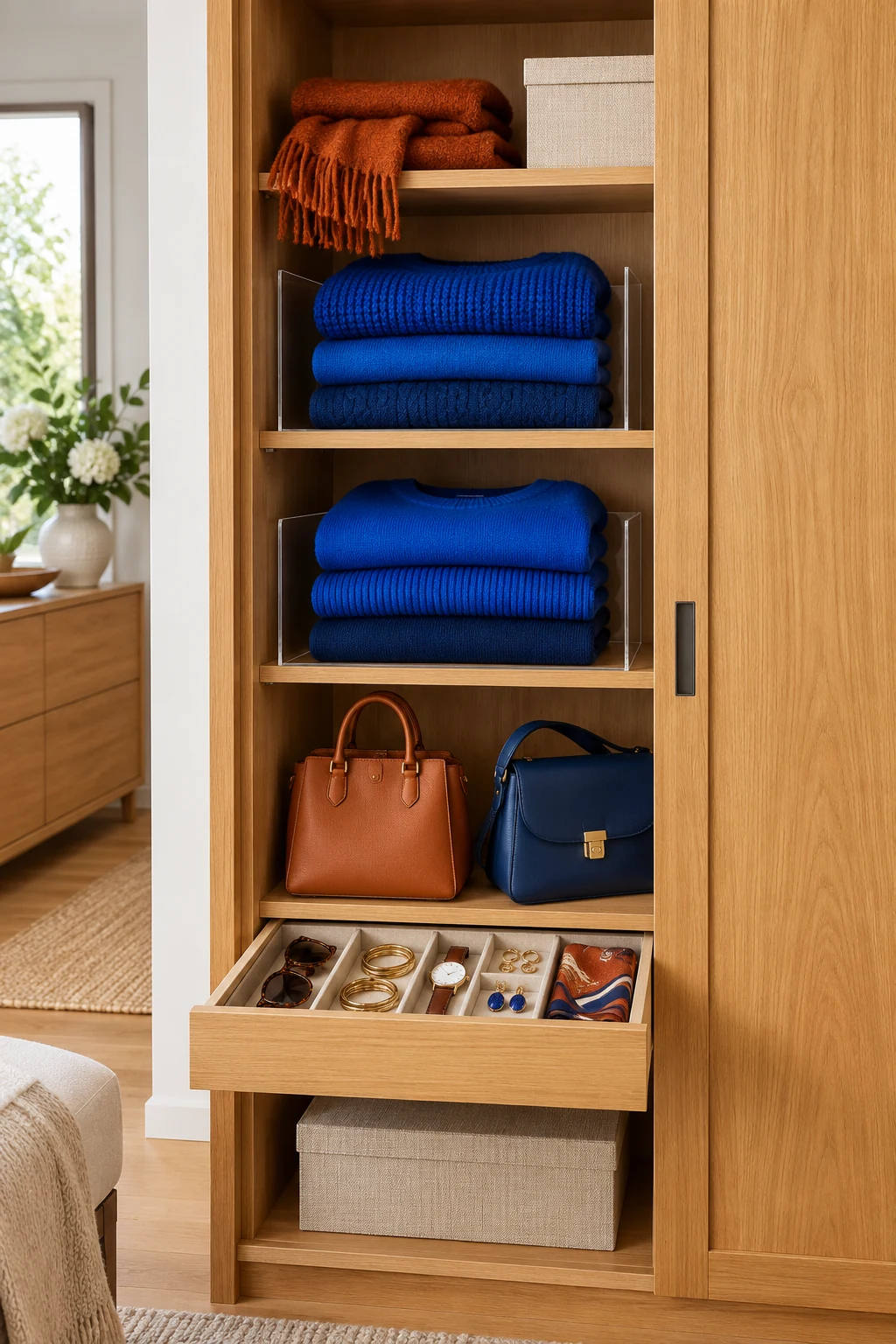
9. Place the small-item drawer where it opens fully
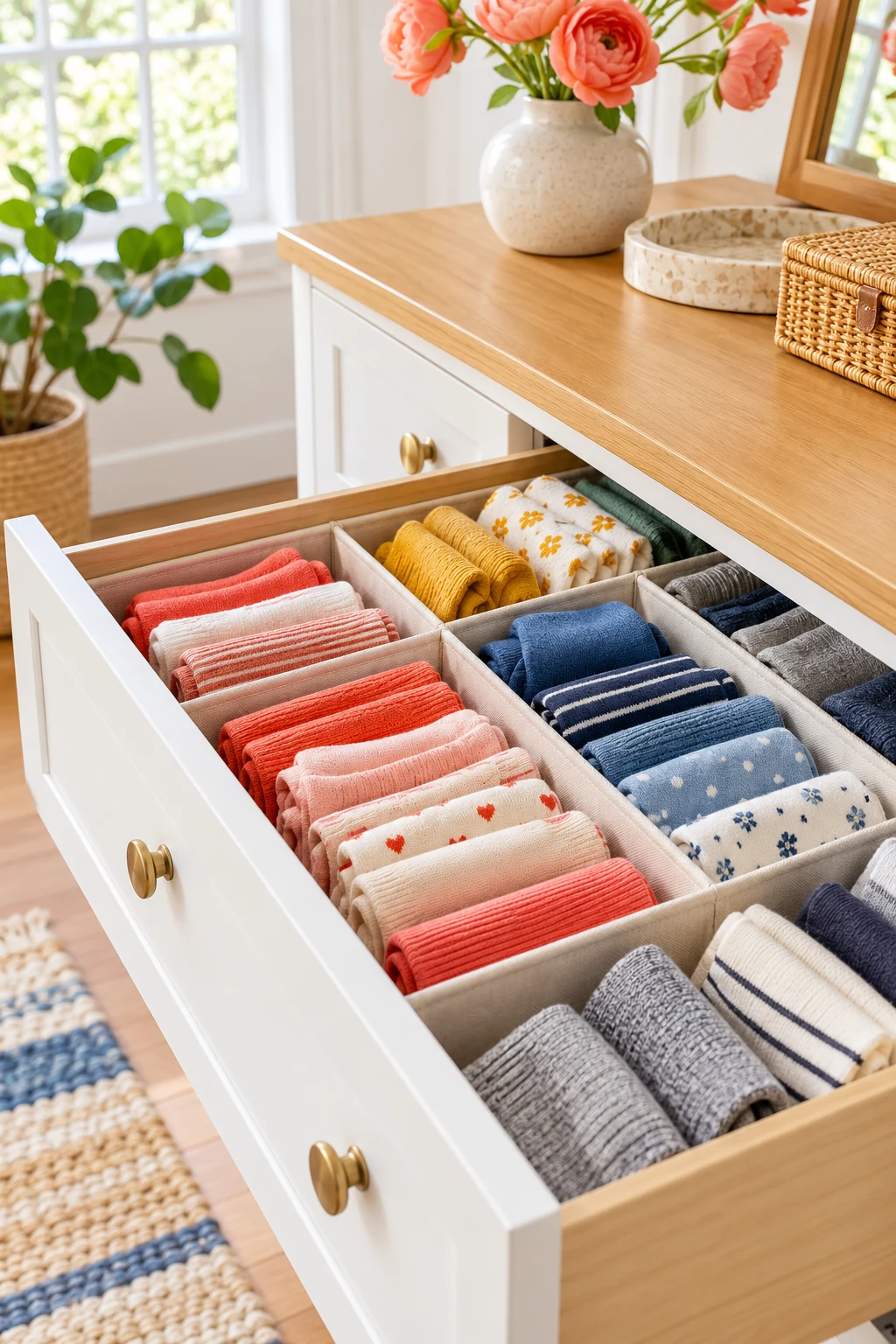
Socks and underwear benefit from a drawer near the place you get dressed. In a reach-in closet, align that drawer with the open doorway rather than squeezing it into a blocked side section. In a walk-in, check that an open drawer does not cut off the only practical route through.
The Simple Houseware 4-Pack Drawer Organizer Set in Gray can divide a suitable drawer into smaller categories. Each insert is listed at 3.5 inches high, but their footprints differ. Plan around the drawer’s interior and closing clearance, and use only the pieces that fit without forcing the layout. View on Amazon.
10. Build a shoe zone below short hanging clothes
A low shoe zone can make use of the floor beneath shorter clothing. Lay out your everyday pairs first and check whether a low rack gives you easier access than a single row. Keep enough height above the rack to lift a shoe without catching a sleeve.
The Simple Houseware 3-Tier Stackable Metal Panel Shoe Rack in Bronze is a freestanding option that requires assembly. Judge its fit using the current listing and your largest shoes; listed dimensions have varied, so confirm them before ordering. Keep tall boots in a separate opening rather than bending them to fit these tiers. View on Amazon.
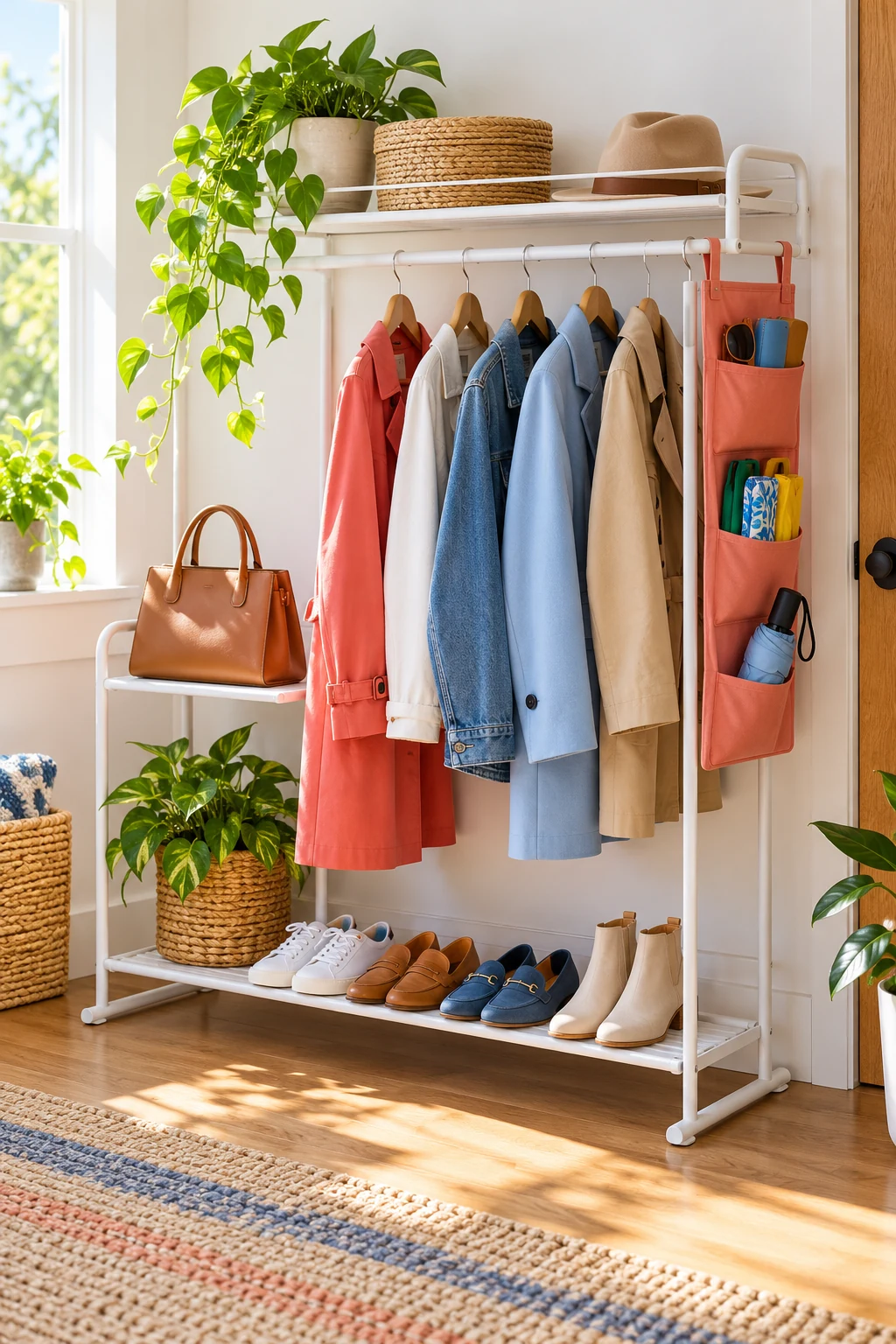
11. Treat a hinged door as a separate storage surface
A suitable closet door can take light accessories off the main shelves. Plan the loaded depth, not just the empty organizer: objects in the pockets must clear the closet contents when the door closes. Test the hinges, top gap, and full swing before deciding this is usable space.
The Simple Houseware 24 Pockets Clear Over the Door Shoe Organizer in Gray can display small shoes or accessories. The hooks are listed for doors up to 1-3/8 inches thick, but thickness alone does not confirm closure clearance. Use another location if the door rubs, will not latch, or is a sliding or bifold style. View on Amazon.
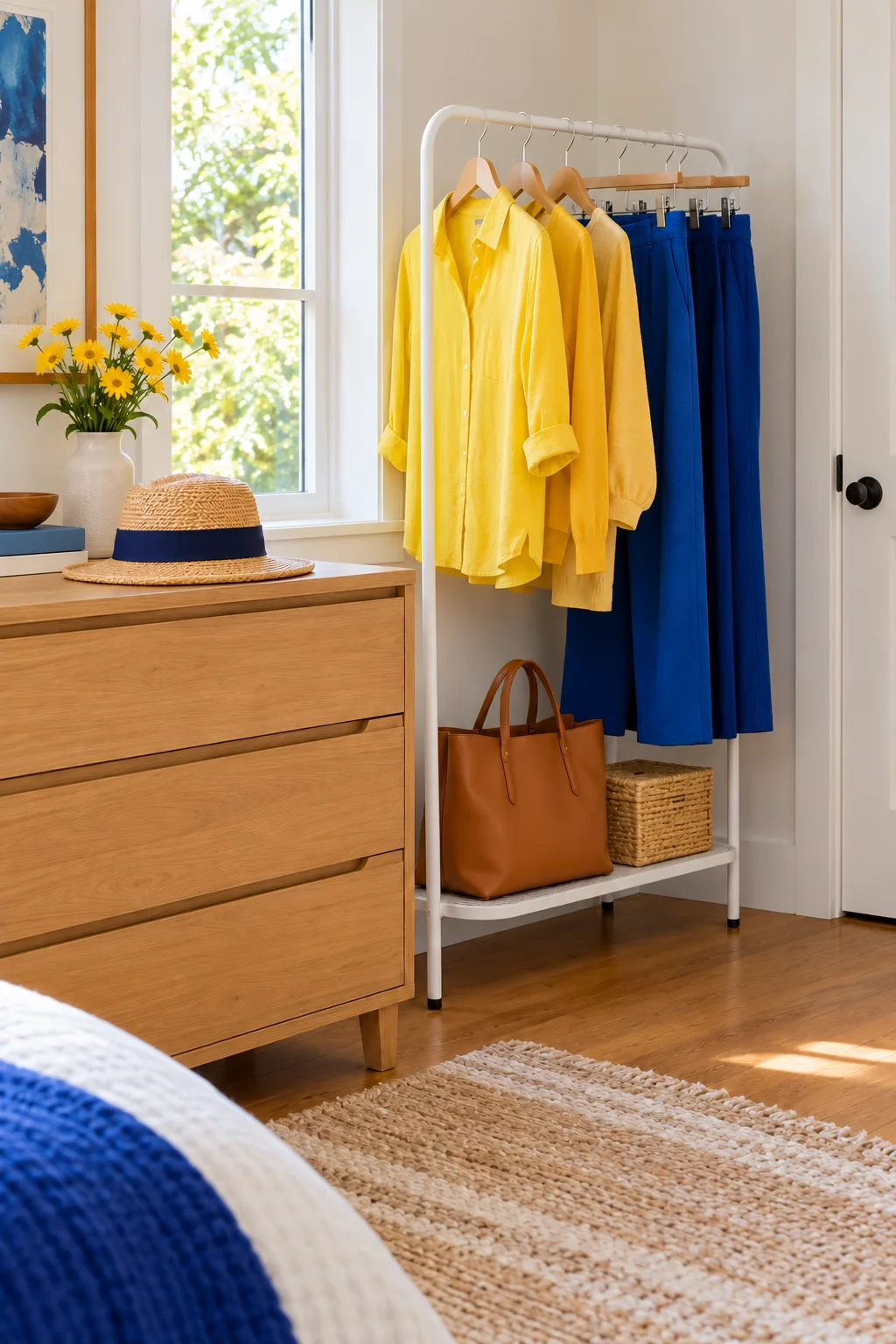
12. Keep the hanging profile visually consistent
Similarly shaped hangers create an even line and make it easier to spot clothing categories. They can also reduce the awkward gaps caused by a mix of bulky plastic, wooden, and wire hangers. You do not need to replace suitable specialty hangers to get a calmer overall layout.
Amazon Basics Slim Velvet Suit Hangers in the Black/Silver 30-pack offer a consistent shape for many everyday garments. Use the velvet surface and shoulder notches where they suit the clothing, and keep broader or specialized support for items that need it. A uniform rail still needs room for clothes to slide. View on Amazon.
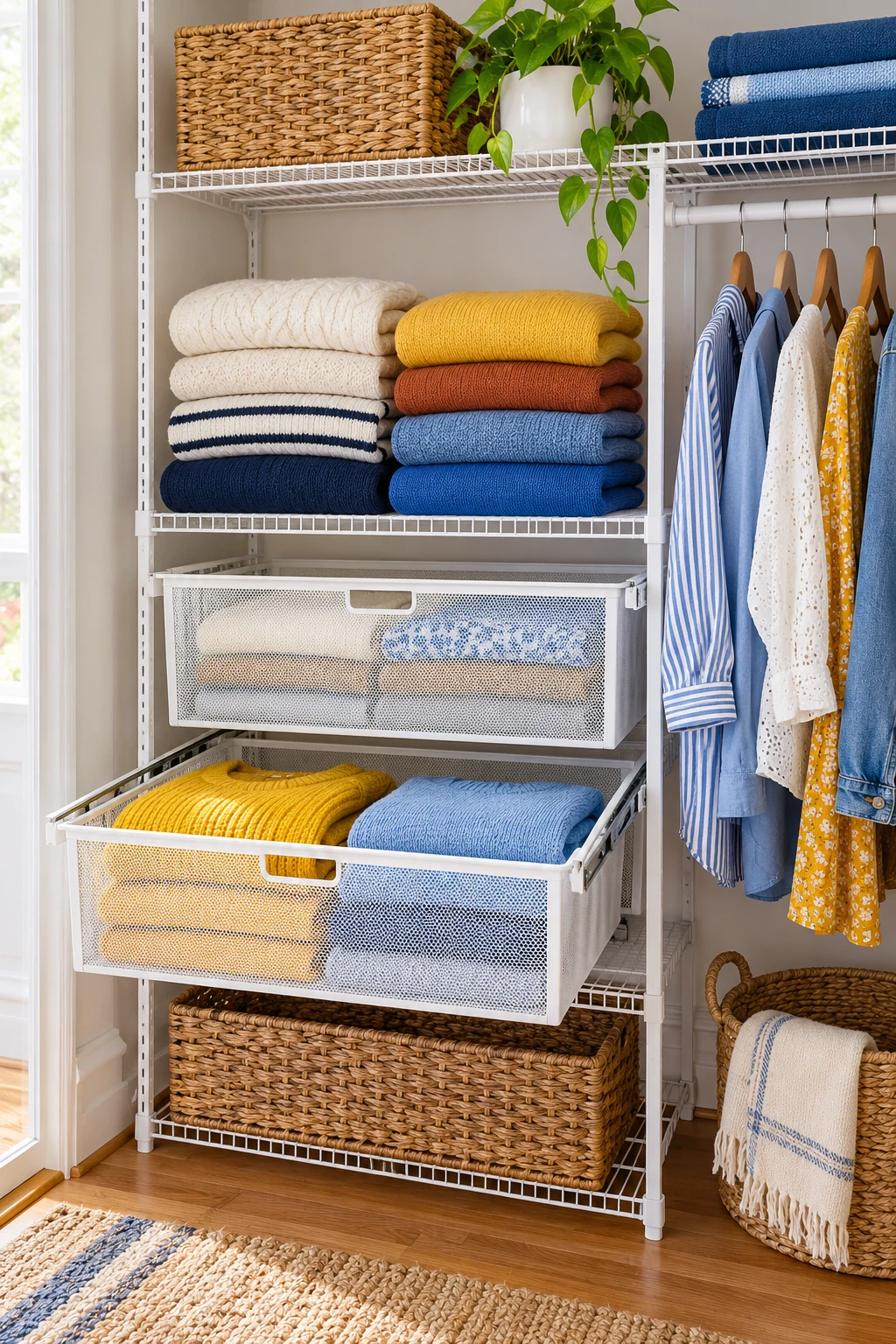
13. Split a shared closet by need rather than symmetry
Two people may need very different storage. One might use more hanging space while the other needs shelves and shoe storage. Start with separate inventories, then divide the closet so both people can reach their daily items without moving someone else’s clothes.
Mark the boundary with a shelf tower, a break between garment groups, or separate labeled bins. Equal-looking halves are optional; a clear agreement about space matters more. Keep shared household storage in its own section so extra bedding does not gradually take over one person’s daily wardrobe.
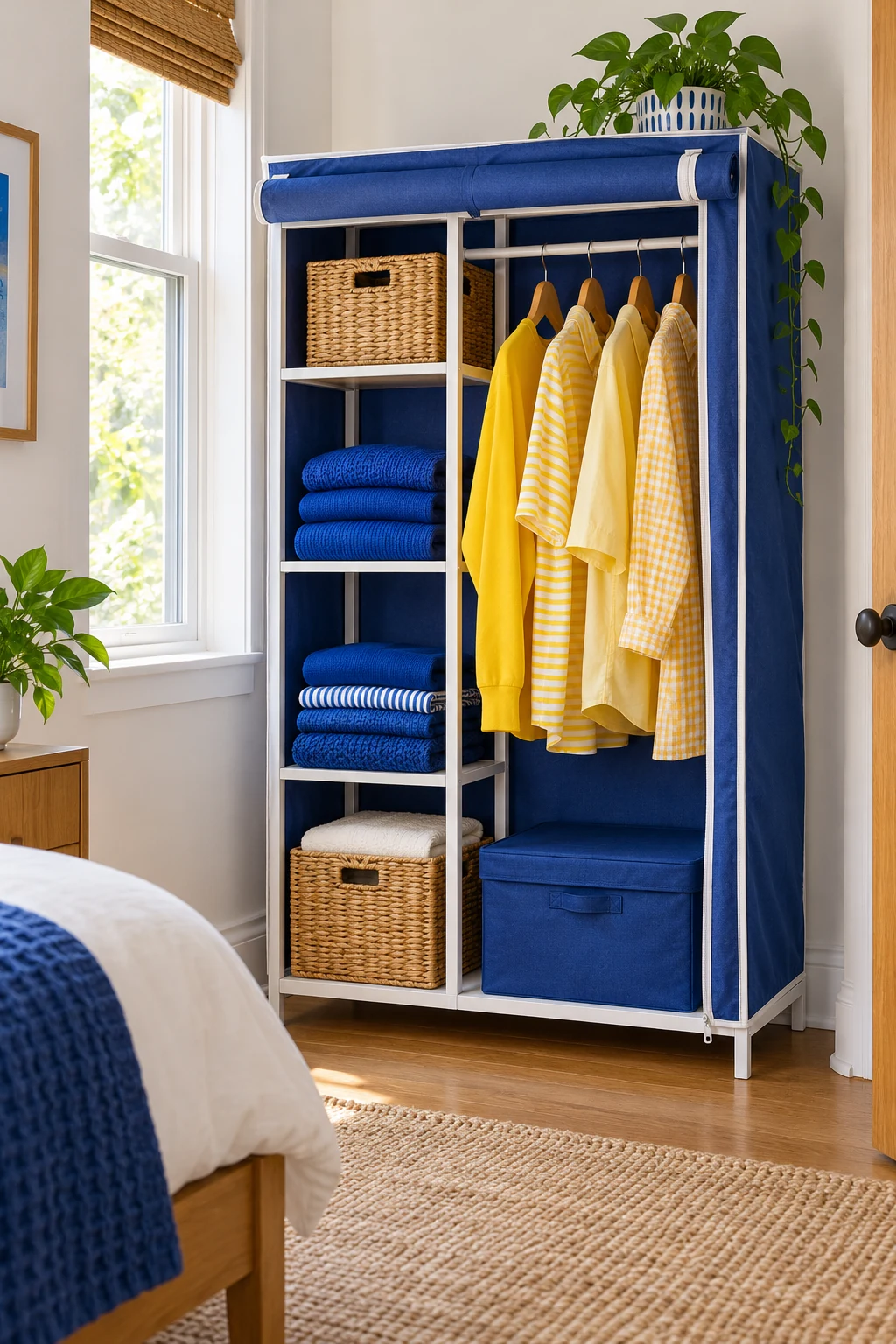
14. Use corners for storage you can reach directly
An L-shaped closet can look generous on paper while hiding items where the two runs meet. Choose which side gets the easy corner access and let the other run stop short enough to avoid a collision. Test the arrangement with hangers or boxes before ordering full-depth components.
A corner shelf can suit light occasional items if its opening remains reachable. Avoid placing an everyday drawer behind the overlapping edge of another unit. Any custom corner joinery or mounting should follow a suitable system design; a cramped corner is not a reason to improvise unsupported shelves.
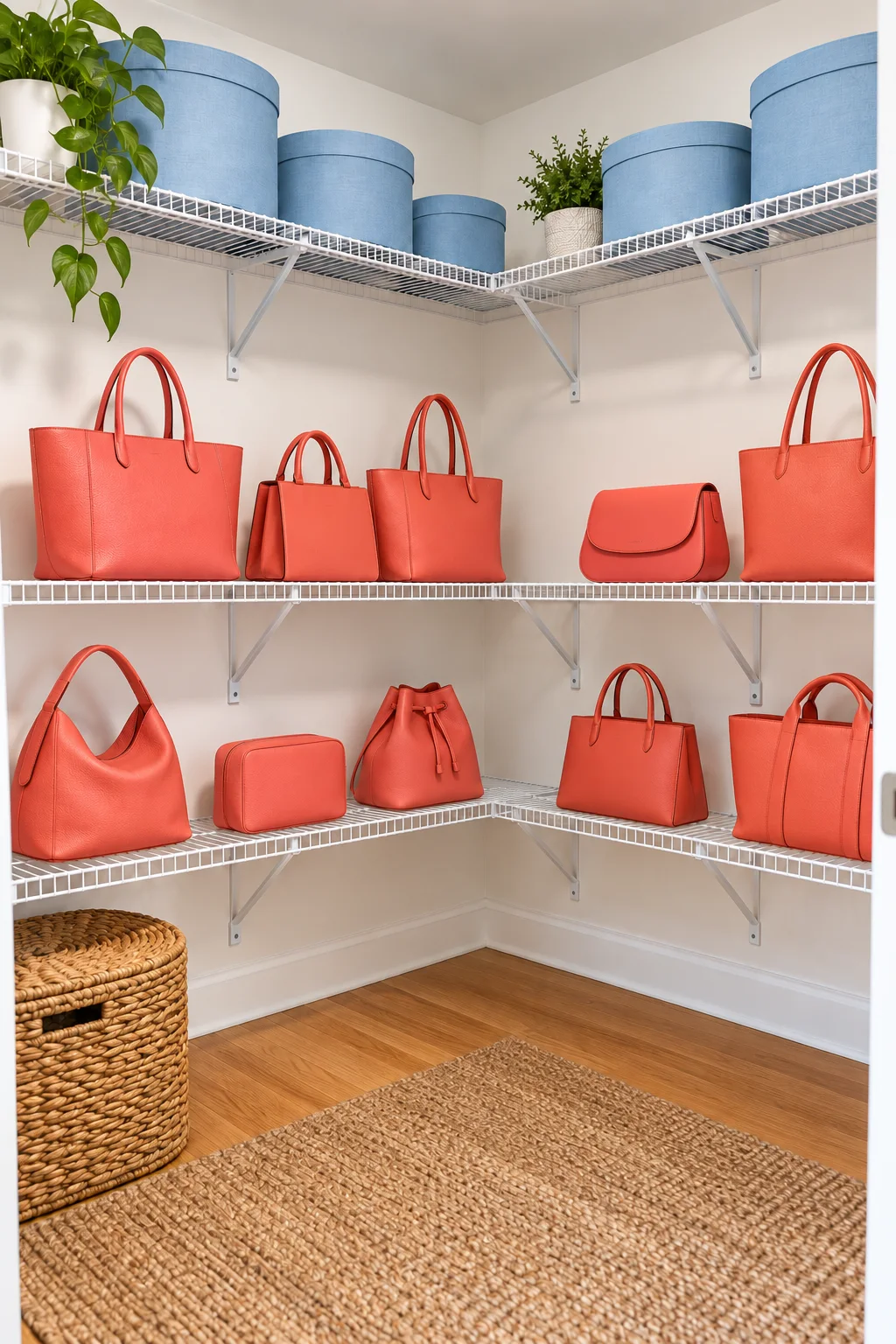
15. Choose shallow storage for a shallow closet
When the closet is too shallow for your usual hangers to sit comfortably, a row of shelves may work better than forcing sleeves against the door. Try a folded-clothing layout, then reserve a separate place for garments that should hang.
A specialty front-to-back rail is another possibility, but it must be designed for the closet and installed as directed. Check its full extension and how you would reach the rear garments. Sketching the loaded profile from the side often reveals a clearance problem that a front-facing inspiration photo hides.
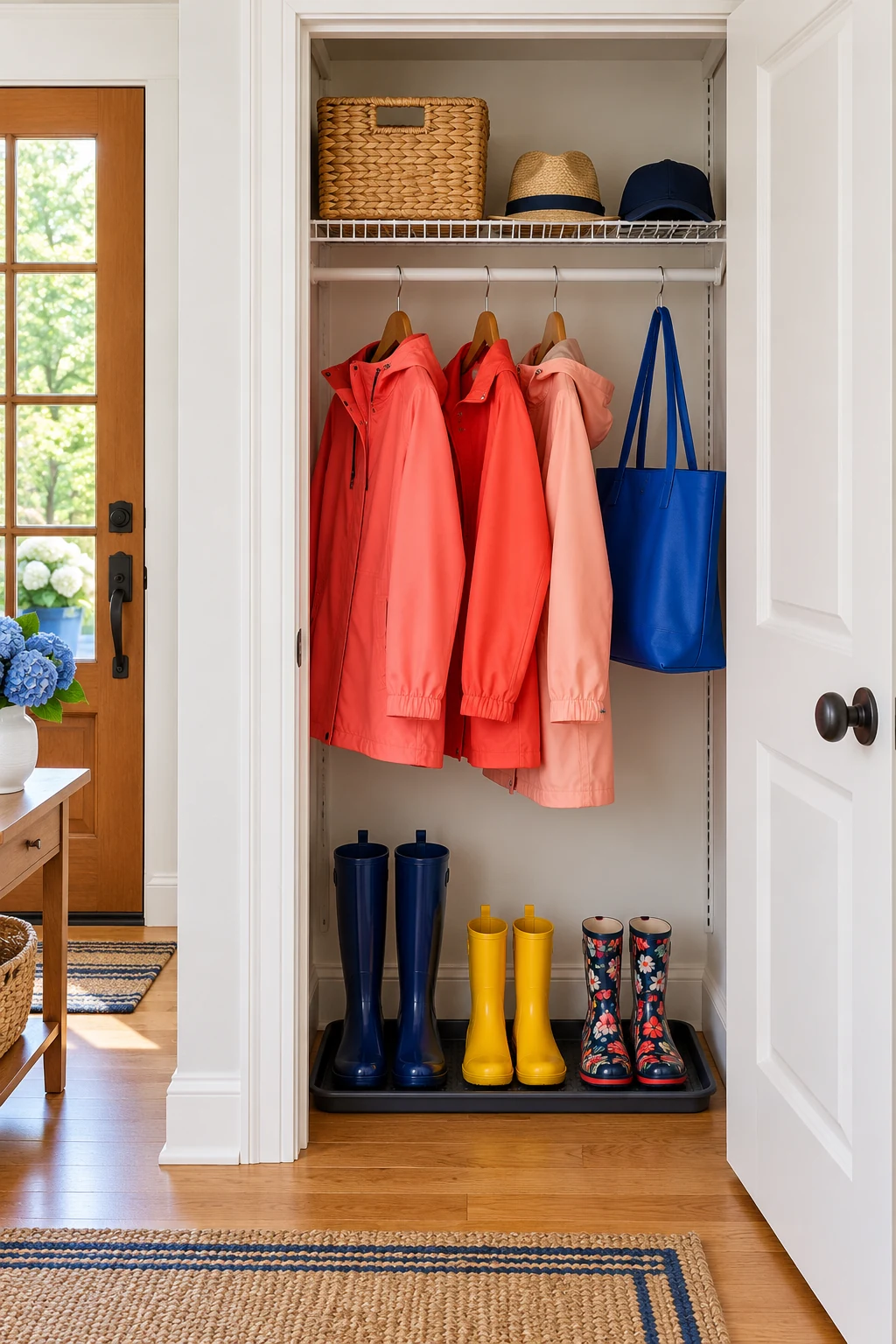
16. Follow a sloped ceiling with lower storage
In an attic or under-eave closet, put low shelves or drawers beneath the slope and save the tallest section for hanging. This keeps the useful headroom where you need it instead of filling it with a wide cabinet that could sit lower.
Measure height at the front and back of every planned component. A unit may fit against the back wall but still block your head or its own drawer movement during use. Keep the approach clear and use suitable built-ins or secured furniture rather than stacking loose boxes into the narrowing roofline.
17. Reserve a complete laundry footprint
Include the hamper in the drawing before assigning the last patch of floor to shoes. A hamper needs room for clothing, a lid if it has one, and a clear route out to the laundry area. Test that route with the basket you already use.
Place it near the closet opening if that matches where clothes come off. If the closet cannot hold it without blocking access, position it nearby in the bedroom. Keep damp garments out of enclosed piles and follow their care instructions instead of treating the hamper as long-term storage.
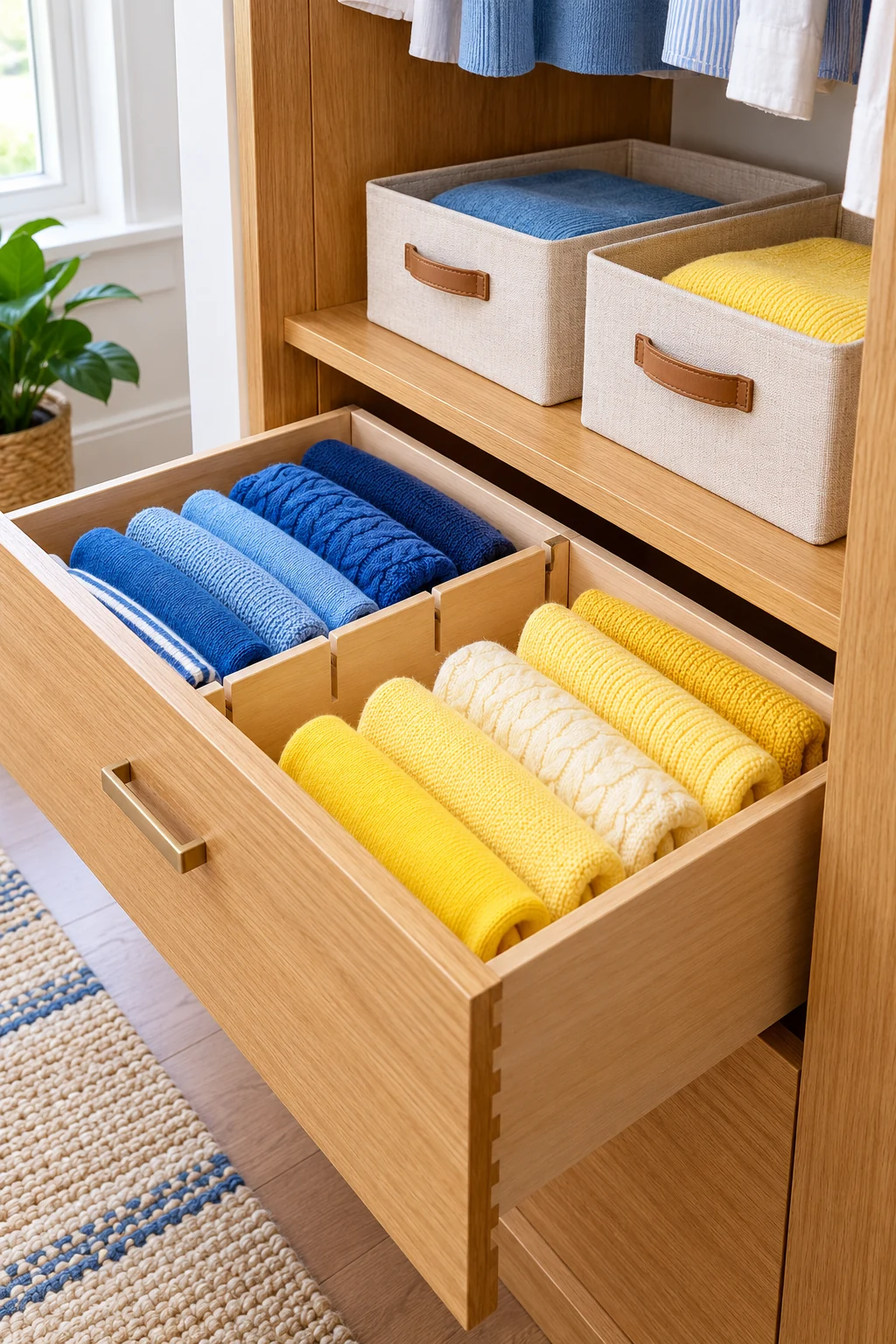
18. Design a small place for clothes to wear again
A dedicated rewear spot can keep a finished closet from spilling onto a chair. Reserve a few hangers or appropriately mounted hooks for briefly worn pieces you intend to wear again. Keep it distinct from freshly washed clothing so you can make a deliberate choice later.
Limit this zone to a small visible group rather than another hidden storage bin. When it fills, decide what is ready for laundry and what is going back into rotation. Hooks need suitable fixings and load limits, and the hanging clothes should not obstruct the door.
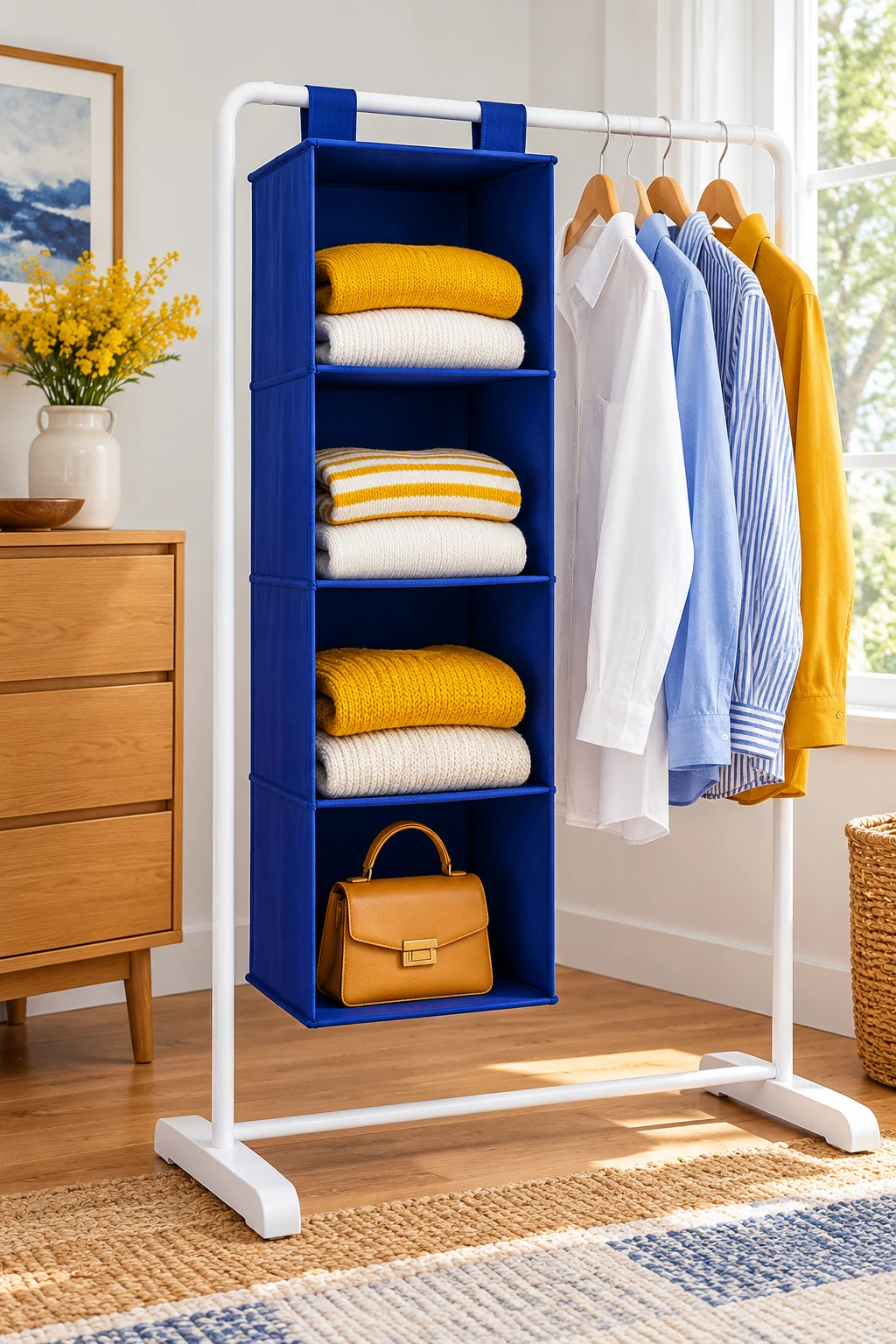
19. Add a small landing surface for accessories
A reachable shelf with a shallow tray gives the watch, belt, or accessories you remove at night a predictable home. Keep it close to the dressing area so returning items takes one simple motion instead of opening several containers.
Choose a tray that leaves usable shelf space around it, and check that its edges will not catch garments passing nearby. Store delicate jewelry according to its material and care needs. The landing area works best for current essentials, with occasional accessories organized elsewhere.
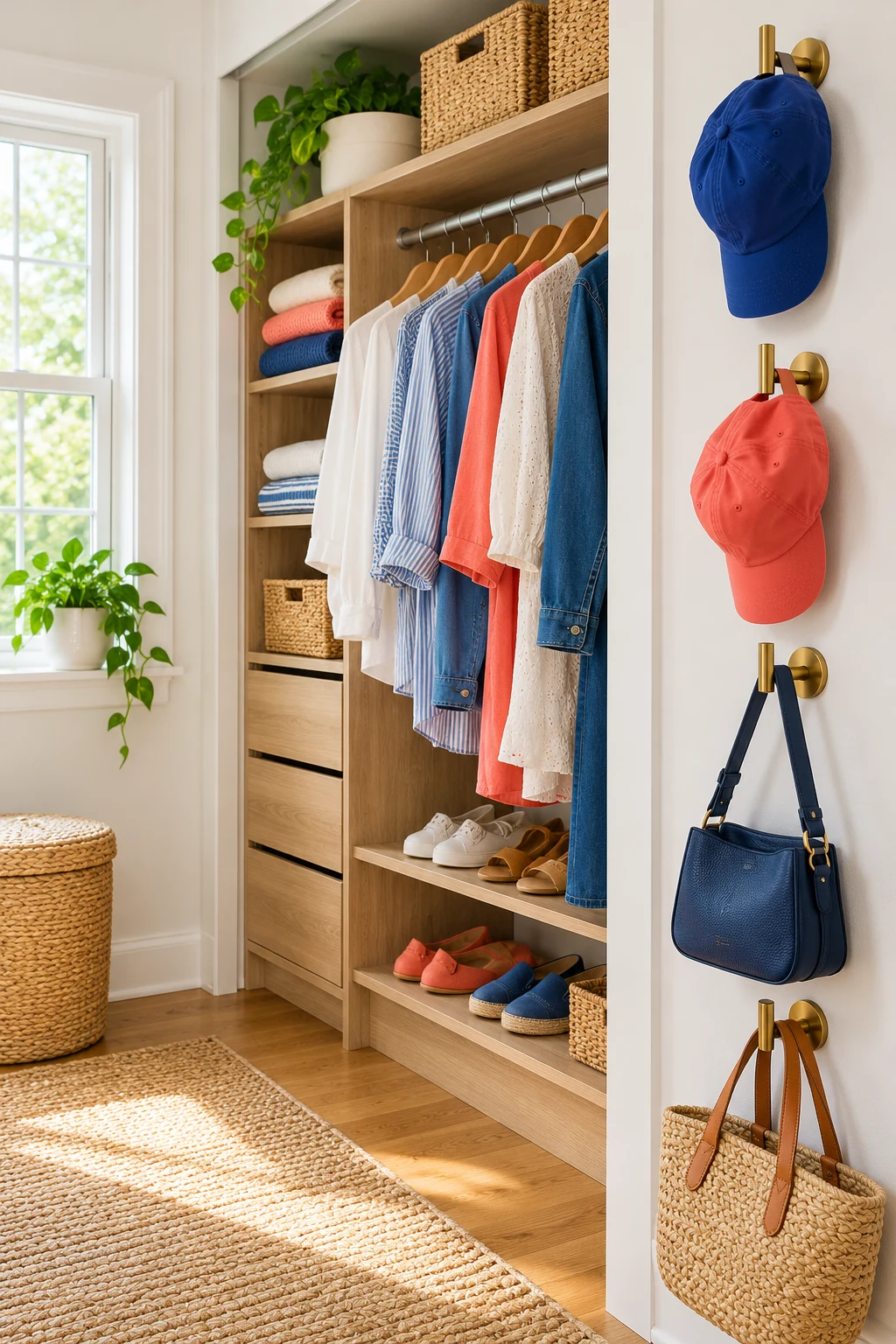
20. Keep upper storage light and easy to identify
The shelf above the main hanging area can hold lightweight occasional items while keeping daily storage open. Use small containers with a visible contents label so you know what to bring down before reaching for it.
Design for safe retrieval as well as capacity. Heavy luggage and overfilled bins belong lower, and a suitable stable step stool is preferable to climbing shelving. Leave space to grip each container without removing a stack of unrelated things first.
21. Plan lighting around the stored clothes
Check the closet after dark before finalizing the layout. A ceiling light may leave the shelf below it in shadow, especially after a tower or upper cabinet is added. Arrange daily categories where you can distinguish colors and see into their compartments.
Use lighting specifically suitable for closets and follow the fixture maker’s placement and clearance instructions. Keep clothing and bins clear of fixtures. If the design calls for new wiring or a fixture change, have a qualified professional check the installation rather than running an improvised cord behind stored textiles.
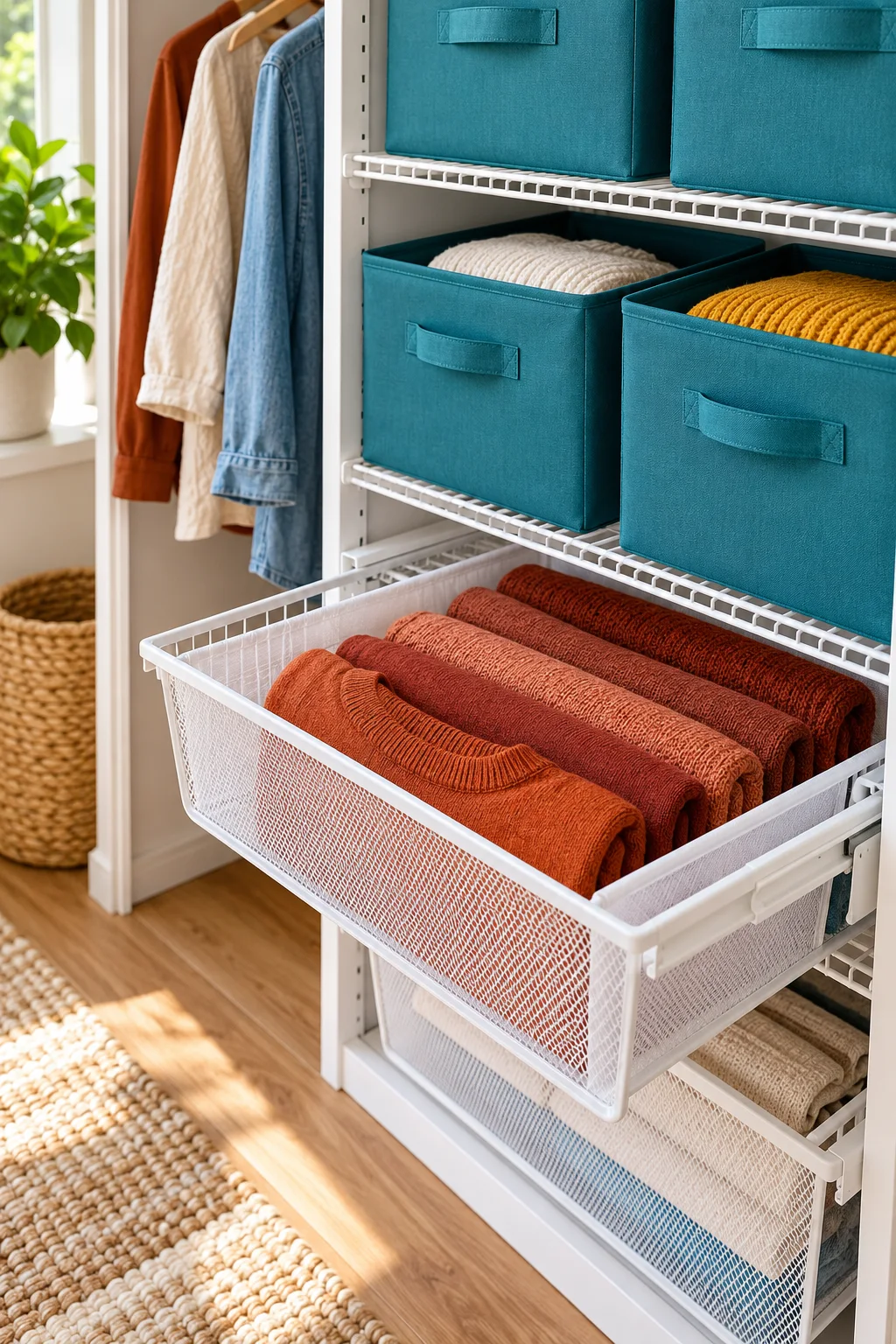
22. Choose finishes that make the contents easy to see
A restrained mix of shelf colors, baskets, and hardware can help a busy closet read as one space. Lighter interiors may make dark clothes easier to distinguish, while a few contrasting bins can identify specific categories without labels on every shelf.
Keep practicality in the palette. Opaque matching boxes need clear identification, and delicate decorative baskets may snag the items you put inside them. Test one container and one folded stack together before buying enough matching storage to cover the whole closet.
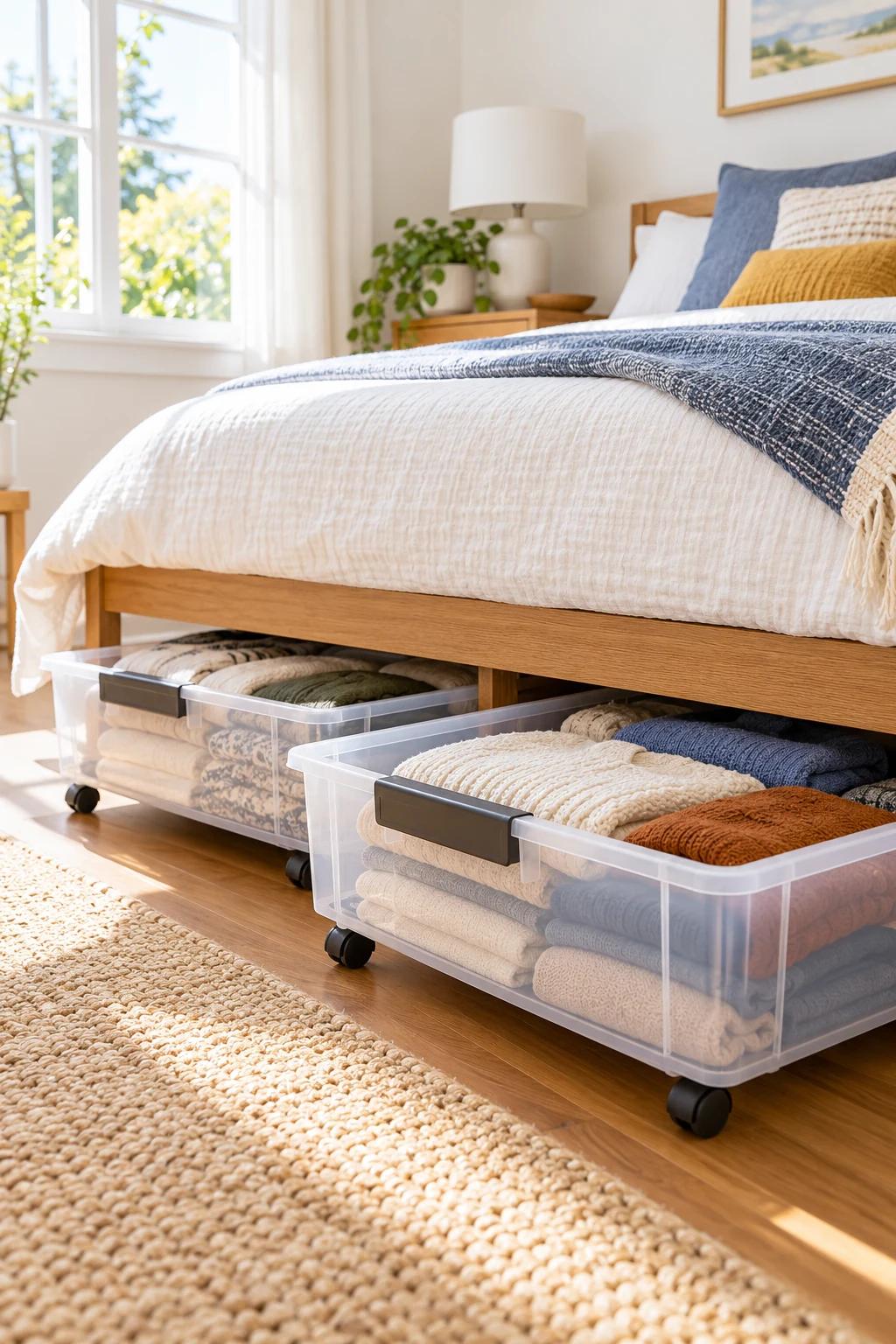
23. Design a second home for seasonal clothing
A closet does not have to hold every season in its easiest-to-reach zone. If clean off-season soft goods can live beneath the bed, the closet layout can focus on the clothes you currently need. Keep a short contents list so that second location stays useful.
Amazon Basics Under Bed Storage Bags in the Gray 2-pack are listed at 42 by 18 by 6 inches for the selected variant. Measure the opening and any bed supports with a filled bag in mind. These are fabric storage bags, so do not assume airtight, waterproof, or pest-proof protection. View on Amazon.
24. Build the plan in a few useful stages
You can improve the design without replacing everything at once. Begin with a layout change using your current rods and shelves, then add the component that solves the clearest problem. Live with that arrangement through a laundry cycle before choosing the next piece.
Keep a record of the measurements, product family, finish, and compatibility of any system you buy. Later components may not match just because they look similar online. A phased plan works best when each stage functions on its own and leaves the next storage area genuinely accessible.
Choose the part of your closet that creates the most friction and sketch a better place for those items first. A well-planned rail or an accessible drawer can be a useful starting point for the rest of the space. Subscribe to the Havelyo email list for more practical small-space decorating and organization ideas.