
Pantry Organization
20 Bread Box Storage Ideas for an Organized Kitchen Counter
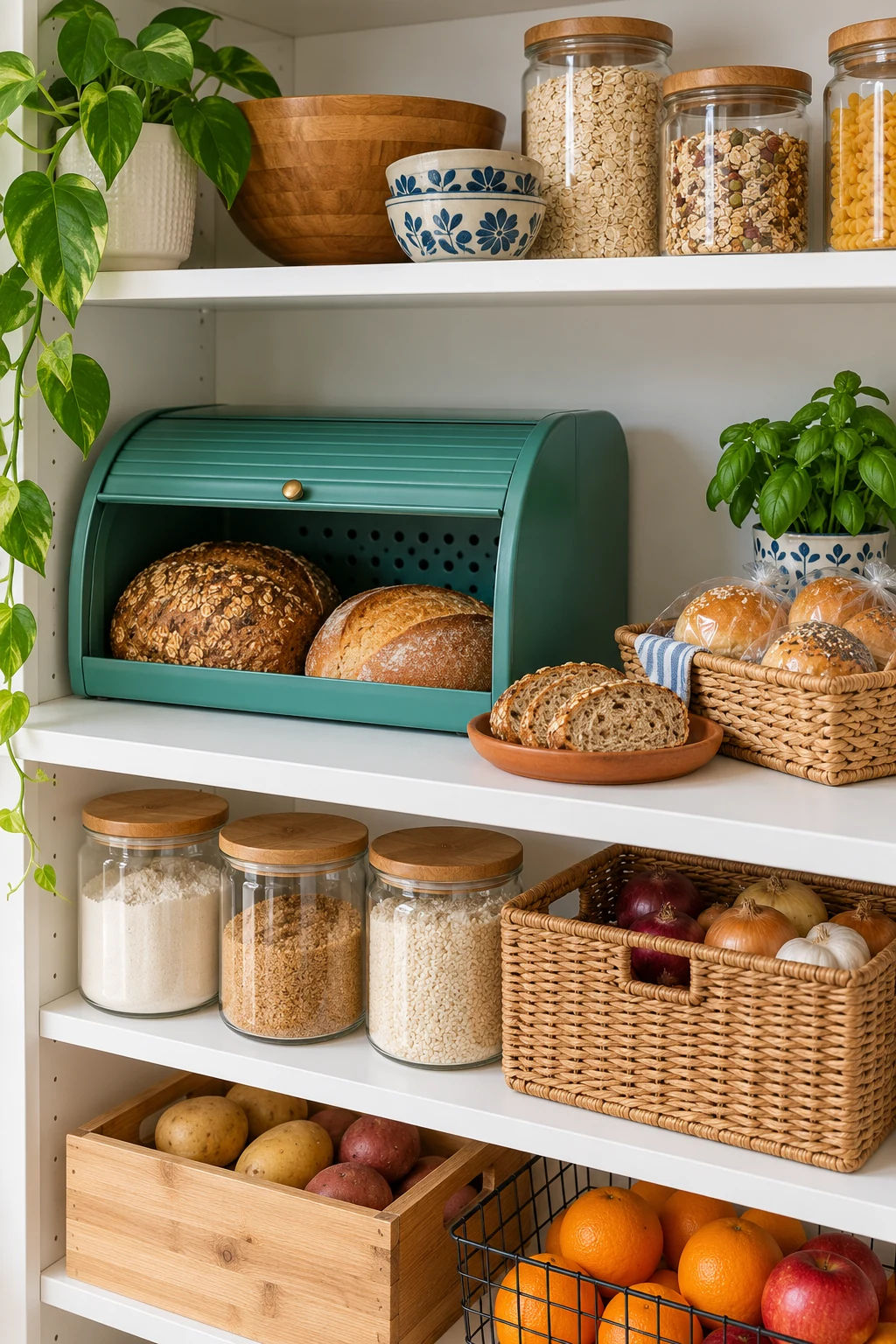
A bread box can tidy a kitchen counter, but only if its lid opens easily and the bread inside is simple to find. The most useful setup starts with your real loaf size and the space you need to prepare food.
These 20 bread box storage ideas cover placement, packaging, nearby tools, and small habits that keep the counter usable. Start by clearing one dry section, measuring it, and deciding how much bread belongs there. Keep food-specific storage directions in charge; a bread box is an organizer, not a promise of extra shelf life.
This article contains affiliate links. If you buy through them, Havelyo may earn a commission. As an Amazon Associate I earn from qualifying purchases.
1. Size the box around the bread you buy
Set your usual loaf, bagels, and rolls together before shopping. Measure the longest package with its closure folded down, then compare it with the bread box’s usable interior rather than relying on a two-loaf description.
A box that barely swallows the bread is frustrating to refill. Leave enough hand room to lift out a loaf without crushing it, and choose a smaller bread supply if a large box would consume your only preparation area.
2. Choose a roll-top lid under low cabinets
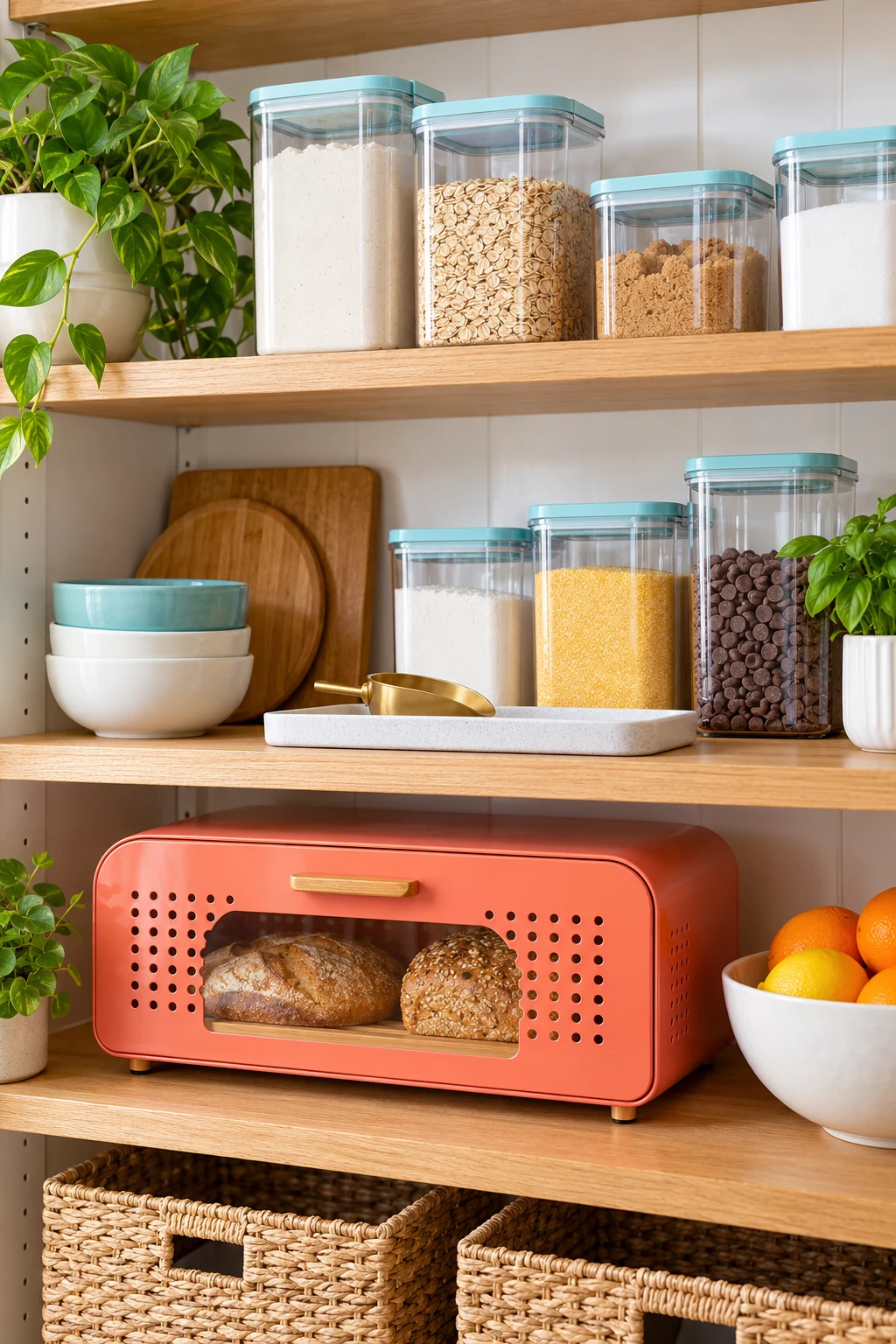
A roll-top box can work where a lifting lid would strike an upper cabinet. Mark the full footprint with removable paper and test whether you can reach the handle comfortably from the front.
The Brabantia Large Matt Black Roll Top Bread Box has a lid that retracts inside and a partially flat top. Its listed exterior is about 17.5 inches wide by 10.3 deep by 6.8 high; measure the selected model and leave its opening unobstructed. View on Amazon.
3. Give a lift-off lid a landing spot
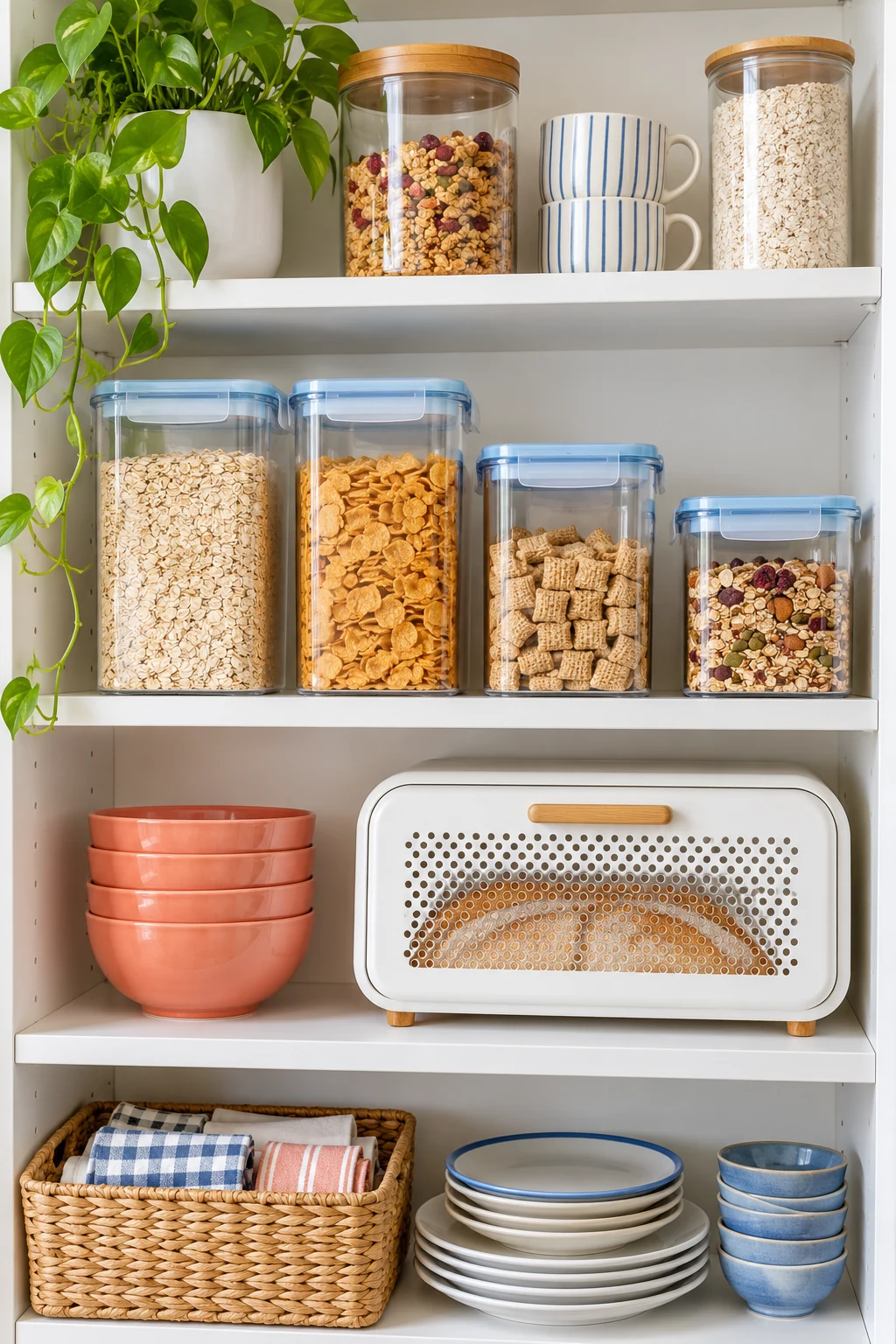
A lift-off lid is easy to remove, but it needs somewhere clean to rest while you reach inside. Plan a small landing area beside the box instead of setting the lid on the sink edge or balancing it against a backsplash.
If the manufacturer specifically designs the lid as a cutting board, use and clean it as directed. A decorative wooden lid is not automatically a food-preparation surface, and a damp board should not be returned over stored bread.

4. Keep the box outside the splash zone
Choose a dry counter section where washing dishes will not regularly splash the box or its contents. Check the spot during an ordinary cleanup, especially if a pullout faucet reaches farther than the sink basin.
A narrow clear strip between the sink and box makes wiping the counter easier. Follow bread-package storage directions and the box’s care guidance; an attractive cover does not make a wet location suitable for food storage.
5. Separate bread storage from cooking heat
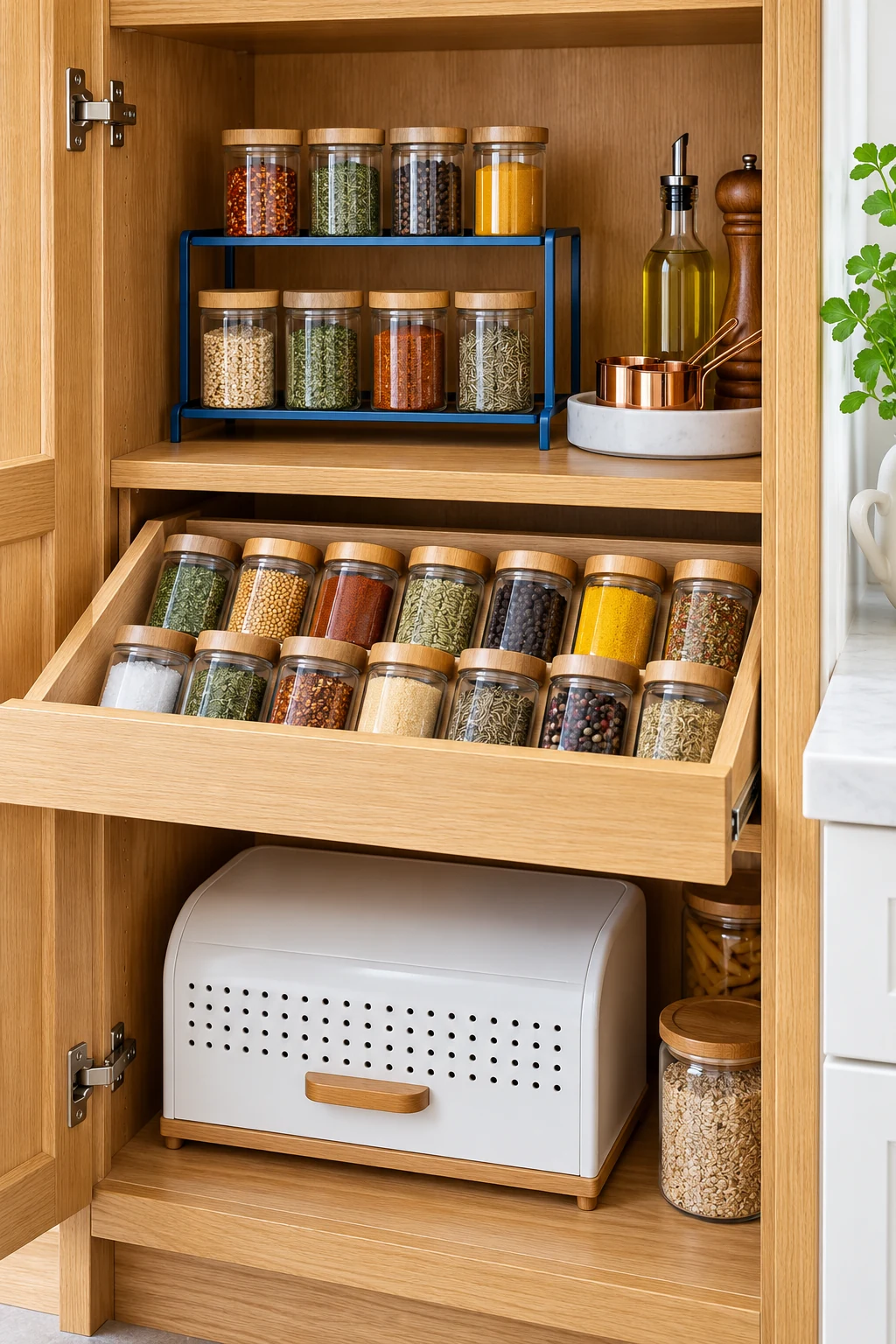
Place the box away from stove heat, an oven exhaust, and a sunny window. A shelf beside a toaster can be convenient, but it must stay outside the appliance’s required clearances while the toaster is operating.
Do not use a bread box as a toaster stand or tuck an operating appliance underneath a decorative shelf without checking its manual. Store the bread nearby and give the appliance its own clear, stable operating surface.
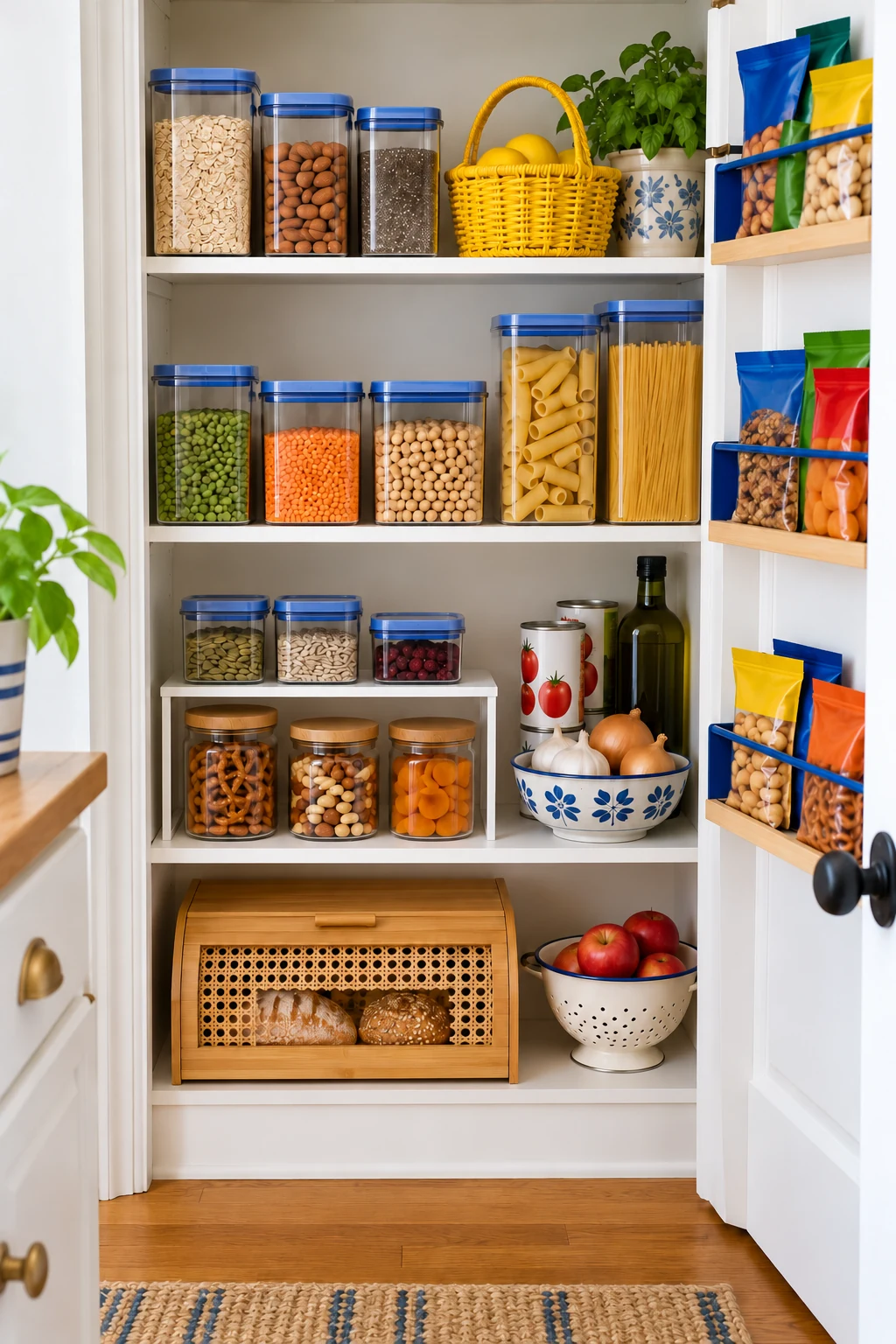
6. Create one clear sandwich-making strip
Keep the bread box at one end of a counter and leave the adjacent working area open. You can pull out bread, set down a board, and assemble lunch without first moving a collection of small decorations.
Store sandwich tools in the drawer below when possible. The counter does not need to display every part of the routine; the useful result is a clear surface that becomes a preparation spot quickly.

7. Stand the bread board beside the box
Store a clean, fully dry cutting board vertically in an adjacent cabinet, rather than laying it across the bread box. Upright storage can make a broad board easier to reach without taking over the counter.
The YouCopia StoreMore Bakeware Rack has adjustable dividers for boards and baking sheets. Check the selected rack’s footprint and the loaded board height, and keep the storage position away from steam and splash. View on Amazon.
8. Give the bread knife a protected drawer home
A knife resting on top of a bread box can slide off as the lid moves. Use a drawer organizer or suitable blade guard so the bread knife has a stable place close to the cutting board.
The Joseph Joseph DrawerStore Compact Knife Organizer offers separate knife slots and lists compatibility with blades up to 9 inches. Measure your serrated knife’s blade, handle, and loaded drawer clearance; keep sharp tools inaccessible to children. View on Amazon.
9. Close original bags neatly inside the box
Fold excess packaging away from the opening so bags do not catch in a rolling lid or disappear behind a loaf. Keeping original bags also preserves ingredient information and the bread maker’s handling directions.
OXO Good Grips Magnetic All-Purpose Clips provide a nonslip grip for gathered packaging. Choose a clip that fits the folded bag, and keep spare clips in a small nearby dish; a clip is not a guarantee of an airtight seal. View on Amazon.
10. Put the opened loaf in front
Arrange the loaf you are using nearest the opening and unopened bread behind or beside it where it remains visible. This simple order can keep a second bag from being opened just because it is easier to grab.
Review the contents before buying more. A first-in, first-out arrangement is a shopping and access habit, not a substitute for package dates, signs of spoilage, or food-specific storage guidance.
11. Keep rolls from being flattened
Give soft rolls a shallow section beside the main loaf rather than piling heavy bread on top. If the box has enough room, a clean food-appropriate divider or small tray can keep the two shapes apart.
Avoid inserting a bulky organizer that leaves less useful room than it creates. Any insert that touches unwrapped bread should be intended for food contact and easy to remove for cleaning.
12. Use the flat top sparingly
A bread box with a manufacturer-approved flat storage area may hold a few lightweight dry items. Keep everything away from the lid track and leave the handle clear so opening the box remains a one-step job.
Do not turn the top into a heavy canister shelf. If you must unload it to get breakfast, move those items elsewhere; never assume that a flat surface is rated for an appliance or a stack of dishes.
13. Move nearby canisters onto a separate shelf
If tea, cocoa, and cereal crowd the bread box, give those short containers a separate level nearby. A freestanding shelf can divide the surrounding counter storage without loading the bread box itself.
The Simple Houseware Metal Top Counter Shelf Organizer uses two separate shelf pieces. Measure the feet and clear space below, follow the permitted configuration, and place it where neither the shelf nor its contents obstruct an appliance. View on Amazon.
14. Keep refrigerated spreads in the refrigerator
Build the breakfast area around bread and dry tools, then bring refrigerated ingredients over when you use them. There is no need to leave every sandwich ingredient beside the bread box for the station to feel complete.
Follow the storage instructions for each spread, filling, and baked item. Bread containing perishable fillings may need different handling from a plain loaf; consult the FDA’s official storage guidance instead of treating the bread box as preservation equipment.
15. Make one bread box work in a shared kitchen
Use a simple left-and-right arrangement for different households or clearly labeled packaged breads. Keep ingredient labels attached when they matter, and make the divisions obvious enough that everyone can restore the setup.
Do not claim that separate sides prevent allergen cross-contact. Where allergy precautions are needed, use the household’s established food-handling plan, separate tools as appropriate, and storage that meets those specific needs.
16. Use color to connect the box to the kitchen
Choose a box color that repeats one existing element, such as a dark faucet or warm wood shelf. A consistent finish can make an everyday storage object feel deliberate without requiring a matching set of accessories.
Prioritize opening style and footprint before finish. A beautiful box that blocks an outlet, narrows your prep area, or requires moving a coffee maker every morning will still be awkward to use.
17. Keep a small counter from becoming a bread stockroom
Store only the bread you expect to use in the countertop box. If you regularly buy more than it can hold, adjust the shopping quantity or plan appropriate freezer storage for suitable bread while it is still in good condition.
Label anything you freeze and follow its packaging and food-specific guidance. Do not squeeze extra loaves into a closed box or promise that a larger box will keep bread fresh for a fixed number of days.
18. Leave room to slide the box forward for cleaning
Set the box on a smooth, stable section of counter with enough space to move it when empty. Crumbs can collect underneath as well as inside, especially if the opening sits beside your cutting area.
Use the box maker’s cleaning instructions and let cleaned components dry fully before reloading. Do not line it with a damp towel or add moisture in an attempt to create a universal freshness trick.
19. Keep the bread-box interior for food storage
Remove mail, charging cables, receipts, and spare keys that have drifted onto or into the bread box. Give these items a separate home outside the food-preparation area so the box stays easy to inspect and clean.
A small household tray elsewhere can solve the landing-zone problem without competing with bread. If an old bread box becomes nonfood storage, clean it and dedicate it to that purpose rather than mixing the two uses.
20. Reset the box before the next grocery trip
Open the box before writing the grocery list, check what remains, and clear crumbs according to the care instructions. This quick review connects the storage setup to the amount of bread your household actually eats.
Discard moldy bread rather than trimming around the visible patch. Keep the next purchase realistic for your routine, then return opened packages to the easy-reach position so the arrangement stays useful all week.
Start with the lid: open the bread box fully, pull out a loaf, and set down your cutting board. If that small routine works without moving other things, you have the beginnings of a kitchen counter that is easier to use. Subscribe to the Havelyo email list for more small-space decorating and organization ideas.