
Bathroom Organization
35 Bathroom Storage Ideas for Towels, Toiletries, and More
Bathroom storage has to work around water, plumbing, narrow walkways, and the things you reach for every day. Filling every gap can make a small room feel busier without making it easier to use.
These 35 bathroom storage ideas cover dry towels, everyday toiletries, shower supplies, and awkward vanity space. Start by measuring and sorting, then choose one area to improve. Keep products in the conditions their labels require and use mounting methods suited to the wall, door, and intended load.
This article contains affiliate links. If you buy through them, Havelyo may earn a commission. As an Amazon Associate I earn from qualifying purchases.
1. Measure the room with doors and drawers open
Measure the vanity, usable wall space, and narrow floor gaps, then open every door and drawer. Note the toilet, plumbing, outlets, vents, towel bars, and the walking route through the room.
Include the projection of handles and baskets in the plan. A cabinet that fits a bare wall may still block the shower door or make the room awkward to move through when someone is getting ready.
2. Sort by what belongs in this bathroom
Group towels, daily toiletries, backups, cleaning supplies, and occasional accessories before adding storage. Remove empty packaging and identify items that should be stored elsewhere according to their labels.
Review old products using the maker’s directions and appropriate disposal guidance. Do not solve an overcrowded bathroom by hiding everything in larger bins; start with a realistic amount of the things the room needs to hold.
3. Give daily toiletries the easiest shelf
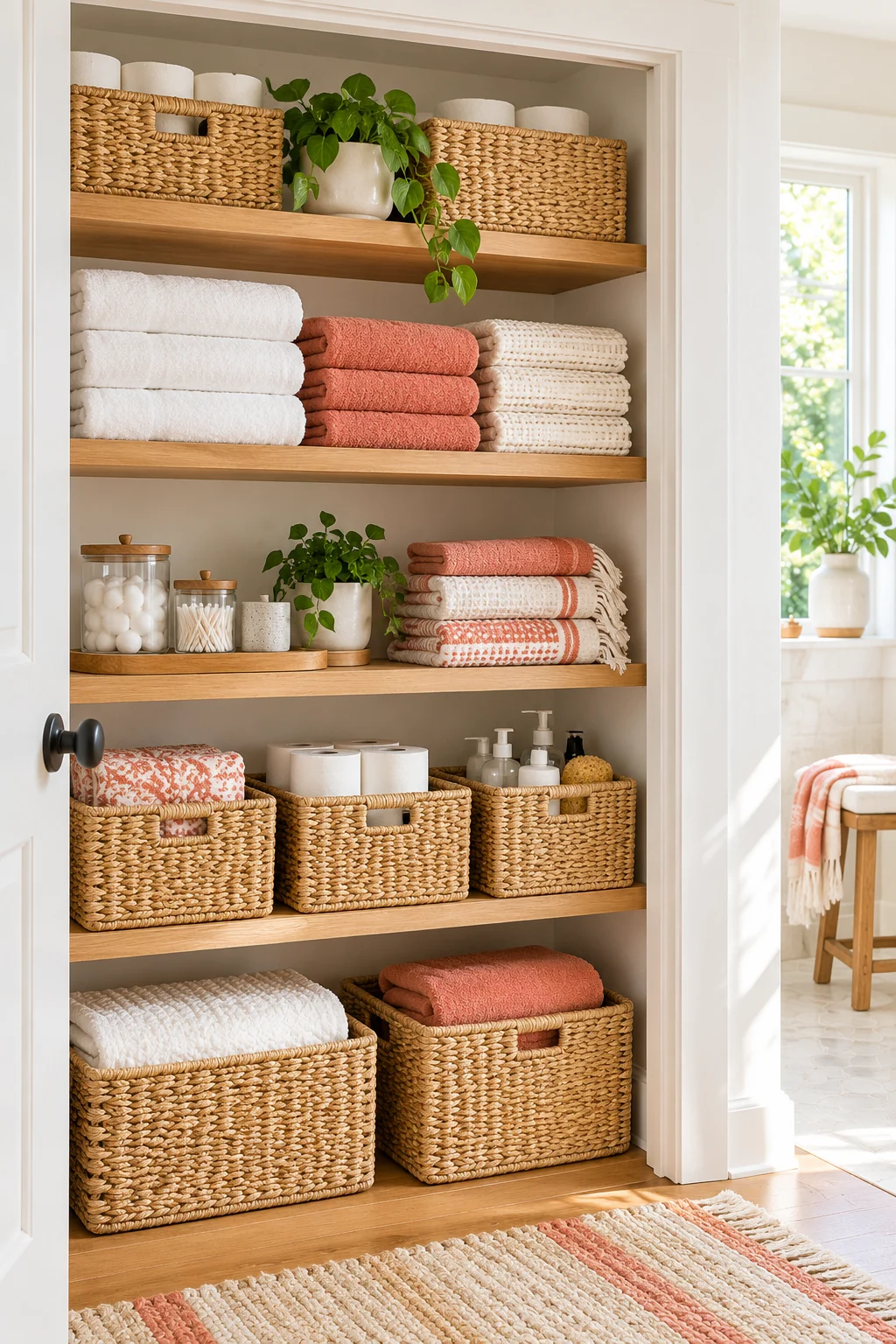
Put the products used every morning on the most accessible vanity shelf or drawer. Keep occasional extras farther back so the daily routine does not involve shifting a stack of backup bottles.
Choose the height for the people using the room. Heavy glass bottles and frequently used items should not require overhead reaching, especially on a shelf above a toilet or beside a hard sink.
4. Fold bath towels to the shelf depth
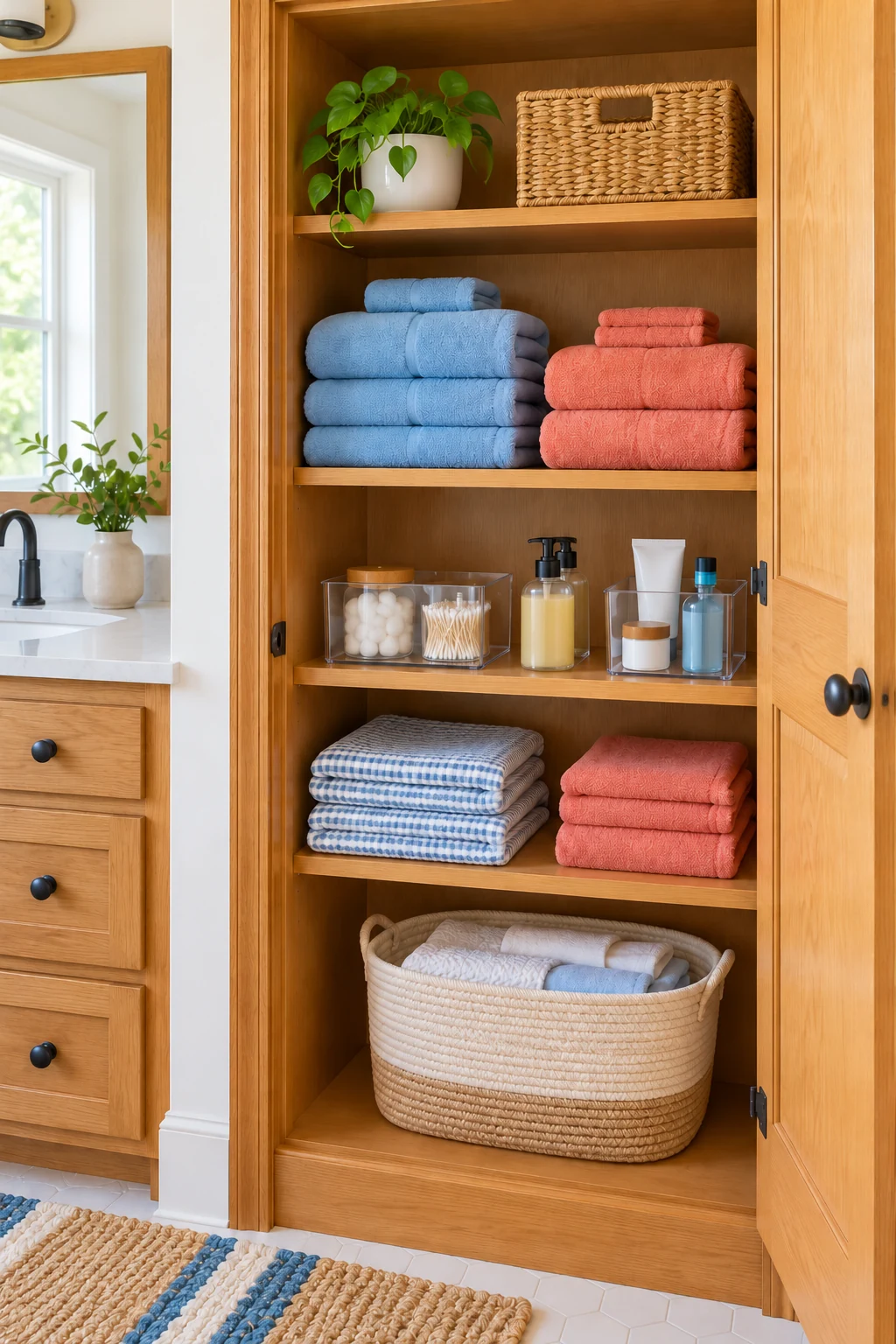
Test one towel fold against the shelf before refolding the entire collection. A fold that sits fully on the shelf can keep stacks from hanging over the edge and obstructing the cabinet door.
Keep stacks low enough to remove one towel without pulling down the rest. Store only fully dry towels, and reduce the number on that shelf if the pile repeatedly leans into a neighboring category.
5. File small washcloths in a drawer
Stand folded washcloths in a shallow drawer so you can see the edges and select one without disturbing a pile. A small existing tray or divider can support the row when only a few remain.
Check drawer closure before committing to the fold. Keep the fabric loose enough to lift easily and return only clean, fully dry cloths; a tight, damp bundle is not a useful storage shortcut.
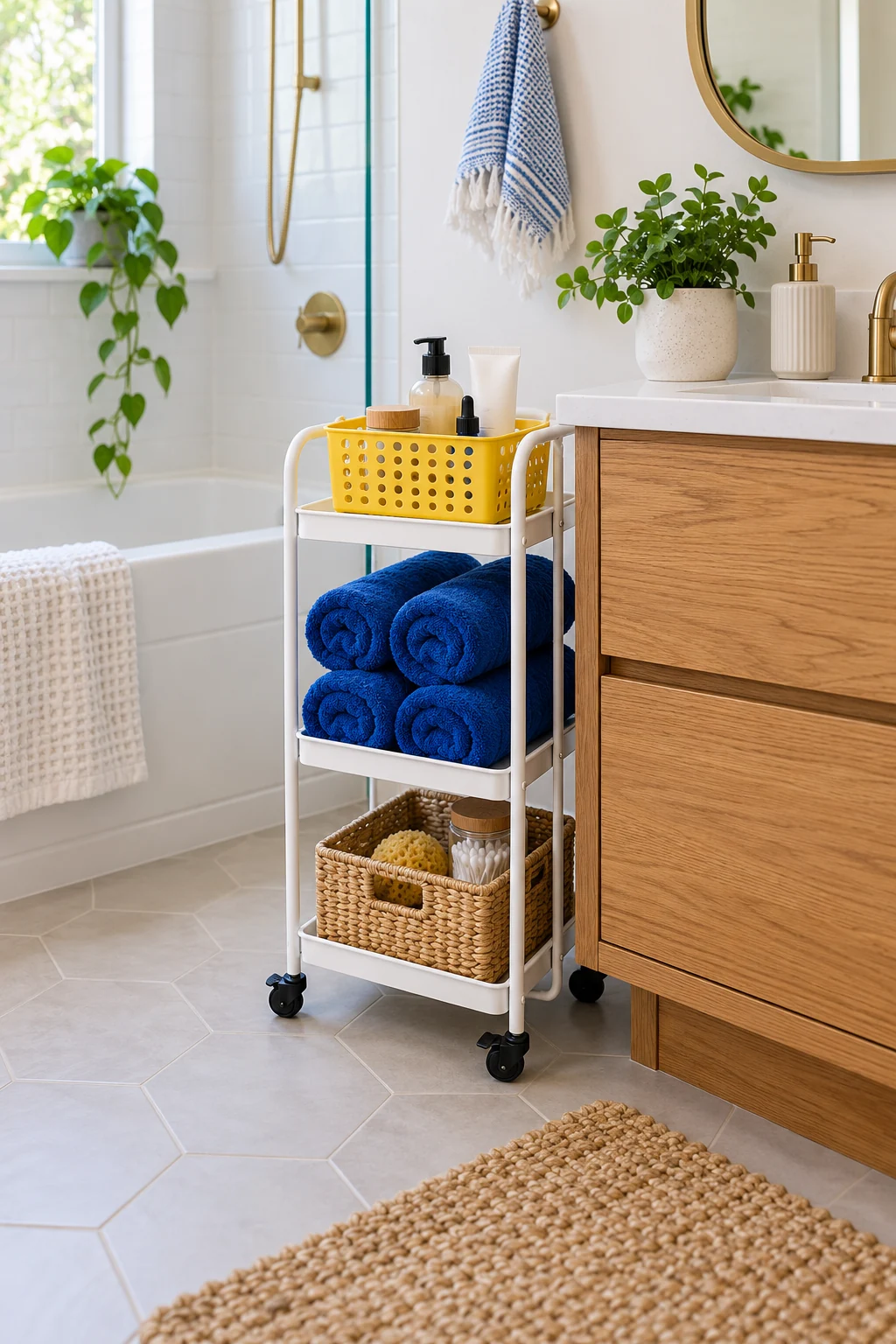
6. Give hand towels their own small basket
A modest basket of dry hand towels can work on an open shelf near the sink. Roll or fold them according to the basket shape rather than forcing one styling method on every towel size.
Keep the basket outside regular splash range and choose a material you can clean appropriately. This is storage for dry replacements, not a place to tuck a towel that is still wet from use.
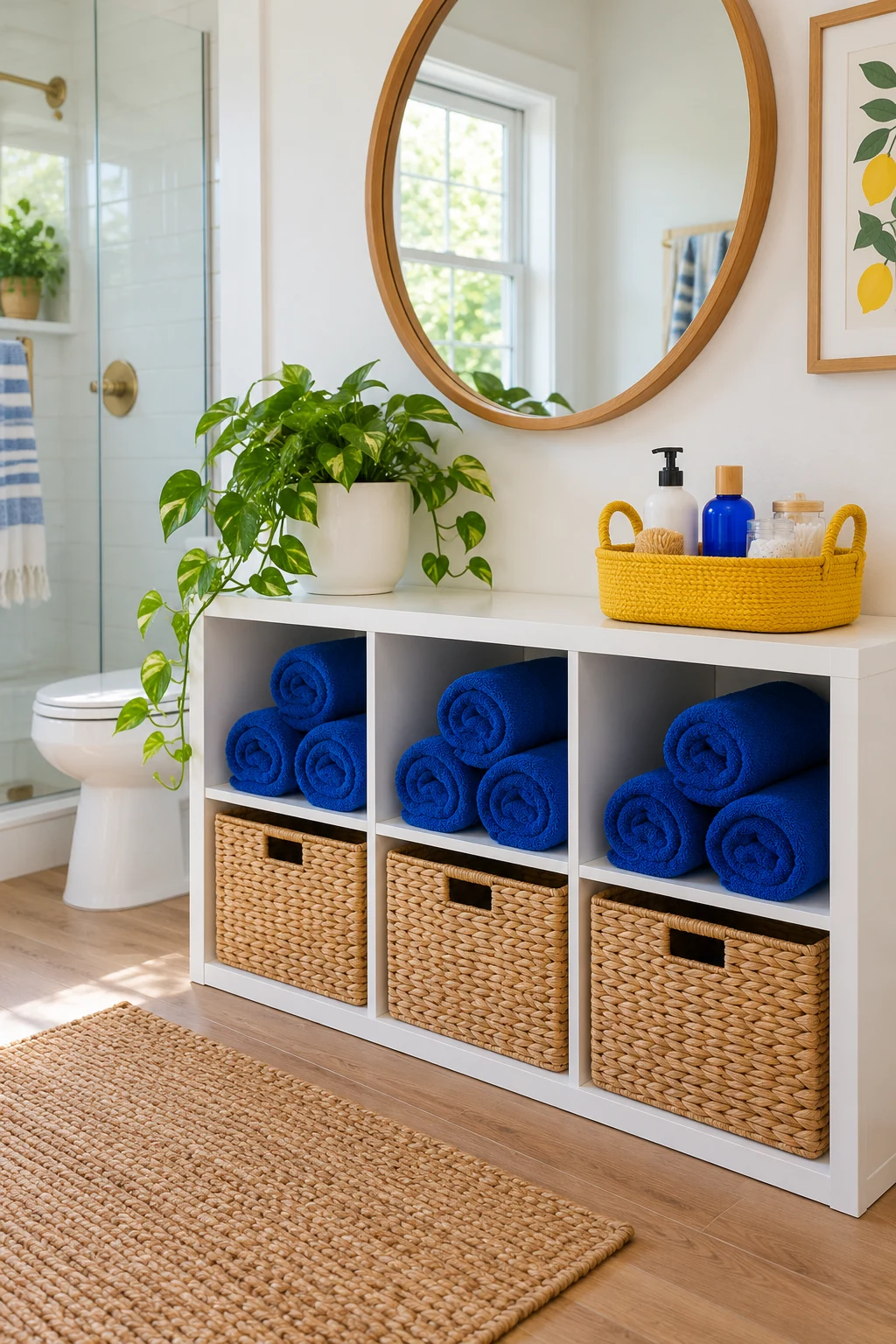
7. Separate guest towels from everyday stock
Keep a small guest set together so preparing the bathroom does not require searching several cabinets. A simple labeled shelf section or existing clean container may be enough.
Choose a reachable location if guests will use it themselves and explain it when needed. Avoid an oversized guest supply that pushes everyday towels into awkward corners or damp storage near the floor.
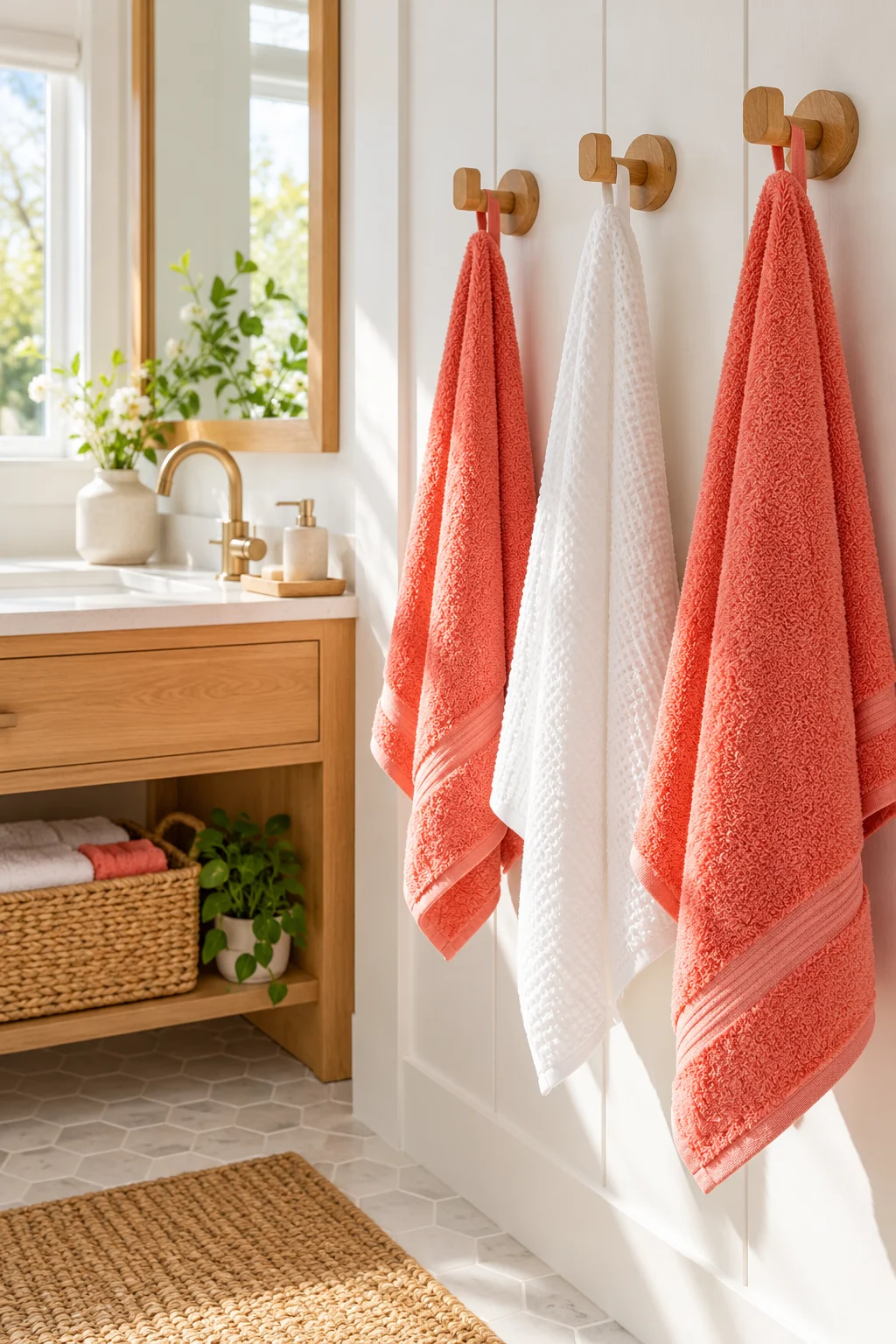
8. Keep backup toiletries in one handled bin
Use a single bin for unopened replacements such as shampoo or toothpaste, following each product’s storage directions. Keeping the supply together makes it easier to check before buying another multipack.
The iDesign Clear Handled Bin has an 8-by-8-by-6-inch footprint and is hand-wash only. Check bottle height and the weight you can comfortably lift; keep the bin in a dry area rather than assuming every plastic organizer belongs in the shower. View on Amazon.
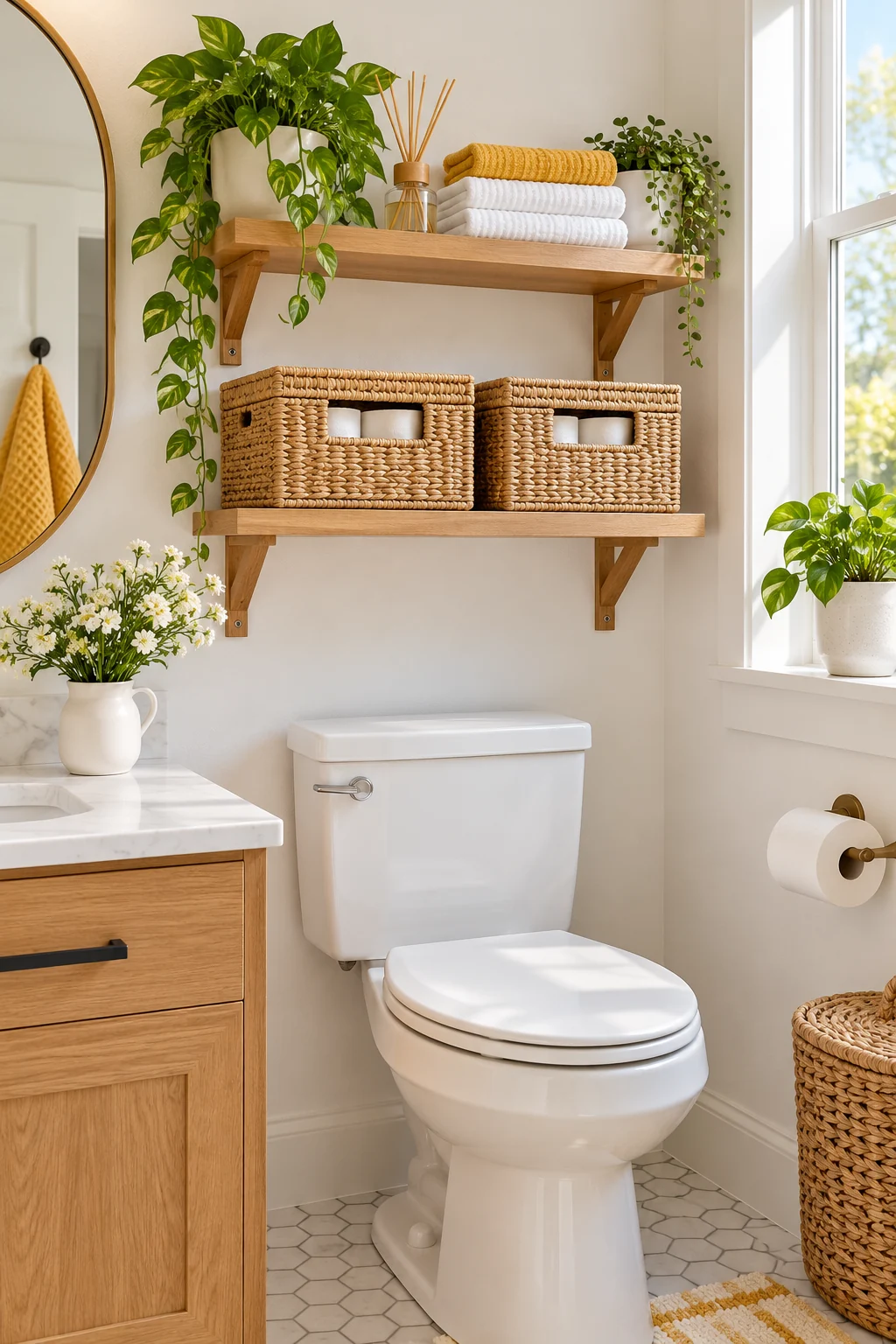
9. Use the highest shelf for light occasional supplies
Reserve high storage for lightweight extras such as packaged tissues or a small empty travel bag. Keep heavy products and daily-use supplies lower where they can be grasped securely.
Use a stable step stool if needed, with clear floor space around it. Do not stand on a toilet seat, tub edge, or vanity to reach a storage shelf.
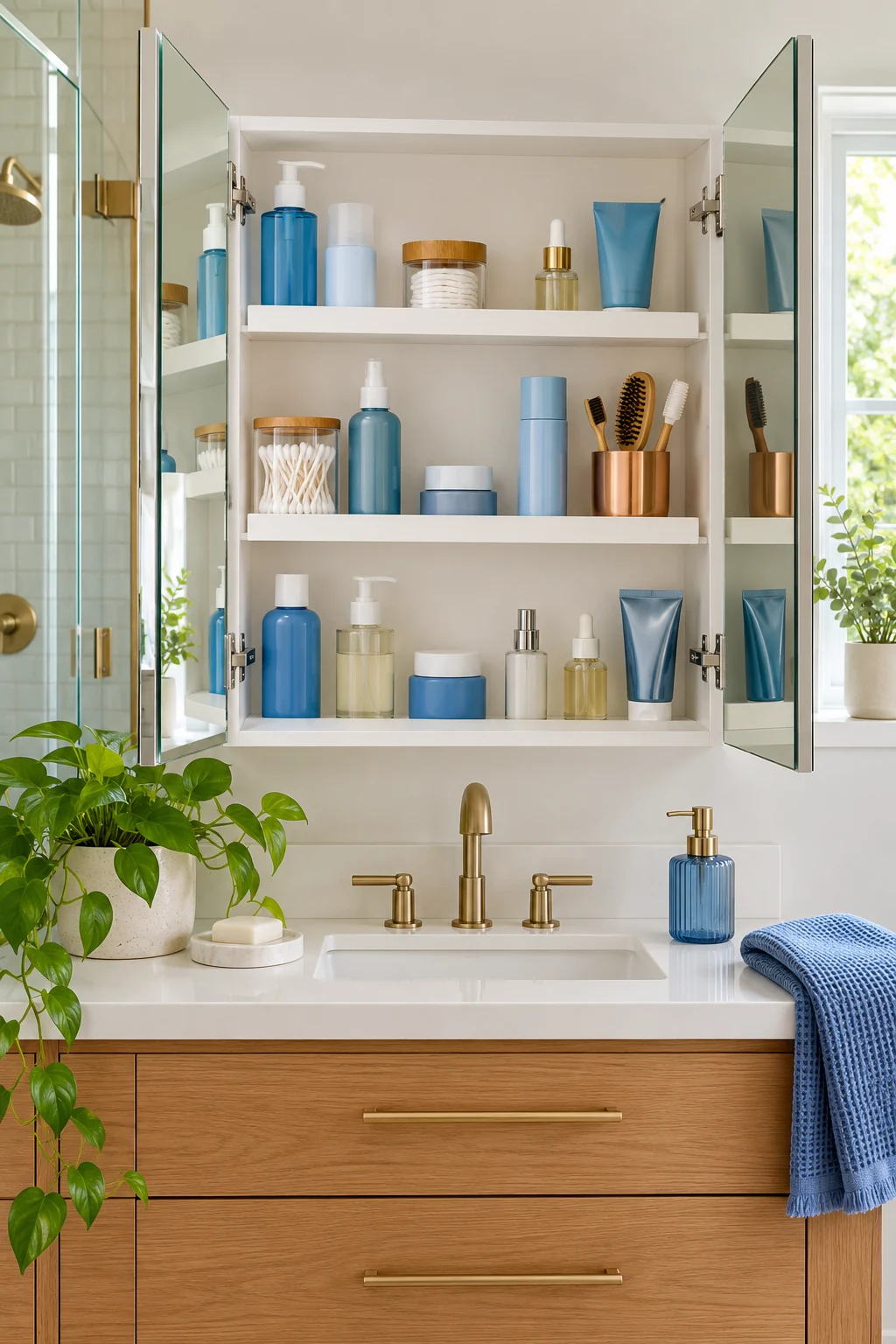
10. Put a shallow shelf above the toilet
A properly mounted shallow shelf can hold a few light supplies without taking floor space. Position it so someone can stand up comfortably and service the toilet without hitting their head or moving storage.
Use fixings appropriate to the wall and shelf load, checking for concealed plumbing and wiring before drilling. Keep heavy glass, candles, and fragile objects out of a position where they could fall onto someone or into the toilet.
11. Choose a narrow cabinet around the walking path
A slim cabinet may add closed storage in a dry unused corner. Measure the full door swing and leave the room’s access route, ventilation, and plumbing service points unobstructed.
Follow the cabinet’s required anti-tip anchoring instructions and use suitable wall fixings. Freestanding does not mean safe to leave unanchored when the manufacturer requires restraint, especially in a home with children.
12. Keep open shelves deliberately shallow
An open shelf beside the vanity can hold a small dry daily-use group without a deep countertop footprint. Choose a depth that does not project into the route to the sink or shower.
Install it according to its load rating and the wall construction. Keep the display modest so every item can be removed for cleaning, and avoid claiming that an adhesive shelf is universally renter-safe or damage-free.

13. Measure the plumbing before filling the vanity
Map the drain, supply lines, shutoff valves, and any pullout mechanism under the sink. Then choose storage that fits the separate open sections rather than treating the cabinet as an empty rectangular box.
Leave valves and plumbing connections accessible and watch for leaks. Do not attach organizers to pipes, cover a damp cabinet base, or stack supplies so tightly that maintenance requires dismantling the whole vanity.
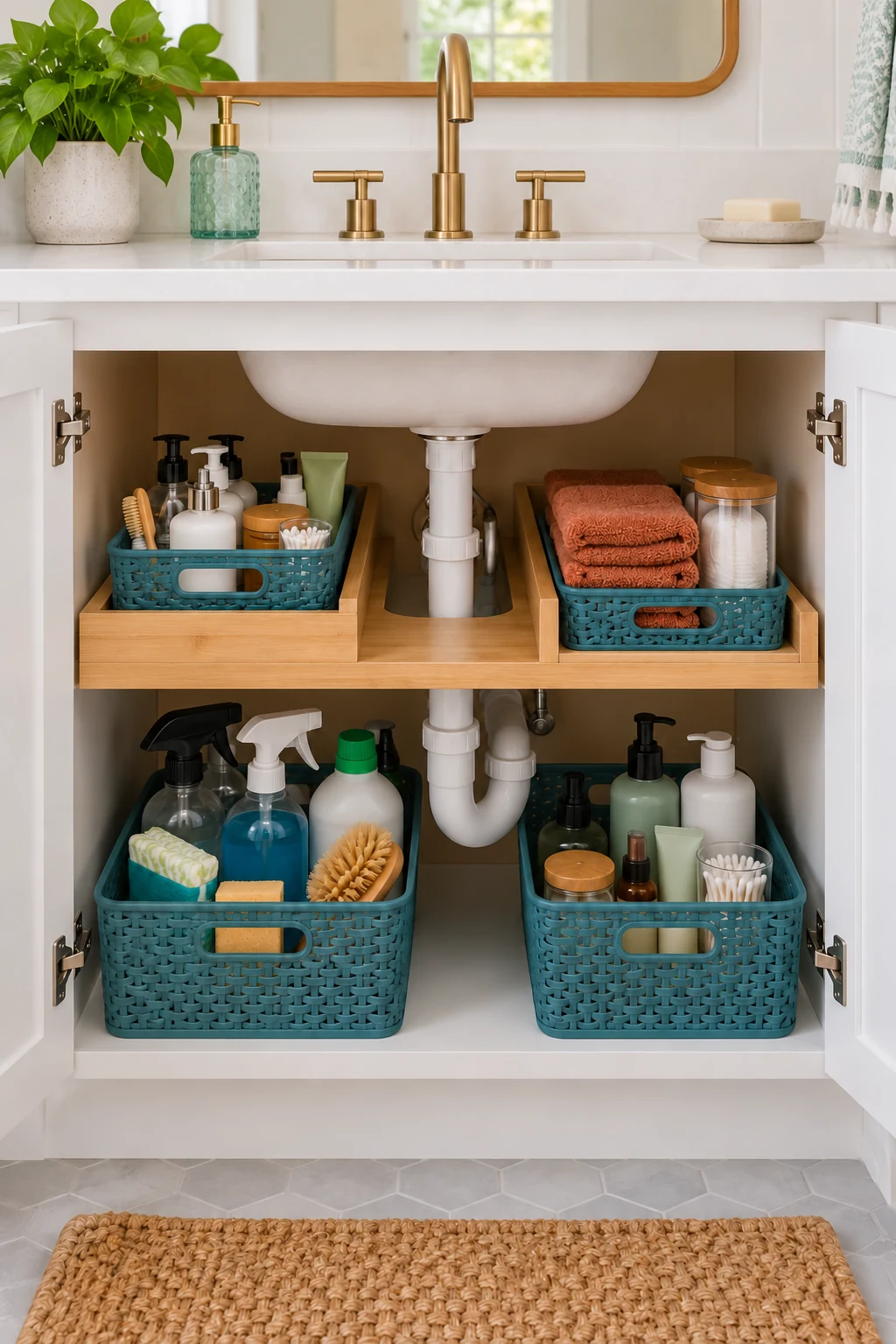
14. Use small pull-forward groups around pipes
Separate under-sink supplies into light bins that can move independently. One bin on each side of the drain may be easier to retrieve than a single wide organizer that collides with the plumbing.
Leave enough room for your hand and for the cabinet door to close. If installing a pullout, verify the mounting surface, load, travel clearance, and required hardware rather than assuming the cabinet floor can take any screws.
15. Try a turntable for short closed bottles
A turntable can make small bottles accessible in a deep dry vanity section. Keep the tallest items out of the rotation path if the drain or shelf above narrows the available space.
The 12-inch Copco Nonskid Turntable is described for bathroom storage and has a raised rim. Measure a complete rotation with the actual bottles, wipe spills promptly, and do not treat the rim as a guarantee that glass cannot tip. View on Amazon.
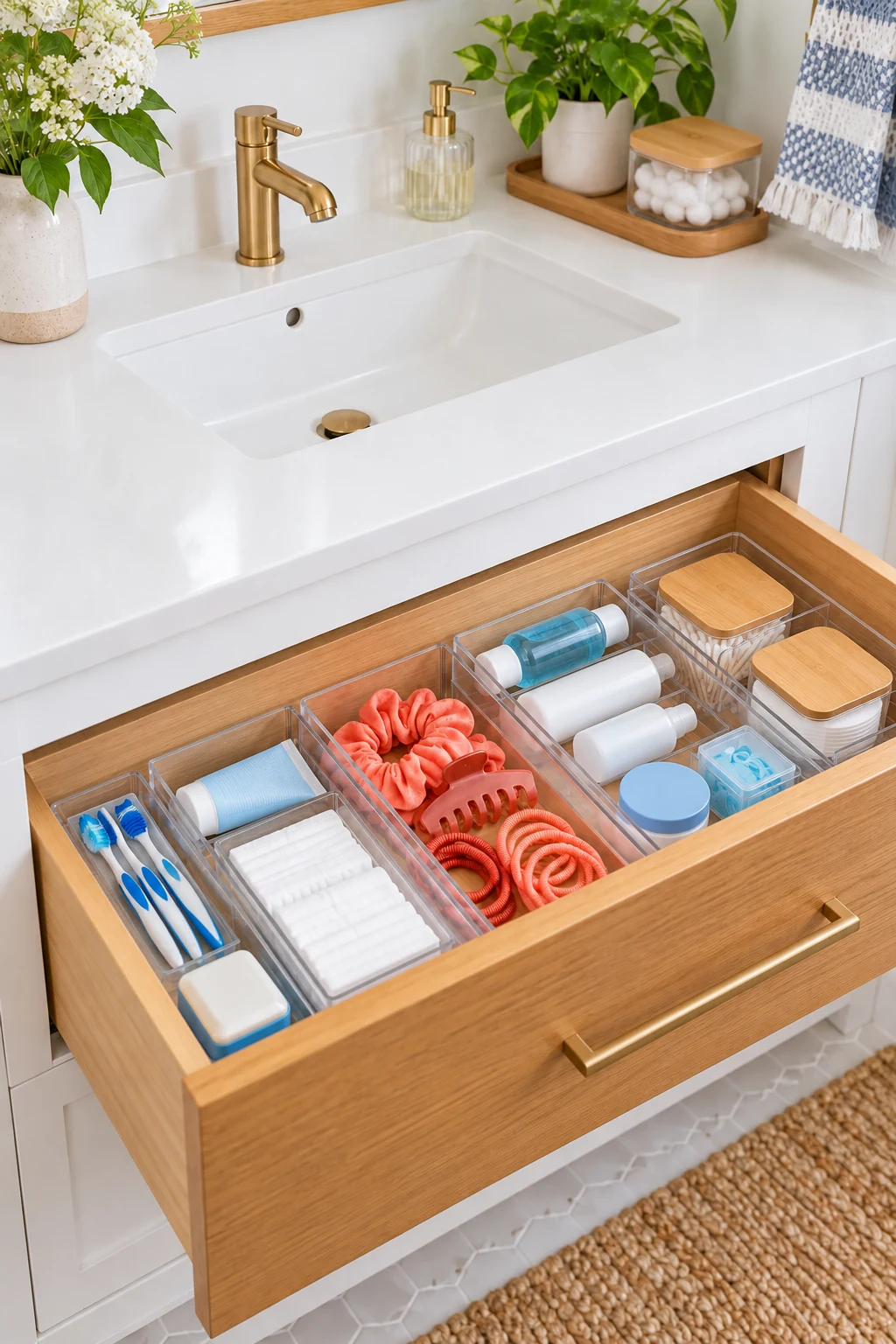
16. Divide small vanity items with modular trays
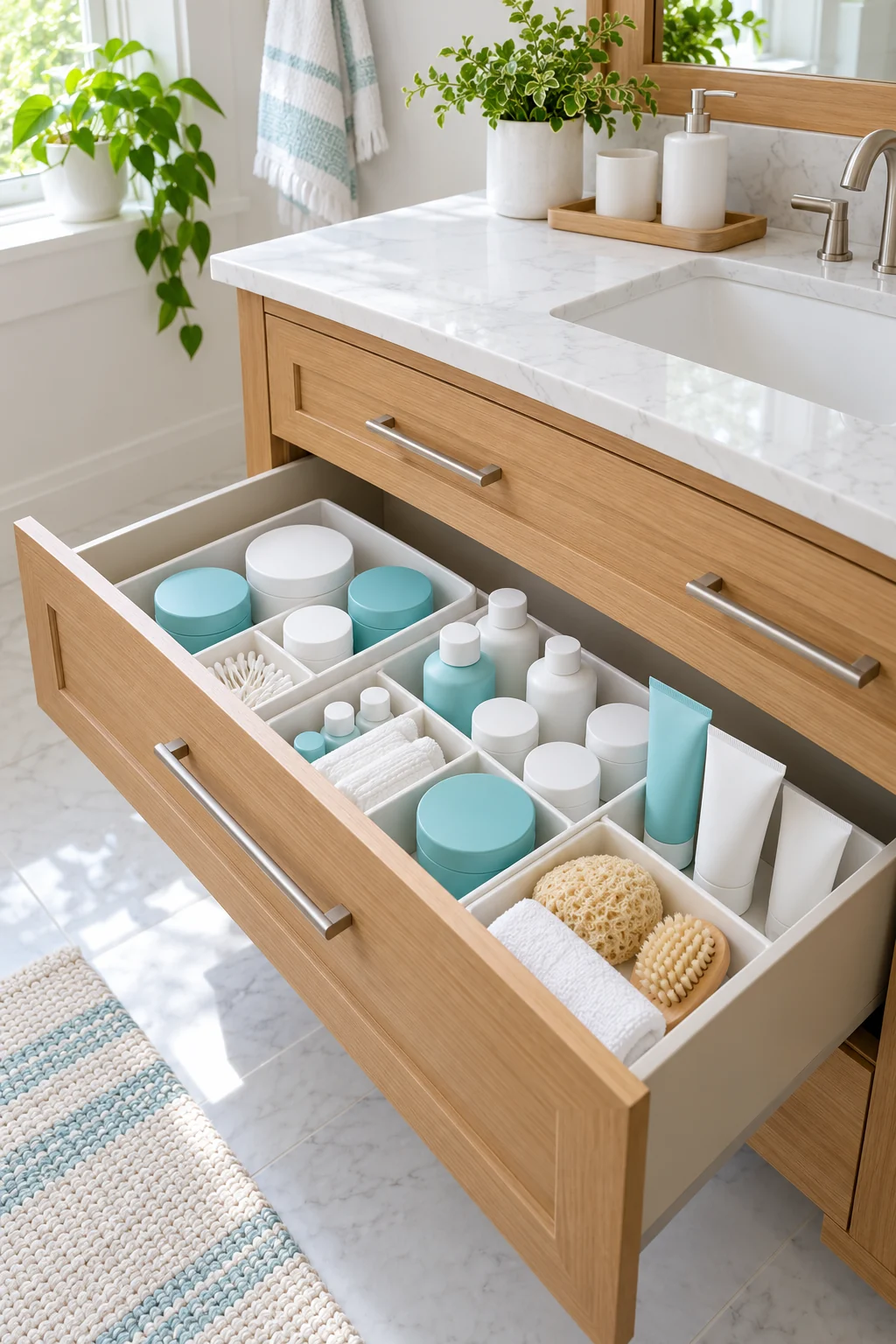
Use small trays for hair ties, clips, grooming tools, and other pieces that drift across a drawer. Select the compartment shapes around your items rather than filling the drawer with a rigid insert that wastes space.
The STORi SimpleSort Six-Piece Set includes several 3-inch-wide tray footprints. Check the height and internal dimensions, leave a little room for easy removal, and keep sharp tools appropriately protected. View on Amazon.
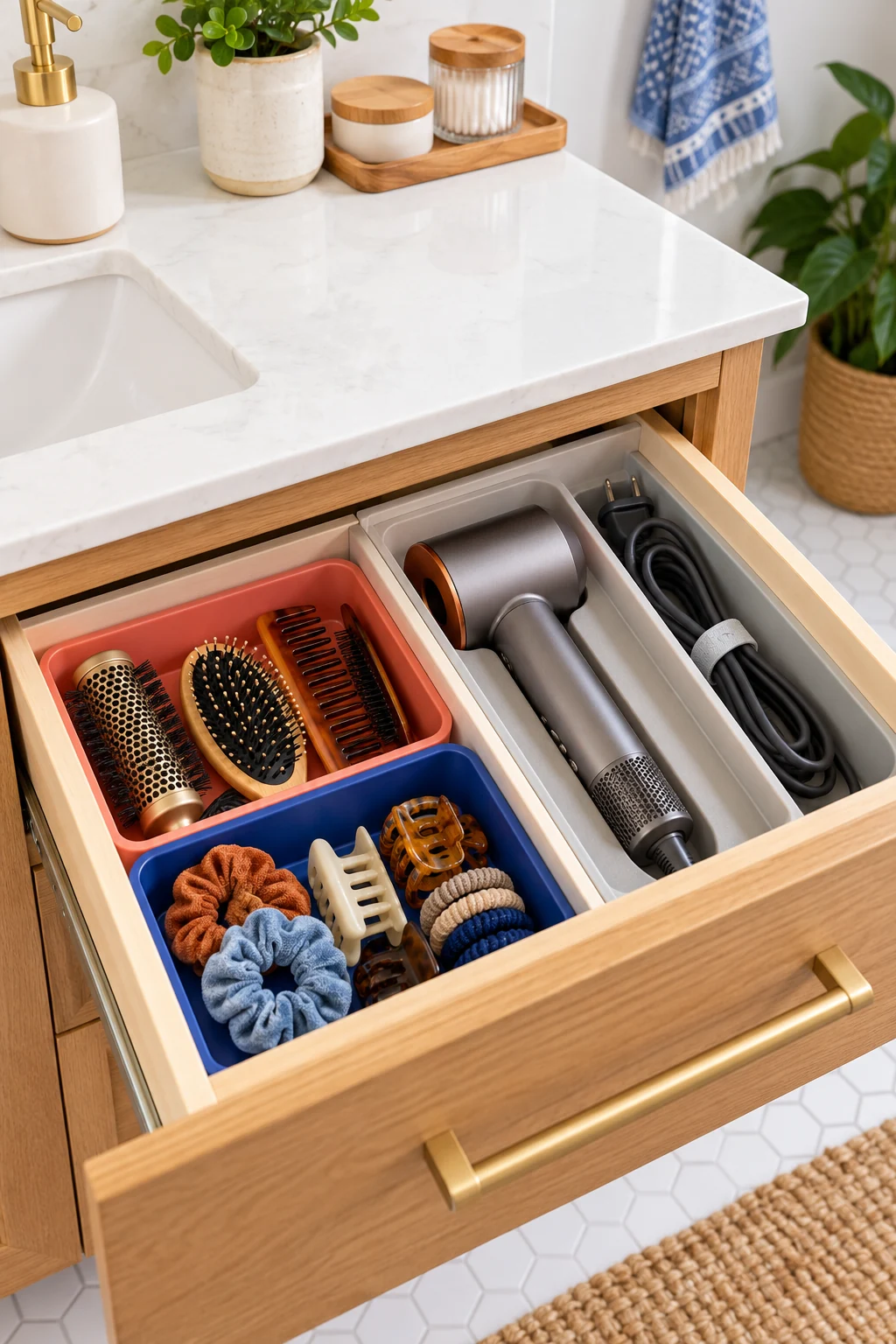
17. Give a deep drawer separate towel lanes
A deep drawer can hold dry towels or larger toiletry groups with a divider between them. This keeps one category from expanding across the entire drawer whenever something is removed.
Utoplike Bamboo Kitchen Drawer Dividers can serve in a dry bathroom drawer when the exact selected size fits. Check the recommended span and height, avoid moisture exposure, and do not apply spring pressure to weak or damaged drawer sides. View on Amazon.
18. Use dry door pockets for light supplies
A suitable bathroom or closet door can hold lightweight packaged supplies in visible pockets. Keep the organizer outside shower spray and test the clearance behind the door when it opens fully.
The Simple Houseware Six-Pocket Clear Window Organizer measures 13 inches wide, 52 high, and 4.5 deep. Check its hooks, care instructions, and permitted load; fabric pockets are not a substitute for a shower-rated caddy. View on Amazon.

19. Give fully cooled hair tools a dedicated holder
Store a hair dryer and styling tools in a dry location after unplugging them and allowing them to cool completely. A separate holder can free a drawer while keeping tools away from sink water.
The Simple Houseware Cabinet Door or Wall Mount Hair Tool Organizer measures about 10.7 inches wide by 5.3 deep. No hot-tool storage rating was verified, so use it only for cooled tools and confirm door fit, mounting, and cord clearance. View on Amazon.
20. Loosely gather cords on stored appliances
After a tool is unplugged and cool, arrange its cord so it does not tangle with other tools or get pinched by the cabinet. Follow the appliance maker’s cord-storage directions rather than wrapping tightly around a hot barrel.
VELCRO Brand ONE-WRAP Cable Ties can gather a loose cord bundle without a tight knot. Remove or reposition the tie as needed before use, and never use storage ties to route an operating appliance toward water. View on Amazon.
21. Limit the counter to one useful tray
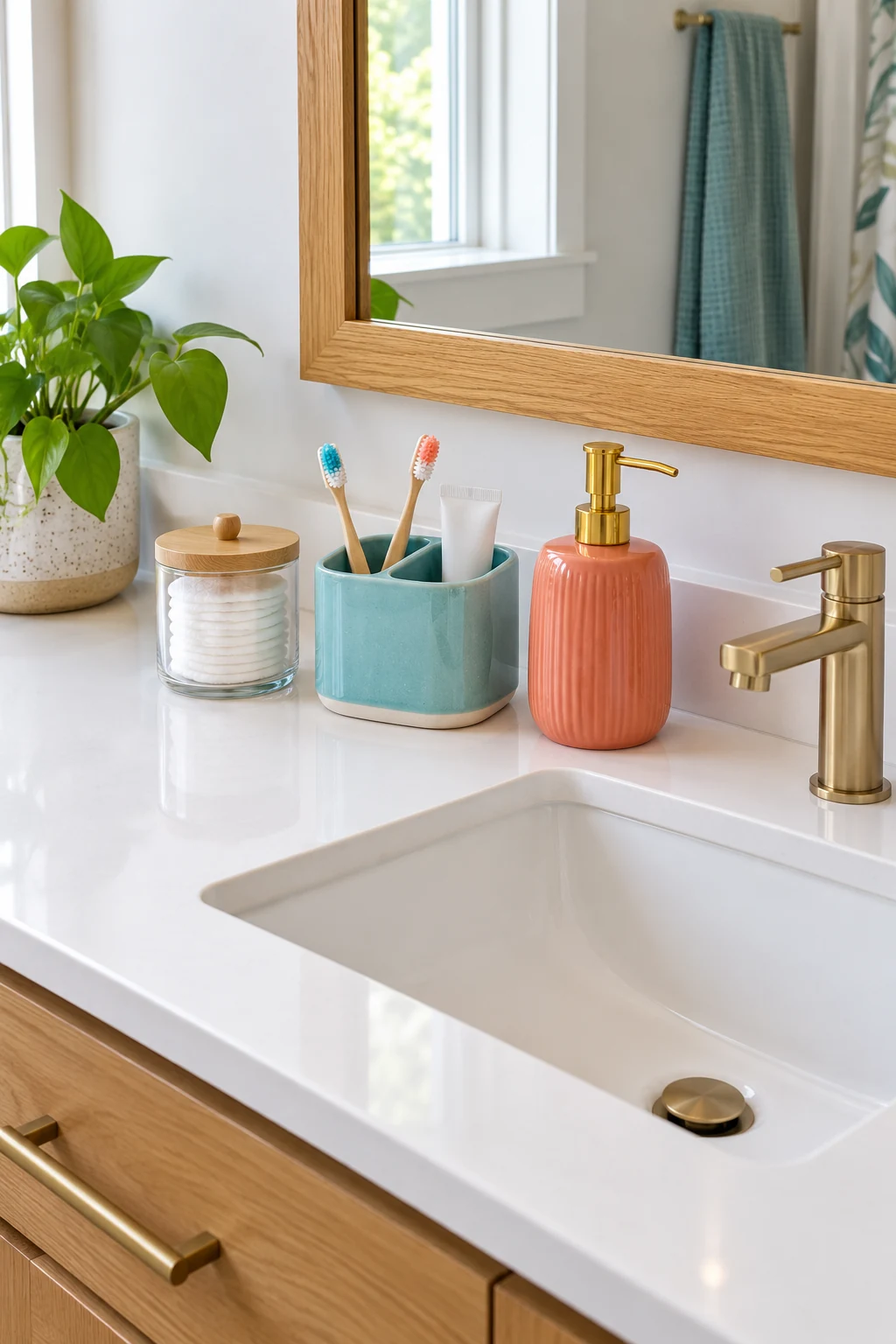
A small tray can define the everyday items that genuinely need to stay on the vanity. Keep it away from the faucet’s splash pattern and leave enough clear surface for routine use and wiping.
Reuse a suitable tray before buying a decorative set. If bottles spill over its edge or have to be moved just to wash your hands, reduce the contents rather than choosing a larger tray that takes over the sink area.
22. Keep soap reachable without crowding the faucet
Give the soap dispenser or dish a stable spot close enough to use easily. Leave clearance for faucet handles, a hand towel, and the area where water naturally drips from hands.
Choose a storage arrangement that can be lifted for cleaning and follows the dispenser’s care directions. Do not balance a tall bottle on a narrow sink rim or place electrical charging equipment beside the soap.
23. Store toothbrushes upright in a cleanable holder
Use a holder sized for the actual toothbrushes and keep the base easy to access for cleaning. Electric handles may need more width than manual brushes, so check the compartment opening before buying.
Keep the holder in a suitable dry location away from obvious splash and follow brush and charger instructions. Avoid promising hygiene benefits from a decorative cover or cramming wet items into a closed travel case for everyday storage.
24. Choose shower storage that drains
Use a caddy designed for the shower environment and position it where it will not obstruct the controls or walking space. Check that water can drain and that the attachment method suits the actual wall surface.
Follow the caddy’s installation and load instructions, including any curing time for adhesive. Do not mount across grout unless specifically permitted, and never treat a storage rail or suction accessory as a grab bar.
25. Put small shower accessories in a separate cup
A small accessory cup can keep a comb or toiletry tube from slipping between larger bottles. Choose a position that stays within comfortable reach while leaving the shower controls clear.
The OXO StrongHold Suction Accessory Cup has a lever-activated suction mount and ventilated base. Use it only on compatible smooth surfaces as directed, check its hold regularly, and keep sharp items safely inaccessible to children. View on Amazon.
26. Keep only active products in the shower
Limit the shower shelf to the shampoo, cleanser, and other products currently in use. Move unopened backups to appropriate dry storage so the caddy does not become unnecessarily heavy.
Check labels and care instructions for products that should not stay in a warm, wet environment. A lighter active collection is also easier to move when you clean the shower shelf and inspect its mounting.
27. Use an existing niche without overfilling it
An existing shower niche can organize active bottles by height, leaving enough room to grip each one. Keep the bottom clear enough for cleaning and avoid forcing tall pumps under the top edge.
Adding a new niche is a waterproofing and wall-construction project, not a simple storage hack. Have a qualified professional assess the location and installation rather than cutting into a tiled wall without understanding what is behind it.
28. Give wet towels space to dry
Use a suitable towel bar or other manufacturer-approved drying arrangement for towels after use. Spread towels as the space allows rather than folding several wet layers into a storage basket.
Position the bar where it does not narrow the doorway or interfere with the shower. Keep clean, fully dry towel storage separate from the used-towel drying area so the two routines remain easy to maintain.
29. Add individual hooks where bars do not fit
A small section of suitable wall or door may fit hooks for a light robe or dry accessories. Choose hooks and mounting hardware rated for the intended load and the room’s conditions.
Allow enough spacing that hanging items do not block the latch, drag on the floor, or press against a heater. Standard indoor adhesive hooks are not automatically suitable for shower spray or a heavy wet towel.
30. Test an over-door robe rack before loading it
An over-door rack can make use of a dry bathroom door when the hook thickness and top gap are compatible. Check the full swing so hanging robes do not hit a wall shelf or prevent the door from closing.
Use the rack’s provided protective components and respect its load limit. If the door rubs, rattles excessively, or no longer latches, choose another location rather than forcing the hardware into the frame.
31. Keep a small laundry destination nearby
A modest hamper in a dry, ventilated position can keep clothing off the bathroom floor. Pick a footprint that leaves the doorway and access to the toilet and shower unobstructed.
Follow textile-care guidance for damp items rather than leaving wet towels compressed in a closed hamper. If the bathroom is too small or humid for the hamper, keep it just outside the room in an appropriate spot.
32. Store spare toilet paper away from splashes
Keep a small spare supply within easy reach in a clean, dry location. A closed cabinet or suitable covered container can make more sense than a tall exposed stack beside the tub.
Leave the toilet’s plumbing and service access clear. Keep larger multipacks elsewhere if they crowd the bathroom, and avoid a shelf position that requires someone to stand on the toilet to reach a replacement roll.
33. Move medicines to storage that follows their labels
Do not treat the bathroom cabinet as the default home for medicines. Heat and humidity from showers and sinks can damage some products, even when the cabinet door stays closed.
MedlinePlus official storage guidance recommends appropriate cool, dry storage and original containers. Follow the medicine label and pharmacist’s instructions, and keep medicines securely out of children’s reach rather than transferring them into decorative bathroom jars.
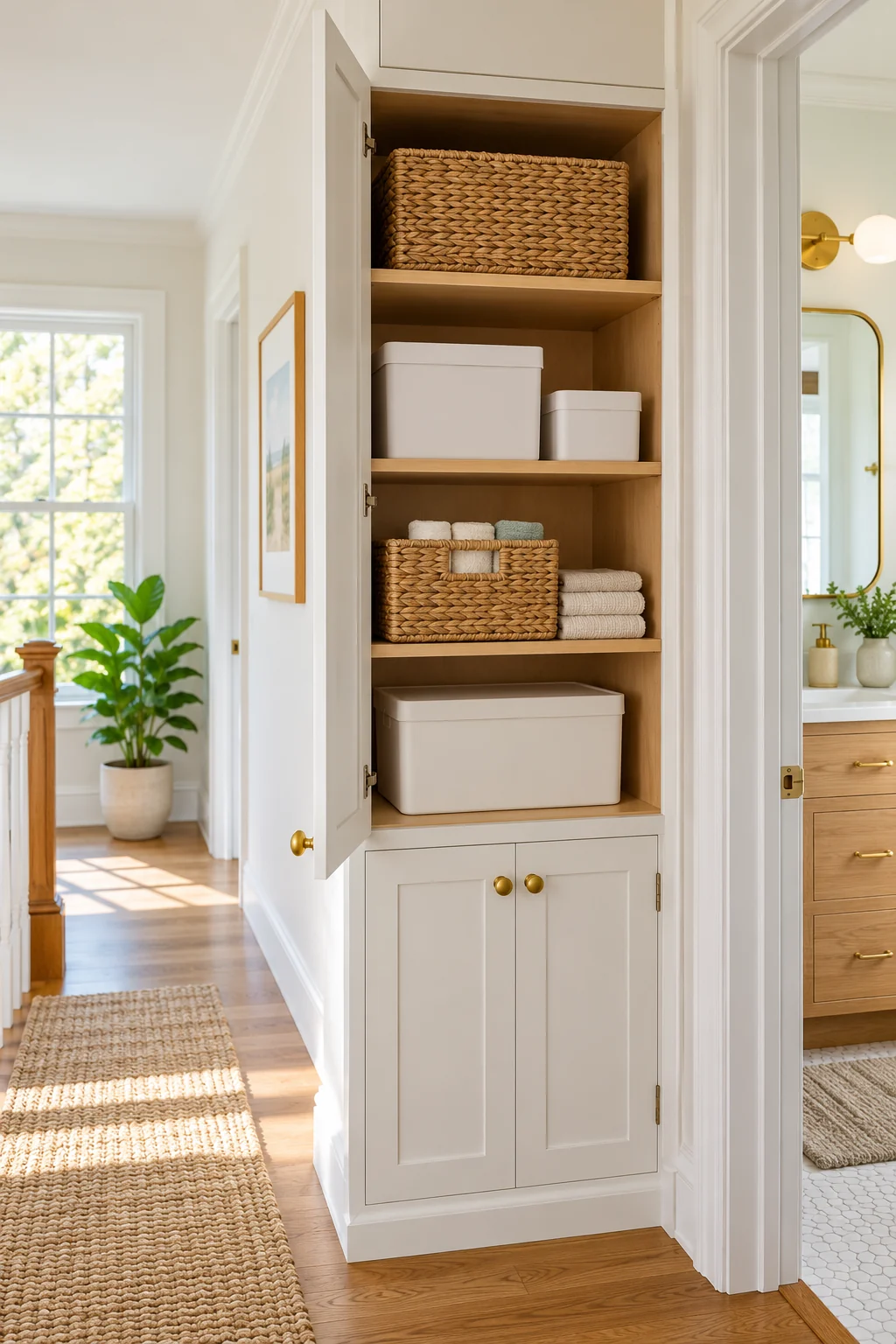
34. Keep cleaners secured in their original containers
Give bathroom cleaning products a suitable secured storage location separate from personal-care supplies. Keep the original labels intact so instructions and warnings stay attached to each product.
Do not decant cleaners into cosmetic bottles or use an open low basket where children or pets can reach them. If the vanity cannot provide appropriate storage, choose a safer household location instead of using the available space by default.
35. Leave enough room for a quick weekly reset
Keep each storage zone simple enough to remove its contents, wipe the surface, and put everything back. The more awkward layers and tiny containers you add, the harder routine cleaning becomes.
Before buying another organizer, identify the specific item or step that keeps causing trouble. A smaller product collection, a better towel fold, or a clearer backup boundary may solve it without adding more furniture.
Choose the area that causes the most daily friction, whether that is the towel shelf, shower caddy, or drawer beside the sink. A measured, easy-to-clean home for that one category is a useful first step toward a calmer bathroom. Subscribe to the Havelyo email list for more small-space decorating and organization ideas.