
Bathroom Organization
25 Bathroom Organizer Ideas to Simplify Your Morning Routine
A bathroom organizer earns its place when it helps you get ready without searching, shifting bottles, or clearing the sink first. The right setup can be small: one useful drawer, a modest daily tray, and a clear place for cooled hair tools.
These 25 bathroom organizer ideas focus on your morning routine rather than filling the room with storage products. Start with the items you use every day and the order you use them. Keep counters practical, match organizers to measured spaces, and follow product labels for storage around heat and moisture.
This article contains affiliate links. If you buy through them, Havelyo may earn a commission. As an Amazon Associate I earn from qualifying purchases.
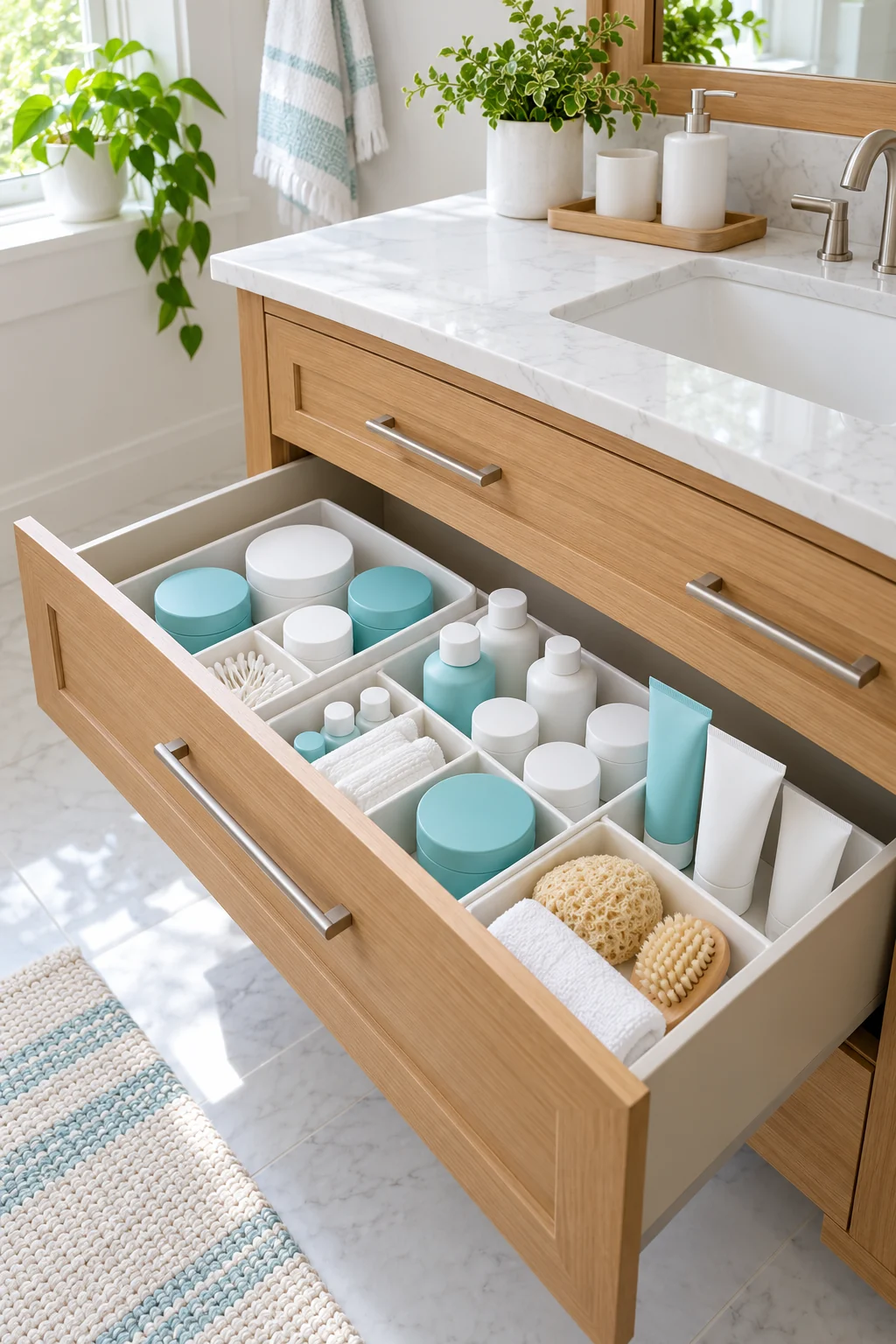
1. Organize around your actual morning sequence
Notice the order in which you use the bathroom: washing, brushing, skin care, hair, or another familiar routine. Write down the items you reach for repeatedly and the places where you have to stop and search.
Choose organizer locations around those steps rather than arranging everything by color. Keep only products appropriate for bathroom storage in the room, and leave the sink and walking space comfortable to use.
2. Keep one small daily-use tray on the counter
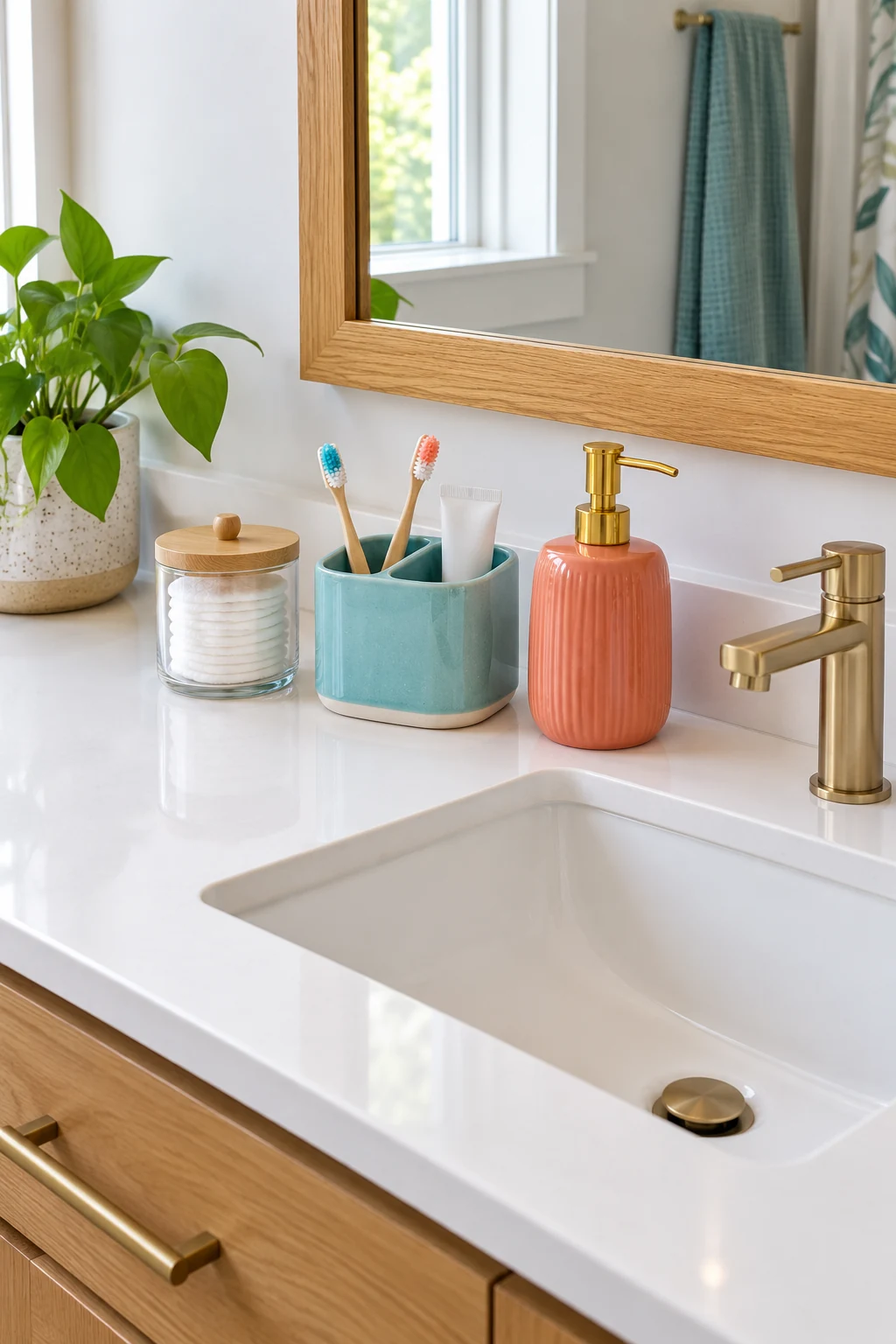
Put the few items you genuinely use at the sink together on a cleanable tray. A defined footprint makes it easier to see when an extra bottle or makeup item has started taking over the counter.
Leave the faucet controls and normal splash area clear, and lift the tray to clean underneath it. If the daily group is too large, move part of the routine into a drawer instead of expanding the tray across the vanity.
3. Create a first-stop drawer with modular bins
Use the easiest drawer for the small essentials needed at the beginning of your routine. Divide the contents into a few obvious groups so putting an item back takes less effort than leaving it on the counter.
Joseph Joseph Blox has ten separate trays that clip together in different layouts. Choose only the pieces that suit your drawer’s usable width, depth, and closing height; you do not need to fit the entire set into one space. View on Amazon.
4. Separate hair ties and clips into shallow sections
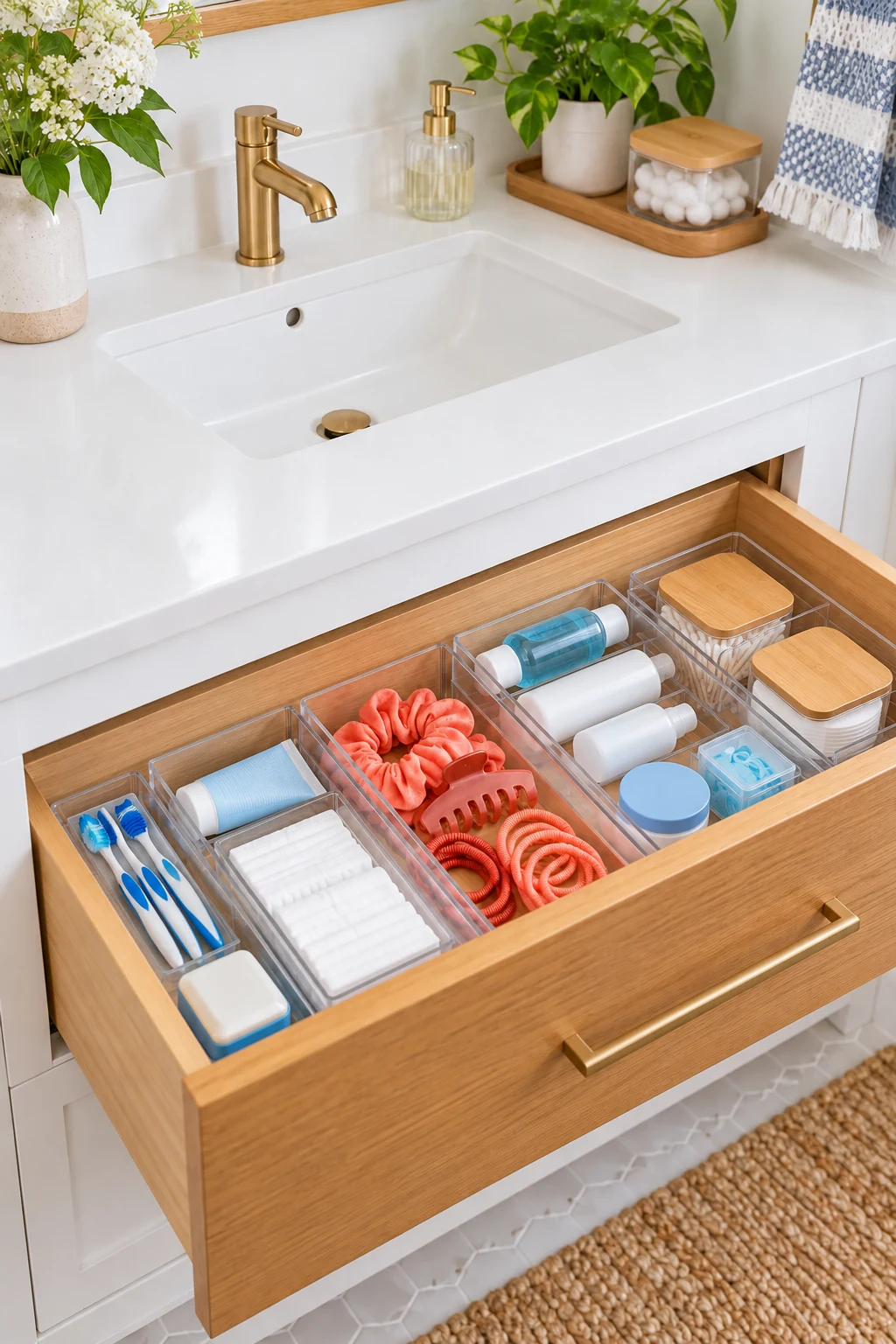
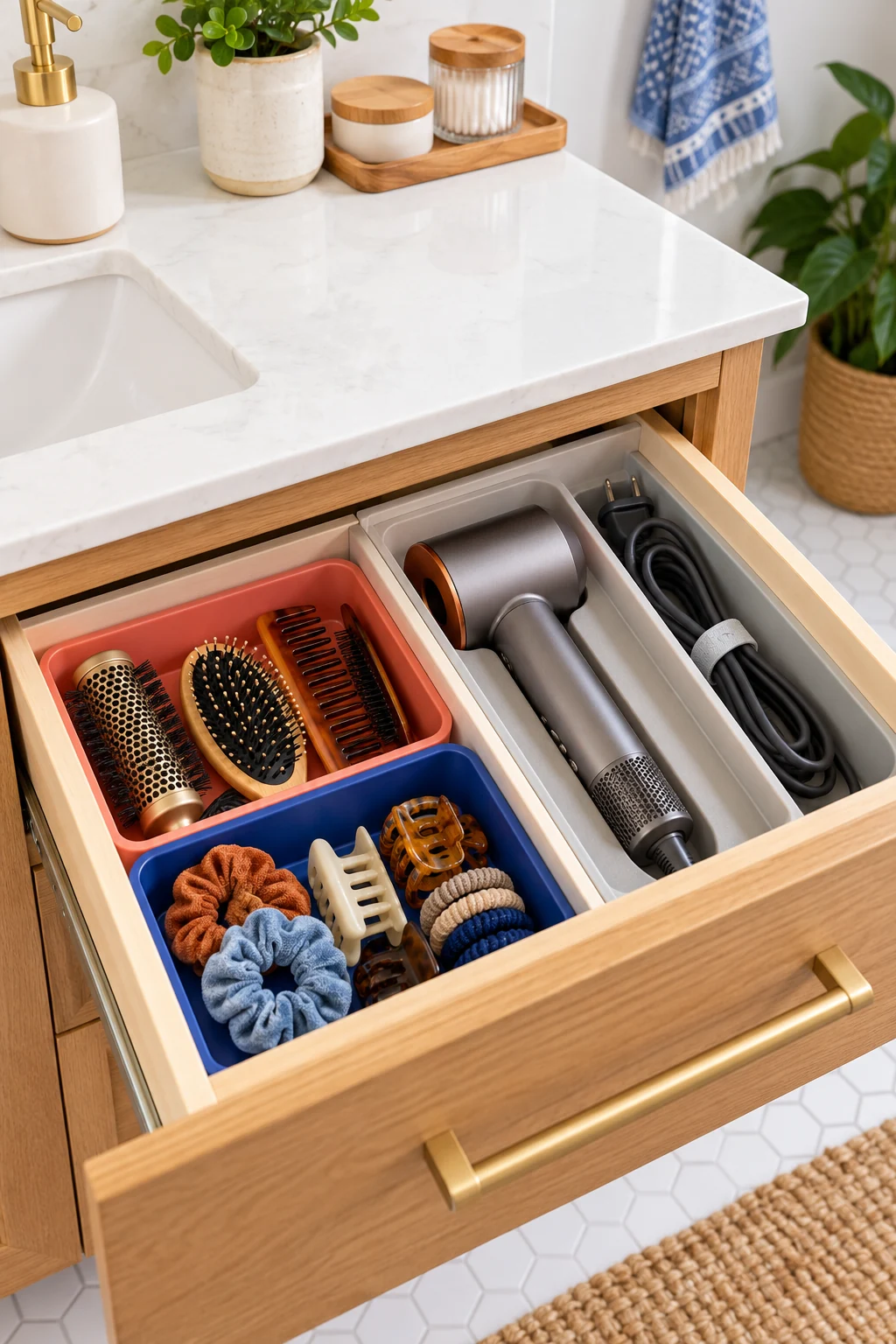
Small hair accessories are easier to find in open shallow compartments than at the bottom of a deep cosmetic pouch. Group by useful type, such as elastics, small clips, and larger barrettes.
The STORi SimpleSort Six-Piece Set offers several tray footprints that can be arranged independently. Check tray height and leave enough finger room to pick up a small item; keep accessories away from young children when appropriate. View on Amazon.
5. Give each toothbrush a usable holder position
Choose a cleanable holder with openings that fit your actual toothbrush handles. Leave enough space to remove one without knocking over another, particularly when an electric brush shares the sink area.
Follow the toothbrush and charger instructions for storage and cleaning, and keep charging equipment away from water. A holder is an access tool; do not assume that a decorative lid provides a hygiene benefit or that tightly covering wet brushes is helpful.
6. Keep dental refills in a small dry bin
Store appropriate unopened dental-care replacements together in a dry cabinet section. A single visible supply area makes it easier to notice whether you already have another toothpaste tube or replacement brush head.
The iDesign 8-by-8-by-6-inch Handled Bin is a simple option when the cabinet fits it. Keep product labels and care directions intact, and avoid buying a large bin that encourages more backup stock than the room needs. View on Amazon.
7. Put closed skin-care bottles on a measured turntable
A small rotating group can make a few daily bottles accessible in a deep dry vanity section. Arrange them so taller bottles do not conceal the labels of smaller ones.
The 12-inch Copco Nonskid Turntable has a raised edge and is listed for bathroom storage. Test its full rotation with the actual bottles and check product storage labels; a turntable will not make a warm, damp cabinet appropriate for every formula. View on Amazon.
8. Separate morning and evening products
Give products used only at night their own small drawer section or container. This keeps the morning area focused while preserving an obvious place to return things after the evening routine.
Use simple labels if the containers look similar, and keep original instructions readable. The categories are about when you use products, not permission to combine ingredients or change the directions on their labels.
9. Stand small cosmetic tubes where names show
Keep a modest selection of daily cosmetics upright or in shallow rows so the labels remain visible. Choose the arrangement around the packaging: a narrow tube may need support while a compact may sit better flat.
Avoid overfilling the organizer with products you do not use, and review condition and dates according to the maker’s advice. Do not transfer cosmetics into unmarked jars merely to make the collection match.
10. Give clean makeup brushes a dry storage place
Choose a holder or compartment that supports brushes without crushing the bristles. Keep it outside regular sink splash and give the holder enough space to be cleaned without dismantling the whole counter.
Follow each brush’s cleaning and drying instructions, and store brushes only when appropriately dry. A closed cosmetic bag can be useful for travel but should not become a place where damp tools are tucked away after washing.
11. Put cooled hair tools beside their attachments
Group a hair dryer with its compatible nozzle and other attachments in a dry section so getting ready does not begin with a search. Unplug tools and let them cool completely before storing them.
The Simple Houseware Cabinet Door or Wall Mount Hair Tool Organizer provides separate storage openings in a metal frame. Verify the selected installation’s clearance and load; no hot-tool storage rating was verified, so this recommendation is for fully cooled tools only. View on Amazon.
12. Use loose cord wraps after tools have cooled
Arrange stored appliance cords so they cannot catch in a drawer or tangle around nearby bottles. Leave bends gentle and follow the appliance manufacturer’s instructions rather than pulling a cord tightly around the tool.
VELCRO Brand ONE-WRAP Cable Ties can secure a loose bundle on an unplugged, cooled appliance. Undo the storage arrangement before operating the tool as needed, and do not route cords across a wet sink or leave them pinched behind a cabinet door. View on Amazon.
13. Plan a safe cooling spot for styling tools
Before using a heated styling tool, identify the stable, heat-resistant resting surface specified by its maker. Keep that spot clear of towels, paper, plastic organizers, and other items that could be damaged by heat.
Let the tool cool fully before returning it to ordinary storage. A metal basket is not automatically heat-safe, and a decorative tray should not be treated as a substitute for the manufacturer’s required stand or heat protection.
14. Keep shower accessories off the bottle shelf
A separate small cup can hold suitable combs or toiletry tubes while leaving the main shower shelf for active bottles. Position it within comfortable reach without interfering with controls or shower movement.
The OXO StrongHold Suction Accessory Cup has a ventilated base and lever-activated suction. Install it only on compatible smooth surfaces according to the instructions, keep within its permitted load, and never use it as a support handle. View on Amazon.

15. Give each person a clearly defined section
In a shared bathroom, assign a drawer section, small basket, or shelf lane to each person’s suitable personal-care items. The division can reduce confusion without requiring a separate organizer for every single product.
Keep shared supplies in a separate common zone and agree on where they return. Personal baskets are an organization aid, not a substitute for proper cleaning, secure storage of hazardous items, or following individual product directions.
16. Prepare a small guest kit in dry storage
Keep a modest set of suitable guest essentials together so visitors can find what they need without opening private drawers. A clean container with a simple label can hold packaged toiletries and a dry washcloth.
Review the kit periodically and follow product storage and dating instructions. Do not add medicines, opened personal-use items, or products you cannot identify clearly simply to make the basket look full.
17. Give sharp grooming tools a protected compartment
Store razors, scissors, and similar tools so blades are protected and hands do not meet them unexpectedly. Keep their location securely out of reach of children and follow each tool’s storage instructions.
Avoid a loose mixed drawer where a sharp tool hides under a hair tie or cotton pad. Choose an appropriate cover or dedicated container, and keep the category separate from the open everyday-accessory tray.
18. Use a travel pouch as a ready-to-check kit
Keep travel-sized items together in a dry place where you can review them before a trip. Store only what belongs in the kit and leave room to see which items need replacement.
After travel, unpack wet items, clean and dry the pouch as directed, and return products to suitable storage. A zipped bag left damp beneath the sink is not a useful shortcut for preparing the next trip.
19. Set a simple backup limit
Decide how many unopened replacements make sense for the products you use regularly. A small home may work better with one spare of a favorite item than with several large multipacks.
Check the backup area before shopping and note when the final spare moves into use. Let the storage space and your actual pace of use guide purchases instead of filling every empty organizer compartment.
20. Keep medicines out of the humid routine zone
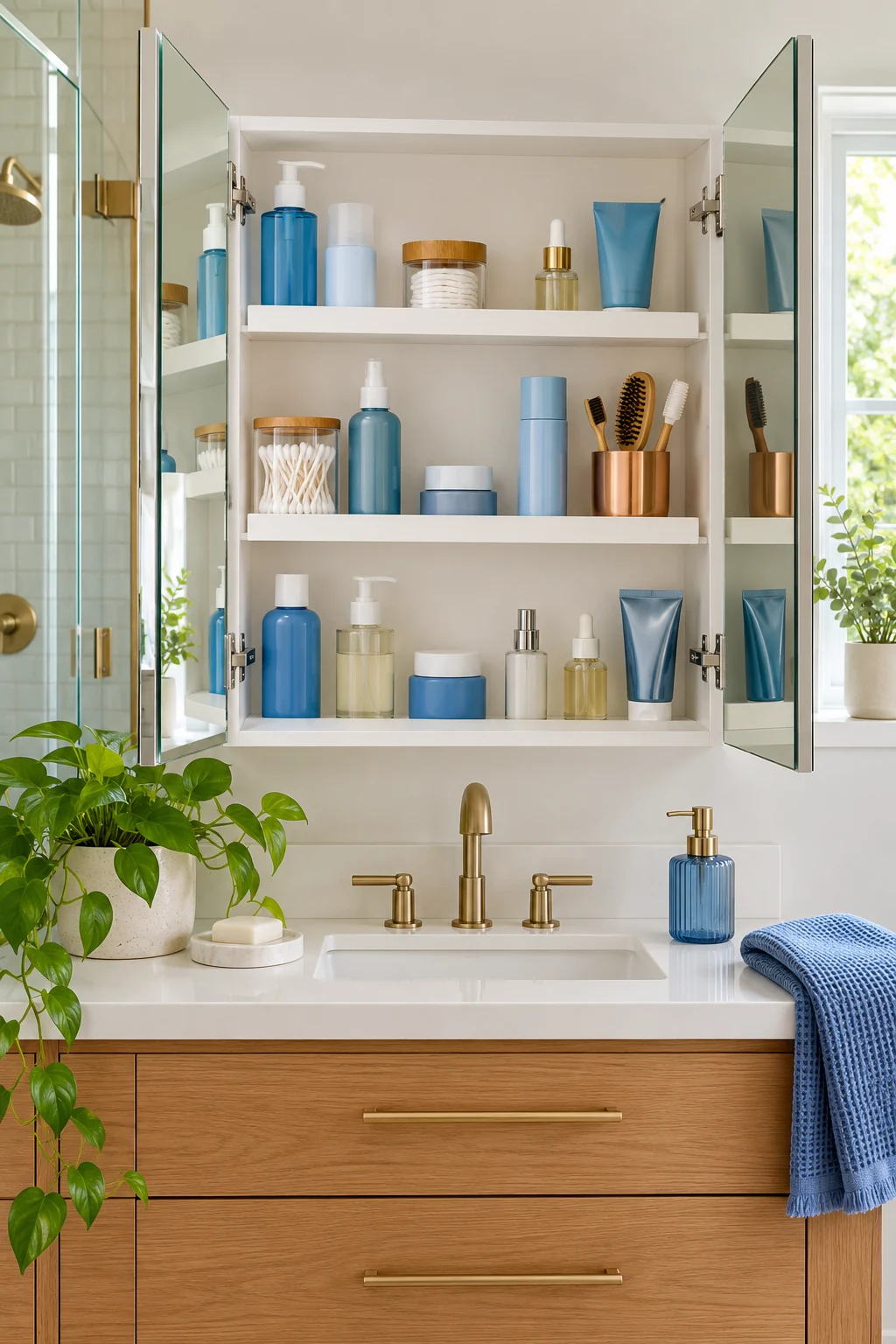
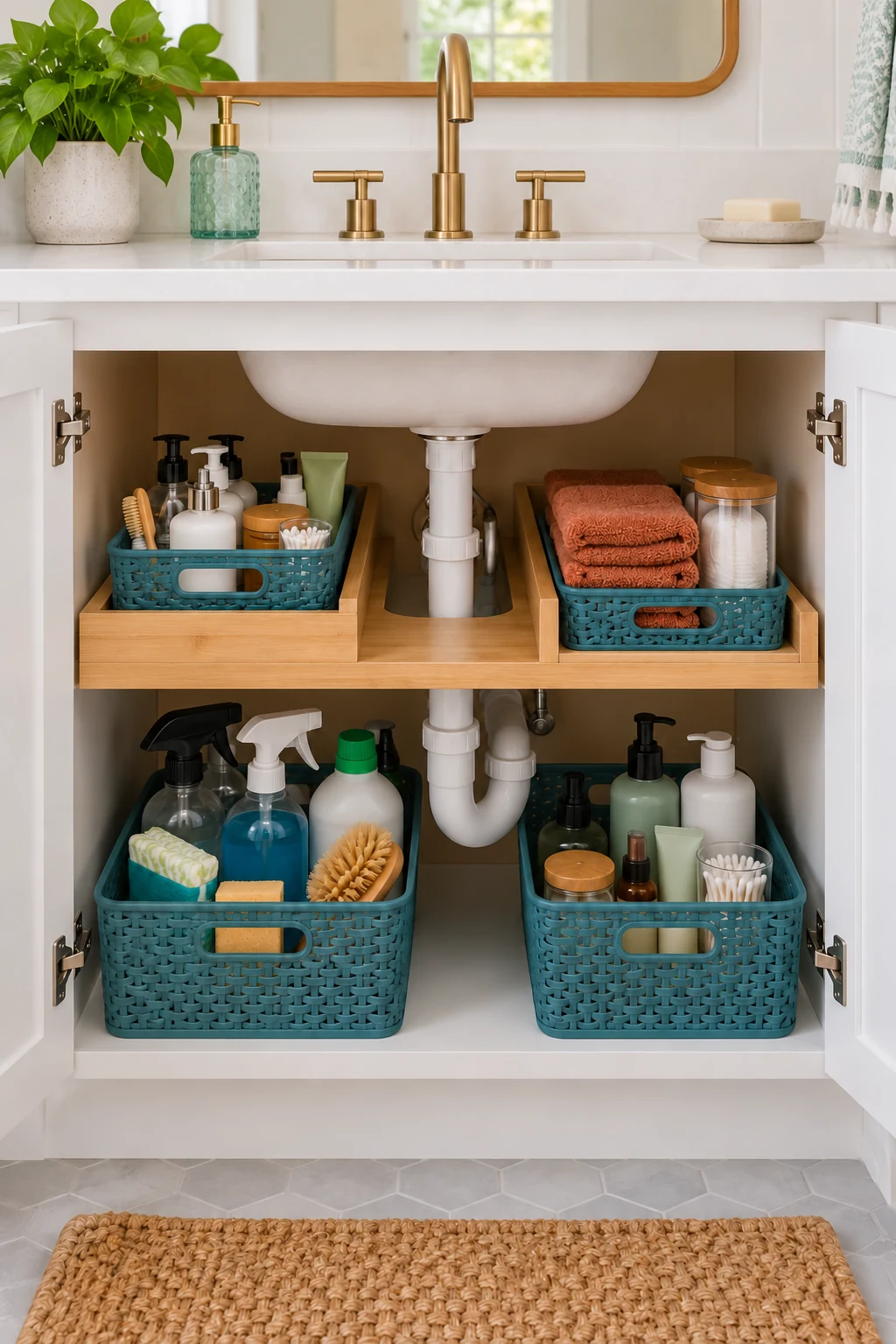
Review medicine labels before deciding where they belong. The bathroom’s changing heat and humidity can make it an unsuitable default, even when a mirrored cabinet seems designed for pill bottles.
MedlinePlus official storage guidance recommends appropriate storage conditions and original containers. Follow label and pharmacist instructions and keep medicines secure from children; do not move them into cosmetic organizers for the sake of a coordinated drawer.
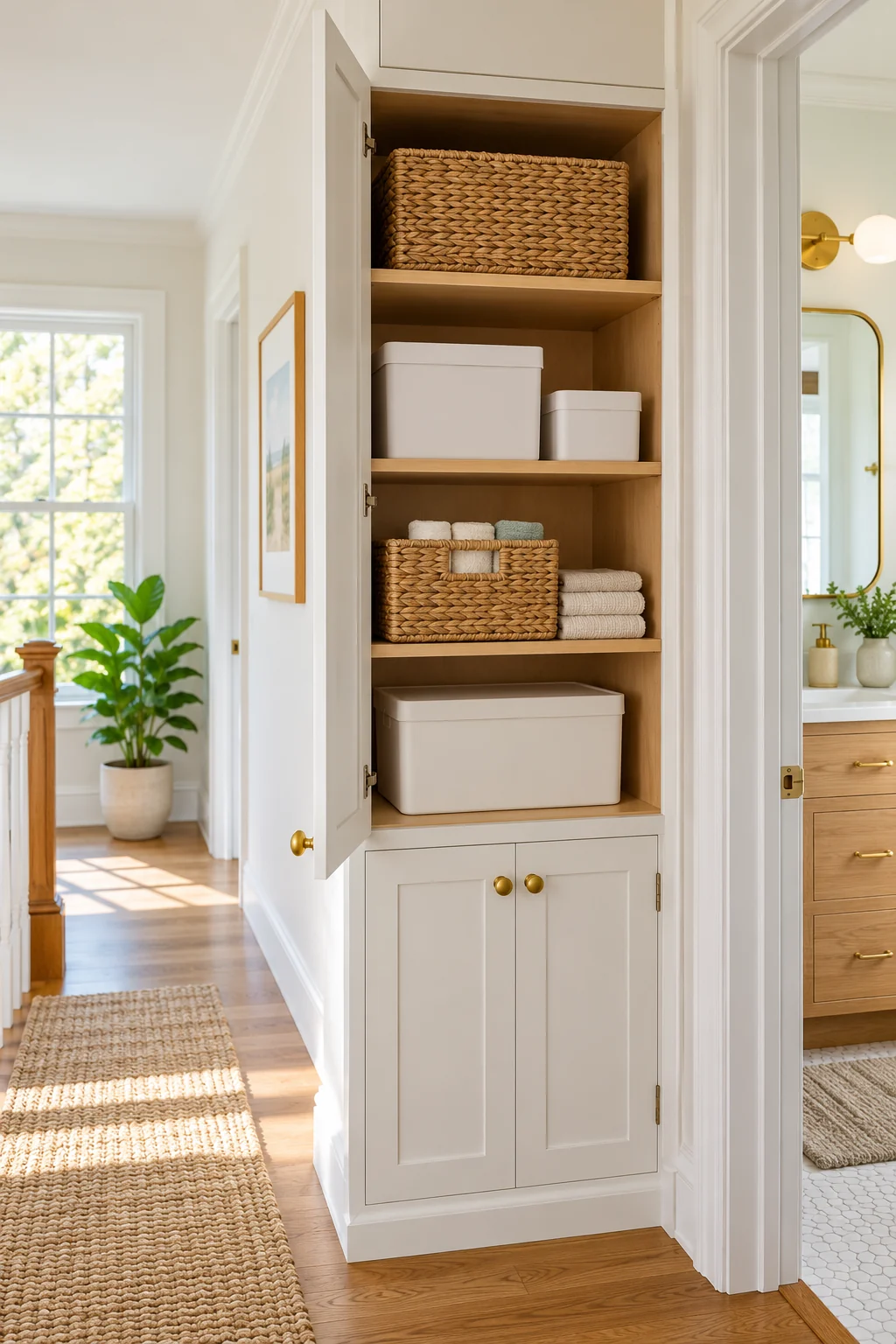
21. Place a clean towel where the routine needs it
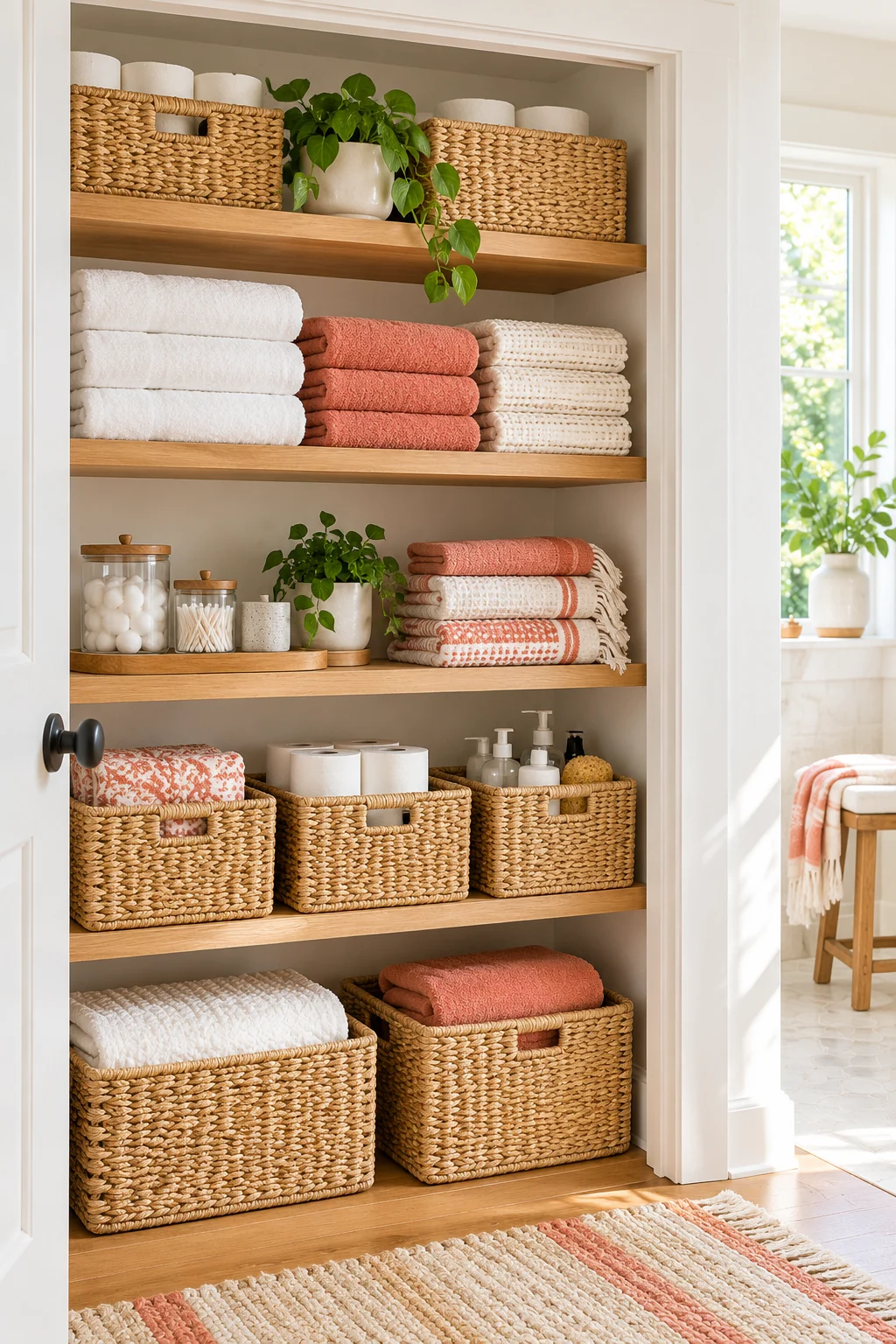
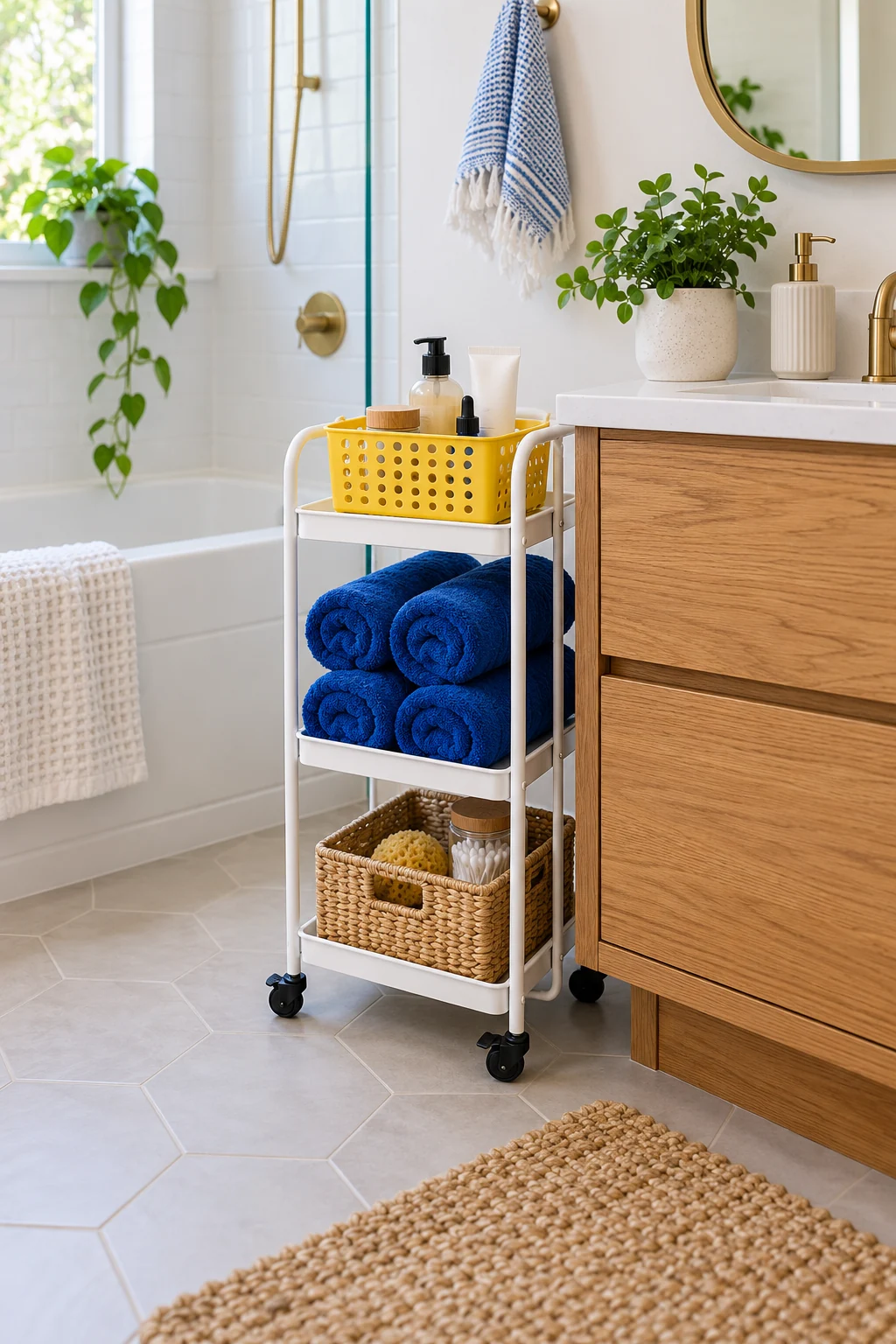
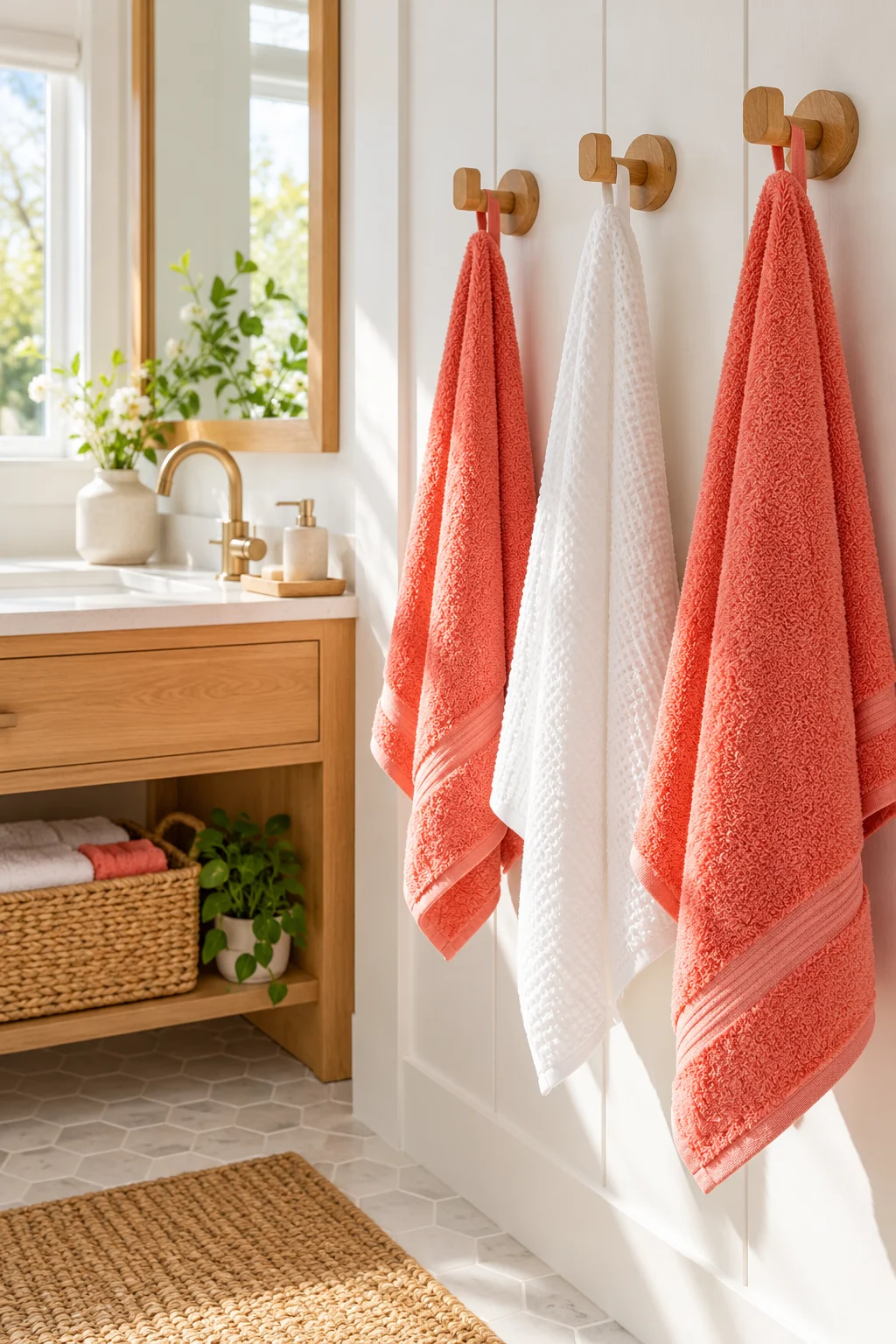
Keep a clean, dry hand towel easy to reach from the sink without crossing the room. Store a modest replacement supply nearby so changing it does not require opening a crowded linen cabinet.
Give used towels a suitable drying location rather than returning them to the clean supply basket. Check that the bar or hook and its fixings are appropriate for the actual load and bathroom conditions.
22. Give worn clothing an obvious destination
Place an appropriately sized hamper in a dry, practical spot or use a nearby laundry area if floor space is tight. Keeping that destination obvious helps clothing avoid the vanity stool or bathroom floor.
Keep the route to the shower and toilet clear and handle damp textiles according to their care needs. An overflowing closed hamper can create a second storage problem even when the counter looks organized.
23. Use dry door pockets for lightweight extras
A suitable door can hold light, packaged supplies that do not need immediate countertop access. Choose pockets that show enough of their contents to avoid turning each section into another hidden pouch.
The Simple Houseware Six-Pocket Clear Window Organizer has a 13-inch-wide, 52-inch-high footprint and projects about 4.5 inches. Check door-hook fit, closing clearance, load, and care instructions, and keep it outside shower spray. View on Amazon.

24. Test the full morning setup before adding more
Open the drawer, remove the product, set it down, and return it exactly as you would on a busy morning. This small test reveals handles that catch, bins that slide, and trays that block the sink.
Change the awkward part before buying another matching accessory. Leave enough room for doors to close and hands to work; the useful measure of an organizer is whether the routine becomes easier.
25. End with a short clear-and-return habit
After getting ready, close containers, return items to their groups, and wipe the sink area as appropriate. A small reset is easier when every daily item has a reachable home.
If the same product repeatedly stays out, question its assigned location rather than adding a more detailed label. Move it to a practical spot or simplify the routine so the organizer fits the way you actually use the room.
Try improving just the first few minutes of your morning: place the daily essentials within easy reach and give each one an obvious return spot. Keep the arrangement simple enough that resetting it feels like part of getting ready. Subscribe to the Havelyo email list for more small-space decorating and organization ideas.