
Closet Organization
25 Hat Storage Ideas That Keep Your Collection Organized
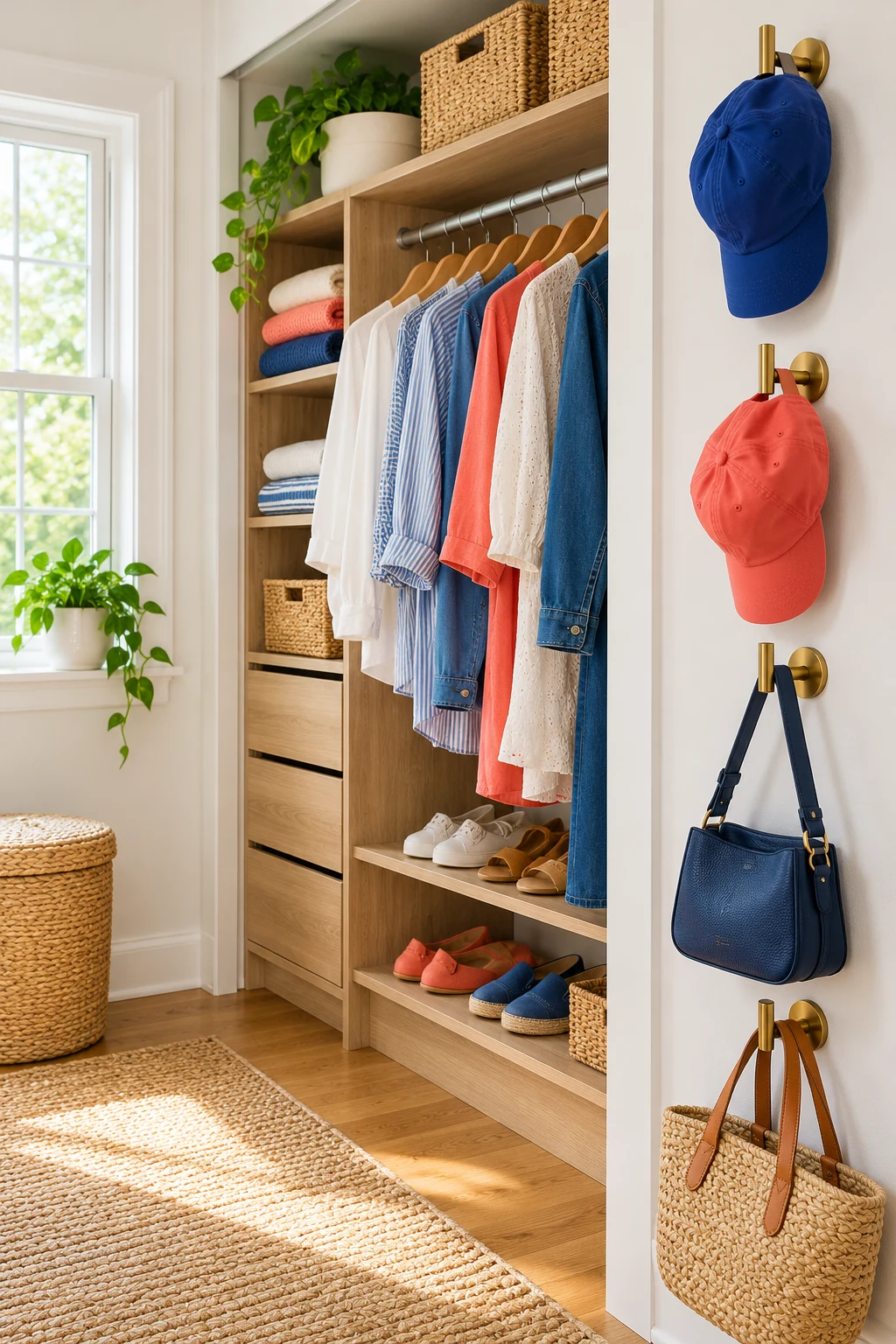
Hats tend to collect in places that were meant for something else: the top of a dresser, a coat hook, or the bottom of a bag. A useful storage plan makes the options visible while leaving each hat enough room for its particular shape.
These 25 hat storage ideas cover adjustable caps, fitted caps, knit hats, and brimmed styles in small closets and entryways. Start by checking care instructions and separating the collection by type. No single rack or folding method suits every hat, so use the ideas that fit the pieces you own.
This article contains affiliate links. If you buy through them, Havelyo may earn a commission. As an Amazon Associate I earn from qualifying purchases.
1. Separate hats by shape before choosing storage
Sort your hats into useful groups such as adjustable caps, fitted caps, knit hats, and structured brimmed hats. Check the care information for each group rather than assuming one organizer will suit everything. A soft beanie and a shaped felt hat ask very different things of a shelf.
Count the hats you wear regularly and give those the easiest access. Keep repairs or items needing care separate from the ready-to-wear group. This quick inventory helps you choose storage for the collection you actually use without buying a large rack that only suits one type of hat.
2. Keep a small everyday selection near the door
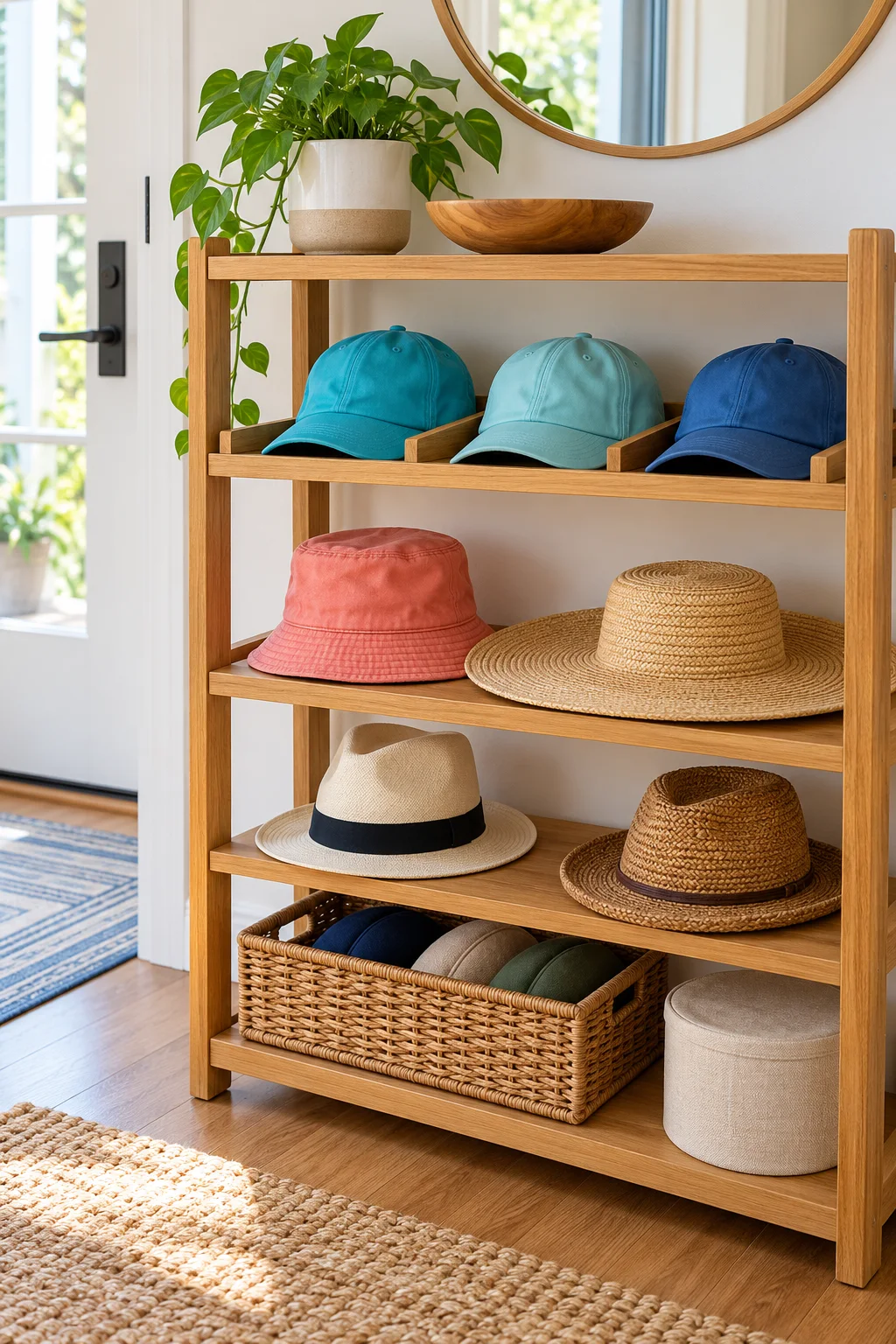
Give the hats you wear most a defined spot where you collect your coat or bag. A reachable shelf or open basket can work for suitable soft styles, while a shaped hat may need a separate supported position. Keep the active selection small enough to identify each item quickly.
Choose the storage method around the hat’s care directions rather than convenience alone. Avoid piling heavy bags or gloves over the hats. If your daily selection changes with the weather, swap what is in the easy-reach spot instead of letting it become a home for the whole collection.
3. Use a compatible over-door rack for adjustable caps
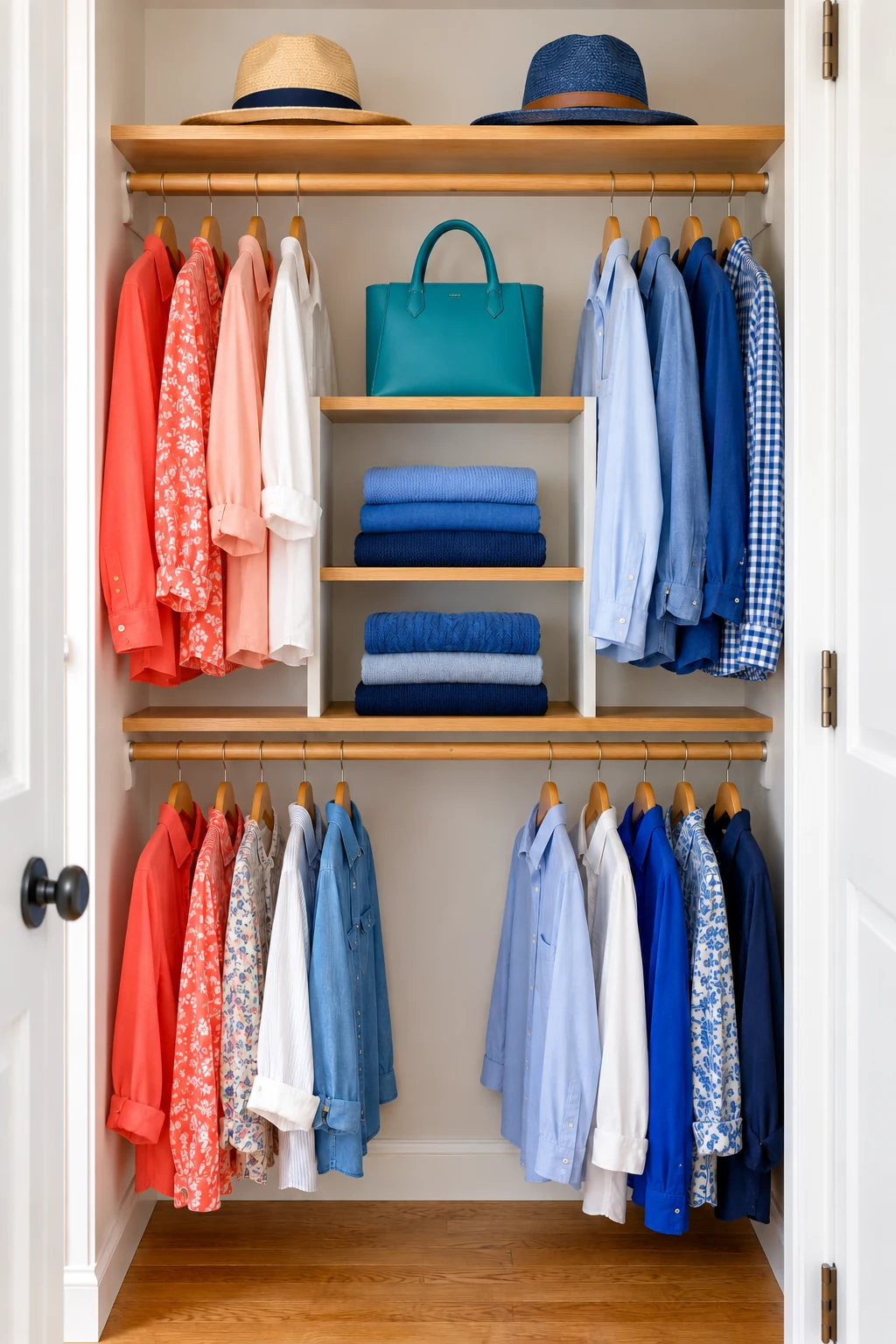
An over-door cap rack can make an adjustable-cap collection visible without using a shelf. Check how the organizer supports the cap and test one before filling the rack. Leave enough separation that you can take a cap off without pushing the others out of place.
The Perfect Curve CapRack two-strap version is designed for adjustable caps and visors, and its listing excludes fitted caps. Follow current fitting instructions and check the door’s top and bottom gaps, closure, and swing. Do not force the system onto an incompatible door or judge useful capacity by the maximum advertised count. View on Amazon.
4. Give fitted caps a shelf arrangement of their own
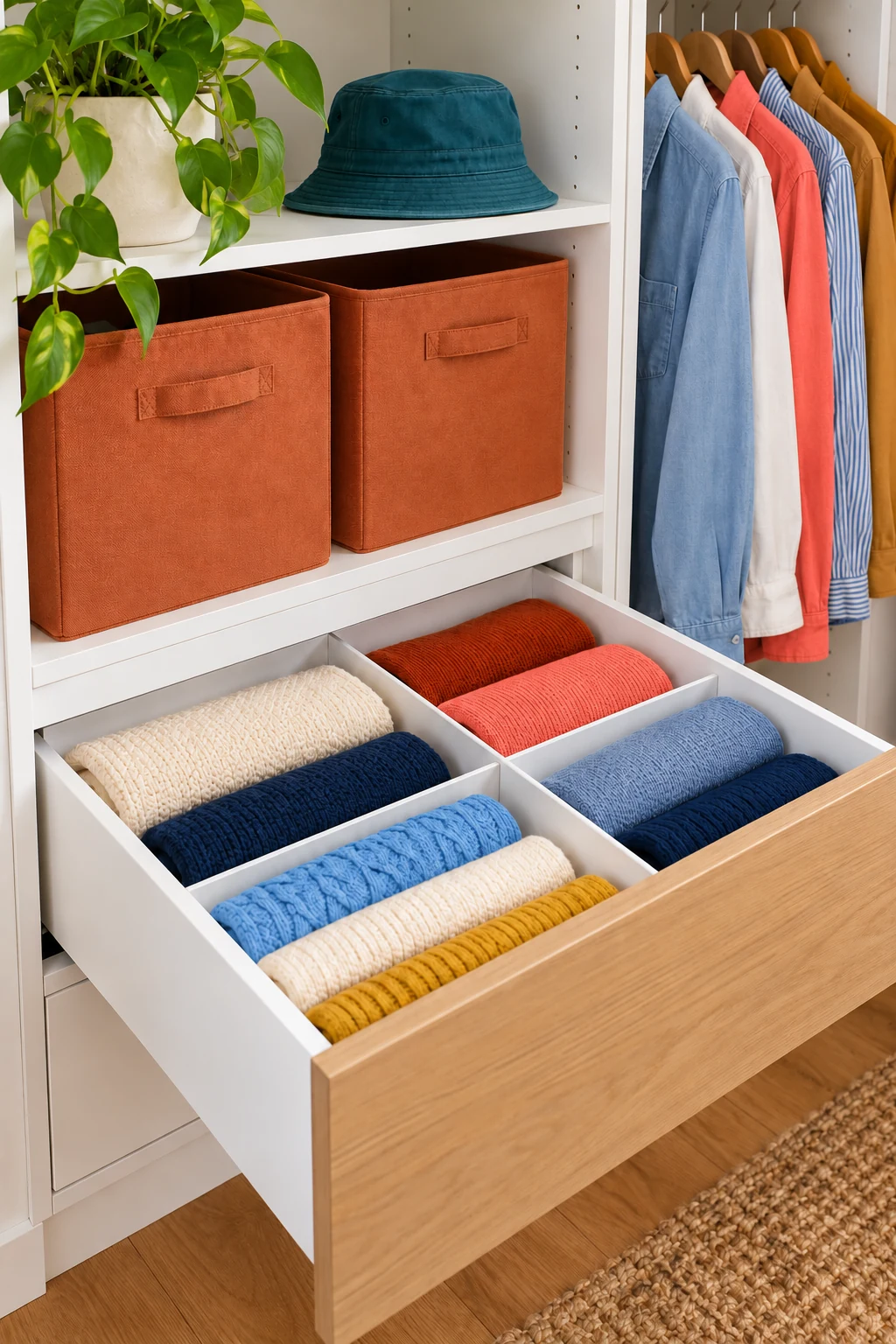
A fitted cap does not have the same back opening as an adjustable one, so some cap-hanging systems will not work. Use a shelf, suitable compartment, or organizer specifically compatible with the fitted styles you own. Keep the crowns and brims clear of pressure from neighboring items.
Check the maker’s guidance before folding, nesting, or using a support inside the cap. Leave room to remove one without dragging it through a tight opening. A small supported row may use more shelf width than a hanging rack, but it avoids adapting the wrong organizer to the collection.
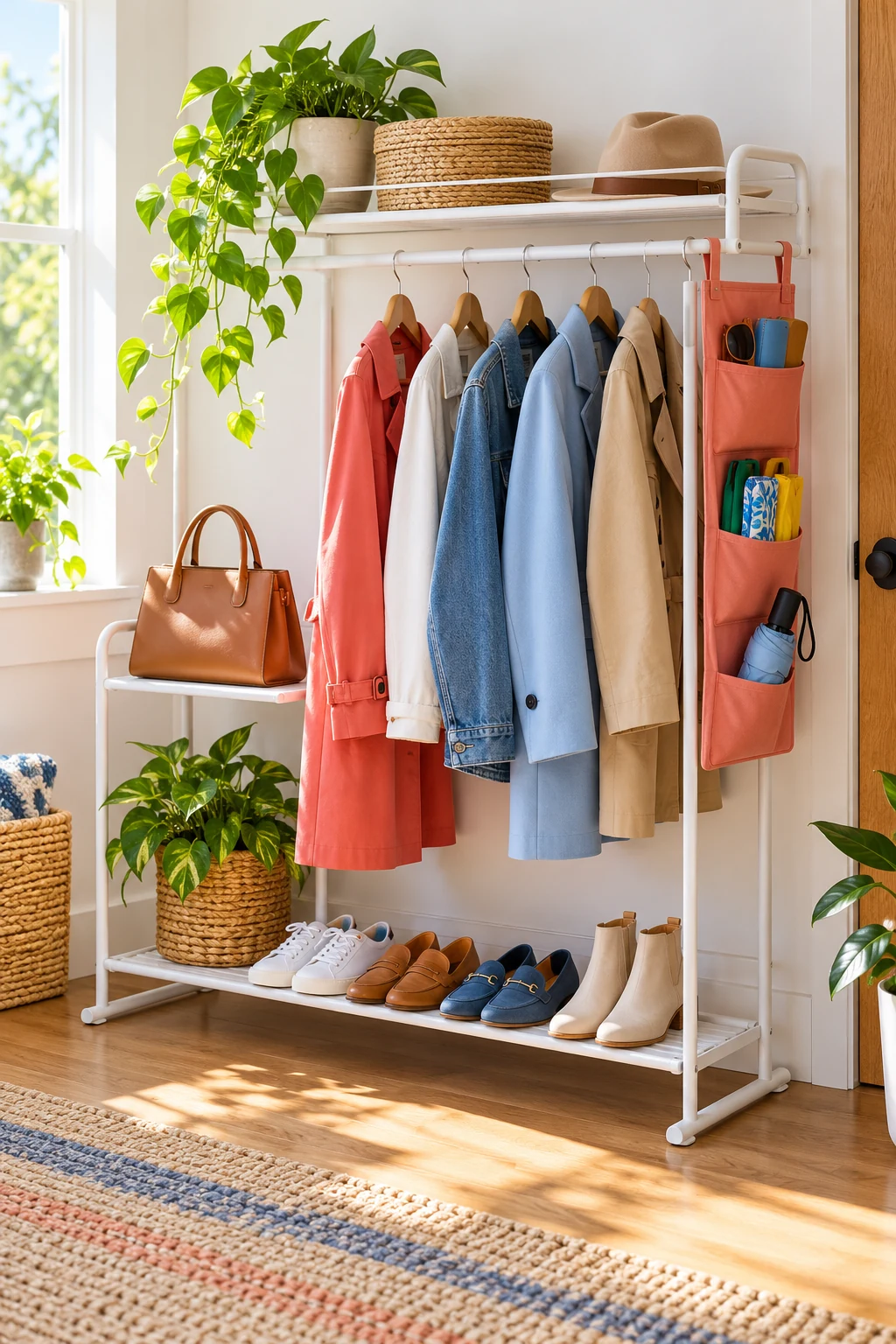
5. Make short rows instead of one deep cap pile
Arrange appropriate caps in short visible rows so you can find the one you want without pulling apart a tall pile. Use the amount of shelf depth that you can actually reach. Keep the front of the row clear so brims are not bent against a drawer or door.
Nest caps only when the particular style and care instructions allow it, and stop before anything is compressed. If the shape needs its own space, give it an individual position instead. For a growing collection, add another clear row rather than pushing more caps behind the same front group.
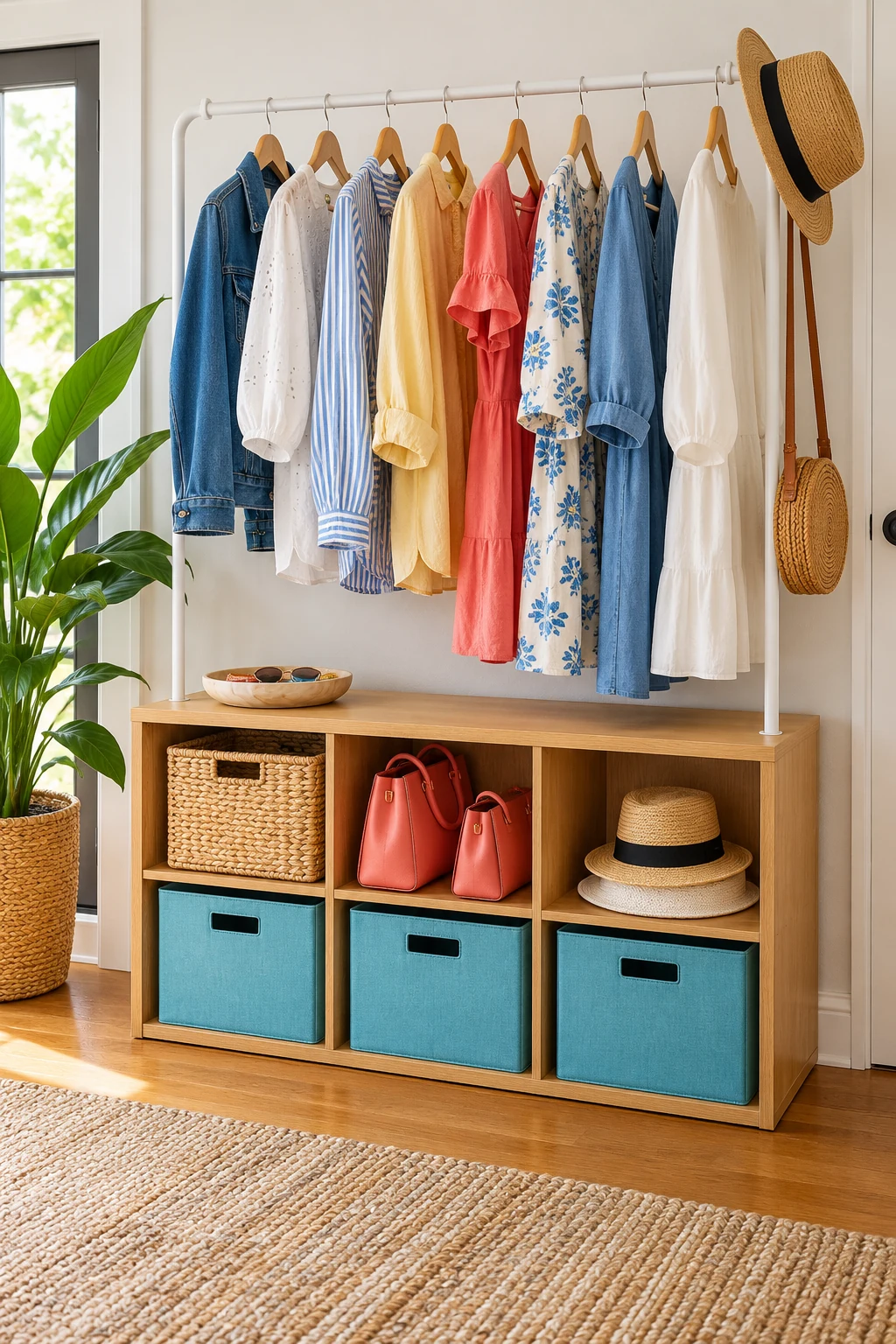
6. Try one layer of caps in a deep drawer
A drawer can store suitable caps out of the way if its interior height lets their crowns rest naturally. Place them in a single visible layer and check the brim position before closing the drawer. Measure the clearance above the tallest part of the cap.
Open and close the loaded drawer slowly during your test. If the cap catches or needs to be flattened, choose a different location. Keep the drawer for hats and compatible light accessories rather than adding heavy objects on top when the rest of the room gets crowded.
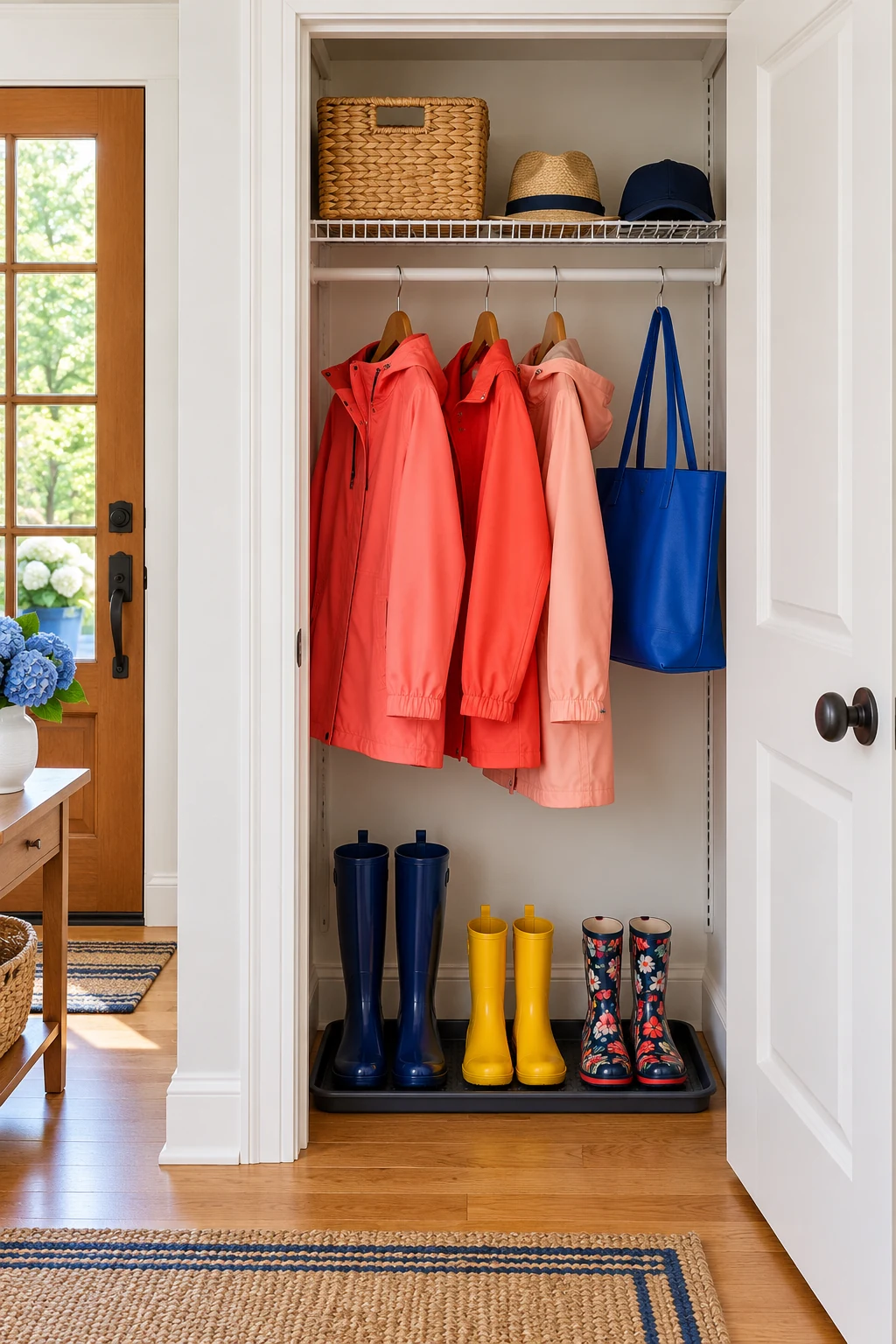
7. Use broad drawer dividers to separate categories
A wide drawer can hold separate lanes for soft knit hats, light accessories, and caps that fit its height. Size the lanes to the contents rather than squeezing them into a fixed grid. Leave enough room to see the categories and lift items out easily.
OXO Good Grips Expandable Dresser Drawer Dividers provide adjustable boundaries for suitable drawers. Check their installed range, height, and the strength of the drawer sides before using the tension mechanism. The dividers organize the drawer; they should not press against or reshape the hats. View on Amazon.

8. Put knit hats in small open fabric bins
Soft knit hats can share a small open bin when their care directions allow the chosen fold or position. Keep the collection loose enough that the top of each hat is visible. Separate especially bulky styles instead of forcing everything into one overfilled container.
The Simple Houseware six-bin fabric set offers mixed sizes for this kind of category storage. Measure the shelf or drawer and select only the pieces that fit. Keep the bins light and easy to remove, and do not assume the same container is suitable for a structured brimmed hat. View on Amazon.
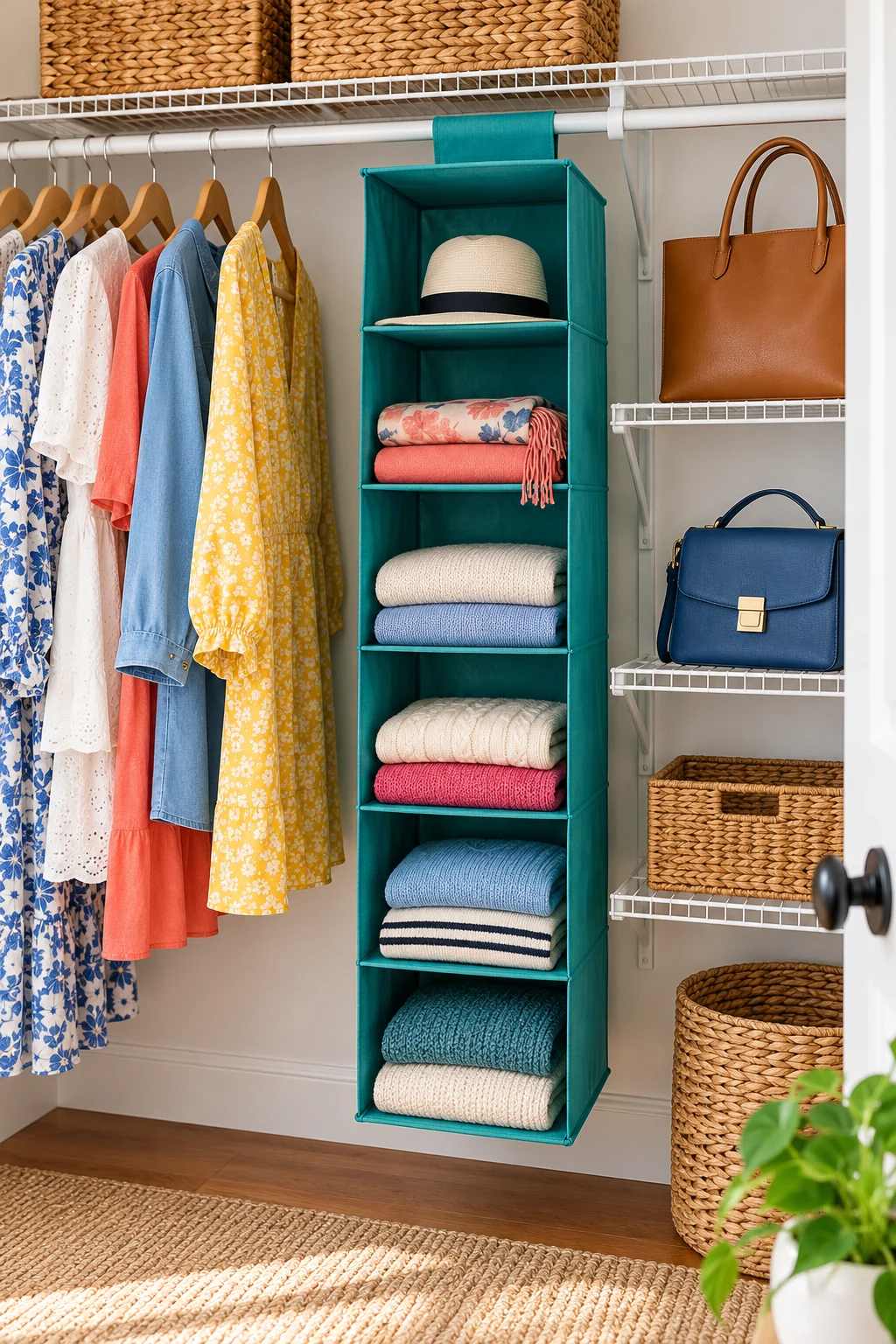
9. Arrange suitable soft hats in a visible folded row
For knit hats that can be folded, try a short upright row in a drawer or open container. Choose a loose fold that fits the available height and makes the color or pattern easy to identify. Test with one hat before arranging the rest.
If a style flops, stretches, or gets compressed by this method, lay it in a shallow section instead. Use the arrangement that makes retrieval simple for that particular hat. File-style storage is a visibility choice, so there is little benefit in forcing a fabric or shape that does not cooperate.
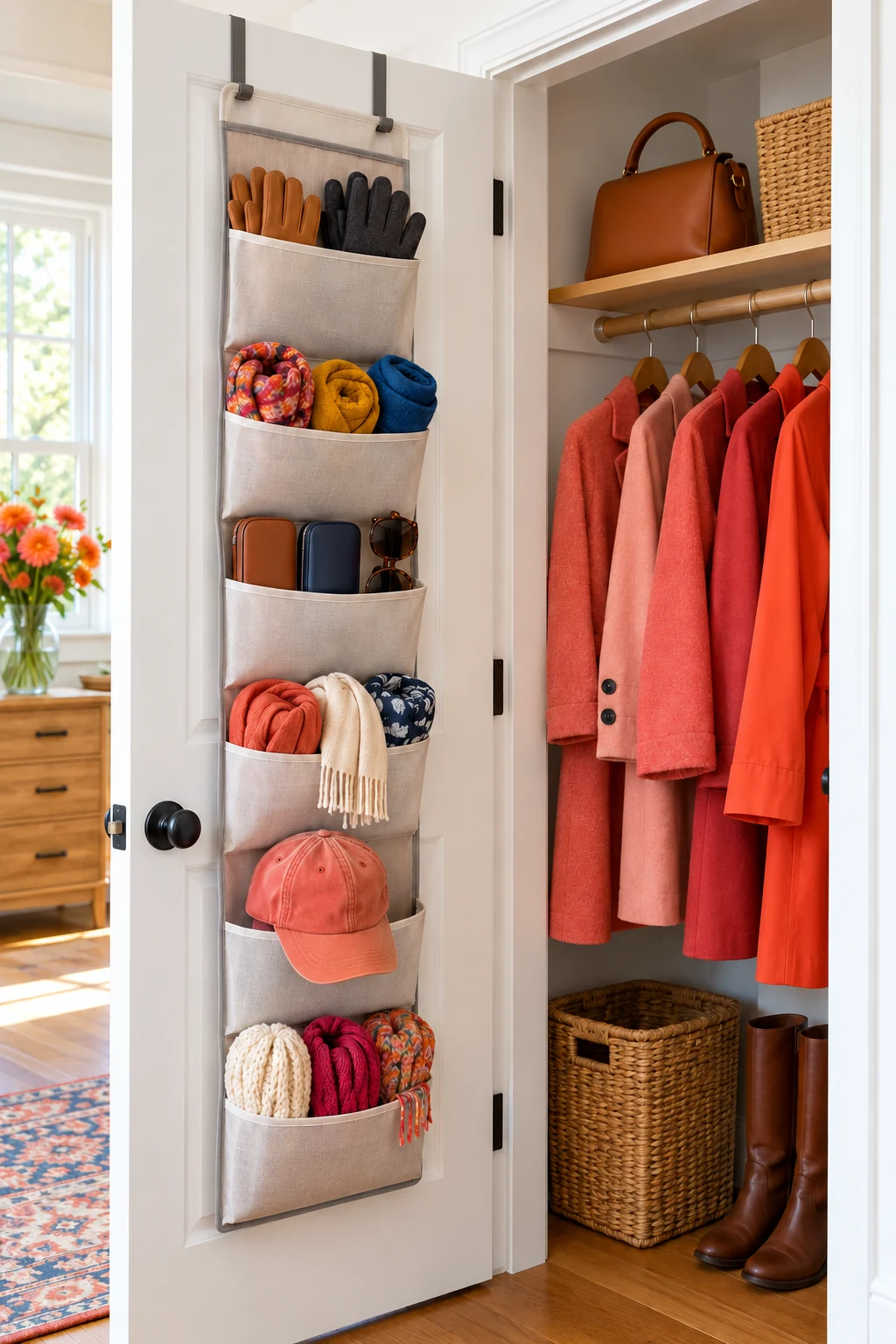
10. Trade spare rod width for light-hat cubbies
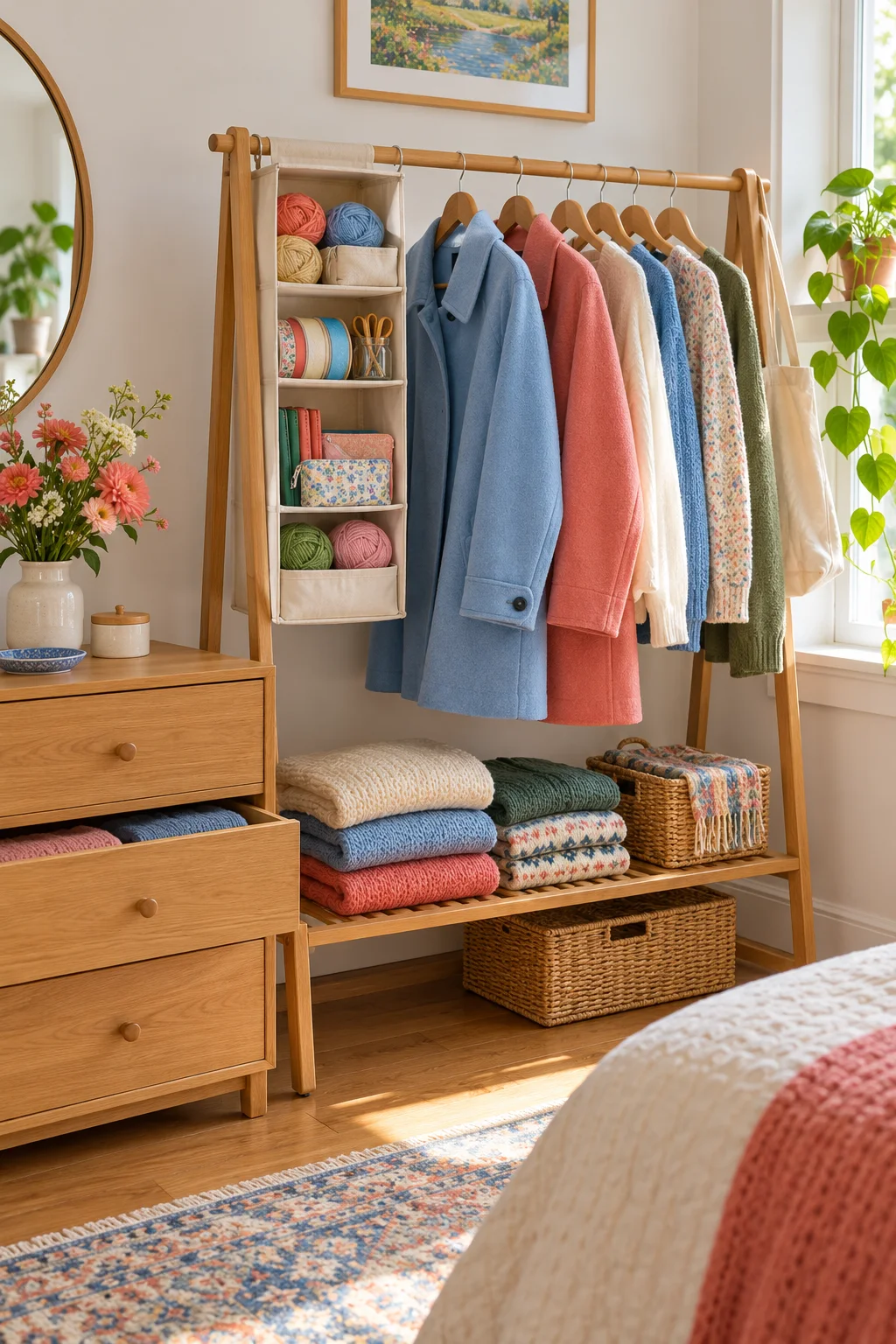
A hanging fabric organizer can provide separate compartments when your closet has unused rail space but no spare shelf. Give suitable light hats their own openings so they are not hidden beneath sweaters. Keep each hat within the compartment without pressing its sides or brim.
The StorageWorks 6-Shelf Hanging Closet Organizer is an option for this arrangement. Measure the openings and overall drop, then check attachment and load instructions along with the existing rod’s capacity. Reserve another location for hats whose shapes need more space or more specific support. View on Amazon.
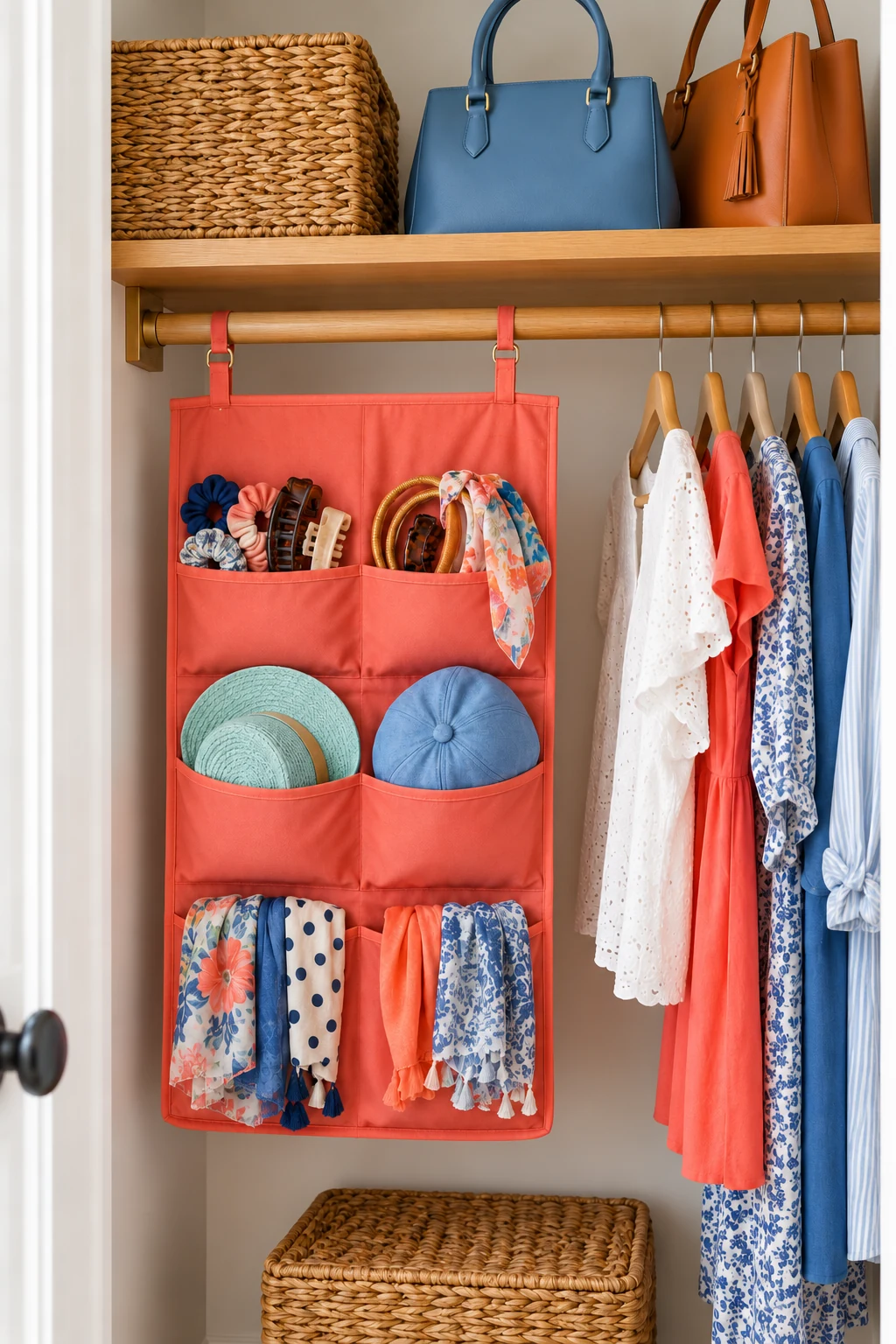
11. Allow the full width of a brimmed hat
Measure the widest part of a brimmed hat before assigning it to a shelf or box. Leave clearance around the brim and choose its resting position from the maker’s guidance. A shelf that fits the crown may still be too narrow for the hat as a whole.
Avoid using the brim as a convenient support unless the instructions for that hat permit it. Keep neighboring objects from leaning into the hat’s shape. If several hats need broad individual spaces, plan the shelf around those widths instead of assuming they can all fit in one narrow cubby.
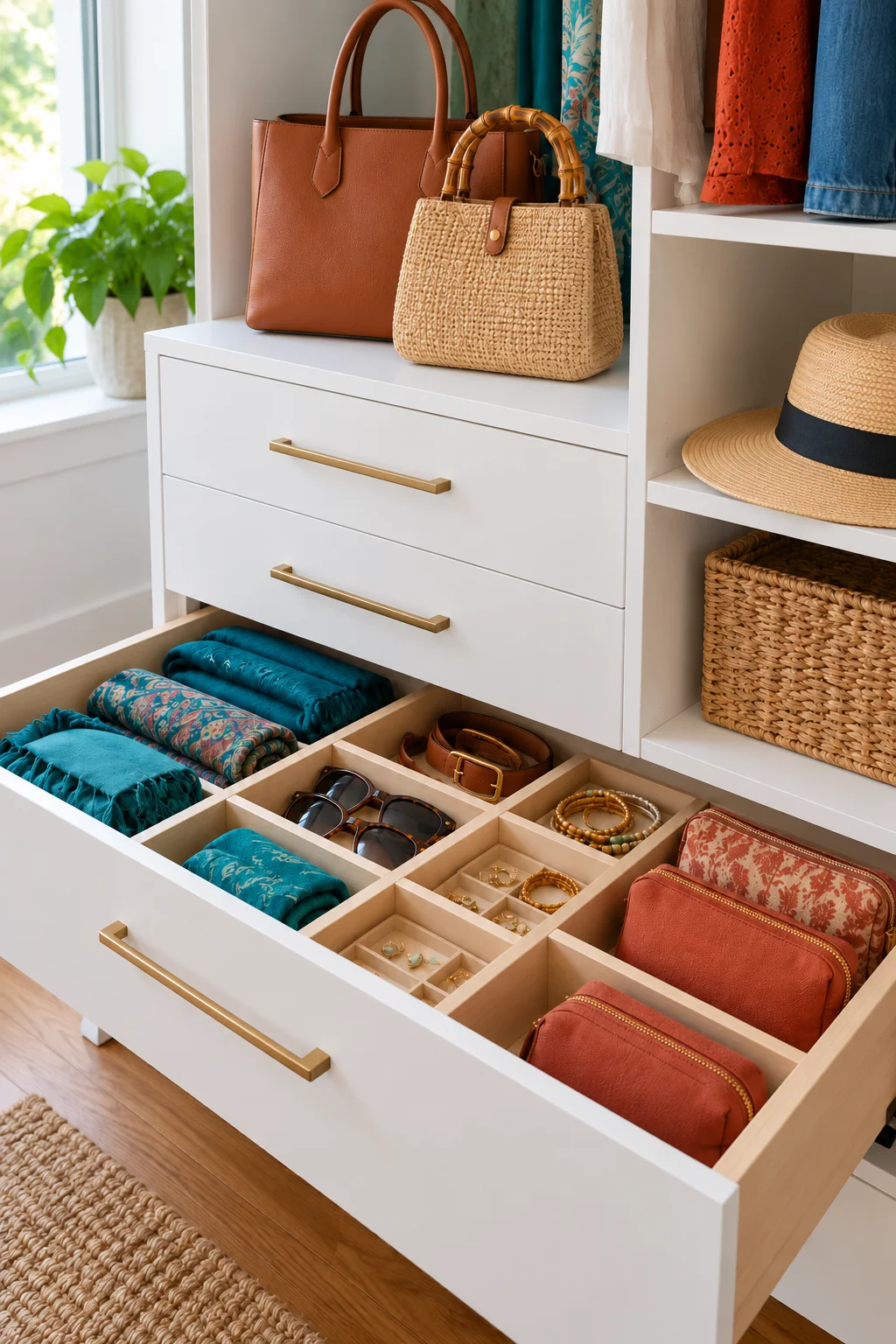
12. Give tall crowns enough shelf height
Check vertical clearance as carefully as width when storing hats with taller crowns. Include any support, stand, or box in the measurement. You should be able to lift the hat out without brushing it against the shelf above or tilting it through a narrow gap.
Use an adjustable shelf opening where possible, following the shelving system’s directions. If the opening is fixed and too short, choose another spot rather than pressing the crown down. Keep the chosen position at a comfortable reach so retrieval stays controlled and the hat can be returned gently.

13. Choose a hat box by interior dimensions
A suitable hat box can give an occasional hat a defined storage location. Measure the usable interior, including any insert, and compare it with the hat in the position its maker recommends. Check that closing the lid will not press on the crown or brim.
Follow both the hat and box instructions for use and location. Do not assume every round decorative box is designed for hat storage or that a closed lid provides special protection. Keep the box light enough to lift comfortably and give it a shelf where it can be removed without tilting dangerously.

14. Label covered hats from the outside
Use a removable outside label to identify a hat kept in a suitable box or cover. A simple description such as the color and style can save you from opening several containers before an event. Put the label on the side you see from the closet doorway.
Avoid applying labels directly to the hat or using attachments that could catch its trim. Update the label if the contents change. Keep the description brief and the container in an accessible position; a perfect label cannot make an oversized, heavy overhead box easy to retrieve.
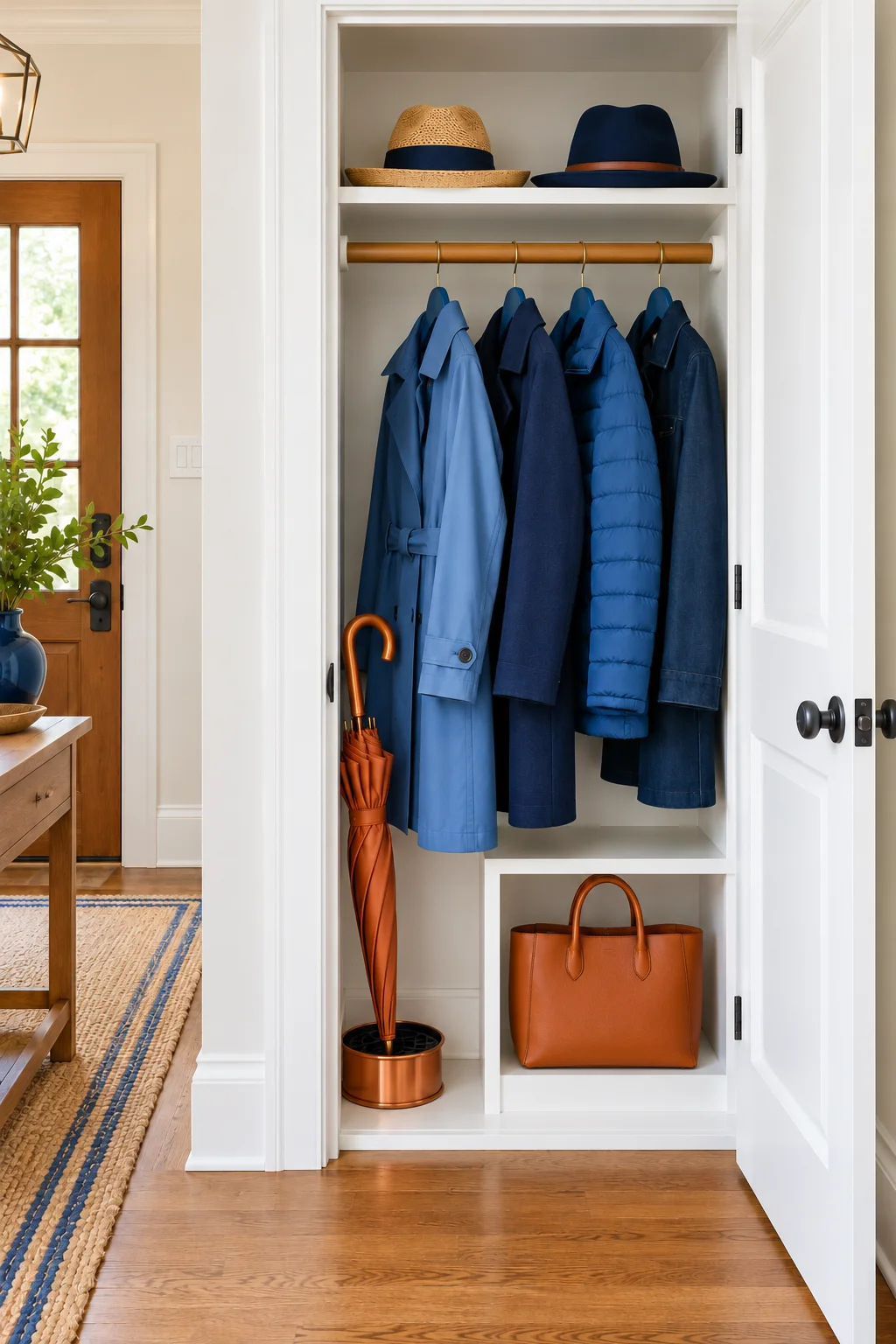
15. Add a photo index for an occasional collection
Take a simple photo of each occasional hat and connect it to a numbered storage spot. Keep the pictures in a phone album or use small prints with the boxes. This is useful when several similar opaque containers are stored away from the daily dressing area.
Update the record when a hat moves, needs repair, or leaves the collection. Use your own photos and keep personal details out of the frame. The index helps you find options, but check the actual hat before an event so a loose trim or missing accessory does not surprise you.
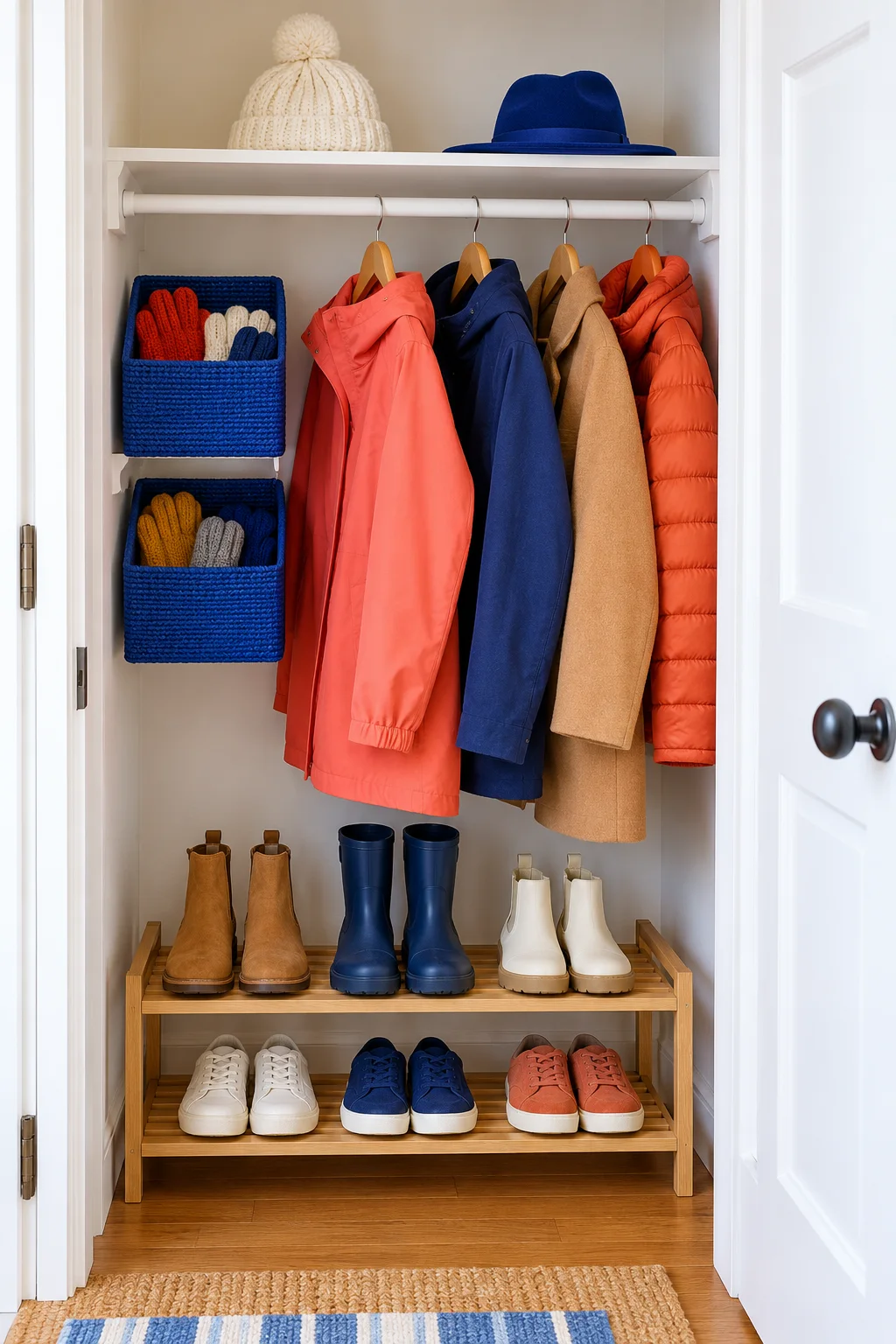
16. Keep suitable original supports with the hat
If a hat arrived with a support or storage insert the maker recommends keeping, store it with the hat and its care information. This can be useful when you move the hat between an everyday shelf and occasional storage. Check the original directions instead of guessing how the insert should sit.
Keep only packaging that is intended for ongoing use and remains clean and in good condition. Shipping materials are not automatically long-term storage supports. If the original insert is damaged or missing, ask the maker about an appropriate replacement rather than tightly stuffing the hat with a random material.
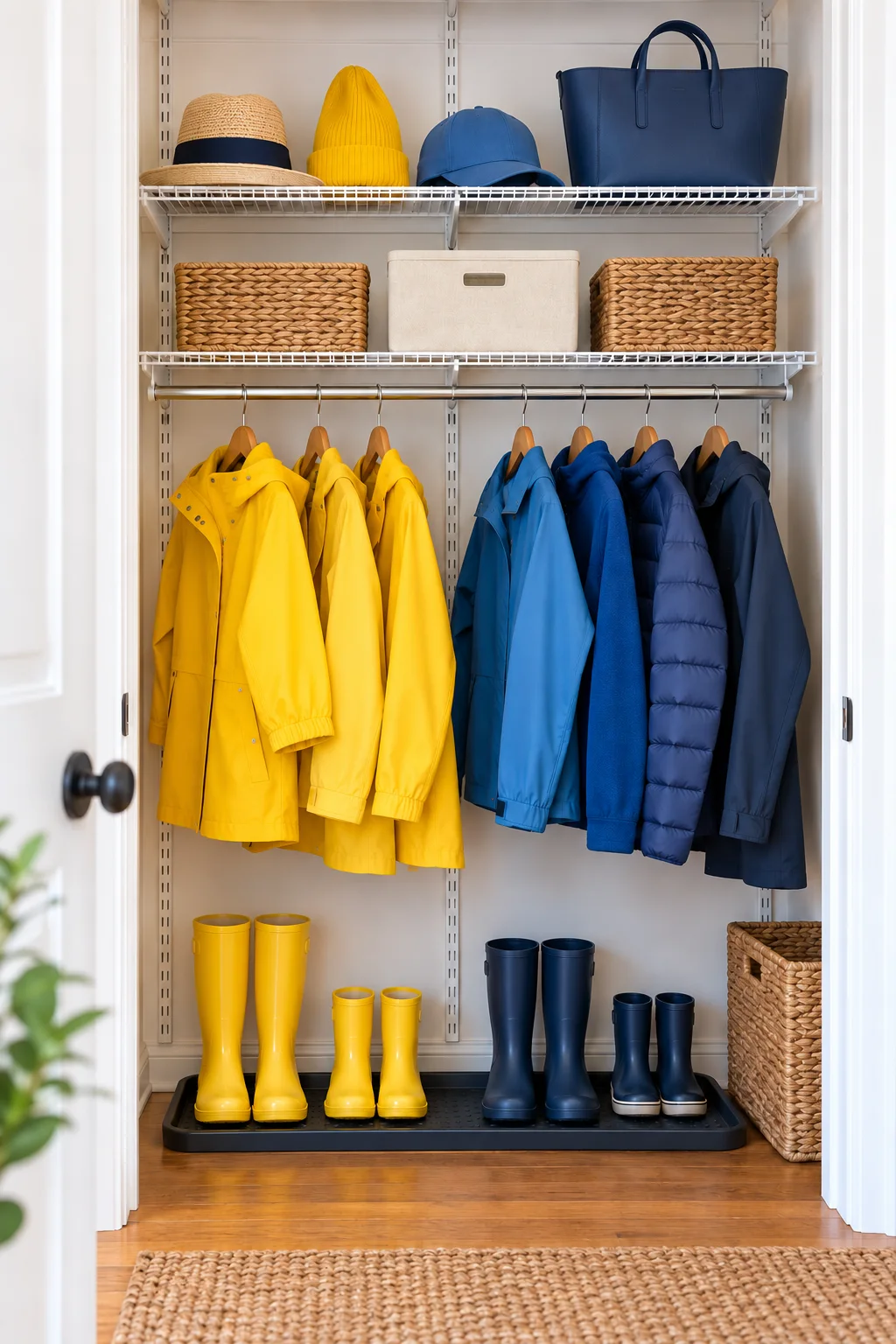
17. Use a hat stand only when its support suits the hat
A dedicated stand can display a frequently worn hat if its support shape is appropriate for that hat’s construction. Measure the stand and hat together, including the base, and choose a stable surface with room around it. Keep the hat clear of passing shoulders and swinging doors.
Check the hat maker’s guidance before using a narrow or rounded support inside the crown. A stand that looks decorative may not distribute contact in the right way for every style. Avoid tall, unstable arrangements and keep the display in a location suited to the hat’s care requirements.
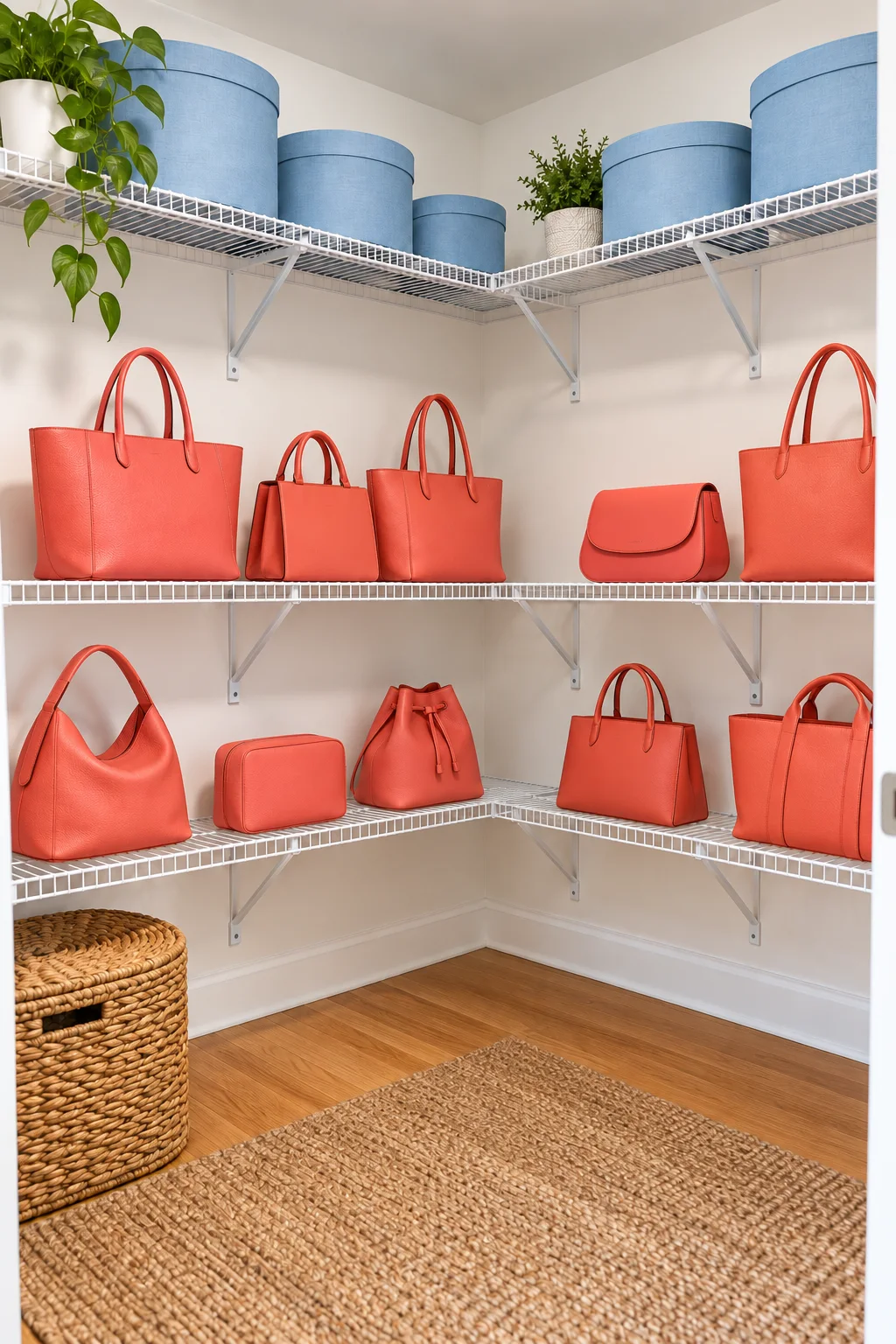
18. Reserve a suitable hook for short-term access
A hook can be convenient for a hat whose maker permits that storage method, especially when it is worn often. Choose a smooth support and a location where the hat hangs clear of the wall, door, and neighboring items. Avoid sharp contact points or improvised clips.
Install the hook according to its instructions with suitable fixings and a compatible surface, and check rental restrictions where relevant. Keep heavy bags off the same hook. If hanging changes the hat’s shape or the care instructions call for another position, use a shelf or suitable box instead.
19. Use door pockets for small soft winter hats
Small soft winter hats may fit a clear-pocket organizer on a suitable hinged door. Put one loose category or hat in each pocket, keeping enough room to grasp it easily. Do not force a crown or brim into a pocket that was designed for something smaller.
The Simple Houseware 24-Pocket Over-the-Door Organizer is one option for soft accessories. Check pocket fit, door thickness, top clearance, and the space available when the door closes. This format is not a universal hat holder, and sliding or bifold doors need a different fit assessment. View on Amazon.
20. Keep visors separate from full-crown caps
Visors can slip into a pile of caps and become hard to see. Give them a shallow section or compatible organizer position of their own, with the band and brim resting as the maker directs. Check that nearby caps do not press on or obscure them.
Choose the arrangement around the way you use the visors, such as keeping daily outdoor pieces near the entry. Avoid tightly looping bands together or fastening several to one improvised clip. Separate visible storage makes it easier to return each visor without disturbing the rest of the collection.
21. Keep soft headbands beside the hats they accompany
If winter headbands and ear warmers are part of the same getting-ready routine, give them a small neighboring section. Keep suitable soft styles loosely arranged so they do not disappear at the bottom of a hat bin. Follow care instructions for structured or specialty designs.
A clean shallow box you already own may be enough to define the category. Keep rigid accessories from pressing into softer pieces, and avoid adding tiny compartments that make putting things away tedious. The aim is to find the appropriate cold-weather option without rummaging through a mixed pile.
22. Move suitable off-season knit hats under the bed
If knit hats are taking up your daily shelf out of season, move the suitable clean, dry pieces into a separate shallow container. Follow their care instructions before storing them and keep a simple label facing outward. Leave a small transitional selection accessible if you still use it.
Amazon Basics Under Bed Storage Bags offer a fabric format for appropriate soft goods. Measure the filled bag and its pull-out path, and avoid packing it tightly. Reserve a different storage method for structured hats; the zipper does not make this bag airtight, pest-proof, or appropriate for every material. View on Amazon.
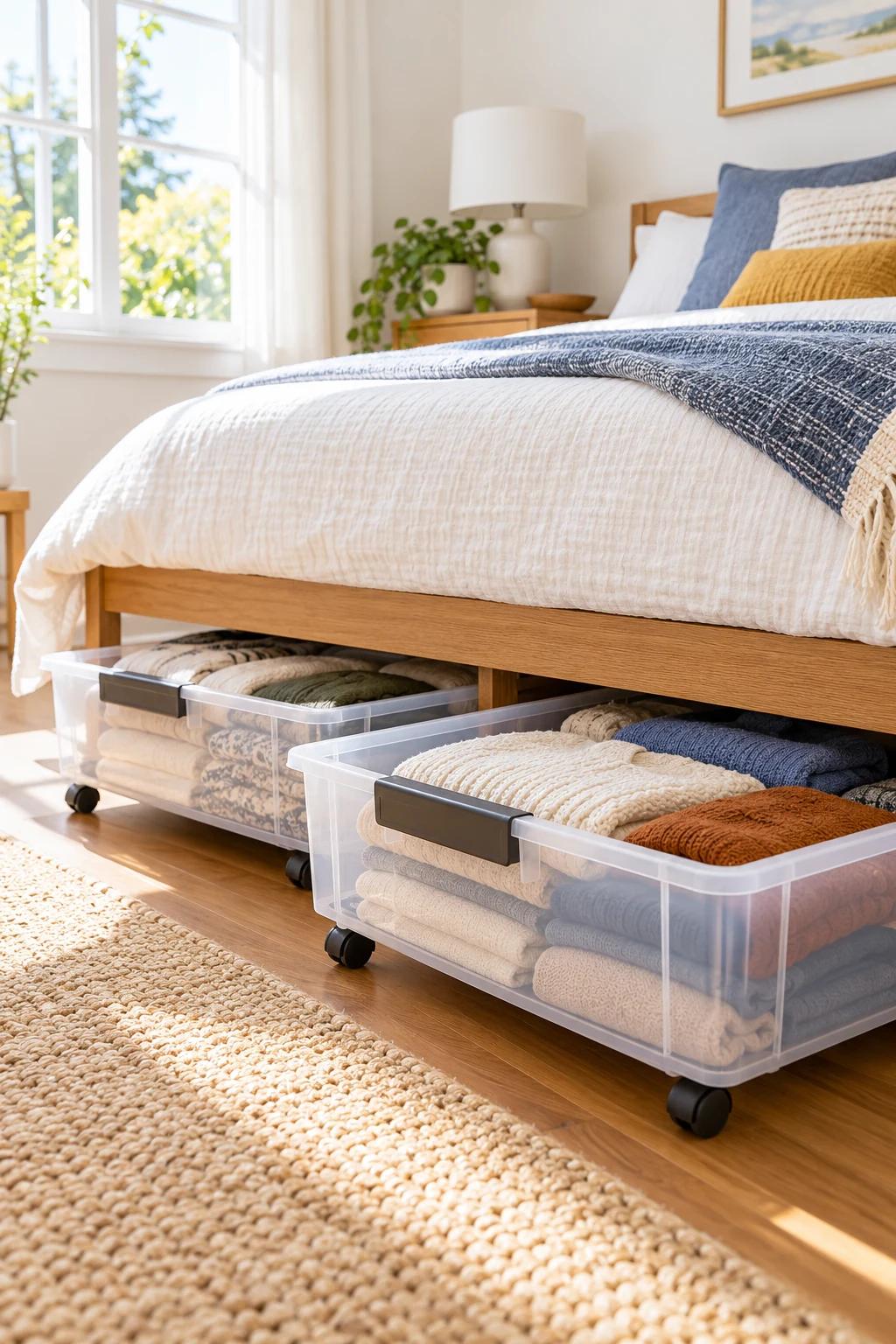
23. Give each person a clear hat section
In a shared closet, assign a small shelf section or container to each person before sorting by finer categories. This makes returns more obvious when several hats look similar. Set the storage at a comfortable reach for the people who use it and avoid high, heavy containers.
Let the space match the collection rather than insisting on identical compartments. Someone with two beanies may need less room than someone with several shaped hats. Keep the storage methods appropriate to each style within the person’s section, and revisit the boundaries when the active collection changes.
24. Make a ready-to-go outdoor accessories spot
Keep a small current-use selection of hat, gloves, and a light scarf together near your exit when those items are part of the same routine. Use neighboring open compartments rather than stuffing everything into the hat. Choose the hat’s own position according to its care needs.
Return each item after use and handle damp or dirty pieces according to their care directions before they go back. Change the active group as the weather shifts. Keep this station limited to what you use regularly so it does not become a second, mixed storage area for the whole collection.
25. Test removal and return before calling it organized
Take a hat from each storage area and put it back. Check whether you have to bend a brim, press a crown, or move another item to reach it. Widen the space, reduce the row, or choose a different position wherever the process feels awkward.
Leave some room for your hands and review the layout when a new hat arrives. A collection that fills every slot tightly is harder to maintain than one with a little breathing room. Keep a separate next-step spot for repairs and follow the individual maker’s guidance whenever you are unsure about a storage method.
Start with your everyday hats and give each one an easy, appropriate home. Once that small group is simple to remove and return, organize the occasional pieces around their own shapes and care needs. Subscribe to the Havelyo email list for more practical small-space organization and decorating ideas.