
Closet Organization
24 Handbag Storage Ideas to Keep Your Bags Easy to Find
Handbags are easier to use when you can see the options and lift out one without disturbing the rest. A bag pile can hide a favorite clutch, tangle straps, and use more space than a simple row of individual homes.
These 24 handbag storage ideas cover shelves, drawers, small closets, and everyday routines. Start with the bags you use most, measure their full shapes, and follow each maker’s care instructions. Storage should support the particular bag, so avoid squeezing, folding, or hanging a piece just to make it fit an organizer.
This article contains affiliate links. If you buy through them, Havelyo may earn a commission. As an Amazon Associate I earn from qualifying purchases.
1. Sort the collection by how you actually use it
Group bags into everyday, work, occasional, and travel categories before choosing organizers. Empty each bag and check its pockets so loose belongings do not become part of the storage problem. Keep pieces awaiting repair separate from the ones ready to use.
Give the daily selection the easiest access and be realistic about the space each category needs. A collection of small crossbody bags needs a different arrangement from several large structured totes. Start with the groups you use most often rather than buying matching containers for every bag at once.
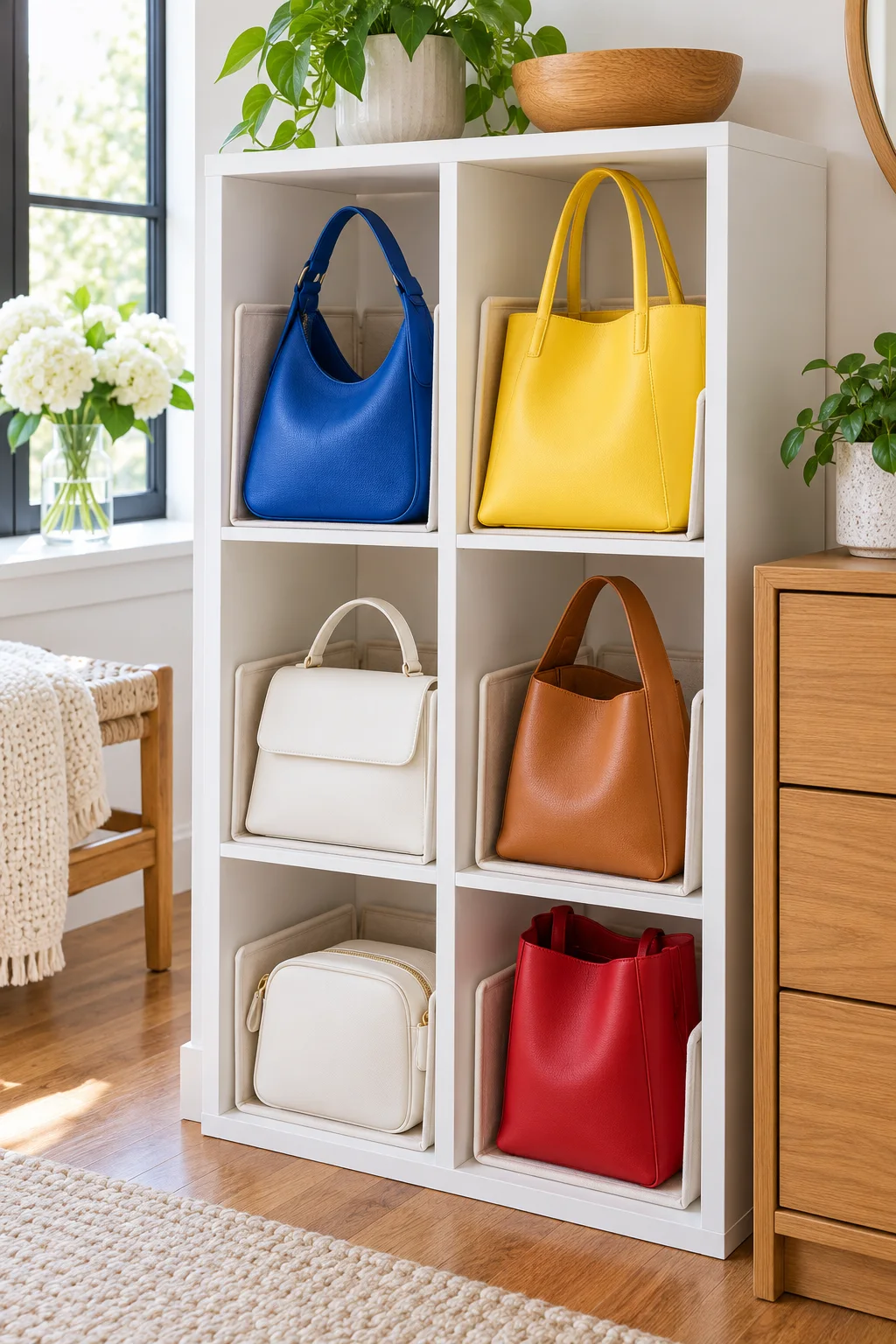
2. Measure the bag’s full resting shape
Measure a bag as it should be stored, including handles, clasps, rigid sides, and any other parts that project. Compare that shape with the shelf opening or the usable interior of a container. Outside box dimensions will not tell you whether a structured bag fits comfortably inside.
Leave room to grasp and remove the bag without dragging it along a neighboring divider. Check the route out through the closet door as well. If a bag only fits when you press its sides or bend its handles, choose a larger space or another storage method consistent with its care directions.
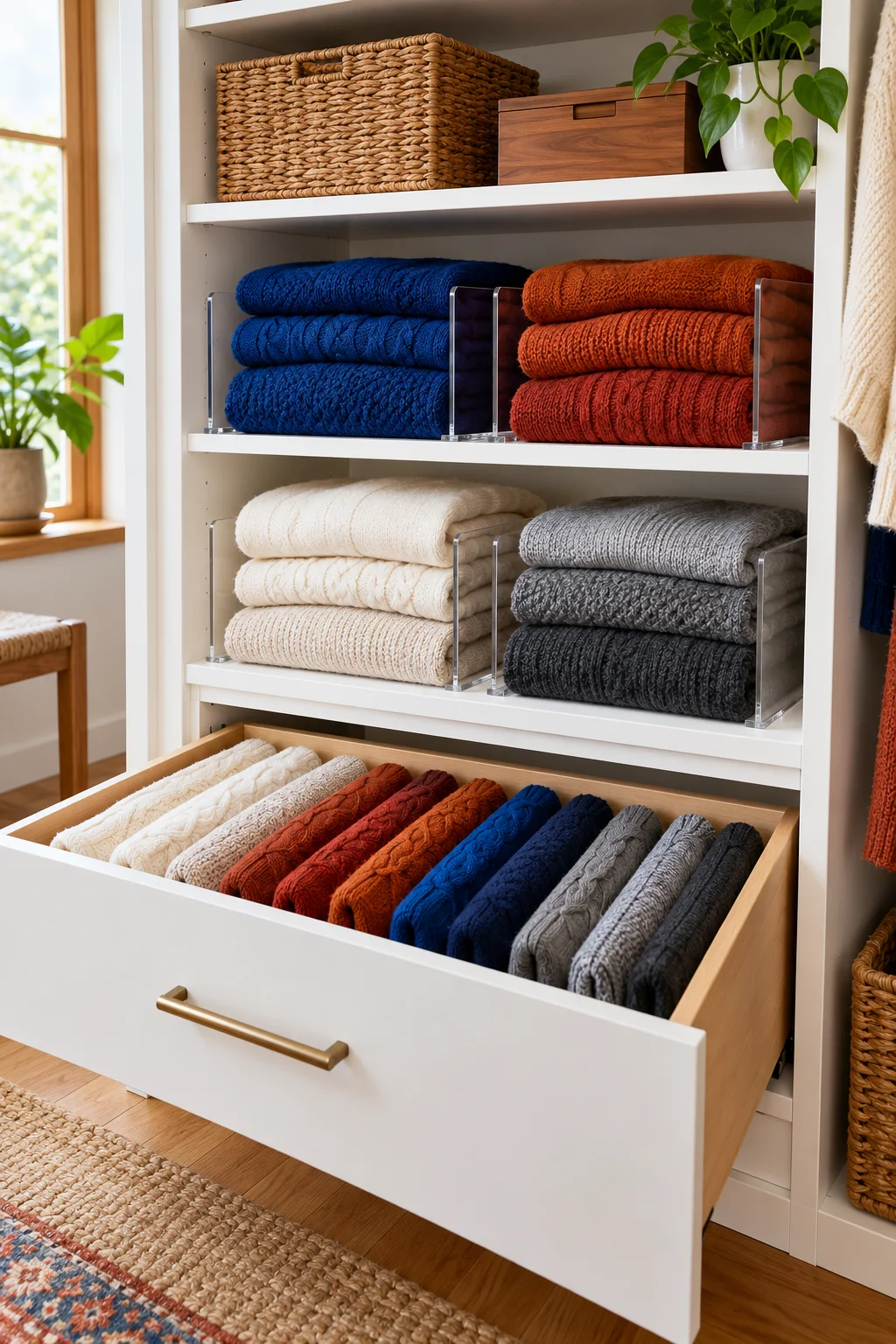
3. Give everyday bags a supported shelf row
Place the bags you reach for most on an accessible shelf where each one can rest on its base. Arrange them in a single visible row, with enough space between them to lift one out cleanly. Keep the row short enough that the bags at the ends remain easy to reach.
Check each bag’s storage guidance for its preferred position and any support it needs. Avoid filling the daily row with heavy contents left over from the day. The shelf should make choosing and returning a bag simple, without relying on hanging straps or handles to hold a loaded bag indefinitely.
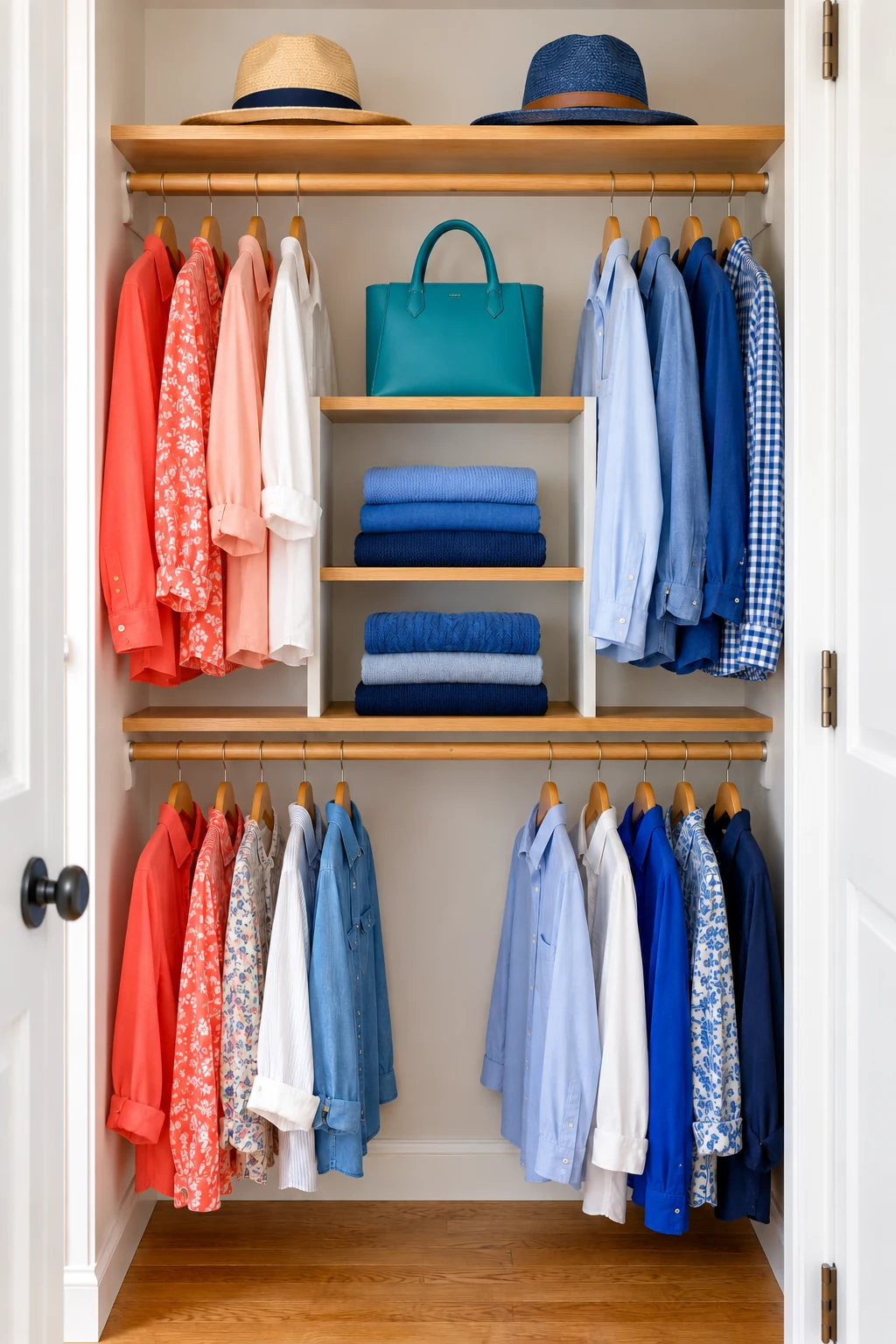
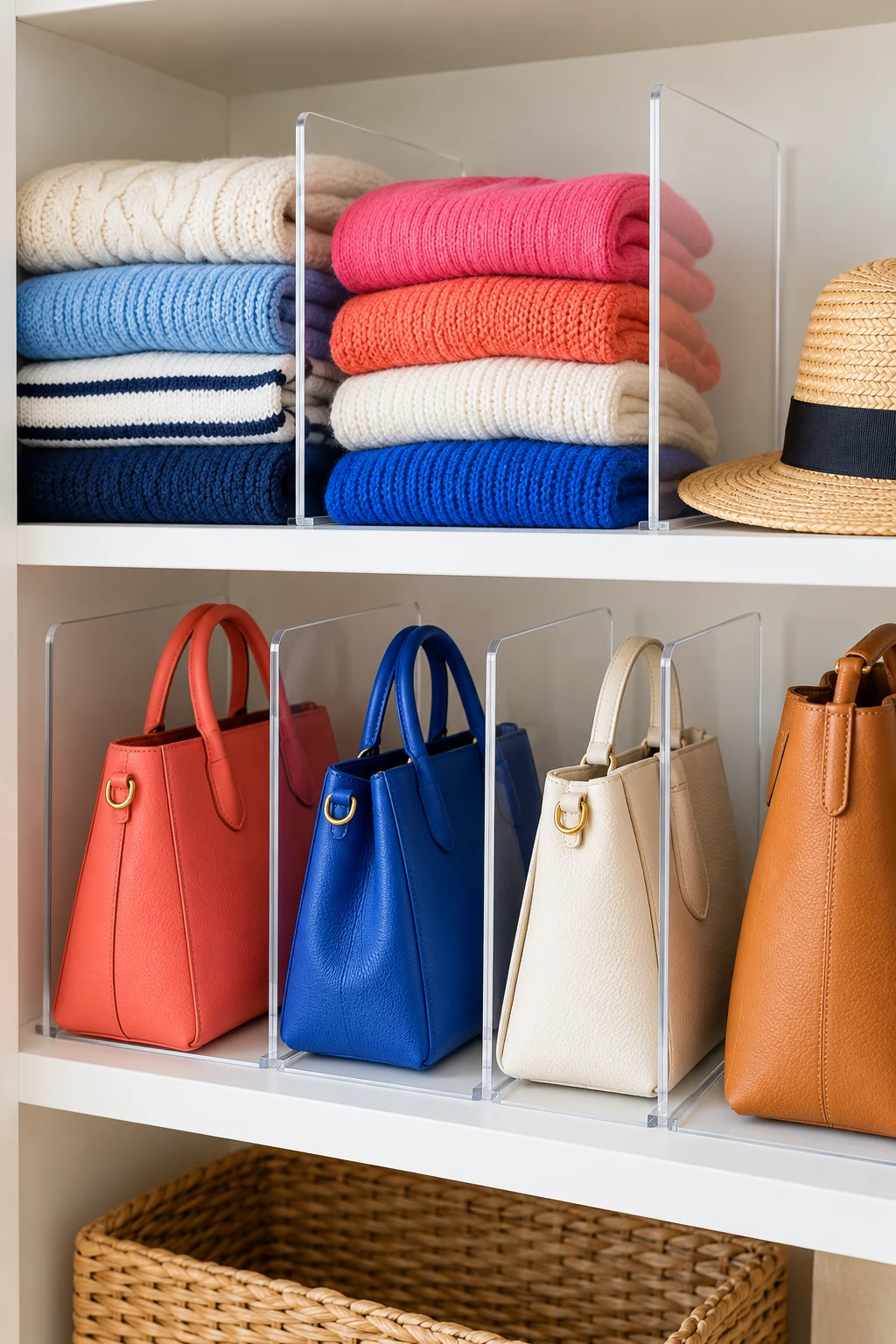
4. Use compatible shelf dividers for individual spaces
Dividers can give bags their own spaces when a row repeatedly leans together. Set the gap around each bag’s real width rather than making every slot identical. Keep decorative hardware and delicate surfaces from rubbing against the neighboring divider.
LYNK Tall White Shelf Dividers are an option for compatible solid wood shelves up to 7/8 inch thick. Check the shelf edge and test the contact points carefully. They separate a row but do not supply specialized bag care, and they should not be forced onto an incompatible shelf. View on Amazon.
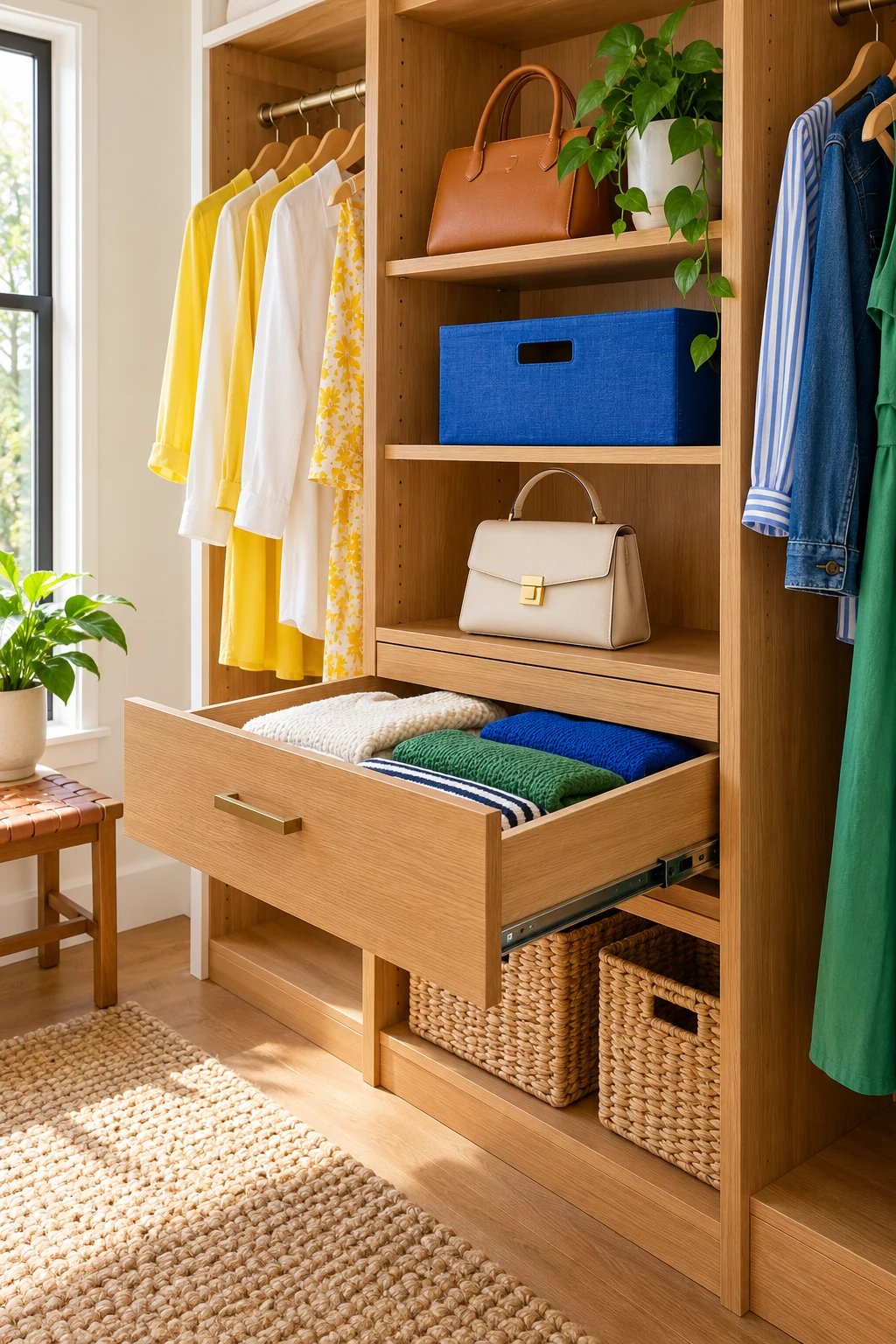
5. Leave a taller bay for large totes
A tall tote may need a full shelf opening even when its base is not very wide. Reserve a separate bay for the largest bags so their handles do not catch the shelf above. Let the shape of the bag set the height rather than squeezing it into a standard cube.
If your shelves are adjustable, move them only within the system’s intended configuration and confirm the supports are seated properly. A large bag should still be easy to lift out through the door. Keep heavier loaded bags lower, and remove unnecessary contents before returning them to storage.
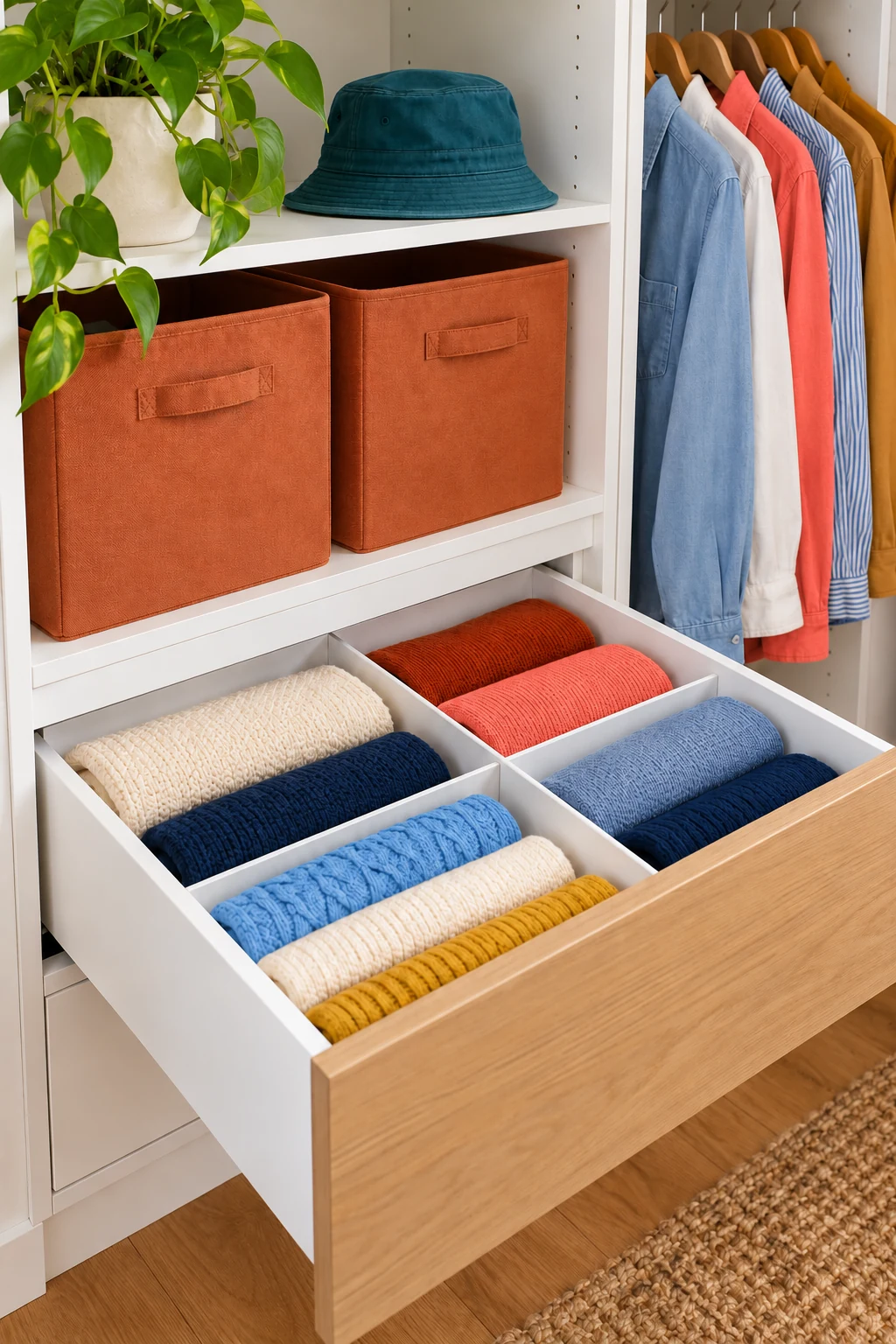
6. Try a smooth file holder for a few clutches
A spare file holder can separate small clutches that are otherwise lost in a pile. Choose one with smooth edges and slots wide enough for the bags, including clasps or embellishments. Position it on a stable surface where each clutch can be lifted straight up or forward.
Treat this as a fit test with a holder you already own. Office organizers are not automatically suitable for delicate bag finishes, and some slots are too narrow. If a bag rubs, bends, or gets wedged, use an open shelf or a more suitable individual space instead.
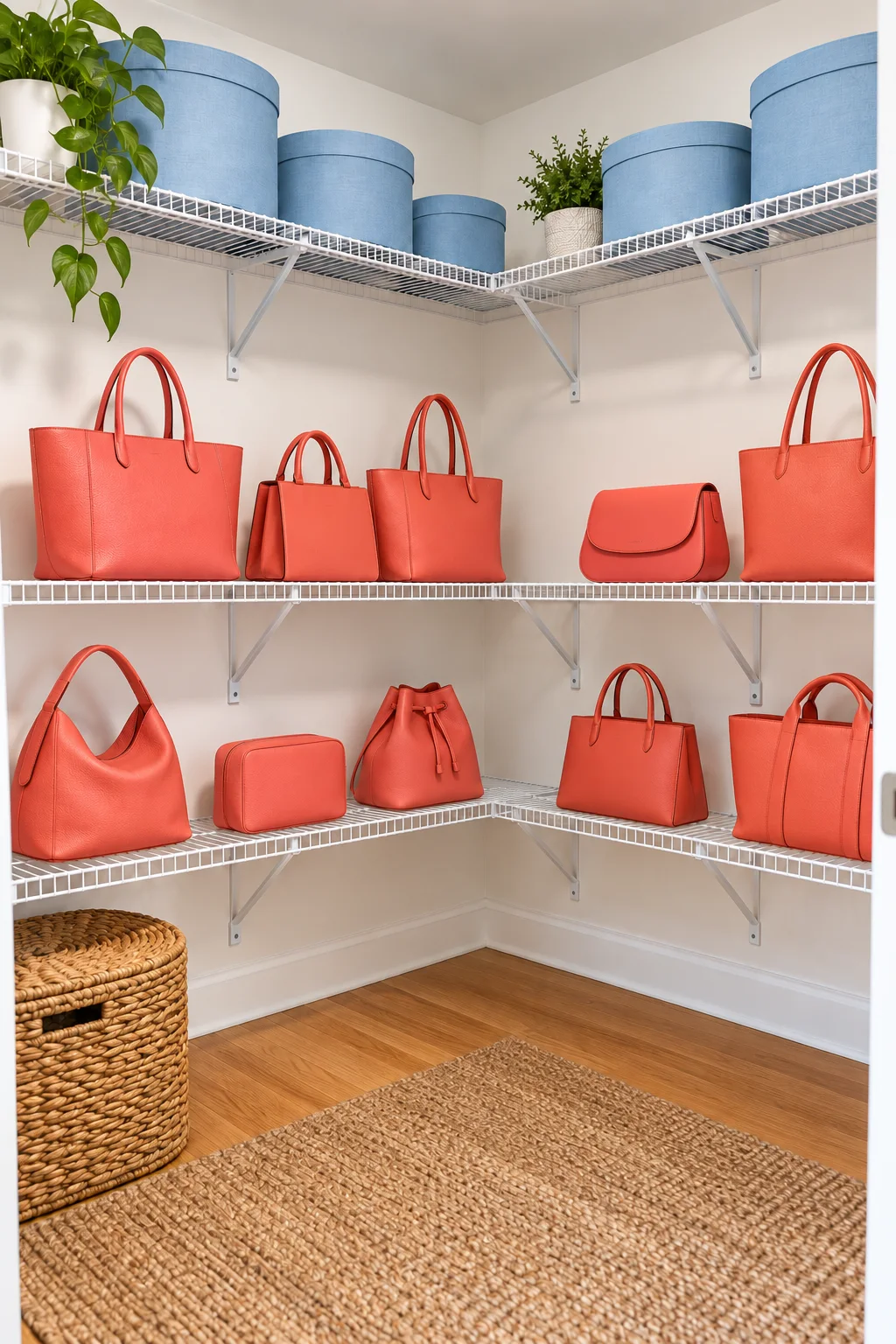
7. Lay suitable small evening bags in a shallow drawer
A shallow drawer can give occasional small bags a visible single-layer home if their storage guidance permits that position. Arrange each one with its straps and closures clear of neighboring items. Keep enough room to pick up a bag without tugging at an embellishment.
Close the drawer slowly during the first fit check. A clasp can rise above the rest of the bag and catch the cabinet frame even when the base lies flat. Use a different shelf or container for rigid shapes that do not fit, and avoid stacking heavy bags over lighter pieces.
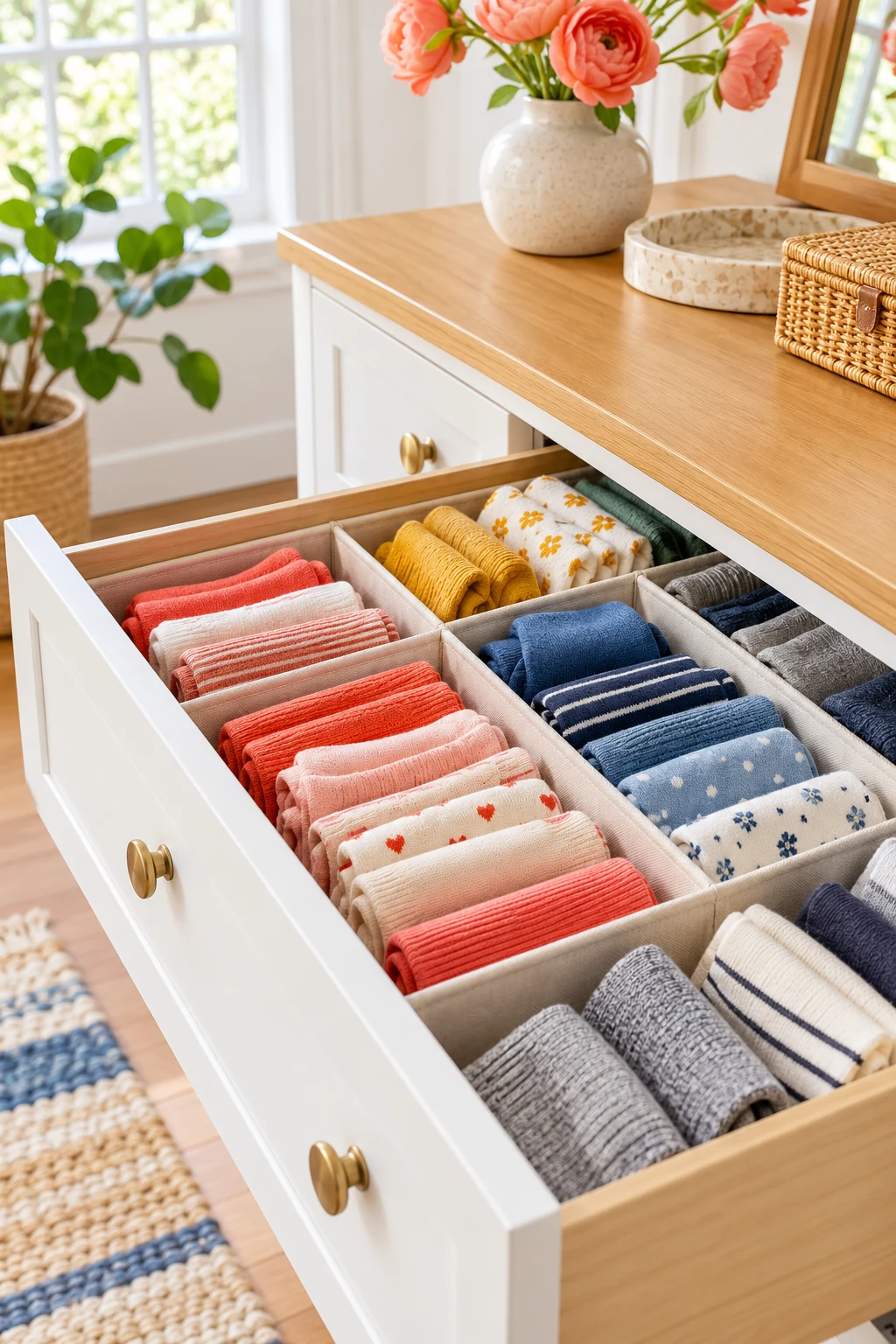
8. Make broad drawer lanes for different bag sizes
A deeper drawer can hold appropriate small bags in broad lanes so they do not slide into a heap. Set each lane around the bag’s resting shape, and leave space for handles or straps. Keep delicate pieces separated in a way their makers recommend.
OXO Good Grips Expandable Dresser Drawer Dividers provide adjustable lanes without a fixed grid. Verify their installed range and height against your drawer, and follow the tension-fitting directions. Dividers should organize the available space without pressing against the bags or forcing weak drawer sides outward. View on Amazon.
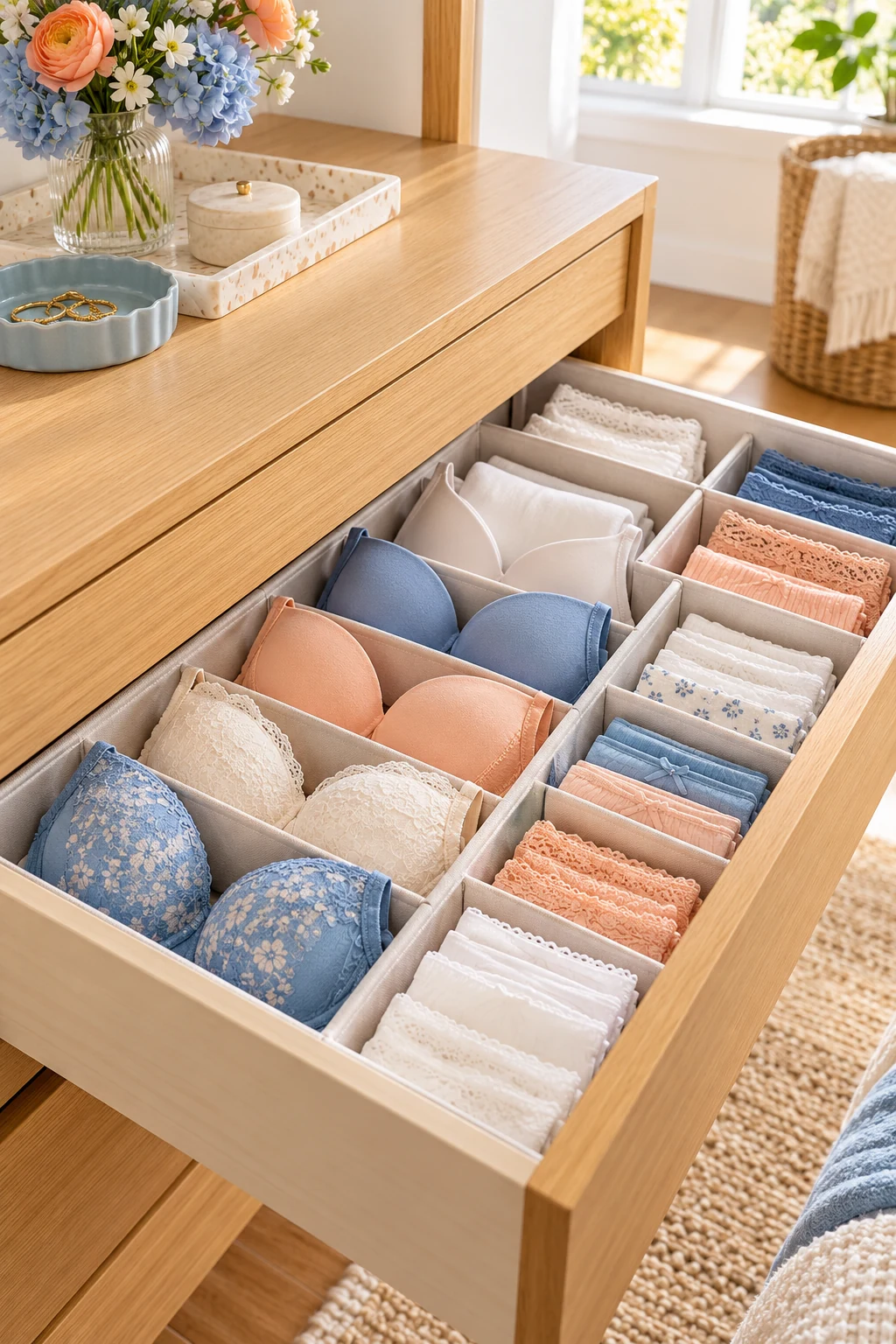
9. Use small open bins for flexible pouches
Group appropriate soft pouches and small flexible bags in open bins, keeping their edges visible. Give each bin a defined category, such as everyday pouches or travel organizers. These smaller pieces can disappear behind larger bags when they share a deep shelf without a container.
The Simple Houseware six-bin fabric set is one option for mixed small categories. Measure the actual bin interiors and contents before deciding which pieces to use. Do not compress a structured or delicate bag into a bin meant for soft items, and follow individual care guidance for storage position. View on Amazon.
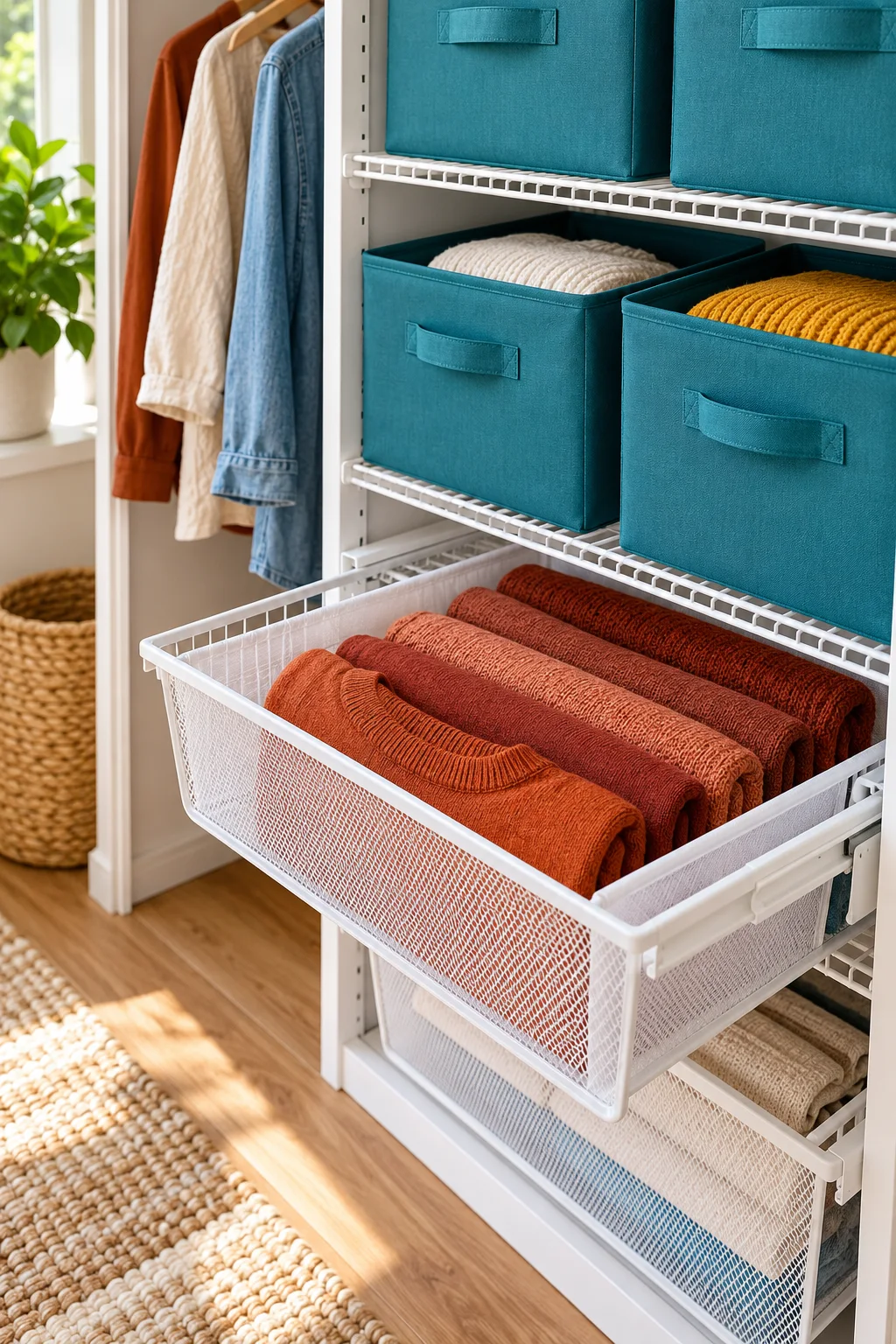
10. Use hanging shelves when shelf space is scarce
A fabric hanging organizer can trade spare rod width for separate compartments for suitable light bags. Place each bag with its base supported in a compartment large enough for its shape. Keep the openings visible so you can remove a bag without pulling against a neighboring garment.
The StorageWorks 6-Shelf Hanging Closet Organizer is a compartment-style option. Measure its full drop, compartment openings, and the rod width it uses. Check all attachment and load instructions, including the existing rod, and keep heavy or oversized bags in a more appropriate supported location. View on Amazon.
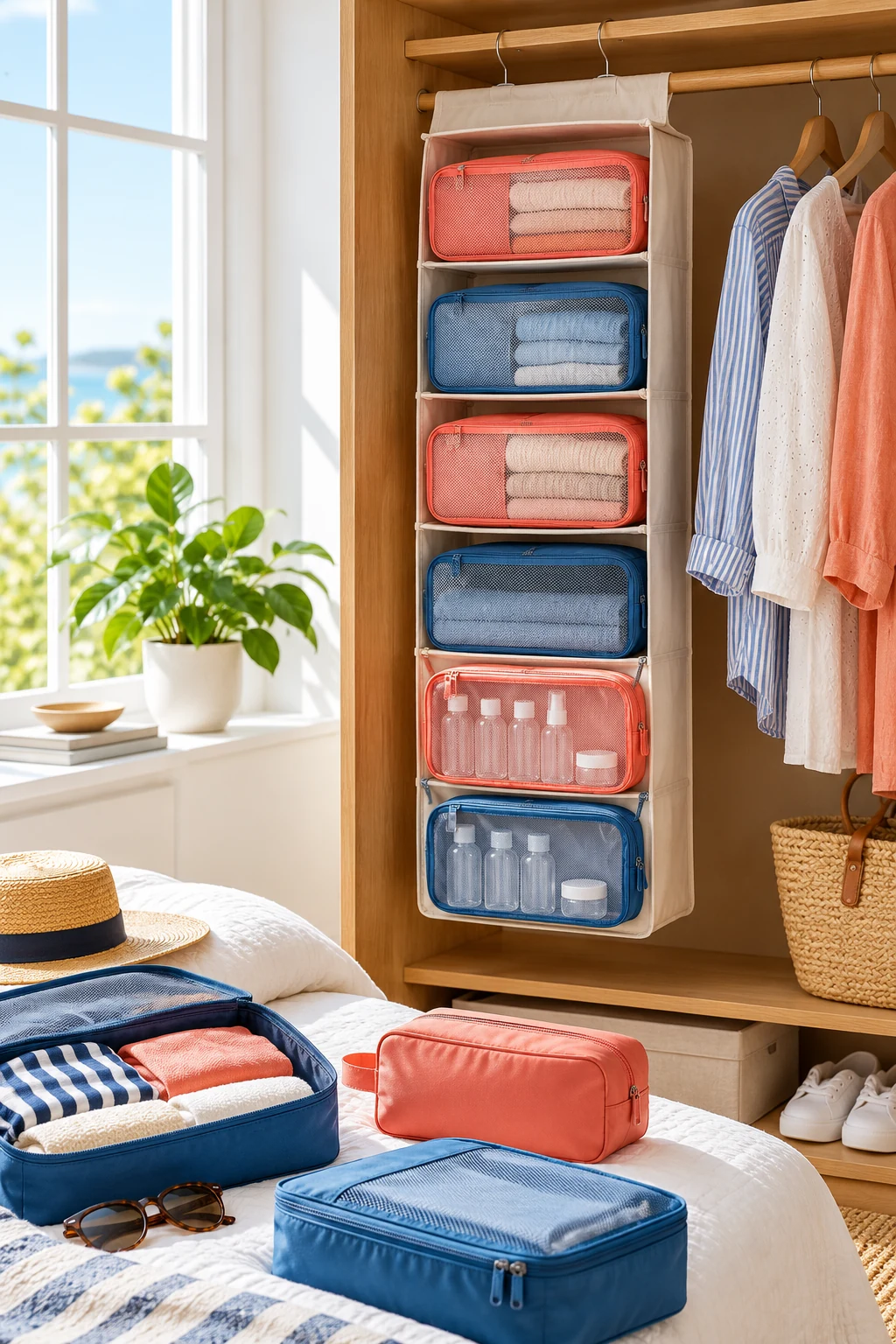
11. Use the bag maker’s recommended supports
For a bag that needs help holding its storage shape, start with the maker’s care directions and any support or insert supplied with it. Keep those instructions with your bag record so you do not have to guess each time it moves into seasonal storage.
Avoid stuffing a bag tightly or using a random household material because it is nearby. Different linings and finishes can need different care, and a support that fits one bag may distort another. Give the supported bag enough shelf space that the surrounding organizer does not undo the intended shape.
12. Label original dust covers without altering the bags
When a maker recommends a dust cover, use it according to those instructions and identify the contents from the outside. A small removable tag on the cover can describe the bag by color, size, or occasion. Keep the label away from the bag’s own surface and hardware.
Do not assume every cover, plastic bag, or fabric is interchangeable. Keep the covered bag in a position and location suited to its care requirements. The label simply saves you from opening several covers to find one bag; it does not turn a cover into a protective storage guarantee.
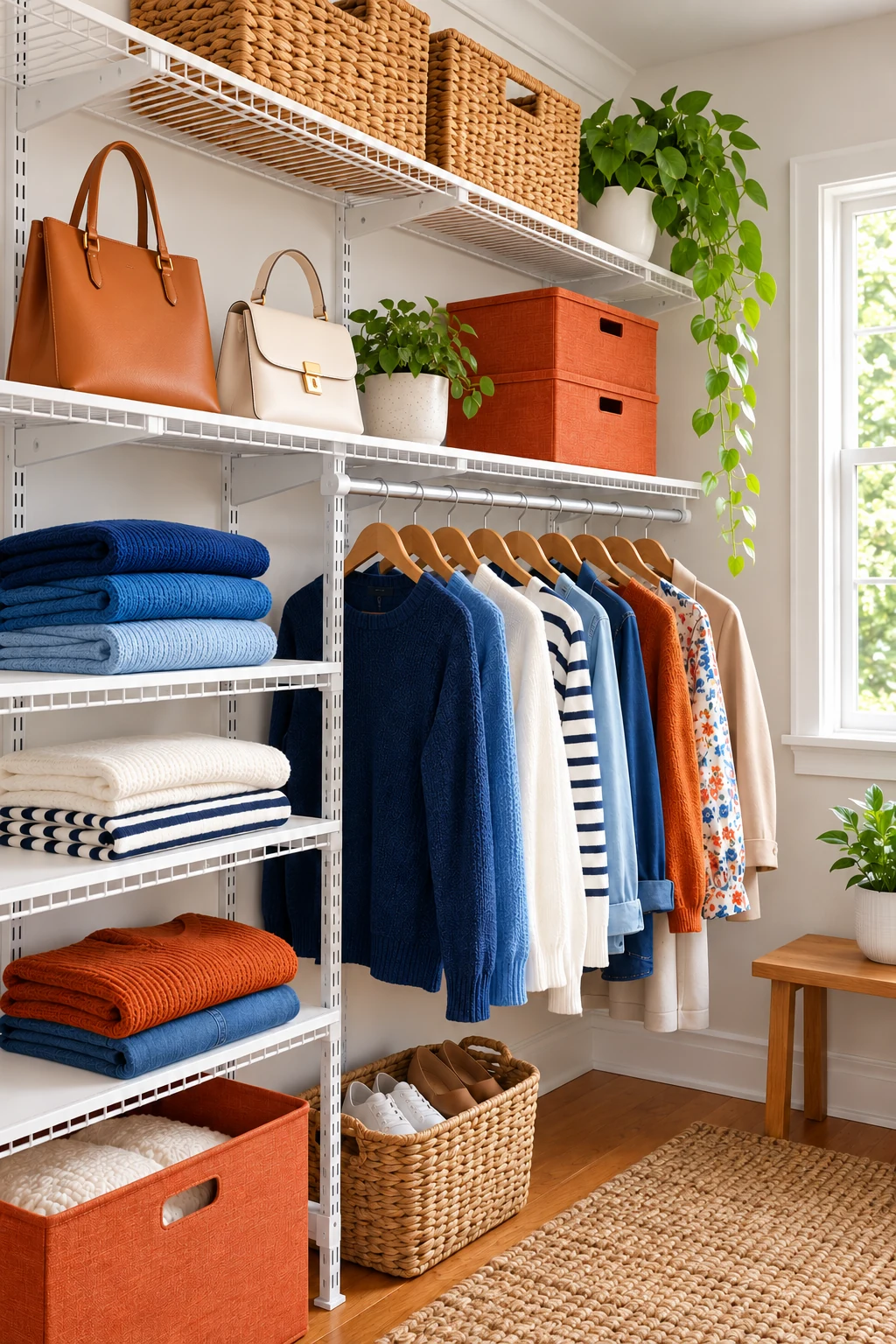
13. Keep a photo index for bags in opaque storage
Photograph bags you keep in opaque covers or boxes and give each storage spot a simple number. Save the pictures in a clearly named phone album or place small prints with the container labels. A photo is especially useful for occasional bags that are easy to forget between events.
Update the index whenever a bag moves or leaves the collection. Keep personal documents and recognizable receipts out of the pictures. Use the index to find a bag, then check the actual item before planning an outfit; an old photo will not show a repair or missing strap.
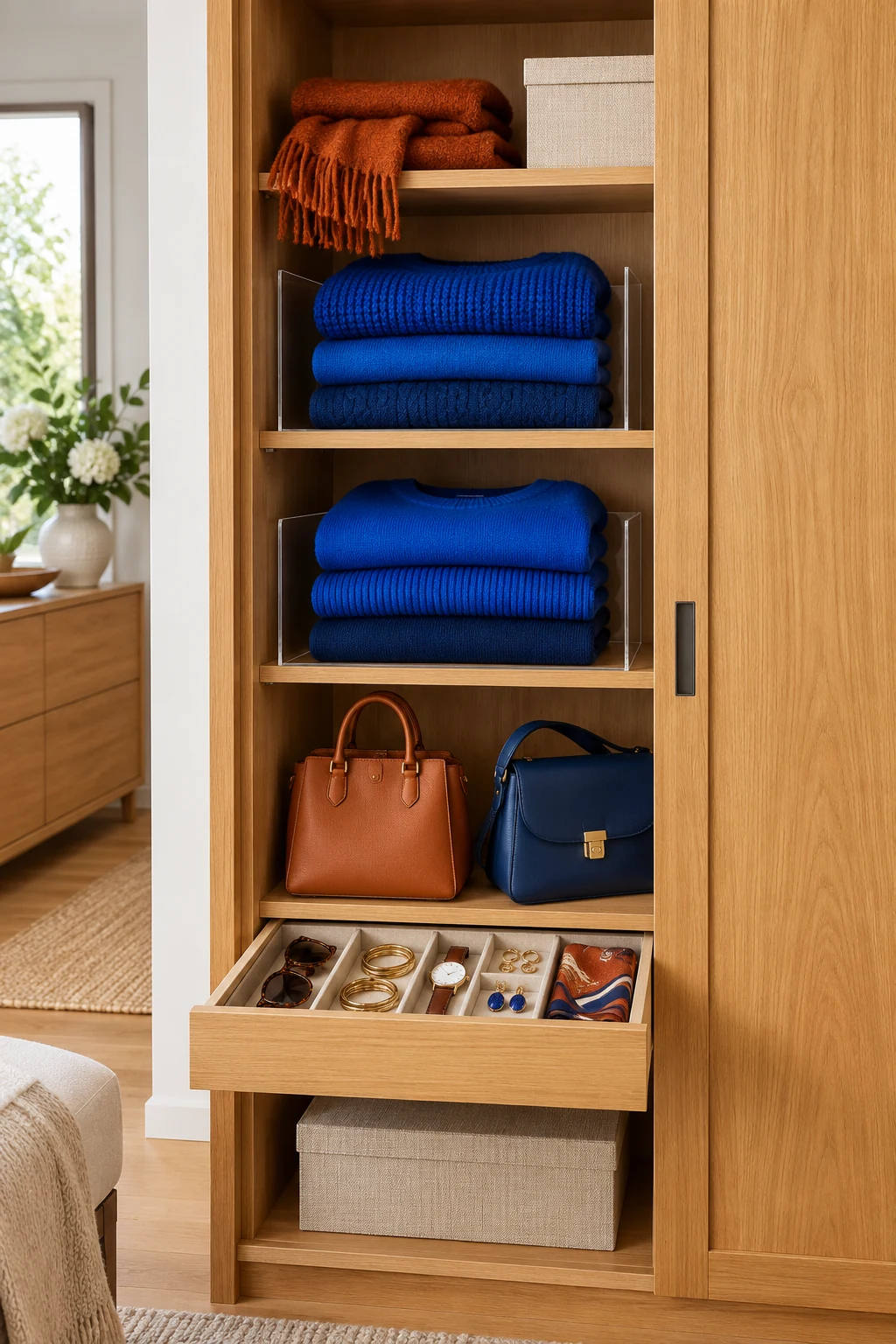
14. Keep each detachable strap with its matching bag
Pair detachable straps with the bag they belong to before putting things away. Store them where the maker recommends, whether that is in a suitable compartment or alongside the bag. Avoid separating similar-looking straps into an unlabeled pile that is hard to match later.
Detach only parts designed to be removed, and keep buckles or clips from pressing into delicate surfaces. If a strap is stored separately, use a clear label or photo reference. Let the strap rest in an appropriate shape rather than winding it tightly to fit an undersized space.
15. Give interchangeable straps and accessories a tray
If several accessories intentionally work across your bag collection, keep them together in a shallow tray near the bags. Separate metal hardware from soft pieces where needed, and make each item visible so changing a strap does not involve emptying a whole basket.
Vtopmart’s clear drawer-organizer set offers separate small trays for this kind of arrangement. Use suitable tray sizes and check loaded drawer clearance. The trays are general organizers, so use storage appropriate to delicate finishes and do not treat a bare plastic compartment as specialized care for every material. View on Amazon.
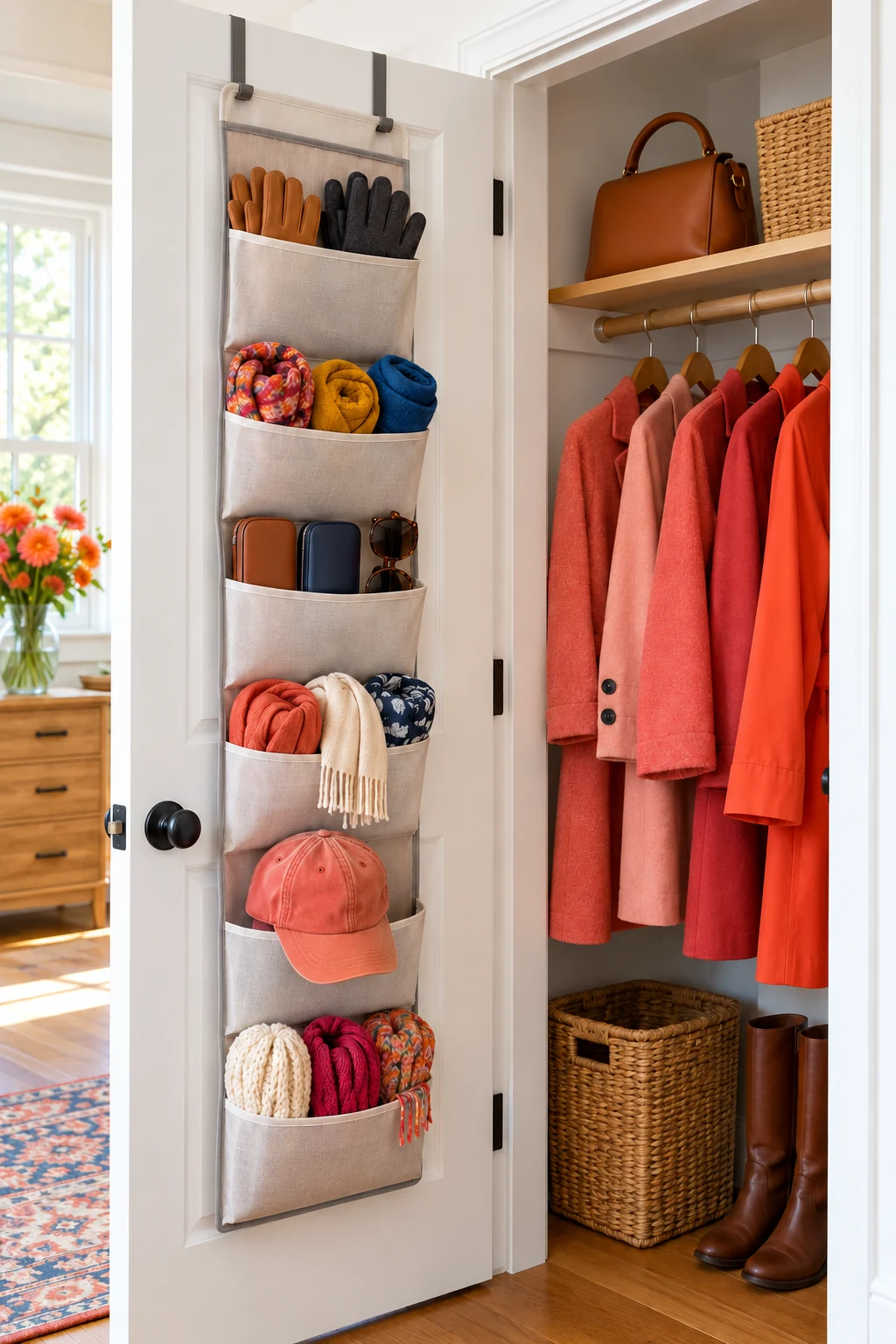
16. Use door pockets for small bag extras
Small bag accessories can fit on a suitable hinged closet door when shelves are already occupied. Think empty fabric pouches or other light items that comfortably fit the pockets, rather than trying to force handbags into a shoe organizer. Keep useful categories at a comfortable reach.
The Simple Houseware 24-Pocket Over-the-Door Organizer provides clear pockets for small extras. Verify the door fit, closure, and loaded clearance, then check each item against the pocket size. Keep fragile pieces, sharp hardware, and anything too bulky or heavy in a better-suited location. View on Amazon.
17. Create a supported landing spot for today’s bag
Choose one stable shelf or surface for the bag currently in use. It should be convenient when you come home and clear of the door’s swing. Give the bag’s base enough support so it does not lean off an edge or rely on a narrow hook by default.
Keep this spot separate from long-term storage so a bag in daily use does not hide the rest of the collection. Empty food, loose papers, and unnecessary contents regularly. If the bag is damp or needs cleaning, follow its care guidance before returning it to its normal storage space.
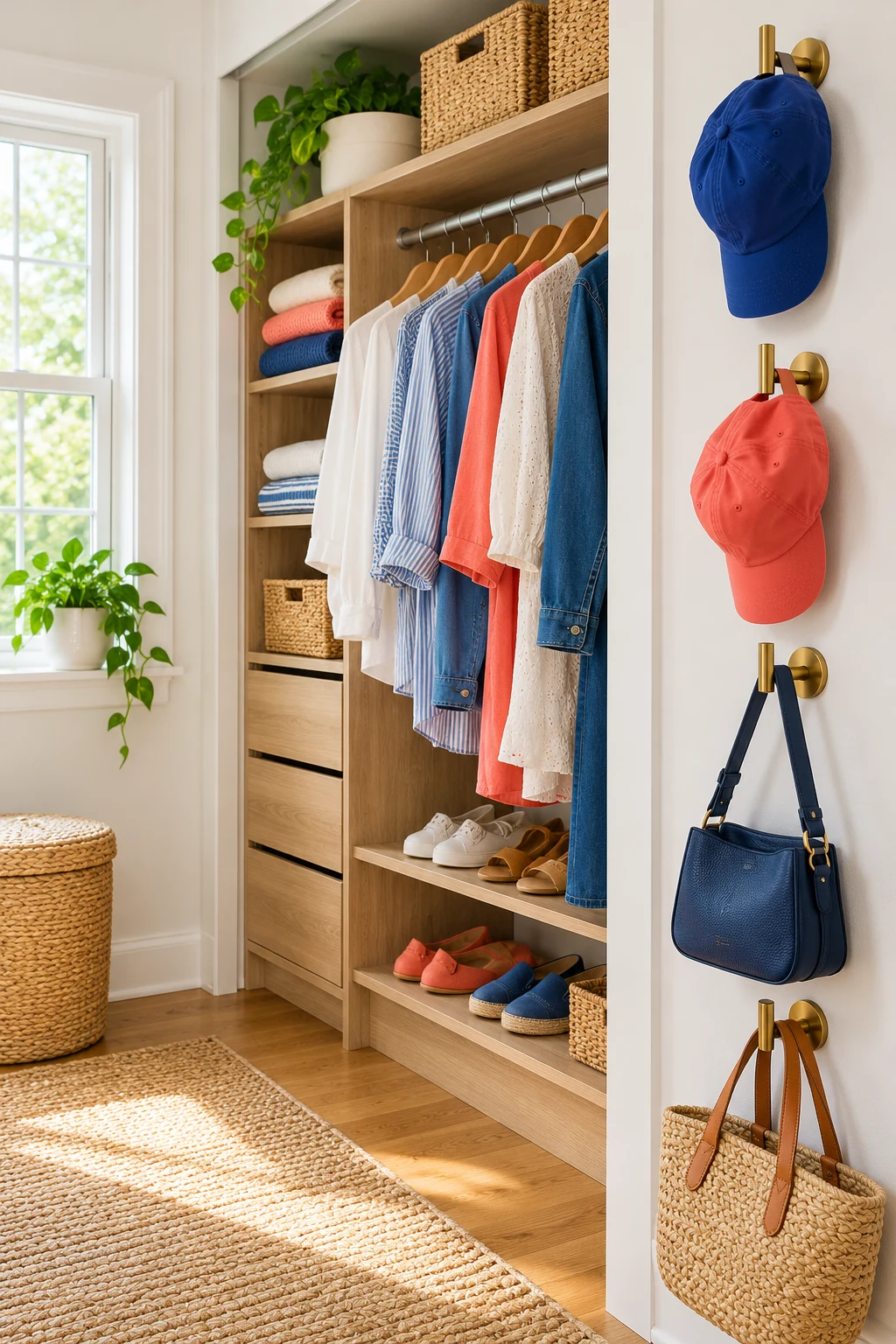
18. Make a small bag-switching station
Place a shallow empty tray near your bag shelf so there is a clear surface for moving everyday contents from one bag to another. Transfer items deliberately, then check both bags’ pockets. This helps keep keys or a cardholder from staying behind in yesterday’s bag.
Empty the tray once the switch is complete instead of letting it become a third storage place for important belongings. Keep documents and other private items out of public view. The station can be as simple as a tray you already own, provided it sits securely and suits the available space.
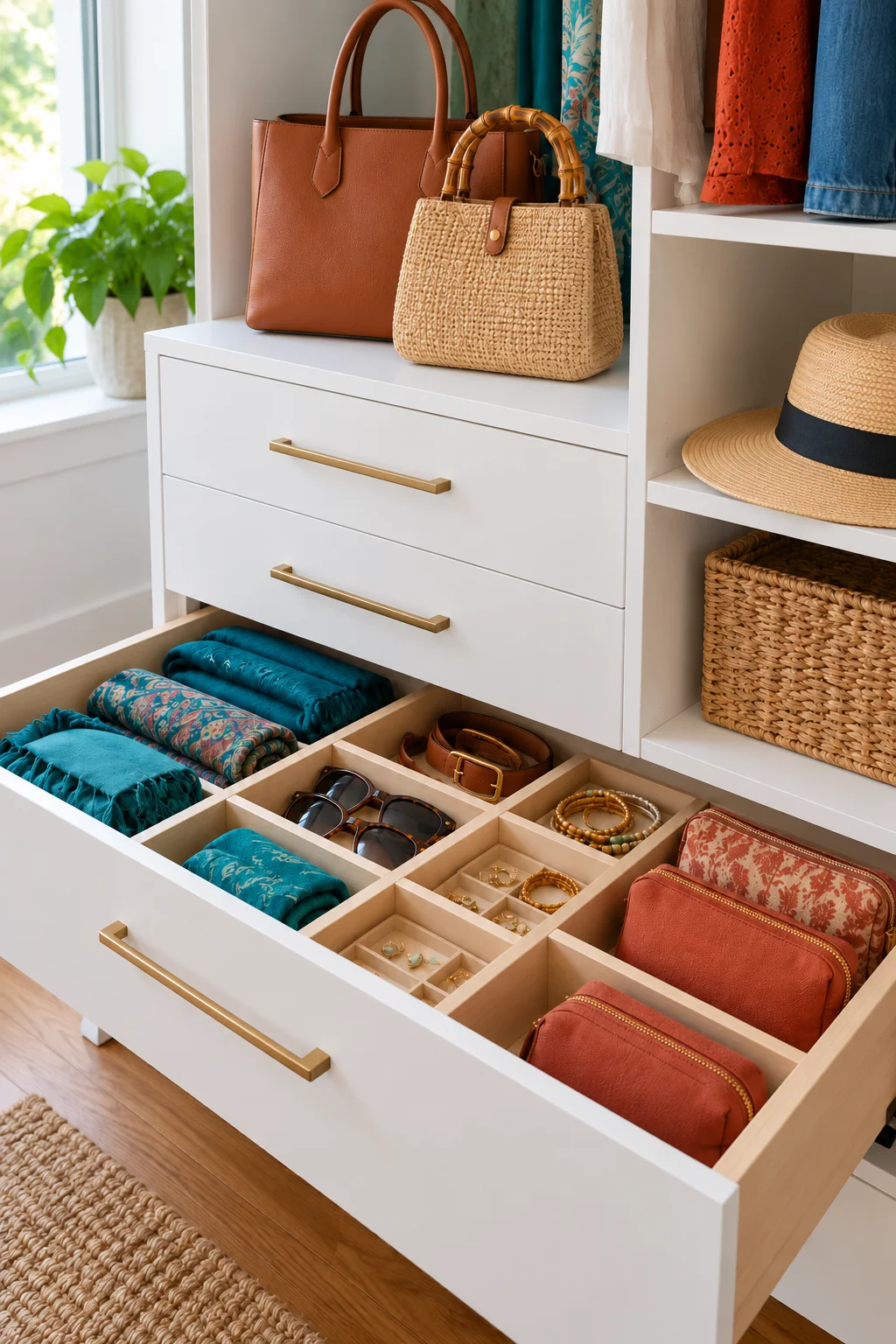
19. Separate work bags from small weekend bags
Group bags around the way you choose them. Work bags may need a taller shelf near the clothes you wear on weekdays, while small weekend bags can share another accessible row. Keep the categories close enough that switching routines does not send you to several different rooms.
Do not duplicate the same storage setup if the bags have very different shapes. A laptop tote and a small crossbody may need different shelf heights or compartment widths. Let the groups guide placement, then follow each bag’s care needs within its zone.
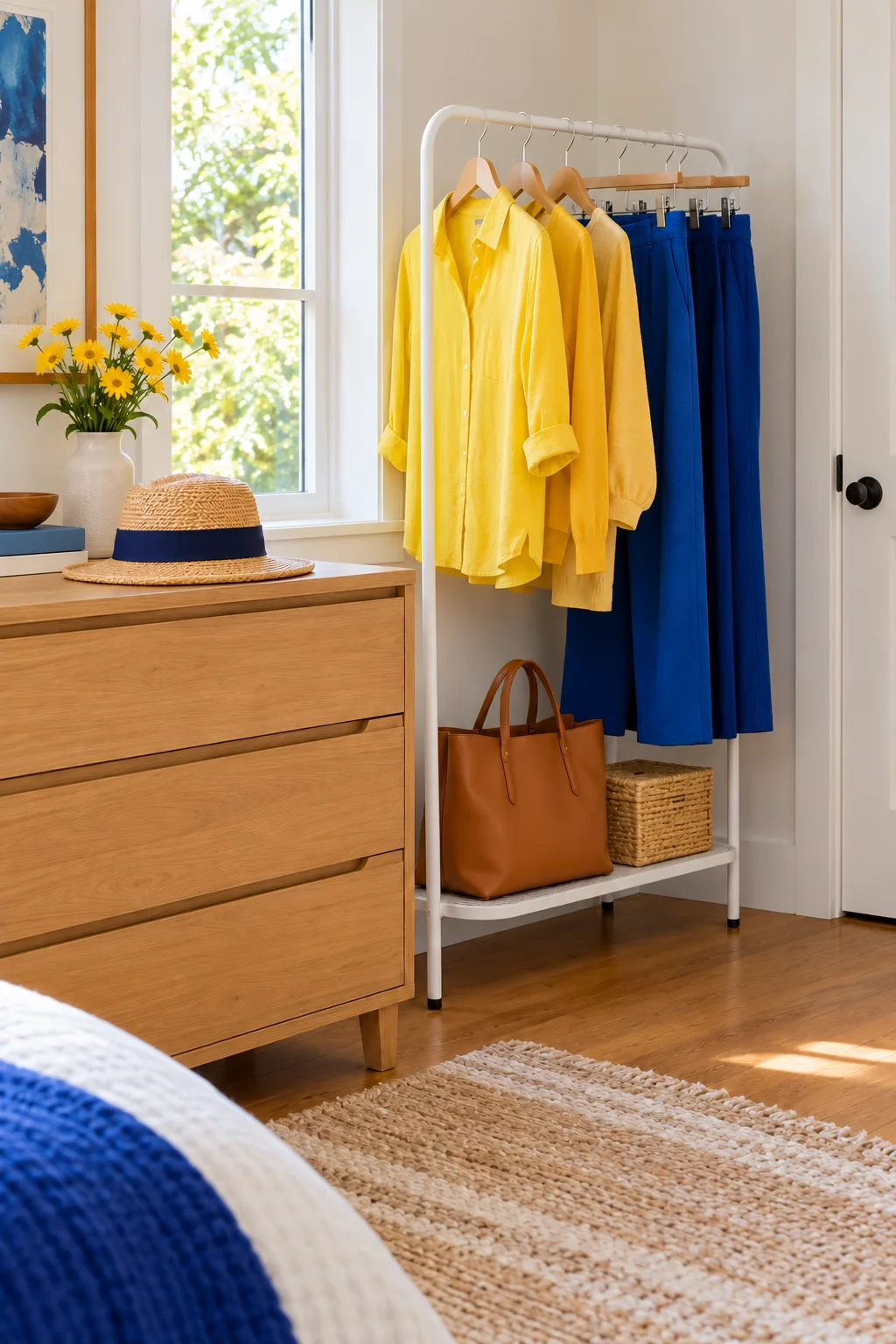
20. Fold only the totes designed to fold
Keep packable shopping totes and other bags intended for folding together in a shallow bin or dedicated pouch. Follow the product’s directions for the fold and closure. This can reduce a loose pile of reusable bags without taking space from structured handbags.
Store the folded bags where you remember to pick them up before shopping. Do not apply the same method to a bag with rigid panels, shaped handles, or materials that should not be creased. A clear distinction between packable totes and the rest of the collection makes the system easier to maintain.
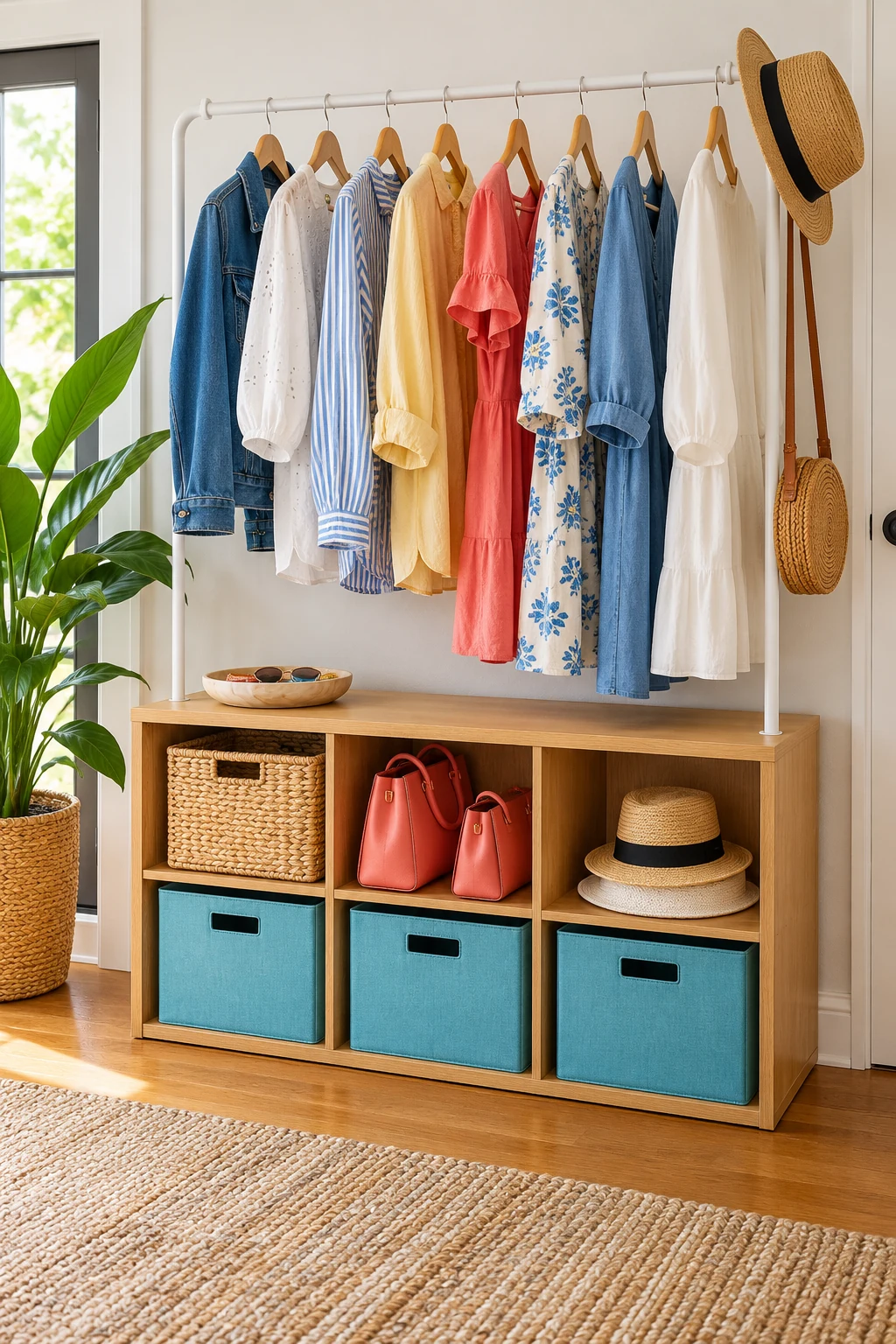
21. Keep travel bags with the travel accessories they use
Give a travel bag and its compatible empty organizers a defined area so packing starts from one place. Keep small accessories visible in a nearby bin or the compartment intended for them. Remove leftover trip contents before putting the bag back.
Nest or fold bags only when their care and design allow it, and avoid packing an inner bag so tightly that it changes the outer bag’s shape. Label the location if travel gear is stored away from the daily closet. Leave a usable path to retrieve the largest piece without unloading a whole shelf.
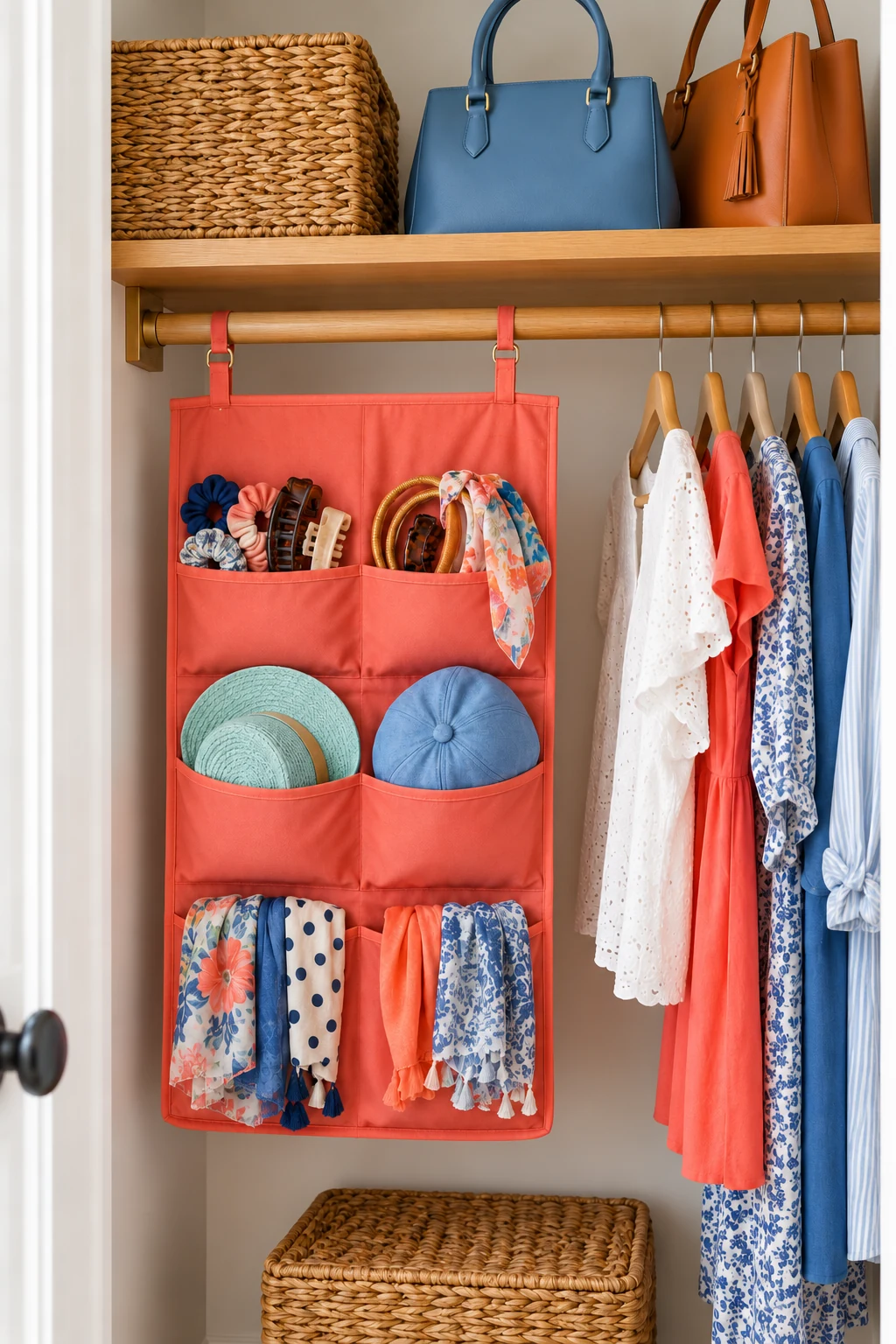
22. Use upper shelves for light occasional bags
An upper shelf can hold a light bag you rarely reach for, provided it can be retrieved safely and stored as its maker recommends. Keep the most-used bags in the comfortable reach zone. Avoid making a large loaded tote an overhead item simply because its handles seem easy to grab.
Leave enough clearance to lower the bag or its container with control. Use an appropriate stable step stool according to its instructions if needed, and keep the path clear. If the shelf is difficult to reach or the bag is heavy, choose a lower location even if it uses more visible space.
23. Use a small cabinet when the closet is already full
A suitably sized cabinet or bookcase outside the closet can give bags an organized home without crowding clothing. Measure the room, the door swing, and the shelves, and check that each bag has the required support and clearance. Place daily bags where you can see and reach them comfortably.
Follow the furniture manufacturer’s assembly and anchoring instructions, including any anti-tip requirements. Consider the bag makers’ guidance when choosing the location rather than using direct sunlight, a damp corner, or an unsuitable environment for the sake of display. Keep walking paths and access to other furniture clear.
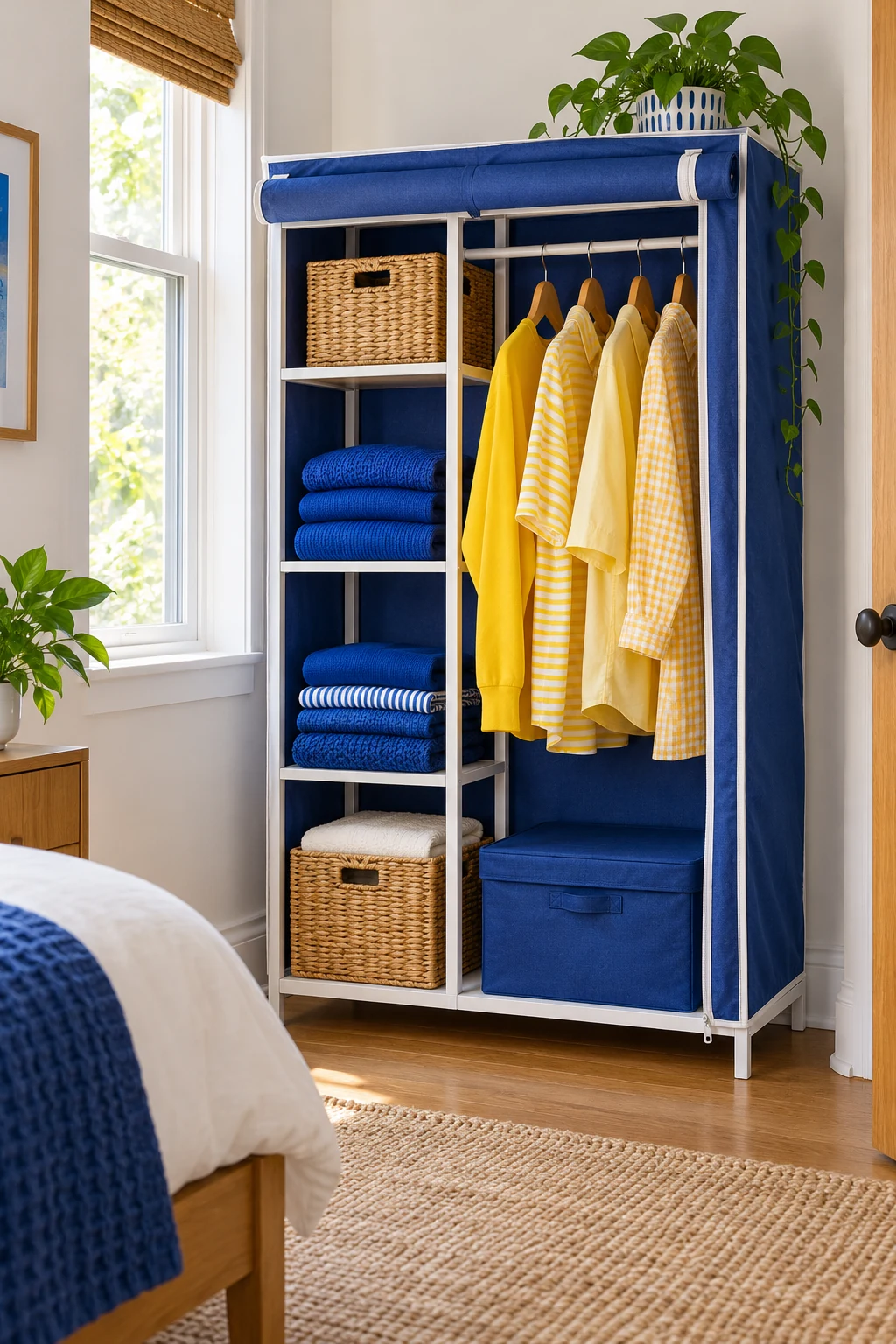
24. Leave a little room to return a bag
Finish the arrangement by taking each daily bag out and putting it back. The space that seems empty when everything is neatly lined up may be exactly what your hand needs for an easy return. Widen any slot that makes you scrape or squeeze a bag into place.
When a new bag arrives, choose its storage location before adding it to the row. Revisit bags you no longer use and give repairs a next step. Keeping a modest amount of spare space makes the system easier to maintain than adding another organizer every time the collection changes.
Choose one shelf or drawer for the bags you reach for most and make each one easy to remove and return. Expand the system only after that everyday row works. Subscribe to the Havelyo email list for more practical small-space organization and decorating ideas.