
Pantry Organization
30 Small Pantry Organization Ideas to Fit More Into Less Space
A small pantry can feel crowded long before every shelf is truly useful. Deep corners hide duplicates, oversized boxes lean into one another, and the ingredient you need ends up behind something you rarely touch.
These 30 small pantry organization ideas focus on seeing, reaching, and replacing food without unpacking the whole cupboard. Start with one shelf and one frustrating category. Reuse a bin or box to test the layout, then buy only the organizer that solves a specific fit problem.

This article contains affiliate links. If you buy through them, Havelyo may earn a commission. As an Amazon Associate I earn from qualifying purchases.
1. Measure the opening as well as the shelves
Record the pantry’s internal width, shelf depth, and height between levels. Then measure the door opening, noting hinges and the space a sliding or folding door leaves uncovered.
A bin can fit on the shelf and still fail to come out through the opening. Make a simple measurement list before buying organizers, including room above each container for your hand to lift or tilt it.
2. Take stock one shelf at a time
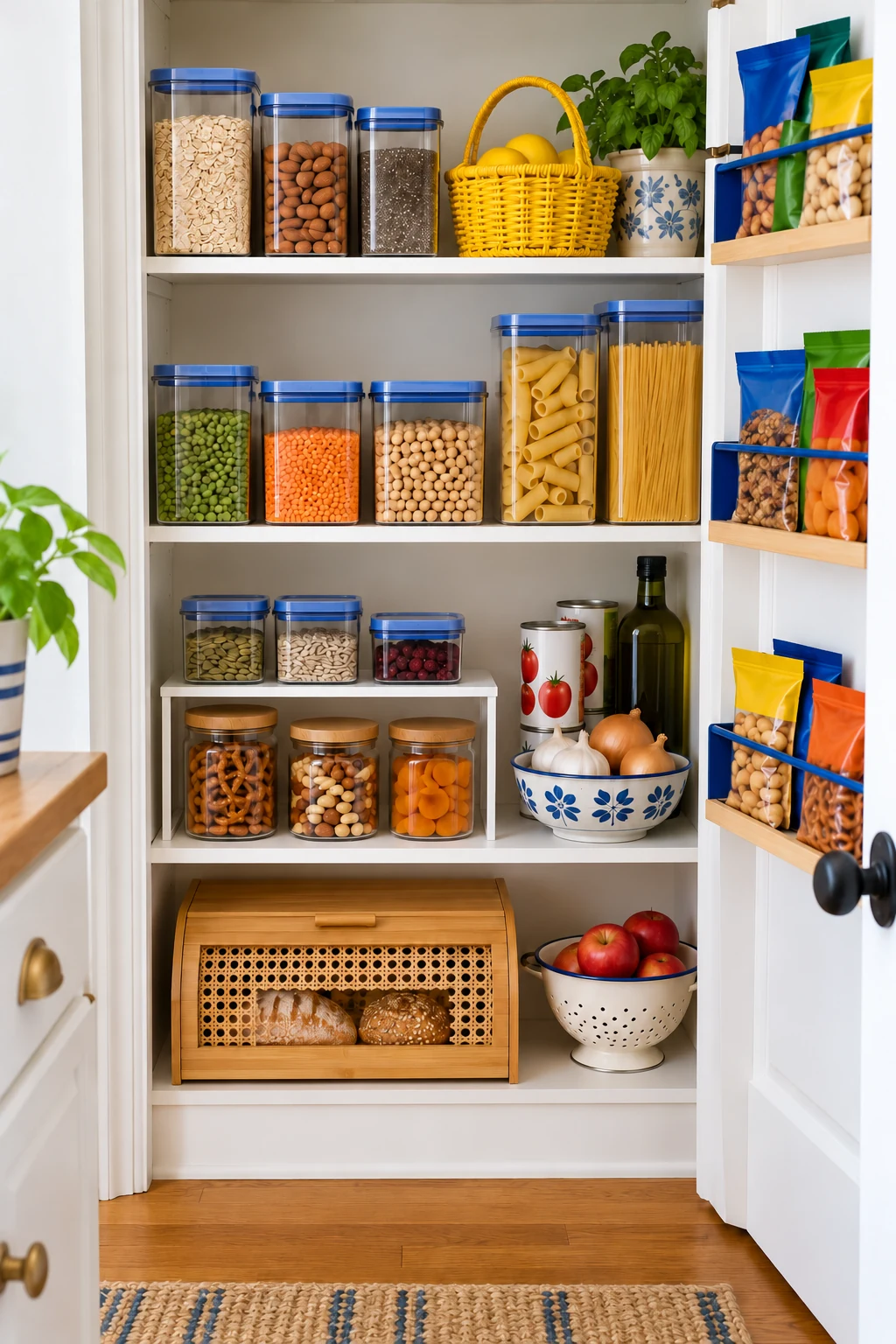
Clear a single shelf, group similar foods, and check labels before changing the layout. Working in a small section avoids turning a quick pantry reset into a kitchen-wide pile that has to be finished immediately.
Keep food in appropriate storage while you work. Return only what belongs in this pantry, and identify duplicates before deciding that more shelving or a bigger collection of containers is necessary.
3. Give everyday ingredients the easiest reach
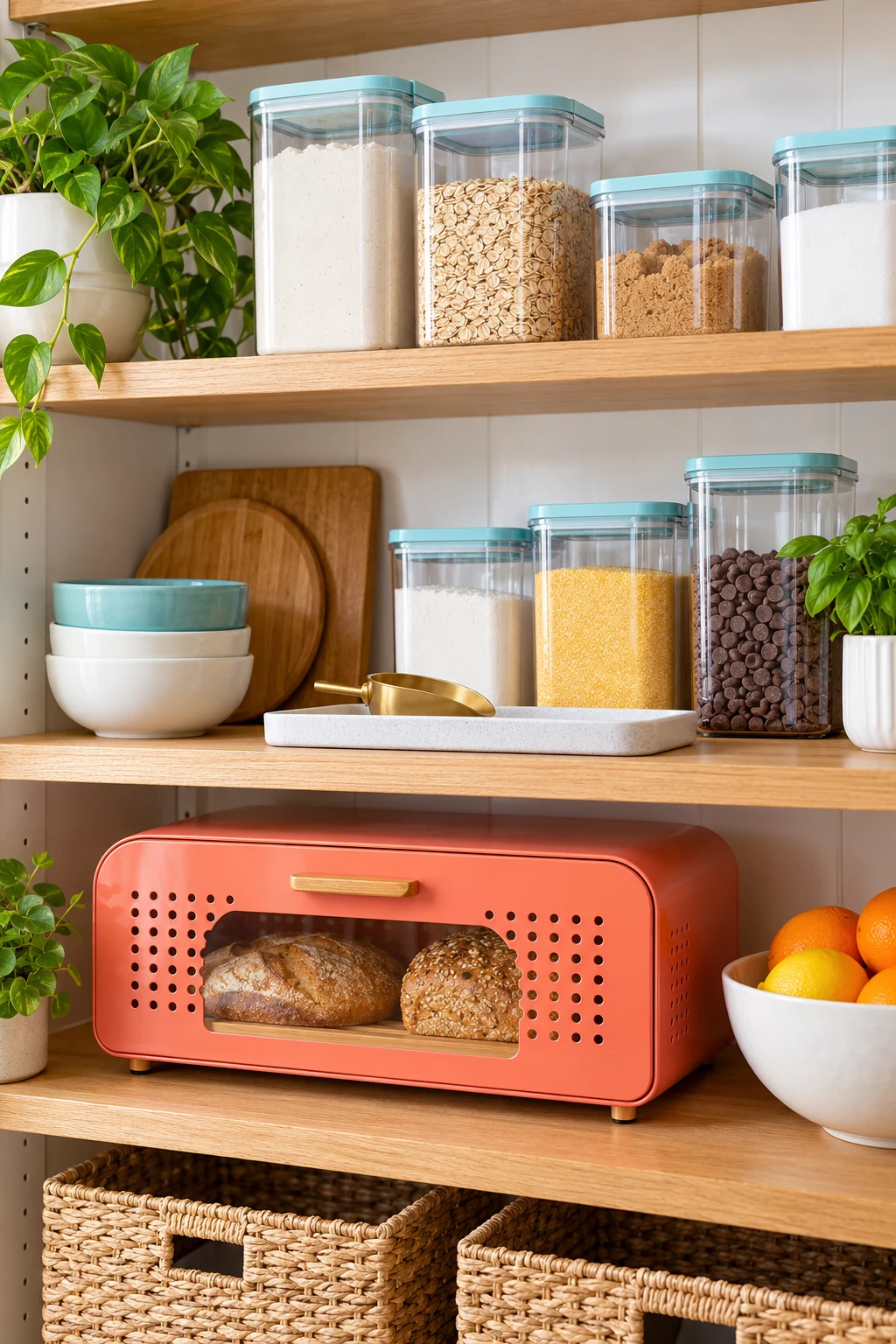
Put the ingredients you use most often between your comfortable waist and eye level. A frequently used rice bag deserves a better spot than an occasional cake stand, even when the cake stand looks nicer.
Adjust the zone for the people who use it, not an imaginary average height. Put heavy goods low enough to lift safely and keep breakable containers out of difficult overhead positions.
4. Group foods by the meals you make
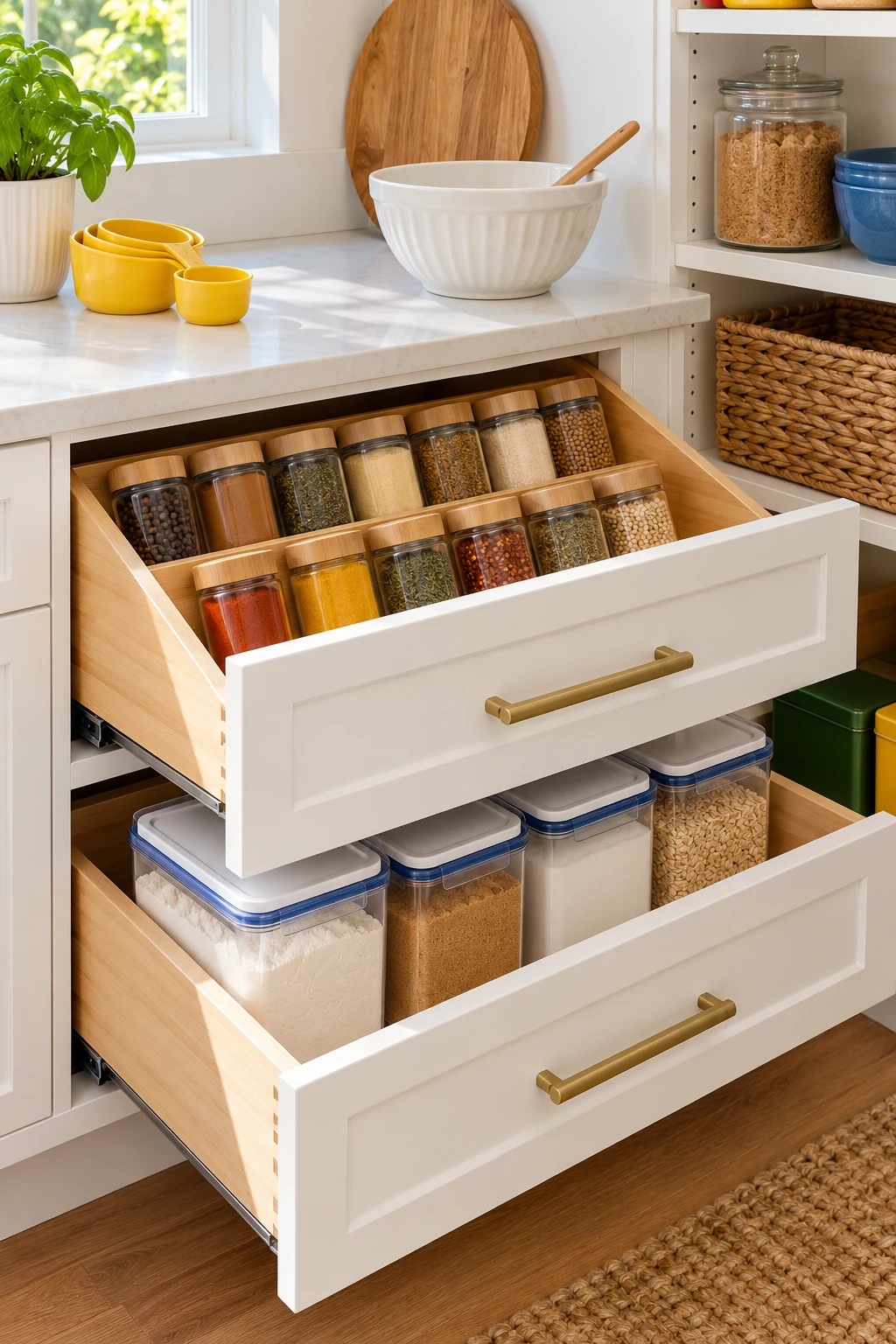
Create recognizable sections for breakfast, baking, packed lunches, or quick dinners. The categories should reflect how you actually cook so you do not have to search several shelves for an ordinary meal.
Avoid making too many tiny categories. If every item needs a unique label and a precise position, the pantry becomes difficult to refill; a few useful groups usually suit a small space better.

5. Choose shallow bins for deep shelves
Use a handled bin to bring a small category forward instead of reaching over loose packets. A shallower bin can leave enough room behind it for a clearly marked backup without making the front section heavy.
The iDesign Pantry Storage Bin with Handles is listed at 8 by 8 by 6 inches. Check the opening and your grip space, and remember that an exterior measurement does not tell you exactly how many packages fit inside. View on Amazon.
6. Raise the back row of small jars
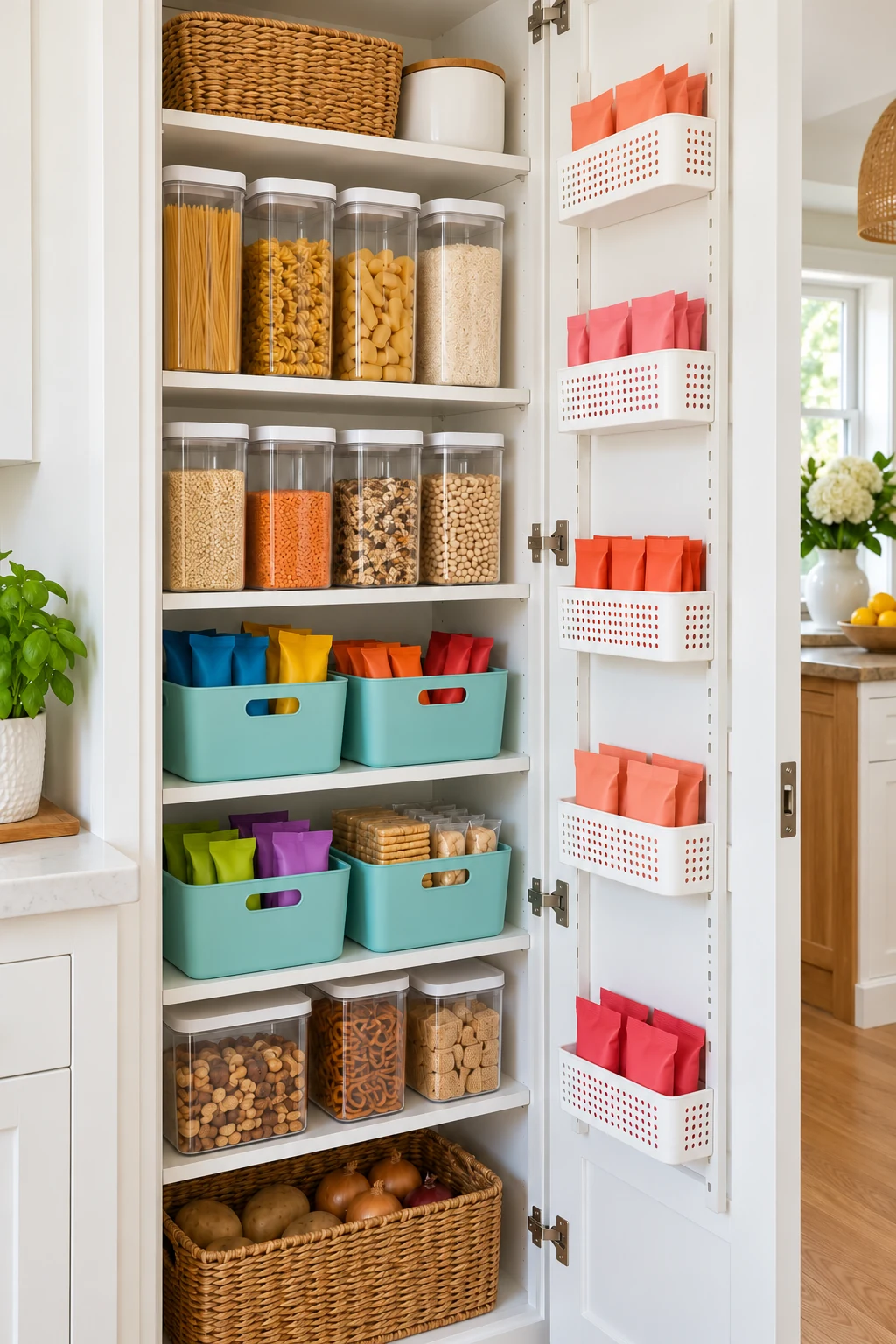
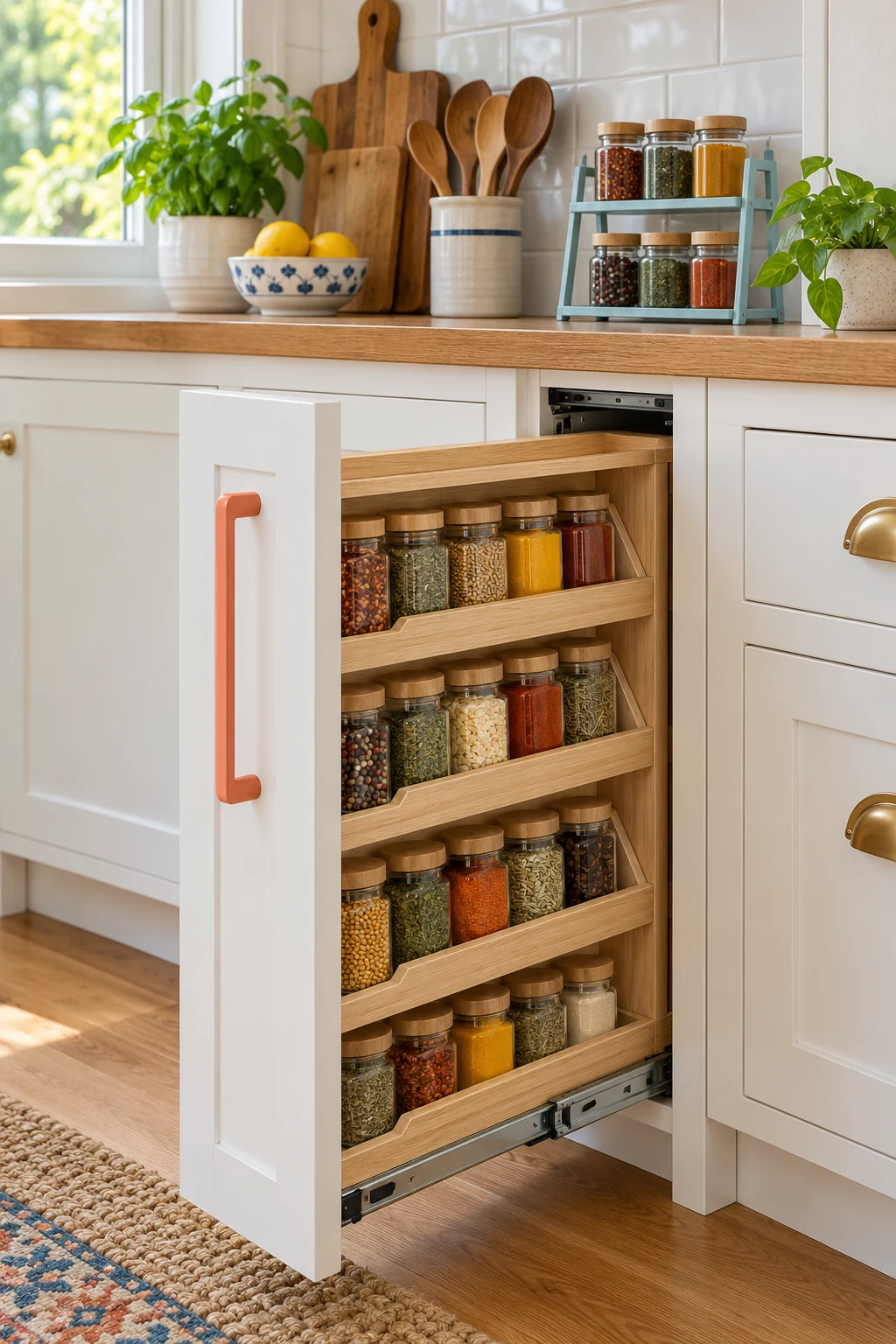
Place short spice jars or small tins on a tiered riser so rear labels remain visible. Test the loaded arrangement with your tallest jar before committing a whole shelf to the organizer.
The 15-inch Copco 3-Tier Spice Rack is about 9 inches deep with roughly 2.75-inch-deep tiers. It suits smaller bases better than large pantry tubs; leave enough height to remove a jar from the back row. View on Amazon.
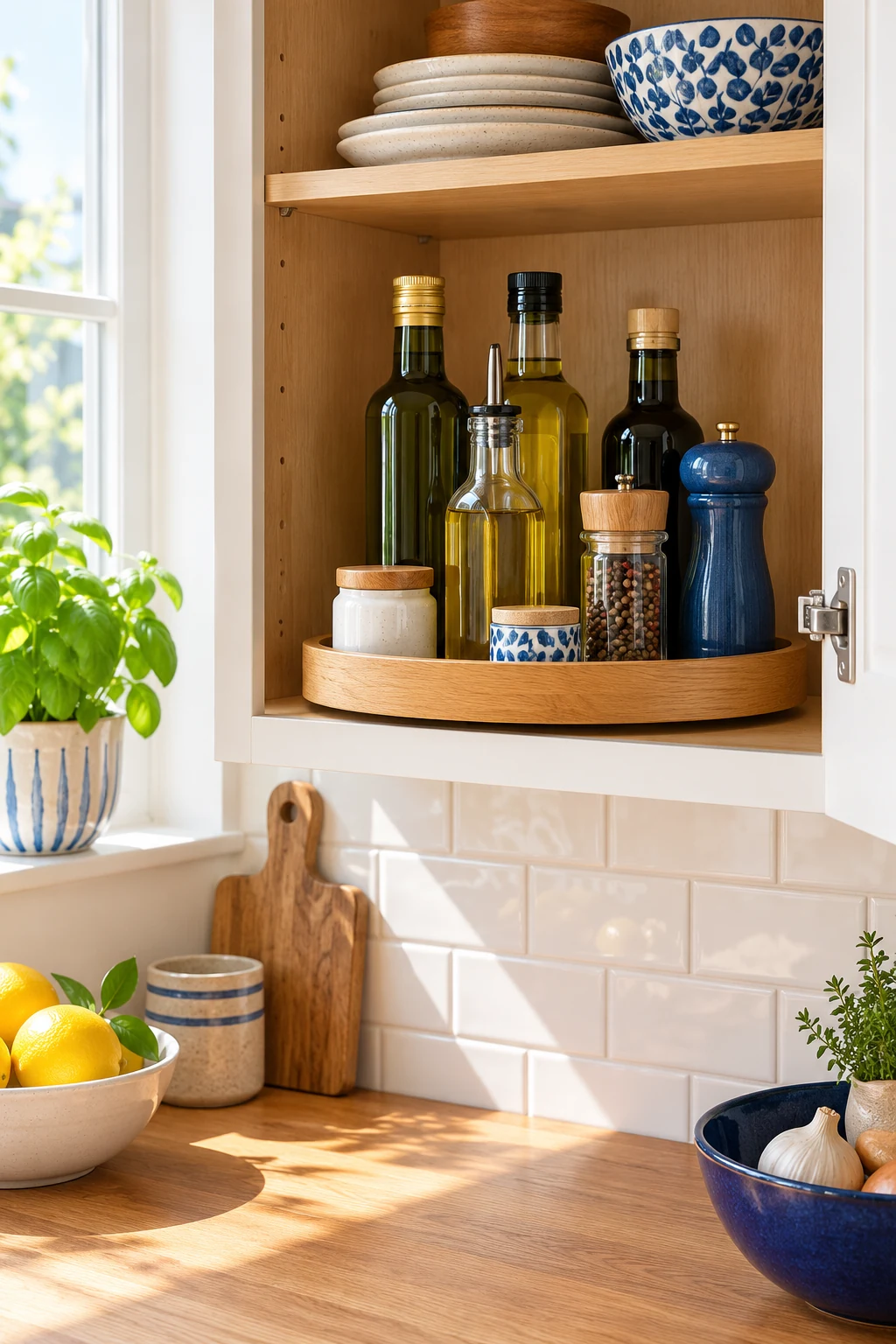
7. Use a turntable for one bottle category
A rotating tray can work in a square pantry corner that is awkward to reach directly. Keep it to one category, such as unopened condiments whose labels permit pantry storage, so the contents remain easy to scan.
The 12-inch Copco Nonskid Turntable has a raised edge and a lined surface. Measure the full rotation path and loaded bottle height; a round tray leaves corner gaps and is not always the most space-efficient choice on a narrow rectangular shelf. View on Amazon.
8. Support packets in stepped compartments
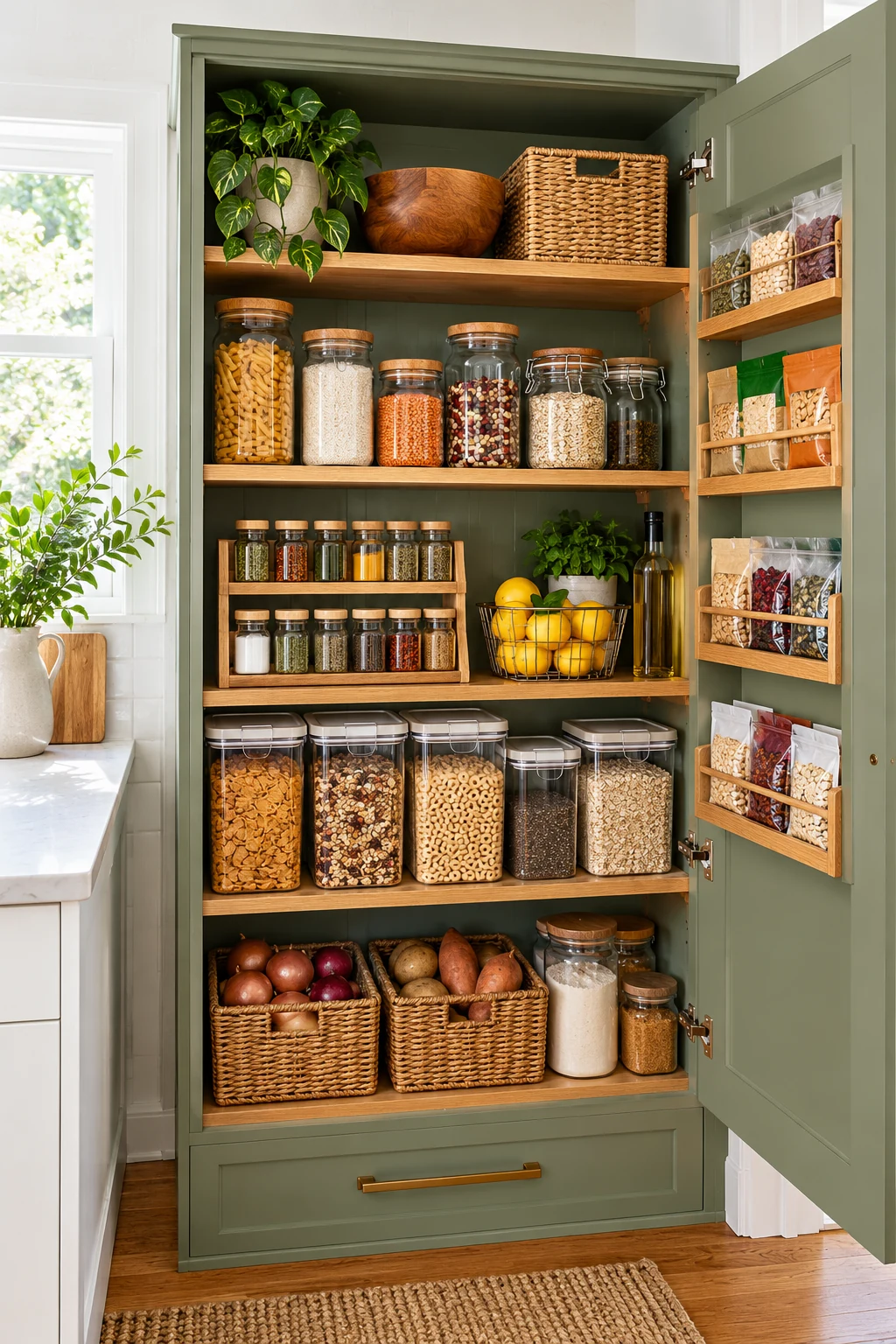
Stand seasoning envelopes and dry sauce packets in separate sections so they do not flatten into a hidden pile. Keep their original packaging intact for ingredients and preparation directions.
The YouCopia ShelfBin Packet Organizer has four stepped compartments and a carrying handle. Its listed footprint is 10.7 inches deep by 6.5 wide, with a 5.2-inch height; check both packet width and the space needed to lift them out. View on Amazon.
9. Add a second level for short packages
A freestanding shelf can divide a tall opening occupied by short boxes or containers. Choose it for a specific group rather than adding a shelf to every gap and making the pantry harder to reach into.
The Simple Houseware Metal Top Counter Shelf Organizer offers two shelf pieces that can be arranged as permitted by its instructions. Measure the clear space underneath the supports, and do not assume the exterior dimensions are the usable lower shelf area. View on Amazon.
10. Decant only the dry staples you use often
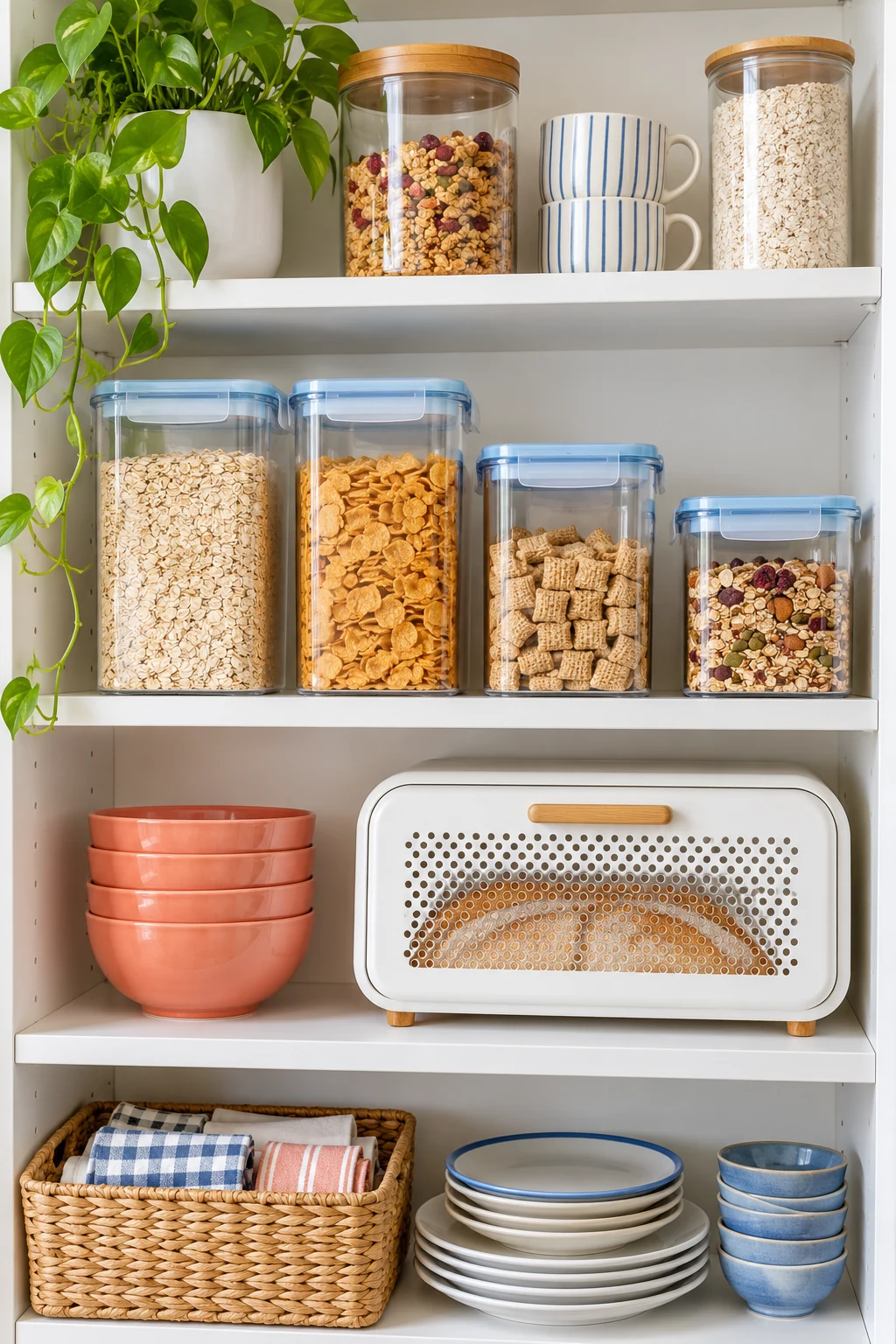
A wide-mouth container can be useful for flour, rice, or another dry ingredient you scoop regularly. For occasional foods, keeping the original package inside a bin may take less effort and preserve helpful information.
The OXO POP 4.4-Quart Big Square Medium Container offers a broad top and push-button closure. Compare its footprint with your shelf and ingredient volume; capacity does not guarantee that a particular bag by weight will fit. View on Amazon.

11. Keep ingredient details with decanted food
When transferring food, retain its name, date information, lot code, ingredient list, and directions in a way that stays associated with the container. A small label plus the folded original panel can prevent future guesswork.
Clean and fully dry the container before refilling as directed by its maker. Do not repeatedly top up old food with new food, because that obscures the age and identity of what is already inside.
12. Use narrow pour containers for breakfast foods
If cereal boxes constantly fall over, test whether a narrower grip-and-pour container works better. Keep the dispenser light enough for the person using it, particularly on a shelf that requires an extended reach.
The Sistema KLIP IT PLUS 4.2-Liter Cereal Container has a contoured grip and pour lid. The manufacturer lists it at 8.9 inches long by 4.8 wide by 10.8 high; leave extra room above it and do not assume every cereal box fits. View on Amazon.
13. Move lightweight snacks to the door
A suitable pantry door can hold wrapped snacks and small dry packets without using shelf depth. Check what the filled pockets would touch when the door closes before you choose an organizer.
The Simple Houseware Six-Pocket Clear Window Organizer measures 13 inches wide by 52 high by 4.5 deep. Verify the hook fit and permitted load; keep it for light packaged goods, and skip the idea if it interferes with the latch or hinges. View on Amazon.
14. Make a small open-first section
Gather opened packages in a clearly marked section at the front of their category. The aim is to make existing food obvious before a new bag or box is opened.
Keep each package properly closed and follow its storage directions, including refrigeration after opening when required. An open-first zone helps you notice food; it does not extend a date or make unsuitable pantry storage safe.

15. Limit backups to one defined space
Choose one basket or part of a lower shelf for unopened duplicates. A defined boundary helps you see when a sale purchase would create overflow instead of useful reserve stock.
Bring a replacement forward when the everyday supply runs out and add it to the shopping list only then. If the backup space fills with foods you rarely use, reduce the quantity rather than expanding the hidden stock area.
16. Keep one narrow lane for tall bottles
Group bottles that genuinely need more height into a single shelf lane. Moving one adjustable shelf can create that space while keeping neighboring areas close enough together for smaller goods.
Follow the shelving system’s support and load instructions when changing positions. Do not remove bracing, overload a narrow shelf, or move food next to heat just because a bottle fits there.
17. File flat bags upright
Place suitably sealed flat dry-food bags in an open bin with their labels visible from above. The filing arrangement can work for pasta shapes, dried beans, or snack pouches that flop over when stored alone.
Avoid folding a package so tightly that its seal is damaged or its contents are crushed. A divider can support a half-full row, but tightly wedging bags together makes it harder to check and remove them.
18. Leave cans in a shallow, visible row
Arrange cans by type with labels facing forward and older suitable stock easiest to reach. A single visible row is often more practical in a small pantry than a deep gravity rack that consumes the entire shelf.
Keep dented, leaking, swollen, or otherwise questionable packages out of the organized supply and follow official safety guidance. Do not bury concerns at the back just to make the front row look consistent.
19. Use shelf edges for readable category labels
Put short labels where your eyes naturally land: the shelf front or bin handle. Broad words such as baking or breakfast make the system easy for other people to use without requiring a detailed pantry map.
Choose removable labels compatible with the finish. Try the arrangement first, then label once it works; covering every surface with permanent labels can make later adjustments needlessly difficult.
20. Reserve the upper shelf for light occasional items
Keep lightweight paper napkins, empty serving baskets, or other infrequently used items on the highest shelf. Dense jars and heavy bags are better placed where they can be handled without stretching.
Use a stable step stool when necessary and keep the floor clear enough to position it safely. Do not climb the pantry shelves or balance on a folding chair to retrieve a rarely used item.
21. Keep heavy packages low and reachable
Place larger bags and multipacks on sturdy lower shelving rather than overhead. Divide a bulky purchase into manageable storage units only when the food and containers are suitable for that handling.
Check the shelf rating and spread weight according to the shelving instructions. Keep the lowest zone tidy enough to inspect and clean rather than turning the floor into a crowded, difficult-to-reach pile.
22. Leave a slim space for a shopping note
Keep a paper list on the outside of the pantry or use a shared phone note. Recording the final used package is easier than trying to remember what was missing after the door closes.
Use the list alongside a quick look through the pantry before shopping. It should help control what comes in, not become an excuse to keep every category stocked far beyond what the available space can hold.
23. Store grocery bags away from food categories
Give reusable bags a separate hook or small utility basket so they do not spread between dry-food packages. Fold only as much as needed to keep the collection compact and easy to grab.
Keep bags clean according to their care instructions and separate any bag that carried leaking raw food. A few useful bags in a defined space are easier to manage than an overflowing bundle behind pantry items.
24. Keep cleaning supplies out of the food pantry
Move detergents and cleaning bottles to an appropriate separate, secured location. This frees small pantry space and avoids storing food beside chemicals that can leak or be confused with food packaging.
Retain cleaners in their original labeled containers and follow child- and pet-safety directions. Do not decant them into matching pantry jars or use a low open food bin as chemical storage.
25. Give produce its own appropriate storage
Whole produce does not all belong in the same sealed pantry bin. Check food-specific directions and choose conditions suited to each item, including refrigeration when required.
For pantry-suitable produce, use a separate, inspectable area rather than hiding it under dry-food packets. The official storage guidance is a better starting point than a universal rule about storing every fruit or vegetable in an airtight container.
26. Move serving pieces out of prime pantry space
Look for bowls, platters, and occasional bakeware occupying shelves you need for everyday ingredients. If a nearby kitchen cabinet can hold them more comfortably, make that trade before buying another pantry organizer.
Keep the destination practical: heavy serving pieces still need secure shelving and easy lifting. Moving clutter into an unsafe overhead stack does not solve the small-pantry problem.
27. Use matching footprints without forcing matching heights
Containers with compatible base shapes can arrange neatly in a small rectangle. Choose heights by the amount of food and shelf opening, rather than buying a large set whose tallest pieces will not fit.
Leave room to release lids and lift containers, especially if you plan to stack them. Follow the container maker’s stacking guidance and keep frequently opened ingredients in positions that do not require dismantling a tower.
28. Leave breathing room around the layout
A little empty shelf space gives you somewhere to set a bin while retrieving what is behind it. It also accommodates the temporary extra item that arrives after a grocery trip without forcing the door shut.
Treat this access space as part of the plan. If every inch is packed, simplify the categories or reduce duplicates before assuming that another tiny organizer will improve the situation.
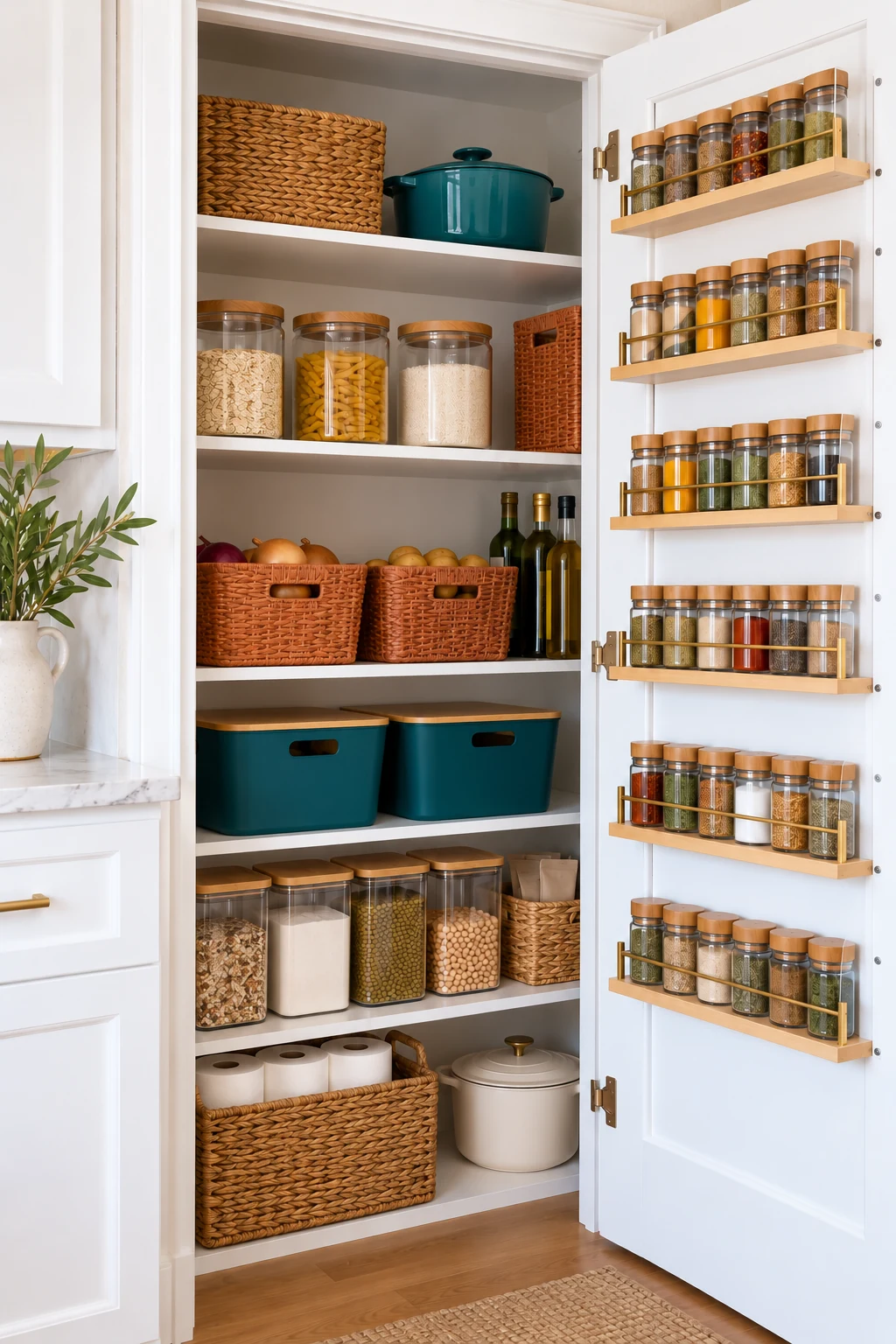
29. Check the pantry from the doorway
Stand where you normally open the door and look for labels or packages hidden by the frame. Turn bins or shift categories so the important information is visible from that real viewing angle.
A pantry photograph taken with every door wide open can hide everyday access problems. Test reaching and returning items one-handed where appropriate, then correct the awkward positions before adding decorative finishing touches.
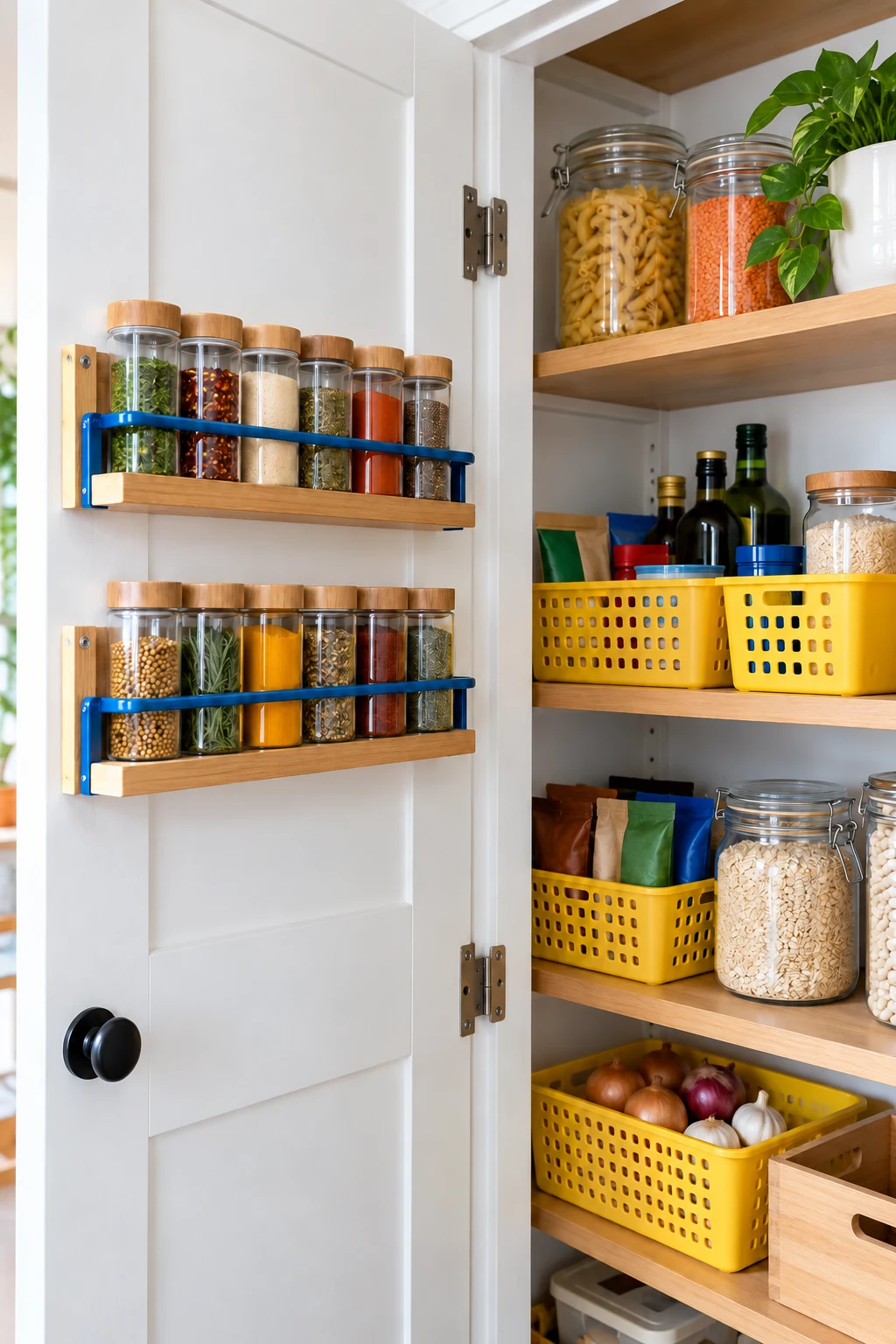
30. Reset the smallest trouble spot each week
Choose the section that usually slips first, such as snacks or baking packets, and straighten it before shopping. Return misplaced items and note what is nearly gone while the amount of work is still small.
If the same zone overflows repeatedly, change its size or the buying habit behind it. A small pantry works best when the amount you store and the space assigned to it remain in balance.
Choose the shelf you open most often and give its everyday ingredients clear, reachable homes. Once that shelf is easy to refill, repeat the same simple approach elsewhere instead of rebuilding the pantry all at once. Subscribe to the Havelyo email list for more small-space decorating and organization ideas.