
Closet Organization
25 Coat Closet Organization Ideas for Every Season
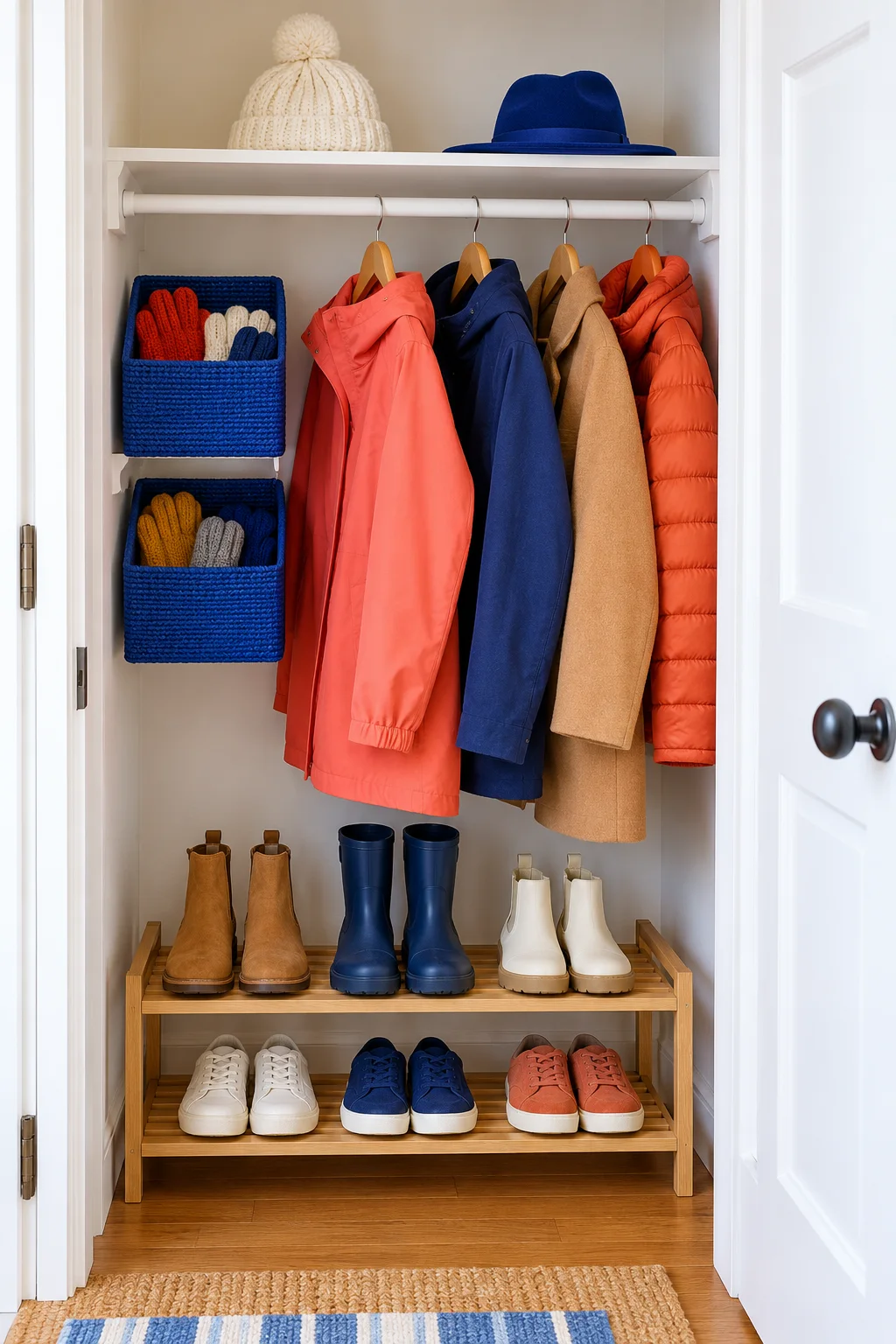
A coat closet has a busy job: it needs to hold outerwear, catch everyday accessories, and help you get out the door without a search. That job changes with the weather, so a useful setup needs a little flexibility.
These 25 coat closet organization ideas work through the rail, shelves, door, and floor with a seasonal plan in mind. Start with the coats and shoes you use now, then give every remaining category a defined space. Measure openings and clearances before adding organizers, and leave room to return things easily.
This article contains affiliate links. If you buy through them, Havelyo may earn a commission. As an Amazon Associate I earn from qualifying purchases.
1. Give the closet one clear entryway job
Start by taking out the things that have drifted into the coat closet but do not help anyone leave or come home. Sort one area at a time so you can keep the entry usable. Decide whether this space needs to hold everyday outerwear, guest coats, or a small share of household extras.
Give unrelated items another specific home instead of pushing them onto the top shelf. If this really is your only storage closet, reserve a clearly limited section for those extras. A visible boundary helps stop coats, cleaning equipment, and spare household supplies from competing for every inch.
2. Keep the current weather’s layers nearest the opening
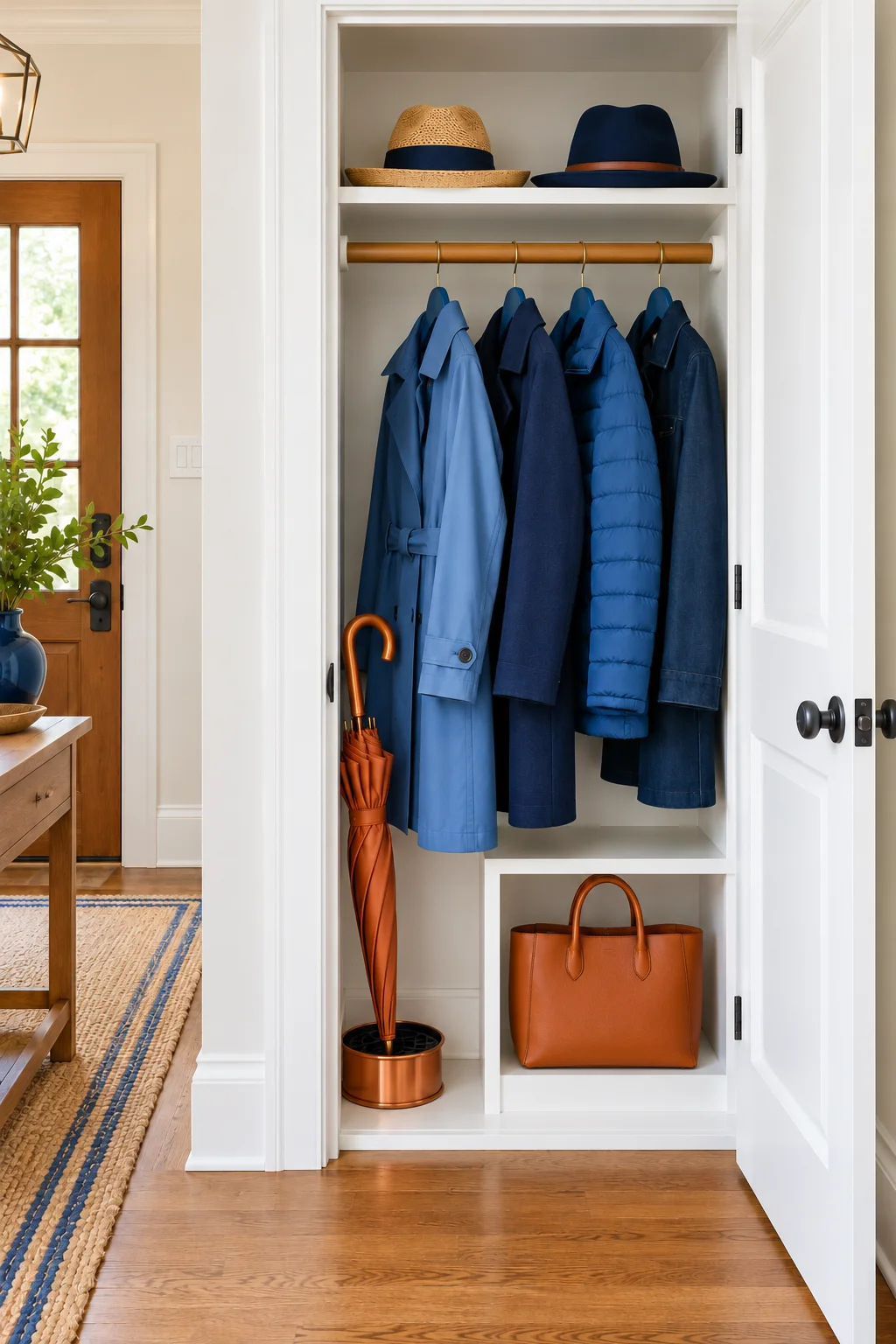
Put the jackets and coats you are actually wearing where your hand naturally goes first. During a changeable season, that may mean a light layer and a raincoat for each person. Keep the less-used outerwear farther along the rail rather than mixing every season together.
Choose the active selection from your real weather and routine, not a fixed number of coats. Leave enough room to slide each hanger without pulling three others forward. If the rail still feels crowded after the seasonal edit, move occasional pieces elsewhere before adding more hardware.
3. Keep a full-height bay for long coats
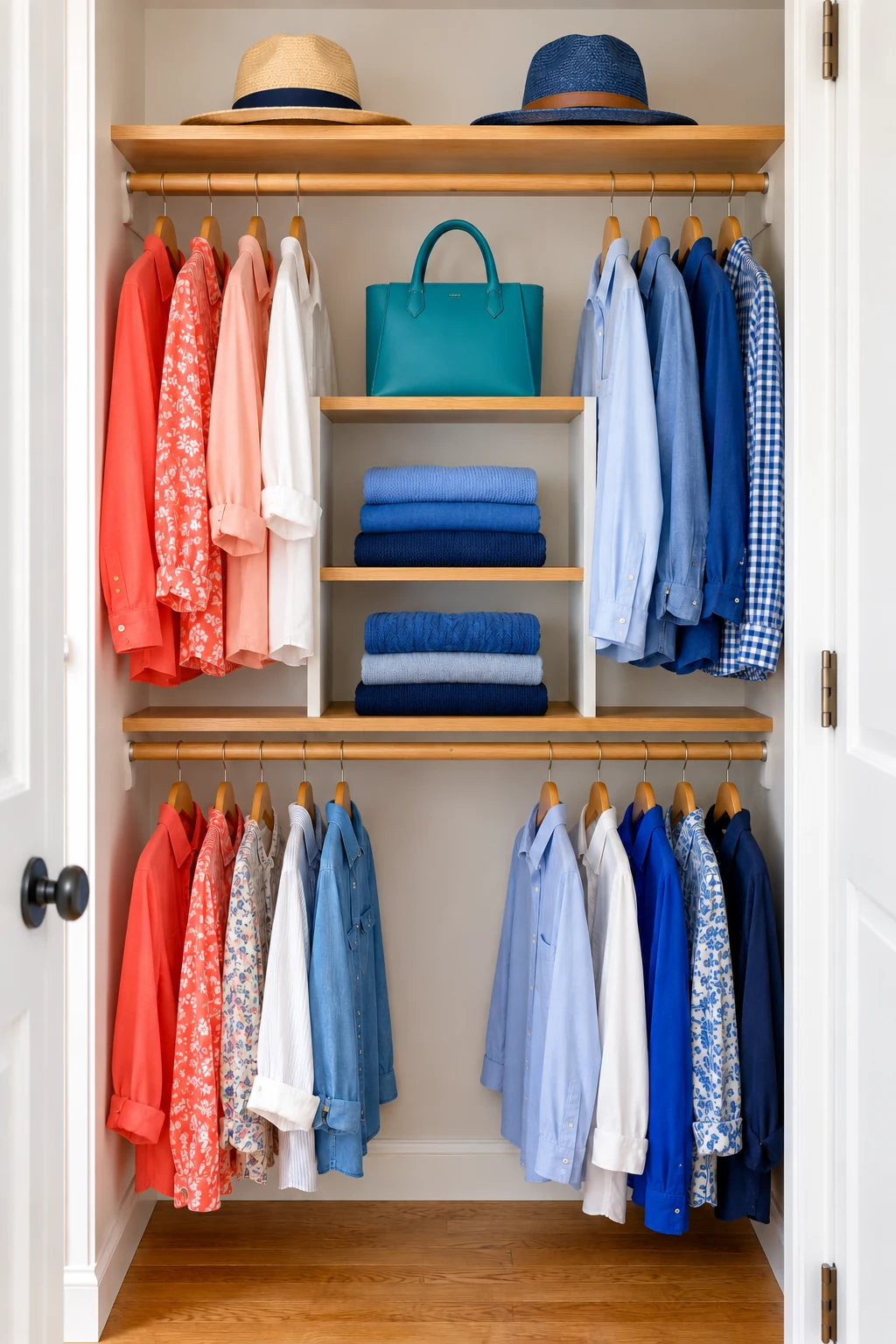
Group full-length coats at one end and leave their hanging path open. Measure from the hanger hook to the longest hem before deciding what can live below. A basket or shoe rack that fits under short jackets can make a long coat bunch up or drag.
Keep the bay wide enough that the coats do not have to be wedged together. If a long garment needs particular support or storage conditions, follow its care guidance. Separating by length makes it easier to use the floor elsewhere without sacrificing the pieces that genuinely need the height.
4. Choose hangers that support the coat
Check the hangers as you put outerwear back. Use an appropriate shape and capacity for each piece rather than moving every coat onto the thinnest hanger you can find. Bulky or structured outerwear may need different support from a light windbreaker.
Face the hooks consistently so the rail is easier to scan and coats come off predictably. Keep only a modest supply of empty hangers in the active section. The benefit comes from a usable row, not a packed line that compresses shoulders and makes returning a coat difficult.
5. Give each everyday coat its own hanging space
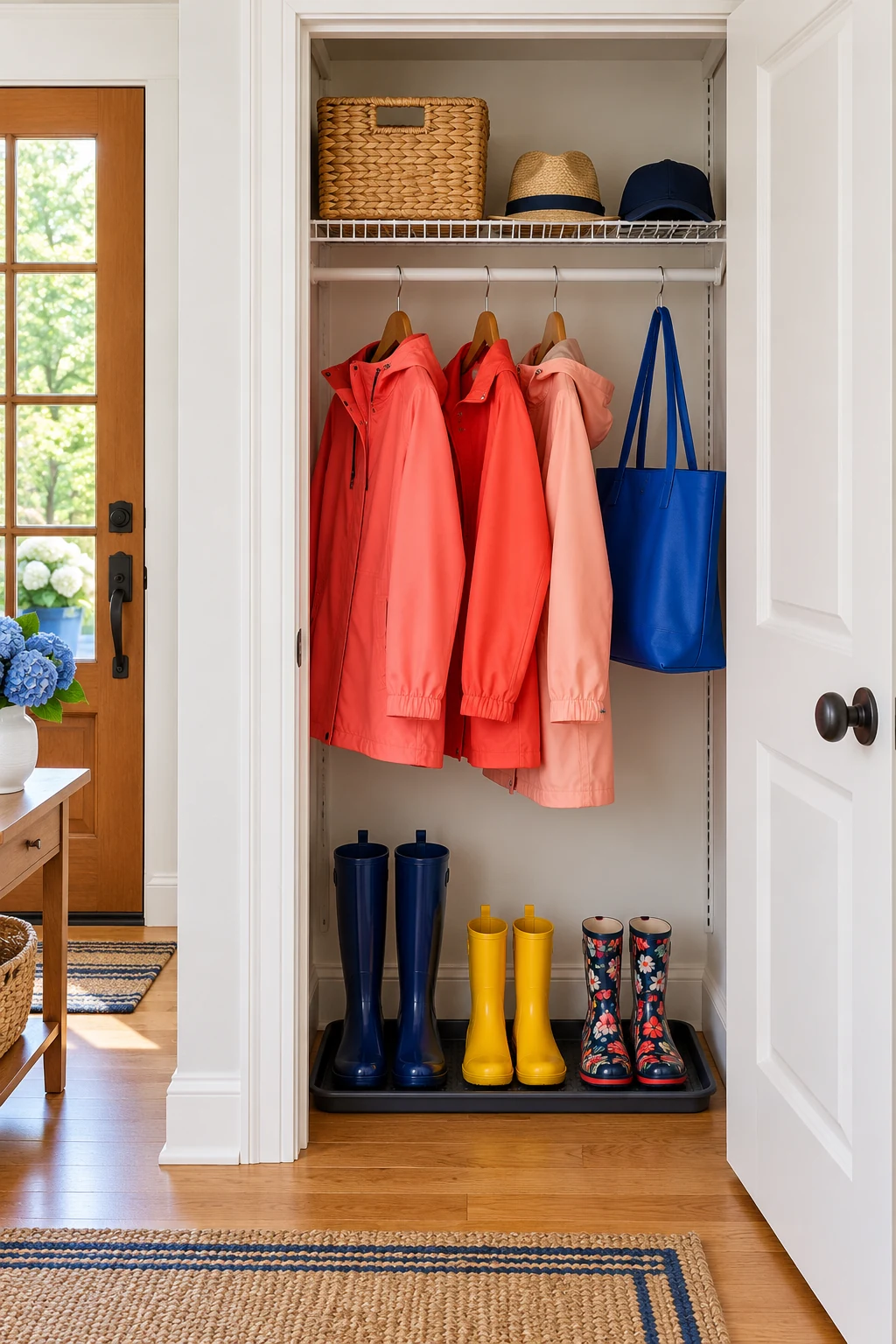
Double-loading hangers can hide the lighter jacket under the coat you reach for first. Give everyday pieces their own place on the rail so you can see what is available before heading outside. Group a person’s coats together if several people share the closet.
Check the arrangement with sleeves hanging naturally. You should be able to remove one piece without unhooking its neighbor. If there is not enough room, reduce the active selection or find a different home for occasional outerwear instead of treating layered hangers as permanent storage.
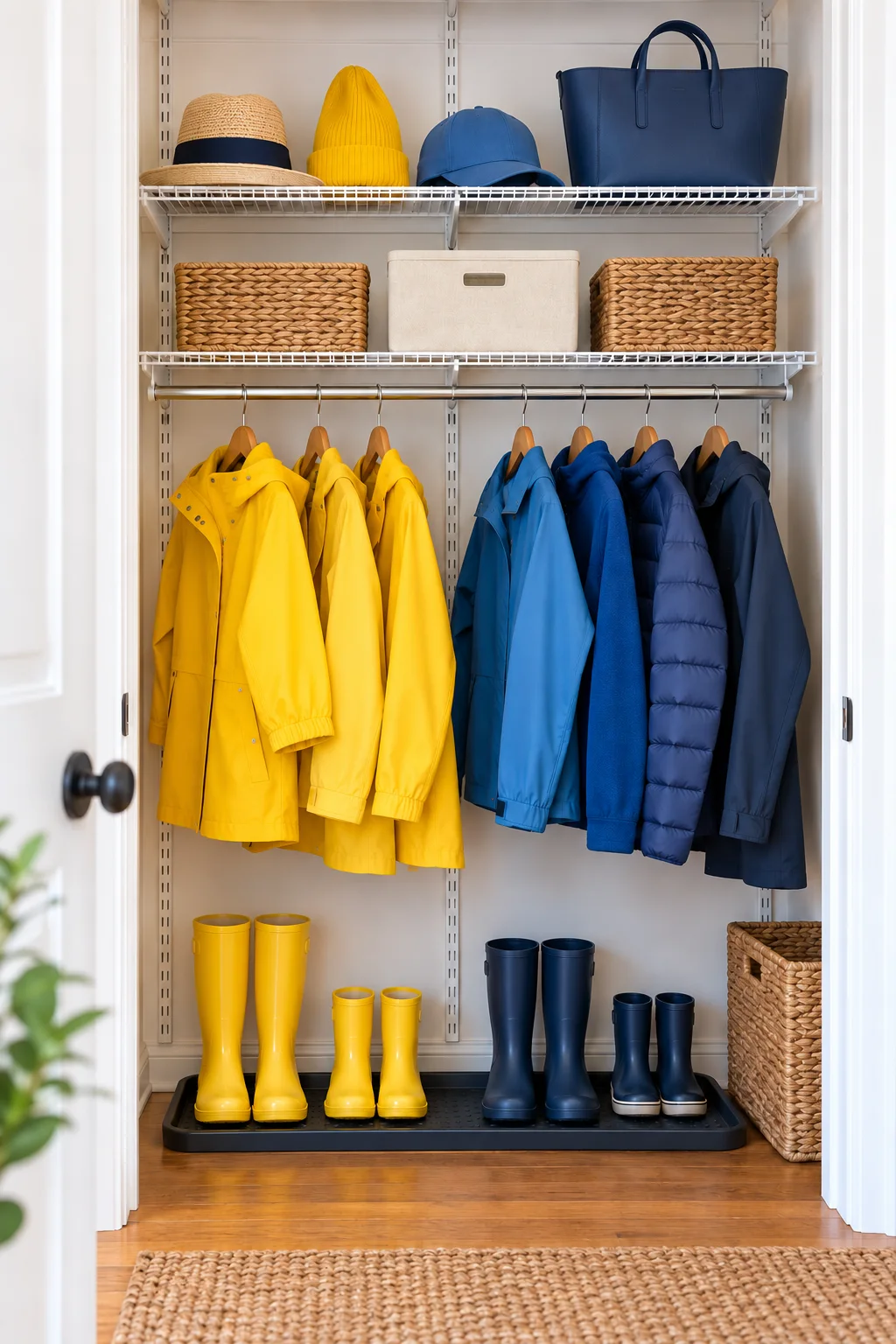
6. Use a lower rail only where short jackets allow it
A lower hanging level can work in the short-jacket section when it leaves both rows clear. Test the top garments and the lower garments together before committing. Keep long coats in their own bay, and make sure the lower row can be reached without bending through another layer of clothing.
The Simple Houseware Adjustable Closet Hanging Rod is one option for this arrangement. Check its drop, attachment, and load instructions, along with the capacity of the original rail and supports. Avoid loading it with heavy outerwear by default; choose contents the complete setup is designed to support. View on Amazon.
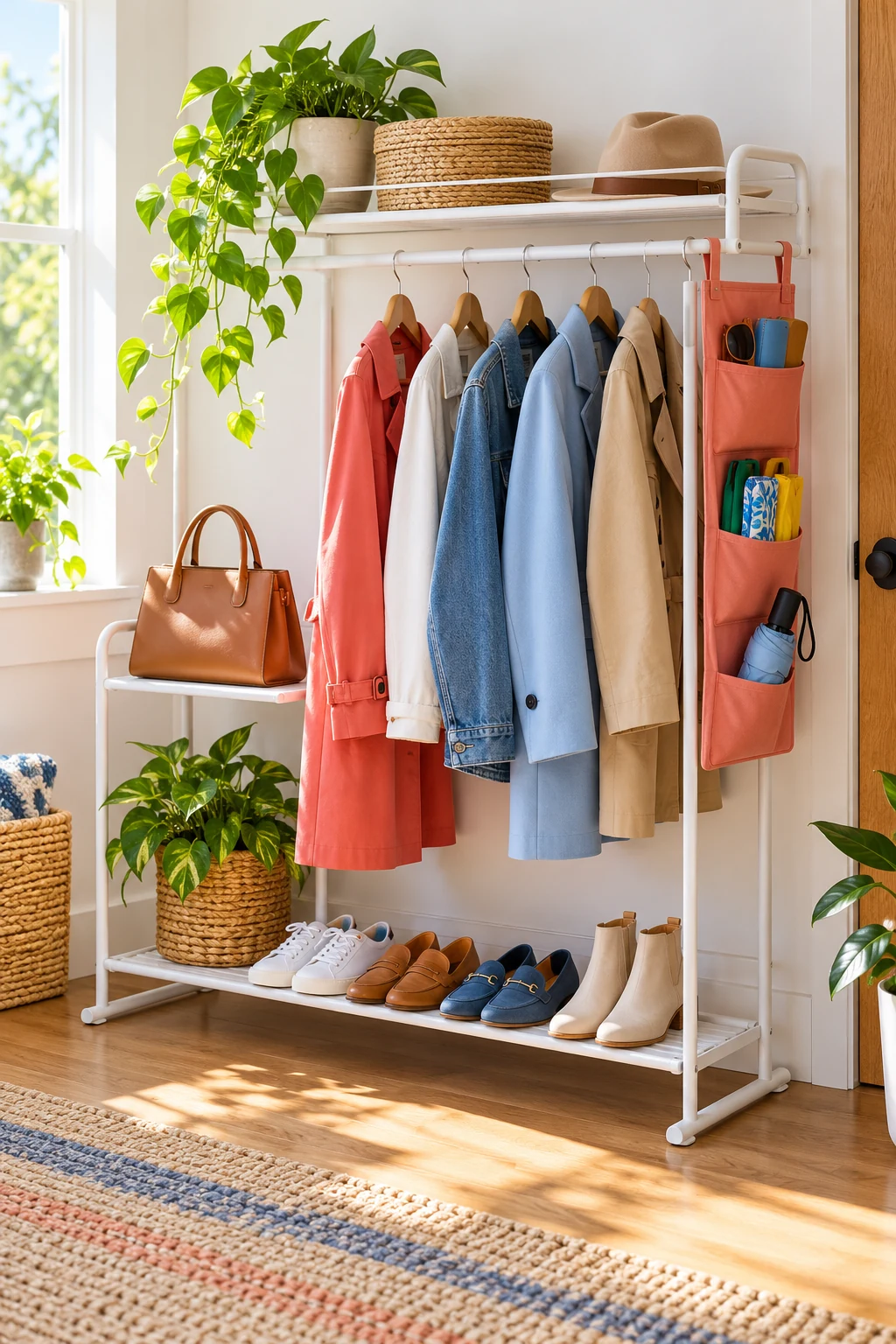
7. Add a small quick-return hook zone
If a light everyday jacket regularly ends up on a chair, one convenient hook may suit your routine better than a crowded rail. Position the hook where the garment hangs clear of the door, floor, and neighboring coats. Use it for a small active selection rather than multiple layers.
Match the hook, mounting method, and wall to the expected load, and follow the manufacturer’s instructions. A rental may require permission for holes or particular adhesives. Check care guidance for garments that should stay on supportive hangers, and keep heavy bags or coats off an unsuitable hook.
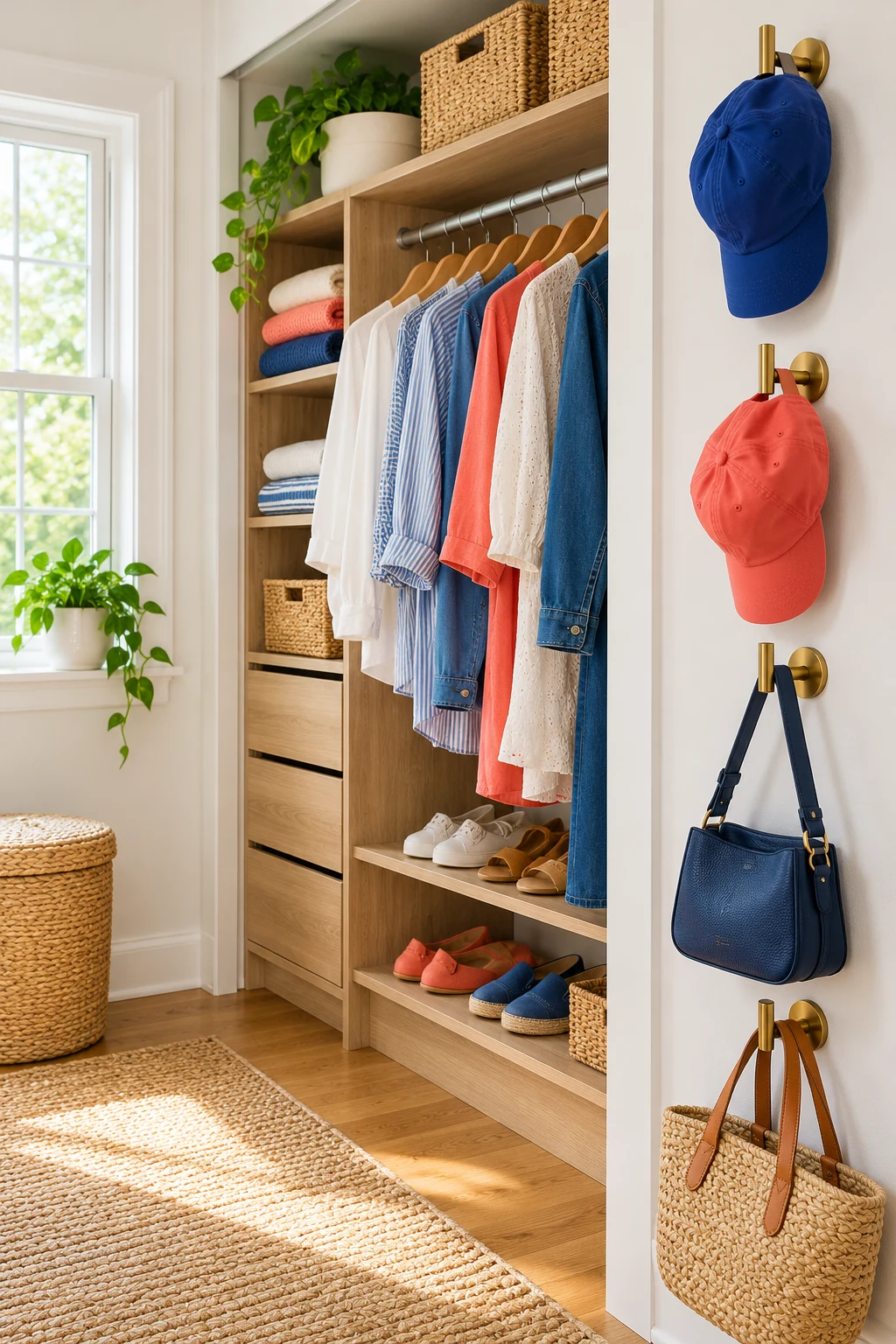
8. Reserve a little rail space for guests
Keep a few appropriate empty hangers together near the opening so a visitor’s coat has a clear home. The space does not have to be large; it just needs to be easy to identify when you open the door. Avoid filling that gap with bags between visits.
Before a gathering, move a few of your own occasional coats to their usual alternate storage rather than improvising a pile elsewhere. Check the rail’s capacity if several heavy coats will be added. A guest zone works best when it is part of the closet plan, not a last-minute squeeze.
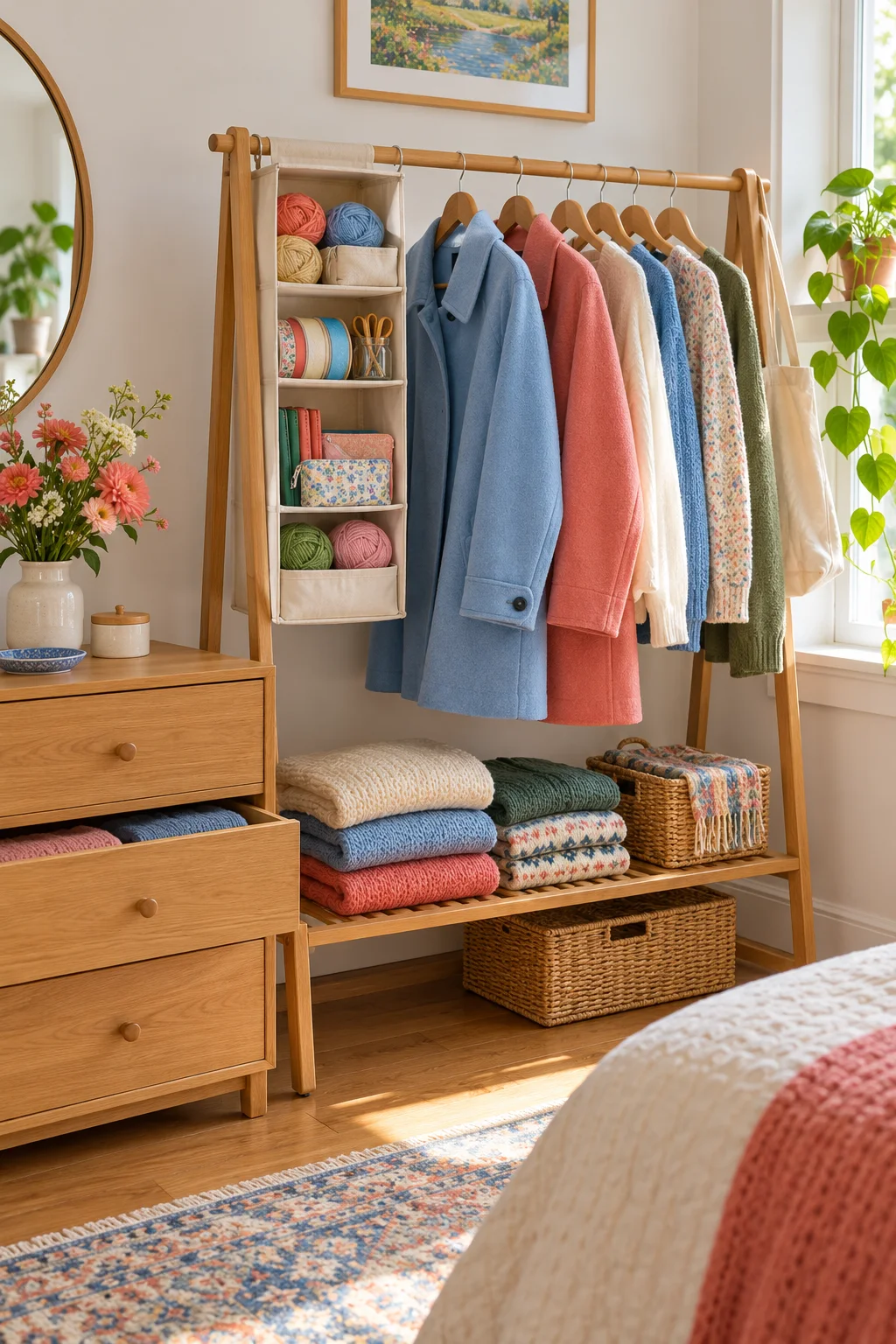
9. Give everyday shoes a low rack
Choose the shoes that belong at this entrance and line them up on a low rack. Keep pairs together and allow space above each level to lift them out. A small daily selection is easier to maintain here than the entire household’s footwear collection.
The Simple Houseware 3-Tier Metal Panel Shoe Rack provides a freestanding floor option. Check its current footprint against the closet opening and the hanging clothes above. Judge useful capacity by your actual shoes, and follow the assembly instructions rather than assuming every advertised pair count will suit bulky footwear. View on Amazon.
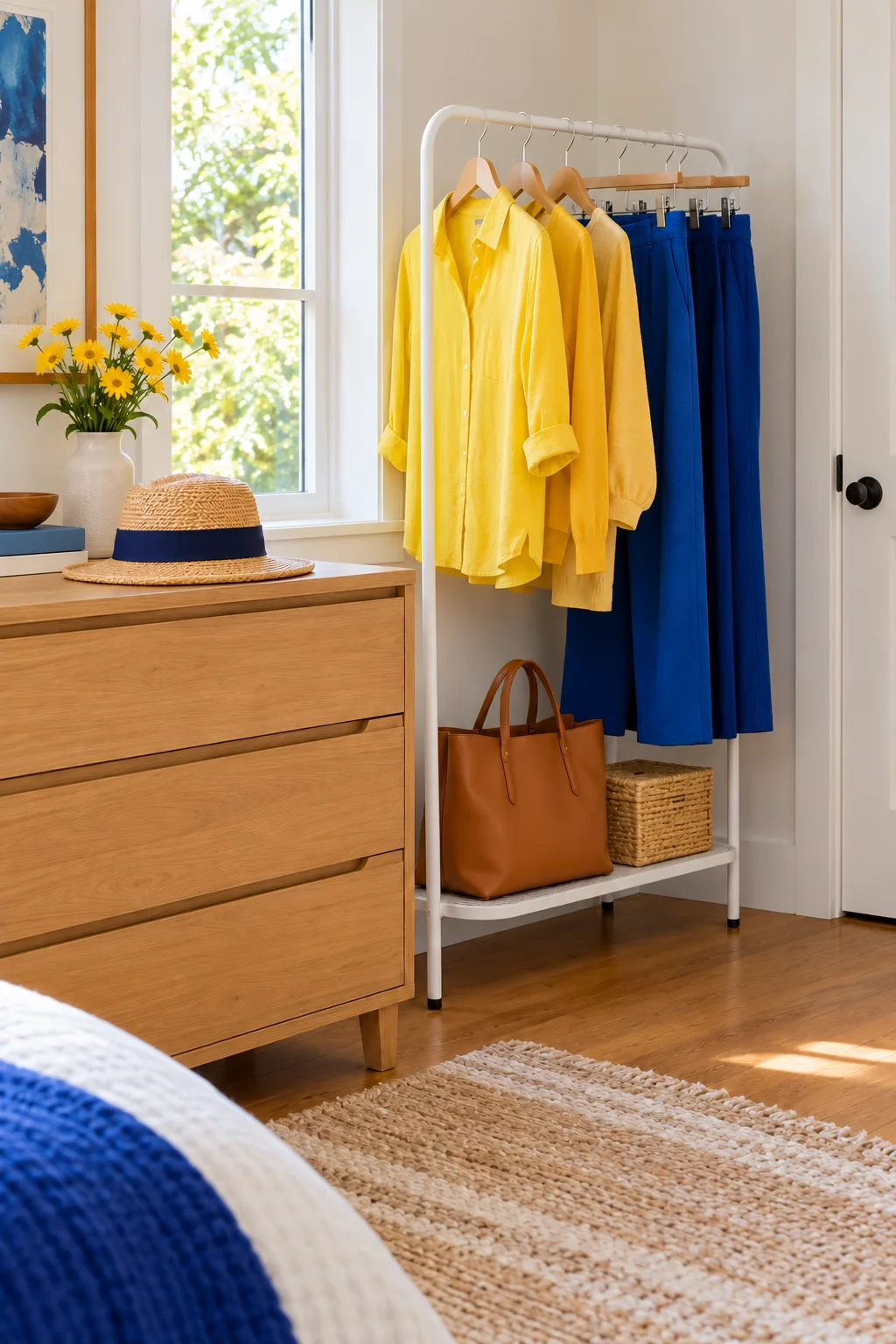
10. Leave a separate bay for taller boots
Stand tall boots in a clear area beside the low shoe rack when they need more vertical room. A suitable removable tray can define the footprint and make routine cleaning easier. Keep it flat, stable, and far enough inside that its edge does not become a trip point.
Allow space above the boots so coat hems stay clear. Follow the footwear maker’s directions for drying and support before returning pairs to storage. Avoid forcing tall shafts under a low shelf just because the empty footprint appears to fit; the full shape of the boots matters.
11. Keep a practical route for wet umbrellas
Choose a spot where an umbrella can dry according to its care instructions before it returns to the coat closet. A crowded closed cupboard is an awkward place to deal with dripping items. Keep the drying arrangement out of the walking path and away from surfaces that should not get wet.
Once dry, store the umbrella in a defined spot where its handle is easy to grasp. A stable suitable stand or a dedicated lower compartment may work, depending on the space. Do not lean umbrellas loosely against the door where they can fall forward as someone opens it.
12. Set aside one supported spot for the daily bag
A bag left on the closet floor can block shoes and collect items that belong elsewhere. Give the everyday tote or backpack an accessible shelf or open compartment where its base is supported. Measure the full bag, including handles and straps, before choosing the location.
Empty unnecessary weight when the bag comes home, and keep straps from hanging across the doorway. Follow the bag’s care instructions for storage. If you use a hook for a suitable light bag, check the bag, hook, mounting surface, and load together rather than relying on appearance alone.
13. Give each person a small accessories bin
Create an easy-to-recognize home for each person’s everyday cold-weather accessories. Place the bins on a shelf the users can comfortably reach, and size them around the actual hats and gloves that need to live there. The goal is a quick return, not a tightly fitted display.
The Simple Houseware six-bin fabric set can supply mixed sizes for a small household arrangement. Choose only the pieces that fit your shelf and contents. Add simple labels, keep the bins light enough to remove comfortably, and use a different storage format if bulky winter gear overflows. View on Amazon.
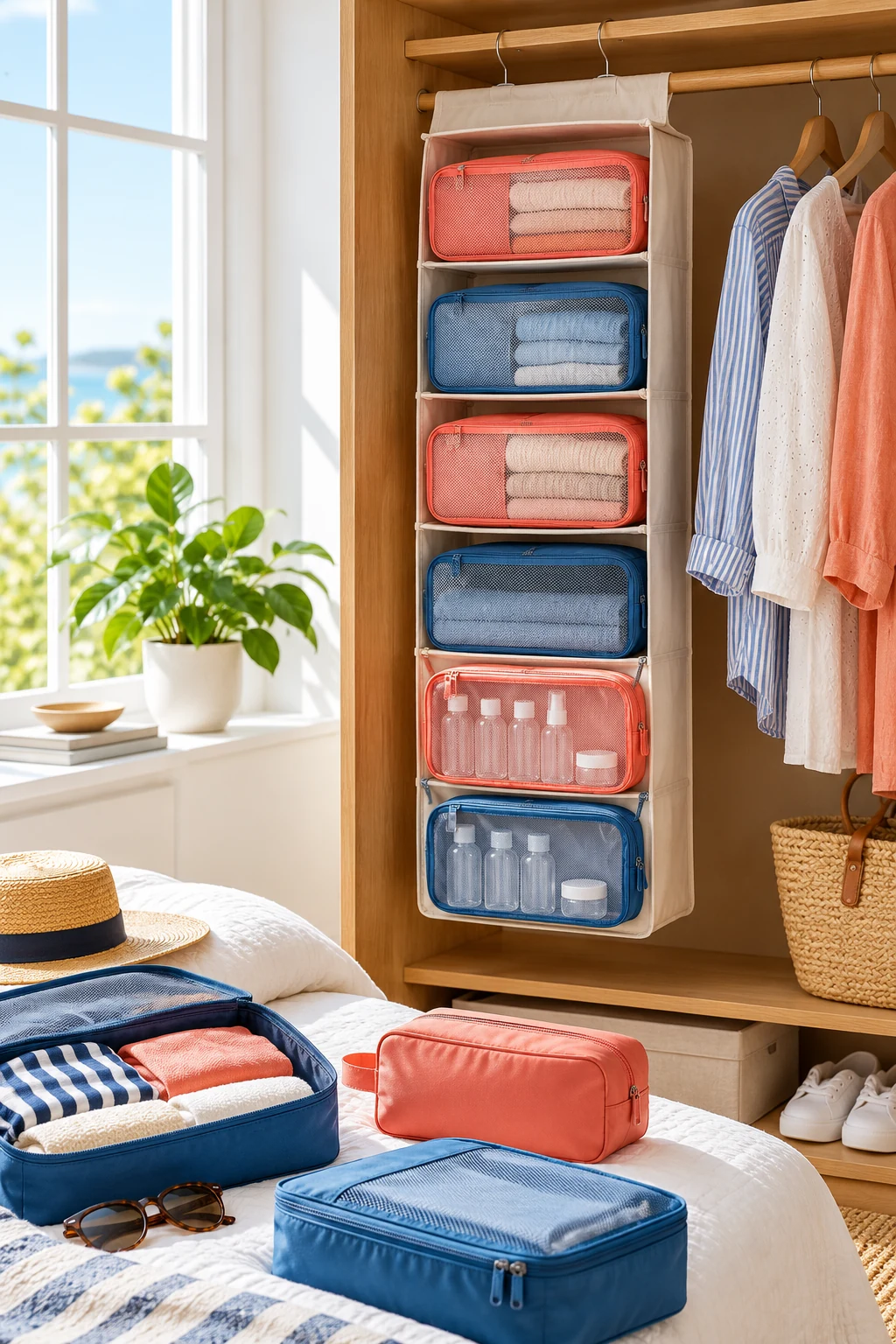
14. Keep glove pairs together before they reach the bin
Pair gloves as part of putting things away so the morning search happens only once. Place complete pairs side by side in a shallow section or small open container. Keep an unmatched glove in a clearly limited temporary spot while you look for its partner.
Avoid turning the whole bin into a long-term collection of singles. Check it during a seasonal change and decide what still belongs. Use a grouping method suited to the materials; there is no need to add tight clips, pins, or rubber bands that could mark or catch the fabric.
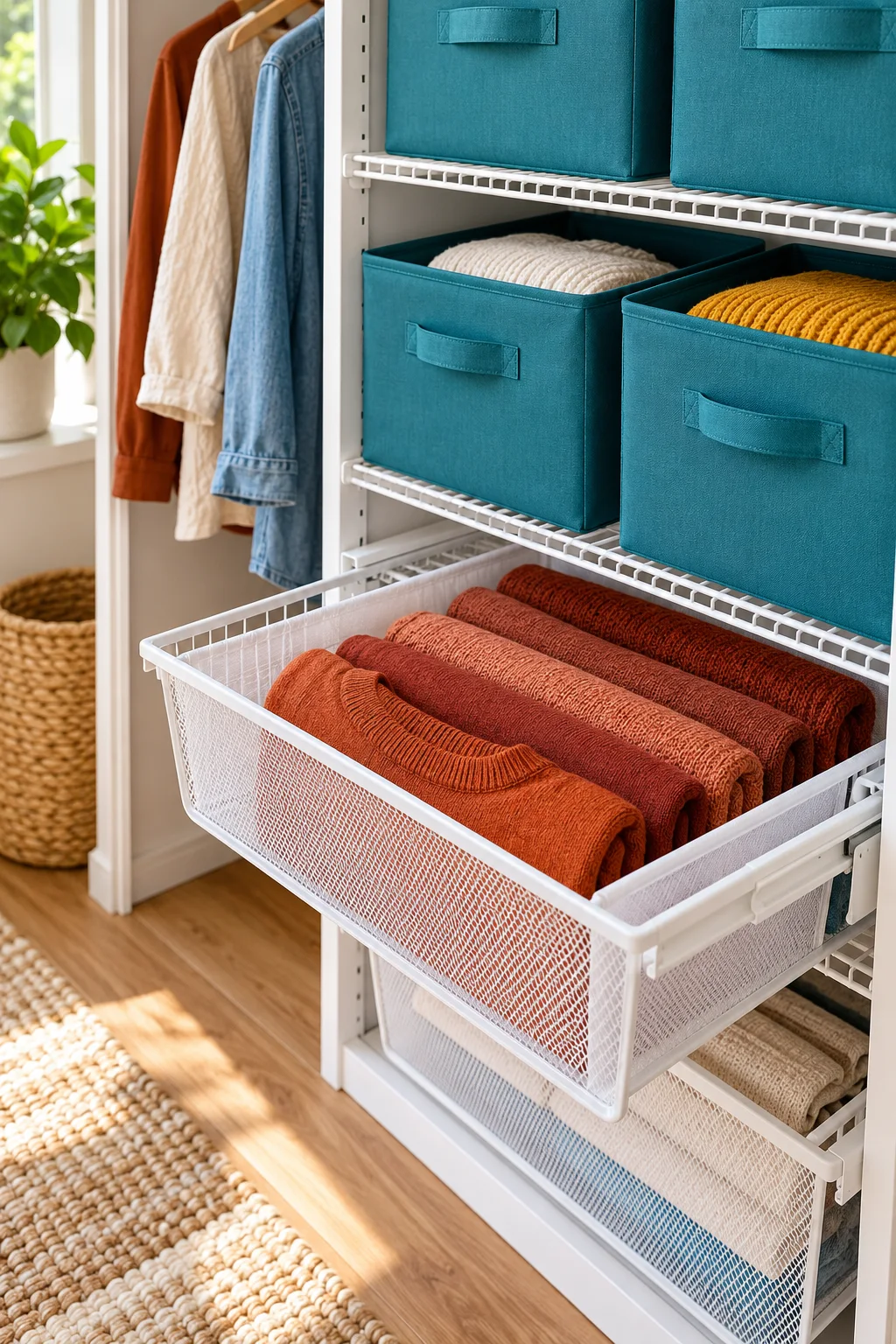
15. Use clear door pockets for small soft accessories
When the rail and shelf are full, a suitable hinged door can hold small dry accessories in visible pockets. Put the most-used items at a comfortable reach and leave enough room around each pocket opening to remove them. Keep sharp or overly bulky objects elsewhere.
The Simple Houseware 24-Pocket Over-the-Door Organizer is a clear-pocket option. Check door thickness, the top gap, and the space behind the closed door. Confirm that hooks and loaded pockets stay within the product’s guidance; a coat closet with bifold or sliding doors may need another solution. View on Amazon.
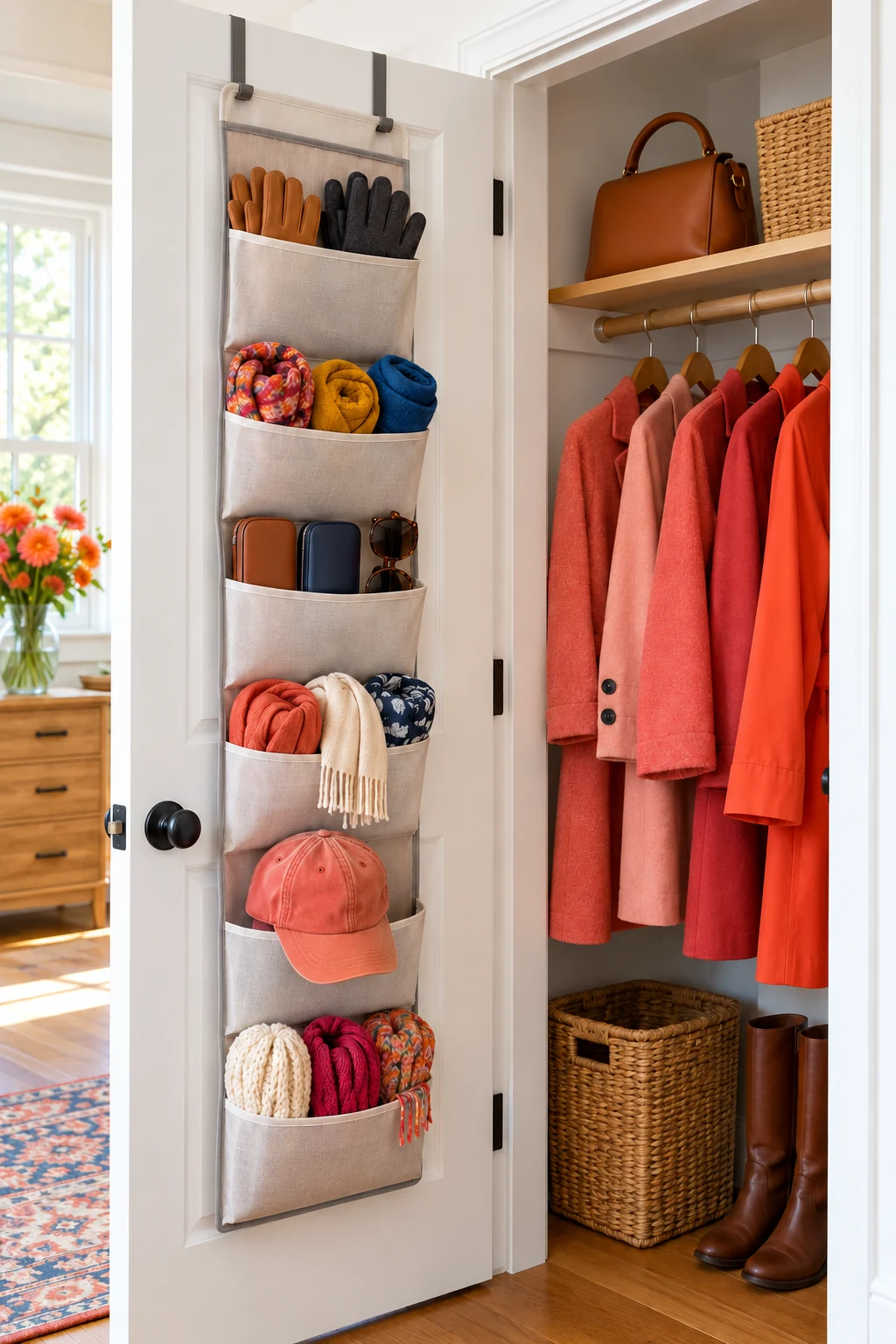
16. Use hanging cubbies for lightweight seasonal extras
If there is spare rod width but little shelf space, a hanging organizer can separate scarves, beanies, and other light dry accessories. Assign a category to each compartment so small things do not disappear under a larger coat. Keep heavier items in a more appropriate supported location.
The StorageWorks 6-Shelf Hanging Closet Organizer provides fabric compartments for this setup. Measure its full drop and the width it will remove from the rail. Follow attachment and load instructions, and check that the original coat rod can support the organizer and its contents along with the existing clothing. View on Amazon.
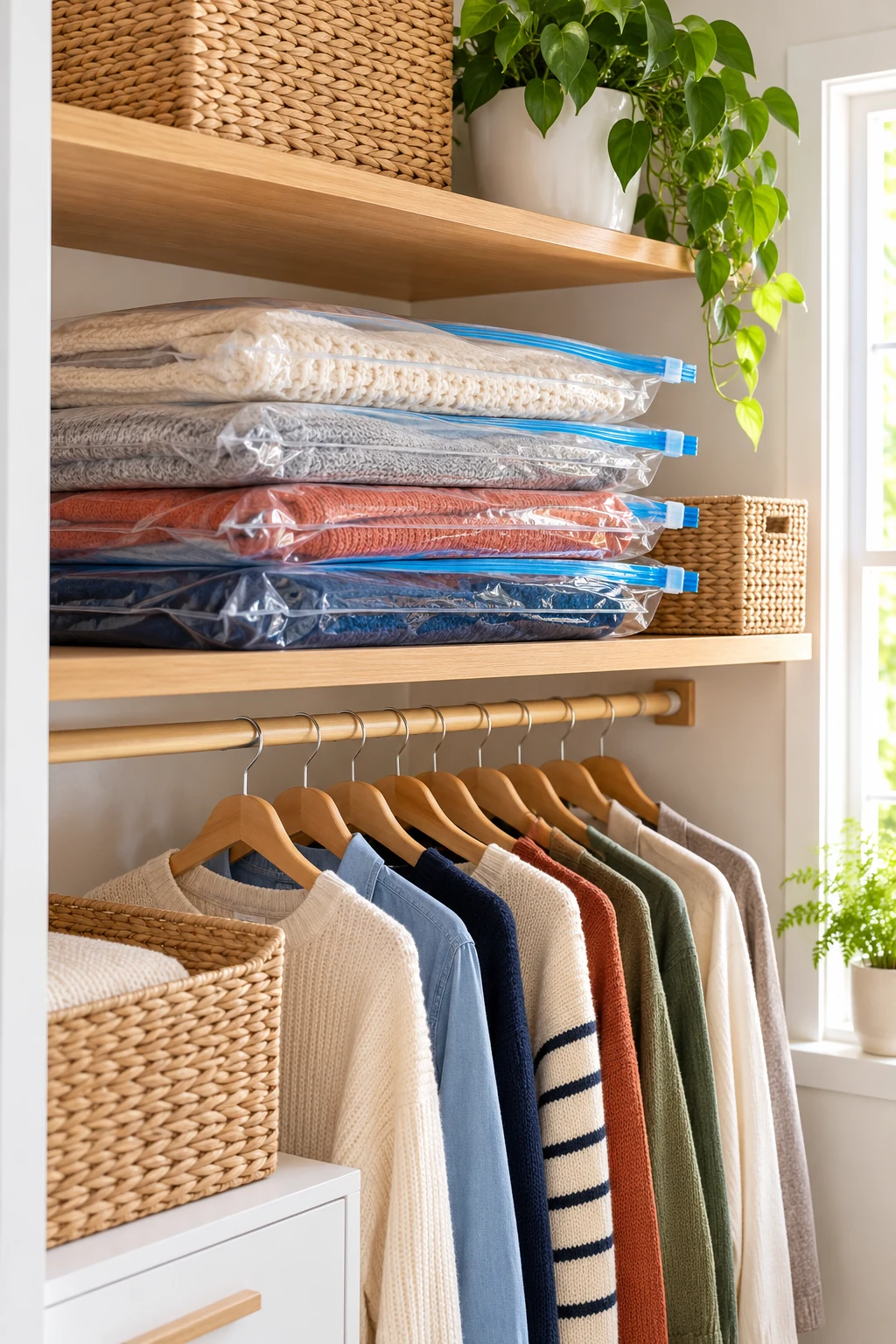
17. Keep scarves in a short visible folded row
Fold suitable scarves loosely into a short row on a shelf or inside a shallow bin. Arrange them so you can identify the edge of each one without lifting an entire stack. Follow individual care guidance for delicate fabric or pieces that need a different storage method.
Give very bulky scarves a separate space rather than packing them into small glove compartments. A short seasonal selection keeps the daily row manageable. If the shelf is deep, leave the rear area for a clearly labeled occasional-use category instead of pushing everyday scarves into a hidden second layer.
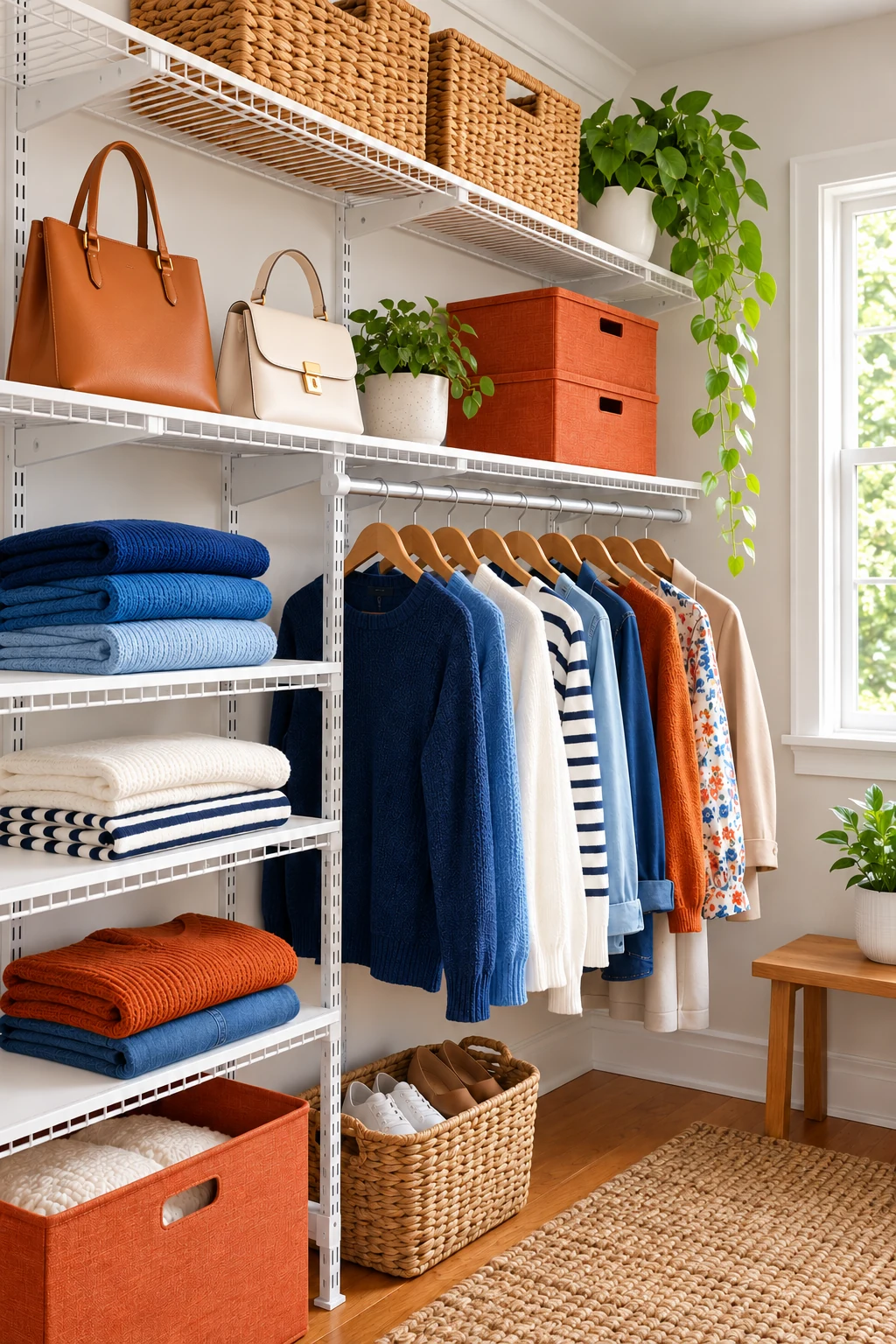
18. Give adjustable caps their own compatible rack
Baseball caps can become tangled with scarves when everything shares one hook. A cap-specific organizer can display a small collection vertically if its attachment method suits the caps you own. Test the layout with one cap before filling all the positions.
The Perfect Curve CapRack two-strap version is designed for adjustable caps and visors; the listing excludes fitted caps. Check the current door-fitting instructions, top and bottom gaps, and closure. Keep caps spaced comfortably rather than relying on the maximum advertised count, and use another format for shaped brimmed hats. View on Amazon.
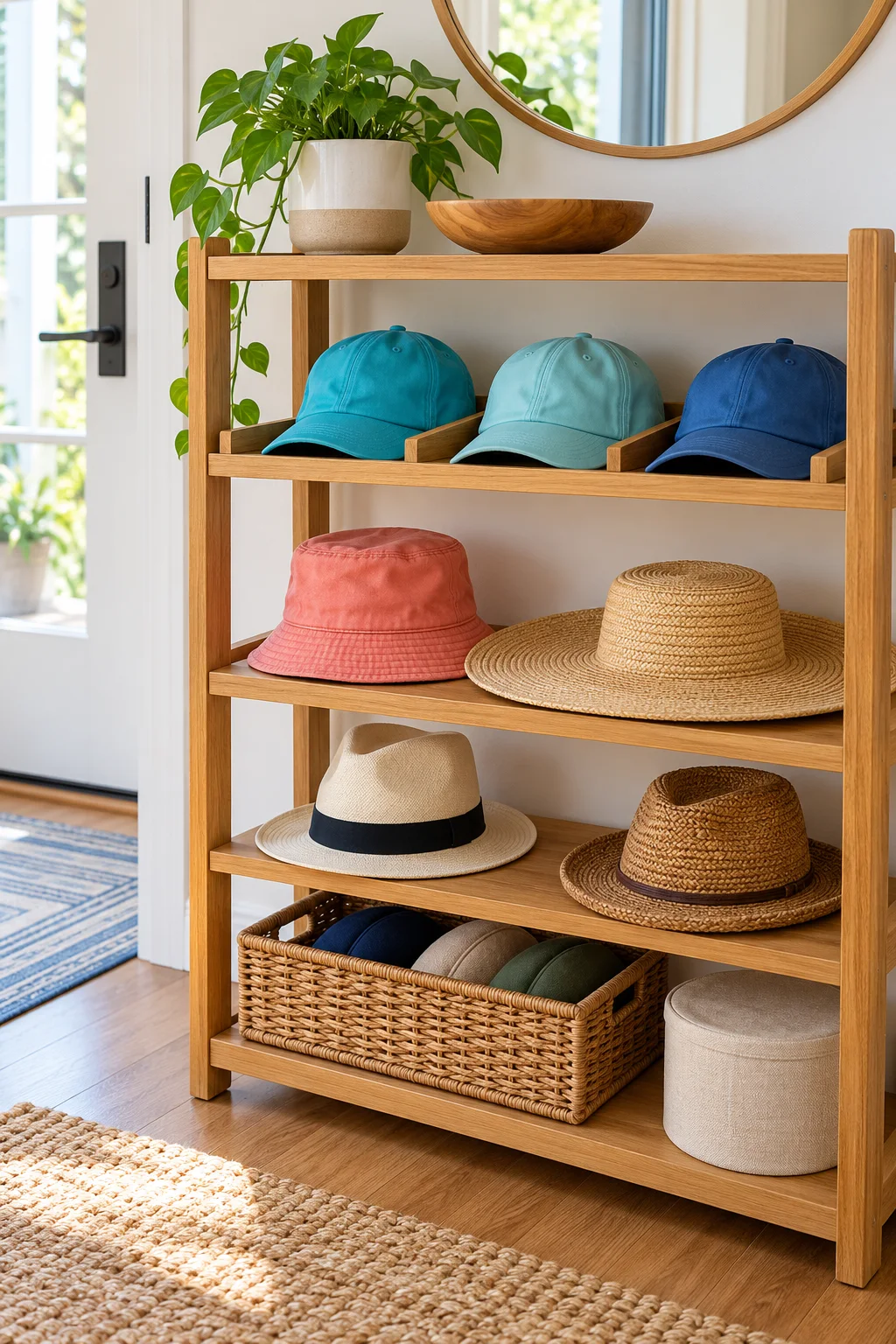
19. Leave a broad open space for a shaped summer hat
A wide-brim hat may need more horizontal space than a winter beanie bin can provide. Measure the full brim and crown, then choose a shelf or suitable box that supports the hat according to its maker’s directions. Keep other objects from pressing against the shape.
Do not assume hats can be nested, folded, or hung in the same way because they look similar. Store a frequently worn hat where it can be lifted out easily; move an occasional hat to a less active shelf if appropriate. The storage method should follow the specific hat’s care guidance.
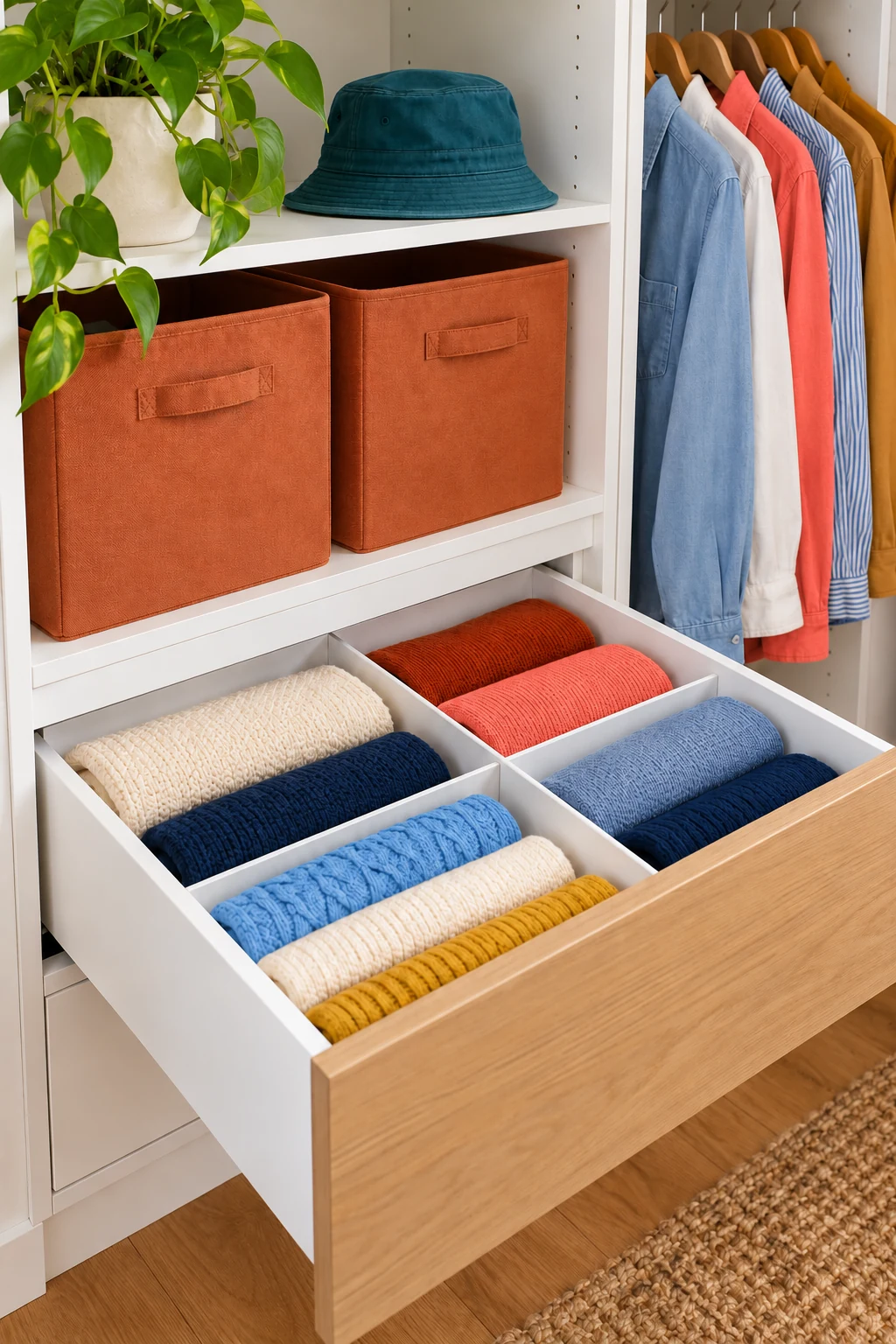
20. Use the top shelf for light off-season categories
Put light occasional accessories on the upper shelf in containers you can lower comfortably. Group by a useful category such as warm-weather accessories rather than mixing unrelated items into one oversized box. Heavy equipment and overfilled bags belong in a safer, lower location.
Check that each container clears the shelf above and the closet opening during removal. Keep the labels facing forward and avoid stacked boxes that require several steps to reach one category. Use a suitable stable step stool as directed when needed, and never climb the closet shelves.
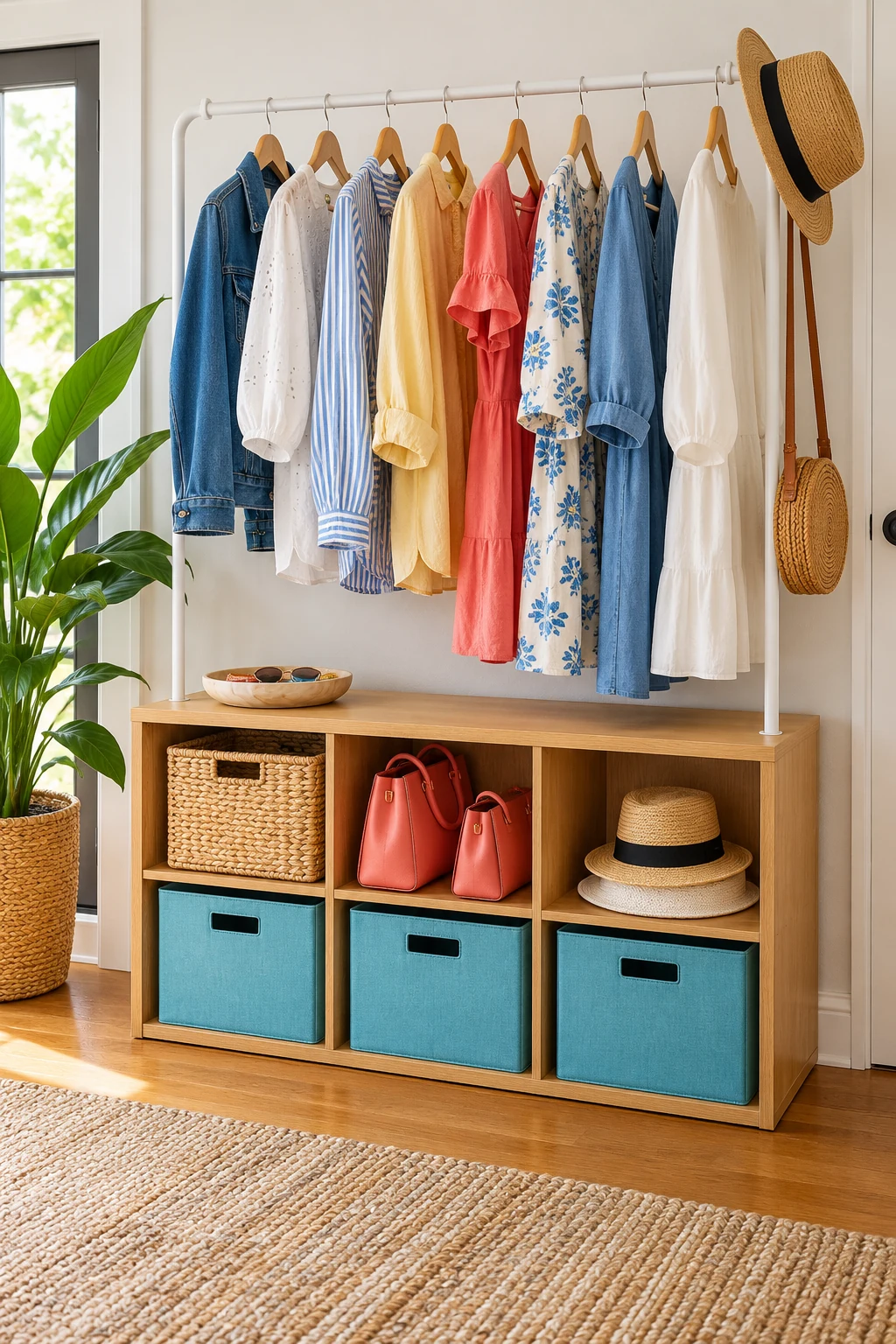
21. Move off-season soft accessories out of the entry
A small coat closet can work better when it holds only the current season’s soft accessories. Move appropriate clean, dry off-season scarves or knit hats to a separate storage location, following their care instructions. Keep one small transitional group handy if the weather changes quickly.
Amazon Basics Under Bed Storage Bags offer a shallow zippered fabric format for suitable soft goods. Measure the opening and the full pull-out route before choosing them. Avoid overfilling, and do not use this format for a shaped hat or describe it as airtight, pest-proof, or a substitute for proper care. View on Amazon.
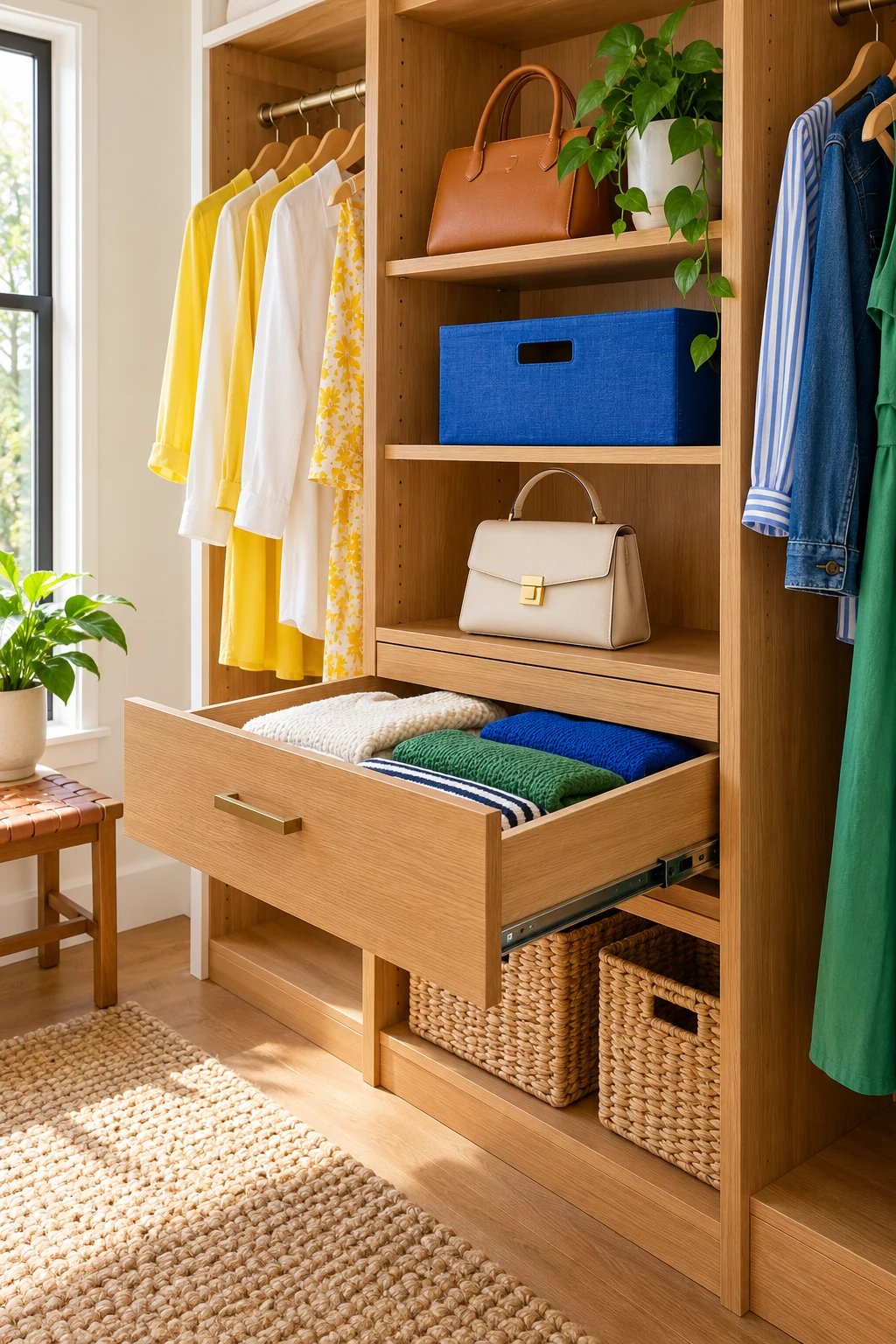
22. Make a small grab-and-go weather kit
Group the ordinary accessories you often need together, such as a compact dry umbrella, a light scarf, and a reusable shopping bag. Keep the kit near the doorway in an open basket or pouch that is easy to remove. Choose contents based on your actual trips out.
Keep this kit small so it does not become a second general accessories bin. Return each item after use and let anything damp dry appropriately before it goes back. If one item is used much more often than the rest, give it an easier individual spot rather than burying it inside the kit.
23. Use labels that can change with the season
Label baskets by their current job, and make the labels easy to swap when the season changes. A simple card in a holder works well for a bin that holds gloves in winter and light accessories in summer. Keep the wording short enough to read at the doorway.
Change the label when you change the contents rather than relying on memory. If a label needs a long list, split the category or simplify what lives there. Consistent labels make shared storage easier to use even when the containers themselves are a mix of different styles.
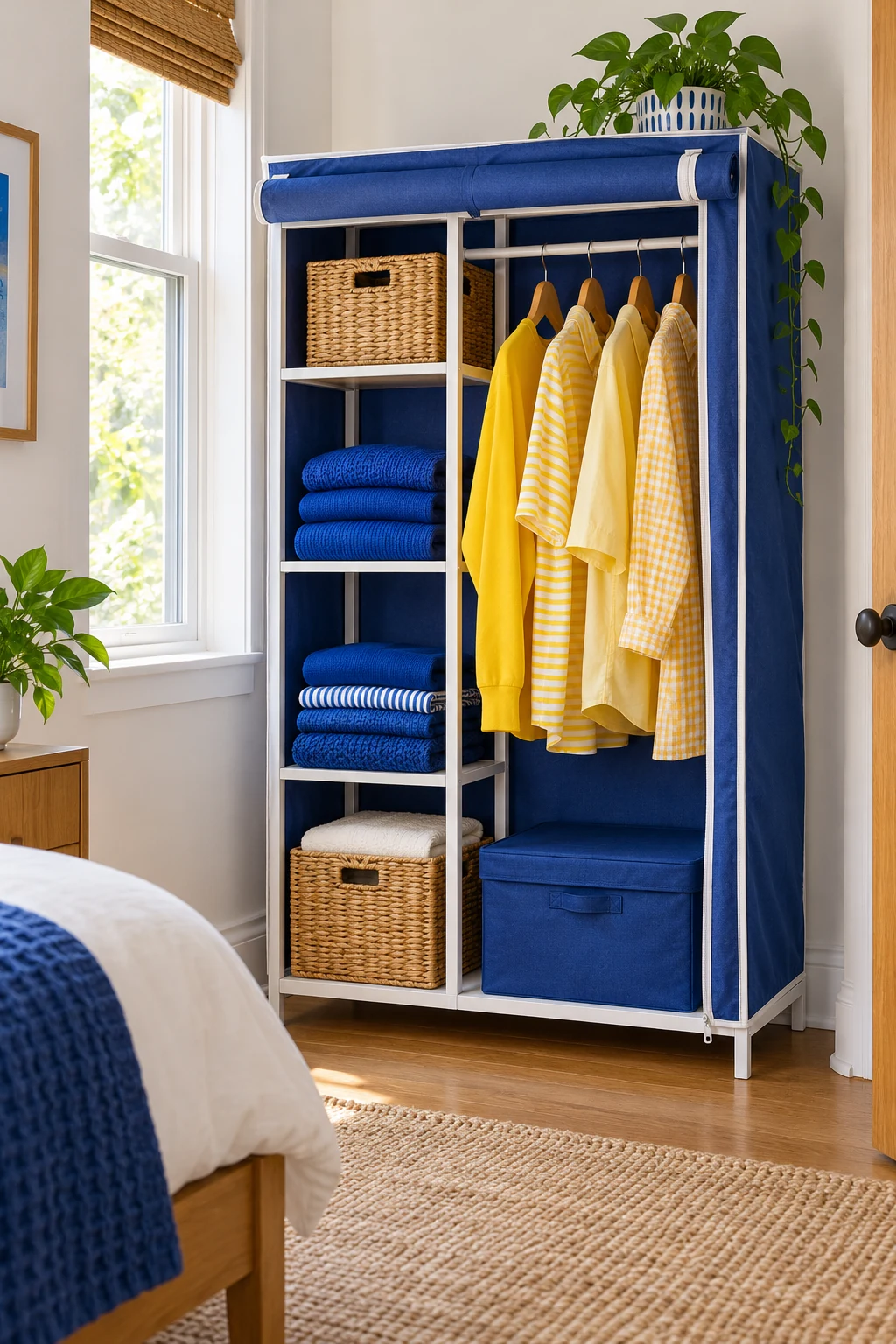
24. Add a small landing tray outside the hanging zone
A tray near the closet can give keys and other everyday pocket items a clear home without sending them into coat pockets. Put it on a stable reachable surface where opening the door will not knock it. Keep only the items you actually collect before leaving.
Vtopmart’s clear drawer-organizer set offers small separate trays if the landing area is inside a drawer. Measure the individual trays and loaded clearance, and use only the pieces needed. Keep private papers, spare batteries, and sharp tools in more appropriate storage rather than letting the tray become a catchall. View on Amazon.
25. Do a short reset when the weather changes
At a seasonal shift, take out the active accessories, check what still fits your routine, and return only what you expect to use. Follow each item’s cleaning and storage directions before putting it away for longer. Check for repairs and give those pieces a separate next step.
Then test the closet as if you are leaving the house: take a coat, shoes, bag, and weather accessory, and put them all back. Adjust any spot that makes you move another item first. A short practical reset keeps the system useful as the weather and household needs change.
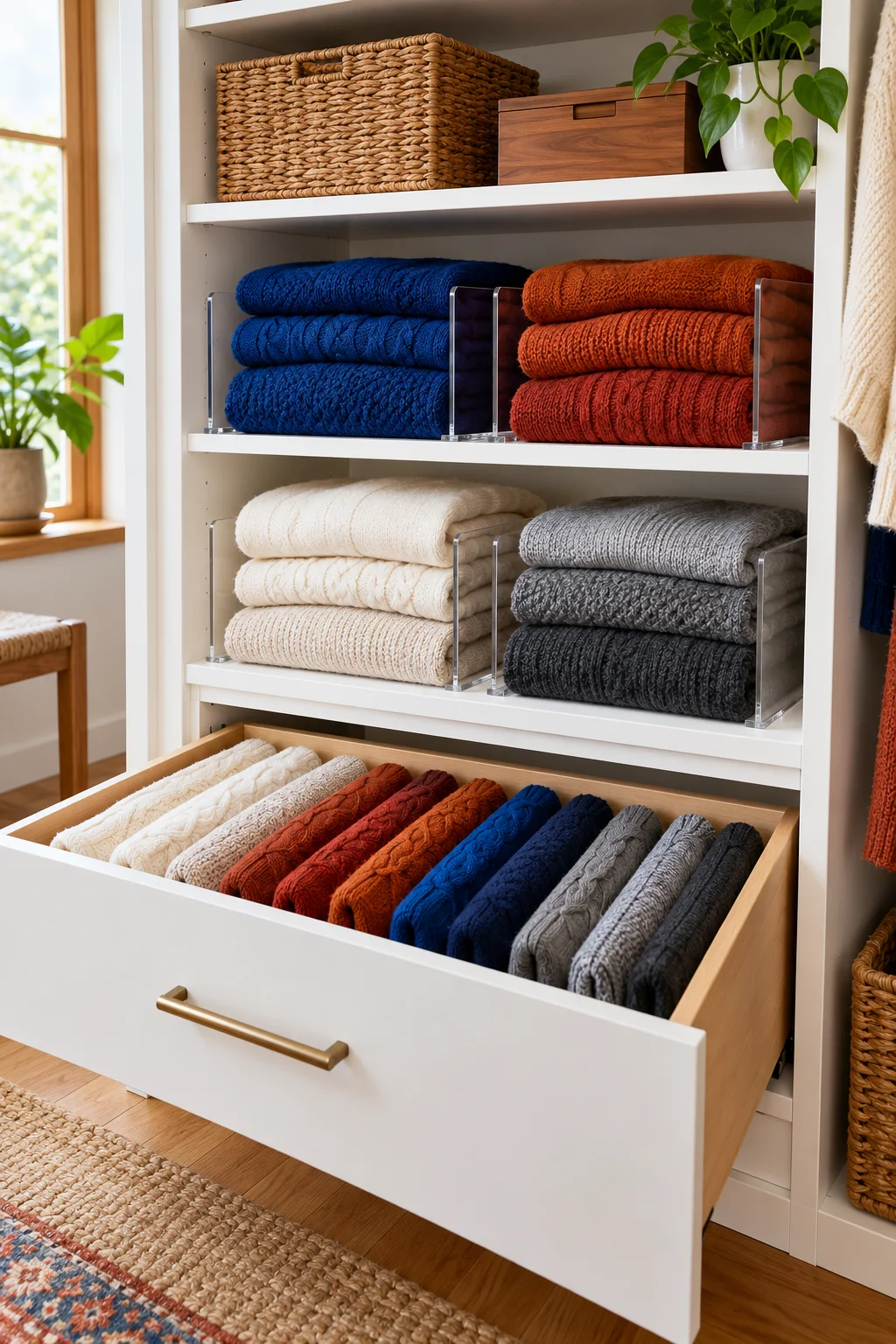
Start with the part of the closet that slows down your next trip out. A clear daily coat row and one easy accessories spot can make the whole entry feel more manageable. Subscribe to the Havelyo email list for more practical organization and small-space decorating ideas.