
Kitchen Organization
25 Pots and Pans Storage Ideas for Cabinets, Drawers, and Walls
A cookware cabinet can become awkward even when the collection is fairly small. Handles interlock, lids slide behind pots, and the pan you use most ends up beneath three others. The right storage gives each shape enough support and a clear way out.
These 25 pots and pans storage ideas cover cabinets, deep drawers, walls, and a little overflow space. Start by measuring your widest pan with its handle and separating everyday pieces from occasional cookware. Check load limits, use mounting designed for the weight, and follow the cookware maker’s care and nesting instructions. Choose a layout that makes returning a clean pan as easy as taking it out.
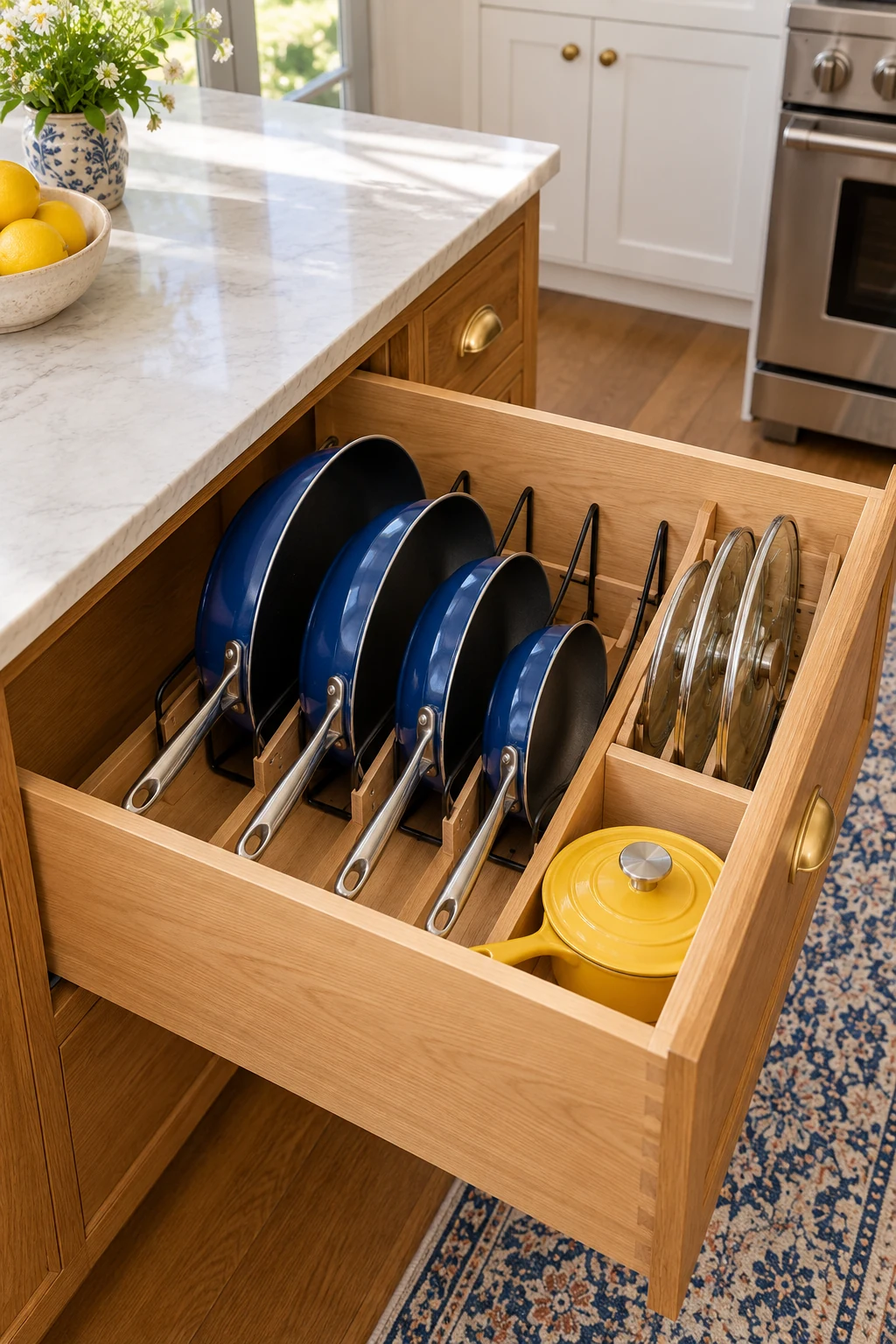
This article contains affiliate links. If you buy through them, Havelyo may earn a commission. As an Amazon Associate I earn from qualifying purchases.
1. Choose the cookware you actually reach for
Pull out one cookware category at a time and identify the pieces you use most. Separate everyday frying pans and saucepans from occasional roasters or specialty equipment. Match the lids before deciding how much storage you need.
Set aside damaged or unwanted items for an appropriate next step. You do not need to reduce the collection to an arbitrary number, but duplicates should have a reason to stay. A rack cannot make an unused collection easier to justify or maintain.
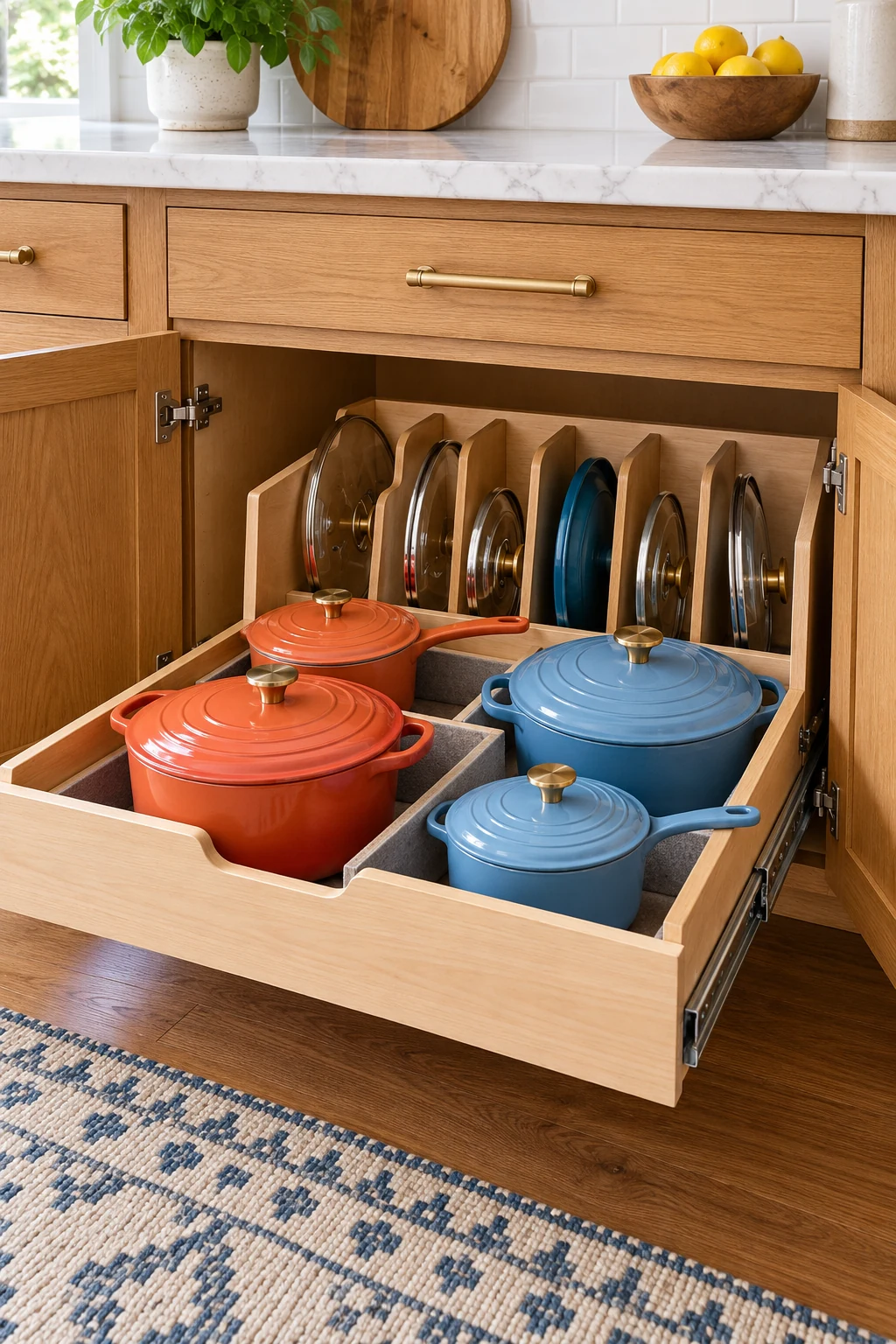
2. Measure the largest pan with its handle
Measure each awkward piece at its widest point, including handles, spouts, and knobs. Compare those dimensions with the cabinet opening, not only the space behind the door. A pan may fit flat but fail to pass upright through the opening.
Test the removal path with the actual pan before buying an organizer. Allow room for your hand and for neighboring cookware to remain in place. This is especially important in cabinets with center stiles or drawers that do not extend fully.
3. Reserve the front of a lower cabinet for daily cooking
Keep frequently used pans near the opening of a supportive lower cabinet close to the cooking area. You should be able to remove one without lifting a pile of other cookware or reaching over an active burner.
Choose the shelf height around comfortable handling and check its load rating. Store the heaviest pieces where you can control the lift. A lower location helps only if it does not require awkward twisting or reaching far behind other items.
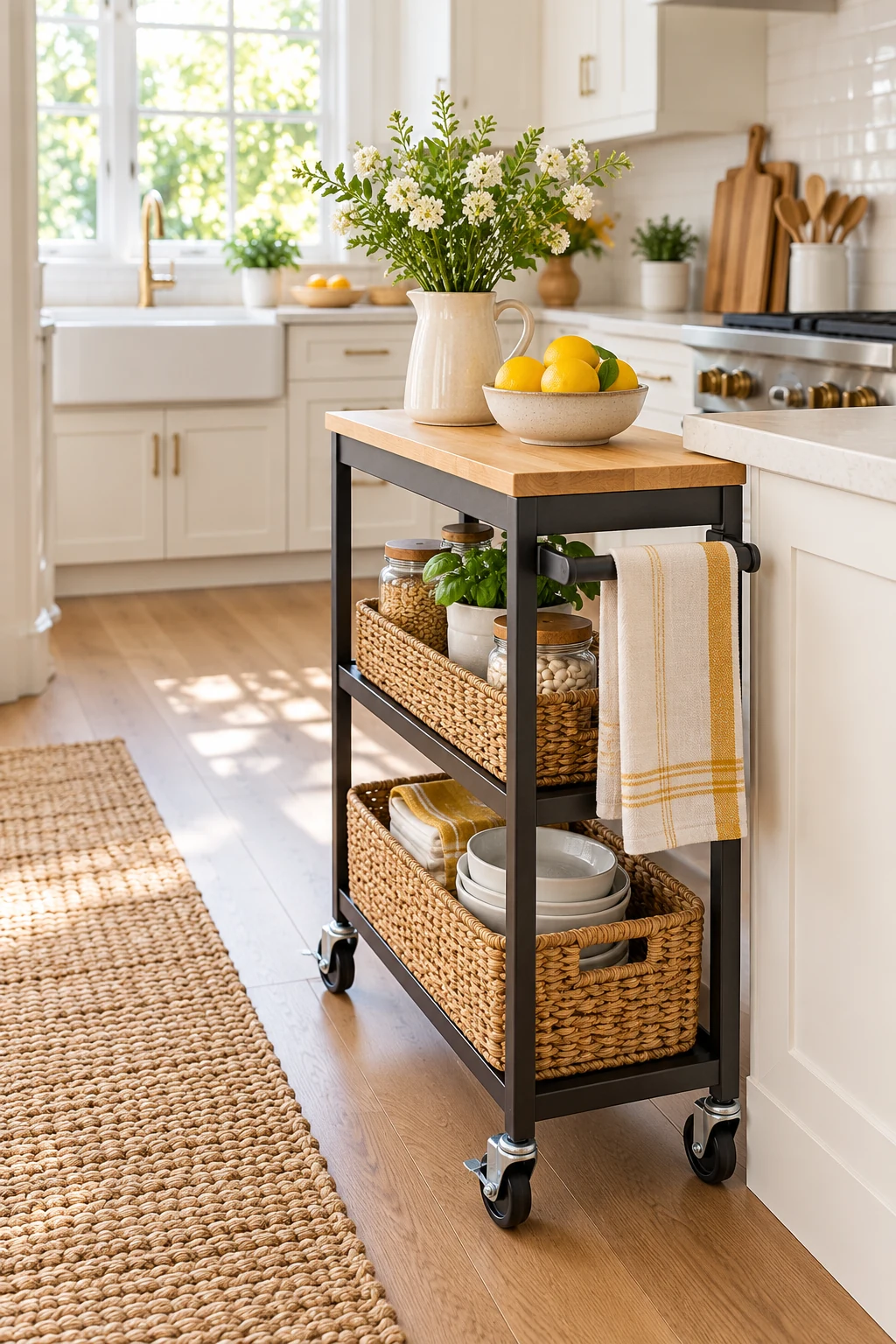
4. Store a mixed pan collection in adjustable upright lanes
An adjustable rack lets pans stand individually so their rims and handles remain visible. Set the lanes close enough to support each piece but wide enough to remove it without scraping a neighboring pan.
YouCopia StoreMore Expandable Cookware Rack, Premium Edition, has a listed 12.5-to-21.5-inch expansion range and ten adjustable dividers. Its footprint grows with the collection. Check loaded height, handle clearance, and support requirements before filling it; rack capacity depends on the actual cookware. View on Amazon.
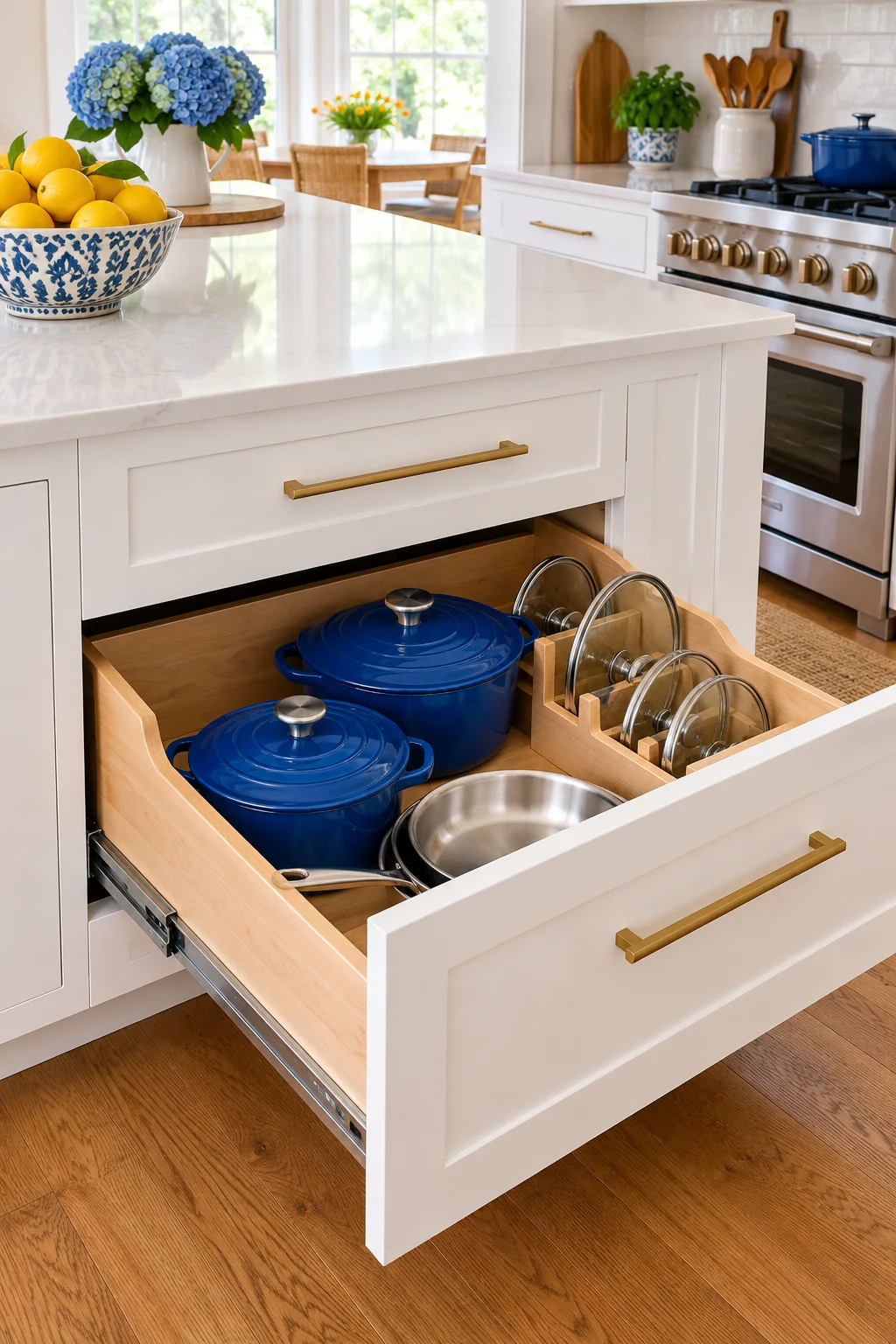
5. Use a small fixed rack for a few shallow pans
A compact fixed-slot rack can be enough when you own only a few shallow pans. It provides separate positions without dedicating a whole cabinet to an expandable system. Measure the depth of each pan, including its rim.
Simple Houseware’s Silver Cabinet Bakeware Organizer comes as two three-compartment racks. The listed slots are 2.56 inches wide, so bulky pans will not fit every position. Use the racks separately if that suits your cabinets, and check stability with the cookware loaded. View on Amazon.
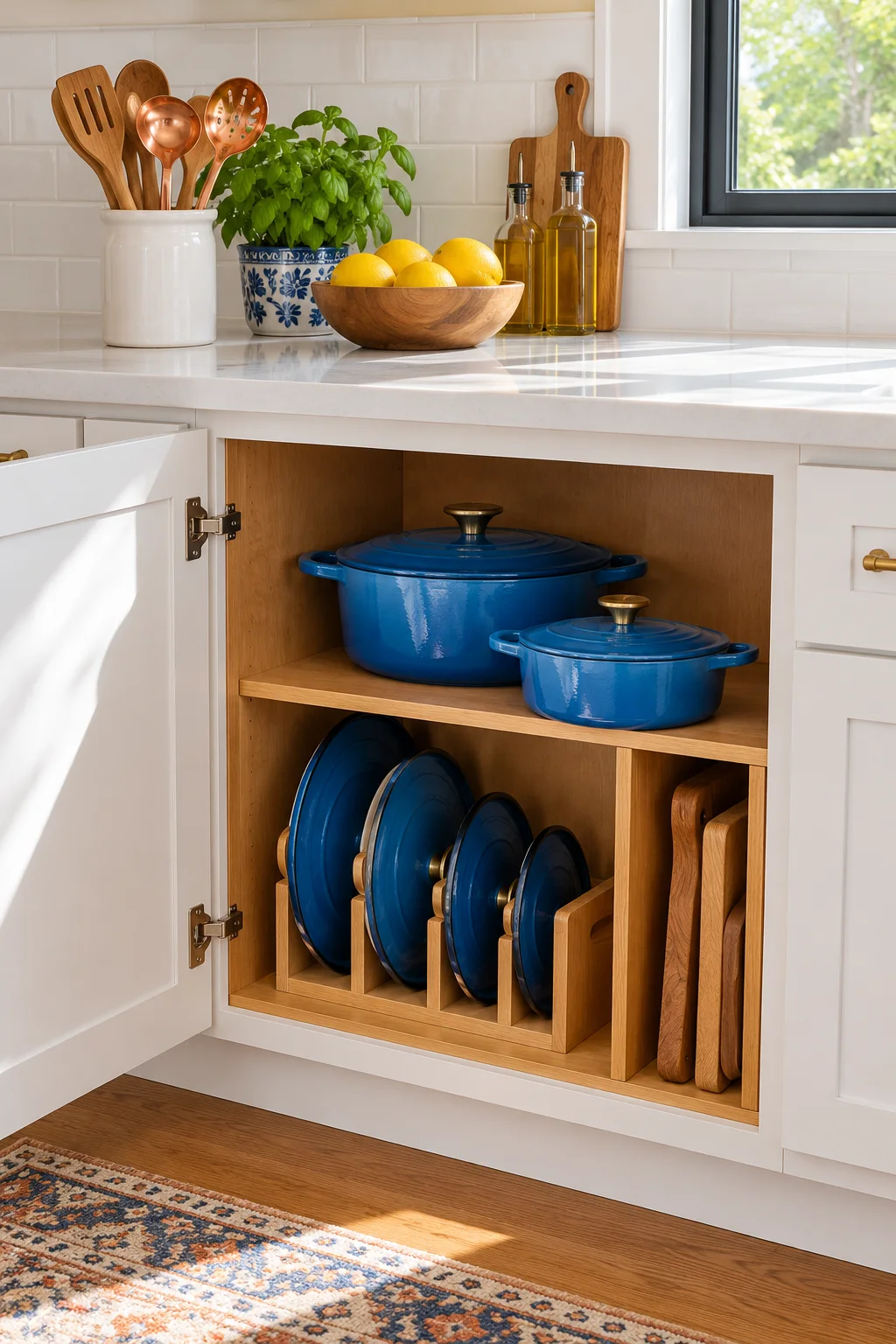
6. Give deep pots a flat supportive base
Deep stockpots and tall saucepans often work best sitting normally on a stable shelf. Group similar heights together so the shelf above can be positioned efficiently. Keep handles accessible without projecting into the door opening.
Avoid forcing deep cookware into a rack designed for thin bakeware. Check the shelf’s load capacity with all the stored pots included. A small amount of empty space around a heavy pot can make it much easier to lift safely.
7. Protect compatible nested pans
Nesting can save room when the cookware maker allows it and the pieces fit without force. Keep the stack short, place appropriate separators between contact surfaces, and avoid setting rough pan bottoms directly against vulnerable finishes.
All-Clad Premium Cookware Protectors are soft separators intended for storage between compatible cookware. Check coverage and care instructions for your pans. Use them only with clean, dry, fully cooled cookware; they are not a substitute for a potholder or an approved hot-pan surface. View on Amazon.
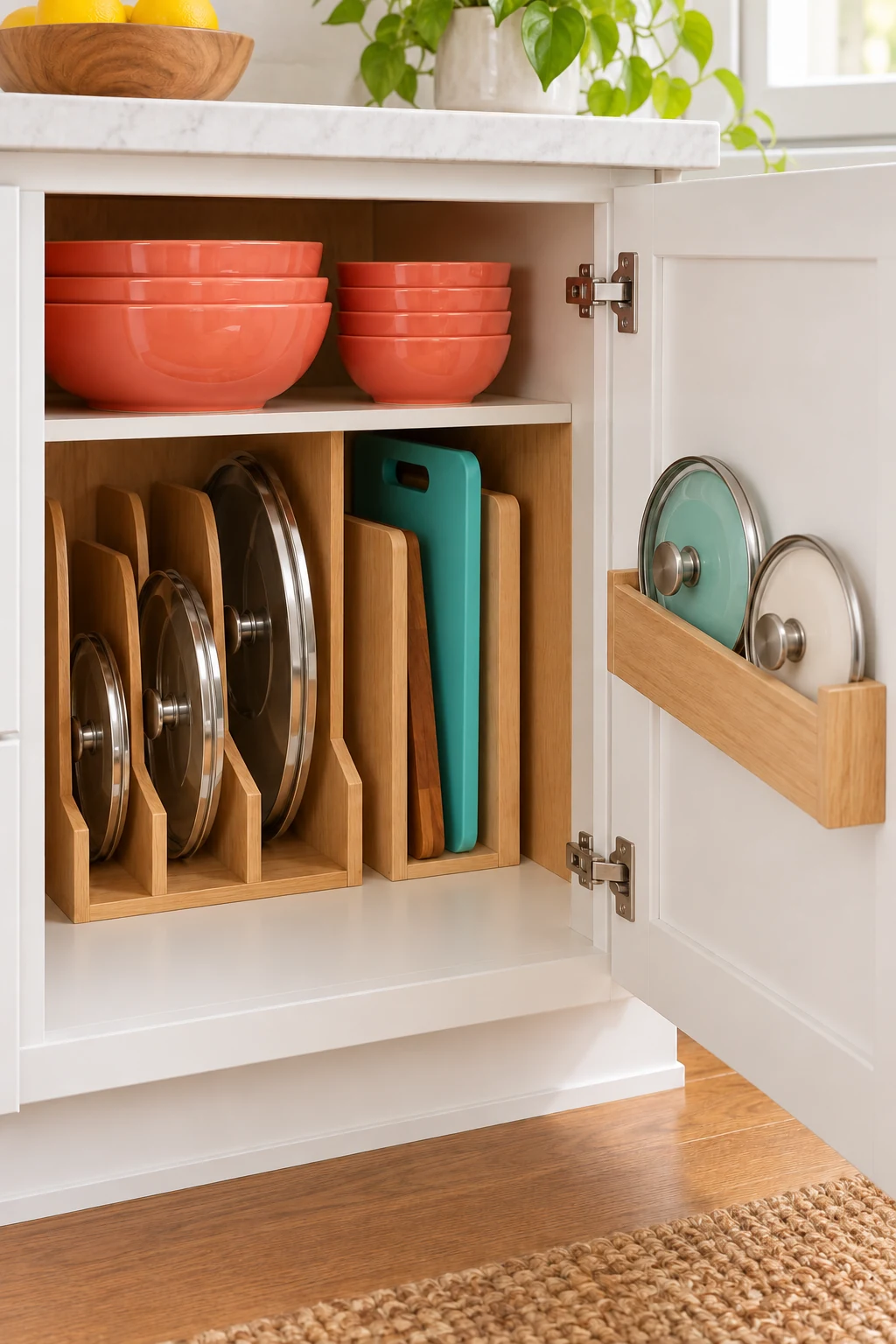
8. Put suitable small lids on the cabinet door
Separate lid storage can make a shelf of pots less awkward. A few small lids may fit behind the door if their handles clear the shelf fronts. Test the door slowly before committing to the positions.
Joseph Joseph CupboardStore Gray Pan Lid Holders use adhesive mounting. Choose compatible flat lids, conservatively about 6.3 to 9 inches across, within the listed 1.1-pound limit per holder. Follow the surface restrictions and 24-hour wait, and do not treat adhesive removal as automatically finish-safe. View on Amazon.
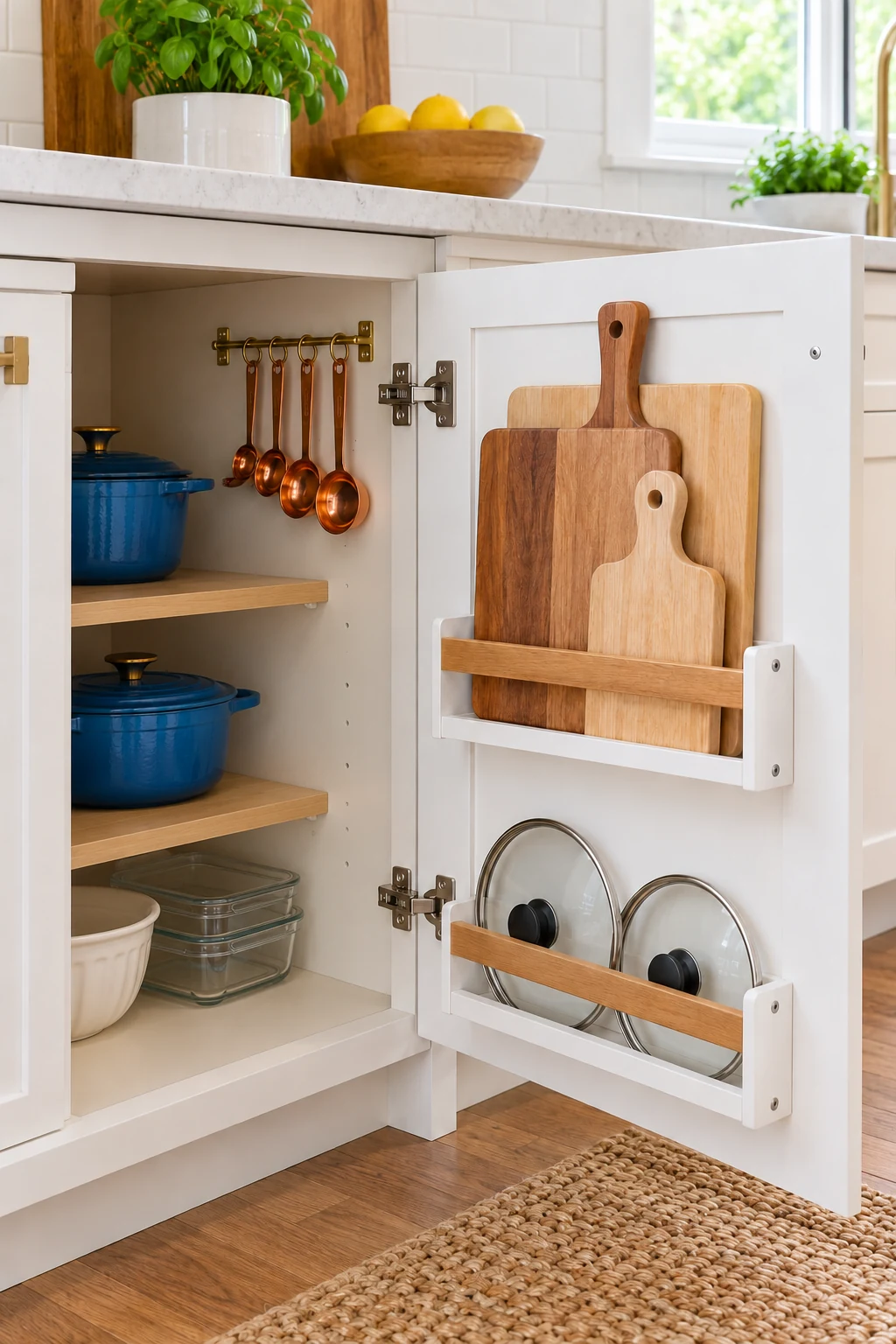
9. Mount a lid rack on an appropriate solid surface
A fixed lid rack can use an accessible wall or suitable cabinet door. Hold the loaded-lid outlines in place first to check handle projection and nearby obstructions. Avoid a location where people brush against the lids while passing.
The Simple Houseware Chrome Wall/Door Mounted Pot Lid Rack has five listed positions and screw mounting. Verify your lid shapes, exact current dimensions, and support requirements. Use fasteners appropriate to the surface; included anchors are not universal, and cabinet-door screws must not penetrate the front. View on Amazon.
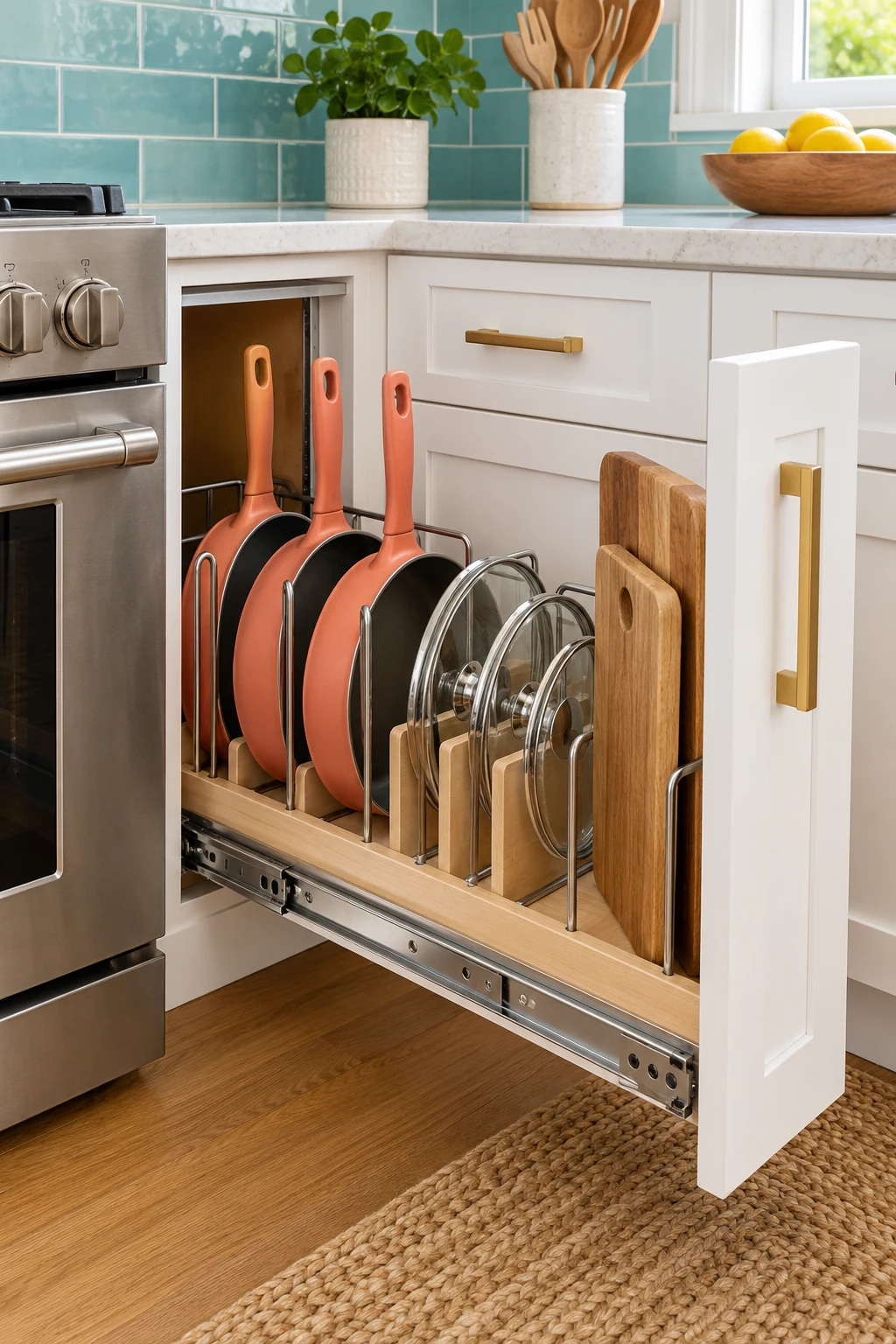
10. Use a deep drawer to see the whole collection
A sufficiently strong deep drawer can reveal pots and pans from above instead of hiding them behind a door. Arrange the everyday pieces so each has a clear lifting route. Leave taller pots enough overhead room when the drawer closes.
Check the drawer and slide load rating before adding a heavy collection. Open the drawer smoothly and keep the load balanced. A deep drawer is convenient storage, but it should never be treated as a step or a seat.
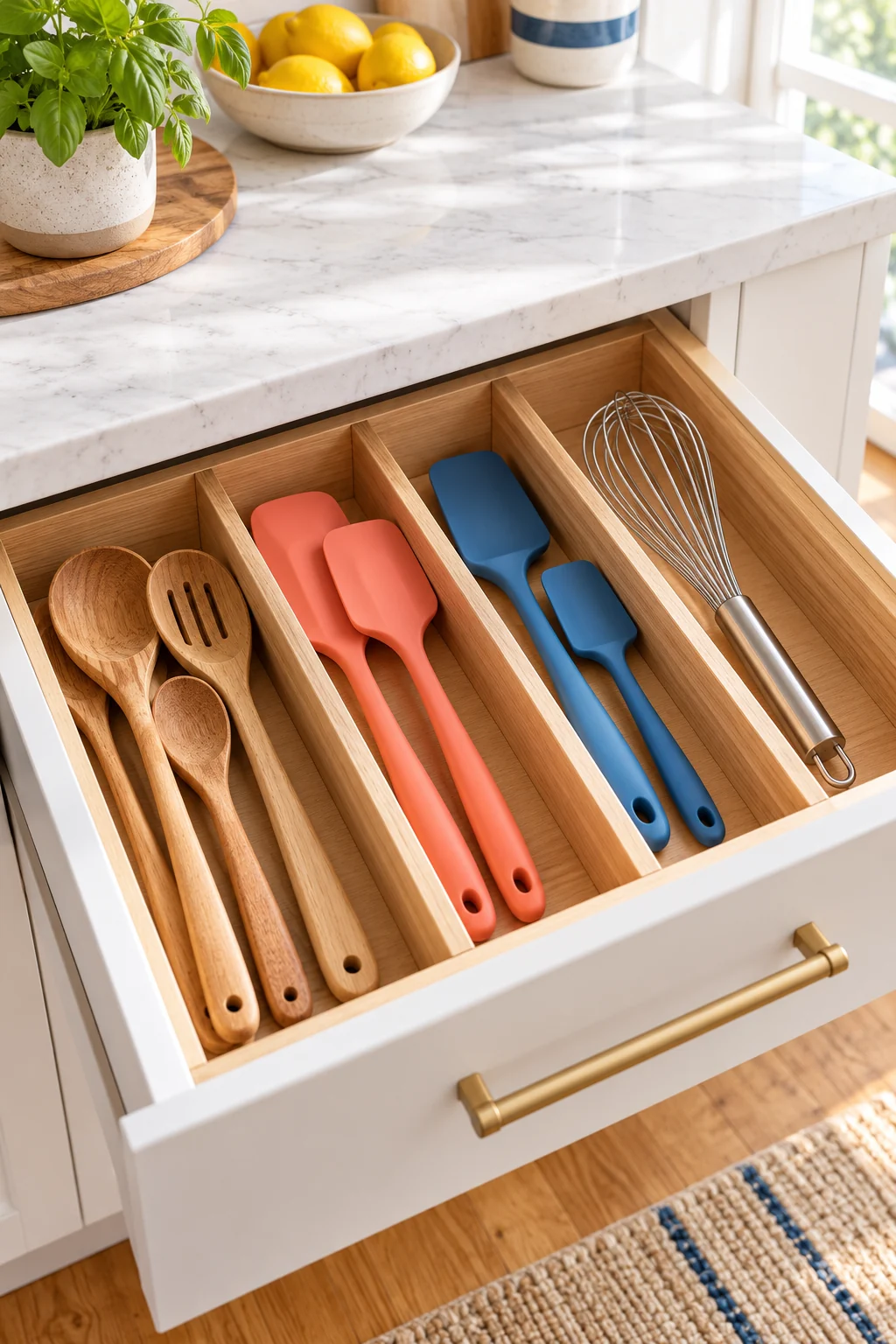
11. Add a suitable peg system to a wide cookware drawer
A drawer-specific peg system can keep stable groups of cookware from drifting as the drawer moves. Position pegs around the actual bases and handles rather than dividing the drawer into identical squares.
Use a system designed for that drawer and follow its installation and load guidance. Avoid placing pressure against delicate rims or handles. Keep heavy cookware supported by the drawer base; pegs help position it and do not increase the drawer’s carrying capacity.
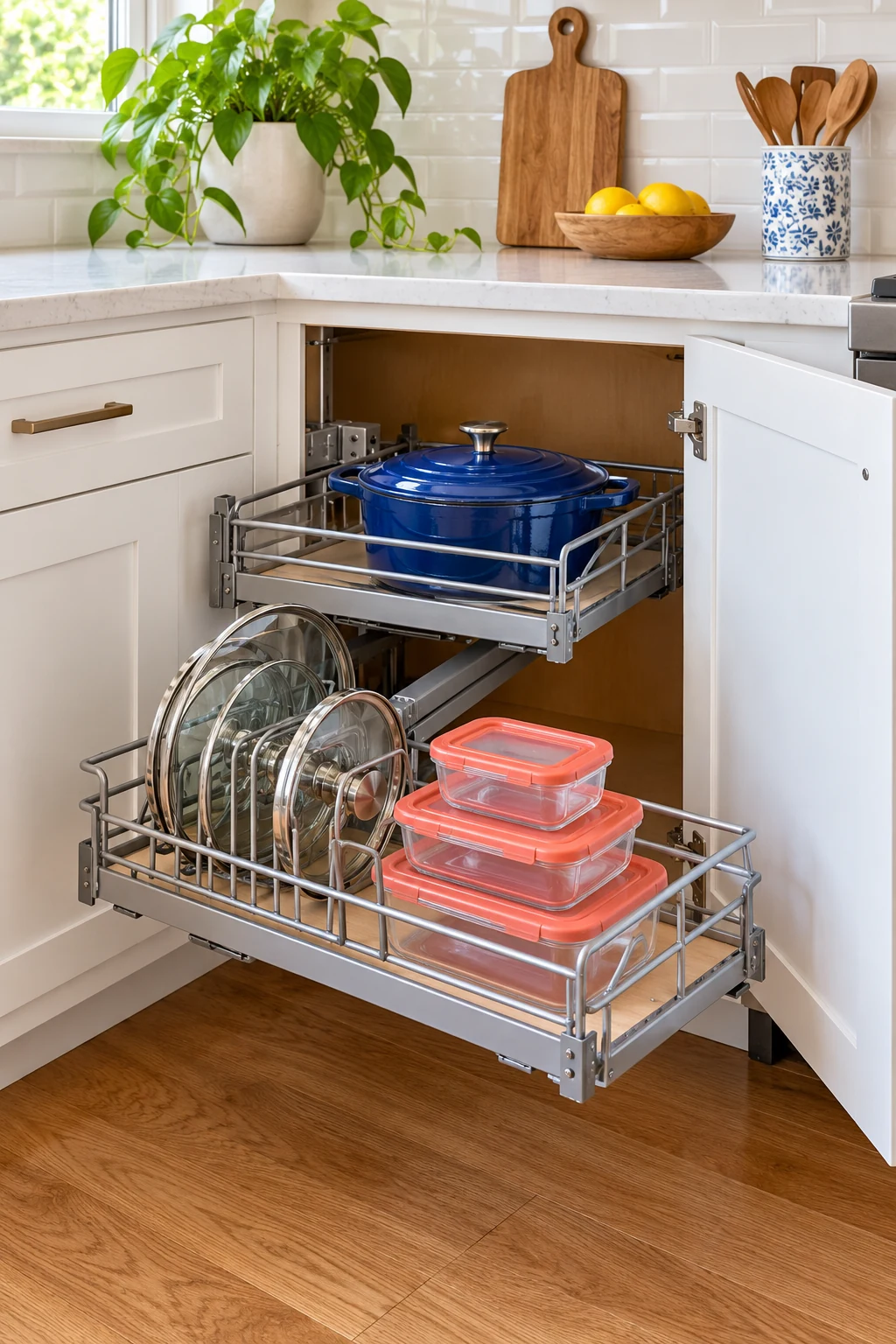
12. Turn handles so they do not interlock
Try rotating adjacent pans so their handles occupy clear lanes instead of overlapping. In a deep drawer, a slight change in orientation can allow you to lift a pan straight up. In a cabinet, handles should stay behind the closed door.
Test the arrangement with the pieces you use together during a meal. Do not gain a little storage space by making the grip awkward or hiding a hot-pot handle behind something else during return. The right orientation is the one you can repeat easily.
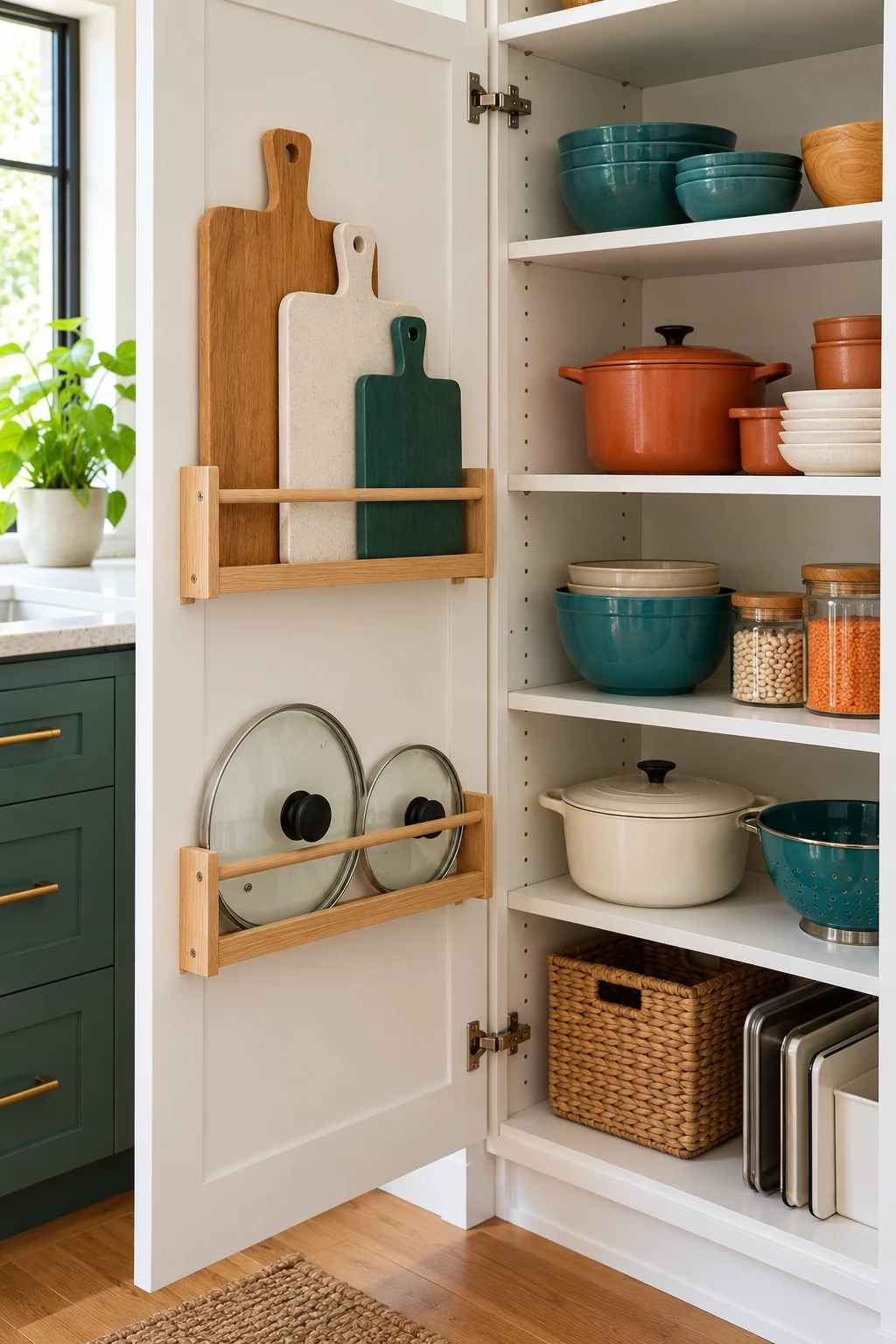
13. Give the everyday skillet an individual position
The pan you use most deserves a home that does not require unstacking the others. A dedicated shelf section or rack lane can make daily cooking easier even if the occasional cookware remains nested nearby.
Keep its lid close when you regularly use the two together. Resist filling the spare space around this position with loose tools. Easy return after washing is just as important as quick access before cooking.
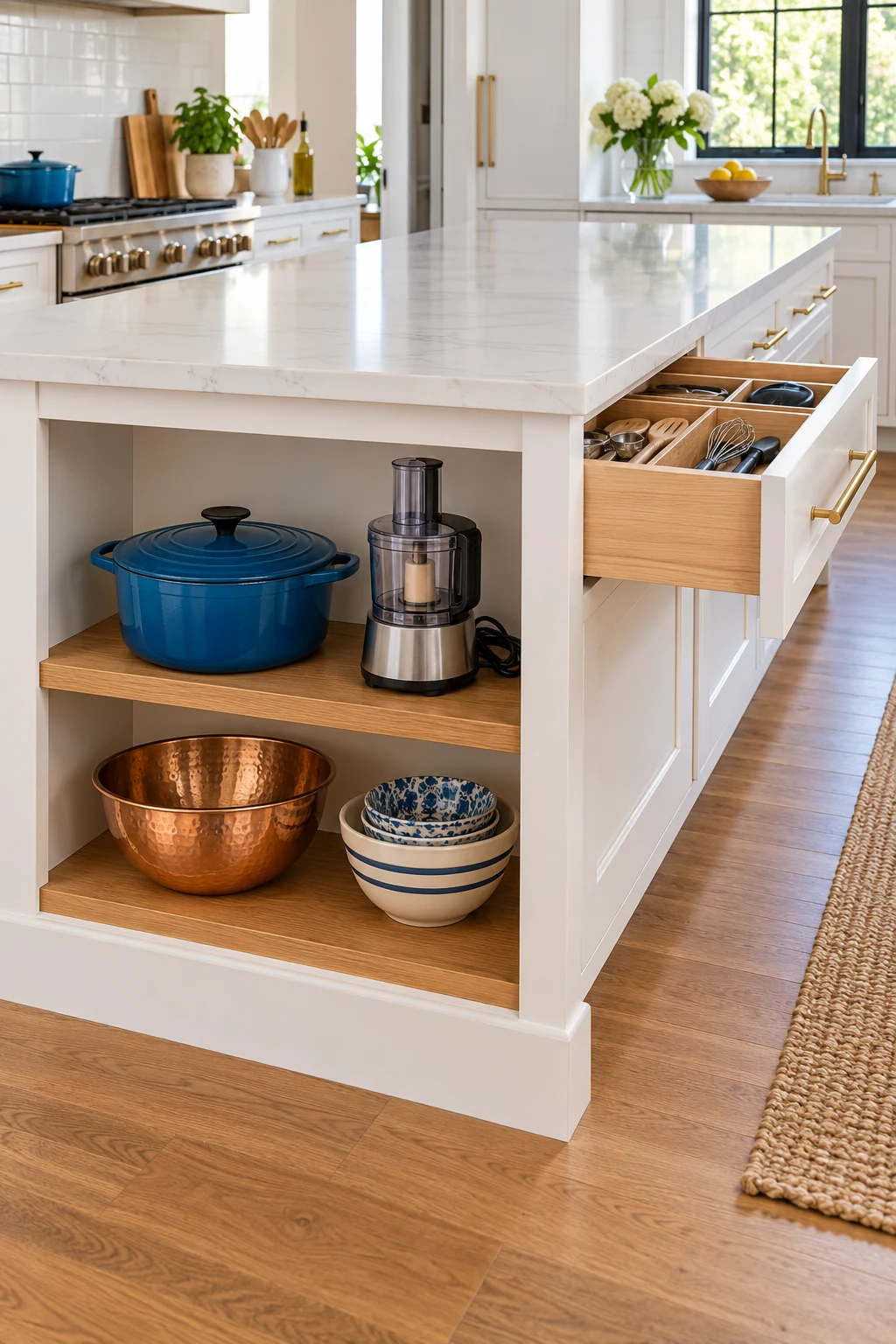
14. Keep heavy cast iron on a supportive lower shelf
Cast iron adds weight quickly, so choose a supportive location where each piece can be lifted with control. Keep the collection in short stable groups or individual positions rather than a tall stack. Check the cabinet’s total load.
Follow the maker’s cleaning, drying, and seasoning guidance before storage. Lodge’s care guidance emphasizes complete drying and a thin oil layer for its seasoned cast iron. Do not transfer seasoned-iron care instructions automatically to enameled cookware or other materials.
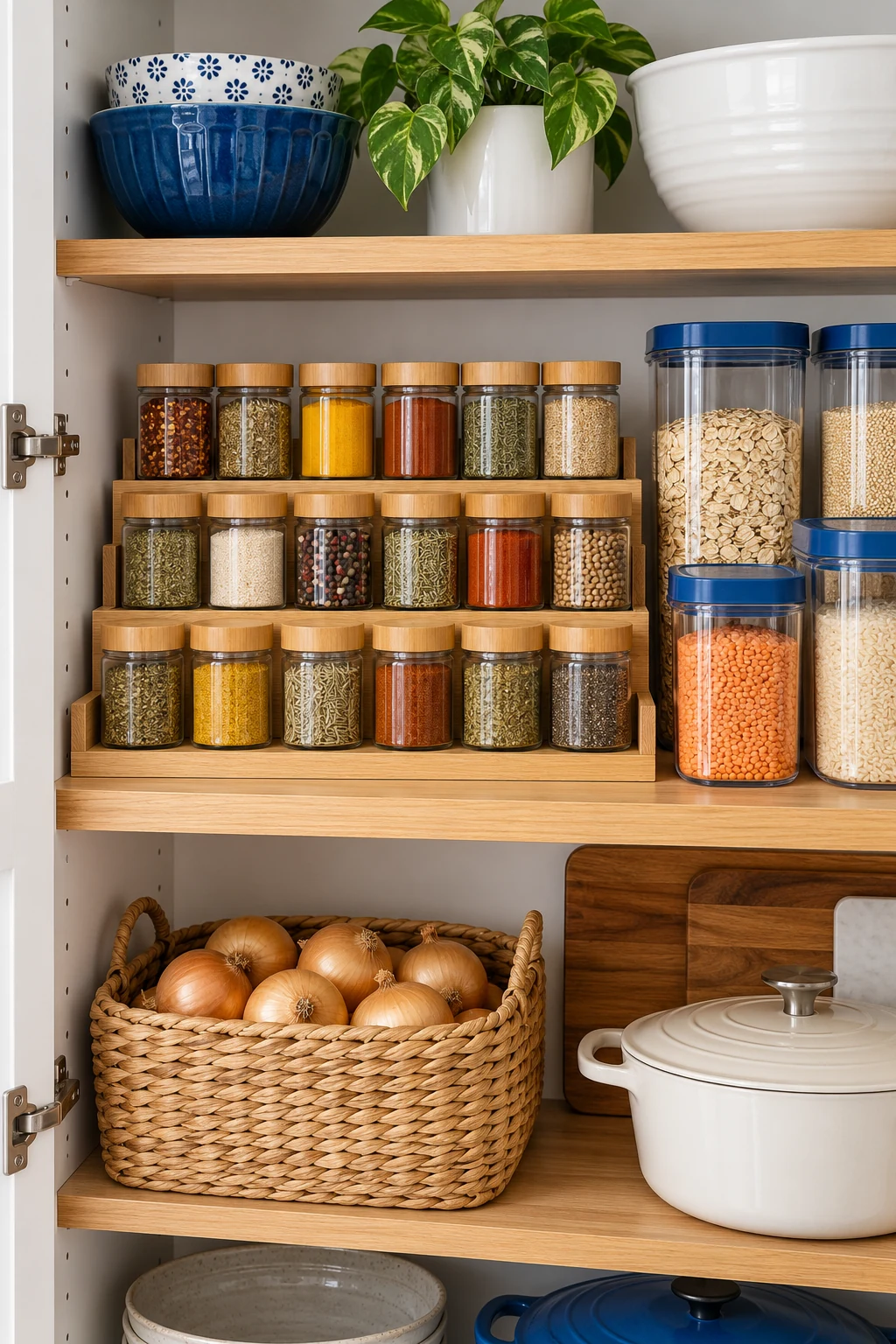
15. Support Dutch oven lids according to their care guidance
A heavy Dutch oven lid may need a secure position beside the pot or supported above its rim using the maker’s approved storage method. Keep the lid from sliding against other cookware and preserve a manageable lifting path.
Use any recommended rim protectors as directed, and keep the pot and lid clean, dry, and fully cooled. Do not improvise unstable balancing on the lid knob. The right arrangement depends on the cookware’s finish and shape, not only the cabinet height.
16. Give sheet pans a separate vertical section
Sheet pans and cooling racks can obstruct round cookware when everything shares one stack. Put these flatter pieces in a separate upright section so each group has storage suited to its shape.
The YouCopia StoreMore Bakeware Rack, Organizing Hero edition, has seven adjustable dividers and a listed 11.6-by-7.4-inch footprint. Check the loaded pan height above the rack and the cabinet’s clear opening. Store only clean, dry, cooled pieces and avoid overloading a narrow lane. View on Amazon.
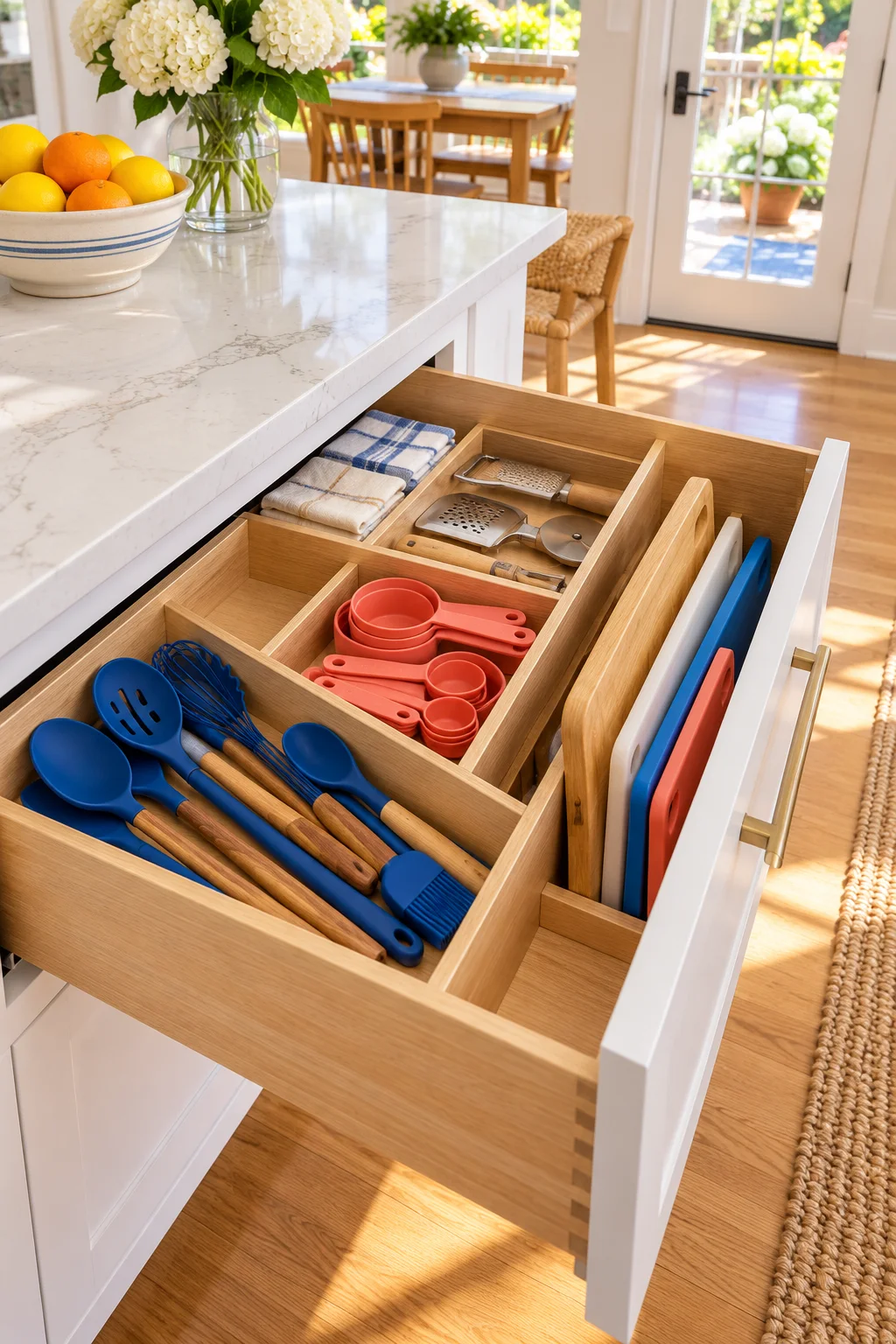
17. Store the roasting pan with its fitted rack
An occasional roasting pan is easier to find when its rack and other compatible accessories stay with it. Use a supportive lower shelf if the combined item is heavy, and allow enough opening width for its handles.
Protect any vulnerable finishes where parts touch and follow the cookware maker’s storage guidance. Do not use the roasting pan as a miscellaneous bin if you must unload it before every use. Keep it ready for the task it serves.
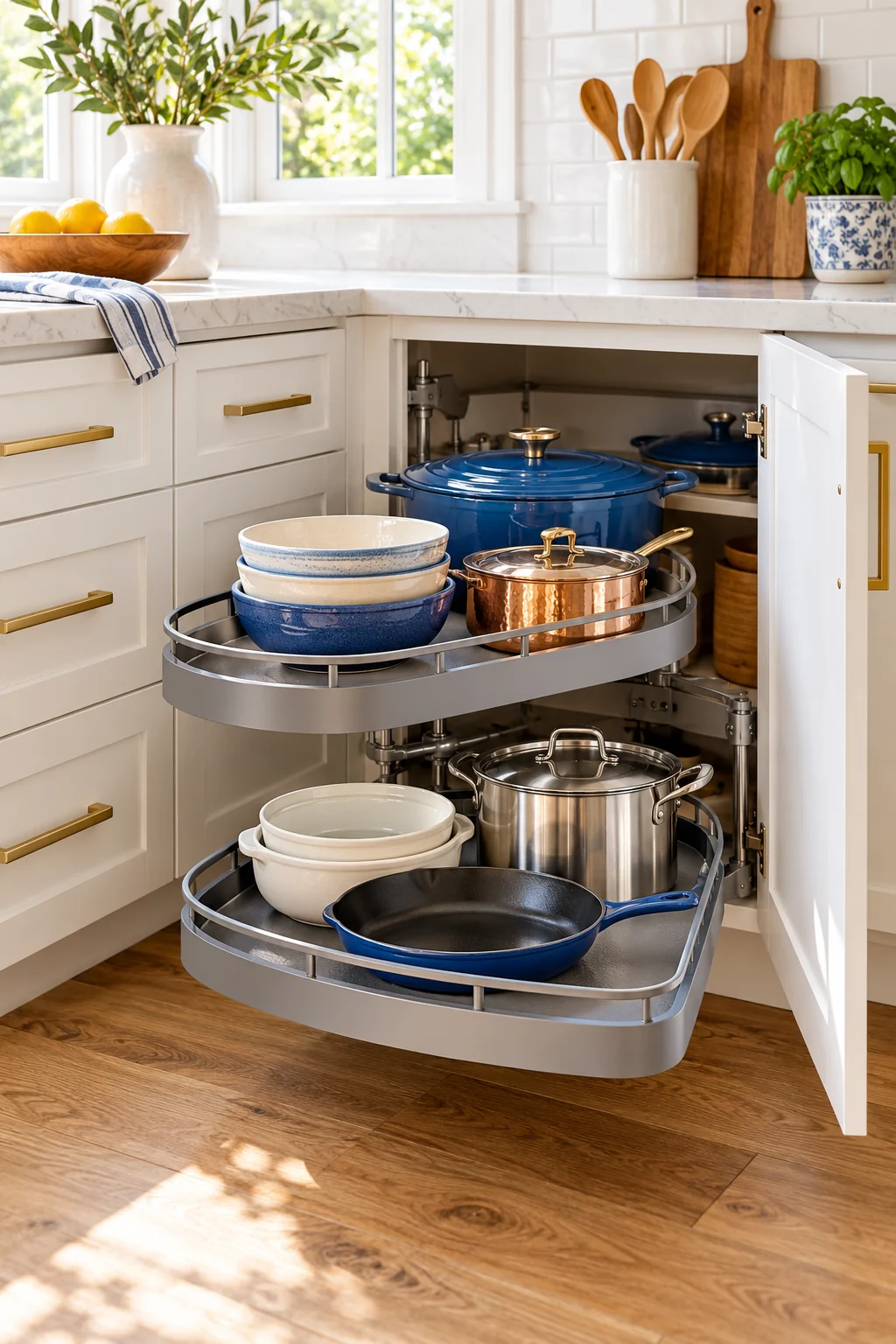
18. Keep large stockpots out of crowded daily lanes
A large stockpot can take over the shelf even if it is used only occasionally. Give it a dedicated footprint in a less central but accessible cabinet, with its matching lid in a stable nearby position.
Check that you can reach and lift it safely, particularly if it is stored low. Avoid putting heavy cookware overhead to free an easier shelf. If the pot is rarely used, let frequency affect its location while weight determines how safely it can be handled.
19. Separate baking dishes by material and fit
Ceramic and glass baking dishes may need a different arrangement from lightweight metal pans. Group compatible shapes and use stable nesting only where their care instructions allow it. Keep handles visible and avoid deep stacks.
Check that a smaller dish does not press on fragile rims or become wedged inside another. Suitable protective material can help where the maker recommends it, but it does not make an unstable stack safe. Give heavy dishes enough room for a two-handed lift.
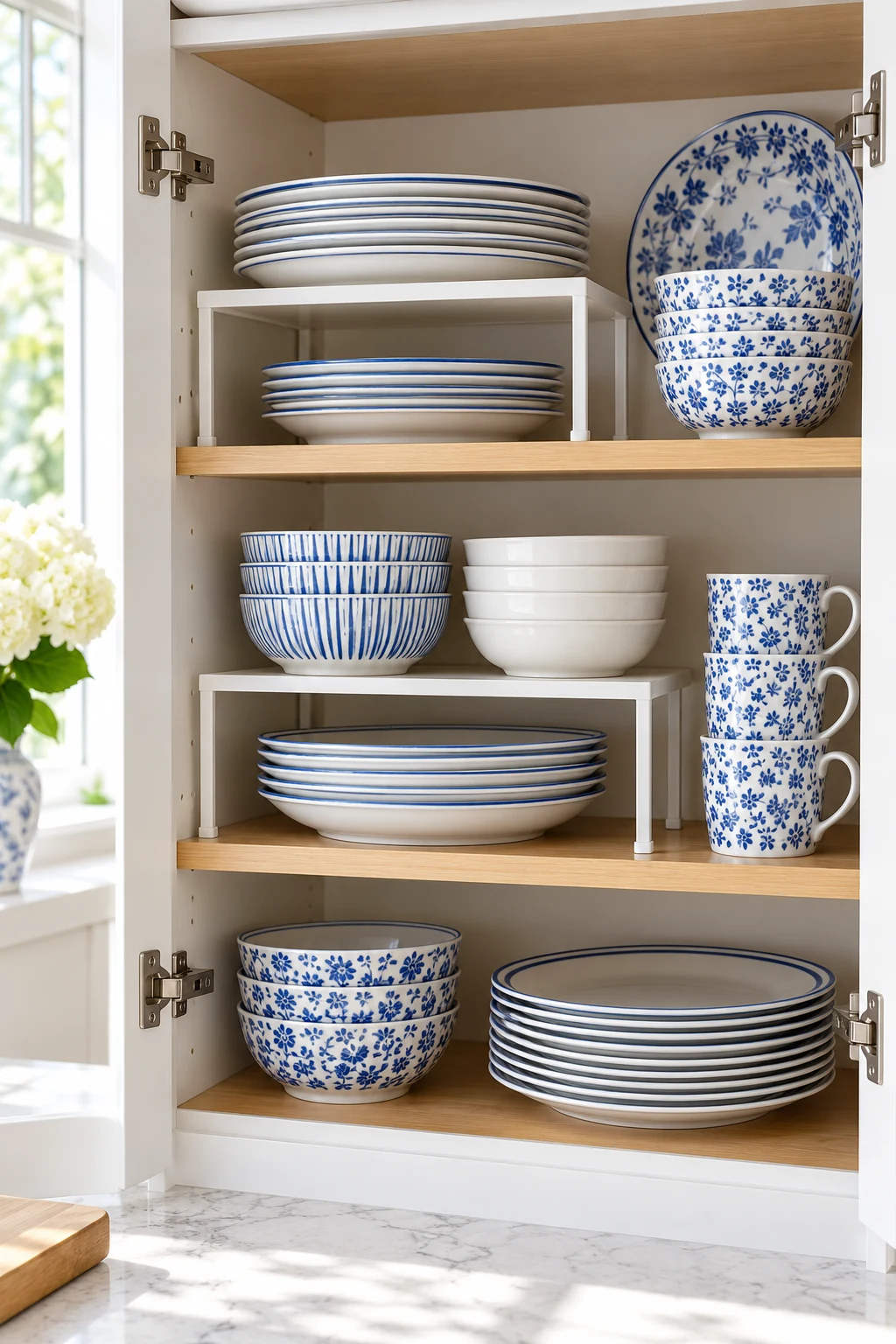
20. Consider two-level pullouts for a tall base cabinet
A purpose-built cookware pullout can divide a tall cabinet into separately accessible levels. Measure the cabinet’s clear opening and interior, including hinges and the space needed for the full pullout travel.
Choose hardware designed for the total load and arrange heavy pieces according to its instructions. Have a qualified installer confirm mounting support when needed. Keep knobs and pan handles from catching during movement, and never operate appliances or place hot cookware on a storage pullout.
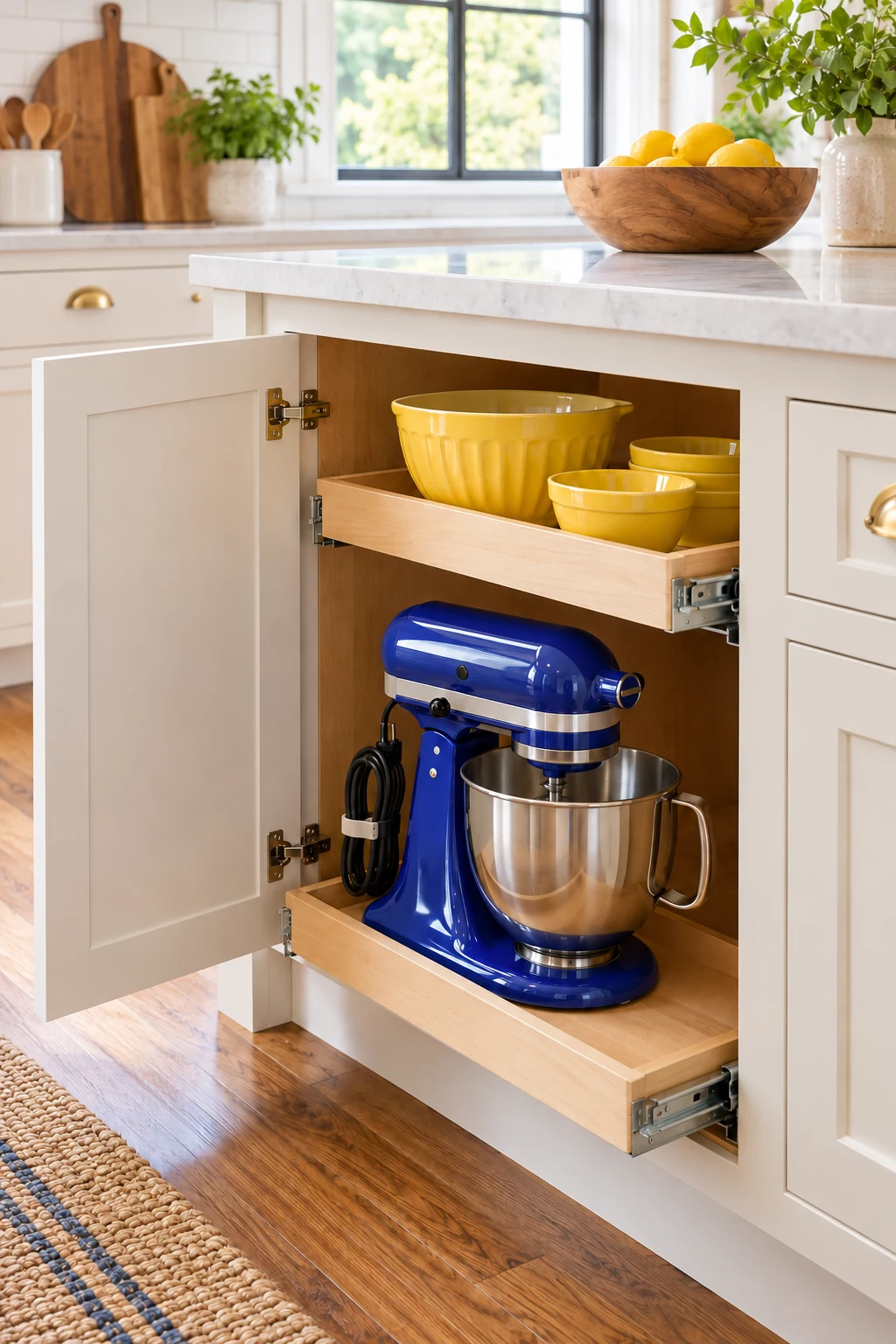
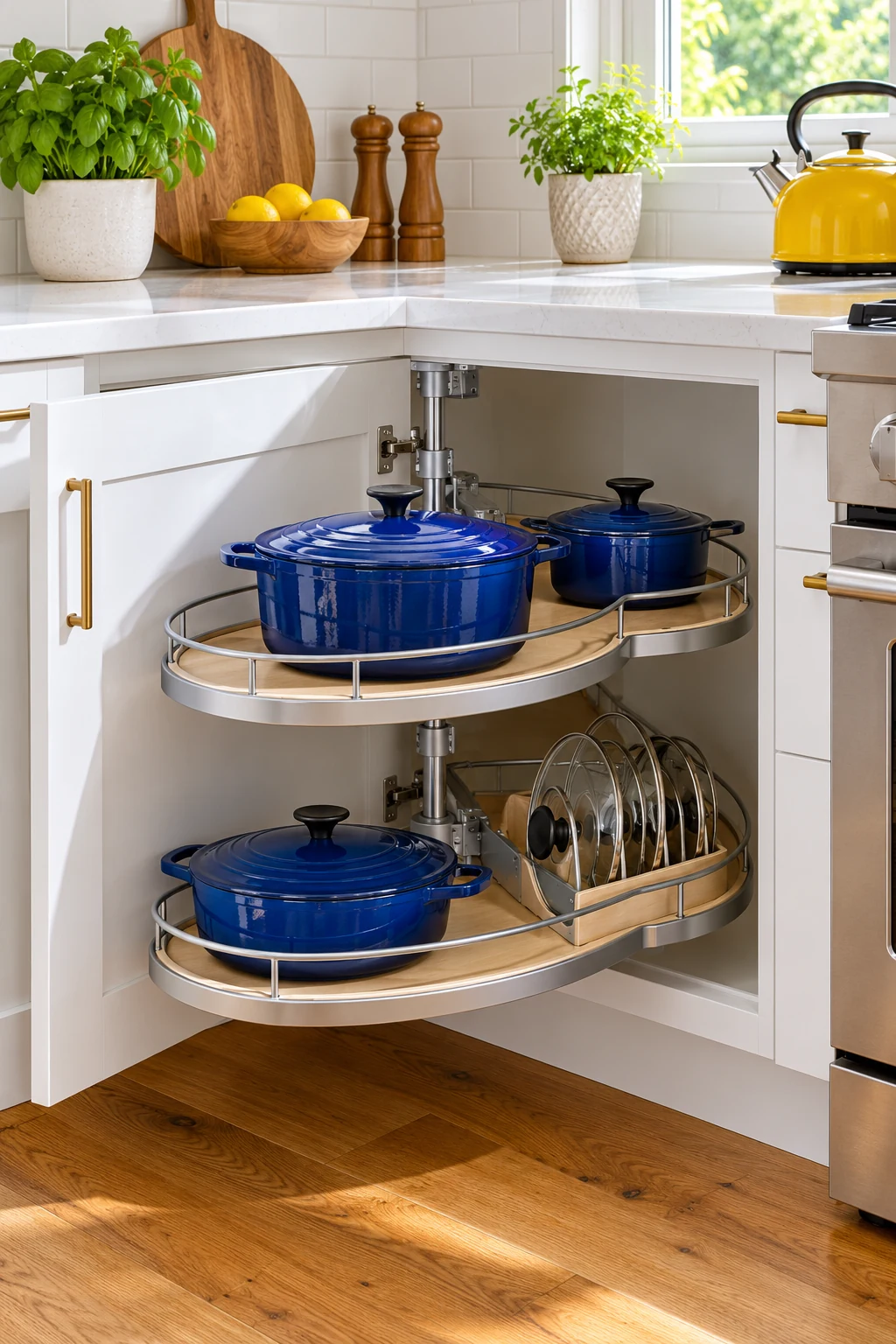
21. Use a corner system only when the pans clear its movement
A rotating or swing-out corner system can bring cookware forward when a fixed corner shelf is hard to reach. Test the full path with your widest pan and longest handle, not just the empty shelf.
Follow the system’s size, loading, and installation requirements. Keep each item within the supported shelf area and leave the pivot path clear. If large cookware cannot travel without catching, use the corner for smaller items and give the pan a simpler location.
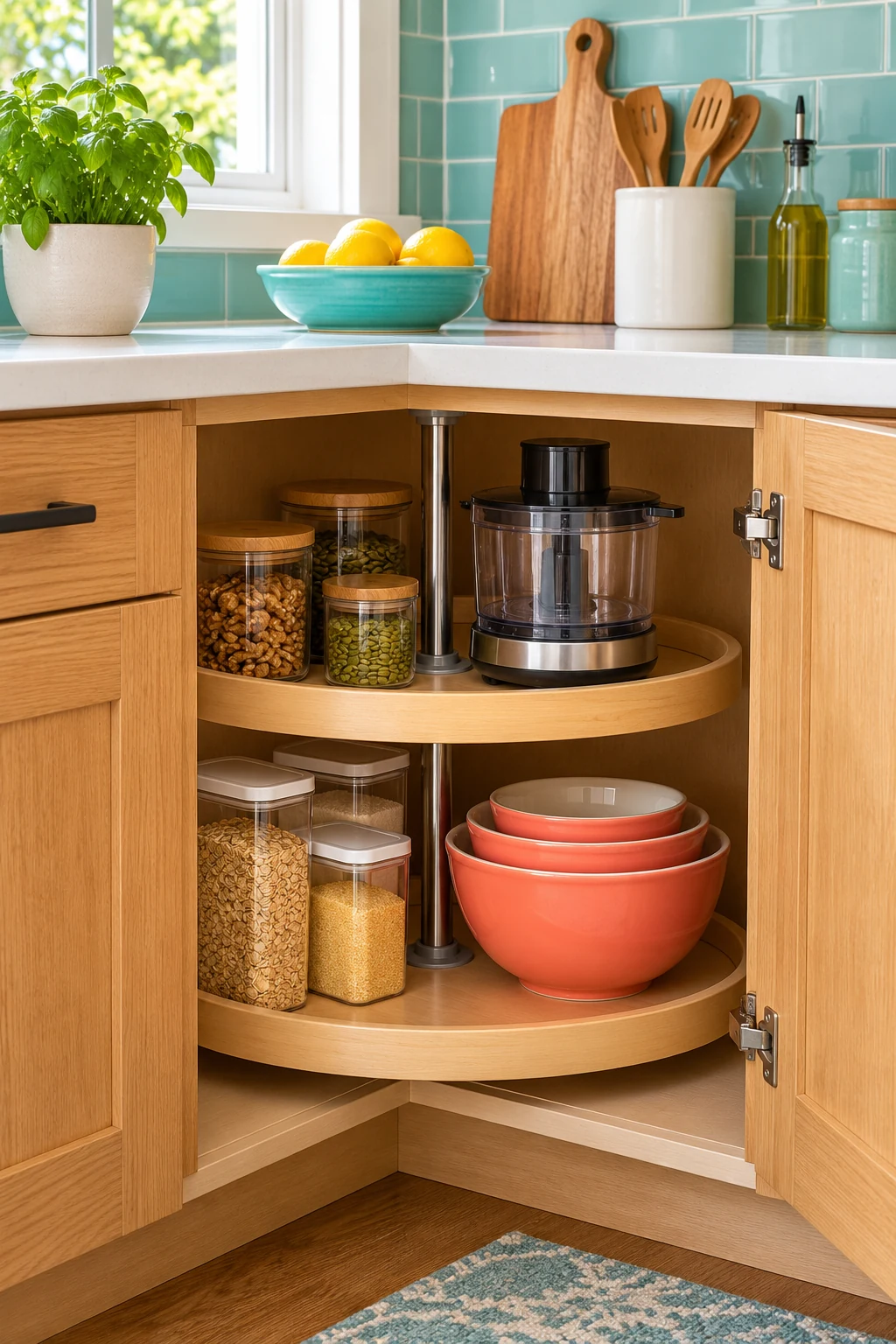
22. Hang a few pans from a properly installed wall rail
A dedicated cookware rail can free cabinet space when an appropriate wall is available. Position it where pan handles can be reached comfortably and the hanging pans do not project into a walkway, window, or appliance clearance zone.
Use a system rated for the intended total and individual loads, with fixings suitable for the wall structure. Get installation help if the wall support is uncertain. Ordinary adhesive hooks are not a substitute for a cookware-rated rail and its specified mounting method.
23. Use cookware-rated pegboard for a changing collection
A properly supported pegboard system can make pan positions adjustable. Plan the layout with the cookware hanging at comfortable heights, leaving enough space to remove one piece without knocking another.
Choose board, brackets, hooks, and wall fixings designed for the total load. Heavy cast iron needs particular care; a decorative craft pegboard is not automatically suitable. Keep hooks secure and leave enough wall clearance so pan rims do not rub vulnerable finishes.
24. Give overflow cookware a dedicated freestanding rack
Open shelving can help when the kitchen has a suitable wall area but too little cabinetry. Place heavier cookware low, keep handles inside the footprint, and leave a clear route for carrying a pot to the cooking area.
Amazon Basics’ Wood/Chrome Baker’s Rack has height-adjustable shelves for different storage needs. Check the current manual for assembly, stability, anchoring, and each shelf’s load limit. Avoid relying on old online capacity figures, and use a layout that lets you lift cookware without climbing or reaching over stacked pieces. View on Amazon.
25. Return cookware only when it is ready for storage
Let cookware cool safely, then clean and dry it according to the maker’s instructions before putting it away. Keep any required care step, such as seasoning guidance for specific cast iron, part of the return routine.
If a pan repeatedly lands on the counter because its place is hard to reach, simplify that section. Move a divider, shorten the stack, or clear the path. A storage system works best when a clean pan can return to its place without rearranging the kitchen.
Give your most-used pan the easiest position, then organize the rest around shape, weight, and comfortable access. One shorter stack or clear handle lane can make the cabinet much easier to use. Subscribe to the Havelyo email list for more small-space decorating and organization ideas.