
Kitchen Organization
25 Corner Cabinet Storage Ideas to Reach Those Awkward Spaces
The kitchen corner is often where useful space turns into a long reach. A pot disappears behind a stack, a turntable catches a handle, or the opening is much smaller than the cabinet behind it. The right solution depends on the corner you actually have.
These 25 corner cabinet storage ideas range from no-purchase rearrangements to installed systems worth discussing with a cabinet professional. Start by emptying the corner and measuring both the opening and the hidden interior. Try the simplest workable layout first, keep a clear route for retrieval, and choose hardware only after checking its exact cabinet and door requirements.
This article contains affiliate links. If you buy through them, Havelyo may earn a commission. As an Amazon Associate I earn from qualifying purchases.
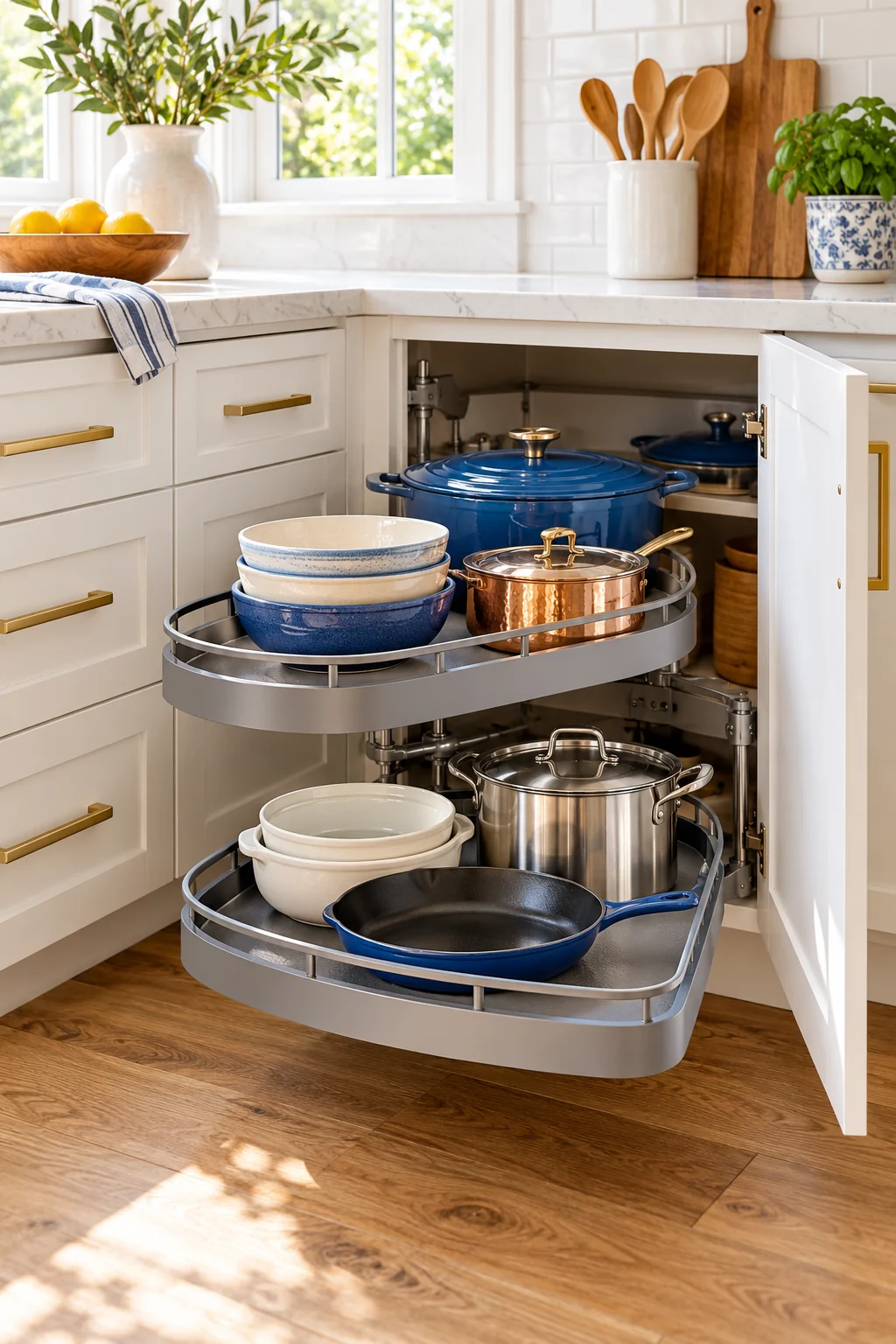
1. Identify the kind of corner you have
A blind corner has storage extending behind an adjoining cabinet, while a diagonal-front or L-shaped corner has a different opening. Empty yours and sketch the accessible shelf, hidden section, hinges, and any fixed center support before choosing a solution.
Measure the opening and the full interior separately. Record depth and height at the narrowest point, including shelf supports. A product labeled for corner cabinets is not automatically compatible with every corner shape, cabinet construction, or door arrangement.
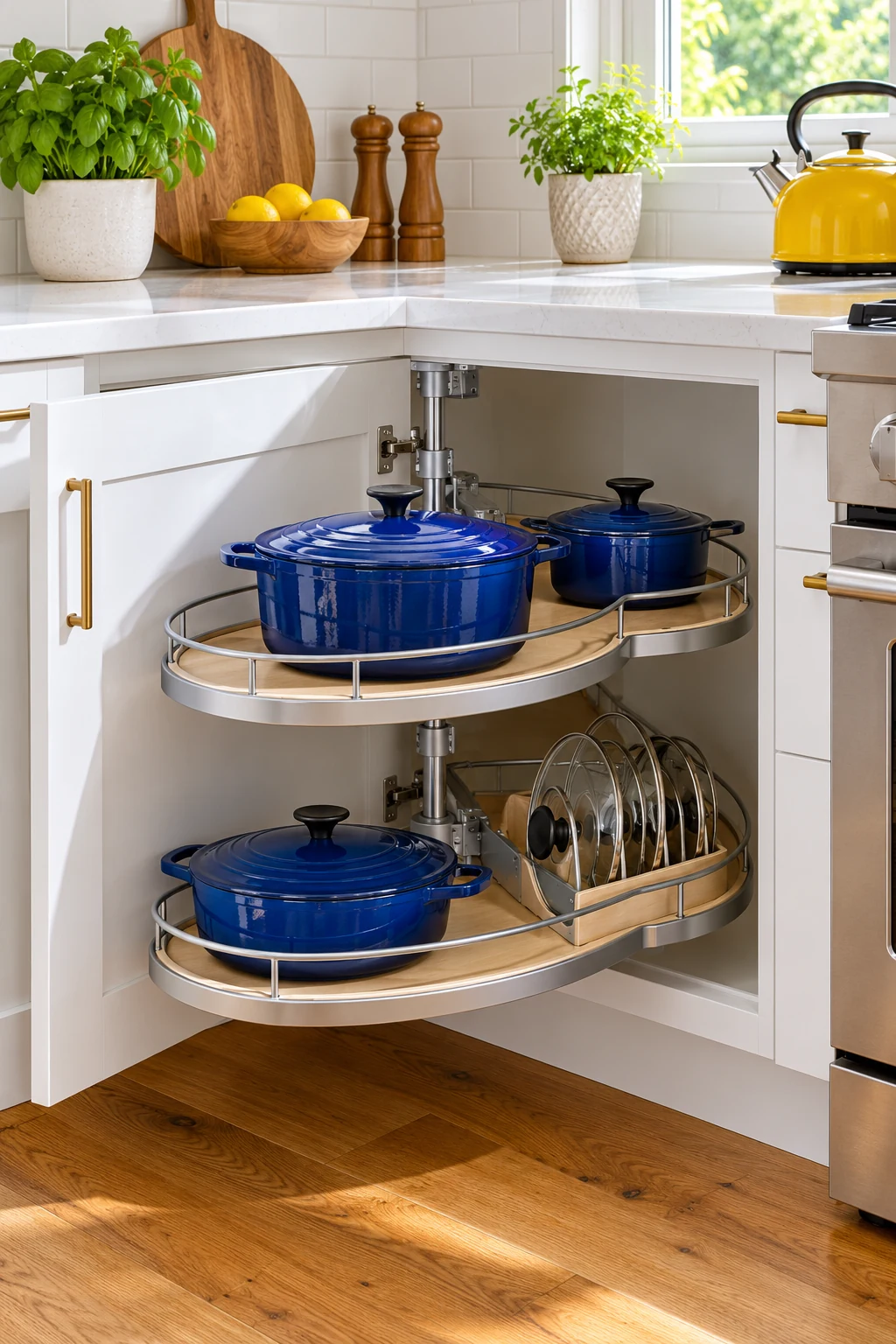
2. Leave a clear route through the opening
Plan how an item will travel from the back of the corner to your hands. Keep a clear retrieval lane instead of packing the entire floor or shelf, particularly when a large bowl must turn before it fits through the door.
Test the route with your biggest item before arranging smaller pieces around it. If you cannot remove it without unloading half the cabinet, change the location. Space kept clear for movement is doing useful work even though it is not holding another object.
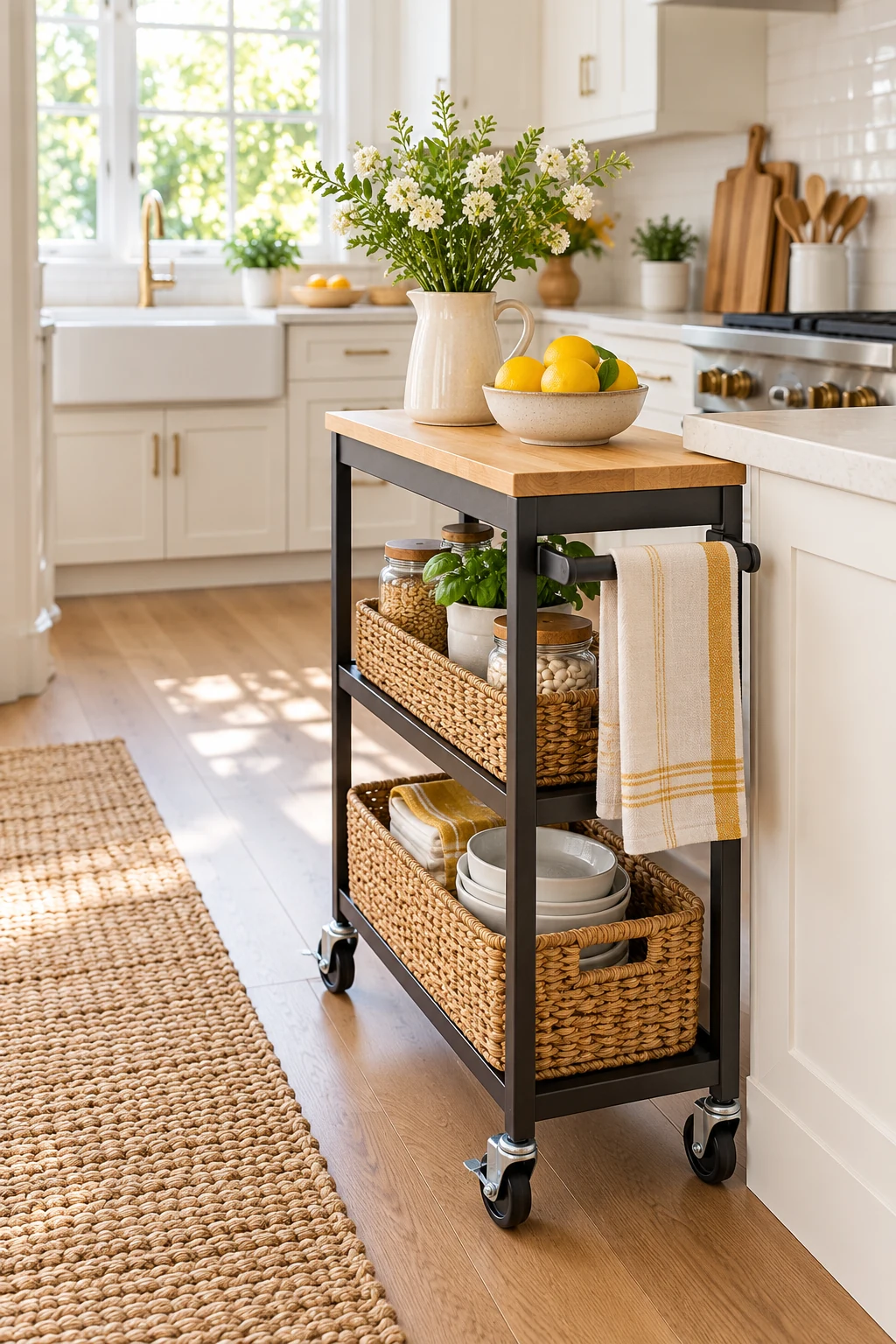
3. Give the reachable front section the daily work
Use the part you can reach comfortably for everyday prep bowls, containers, or cookware. Assign the deep section a limited occasional purpose so a daily tool never depends on stretching behind several unrelated items.
Try the setup while standing where you normally cook, with nearby drawers closed and open. If a daily object still requires an uncomfortable reach, move it to another cabinet. The goal is easier access, not proving that every kitchen category can fit into the corner.
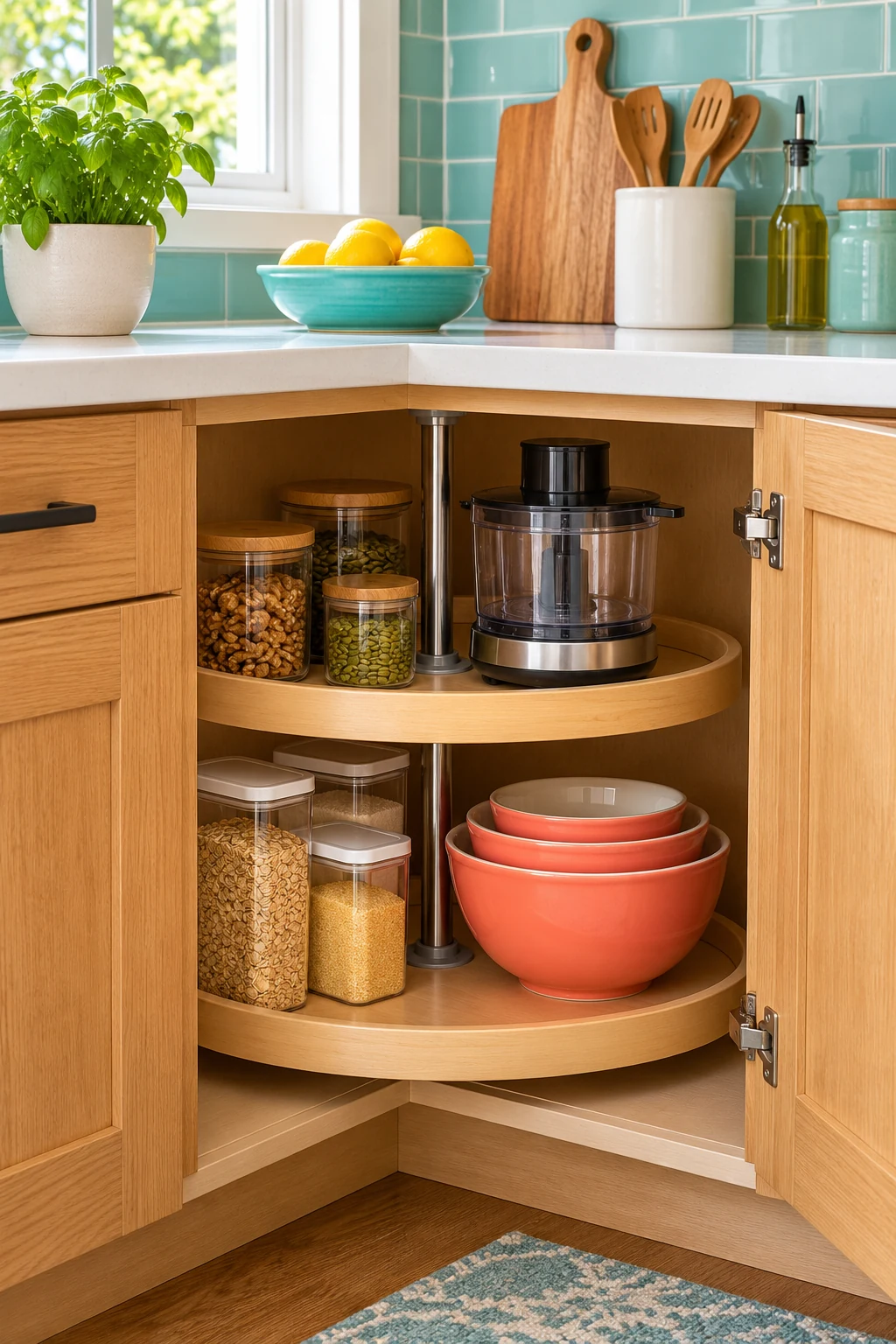
4. Try a small turntable for bottles
A freestanding turntable can make a reachable upper corner easier to scan. Arrange suitable cupboard-stored bottles around the outer edge and turn the tray slowly to see whether each item comes into view.
The Copco 12-inch turntable is one option for a compatible shelf. Check the whole circle against the door, hinges, brackets, and loaded bottle height. Keep the center lightly filled or empty if a crowded middle would hide the very items you are trying to find.

5. Use two smaller zones instead of one giant tray
A wide corner shelf does not always need the biggest turntable that fits. Two separate small zones, such as a rotating bottle group and a shallow bowl stack, can make the shape easier to use.
Mock up the footprints with paper and keep a route to both zones. A large circle leaves triangular spaces around it, but filling every sliver can prevent rotation. Compare the arrangement with one simple removable bin before buying multiple organizers.
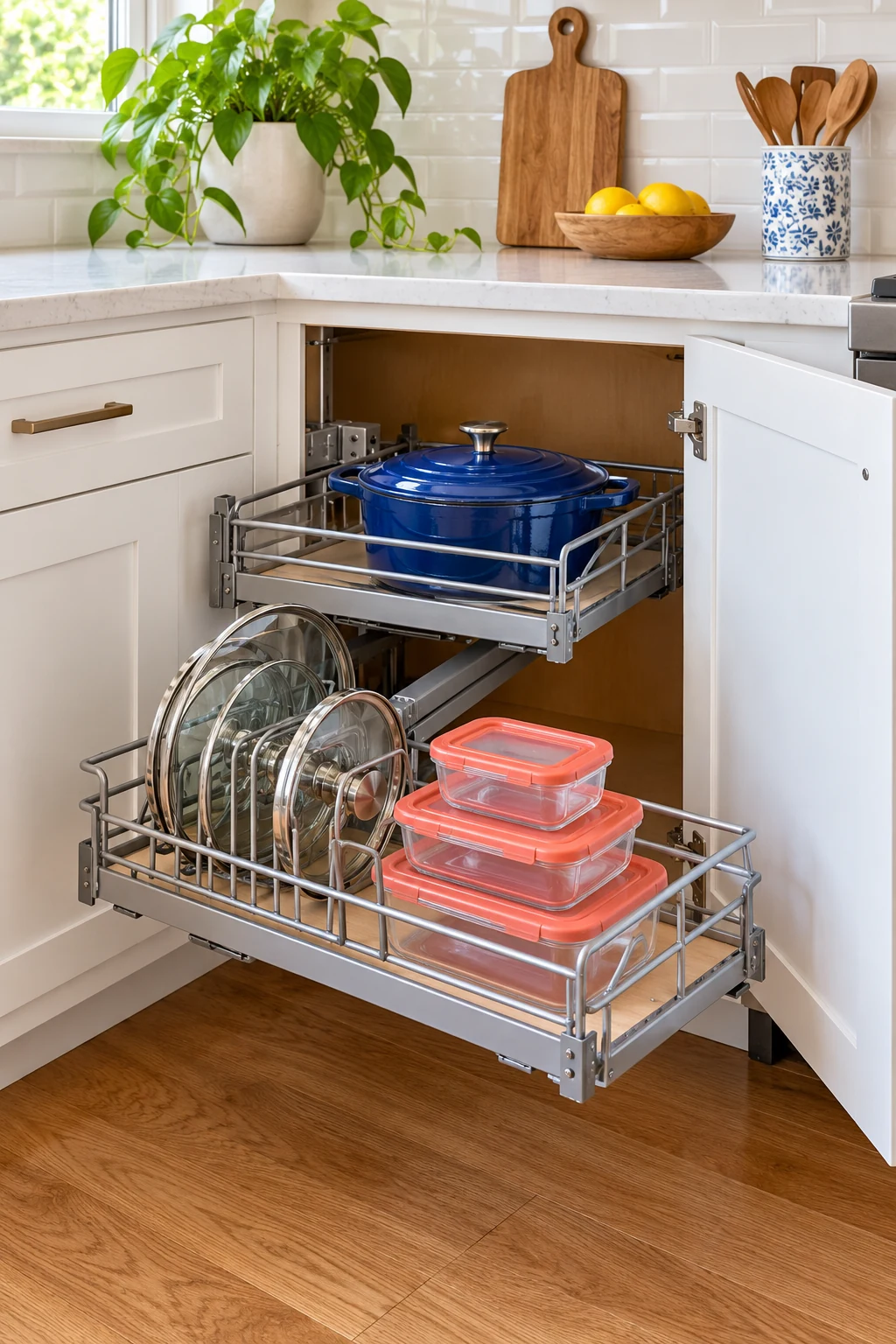
6. Bring a category forward in a handled bin
A bin with a comfortable front grip can turn a corner shelf into a removable kit. Try it for baking accessories or another small collection you can lift out together, leaving the rest of the cabinet undisturbed.
The clear iDesign Pantry Storage Bin with Handles suits a compact category. Its square shape needs to pass through the opening as well as sit on the shelf. Keep the filled bin manageable and leave enough clearance to get your hand around the handle.
7. Give small packets a short tray
Little packets can disappear into the point of an upper corner. Put them in a shallow, open tray that you can pull forward, with their tops visible and the original package information still available.
Reuse a suitable tray to test the arrangement. It should sit fully on the shelf and slide without catching a hinge. Keep the collection limited to one useful category; a tall mixed bin in the same corner may conceal just as much as loose packets did.
8. Stand everyday pans near the opening
In a corner base cabinet with a usable front section, stand suitable pans where their handles remain easy to grasp. Keep the arrangement within that accessible area rather than pushing the whole rack toward the hidden rear.
The YouCopia StoreMore Expandable Cookware Rack can size a row to the available width. Measure loaded handles and the path through the door. Heavy cookware may be easier on a clear fixed shelf, and any rack still relies on adequate cabinet support.
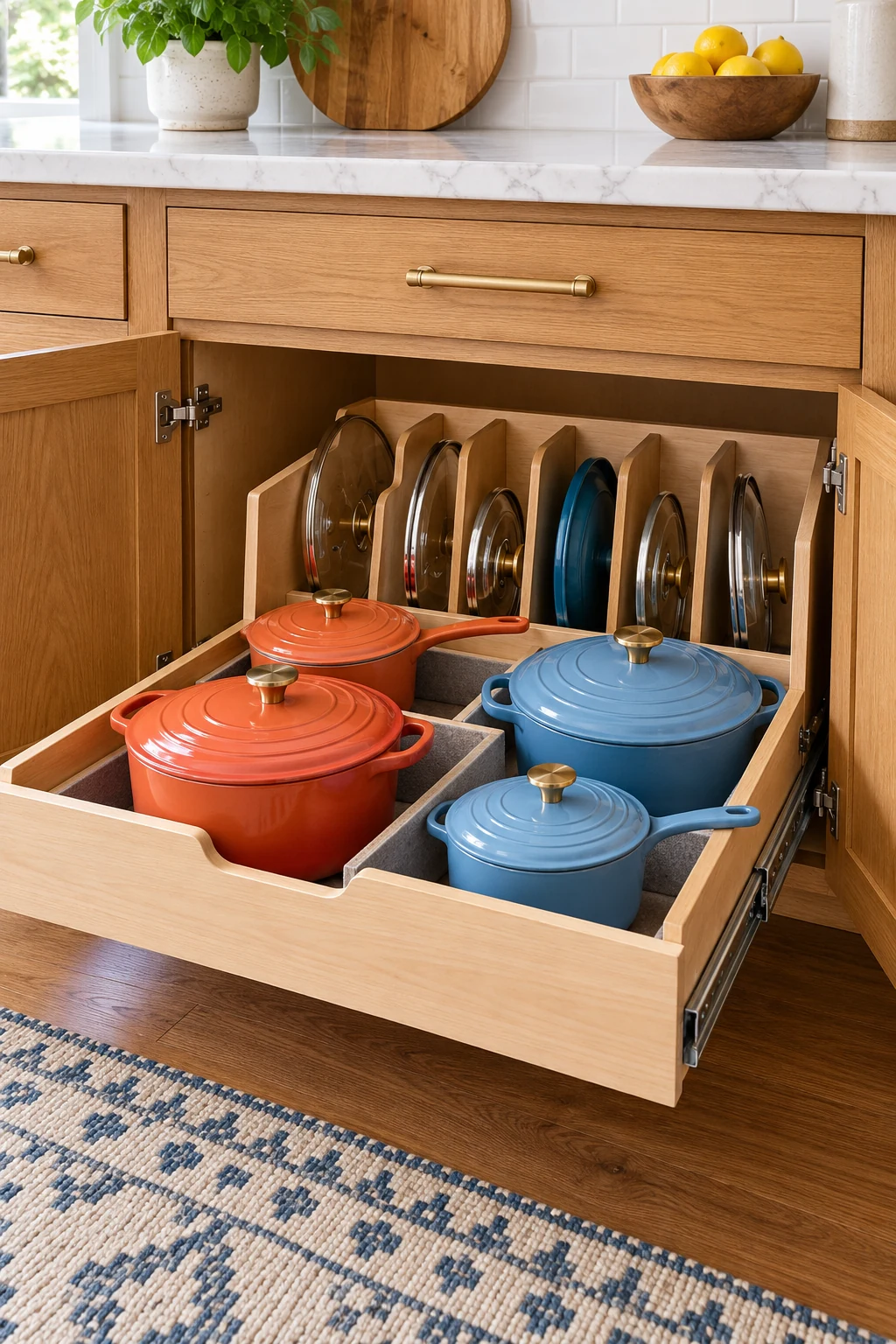
9. Use a side section for thin bakeware
The straight side of a corner opening can suit an upright row of sheet pans or cooling racks. Position the row so you can remove a sheet without turning it across the entire cabinet.
The YouCopia StoreMore Bakeware Rack has adjustable dividers for different thicknesses. Check the tallest sheet and the angle needed to clear the door. Do not hide frequently used bakeware behind a permanent turntable or put the rack where rotating hardware can strike it.
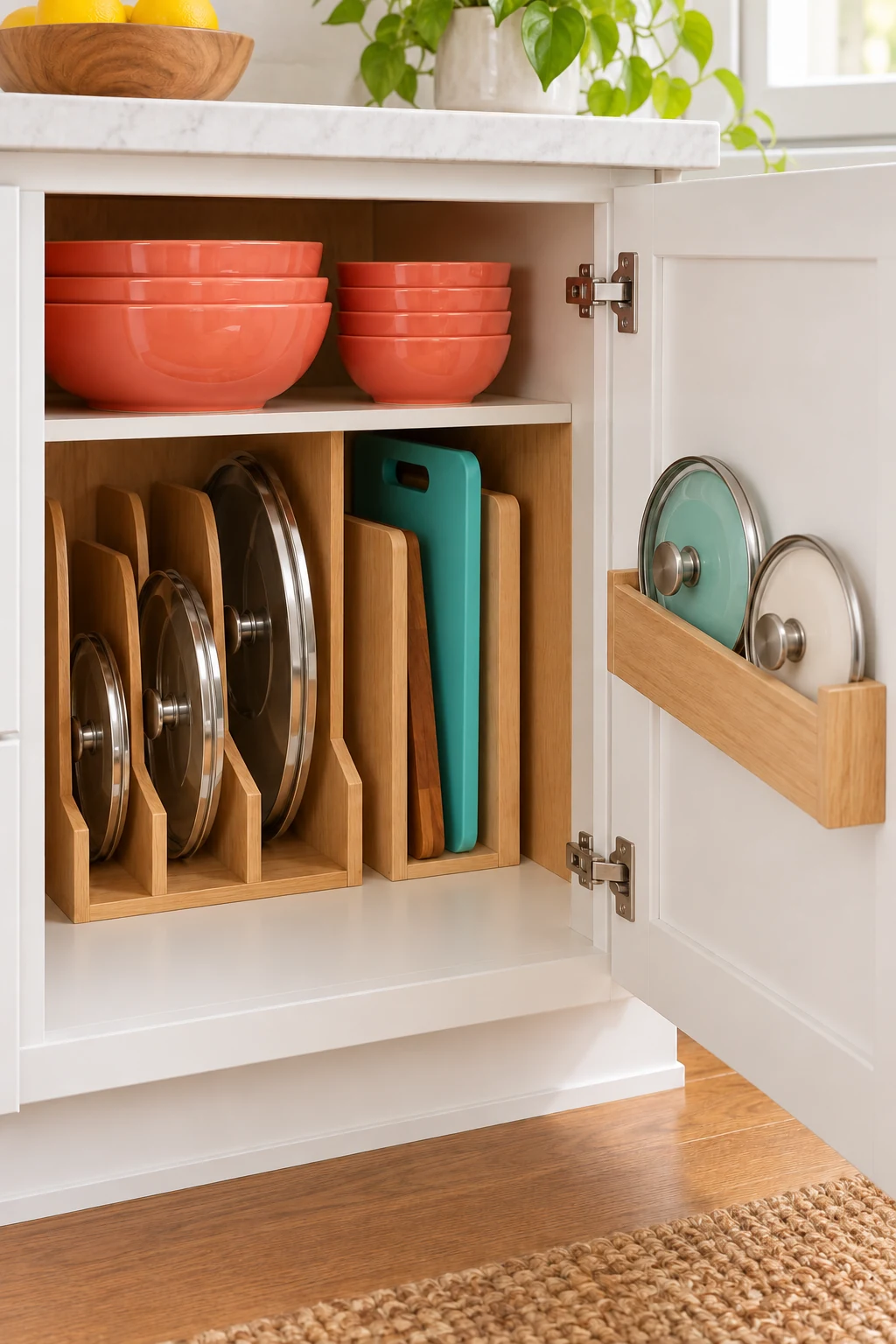
10. Keep container lids at the visible edge
If food containers live in the corner, keep their lids near the opening instead of loose at the back. Separate lids by the bases they fit, with a short stack of matching containers immediately beside them.
The YouCopia StoraLid 24 Container Lid Organizer can support those groups on a level shelf. Check the height with your lids standing in it and leave space to lift them over the dividers. A deep corner is only useful here if the whole arrangement stays reachable.
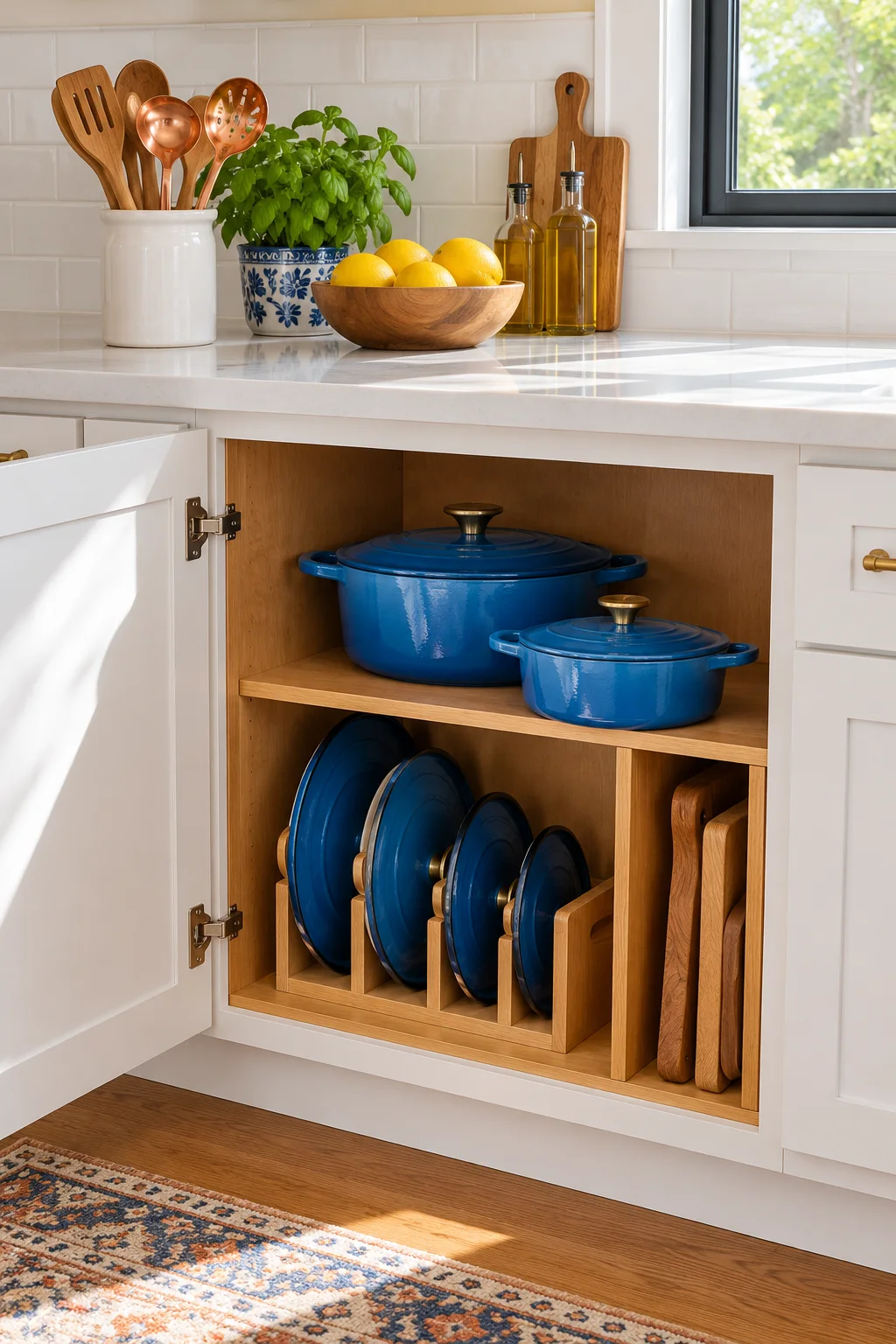
11. Raise a small dish stack in an upper corner
A riser can divide the vertical space in a deep upper corner without replacing the cabinet shelves. Keep a short stack below and another light category above, with both visible from the opening.
The two SONGMICS Cabinet Organizer Shelves can be used separately or in supported arrangements. Test the configuration with paper footprints and actual dishes. Avoid bridging a shelf gap or balancing one leg near the edge; every support point needs a stable surface.
12. Add short shelves to the reachable side
The front side of a corner cabinet can hold long wrap boxes on closely spaced shelves. This is useful when a tall open section wastes vertical space but the boxes remain easy to pull directly out.
The small YouCopia UpSpace Cabinet Box Organizer creates adjustable levels within that section. Check the full box length and keep it clear of any moving corner hardware. Do not let a tidy stack of wraps block access to another daily category behind it.
13. Keep bowls in one simple nesting group
A few compatible mixing bowls can work well on a reachable corner shelf. Nest them in a short stack and orient handles or pouring lips so they do not catch the door or an adjacent support.
Keep the bowl you use most easy to remove, even if that means it sits separately. Test the lifting motion with empty, dry bowls. A heavy nested collection is not a good use of a high shelf or a blind spot that requires twisting to reach.
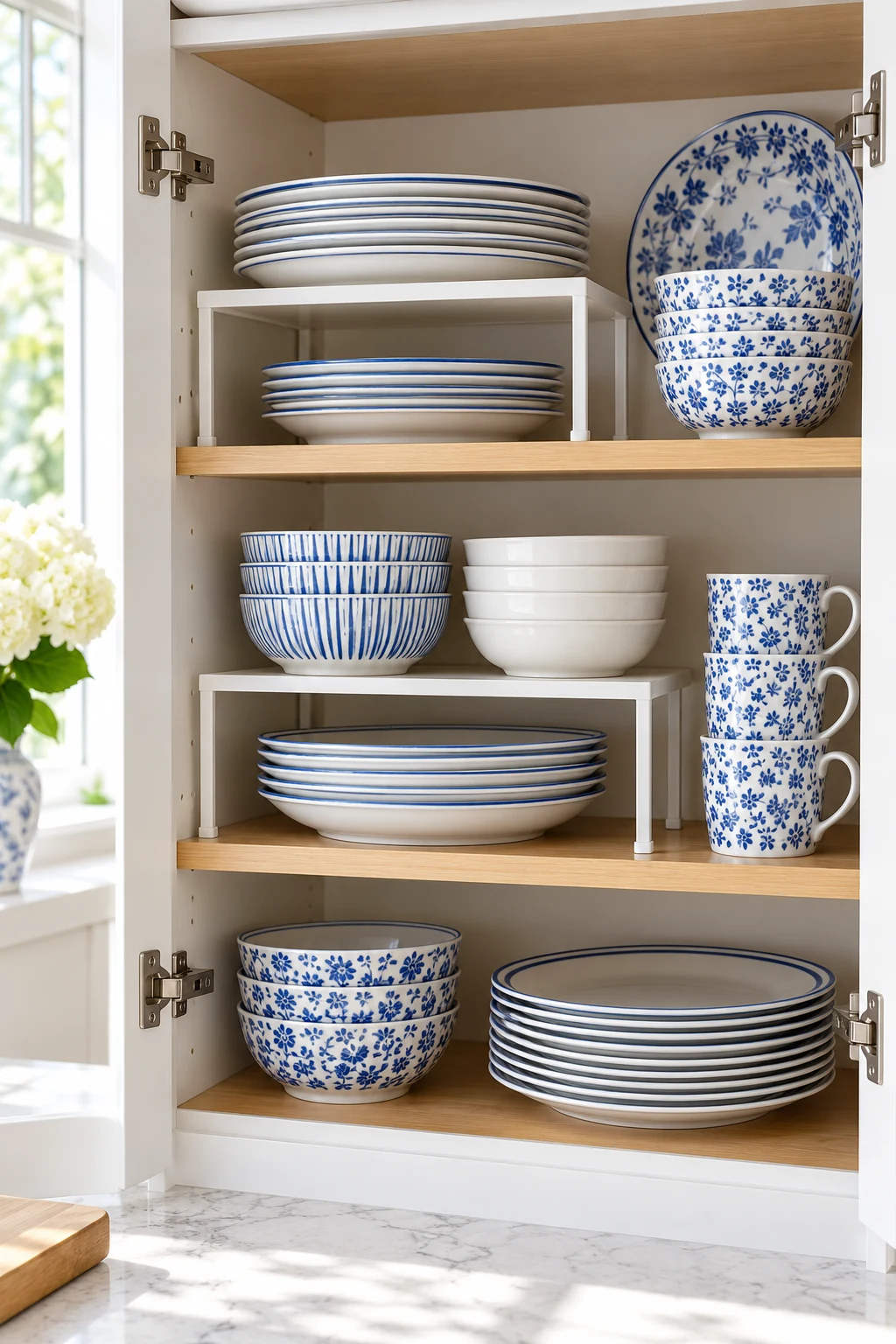
14. Give the roaster a deliberate occasional home
A bulky roasting pan can occupy a deeper corner when you use it only occasionally and can retrieve it safely. Keep its rack and compatible accessories together so preparing for a larger meal does not require another search.
Leave a clear route in front of it and avoid stacking heavy objects on top. If removal involves kneeling awkwardly or dragging the pan against plumbing, choose another home. Infrequent use does not make a difficult or unsafe lifting position worthwhile.
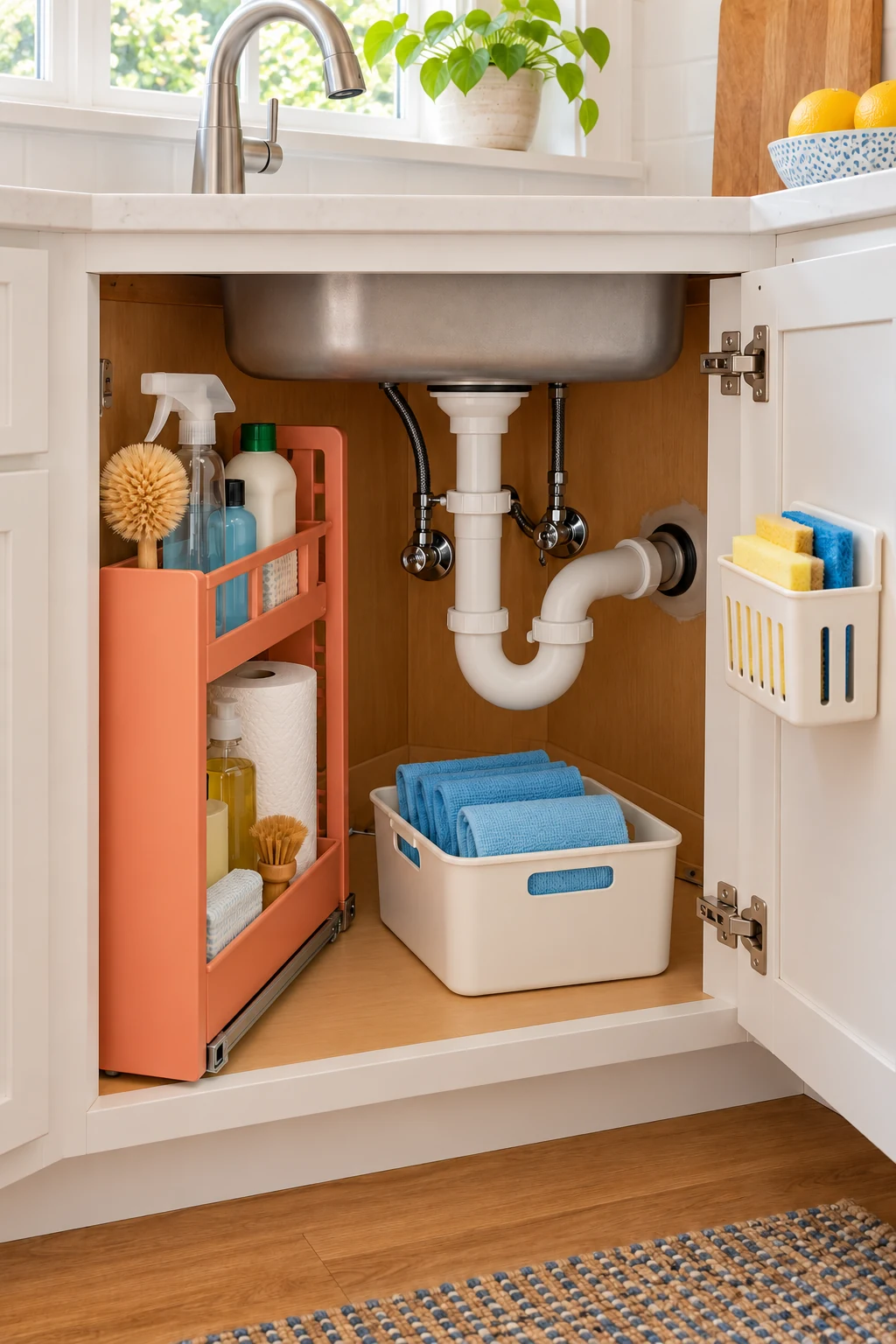
15. Use lightweight items in the deepest section
The deepest part of a fixed corner shelf may suit a few light occasional items, such as a small basket of seasonal baking molds. A single manageable container is easier to retrieve than several loose pieces.
Keep a short contents note near the opening so the collection is not forgotten. Avoid using the hidden zone for daily supplies or dense cookware. If you cannot comfortably reach and control the container, leaving that section empty is a sensible option.
16. Organize an existing carousel around its edge
If your cabinet already has rotating shelves, put recognizable categories where they come into view as the tray turns. Keep items fully inside the shelf boundary and allow enough space around handles for the mechanism to move.
Follow the carousel’s loading and care instructions. Do not wedge extra objects around the outside of the rotating shelf or beneath it. Test a slow full rotation after putting things away, especially when a new pot is taller or wider than the one it replaces.
17. Use containers that follow the rotating shelf
Compatible wedge-shaped or compact bins can keep small items together on a carousel. Choose shapes that remain fully supported without crossing the moving shelf edge or obstructing a center post.
Measure the available area and the height above the loaded container. Check with the carousel maker before adding accessories that change loading or movement. Avoid fastening homemade partitions to the rotating mechanism; a removable grouping is easier to clean and reconsider.
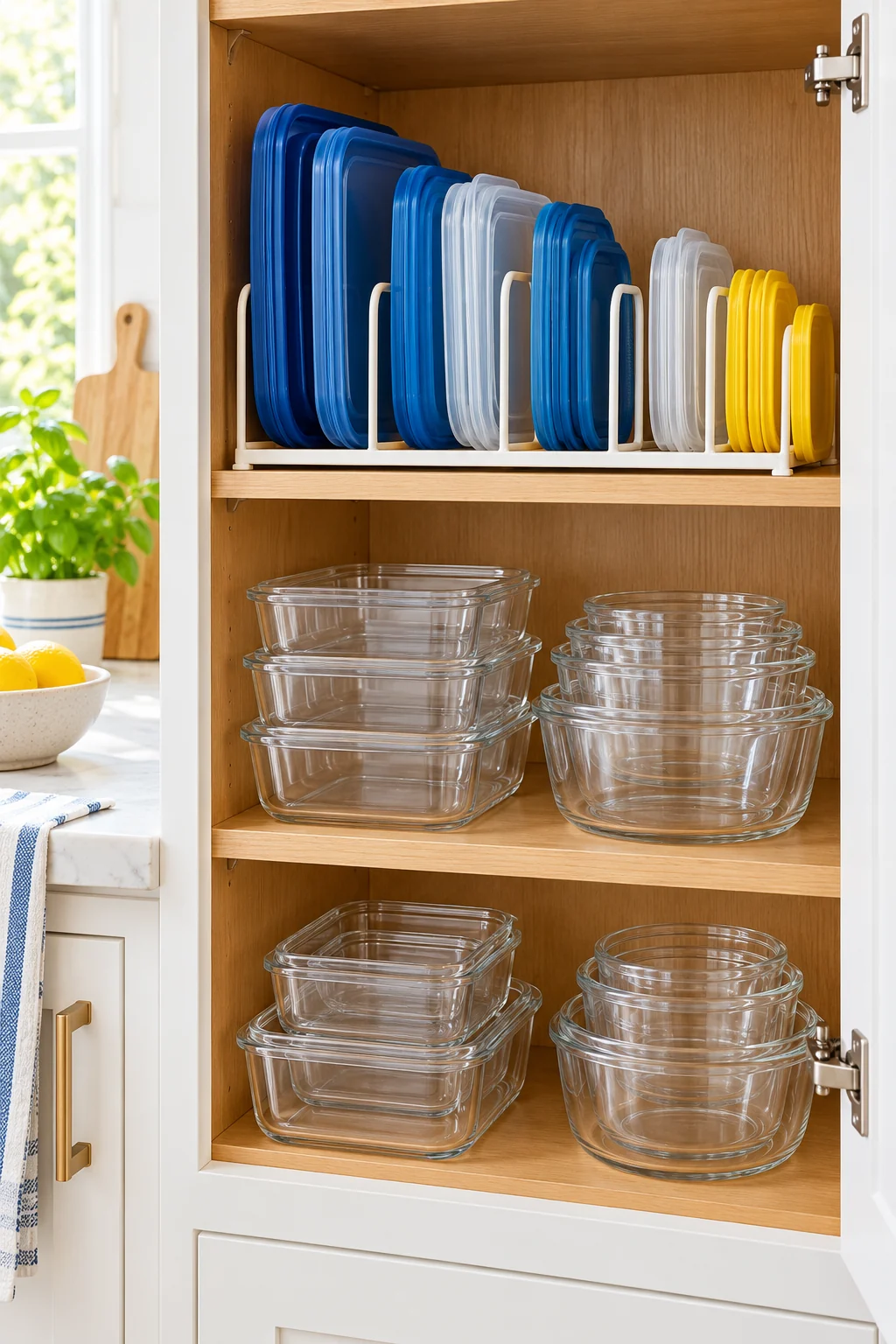
18. Keep tall items away from the moving cutout
On a rotating corner system, a tall bottle or projecting handle can strike the cabinet opening even when its base seems to fit. Arrange tall pieces where the maker’s design and clearances allow them to complete the full movement.
Turn the system slowly with the door in the intended operating position. Move any item that brushes a frame or shelf rather than forcing the mechanism past it. A short, stable group often works more comfortably than loading the tray to its tallest possible limit.
19. Refresh the existing hardware before replacing it
A corner carousel that feels awkward may need its contents reduced or its approved adjustments checked. Empty it and look for objects caught outside the tray, obvious damage, or a shelf that no longer sits as intended.
Use the manufacturer’s maintenance and adjustment instructions, or ask an installer to assess it. Do not improvise repairs to load-bearing hardware or apply an unapproved lubricant around stored dishes. Sometimes restoring a sound existing system is more useful than adding a second organizer around it.
20. Consider a half-moon pivot-and-slide system
A purpose-built half-moon system can move storage from a blind corner toward the opening. Some designs pivot and then slide, so the useful comparison is the entire movement and reachable tray area, not just the size of the shelf.
These are installed hardware systems, not universal drop-in organizers. Compare cabinet construction, opening width, interior depth, mounting points, and left- or right-hand orientation with the exact model’s template. A qualified installer can check compatibility before you buy or remove an existing shelf.
21. Compare a multi-stage blind-corner pull-out
A multi-stage pull-out can bring front baskets outward and move a rear section into reach. It may suit a blind corner when fixed shelves require too much stretching, especially if you want to retrieve an entire category without unloading the front.
Hardware occupies some interior space, so compare usable basket dimensions with your cookware. Check the fully extended path against neighboring doors and your working aisle. Follow the model’s installation and load requirements rather than choosing only by a cabinet-width label.
22. Match a replacement carousel to the door design
A kidney-shaped carousel and a door-attached pie-cut system are not interchangeable simply because both are round with a missing section. The cabinet opening, door action, center hardware, and intended shelf shape work together.
Take clear photos and measurements to the cabinet or hardware supplier before ordering a replacement. Confirm the complete model and installation method, including any required supports. Replacing a system is a good time to improve access, but it should not involve guessing how the door is meant to move.
23. Ask about corner drawers during a larger remodel
Purpose-designed corner drawers can make stored items visible from above and bring them forward. They are most practical to consider while cabinetry is being designed or substantially rebuilt, when the surrounding layout can accommodate their movement.
Compare the useful interior shape and drawer extension with conventional cabinets in the same footprint. This is a cabinet-design decision, not a quick insert for an existing corner. Keep structural supports and nearby appliance clearances in the planning discussion with your cabinet professional.
24. Light the opening without obstructing the shelf
Better visibility can make a fixed corner easier to use, particularly when the contents are already organized but the back looks dark. A light intended for cabinet use can help illuminate labels and the retrieval path.
Follow the light’s mounting, battery, charging, and clearance instructions. Keep cords out of moving hardware and stored items, and use a qualified electrician for hardwired changes. Lighting should help you see an accessible space; it cannot make an uncomfortable reach safe.
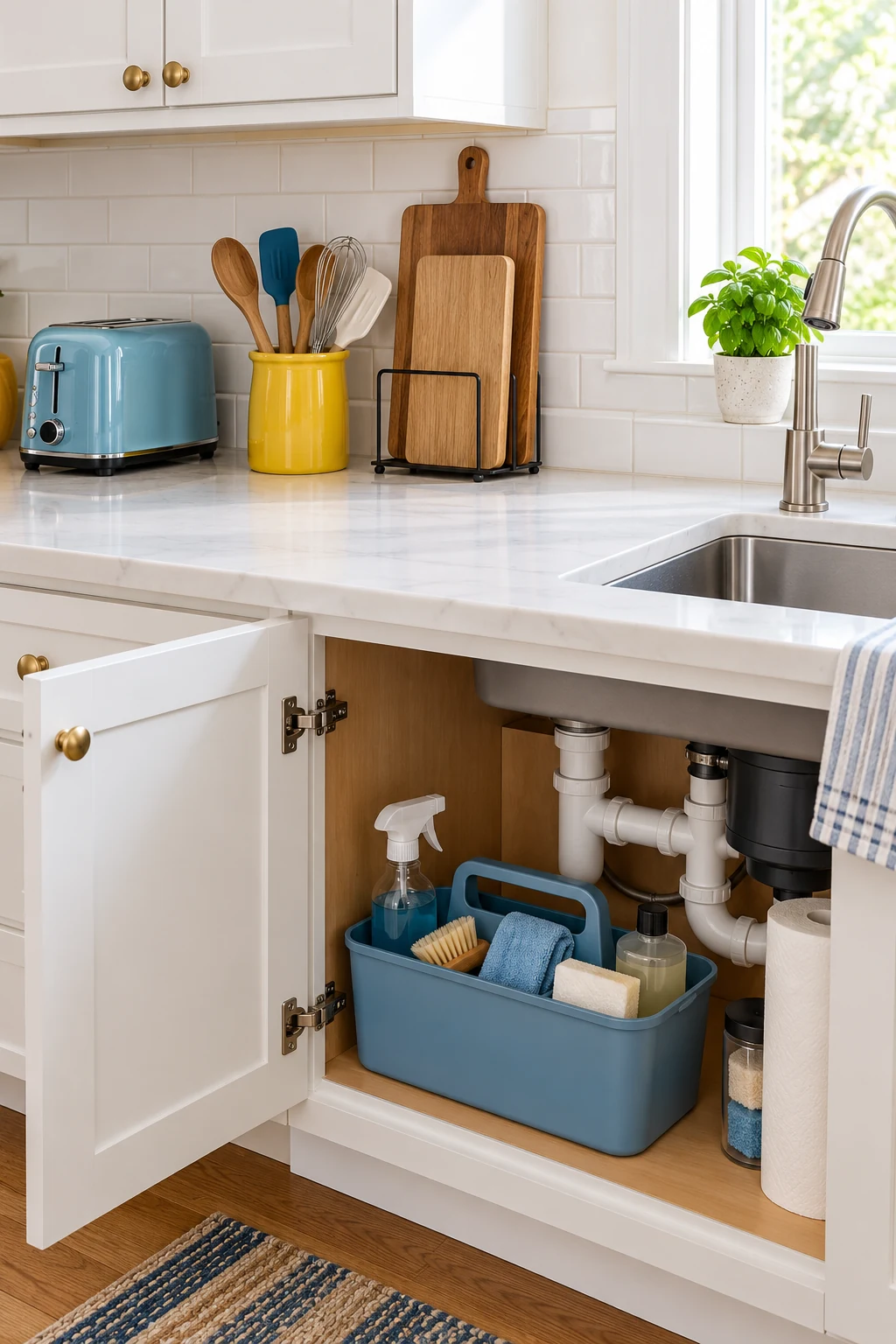
25. Keep a small map and reset the corner
Place a simple contents list inside the door or in your household notes if the rear section is hard to see. Use clear categories such as roasting pan or seasonal baking molds, and update the list when the contents change.
Check the corner whenever you return a bulky item. Make sure the front retrieval lane and all moving parts stay clear. If something repeatedly lands on the counter because putting it back is awkward, give it a better home instead of adding another layer of storage.
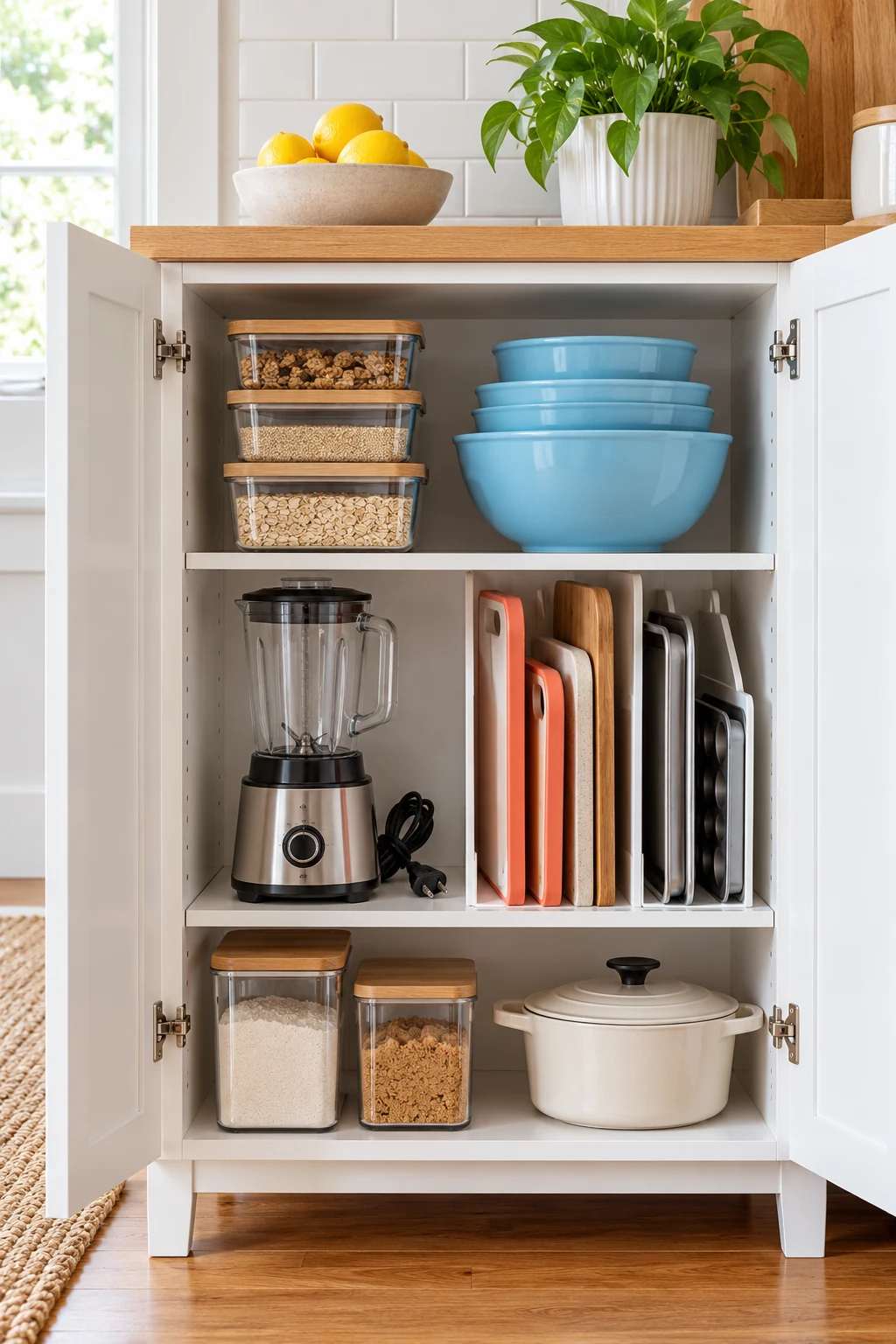
Begin with the front section and one clear route to the back. If a simple bin or smaller collection makes the corner easy to use, keep it simple. If the cabinet still requires an awkward reach, use your measurements to compare a properly fitted system. Subscribe to the Havelyo email list for more small-space decorating and organization ideas.