
Kitchen Organization
22 Kitchen Storage Cabinet Ideas for Kitchens That Need More Room
When a kitchen runs short on storage, another cabinet can help, but only if it fits the room and has a clear job. A tall cupboard may hold more, while a shallower cabinet might preserve the walkway you need every day.
These 22 kitchen storage cabinet ideas focus on adding useful capacity without making a small kitchen harder to use. Start with a floor-plan test and a short list of what needs a home. Check interior dimensions, door movement, shelf limits, and required anchoring before buying. Then organize the cabinet around that specific collection, rather than filling it simply because the space is available.
This article contains affiliate links. If you buy through them, Havelyo may earn a commission. As an Amazon Associate I earn from qualifying purchases.
1. Measure a usable footprint before choosing a cabinet
Tape the proposed cabinet footprint on the floor, including handles and any baseboard gap. Then open the refrigerator, dishwasher, nearby drawers, and doors. A cabinet can fit along a wall and still make the kitchen difficult to move through.
Leave the taped outline in place during a normal meal. Notice where you stand to load groceries or carry hot dishes. Select the cabinet around the space that remains comfortable, not the largest furniture dimensions the wall could technically accommodate.
2. Use a tall enclosed cabinet for a spare wall
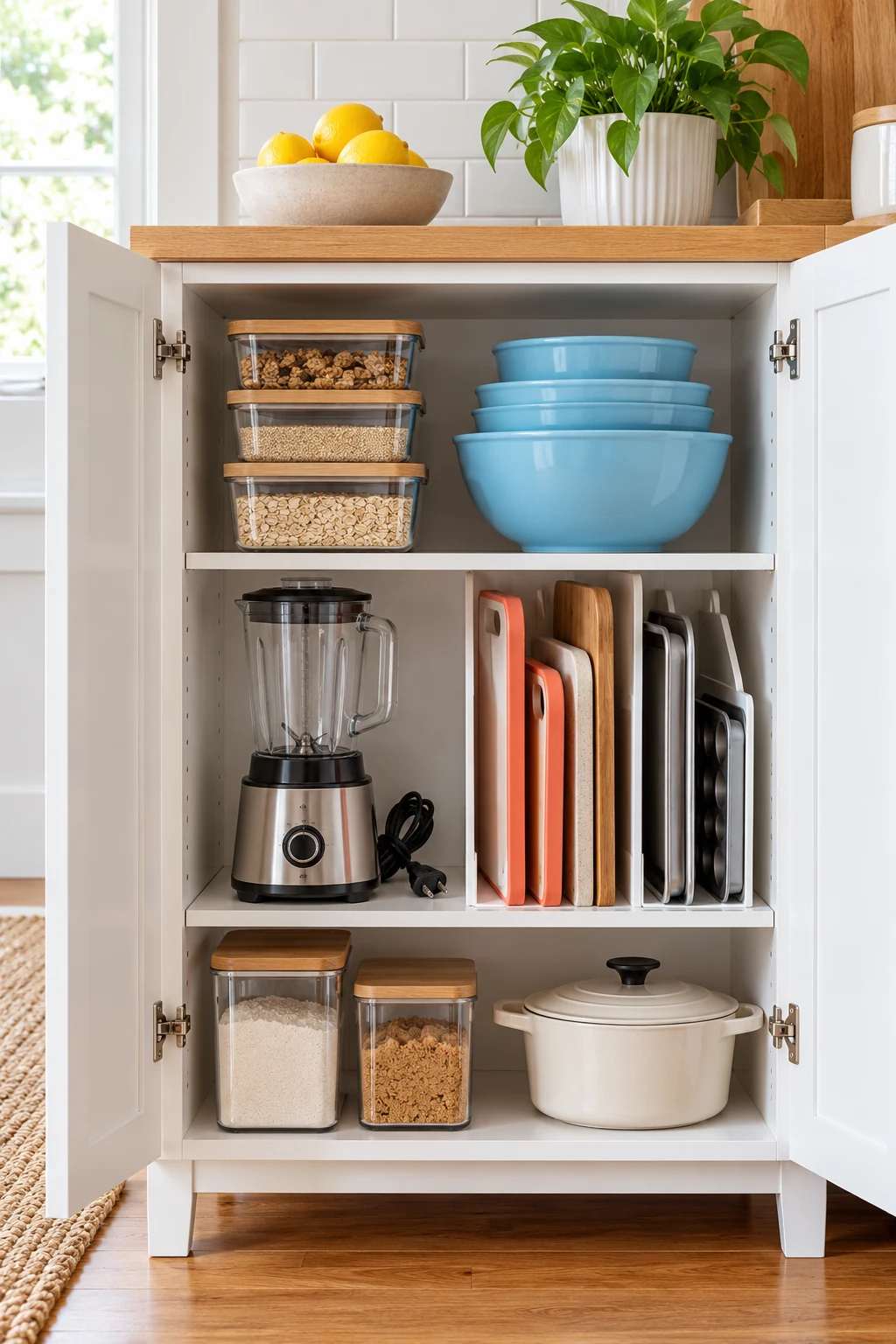
A tall cabinet can turn a spare wall into useful storage for pantry supplies and serving pieces. Choose adjustable shelves so the layout can change, with the heaviest permitted items kept at a comfortable low level.
The Sauder HomePlus Kitchen Storage Pantry Cabinet in Soft White, model 422427, is one option to compare. Its swing-door storage requires a generous opening path. Verify the current dimensions, shelf limits, and assembly instructions, and complete the specified wall anchoring before loading it.
3. Choose shallow depth beside a narrow walkway
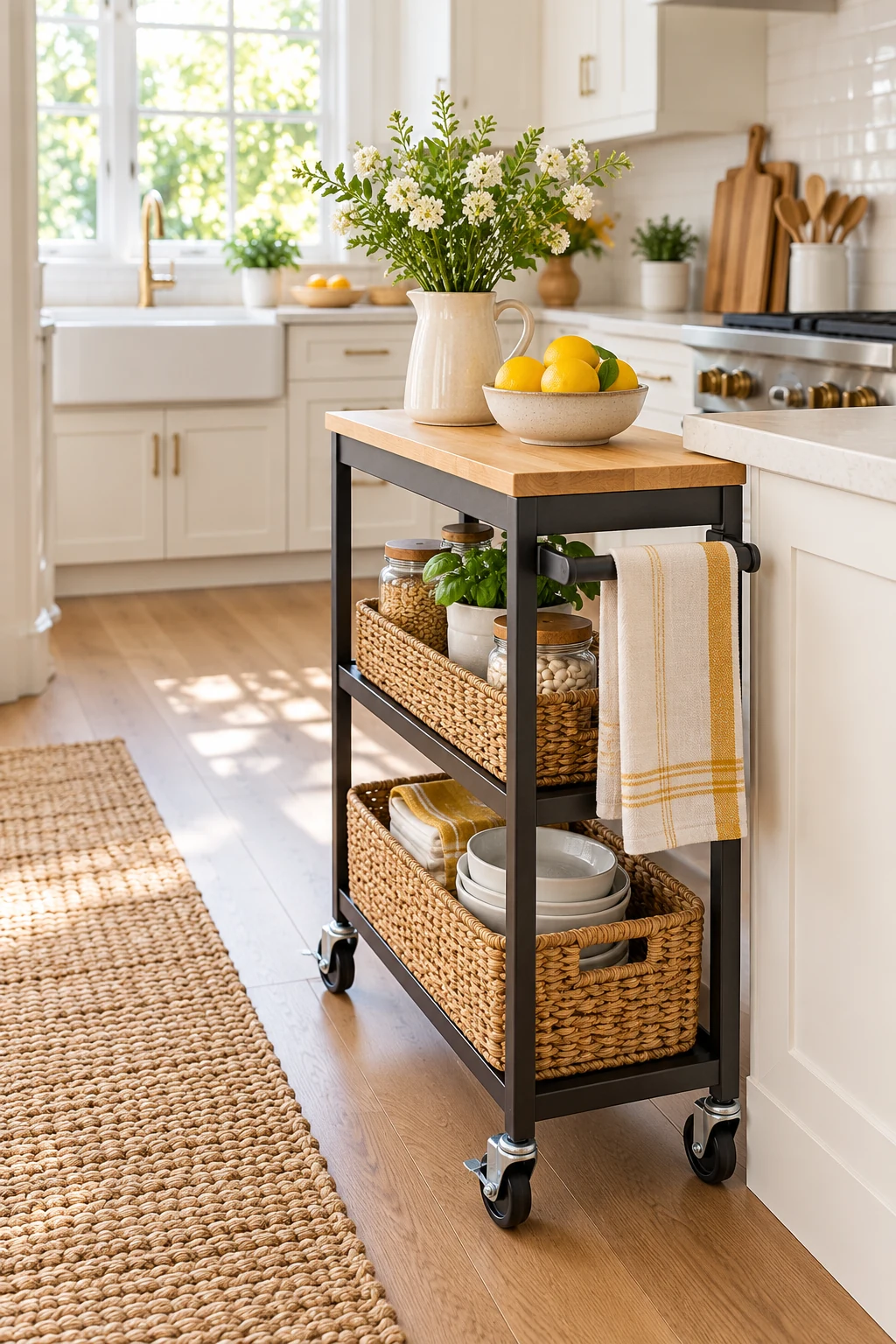
A shallow cabinet can be a better addition than a deep one when traffic space is limited. It suits dishes, jars, and short supplies that you can arrange in a visible row without losing items at the back.
Measure the interior depth as well as the exterior footprint. Door panels, hinges, and the back reduce usable room. Try your largest plate or intended bin in a cardboard mockup, and leave the walkway clear when the cabinet door is fully open.
4. Use a low cabinet as a serving station
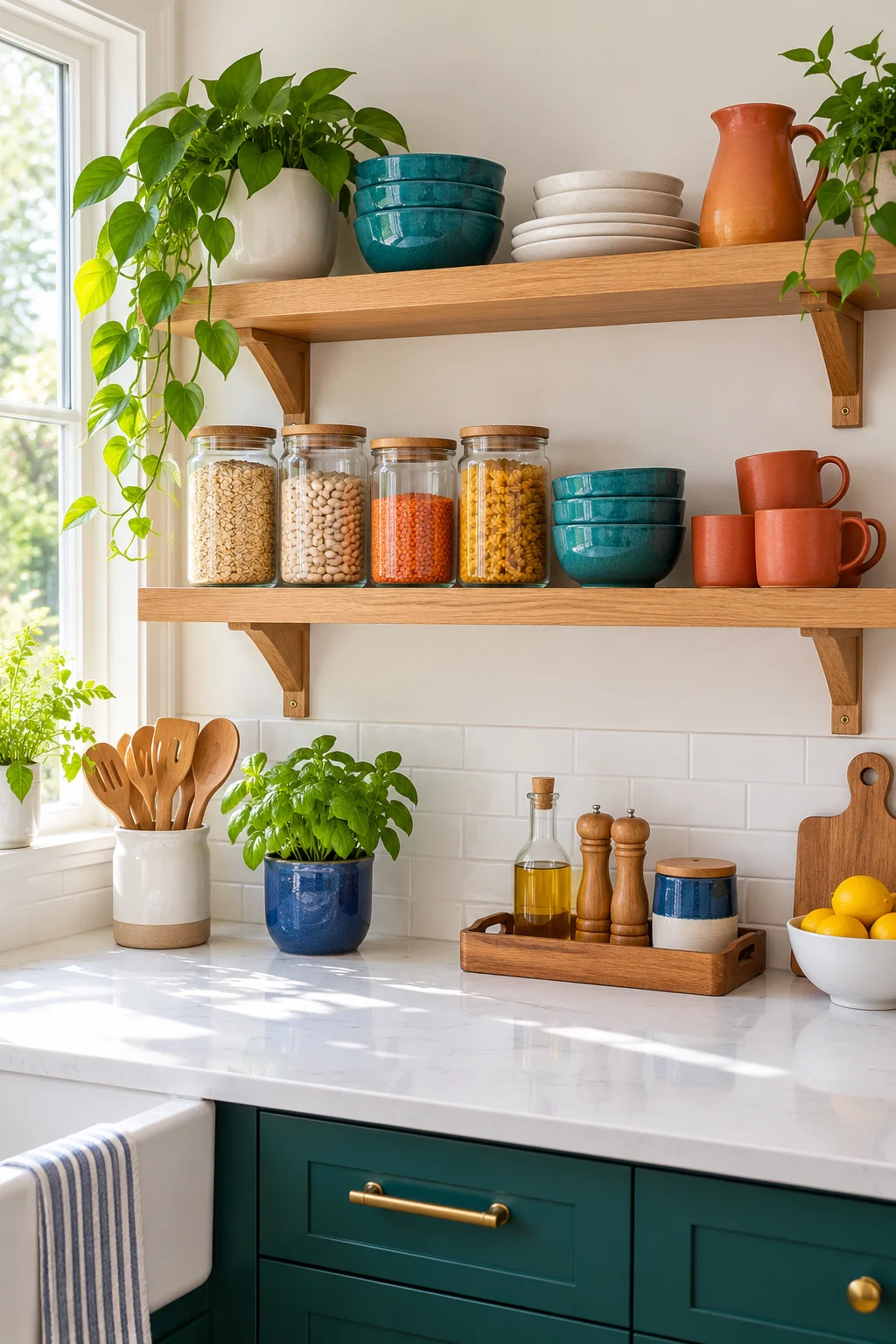
A low enclosed cabinet near the dining area can hold napkins, placemats, and serving pieces while its top becomes a convenient landing surface. Moving those categories here can free the kitchen’s base cabinets for daily cookware.
Check the top’s weight and care limits, and use appropriate protection for moisture or heat. A decorative furniture top is not automatically a chopping surface. Leave enough room to set down a tray without balancing it on permanent decor or a pile of mail.
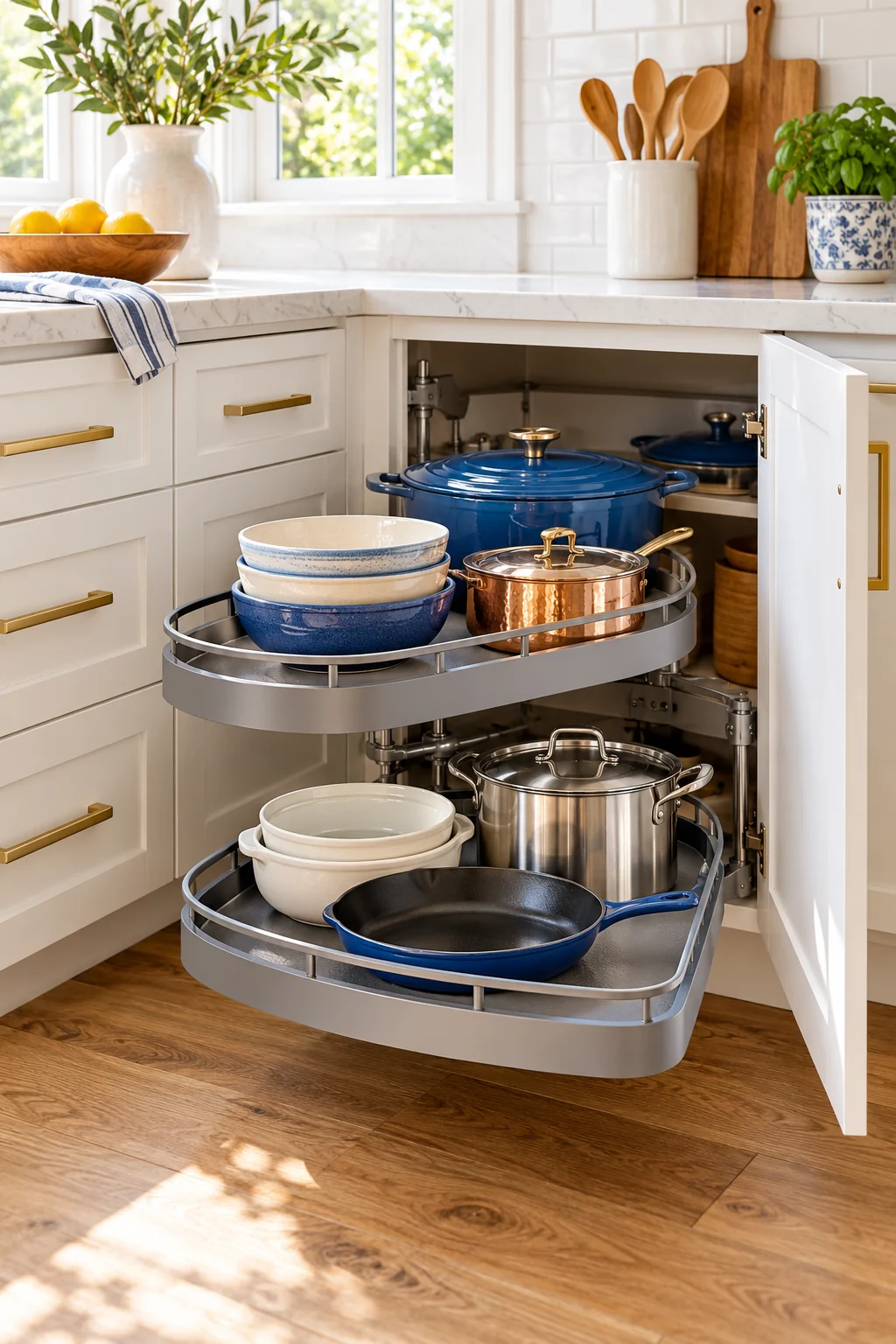
5. Fit a narrow cabinet into an actual gap
A slim cabinet can work beside a wider storage unit or along a short wall where a standard cabinet would overwhelm the space. Give it narrow categories, such as baking sheets or a small collection of serving trays.
Measure the opening at the floor, middle, and top, allowing for trim and handles. Keep appliance-required ventilation gaps untouched; an empty space beside a refrigerator may have a necessary purpose. Do not buy furniture to fill it until you have checked the appliance instructions.
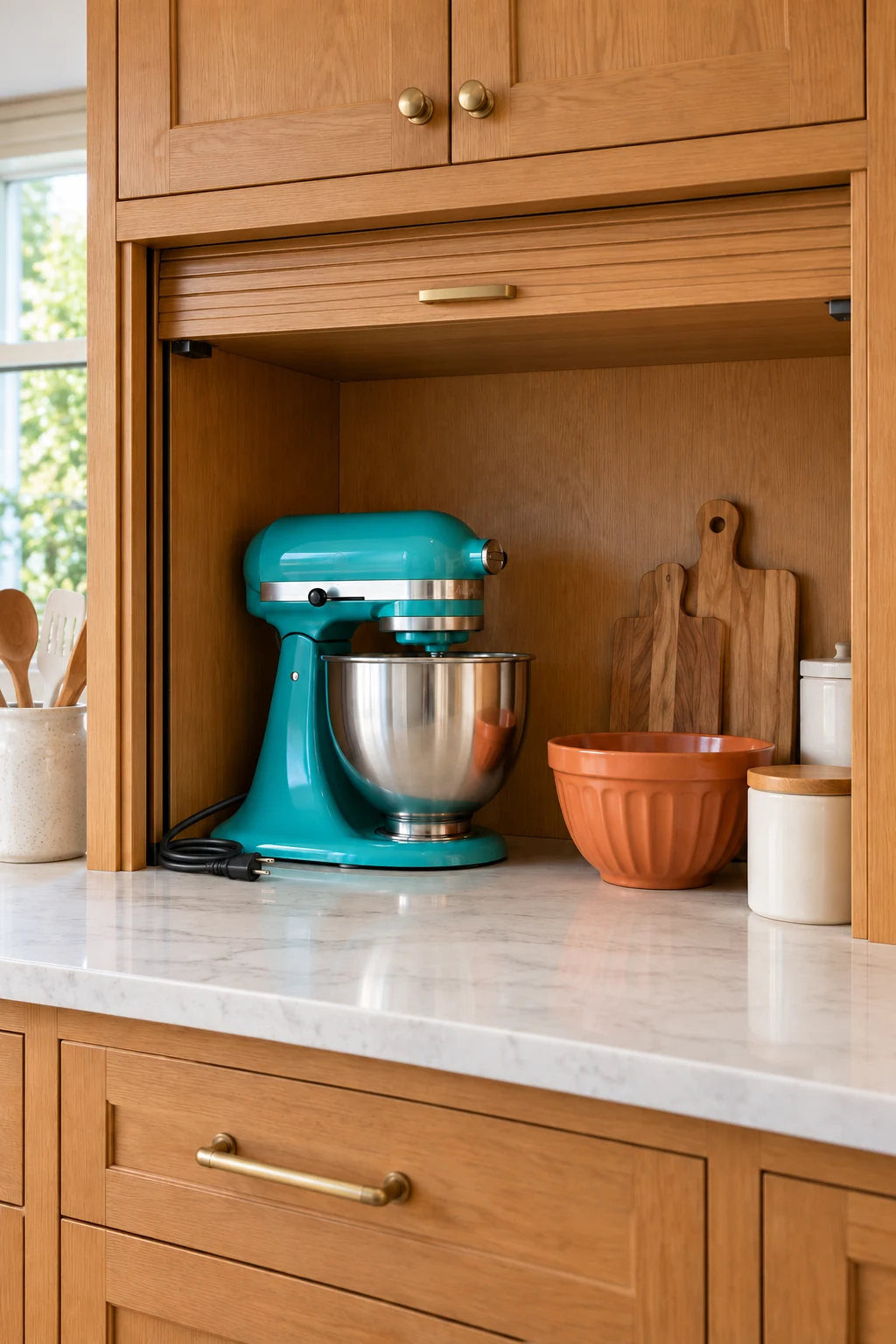
6. Consider a purpose-built corner cabinet
A freestanding corner cabinet can turn an unused room corner into storage without extending far along either wall. It is often useful for lighter serving pieces or a small breakfast collection when the main cabinetry is full.
Compare the interior shape with your actual dishes. A triangular shelf may look roomy but offer limited space for square bins or wide platters. Follow anchoring instructions, and check both nearby door swings so access remains comfortable from the side you use most.
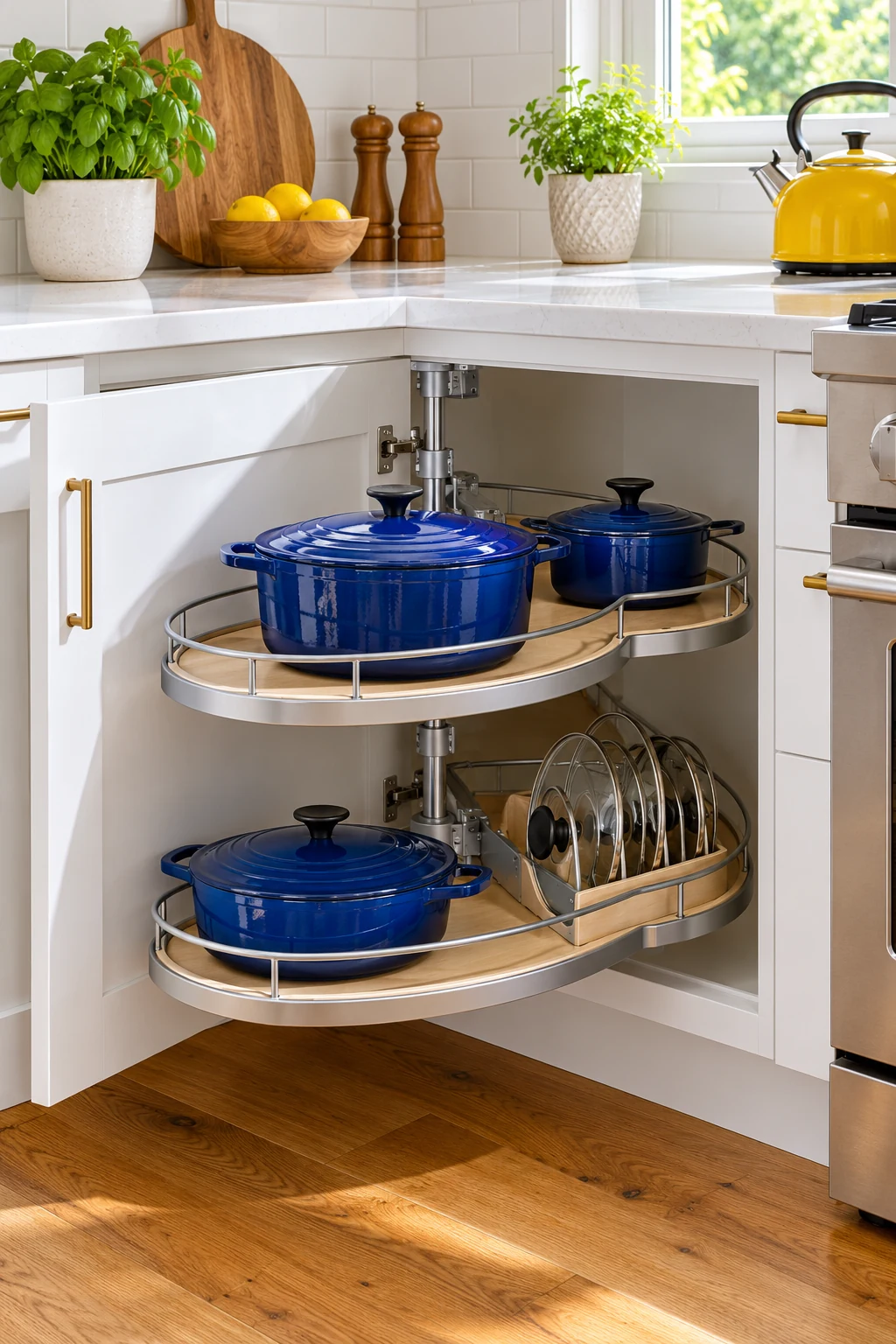
7. Use upper cabinets where floor space is scarce
A properly installed wall cabinet can add enclosed storage without taking up a narrow floor path. Choose a height that makes the lower shelf useful for everyday lighter items and leaves a suitable work or passage area below.
Wall cabinets need a mounting system and wall structure suited to their fully loaded weight. Use a qualified installer when necessary, particularly around existing wiring and plumbing. Do not replace proper cabinet fixings with adhesive hardware or treat a decorative shelf bracket as equivalent support.
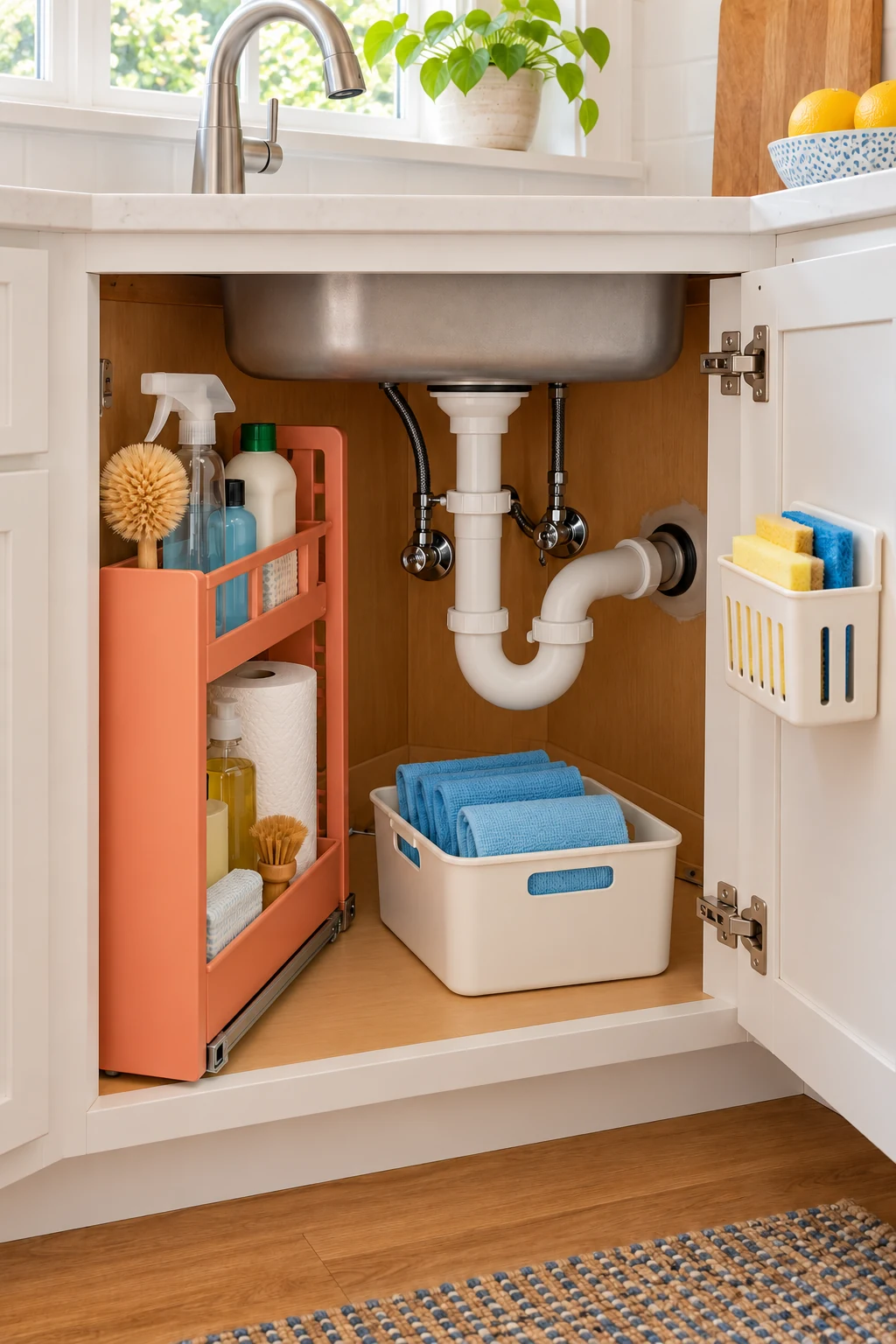
8. Choose doors that suit the room
Hinged doors, sliding doors, and open sections solve different access problems. Hinged doors can reveal the whole opening; sliding doors avoid a swing path but keep part of the cabinet behind a panel. Test the movement against your routine.
Measure the usable opening in the position you will actually use it. A wide cabinet with a narrow sliding-door opening may not accept the basket you planned. Keep door hardware accessible and follow the maker’s adjustment instructions so poor alignment does not become an everyday struggle.
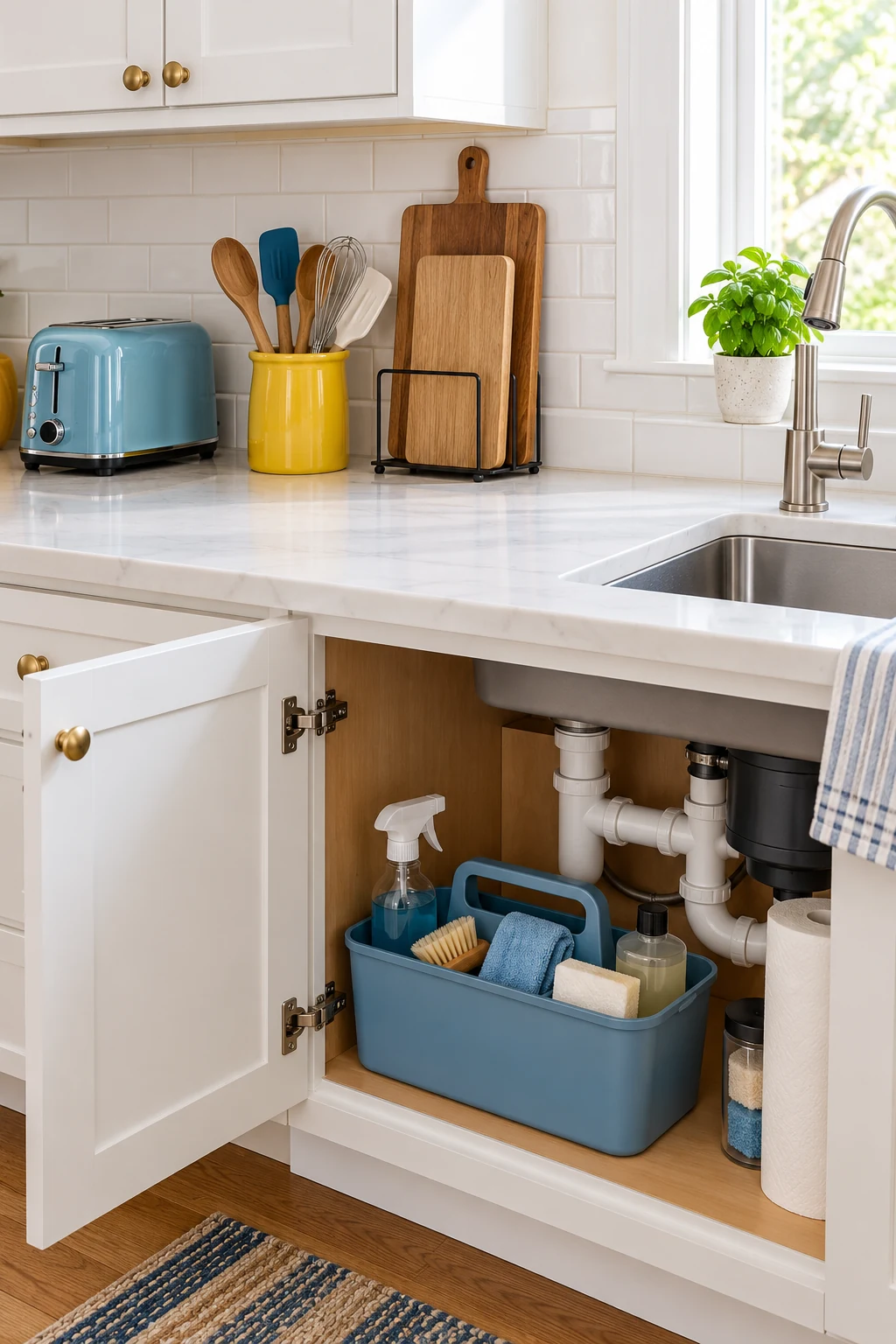
9. Use glass doors for a simple daily collection
A glass-front cabinet can make a small kitchen feel visually lighter while keeping dishes behind doors. Give it a focused collection, such as everyday bowls and glasses, so the display remains easy to use and maintain.
Arrange short stacks with room around handles and rims. Store visually busy packets in a different cabinet if you prefer a quieter look. Follow the cabinet’s glass-shelf load and care guidance; a delicate-looking shelf should never be assumed suitable for dense cookware.
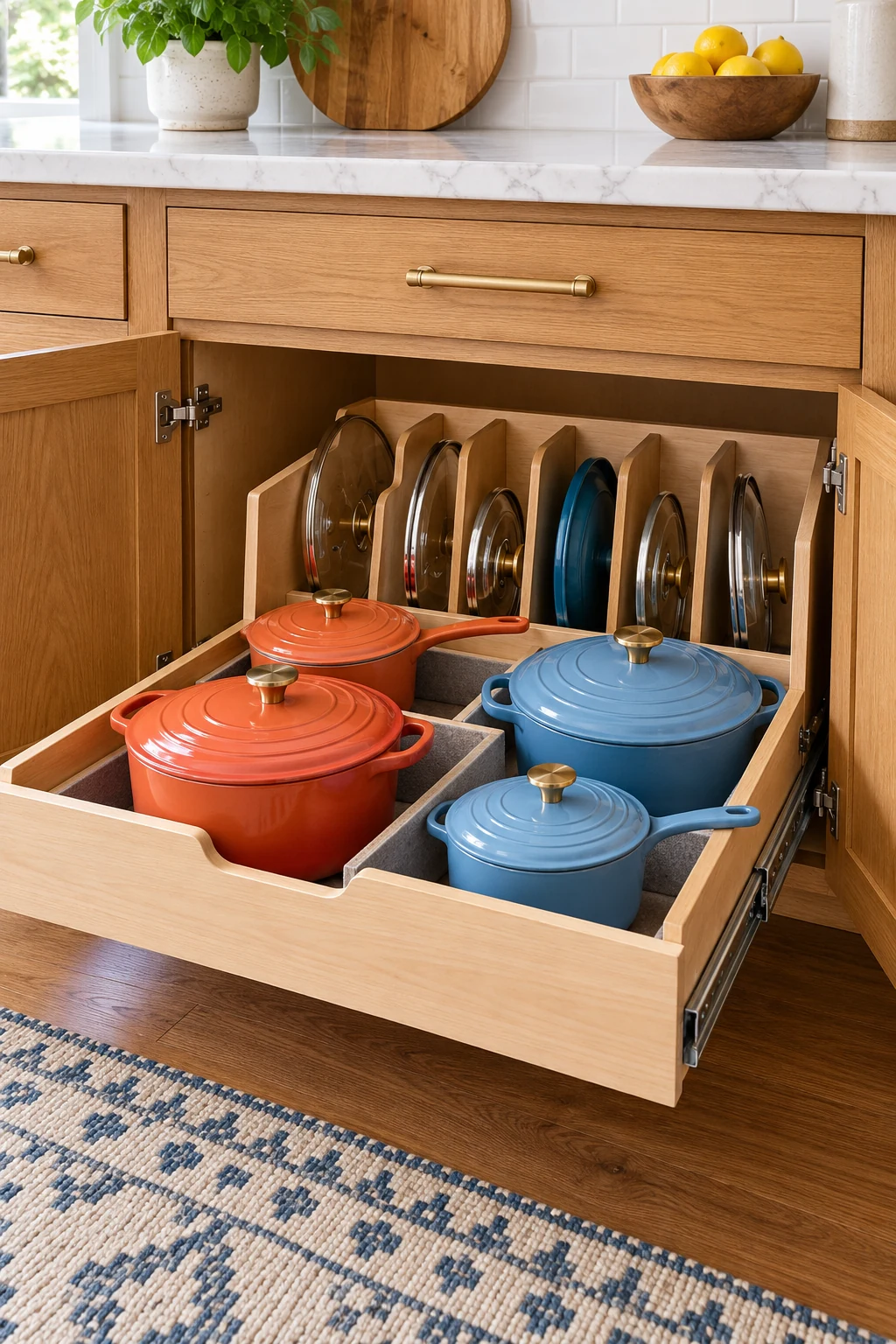
10. Mix one open section with enclosed storage
A cabinet with one open section can keep a small, frequently used group within easy reach while doors hide less attractive supplies. Use the open bay for mugs or a portable breakfast tray instead of packing it with miscellaneous objects.
Before choosing the cabinet, check that the open bay has the height and depth your items need. Keep appliances unplugged and stored only if the manufacturer permits it; operating a coffee maker in an enclosed or partly enclosed bay requires its specified clearances.
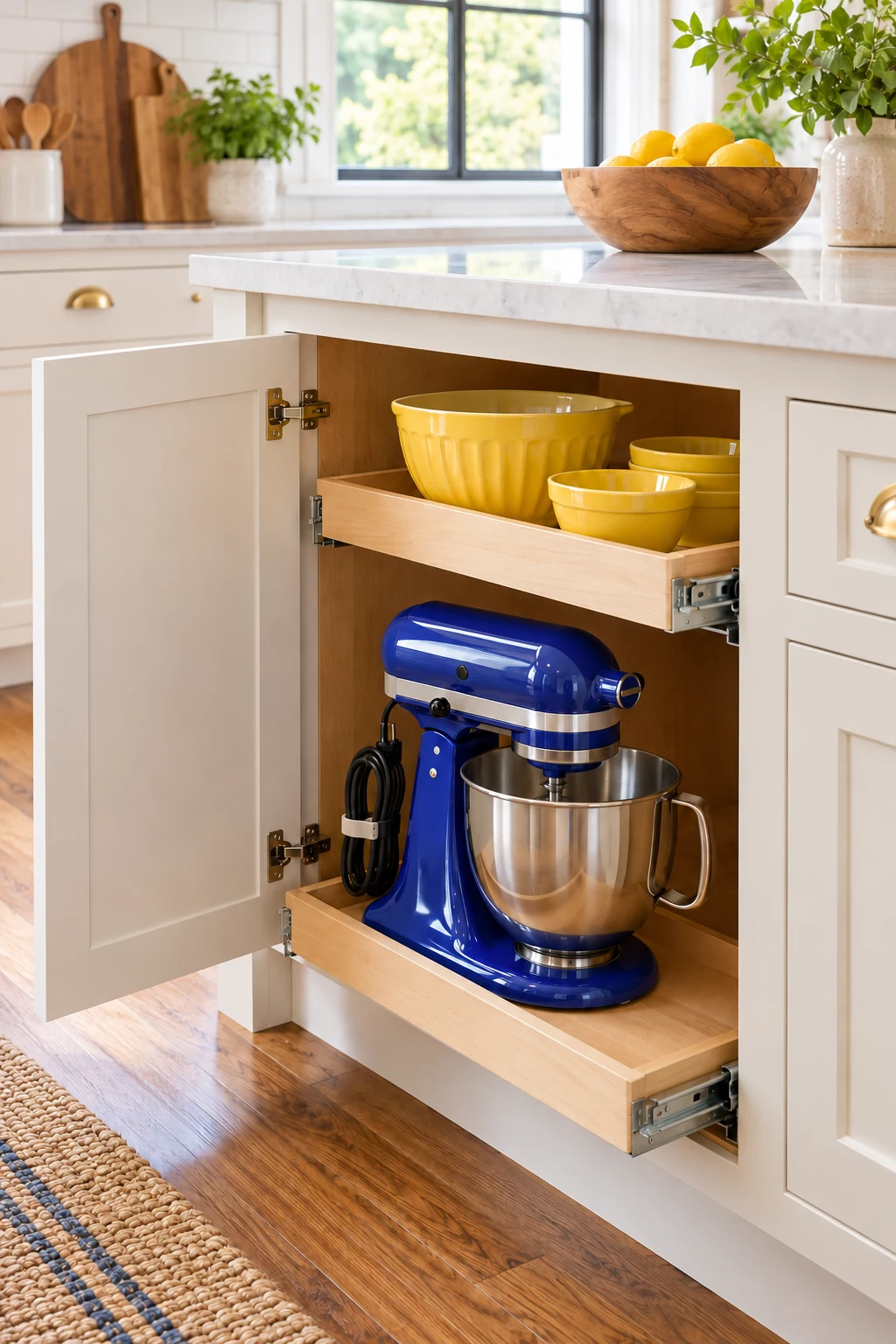
11. Separate short dish stacks with a riser
Inside a new or existing storage cabinet, one tall opening can often serve two short categories. A riser lets small bowls sit above side plates without asking you to lift the bowls whenever you need a plate.
The SONGMICS two-piece shelf set can create a removable extra level when the individual pieces fit. Check the clear space beneath the shelf and the combined load on the cabinet board. Leave room to grasp dishes rather than filling the added level edge to edge.
12. Add a small shelf unit for long boxes
If the cabinet holds foil, parchment, and food bags, give the active boxes separate low levels. This keeps the original package labels visible and reduces the chance of a collapsing cardboard stack.
The small YouCopia UpSpace Cabinet Box Organizer is designed for adjustable short shelves within a larger opening. Test the longest box through the cabinet door and leave room to pull it straight out. Store extra rolls elsewhere when they would block the everyday dispensers.
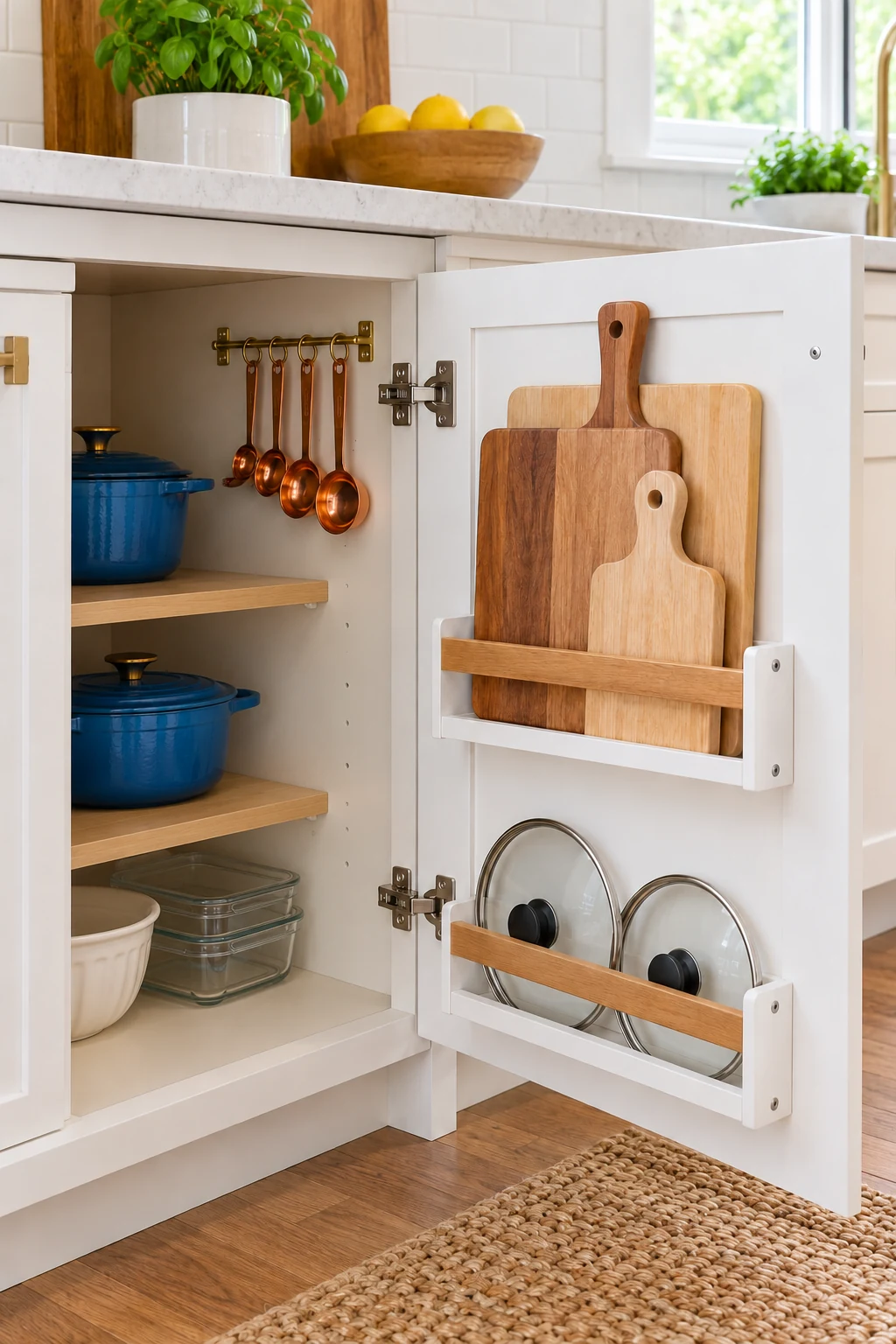
13. Make deep cabinet shelves removable by category
A handled bin can turn a deep shelf into a collection you lift forward. Give each bin a clear job, such as baking extras, napkins, or drink accessories, rather than making one heavy container for everything small.
The iDesign Pantry Storage Bin with Handles is useful for a compact square group. Compare its external footprint with the shelf and allow hand clearance. Keep the loaded weight comfortable, especially if you must lower the bin before setting it on a counter.
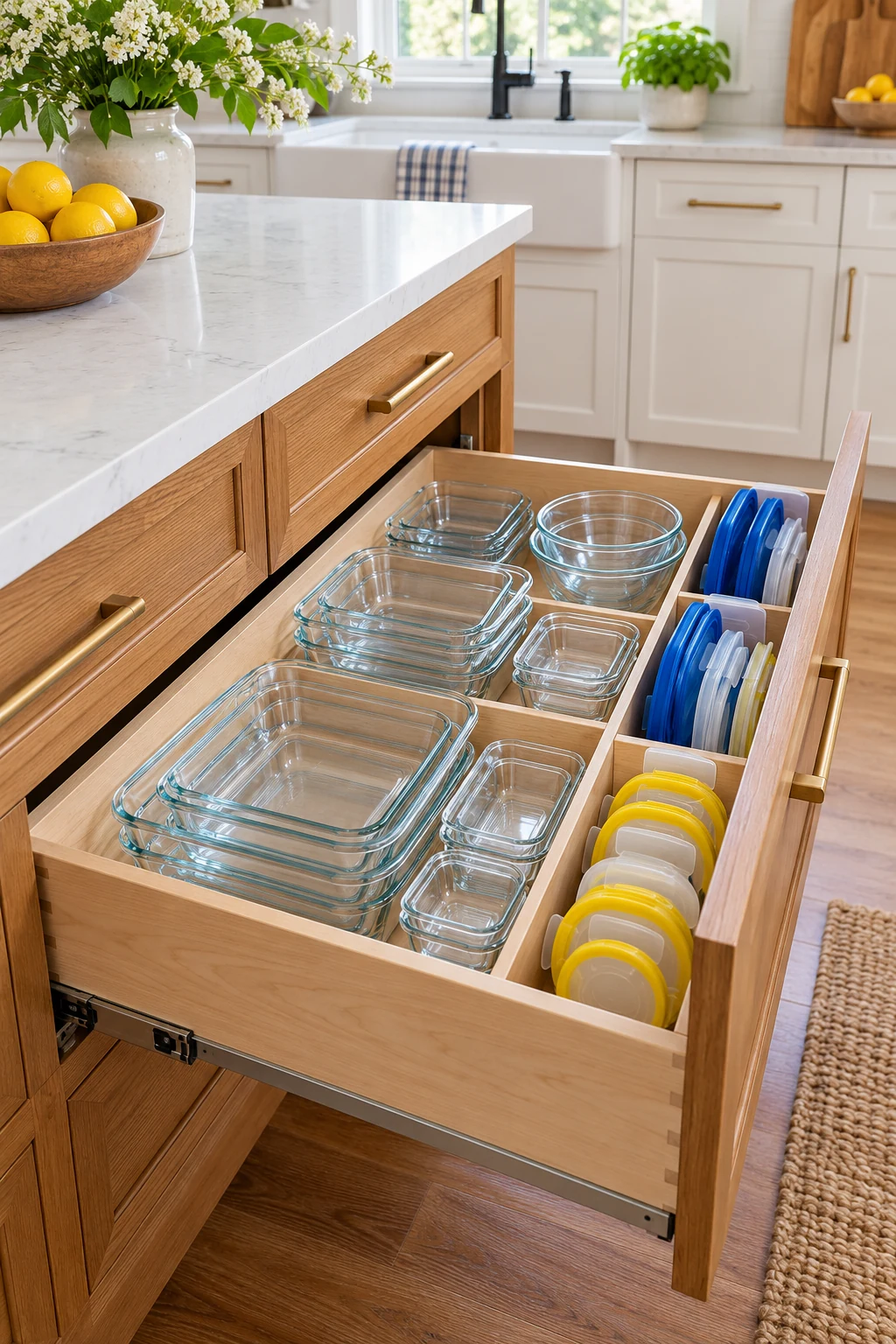
14. Stand thin bakeware in its own bay
Tall cabinet openings can hold sheet pans and cooling racks vertically, leaving shorter shelves for dishes. Choose a lower, reachable section so a wide pan can come out without brushing your face or catching an upper door.
The YouCopia StoreMore Bakeware Rack provides adjustable support for a mixed row. Measure the loaded sheets and the clearance needed to tilt them through the opening. Store fragile or heavy bakeware where its weight and material can be handled appropriately.
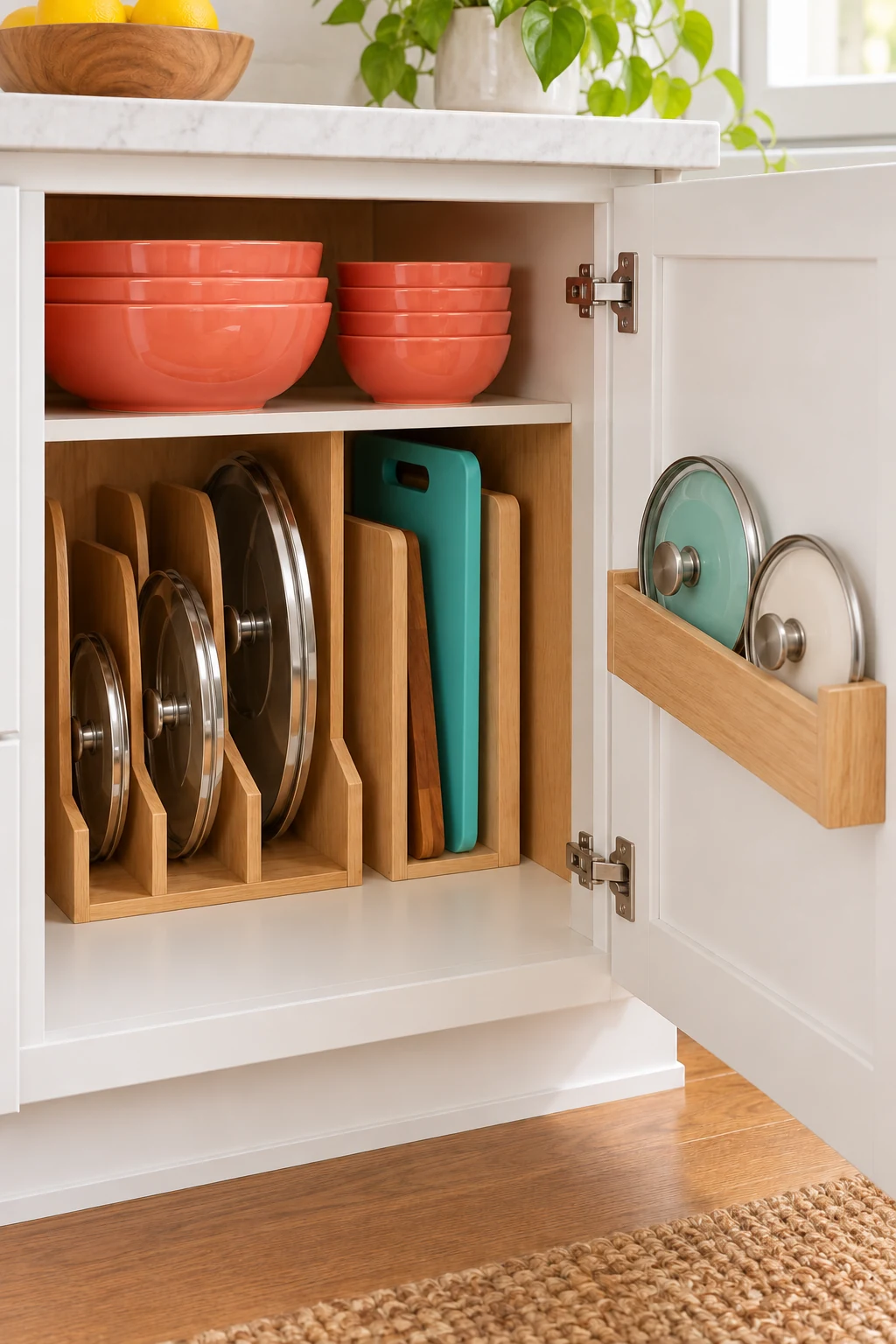
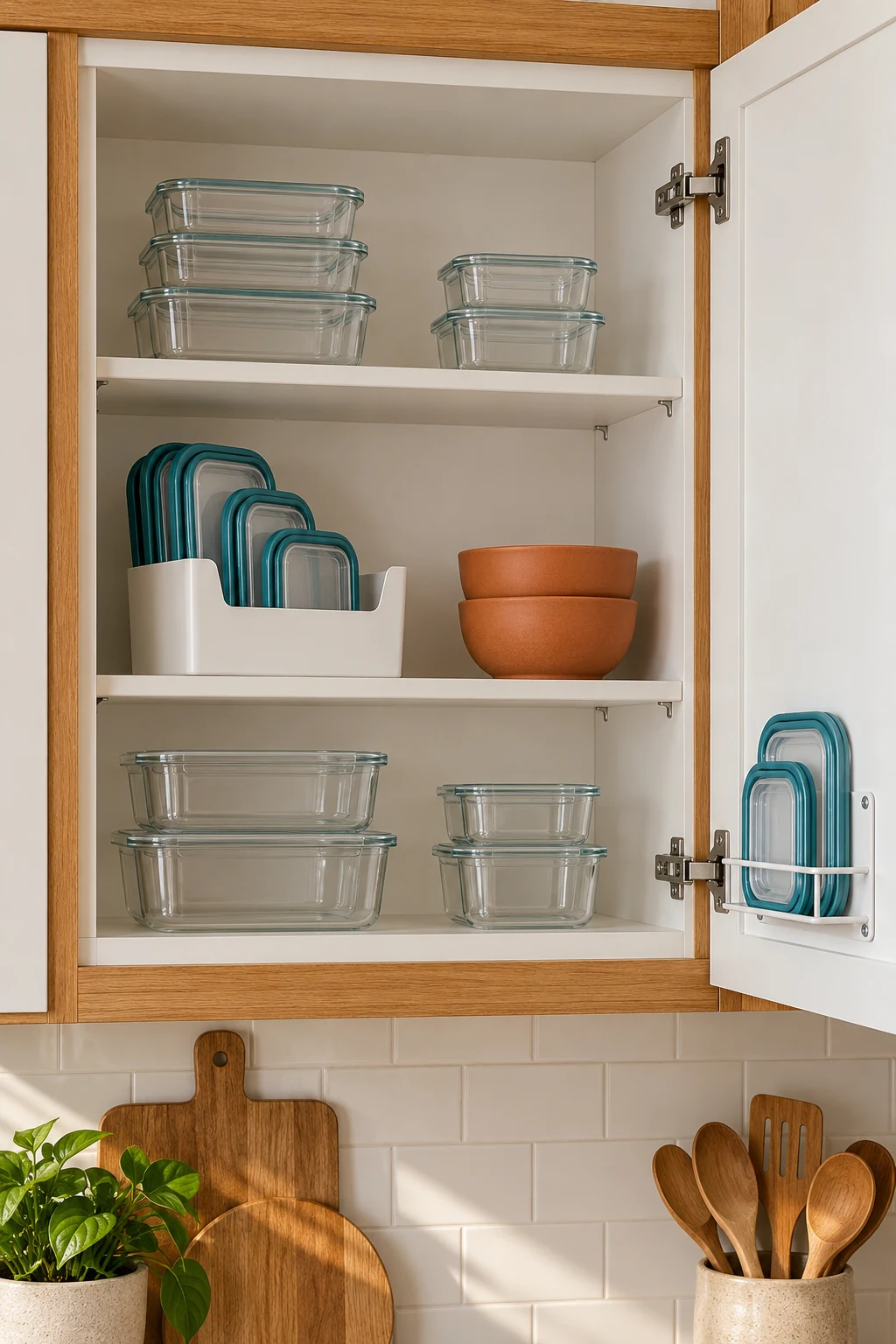
15. Give container lids a visible row
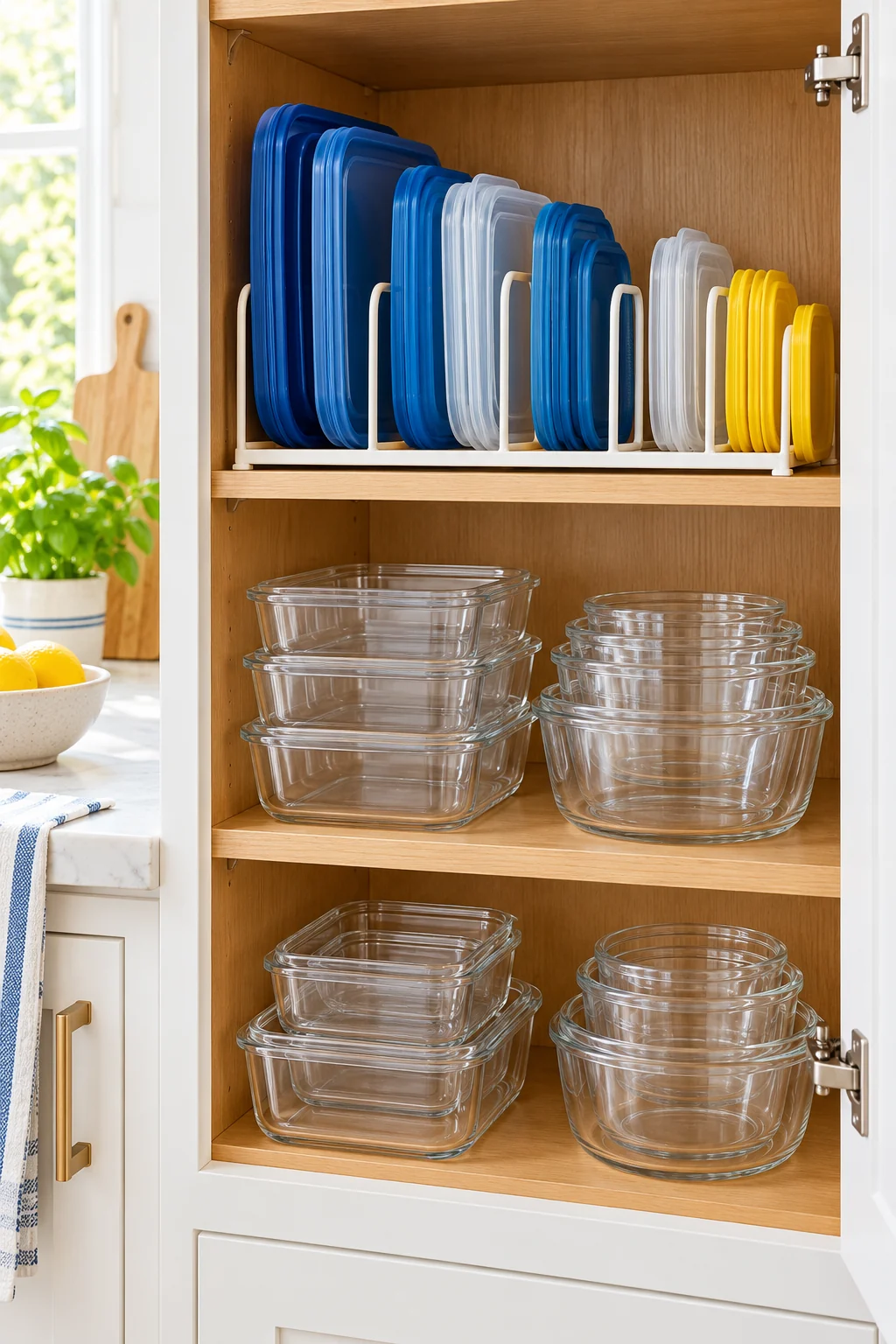
A storage cabinet near the prep area can hold food containers and their lids together. Pair them first, then stand compatible lid groups beside the matching stacks so you can build a complete set quickly.
The YouCopia StoraLid 24 Container Lid Organizer has movable dividers for this arrangement. Check the overall organizer footprint and standing lid height against the chosen shelf. A lower open row may be easier than a lidded box you must remove and open for each meal.
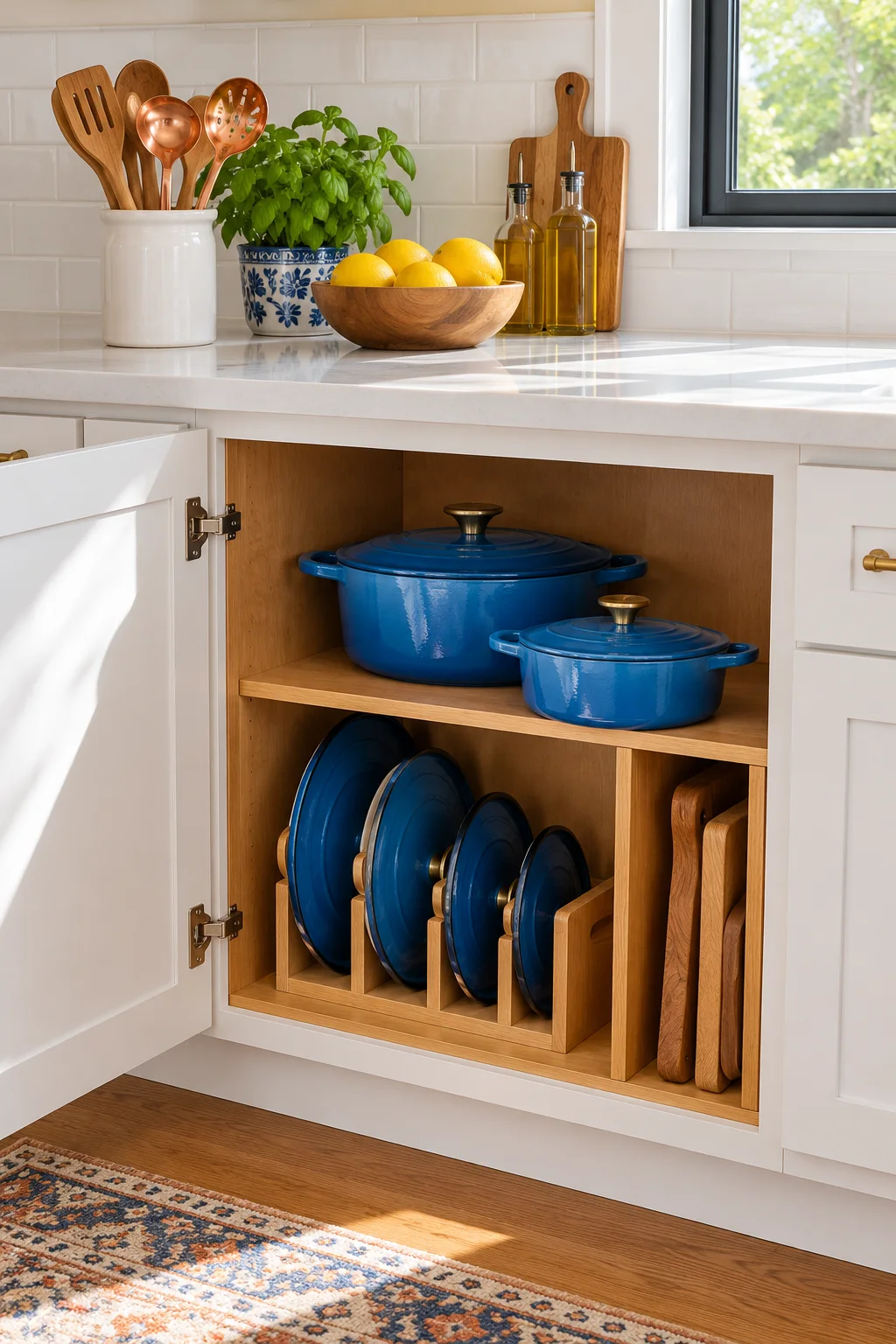
16. Use a turntable for a small bottle group
A turntable can improve access to a few bottles on a deep, reachable cabinet shelf. Keep a modest group around the outside so rotation actually brings each item into view, rather than surrounding a hidden center pile.
The Copco 12-inch turntable is a straightforward option to measure. Include the loaded bottles in a full rotation test, with the cabinet door closed. Follow the products’ storage instructions and keep the tray away from heat or any appliance ventilation path.

17. Create a dedicated cookware cabinet
If pans have outgrown the main kitchen cabinets, a sturdy additional cabinet can hold a focused cookware collection. Place it close enough to the cooking area that carrying a pan across the room is still comfortable.
The YouCopia StoreMore Expandable Cookware Rack can separate suitable pans on a properly supported shelf. Check the furniture’s shelf limits and the size of loaded handles. Keep the cabinet anchored as directed and avoid placing heavy cookware high just because an organizer fits there.
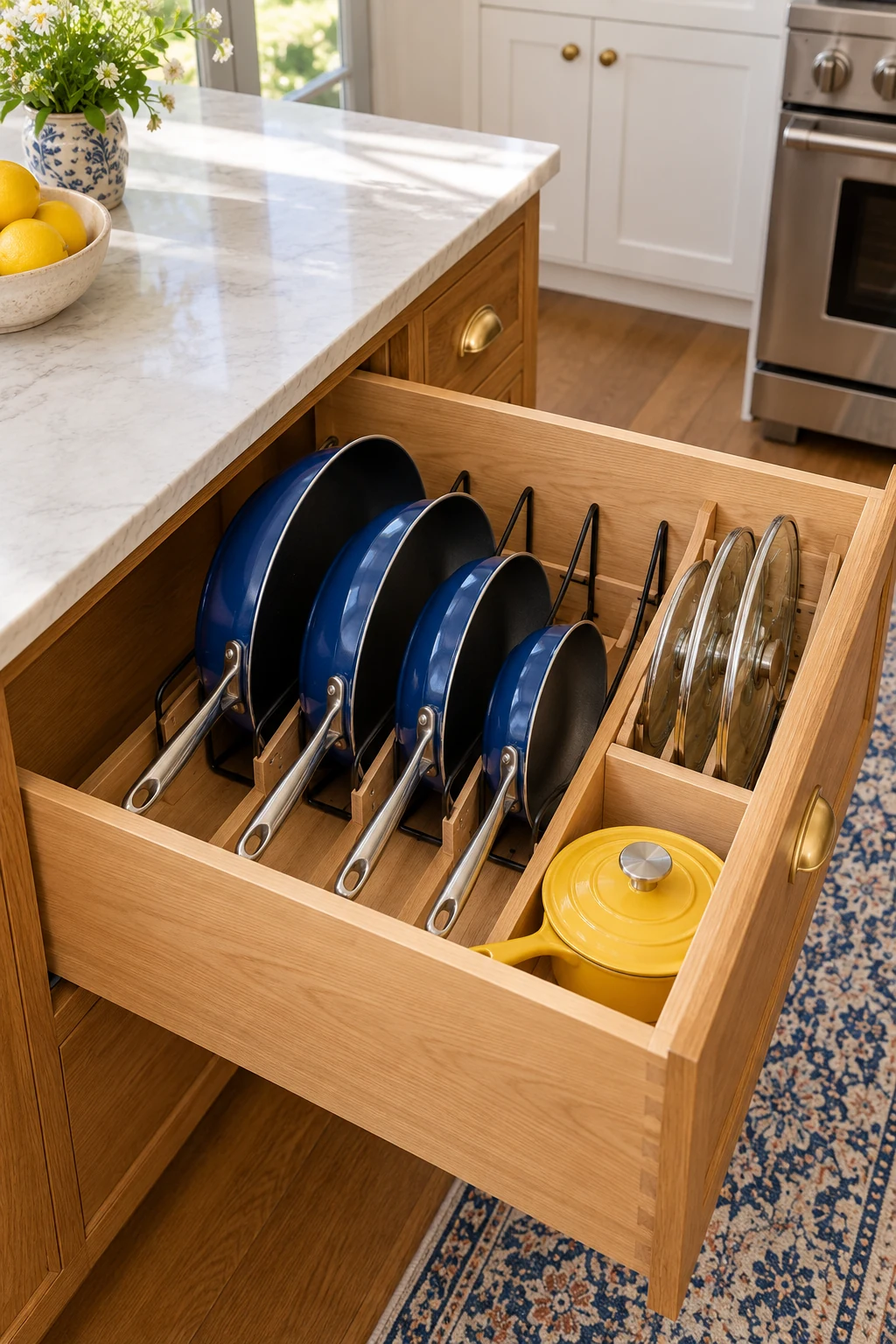
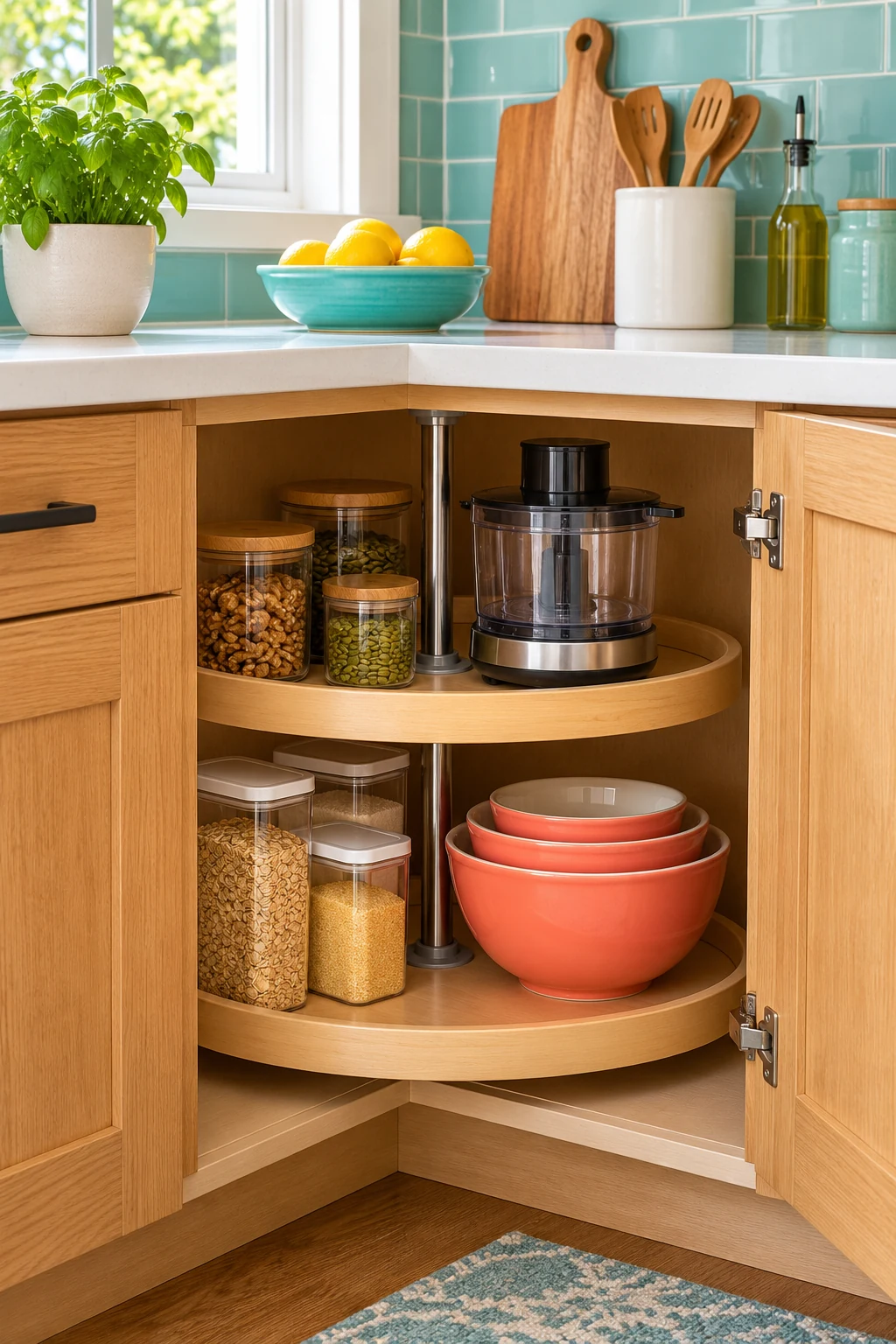
18. Reserve a dry place for appliance parking
A cabinet can hold the appliances you do not use every day, with a separate spot for each set of attachments. Measure around lids, handles, and cords so the appliance comes out easily without pulling another object along.
Follow the appliance’s storage instructions, unplug it, and let it cool before putting it away. A storage cabinet is not automatically an operating enclosure. Move the appliance to a suitable work surface with its required clearances whenever you use it.
19. Give overflow supplies a clear limit
An extra cabinet can become a useful home for unopened refills, but it can also hide things you forgot you own. Assign a shelf or bin to each relevant category and keep the existing package labels and directions visible.
Check this cabinet before shopping and move refills into use when appropriate. Avoid expanding the category into every remaining shelf. A clear storage limit helps the extra cabinet support the kitchen instead of becoming a second collection of things to sort later.
20. Anchor and level the cabinet before organizing
A cabinet should be assembled, leveled, and secured according to its instructions before you fill it. Use the required anti-tip system and wall fixings suitable for your home, getting qualified help if the wall construction is uncertain.
Adjustable feet can help with level; they do not replace anchoring. In a rental, get permission for the required installation rather than leaving a tall cabinet unsecured. Keep heavy loads low as directed and avoid using shelves, doors, or drawers as climbing steps.

21. Use doors only within their design limits
Purpose-built door shelves can put small items within easy reach, but they change how a cabinet opens and carries weight. Keep items within the maker’s loading guidance and verify that nothing collides with the fixed shelves inside.
Do not assume a plain furniture door can support an added rack. Ask the manufacturer about mounting, door construction, and hinge limits before modifying it. Test the loaded swing path carefully, particularly where the door opens toward a narrow walkway or another cabinet.
22. Keep the new cabinet focused after move-in
Once the cabinet is filled, give each shelf one recognizable role and leave a little room for returning items. Use simple removable labels where the purpose is not obvious, especially if several people put things away.
Try the setup for a week of normal cooking before adding more inserts. If a category keeps migrating back to the counter, reconsider its location rather than buying another cabinet. The useful gain is storage that fits your habits as well as your floor plan.
Choose the cabinet shape that leaves your kitchen comfortable to move through, then give it one clear purpose. A measured footprint, secure installation, and a simple shelf plan can make the extra storage feel like it belonged there all along. Subscribe to the Havelyo email list for more small-space decorating and organization ideas.