
Pantry Organization
25 Pantry Cabinet Ideas for Kitchens Without a Walk-In Pantry
You don’t need a walk-in pantry to give groceries a proper home. A well-planned cabinet can hold the foods you use most without turning every cooking session into a cupboard search. The trick is matching the layout to the opening, the shelf depth, and your routine.
These 25 pantry cabinet ideas include ways to use existing cupboards and options to consider when adding storage. Start with one cabinet and measure its usable space, including hinges and door travel. Keep food in an appropriate cool, dry location, and follow the cabinet’s loading and anchoring instructions before filling it.

This article contains affiliate links. If you buy through them, Havelyo may earn a commission. As an Amazon Associate I earn from qualifying purchases.
1. Turn a pair of upper cabinets into one food zone
Choose two neighboring upper cabinets for the pantry foods you use most, then move occasional serving pieces elsewhere if there is a better home for them. Keeping food in a continuous area can be easier than opening three unrelated cupboards to assemble a meal.
Map the interior of each cabinet separately before buying inserts. A center stile, hinge, or slightly different shelf depth can change what fits. Keep heavier foods on a lower reachable level and use the upper section for light extras you can retrieve safely.
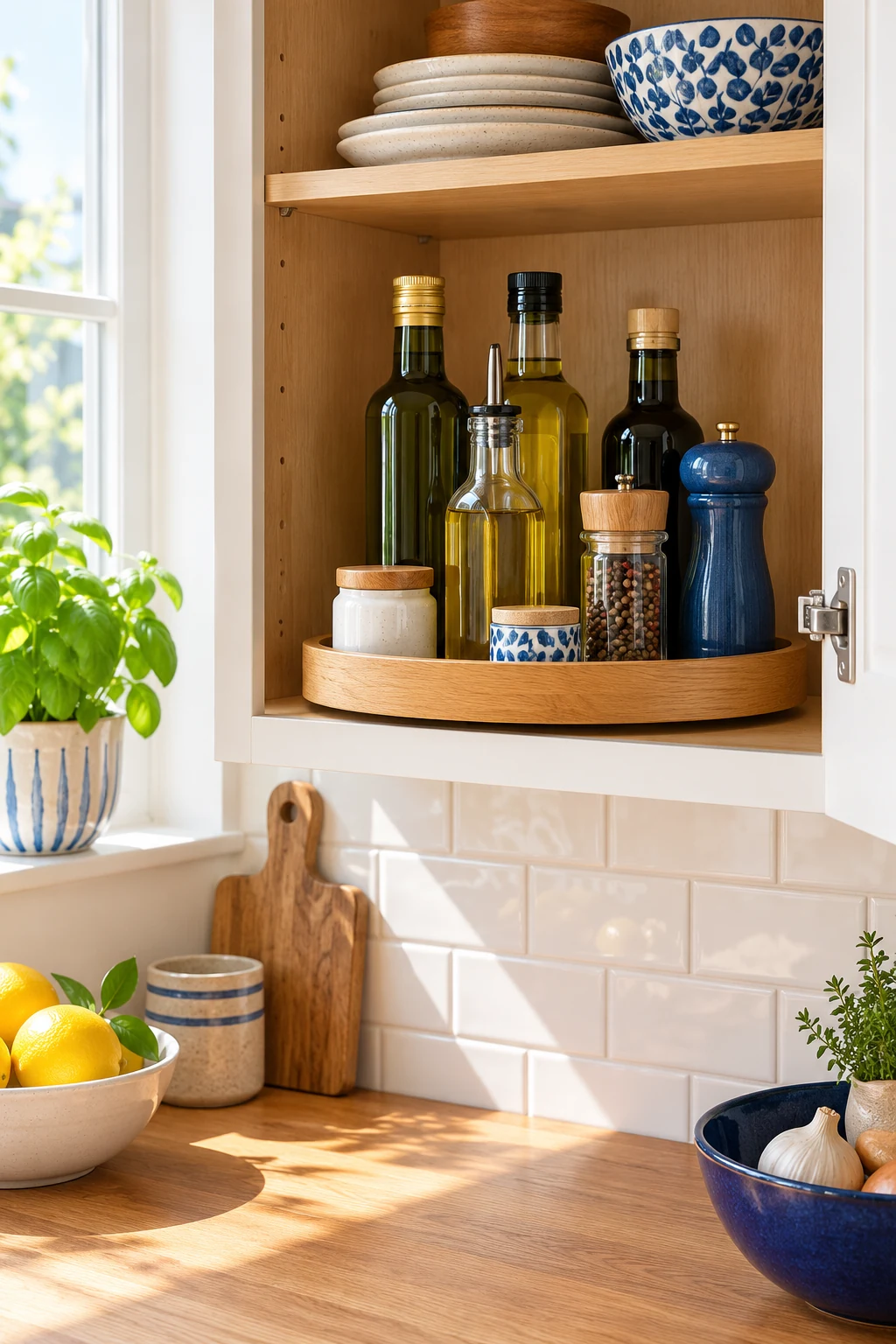
2. Give an existing tall cabinet a food-first layout
A tall cabinet can act as a compact pantry when its interior matches the food you buy. Place a few actual cereal boxes, bottles, and canisters on the shelves before resetting the heights. Leave a separate space for anything too tall for the regular rows.
Keep the useful middle section for everyday ingredients rather than making all shelf gaps identical. If the cabinet is freestanding, install the required anti-tip hardware before loading it. Follow its shelf ratings; a cabinet designed for light linens may not suit a dense collection of cans.

3. Choose a shallow freestanding pantry where depth is scarce
A shallow cabinet along an unused wall can hold a single visible row of food without projecting far into the kitchen. Mark the proposed footprint with painter’s tape first, then test the walking route while nearby appliance and cabinet doors are open.
Check usable interior depth rather than the outside measurement, since doors and the back panel take space. Choose furniture intended for the load and follow all anchoring instructions. A freestanding cabinet still needs to be secure, even if you prefer a movable or rental-friendly setup.
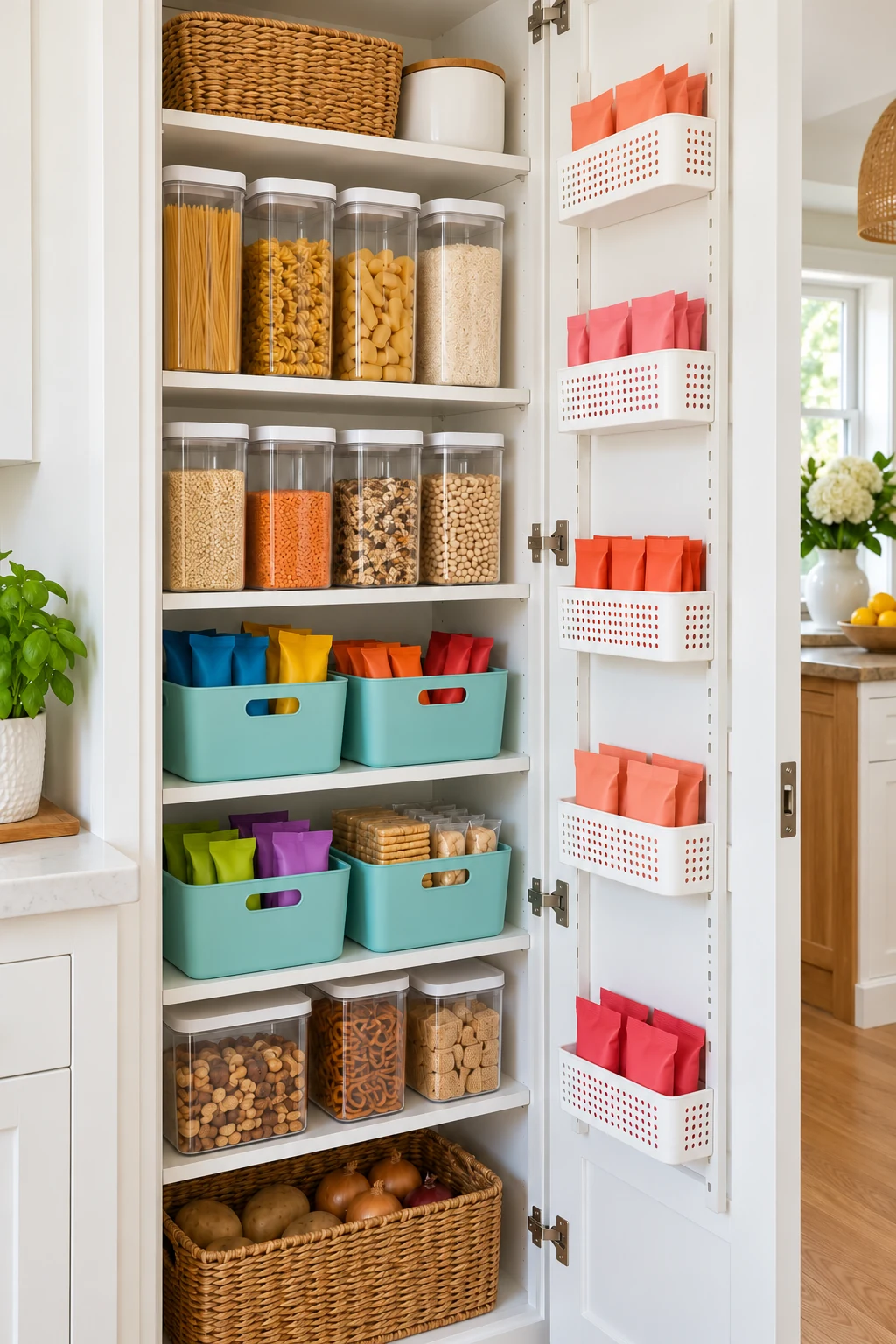
4. Use a low sideboard for pantry overflow
A sideboard in a nearby dining area can hold unopened pantry extras when kitchen cabinets are already full. Give it a specific role, such as baking backstock or a small reserve of canned foods. Keep everyday cooking ingredients closer to the prep area.
Choose a cool, dry indoor location and confirm that the furniture shelves can carry the intended weight. Keep food separate from candles, cleaners, and craft supplies. A low cabinet top can remain useful for serving, but it should not become a permanent unloading pile.

5. Make a deep base cabinet work with lift-out bins
A base cabinet can store pantry food well if you can bring the contents out to see them. Use separate lift-out bins for a few categories, such as sealed snack bags or pasta pouches. Keep the front of each bin clear enough to grip with both hands.
Try the motion while kneeling or sitting at a comfortable height before committing to the arrangement. Avoid loading a large bin with heavy glass jars. If the opening is narrow or the bin catches on the frame, a smaller pair may be easier than one deep container.
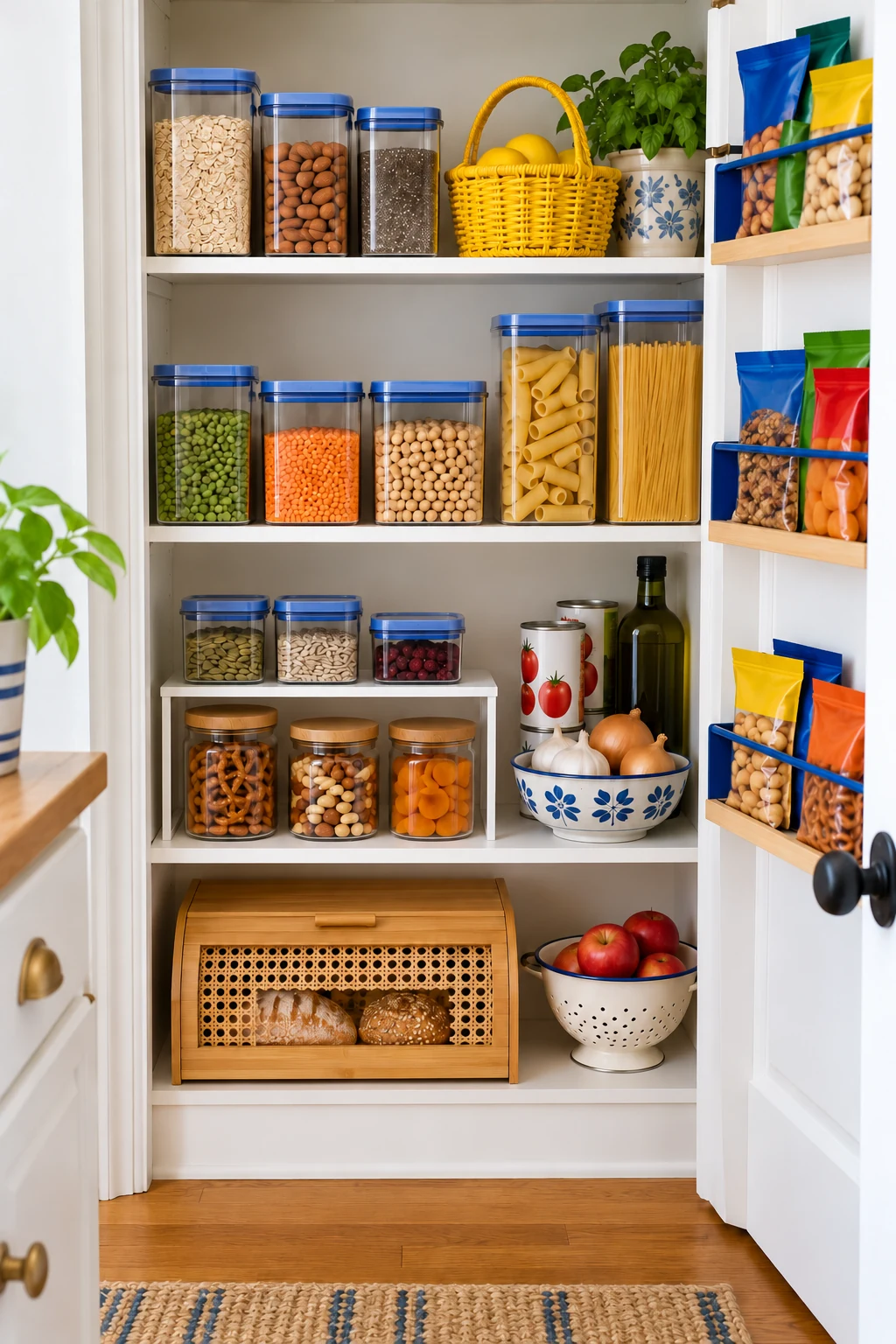
6. Dedicate a deep drawer to upright pantry food
A deep kitchen drawer can become a pantry you look down into. Stand containers and sturdy packages upright in loose rows, then put ingredient names on top where needed. This arrangement helps when bending to a low shelf is difficult.
Measure the drawer’s closed clearance, not just the visible side height. Tall lids can catch underneath the cabinet frame even when the drawer appears deep enough. Keep heavy jars within the drawer rating and leave a little room so the drawer opens and closes without a jolt.
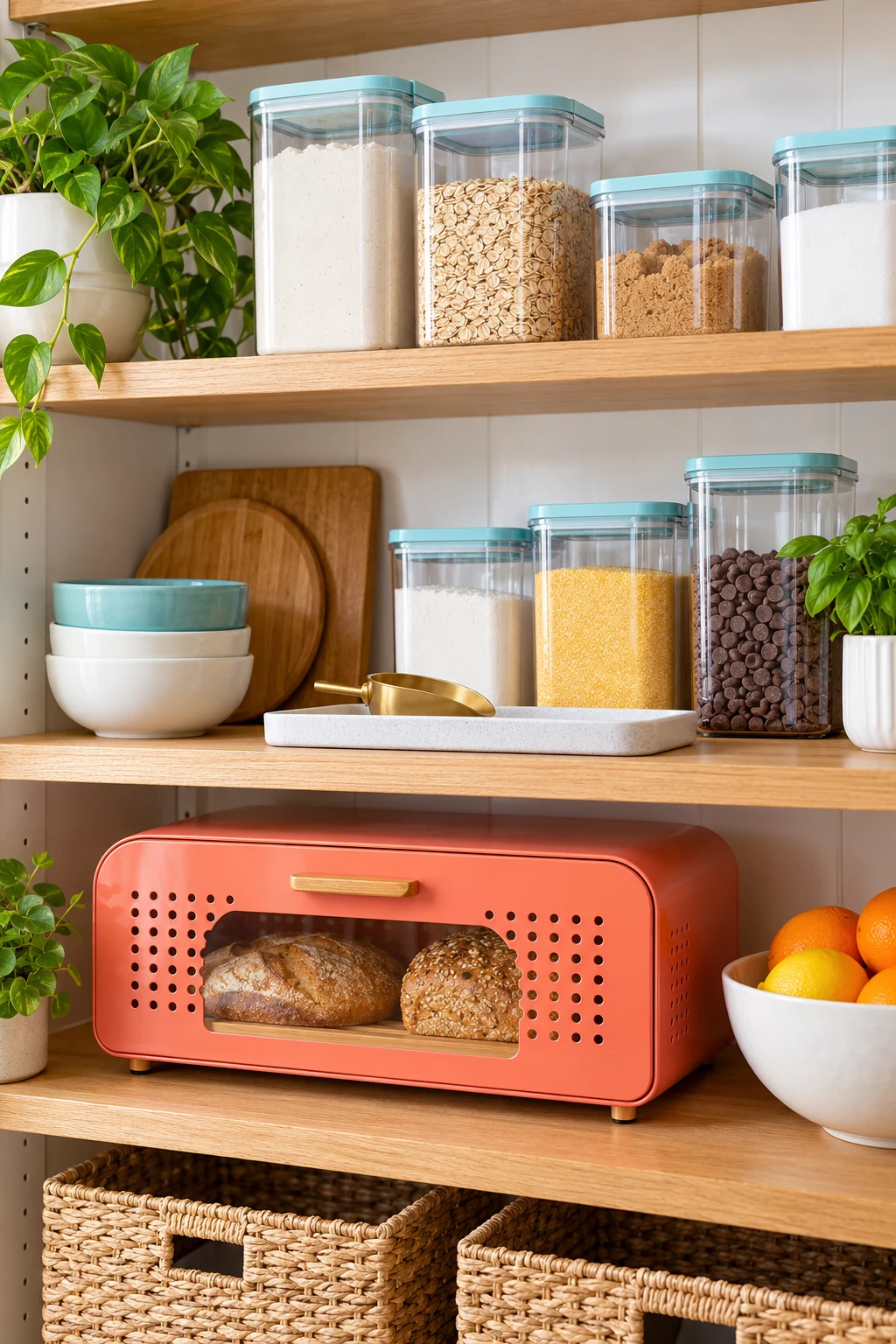
7. Use a narrow vertical cabinet for one slim category
A narrow cabinet can be useful for flat packages or modest pantry containers that fit its opening. Give it a limited job instead of treating it as a miniature version of the entire pantry. A baking-ingredient section or a row of dry dinner basics is easier to browse.
Check whether the door can open far enough to lift out the back items. Narrow cabinets beside a range may be convenient but can expose food to heat; choose a location that follows the food’s storage instructions. Keep oversized packages in a different bay.
8. Split a tall cabinet into daily and reserve sections
Give the comfortable middle shelves of a tall pantry cabinet to open foods and weekly staples. Use a clearly separate section for unopened backups. This makes it easier to spot when you have a working supply and an extra without checking every shelf.
Choose the boundary around your actual reach rather than assigning all reserve food overhead. Heavy duplicate cans may belong low, while light packages fit higher. Keep a short list of the reserve section’s contents if its location is harder to inspect.
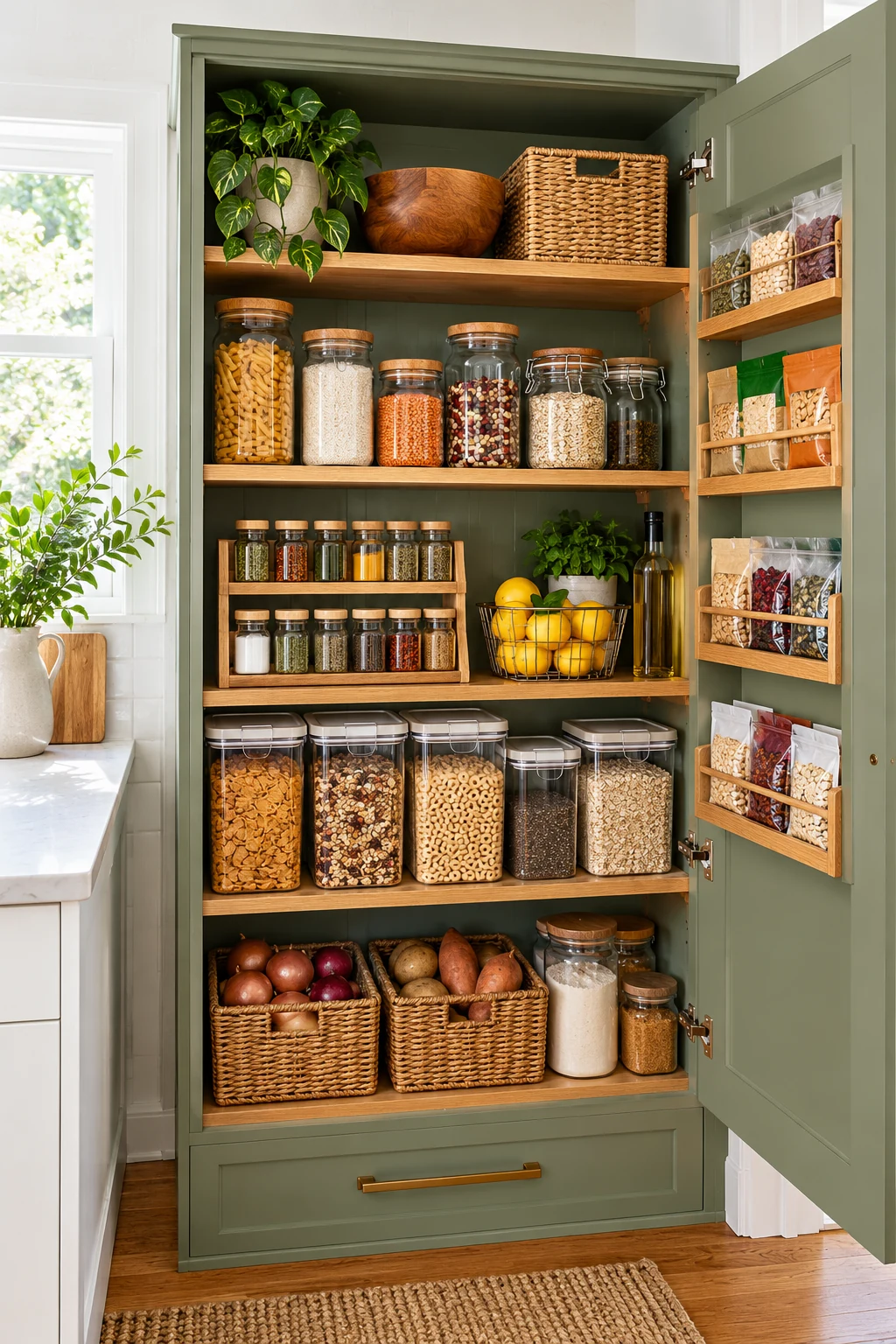
9. Set shelf heights with your tallest real package
When shelves are adjustable, use the actual packages to decide the gaps. A shelf for short cans needs a different opening from one for cereal boxes. Include room for your hand and for any lid you plan to open in place.
Move shelf pins only as the cabinet manufacturer allows, supporting the empty shelf while you work. Confirm that every pin is fully seated and matched to the cabinet. Recheck the door and hinge clearance before loading food back onto the new levels.
10. Add a removable shelf inside an oversized opening
An unusually tall cabinet compartment does not always need a permanent new shelf. A freestanding insert can make space for two short rows of food while preserving the cabinet itself. Position it where both the upper and lower items can be removed without tilting.
The Simple Houseware Expandable Stackable Kitchen Counter Shelf Organizer, White, Metal Top is one option for dividing a modest section. Its two metal pieces have different footprints, so measure them individually against the cabinet opening. Leave tall bottles beside the insert rather than forcing a full-width arrangement that blocks them.
11. Create a stepped display inside a wide upper cabinet
A wide upper cabinet can hold short jars in a few rising rows. Keep the smallest containers in front and avoid placing a tall item where it hides everything behind it. The stepped layout works best when you see the labels from your normal standing or seated position.
The Copco 3-Tier Spice Rack Organizer, 15-Inch, White/Gray occupies a 15-by-9-inch footprint before food is added. Measure the available width between obstructions and add the back-row jar height to its 3-inch rise. A smaller collection can use only part of the cabinet instead of filling every step.
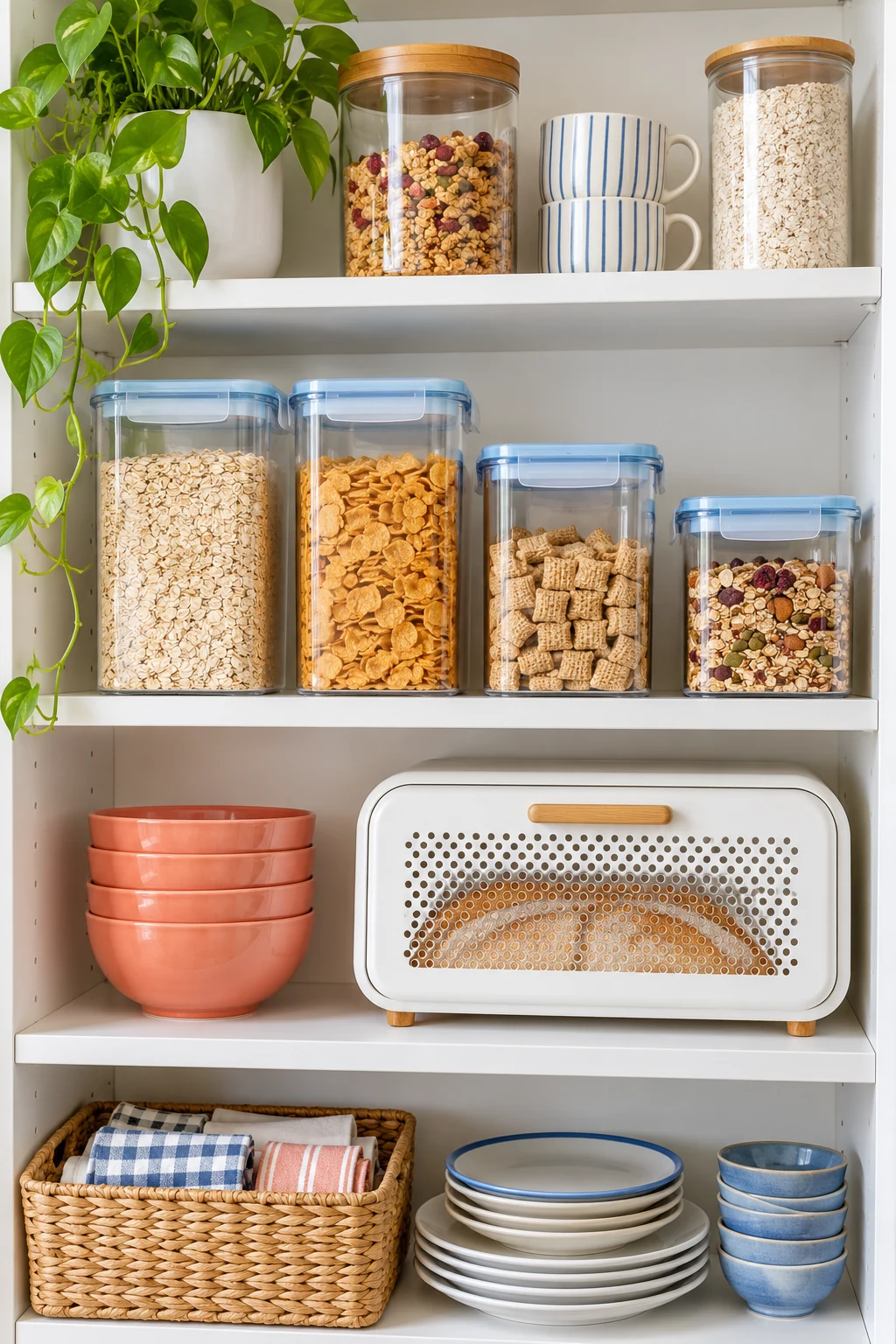
12. Fit low canisters beneath fixed shelves
Fixed shelves sometimes leave awkward openings that a tall matching container set cannot use. A low rectangular container can fit the opening and still leave space to lift it out. It is especially useful on a shelf you view from above.
The Rubbermaid Brilliance Pantry Storage Container, 7.8-Cup, Clear has a clear top and a listed 7.8-cup capacity, making it a candidate for this lower-profile arrangement. Verify the full footprint and latch clearance with your cabinet. Keep the container’s food information with the current contents when you decant.
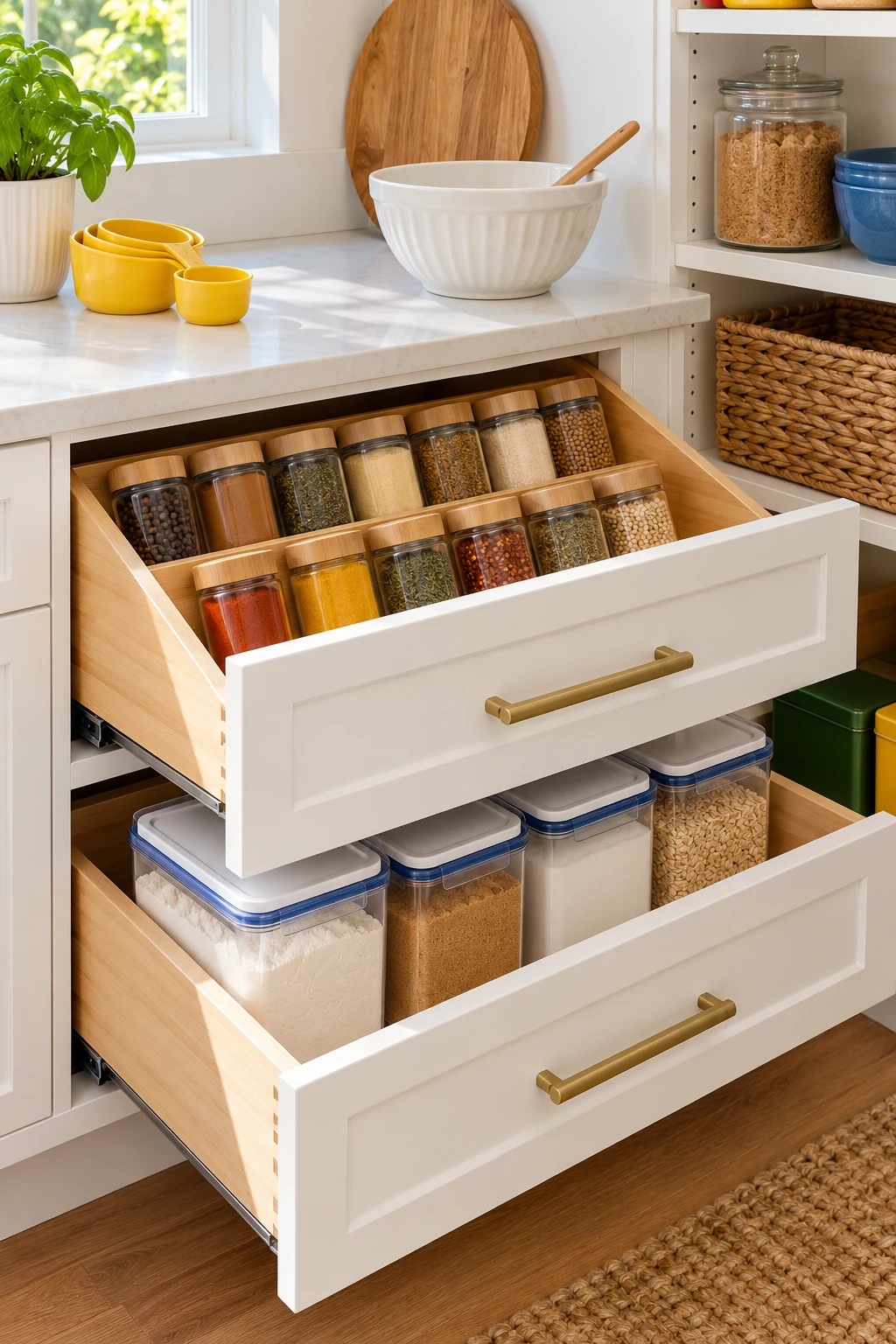
13. Leave one uninterrupted bay for tall packages
Preserve a tall section for long pasta, large cereal boxes, or other upright packages you regularly buy. This is more useful than shortening every shelf gap and then storing tall food on its side. Put the bay near an opening wide enough for a comfortable grip.
Use the remaining cabinet width for shorter shelves or bins if the cabinet system supports that layout. Do not remove structural dividers to create a bigger opening. A tall bay should match a recurring need rather than become a place to abandon every awkward item.

14. Use a corner cabinet for a small rotating pantry zone
A reachable corner cabinet can hold pantry-suitable bottles on a turntable rather than in a crowded back row. Choose one group you can identify quickly, such as closed cooking condiments. Keep the arrangement sparse enough that the center is still accessible.
The Copco Nonskid Lazy Susan Turntable Organizer, 12-Inch gives a 12-inch rotating footprint to compare with the cabinet’s narrowest opening. Test the loaded circle against the door and adjacent items. If you cannot reach the tray comfortably, a corner cabinet may suit occasional supplies better than daily ingredients.
15. Put breakfast beside the bowls
A cabinet near bowls and mugs can become a breakfast pantry. Keep the foods used each morning on its lower shelf, with unopened backups farther away. Grouping the steps of a routine can reduce the number of cabinets you open before the kitchen is fully awake.
Keep the cabinet interior dry and away from a kettle’s steam or a toaster’s heat. Leave appliances outside the cabinet unless the entire installation is designed and approved for their operation. A breakfast pantry is useful even when it holds only oats and a cereal box.
16. Give baking staples a reachable lower cabinet
Flour and sugar containers can be easier to handle on a low reachable shelf than overhead. Set up a baking cabinet near a clear work surface so each ingredient has a short trip to the counter. Keep the heaviest container nearest a comfortable grip point.
The OXO Good Grips POP Container, Big Square Medium, 4.4-Quart can hold one frequently used dry ingredient without needing a complete matching set. Its 4.4-quart volume is a starting point for measuring your supply. Check the cabinet opening and leave room to lift the full container from the base rather than its lid.
17. Build a packet section into a small cabinet
A small cupboard that is too narrow for large canisters may still make a useful packet pantry. Keep intact soup mixes, seasoning envelopes, and tea packets upright so you can browse the tops. Separate the groups with a simple divider instead of stacking them flat.
The YouCopia ShelfBin Packet Organizer, Four-Tier, Speckled White provides four stepped sections in a roughly 6.5-inch-wide bin. Its handle helps bring the packets to a counter when the cupboard is deep. Check the tallest loaded packet, since the organizer’s empty height does not tell you the full clearance needed.
18. Reserve a cabinet-edge lane for kitchen wraps
A narrow lane at the side of a pantry cabinet can hold foil, parchment, and food-wrap boxes. Keep them accessible without spreading them across the food shelves. Their long shapes often fit better in a dedicated vertical stack of levels than mixed into a basket.
The YouCopia UpSpace Adjustable Box Organizer, Original, White has adjustable shelves for this kind of box storage. Use the Original model’s stated dimensions when planning the lane, and account for boxes extending beyond its shelf edges. Keep the door swing clear and follow the organizer’s loading instructions.
19. Make a spice module inside the pantry cabinet
A pantry cabinet can include a compact spice area without dedicating a whole shelf to loose jars. Choose a system that shows the back row and works with your current bottles. Place it where you can open it without moving the foods beside it.
The YouCopia SpiceStack Adjustable Spice Organizer, 24-Bottle pulls its drawers forward and down, which can suit a cabinet above a clear counter. Check the closed dimensions and the full motion before choosing a shelf. Keep refill jars elsewhere so the working collection remains easy to open and return.
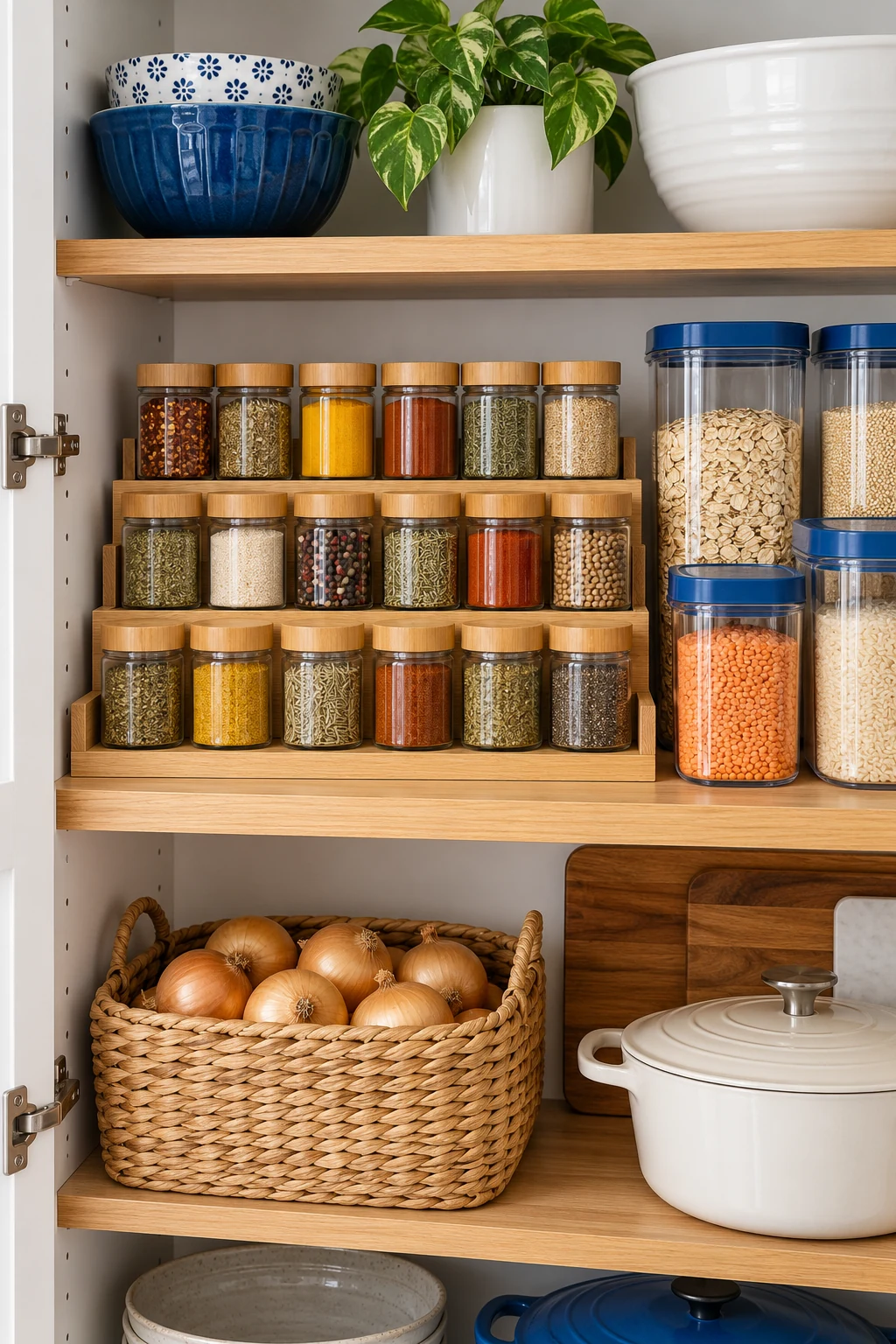
20. Add door storage only between shelf edges
On a suitable hinged pantry cabinet, shallow door storage can hold lightweight items in the gaps between interior shelves. Mark where the shelf fronts meet the closed door, then test a mock-up. This catches collisions that are easy to miss while the door is open.
Choose hardware made for the door material and follow mounting and load directions. Cabinet doors can be thin, so drilling without checking thickness risks damage. Avoid adding heavy jars to a door that was not designed to carry the extra load.
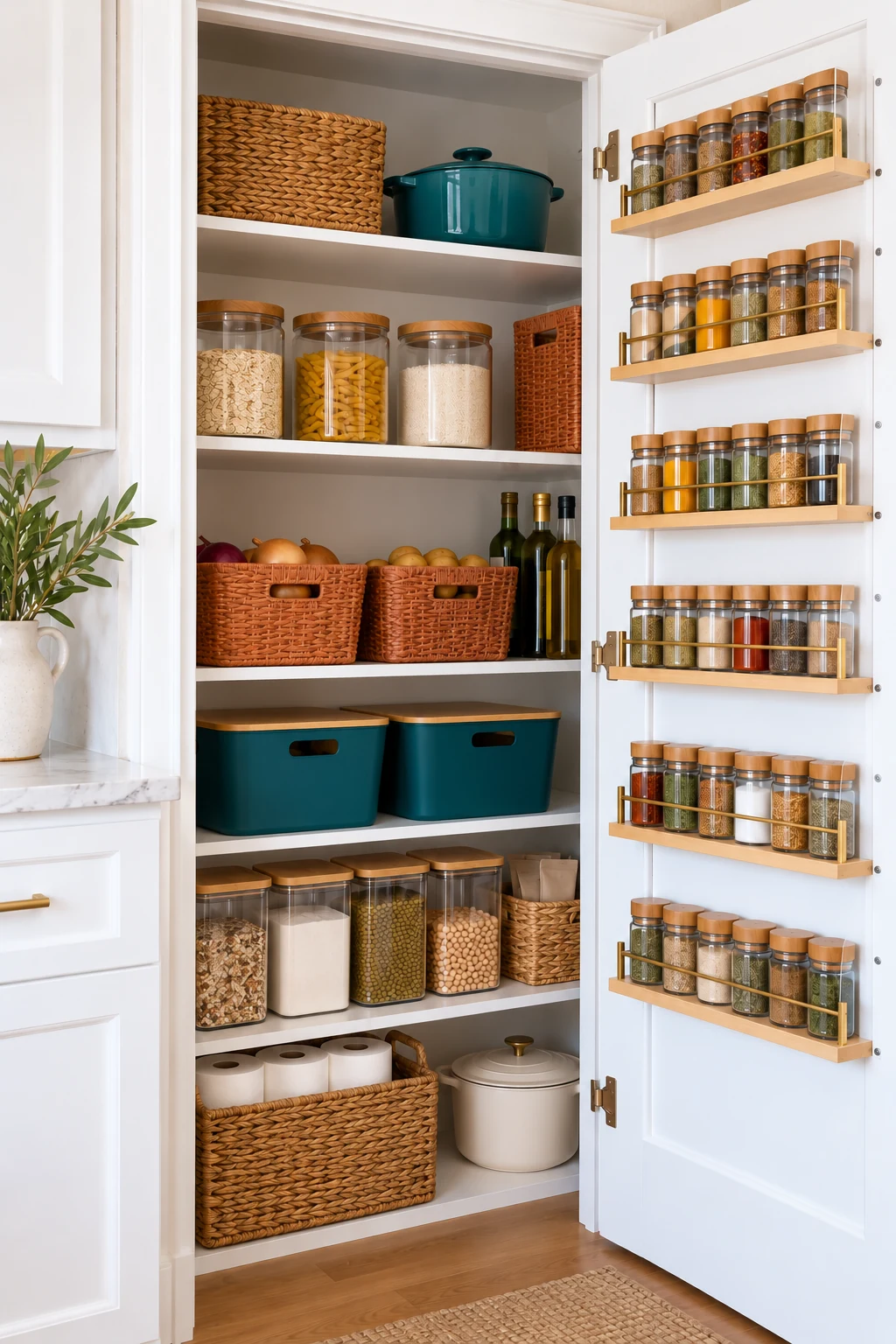
21. Turn an end cabinet into a pantry landing zone
A cabinet at the end of a kitchen run can hold the pantry foods you unload most often. Put groceries down on the nearby counter, check existing supplies, and return them to this cabinet. The short route makes it easier to keep new food from lingering on the counter.
Leave a small clear area for unpacking rather than filling every inch with decor. Keep any household entry items, mail, or keys in a different spot. This pantry location works only if the cabinet stays cool, dry, and convenient for cooking too.
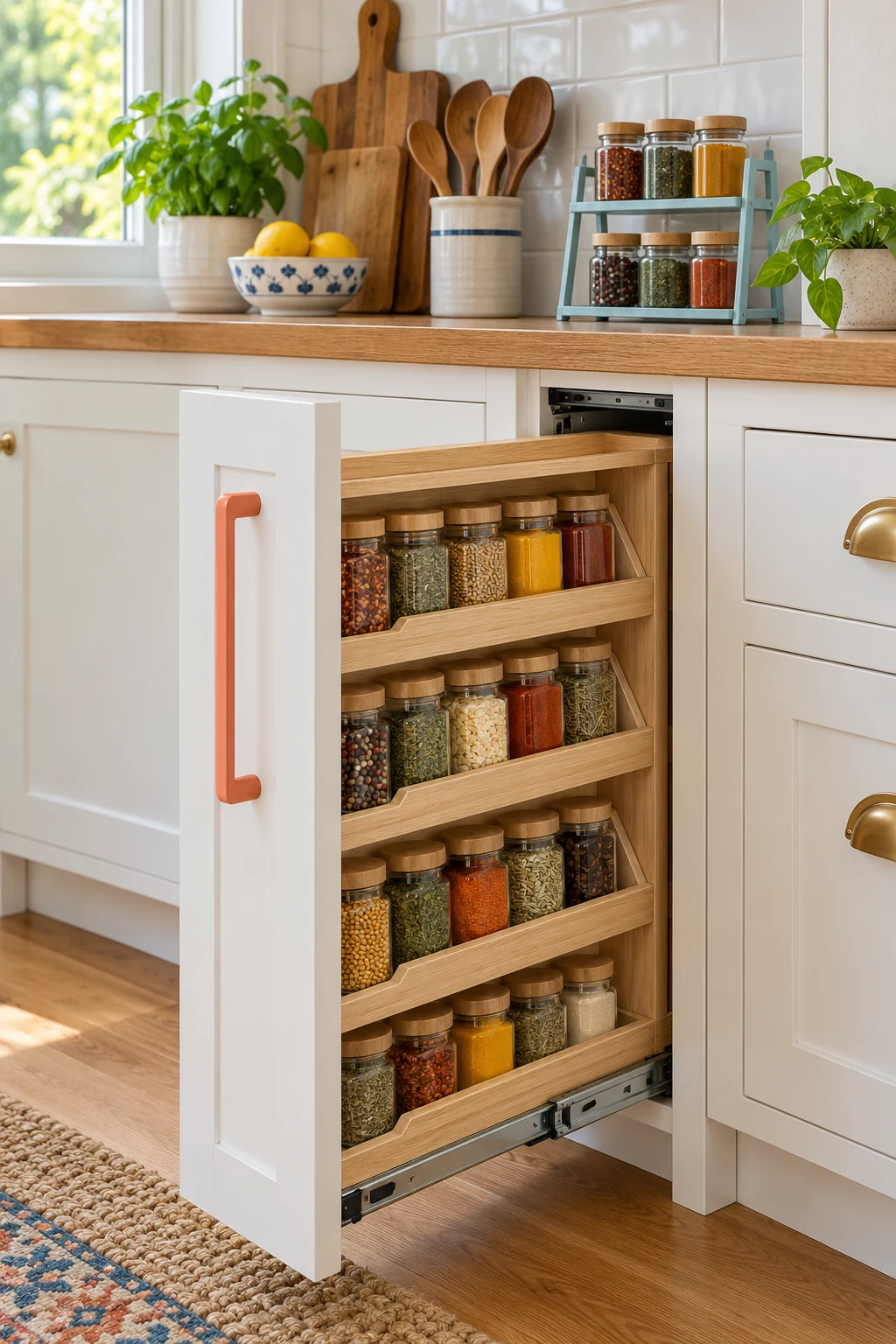
22. Consider fitted pull-out shelves for hard-to-reach food
If a deep cabinet consistently hides food, fitted pull-out shelves may be worth planning. They bring the shelf forward as a unit, unlike a loose basket that must be lifted. Check whether the door opens fully and whether hinges or a center stile reduce the travel path.
Use a system suited to the cabinet construction and follow its mounting and load instructions. Installation can require exact positioning and suitable screws, so get help when needed. A pull-out takes space for its frame and slides; compare usable storage before and after the retrofit.
23. Keep a glass-front pantry cabinet visually simple
Glass-front doors show the packaging even when the cabinet is closed. Use a few broad categories and consistent basket shapes to give the view some order. Keep attractive, easy-to-identify staples visible while leaving food in its original package whenever that is simpler.
Do not hide necessary labels merely to create a neutral color palette. Place bins so they can be removed without scraping the glass-door frame. If the cabinet gets strong sun or heat, choose a different food-storage location rather than relying on tinted jars to solve the problem.
24. Divide a shared kitchen cabinet into clear bays
In a shared kitchen, give each household or person a defined pantry bay when that helps prevent mix-ups. Use removable shelf labels or separate bins with enough space for the groceries each person normally buys. Keep genuinely shared basics in a clearly different area.
Agree on how to handle overflow before it spreads into someone else’s section. Labels alone are not an allergy-control plan, so maintain any necessary separate storage and utensils. The arrangement should make ownership obvious while keeping the whole cabinet easy to clean.
25. Combine two small cabinets instead of forcing one large pantry
If no cabinet can hold everything comfortably, give two smaller locations complementary jobs. Keep everyday dinner ingredients near the cooking area and a reserve of unopened extras in another suitable indoor cabinet. A deliberate split is easier to remember than food scattered wherever a gap appears.
Keep a simple note of what lives in the second location and check it before shopping. Move a category back closer if the extra trip becomes annoying. The goal is a pantry arrangement you can use every day without narrowing walkways or overcrowding cabinets.
Choose the cabinet you can reach most comfortably while cooking and give it one clear pantry role. Test the layout with your existing food before ordering inserts or furniture. A measured, easy-to-use cabinet can do plenty of work in a kitchen without a walk-in pantry. Subscribe to the Havelyo email list for more small-space decorating and organization ideas.