
Closet Organization
20 Portable Closet Ideas for Bedrooms Without Built-In Storage
A bedroom without a built-in closet can still have a useful place to get dressed. A portable wardrobe or freestanding rail gives hanging clothes a home, but the right setup depends on the room around it as much as the unit itself.
These 20 portable closet ideas cover choosing a layout, making the compartments useful, and keeping the setup manageable when plans change. Start by measuring the full footprint, including hanging clothes and opening space. Follow the specific manufacturer's assembly, load, and anchoring instructions; portable does not automatically mean no securing is needed or safe to move while loaded.
This article contains affiliate links. If you buy through them, Havelyo may earn a commission. As an Amazon Associate I earn from qualifying purchases.
Choose a setup that fits the room
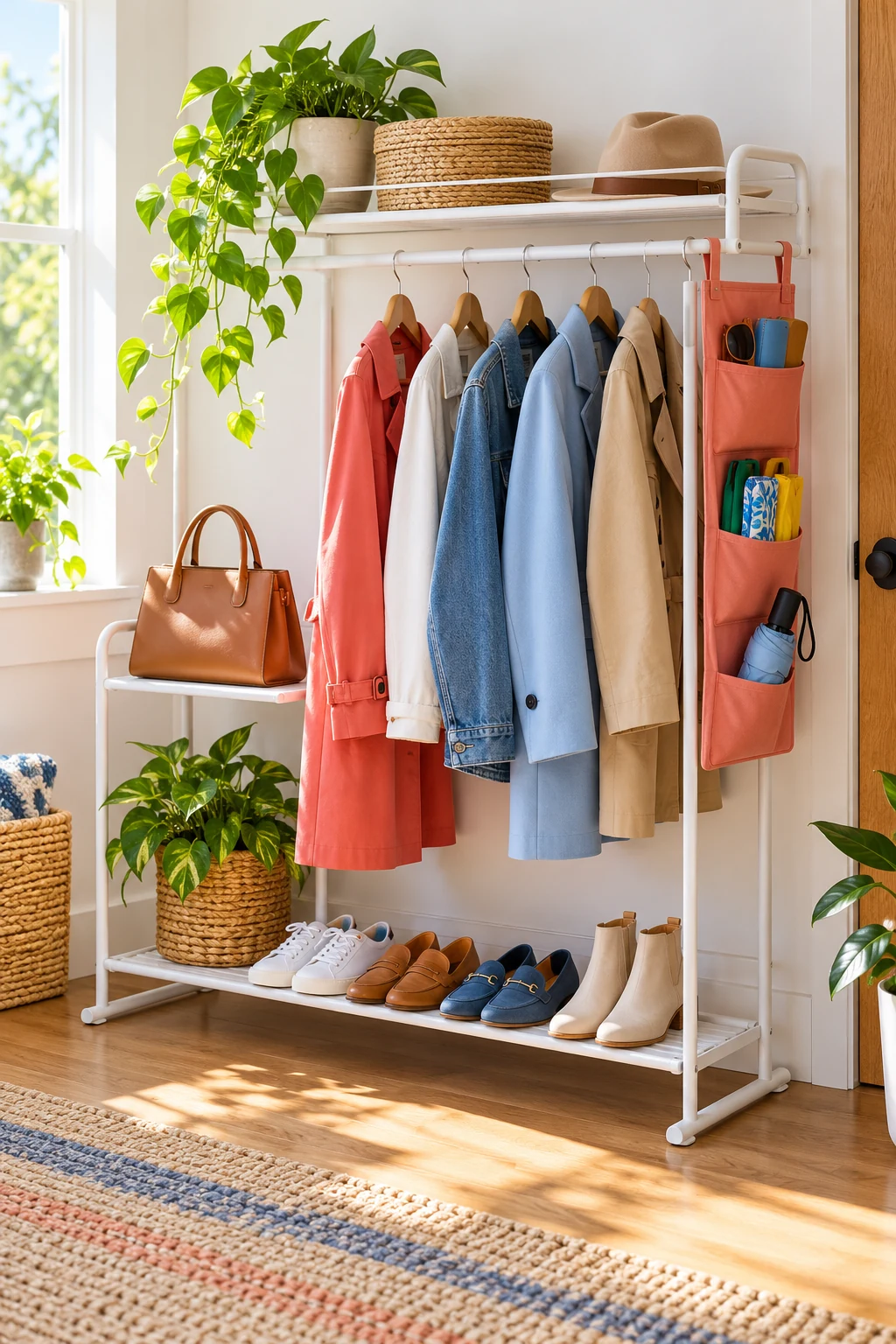
1. Test the full footprint before choosing a unit
Mark the planned wardrobe footprint on the floor with a removable method appropriate for the surface. Walk past it, open nearby furniture, and stand where you would choose clothing. A frame that fits the wall can still leave too little dressing space.
Include the depth of garments on hangers, projecting feet, handles, and any front cover that opens outward. Check the ceiling and baseboard too. Use the largest relevant assembled measurement rather than the shipping-box dimensions when comparing a portable closet with the room.
2. Choose the layout around your longest clothing
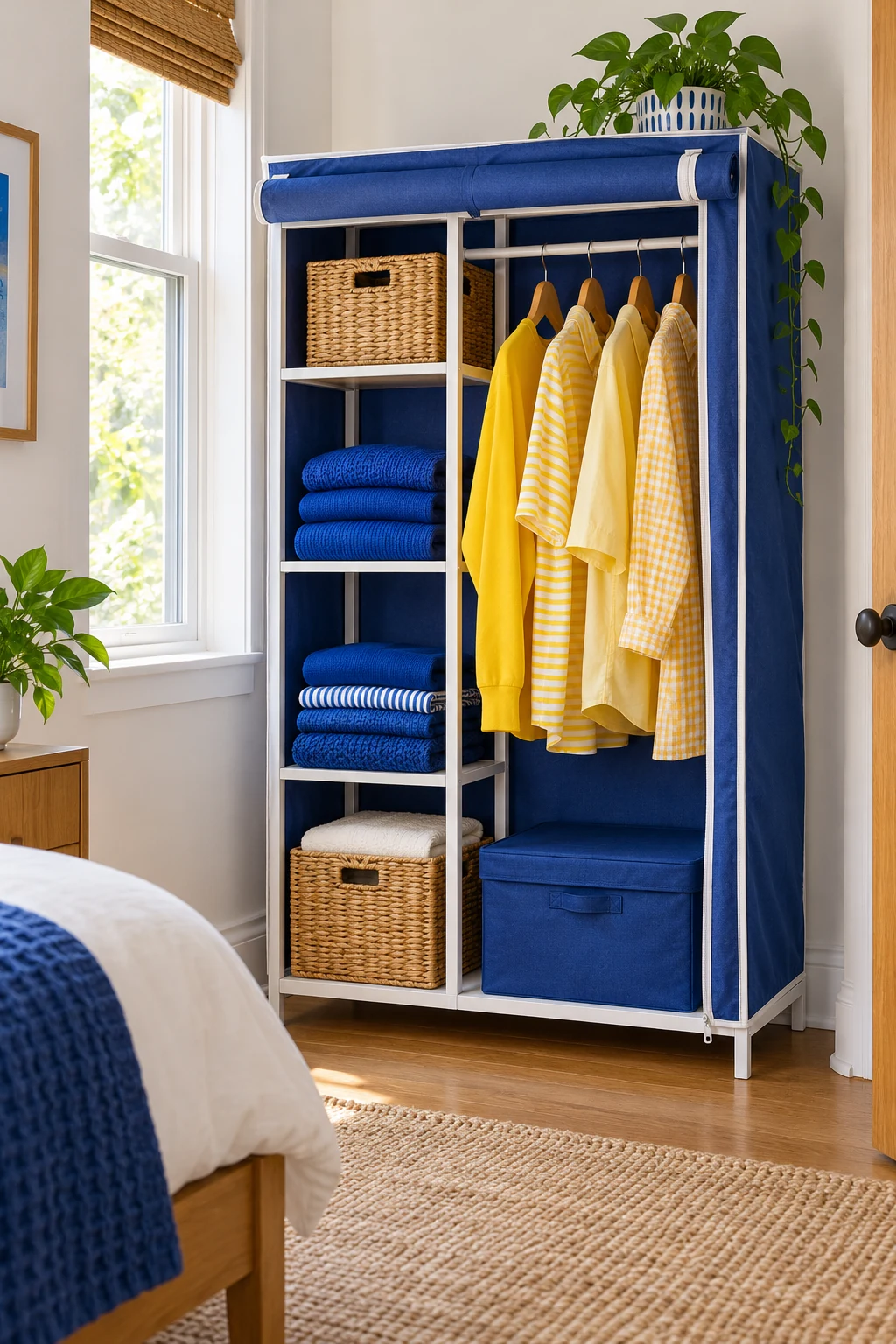
Measure a long dress, coat, or jumpsuit on its usual hanger before choosing a multi-level wardrobe. Double hanging can be useful for shirts, but it will not help if long garments end up folded over a lower rail or shelf.
List how much of your wardrobe needs full-length hanging and preserve that space first. A removable rail is useful only when the manufacturer permits that configuration. Do not leave out structural frame parts or drill new mounting positions to create extra height.
3. Use a covered wardrobe when visual calm matters
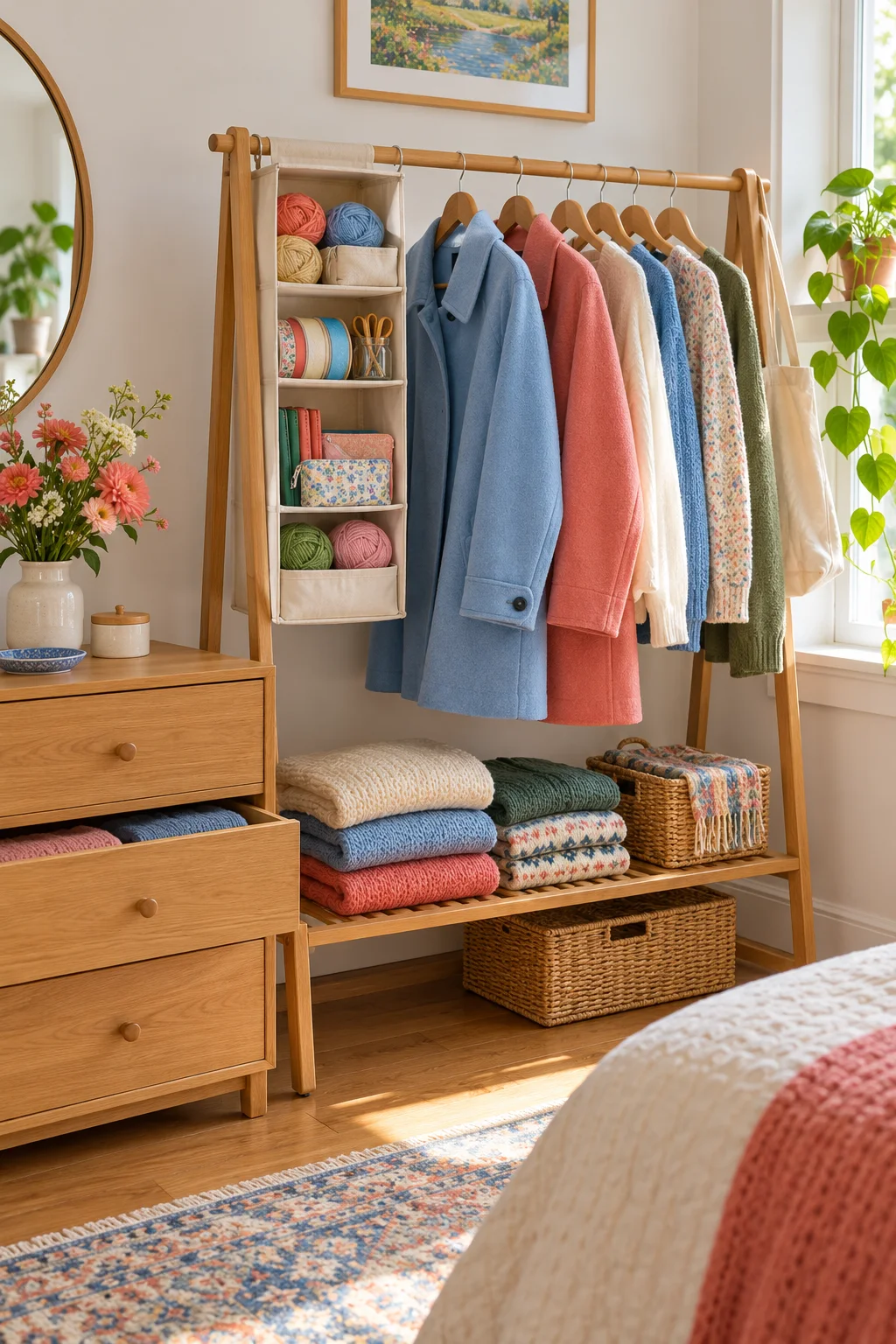
A fabric-covered unit can gather an open clothing collection behind a quieter front in a multipurpose bedroom. Choose a place where the opening remains accessible so closing the cover does not make everyday clothing inconvenient to reach.
The black SONGMICS ULSF03H is listed at 59 inches wide, 17.7 deep, and 69 high, with a rail and storage shelves. Check those measurements against the room and follow current instructions. The fabric front conceals contents; it is not a promise of airtight, pest-proof, or waterproof storage. View on Amazon.
4. Choose an open frame for frequent access
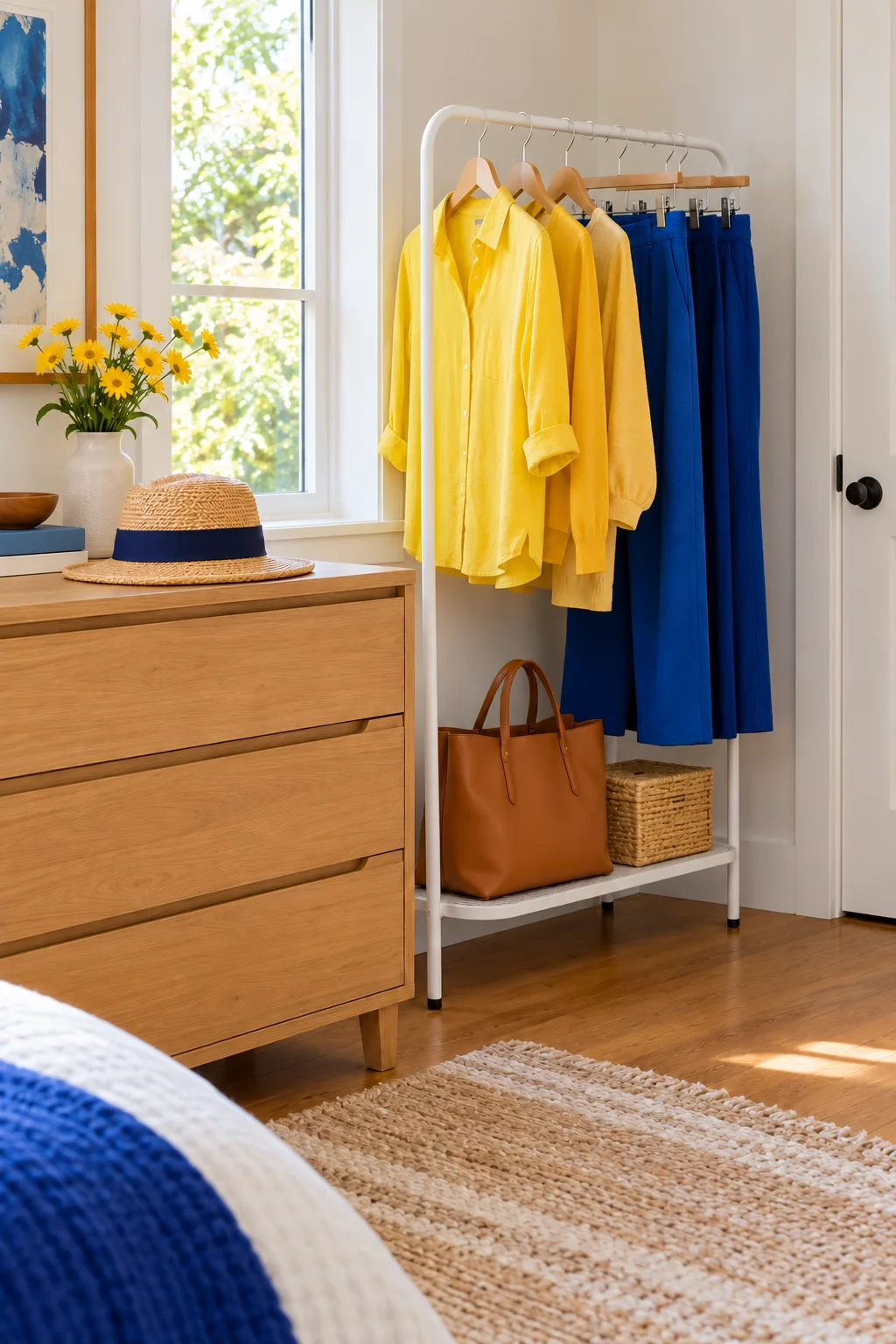
An open freestanding unit makes the whole clothing arrangement visible at once, which can suit someone who prefers to see the available choices. Keep the collection edited enough that the open shelves and rails remain easy to navigate.
The Whitmor Double Rod Freestanding Closet, model 6779-3044, pairs five wire shelves with two rods, including a removable lower rod. Its manufacturer instructions require connections to be fully seated. Check the current footprint, securing requirements, and permitted load before using it in your room. View on Amazon.
5. Place the closet along a clear wall
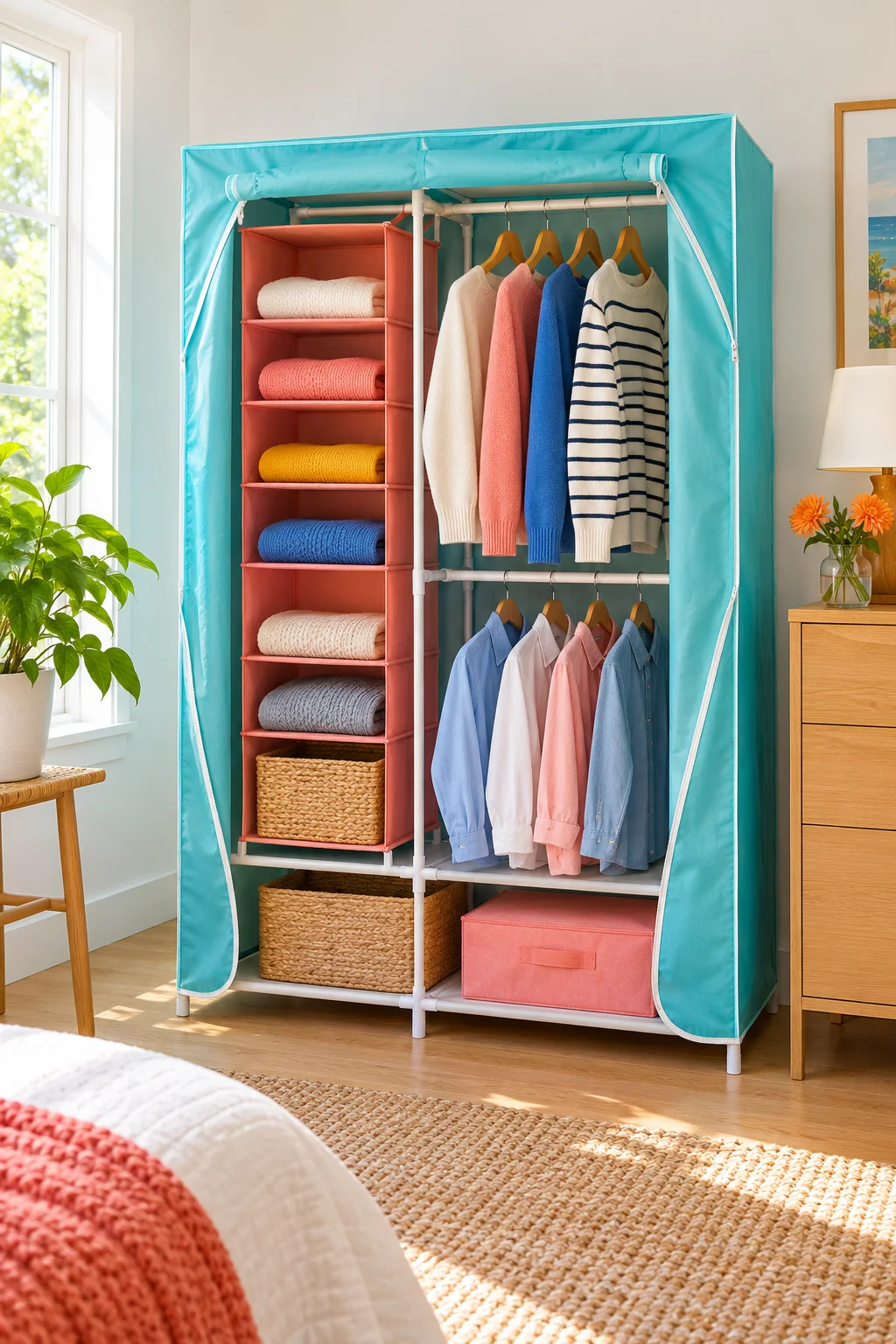
A straight wall can give a portable wardrobe a defined place while preserving a simple walking route. Position the unit where its feet sit fully on a level surface and its opening is not squeezed behind the bed.
Leave any ventilation or wall clearance required by the manufacturer, and use required anchoring with appropriate fixings. Do not assume pressing furniture tightly against a wall makes it stable. Avoid extension cords beneath feet and locations where a door can strike the frame.
6. Keep a temporary guest wardrobe deliberately small
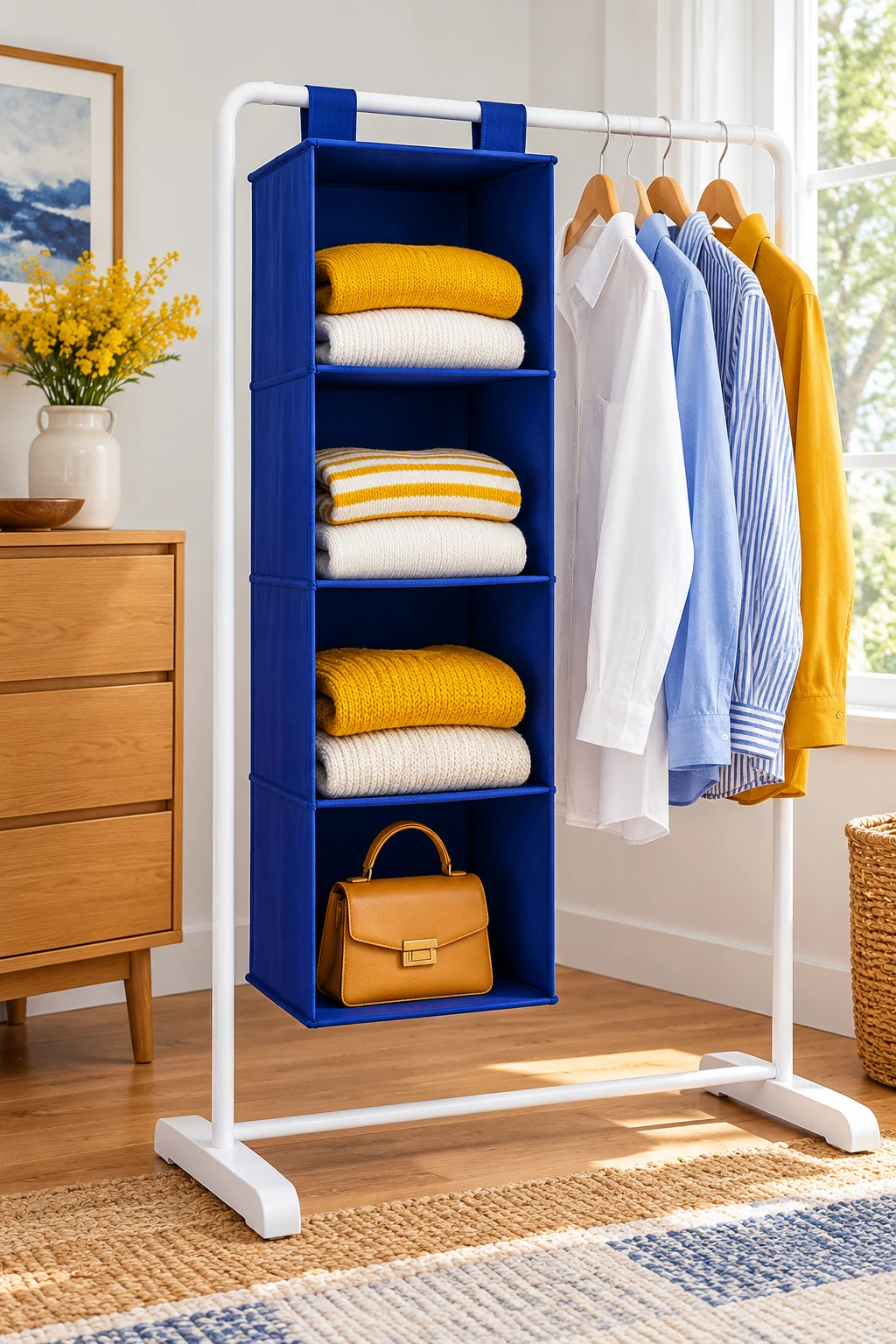
For a guest room that also serves another purpose, set up a modest rail and a small folded-clothing area instead of filling the room with permanent storage. Leave a few empty hangers and a clear place for the guest's most-used pieces.
Check that visitors can open luggage and move around the bed comfortably. Store household overflow elsewhere so the guest rail is actually available when needed. If the unit folds or dismantles, follow the intended process and keep its hardware together between visits.
Make the rails and compartments useful
7. Use two hanging levels only for short pieces
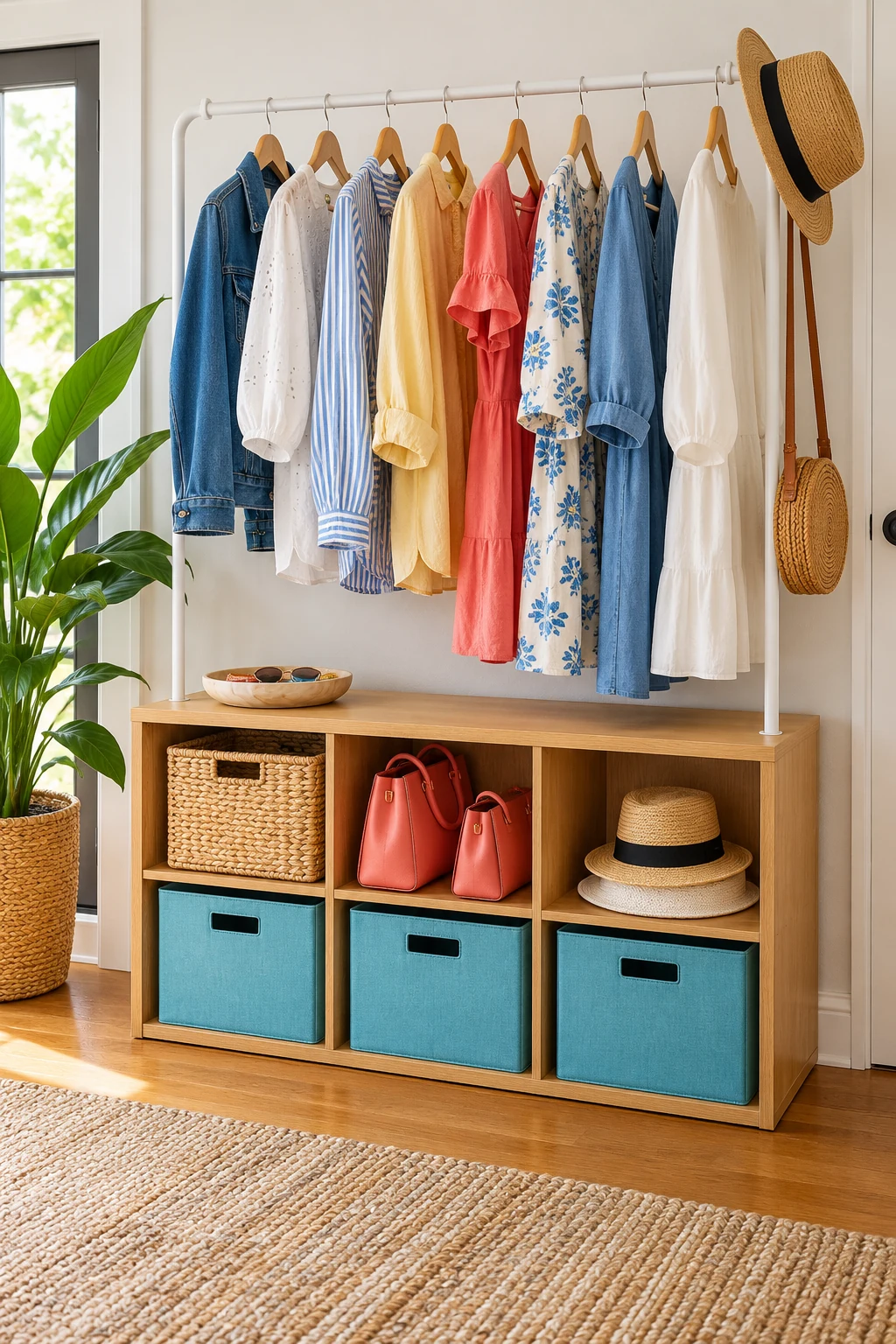
Where a unit is designed with two rails, place short shirts above and folded trousers or similarly short garments below. Check both levels with actual clothing so sleeves and hems do not cover the category underneath.
Use only the rails and positions permitted for that frame. An add-on hanging rod can transfer more weight to the upper support, so do not assume a built-in-closet accessory suits a portable unit. Keep the long-garment space intact if your wardrobe needs it.
8. Keep everyday hangers consistent
A consistent hanger shape gives an open rail a more readable outline and can prevent hooks from tangling. Face the hooks in one direction, then organize the clothing by the categories you reach for rather than purely by color.
Amazon Basics Slim Velvet Suit Hangers in the Black/Silver 30-pack are one option for everyday garments. Retain suitable specialty hangers where clothing needs extra support. Leave enough rail space to remove a garment without pulling on the rack, even when slim hangers make room for more. View on Amazon.
9. Check hanger depth as well as frame depth
Hang one of your widest garments on the proposed rail position and see how far it projects to the front and back. The published depth of a wardrobe frame may not represent the space required by shoulders, sleeves, or a bulky jacket.
Keep clothing from pressing against a cover, wall, or nearby heater. If a narrow room cannot accommodate the full hanging depth, choose a different placement or move some suitable clothing into drawers. Turning hangers at an awkward angle is not a reliable everyday fix.
10. Add fabric cubbies only to an approved support
A hanging fabric organizer can provide a few folded compartments when an appropriate portable rack has spare rail width. Start with light categories such as tees or scarves so the cubbies do not become dense hanging bins.
The StorageWorks 6-Shelf Hanging Closet Organizer is a possible option only after confirming both its instructions and the rack's compatibility and load allowance. It adds weight and removes hanger space. Do not attach the unit to a fabric cover, lightweight cross brace, or unapproved frame member. View on Amazon.
11. Give each shelf one broad category
Use a shelf for one manageable group, such as casual tops, sleepwear, or small bags. Broad categories make a portable closet easier to keep organized because laundry has a clear destination even when the shelves are shallow.
Keep stacks short enough to remove a middle item without steadying the frame. Follow the unit's shelf-by-shelf and total load limits rather than filling every shelf to the same height. Soft shelves may need lighter contents than rigid ones in the same wardrobe.
12. Use removable bins for tiny items
A small lightweight bin can keep loose accessories together on a supported shelf. Choose a size that leaves room to grip the bin and does not overhang the front or press against the wardrobe cover.
Test an existing box first before buying a matching collection. Avoid tall bins that hide everything at the bottom or heavy containers that make the shelf difficult to use. The weight of the bin itself counts toward the shelf and overall unit limits.
Give nearby items sensible separate homes
13. Keep daily shoes on a low neighboring rack
A separate low shoe rack can work better than loading shoes into a fabric wardrobe's light shelves. Put it close enough to the clothing zone to be useful while keeping dirty soles away from folded clothing.
The Simple Houseware 3-Tier Metal Panel Shoe Rack in Bronze is a freestanding option. Check the current dimensions and shoe clearance; the listing's width fields differ slightly. Keep the rack outside the wardrobe opening and leave a separate place for boots that need more height. View on Amazon.
14. Put the hamper beside the routine, not inside every unit
Place laundry near the dressing area where it is easy to use without blocking the portable closet. A hamper outside the frame preserves hanging drop and gives the bottom shelf a clearer purpose.
Check the removal route with the hamper full, and keep damp clothing out of closed textile storage. If the bedroom has little floor room, use another convenient permitted location. Do not hang a heavy laundry bag from a portable frame unless its manufacturer explicitly allows that use.
15. Use the upper area for light occasional items
If the wardrobe includes a rated upper shelf, reserve it for a few light, infrequently used things you can retrieve safely. Keep heavy containers lower and leave enough space to lift items without tipping them toward your face.
Do not put storage on top of a fabric cover that is not a shelf. Use a suitable stable step stool if needed and follow its instructions; never climb the frame or shelves. If reaching the upper area pulls you off balance, leave it unused or relocate the category.
16. Move seasonal overflow under the bed
Keep the portable closet focused on the current wardrobe instead of using it as the only storage in the room. Suitable under-bed storage can hold clean, dry seasonal pieces that would otherwise crowd the rails and shelves.
Amazon Basics Under Bed Storage Bags in the Gray 2-pack are listed at 42 by 18 by 6 inches and have clear tops. Measure filled clearance and access around bed supports. Keep a contents list, and avoid filling the bags so heavily that the handles are difficult to use safely. View on Amazon.
17. Use a nearby hinged door for small accessories
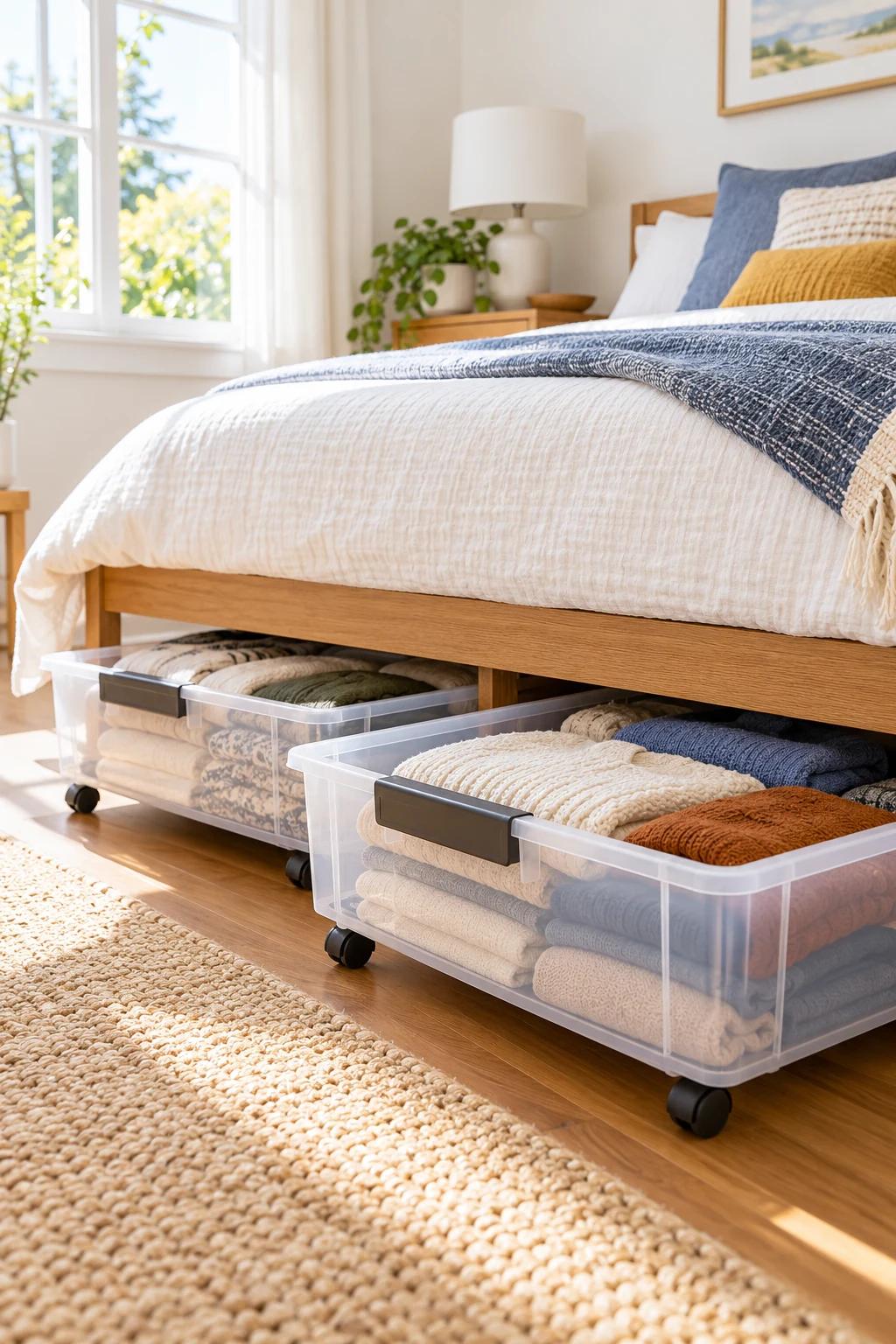
A compatible bedroom or closet door can provide pocket storage without adding weight to a portable wardrobe. Group light accessories in visible pockets so they are easy to reach while the freestanding unit handles the main clothing.
The Simple Houseware 24 Pockets Clear Over the Door Shoe Organizer in Gray has hooks listed for doors up to 1-3/8 inches thick. Check the top gap, closing action, and pocket dimensions. Mount it only as directed on a suitable door, not on the wardrobe's fabric front or side bars. View on Amazon.
Keep the setup easy to live with
18. Make the cover opening part of the layout
Before filling a covered wardrobe, practice opening and closing its front in the intended position. Check whether you can see the lower shelves and reach side compartments without leaning over the bed or shifting another piece of furniture.
Use the cover ties or fasteners only as the manufacturer directs, and keep loose material away from walking routes and heat sources. Store fully dry clothing and attend to any damp-room problem rather than relying on a cover to protect the contents.
19. Unload and follow instructions before relocating it
Treat portability as the ability to change the setup using the intended process, not permission to drag a full wardrobe across the room. Remove clothing and loose bins before moving or dismantling the unit unless the manufacturer expressly allows another method.
Keep original instructions and labeled hardware together so reassembly is straightforward. Check connectors and damaged parts before loading again, then restore any required anchoring. For a wheeled unit, follow the maker's moving and brake guidance and avoid routes with abrupt floor transitions.
20. Keep a small weekly edit instead of adding more racks
Review the portable closet when clean laundry returns. Gather empty hangers, return accessories, and notice which shelf is becoming difficult to use. Adjust that category before buying another rack that takes more of the bedroom.
Leave enough space to put one garment back without compressing the entire row. If the unit remains overloaded, move occasional items to another appropriate location or reduce the current rotation. The goal is a dependable dressing area with comfortable room around it.
Pick the smallest portable setup that supports your real wardrobe and leaves the bedroom comfortable to use. Test one hanging section and one shelf category first, then adjust the arrangement within the unit's instructions. Subscribe to the Havelyo email list for more practical small-space decorating and organization ideas.