
Closet Organization
22 Closet Drawer Ideas to Keep Small Items Organized
Small closet items are easy to lose in a large drawer. A sock slips behind a scarf, belts catch on delicate fabric, and a perfectly organized section becomes crowded as soon as the laundry comes back.
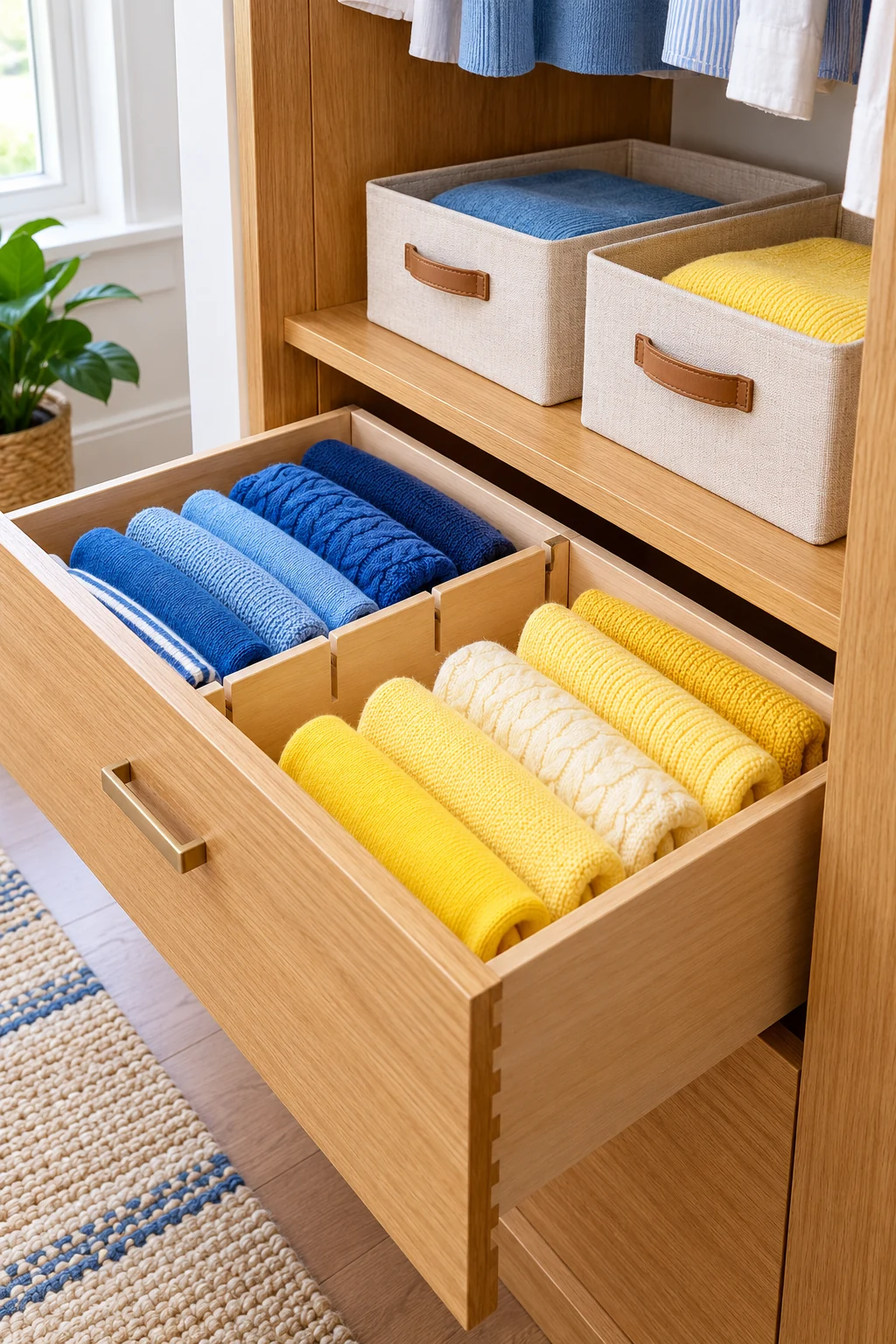
These 22 closet drawer ideas focus on compartments that suit the contents and habits that are easy to repeat. Start by emptying one drawer, measuring its usable interior, and sorting what belongs there. You can test the layout with clean boxes before deciding whether a grid, a broad divider, or a shallow tray would actually help.
This article contains affiliate links. If you buy through them, Havelyo may earn a commission. As an Amazon Associate I earn from qualifying purchases.
1. Measure inside the drawer before choosing inserts
Measure the interior from side to side and front to back, then check the usable height with the drawer closed. Drawer sides may be taller than the clearance beneath the frame above. Hardware, curved corners, and a sloping back can also reduce the space that an insert can use.
Cut paper templates for any organizer footprints you are considering and arrange them in the drawer. This makes awkward leftover strips visible before you buy a set. Leave room to lift out the inserts for cleaning, and test closure with the clothing or accessories in place.
2. Use the easiest drawer for everyday essentials
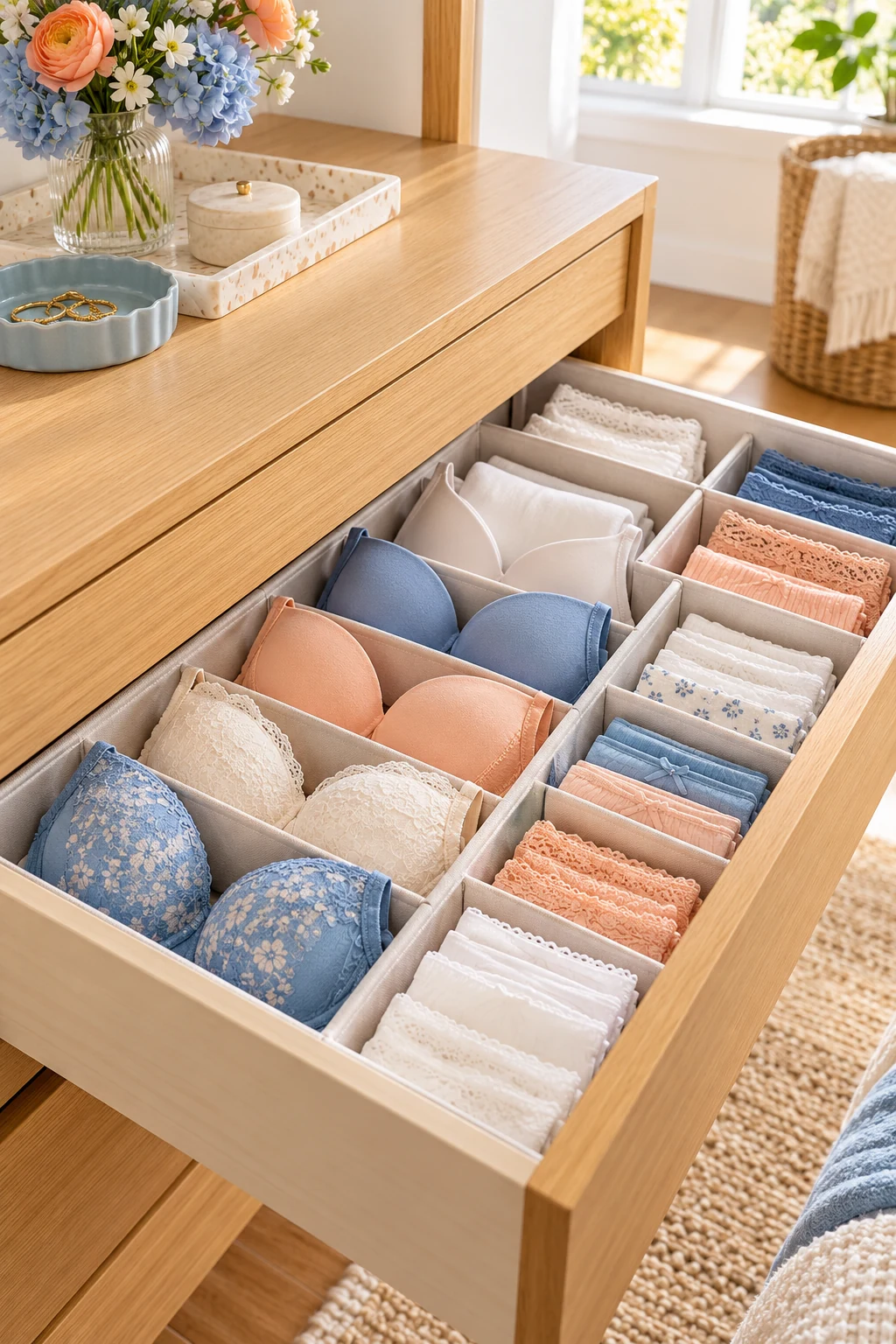
Give your most frequently used small items the drawer you can reach comfortably. Socks and underwear may belong together near the dressing area, while occasion accessories can sit farther away. The best order follows your routine rather than a rule that every top drawer must hold the same things.
Try opening and closing the drawer while standing where you normally get dressed. If a door or hamper blocks it, solve the access problem first. An organized interior will still be frustrating if you have to move something before every use.
3. Give sock pairs simple compartments
Small compartments can keep pairs together and separate everyday socks from thicker or athletic styles. Choose categories that make a real difference when getting dressed. A separate cell for every color may add work without helping you find what you need.
The Gray Simple Houseware 4-Pack Drawer Organizer Set offers several compartment patterns. Its inserts are listed at 3.5 inches high, so compare that height and each footprint with the drawer. Use the larger cells for bulkier pairs rather than compressing everything into the smallest grid. View on Amazon.
4. Make broad clothing lanes with adjustable dividers
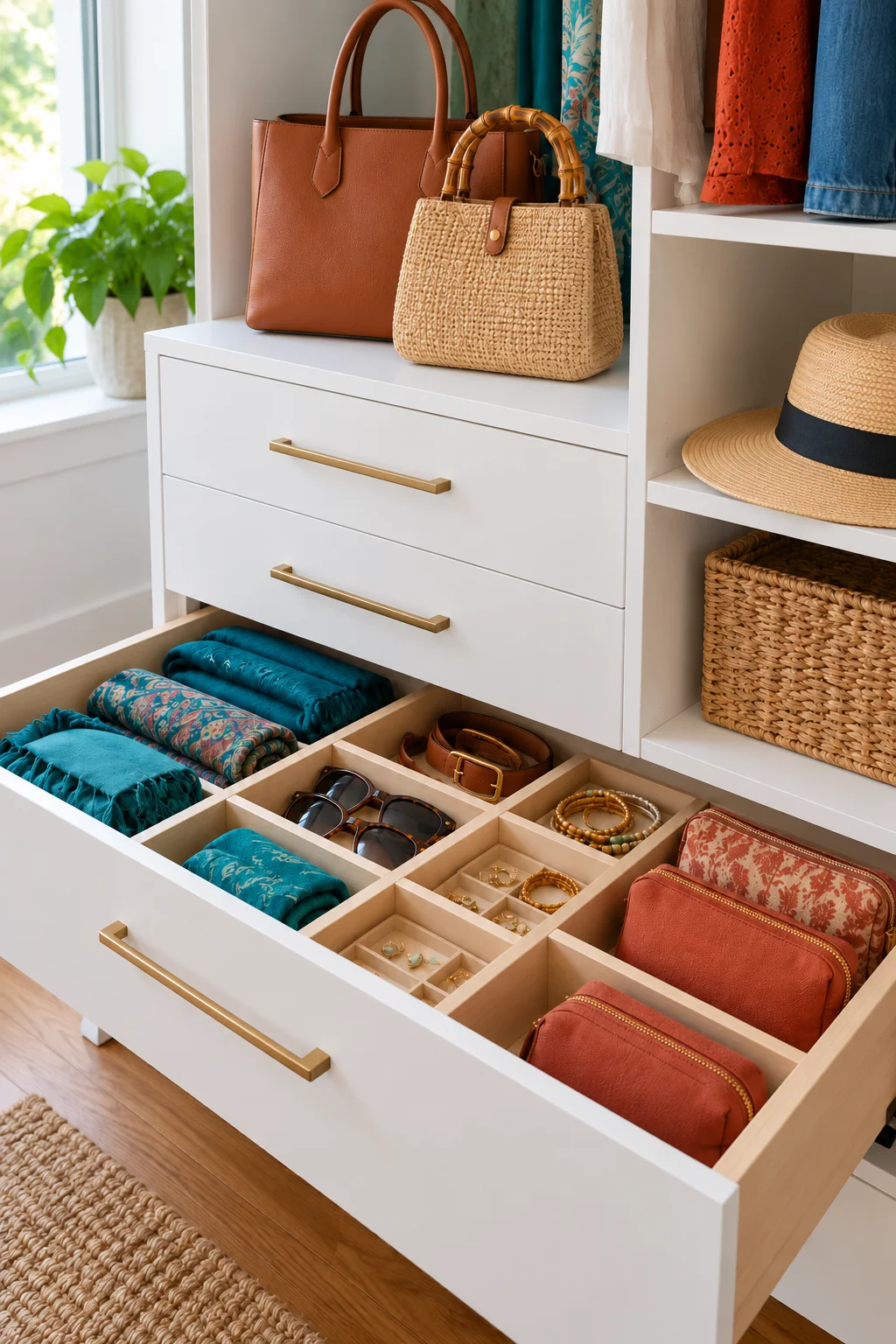
Long lanes can organize underwear or folded small clothing without enclosing every piece in a little box. Use one lane for each category and adjust the widths to match the amount you own. This is helpful when a fixed grid would leave some cells crowded and others empty.
The OXO Good Grips Expandable Dresser Drawer Divider two-pack is listed by OXO as 4 inches tall with an 11-to-17-inch adjustment range. Check the drawer’s depth or width, closing clearance, and wall construction before using its tension mechanism. Follow the maker’s instructions rather than forcing a divider into an unsuitable drawer. View on Amazon.
5. Use open fabric bins in a deeper drawer
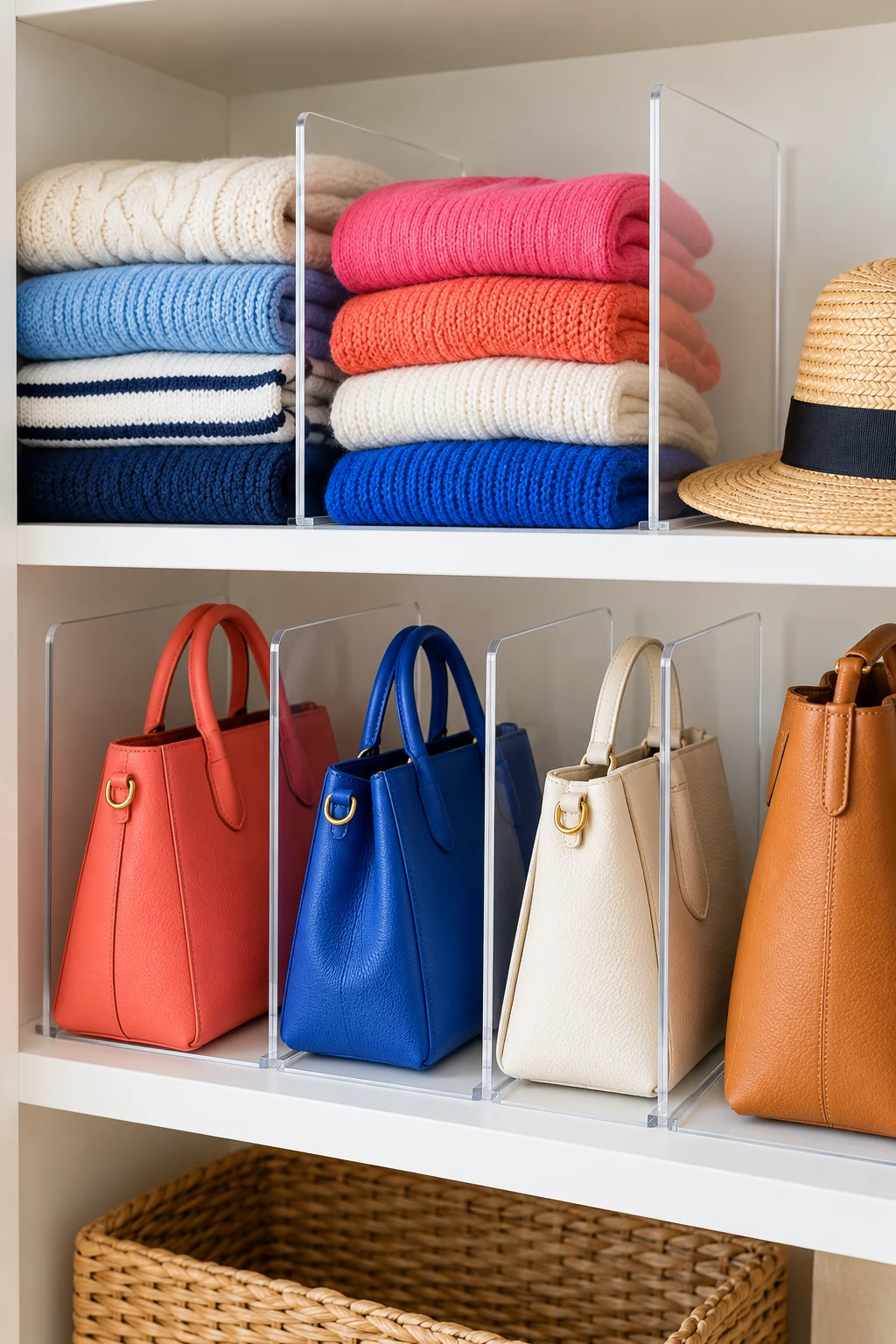
A deeper drawer can hold soft clothing in open bins with enough side support to keep categories separate. Try this for lounge shorts, soft sleepwear, or bulky socks. A bin can also bring a whole category forward when the drawer does not extend completely.
The Simple Houseware Underwear Drawer Organizer set of six in Gray includes three bin sizes. The listed 5.25-inch height makes this set a better candidate for a deeper drawer than a shallow accessory drawer. Measure every piece you intend to use; the full set does not have to fit together. View on Amazon.
6. Leave a wide section for structured bras
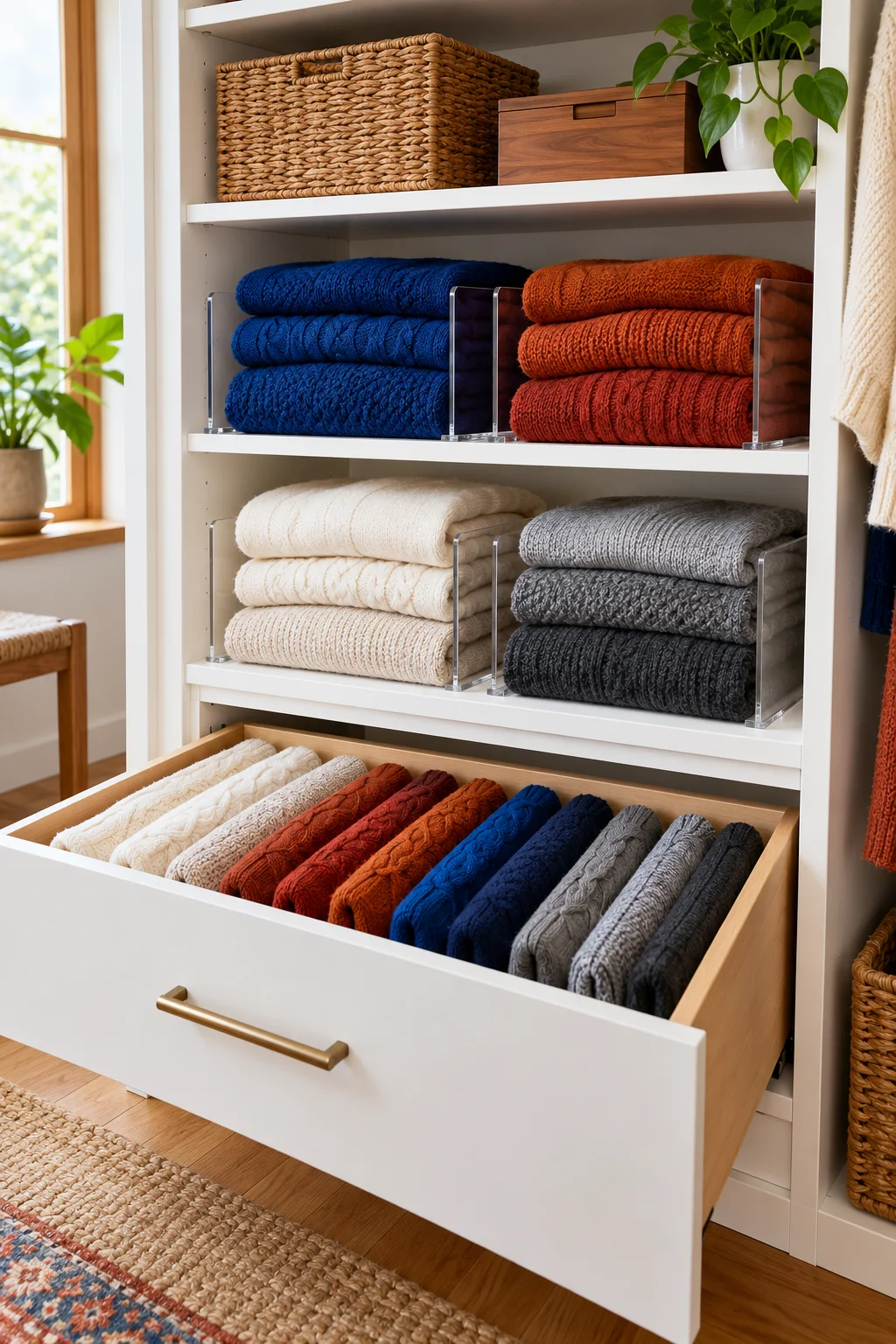
Keep structured cups supported instead of turning them inside out to fit a tight compartment. Arrange bras according to their care instructions in a wide section where you can see the options. Soft bralettes can use a separate smaller section if their construction allows it.
Keep fasteners and adjustable hardware from catching delicate neighboring fabrics. If the drawer is too shallow, choose another appropriate storage area rather than forcing it closed. An organizer should preserve the garment’s shape while making the choice easier.
7. Protect tights from rough edges and hardware
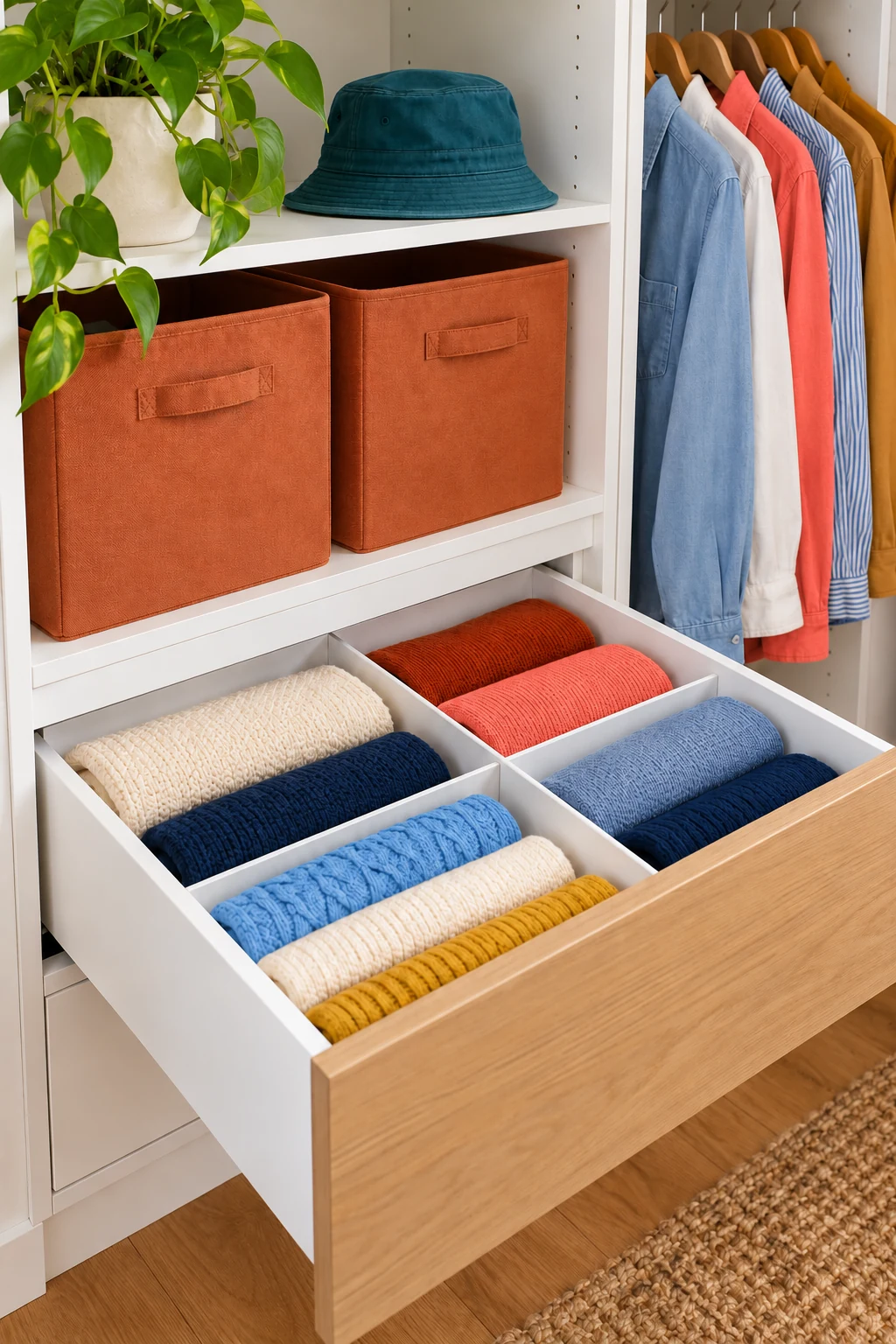
Tights and delicate hosiery benefit from a smooth dedicated section away from belt buckles and jewelry. Fold or roll them gently according to their care needs, keeping similar types together. A small soft pouch can separate a pair that is especially prone to snagging.
Check the drawer and organizer for rough seams, splinters, or exposed edges before filling it. Avoid tight stuffing that makes you tug at delicate fabric to remove one piece. Put a pair needing repair or replacement aside so it does not keep returning to the wearable group.
8. Sort hair accessories in small clear trays
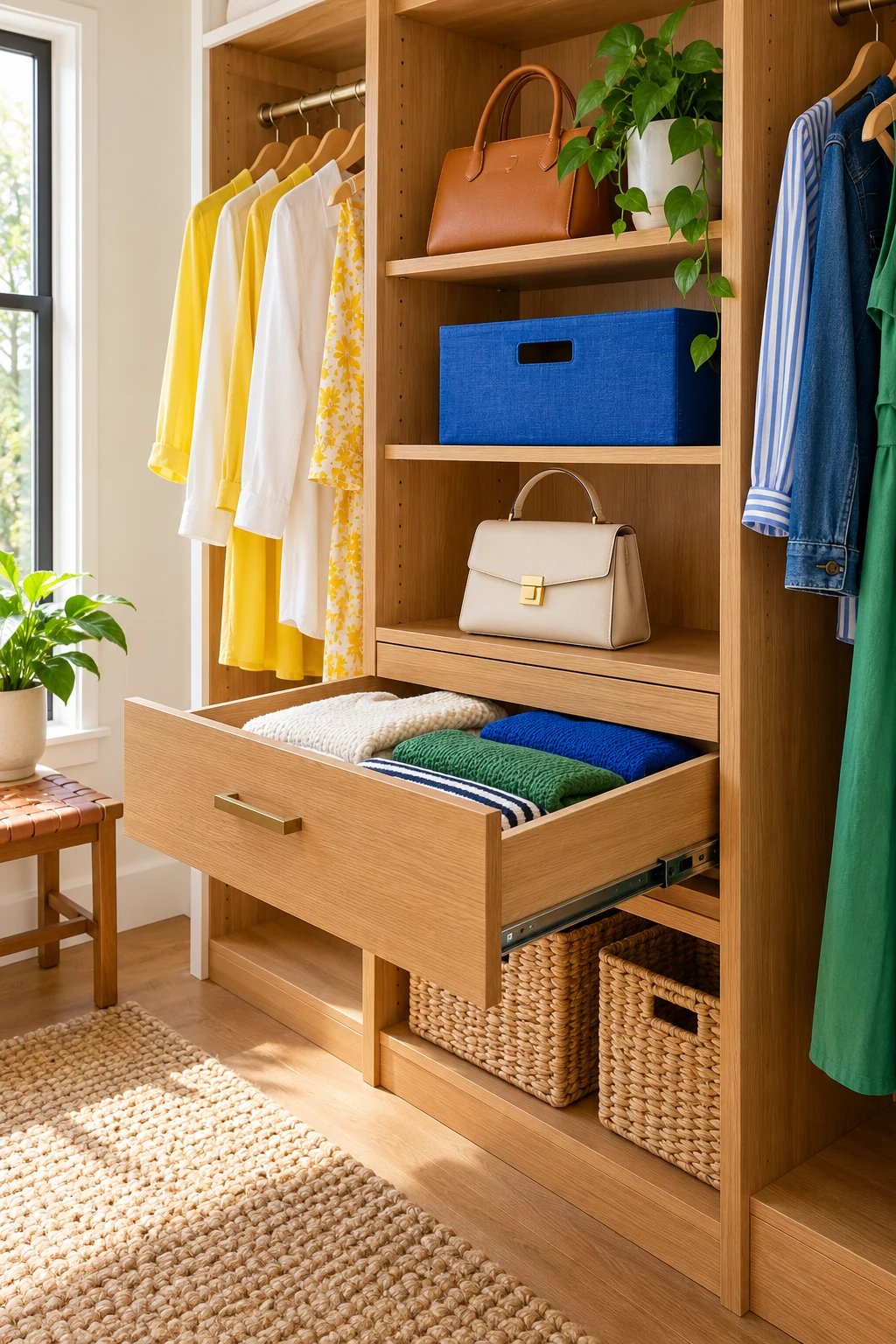
Hair ties, clips, and simple barrettes are easier to browse when they do not collect in one deep cup. Give each broad type a shallow space and keep the pieces you use most at the front. A clear tray lets you see small items from above and through the sides.
The Vtopmart 25 PCS Clear Plastic Drawer Organizers Set includes four tray sizes and separate base pads. You can arrange a few pieces around your collection and keep the rest for another drawer. Check individual footprints and loaded height, and avoid stacking trays over items you need every day. View on Amazon.
9. Use a lined tray for jewelry
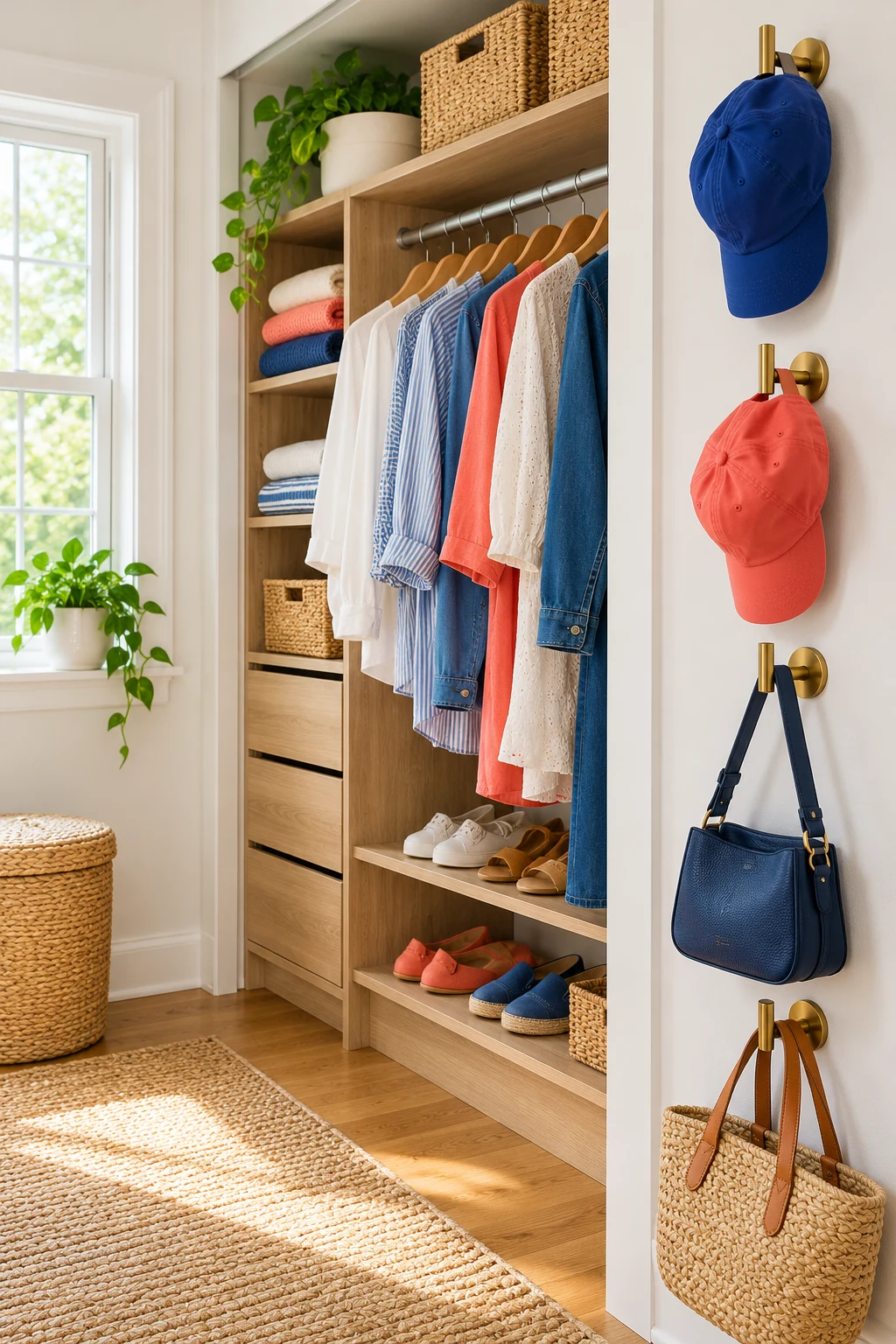
Jewelry needs a more deliberate home than the empty gap beside your socks. Choose a tray with appropriate lining and divisions for the pieces you own. Keep hard or sharp items from rubbing against delicate surfaces, and follow material-specific storage guidance.
The Cloud White SONGMICS Stackable Jewelry Trays, model UJBC164W01, have four removable layers with dividers. Individual layers may suit a drawer if their actual height and footprint fit; the full stack is listed at 7.2 inches high. This is an organization option, with no verified anti-tarnish or security guarantee. View on Amazon.
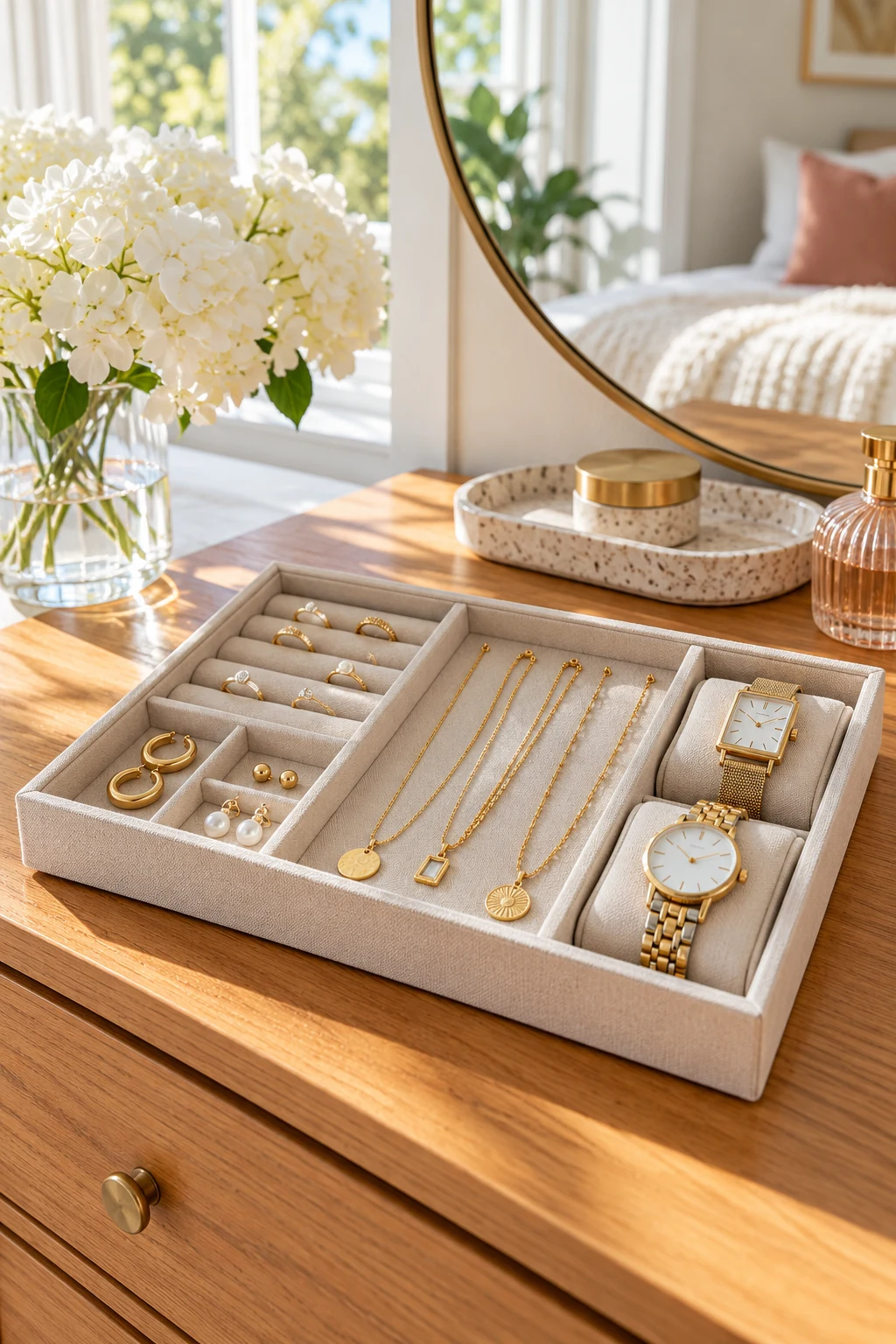
10. Give necklaces separate paths
Keep fine chains separated so the clasps and pendants do not knot together when the drawer moves. A suitable compartment or individual pouch can give each piece its own space. Lay longer necklaces in a way that follows their construction rather than pressing them into a short cell.
Do a gentle open-and-close test after arranging the drawer. If pieces slide into one another, revise the layout before adding more jewelry. Keep the most delicate or valuable items in storage that meets their care and security needs, even if that means using another location.
11. Make ties easy to distinguish
Place ties in separate shallow sections so their colors and patterns remain visible. Choose a loose fold or roll only if it suits the fabric and care guidance. Avoid burying a delicate tie beneath a pile of heavier accessories.
Use the drawer’s dimensions to decide which direction works best. A long narrow compartment may suit a folded tie better than a small square cell. Keep your regular rotation closest to the front and avoid overfilling the back where the drawer is harder to inspect.
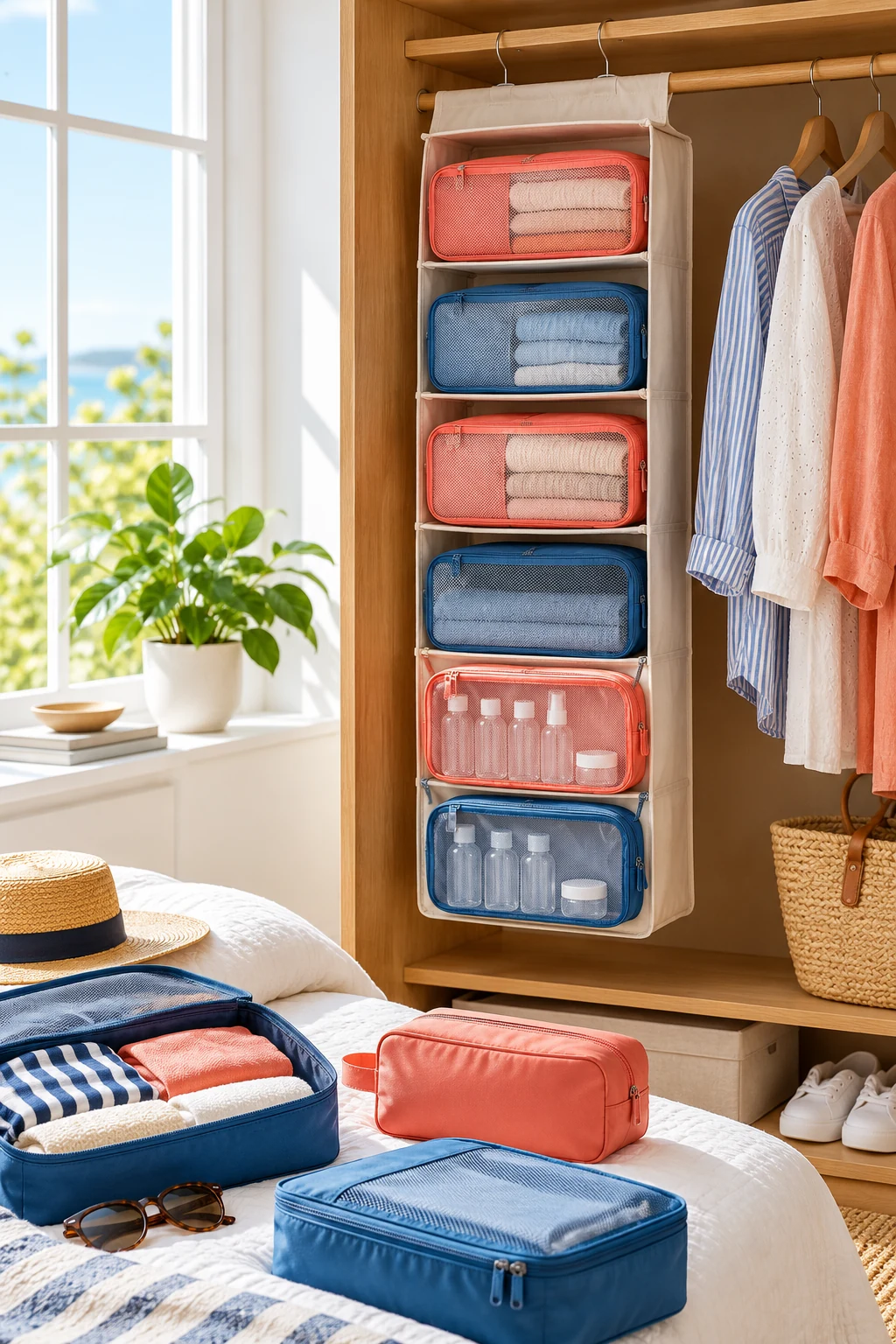
12. Coil suitable belts loosely in an open section
A wide compartment can hold a few loosely coiled belts with the buckles visible. Leave enough space between them that removing one does not unravel the others. For belts whose care guidance favors hanging, use another storage method instead.
Position heavy buckles so they do not scrape nearby delicate accessories. If one belt takes over several small compartments, remove a divider rather than folding the belt sharply. The layout should accommodate the item’s natural size instead of making the item accommodate the grid.
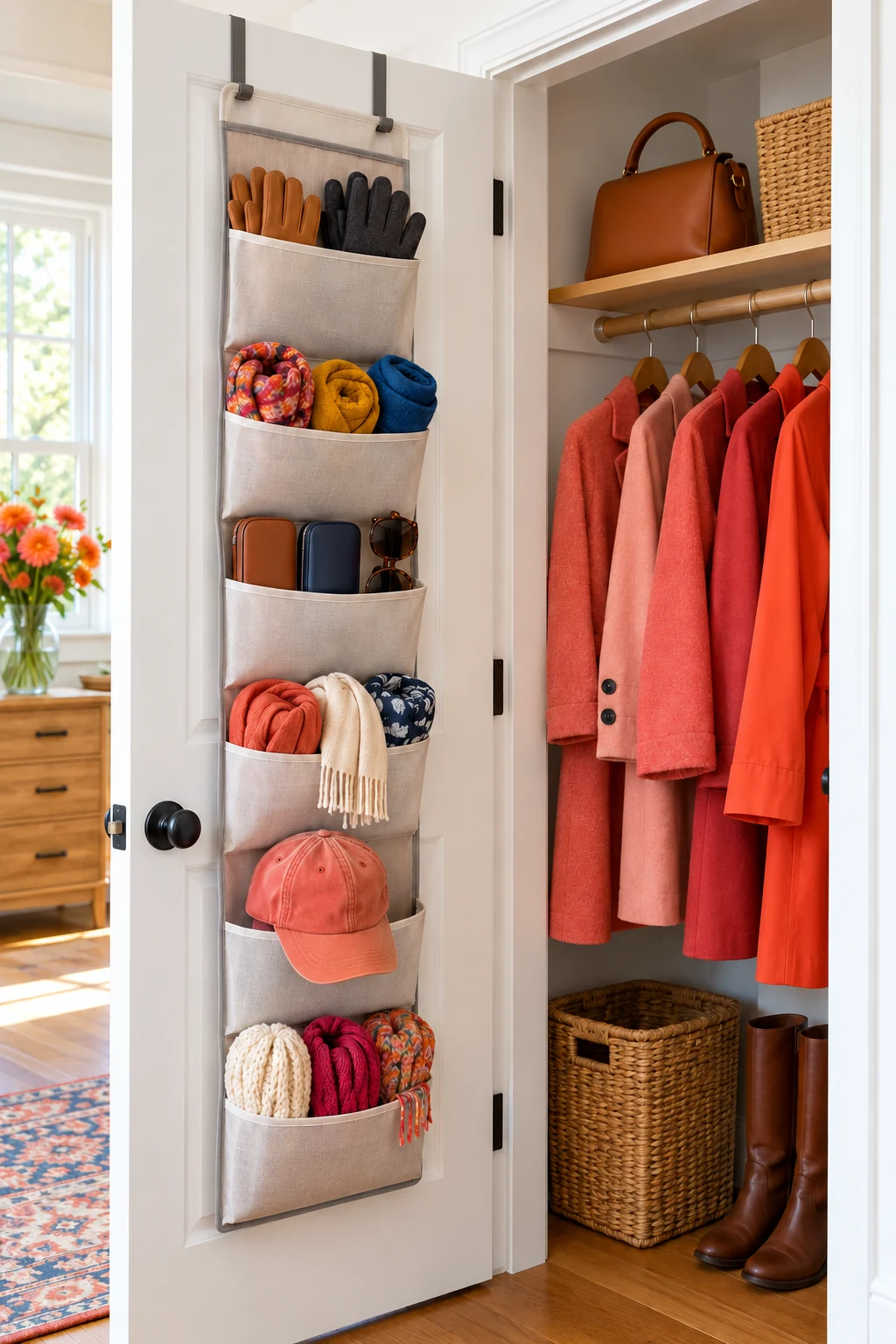
13. Keep glasses in their protective cases
Line up suitable eyeglass or sunglass cases in a shallow drawer so you can identify each one easily. The cases create their own compartments and keep lenses away from loose jewelry or buckles. You may only need a simple boundary to stop the group spreading.
Measure with the largest closed case and check that it can be lifted out without rubbing the drawer frame. If you open cases inside the drawer, allow that additional clearance too. Keep cleaning cloths in a small separate space so they stay easy to find.
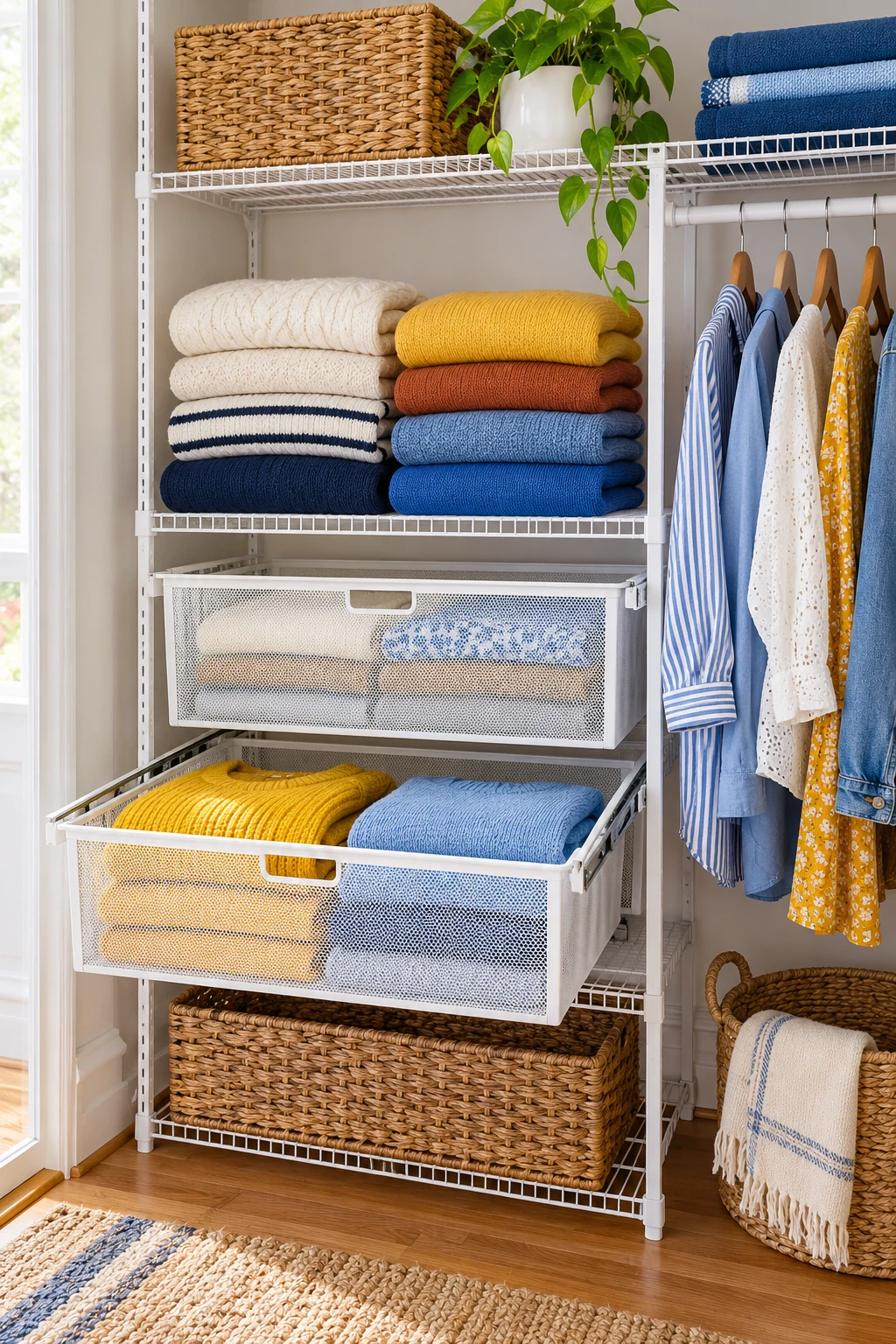
14. Separate watches from loose metal accessories
Give watches a section that supports them appropriately and prevents metal bracelets, buckles, or cufflinks from scratching one another. Use the storage supplied with a watch or a suitable dedicated insert when needed. Do not assume a bare compartment provides protection just because it is tidy.
Keep spare straps together in a separate soft pouch or small tray, following their material care instructions. Leave space to lift a watch without pulling on the strap. A drawer close to the dressing area can be convenient, but valuable pieces may need a different security arrangement.
15. File fold small workout clothes
Try upright rows for lightweight leggings, shorts, or tees so each folded edge is visible. Test one garment against the closed drawer height first. This arrangement can prevent the same two pieces from staying on top of a pile while the rest remain hidden.
Leave the row loose enough to remove and replace a garment without rearranging everything. A small open container can support slippery pieces when the drawer is partly empty. Bulky or structured clothing may be easier to keep in a short flat stack.
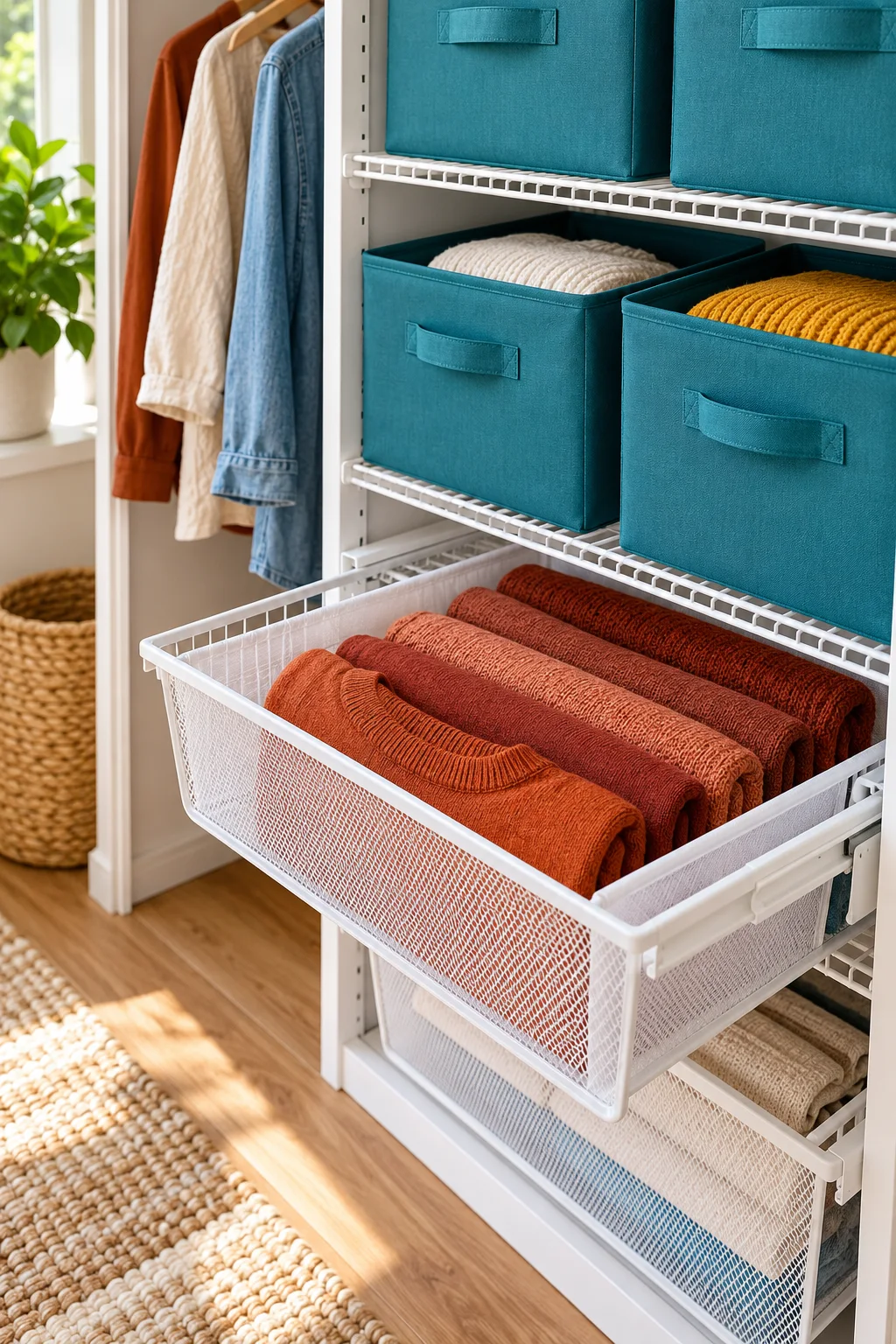
16. Keep a repeated outfit combination together
If you regularly wear the same kind of outfit for an activity, reserve a small section for its clean pieces. A workout top and shorts or a sleep shirt and pants can sit together. This reduces the number of drawer sections you need to search before the activity.
Use this only where the combination stays useful. If you mix everything freely, broad categories may be easier to refill. Do not create several empty outfit cells that take space from the clothes you actually have ready to wear.
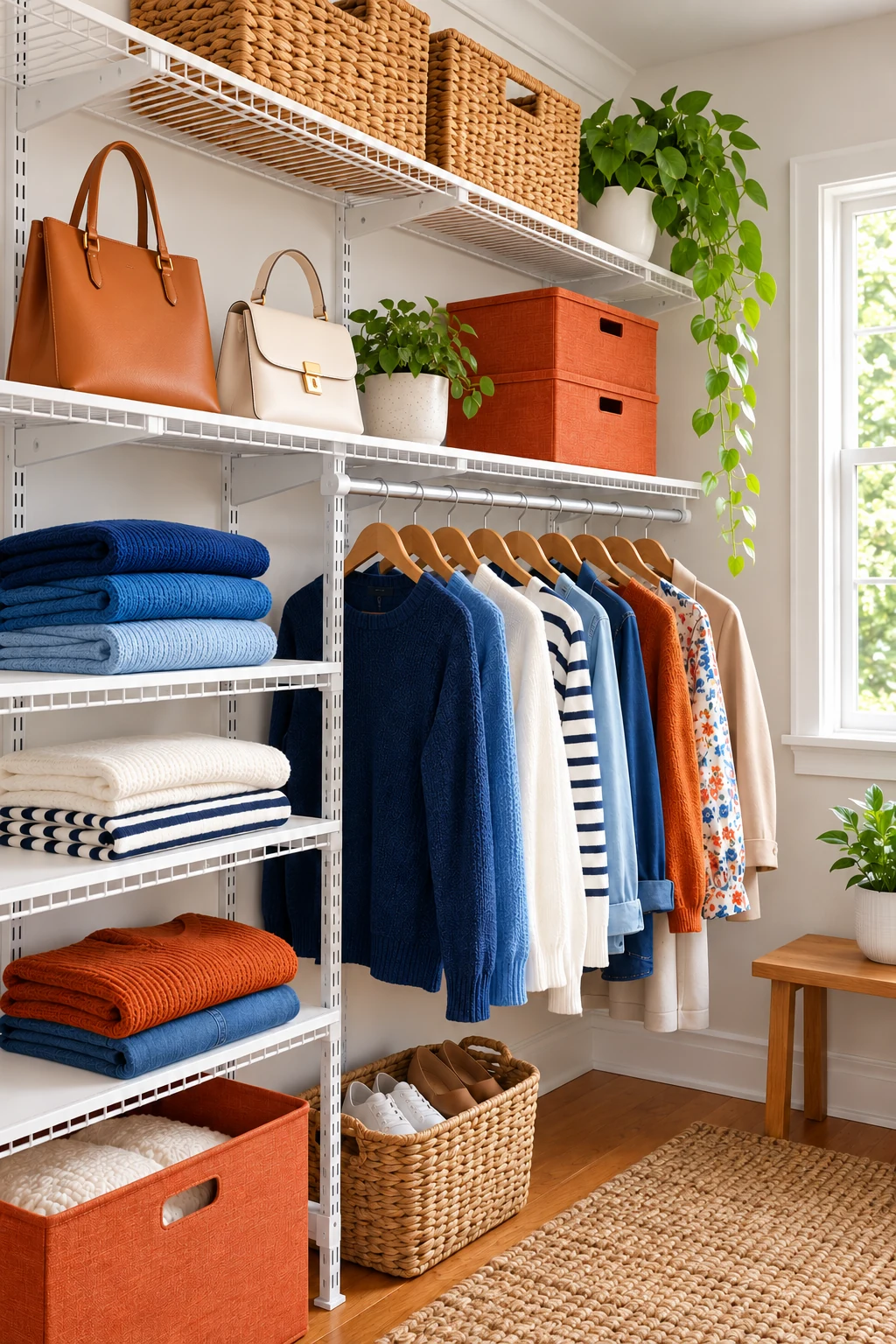
17. Rotate the easiest space with the season
The drawer front should reflect what you use now. When thicker socks replace lightweight pairs, switch their positions rather than crowding the new season into the same small front section. Keep transitional pieces accessible if your weather changes frequently.
Store clean and fully dry off-season items according to their care guidance, either at the back of the drawer or in a separate appropriate location. Label any container that leaves the daily area. Seasonal rotation should make choices clearer rather than simply hide an overfilled drawer.
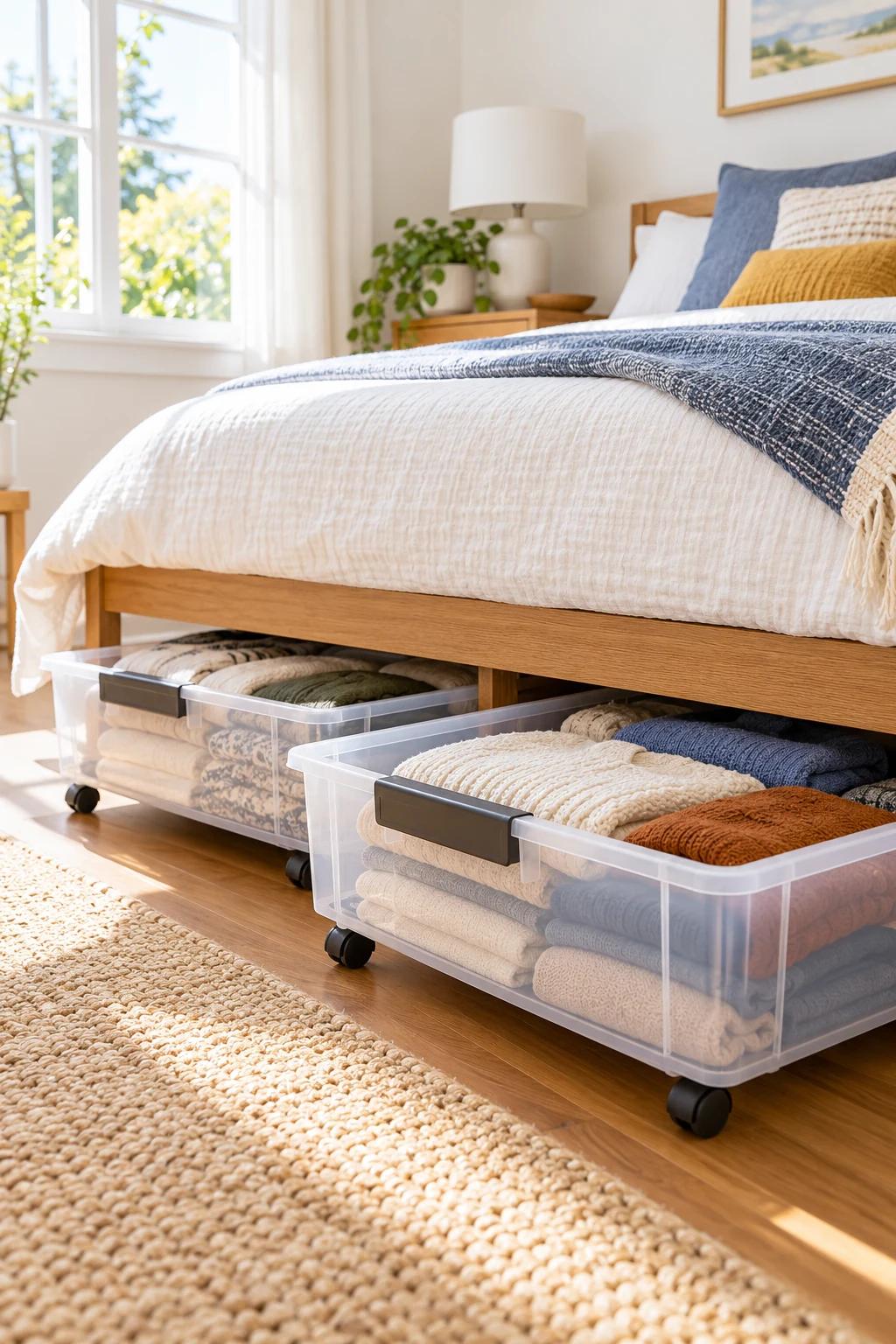
18. Divide a shared drawer in a way both people understand
If two people share a closet drawer, make the boundary clear before dividing the smaller categories. A separate removable bin for each person can work better than a complicated alternating layout. Give each person room suited to the items they keep there.
Use discreet labels inside the drawer if similar items are easy to mix up. Keep the wording simple and agree on where clean laundry goes back. Revisit the split when the contents change rather than letting one side gradually overflow across the boundary.
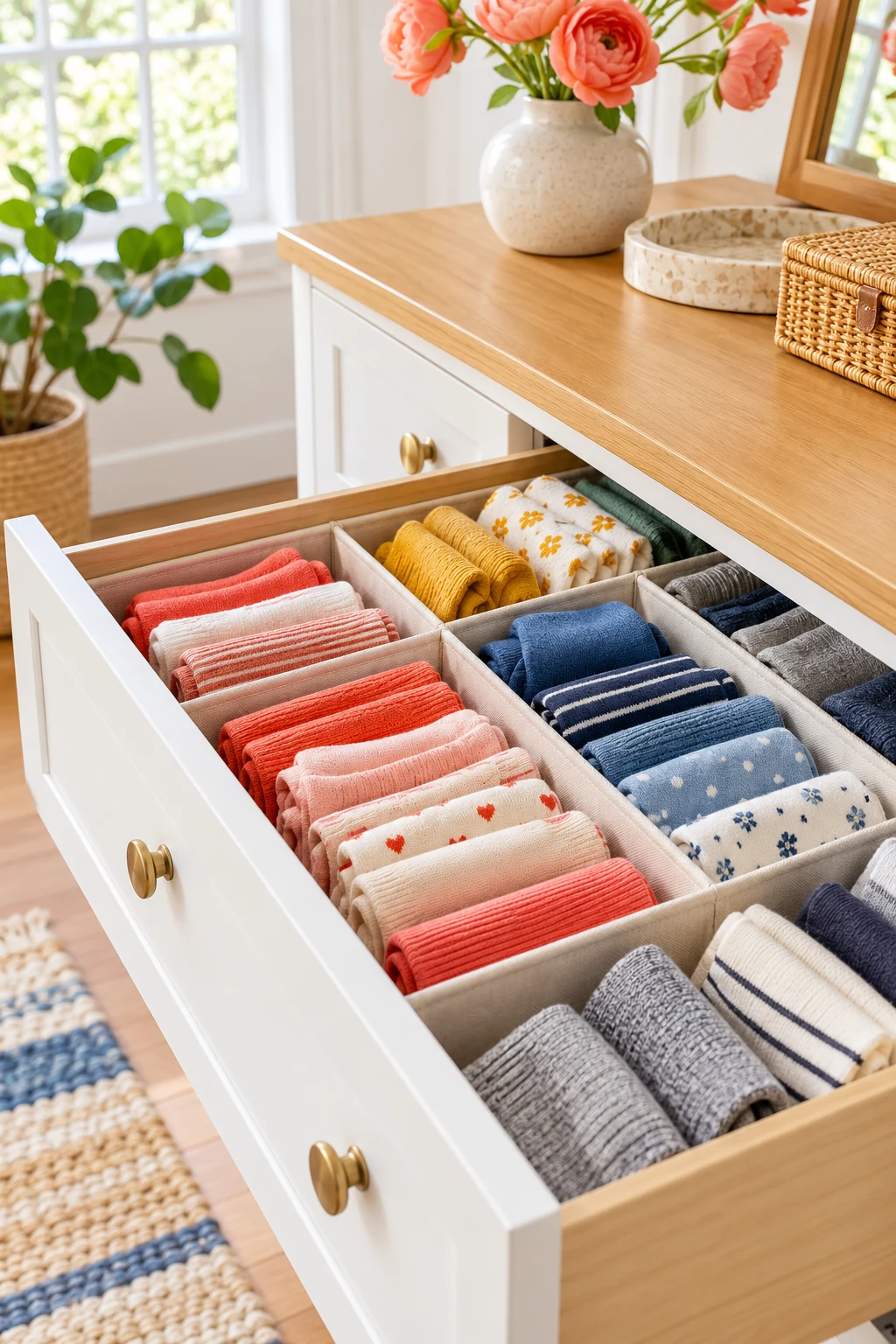
19. Reserve a small pouch for travel-only accessories
Keep occasional travel accessories used while packing in one identifiable pouch or section. This might include a spare luggage tag, an empty garment-care pouch, or other small wardrobe-related items. Keeping the group together can free everyday compartments from things you rarely reach for.
Do not let the travel section become general storage for every souvenir or spare cable. Keep personal documents and valuables in an appropriate separate location. Review the pouch after a trip so damaged or unnecessary items do not wait unnoticed until the next time you pack.
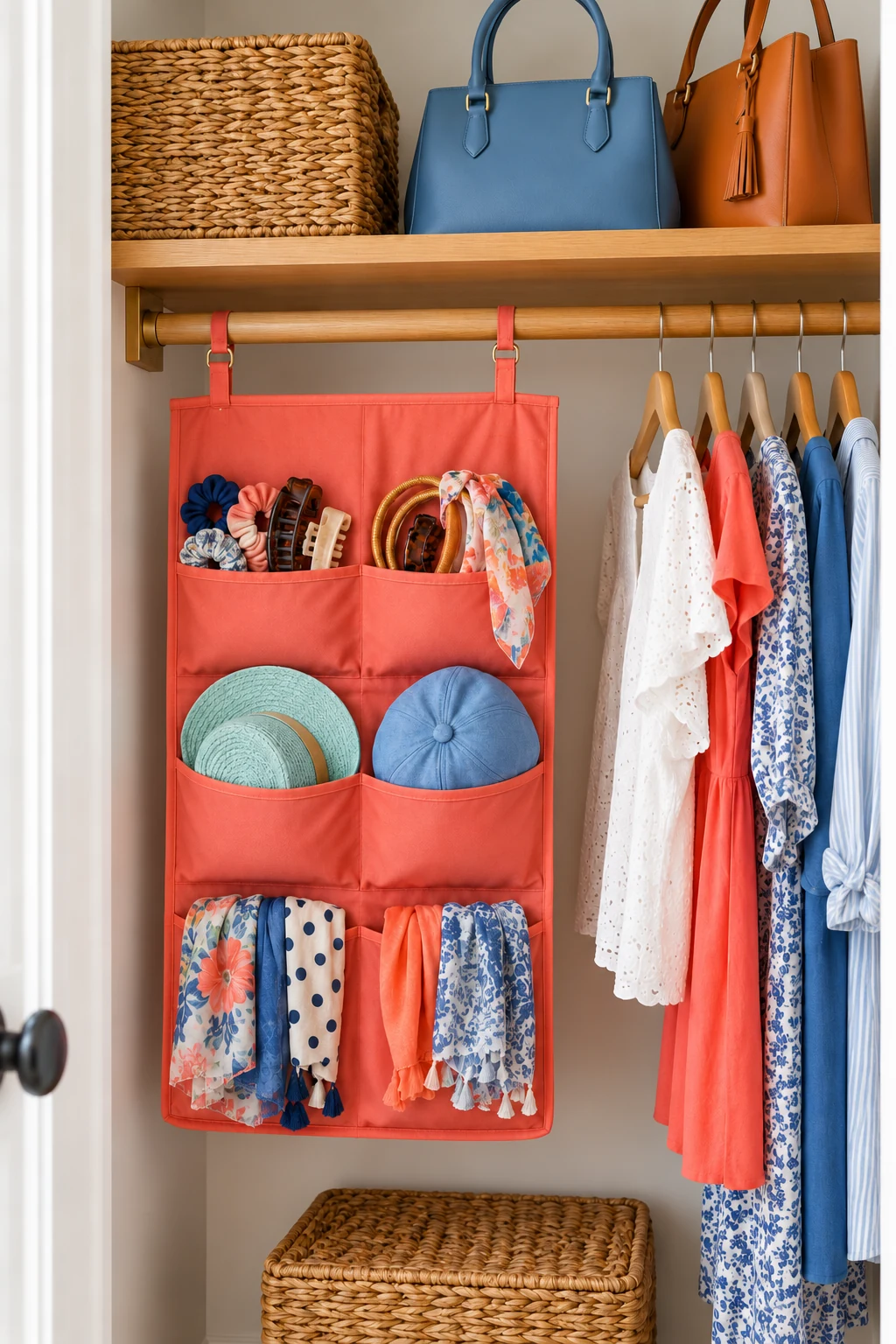
20. Keep inserts from sliding during normal use
Even a neatly divided drawer becomes mixed when the containers slide each time it opens. Test the layout with a few normal movements before filling every tray. A closer-fitting arrangement or the organizer’s intended non-slip feet may solve the problem without attaching anything to the drawer.
Use pads or a liner only when they are compatible with the organizer and drawer finish. Some materials can leave residue or react with surfaces, so follow care guidance and check periodically. Avoid permanently gluing inserts down when a removable arrangement would work.
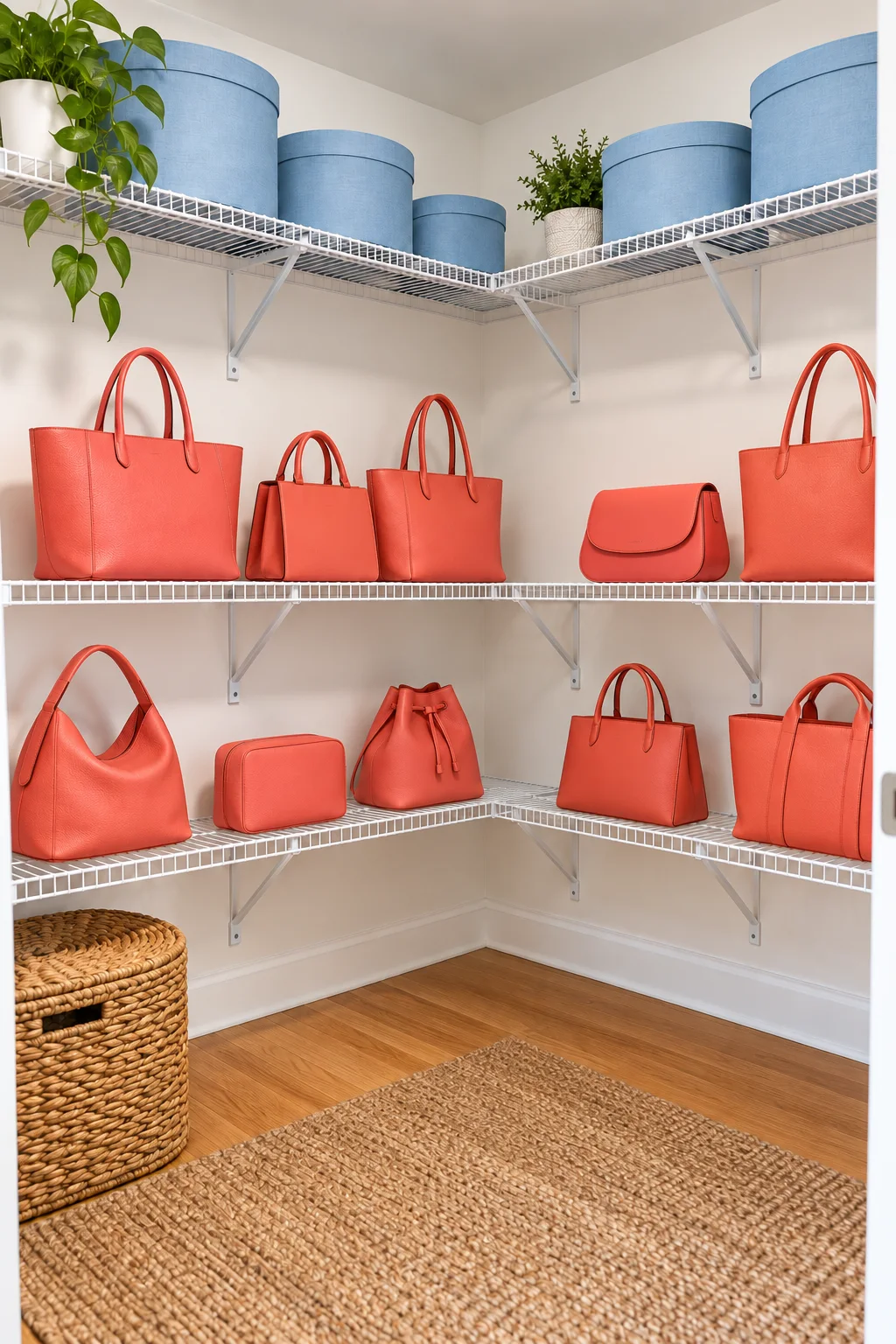
21. Leave a little room for clothing returning from the wash
A drawer can seem well organized when half the wardrobe is in the laundry. Plan the final layout when you can account for the full category. Leave enough room that the last clean pair of socks does not have to be pushed into an already packed cell.
If the drawer only closes after compression, reduce the contents or move part of the category to a better location. Avoid adding a second layer that hides everything below it. A small amount of open capacity makes the organizer easier to maintain throughout the week.
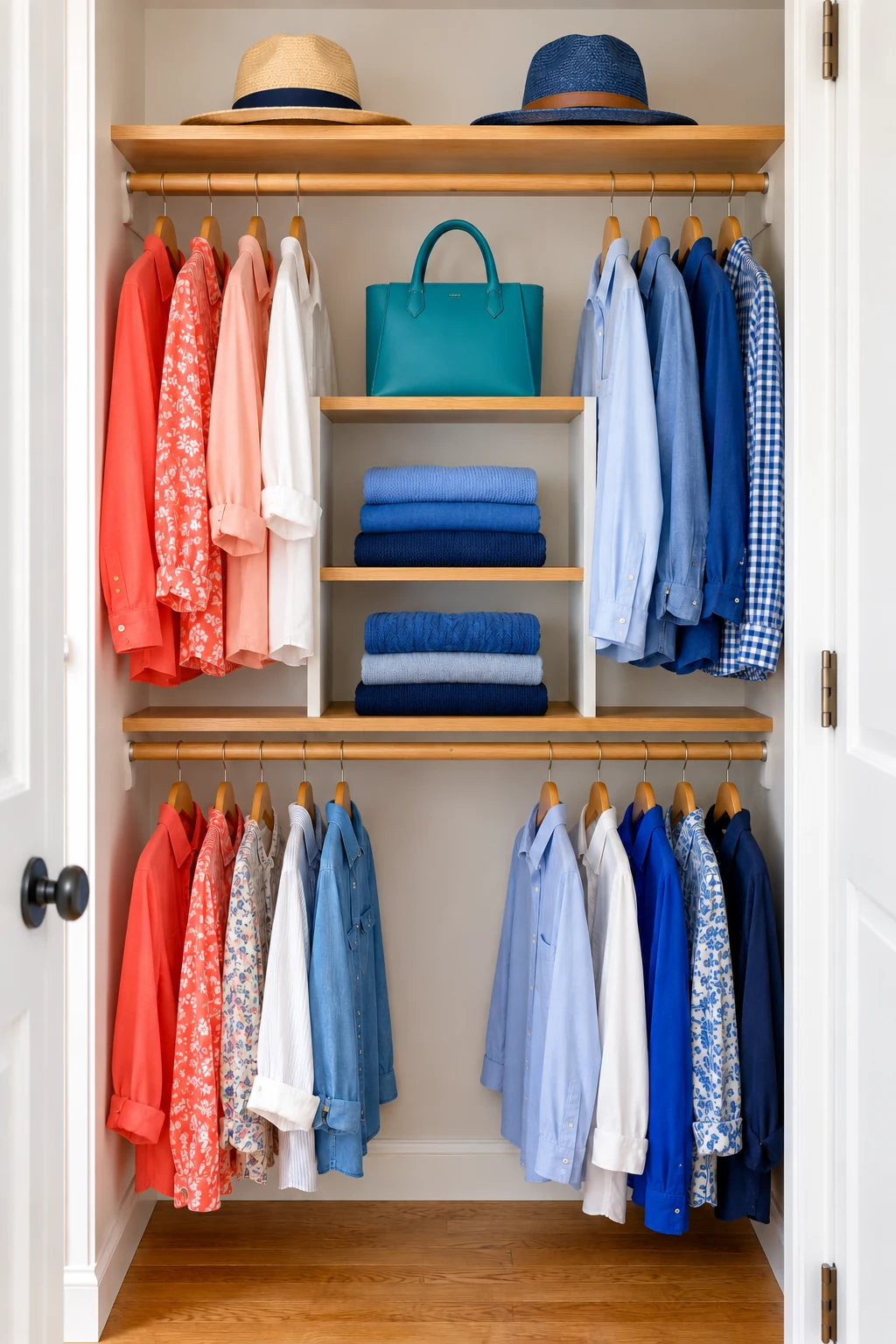
22. Use a quick put-away check to maintain the layout
As clean laundry returns, notice whether each category can go back in one straightforward motion. Return stray accessories, pair the socks, and remove items that need a decision. The drawer does not have to look styled every day to function well.
If the same compartment repeatedly causes trouble, change its size or simplify what belongs there. Save elaborate folding for pieces that truly benefit from it. A drawer stays organized more easily when the easiest action is also the one that puts things in the right place.
Begin with the drawer you open most often and give its contents a layout you can refill easily. Keep the useful divisions, leave a little breathing room, and adjust anything that makes putting things away harder. Subscribe to the Havelyo email list for more small-space storage and organization ideas.