
Kitchen Organization
20 Pull-Out Shelf Ideas to Make Kitchen Cabinets Easier to Use
A deep cabinet can hold plenty while keeping the useful things just out of reach. A pull-out shelf brings the contents forward, but the improvement depends on the right size, sound installation, and a layout that stays steady while it moves.
These 20 pull-out shelf ideas cover everyday cookware, pantry supplies, food containers, and specialized cabinet shapes. Start with the cabinet that causes the most reaching, measure its clear opening, and check the current installation and load requirements for the exact hardware. Added organizers need to fit the moving shelf as carefully as the shelf fits the cabinet.
This article contains affiliate links. If you buy through them, Havelyo may earn a commission. As an Amazon Associate I earn from qualifying purchases.
1. Start with the cabinet you reach into most
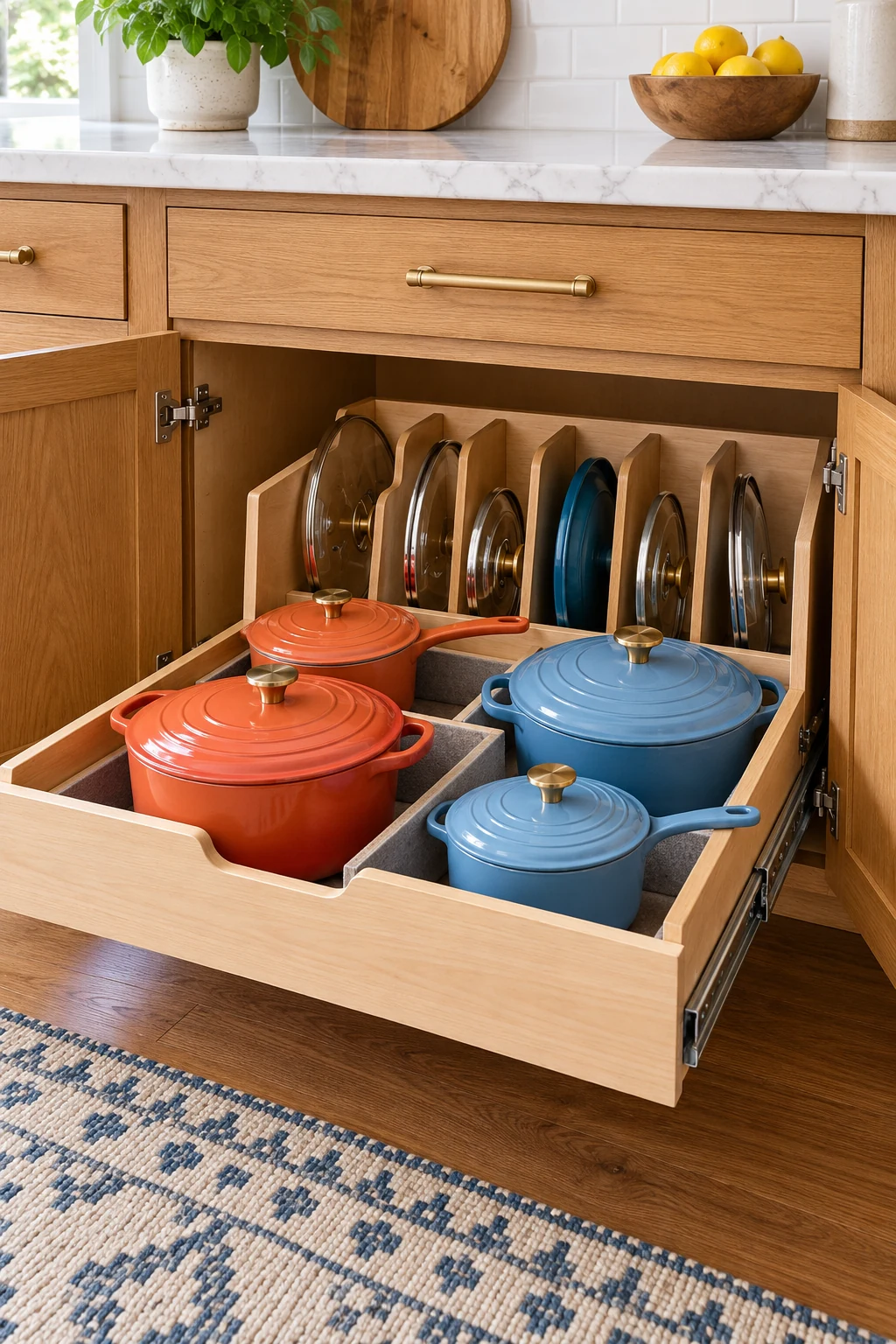
Choose the lower cabinet that makes daily cooking awkward, such as the one holding your regular pots. One well-planned rollout can be more useful than adding sliding hardware throughout the kitchen before you know which arrangement suits your routine.
The LYNK PROFESSIONAL 11-by-21-inch chrome pullout is a single-tier cabinet-mounted option. Measure the opening, installed footprint, and loaded height, and follow its mounting and load instructions. A correctly sized shelf should bring the cookware forward without forcing it past the door. View on Amazon.
2. Size the shelf to the narrowest opening
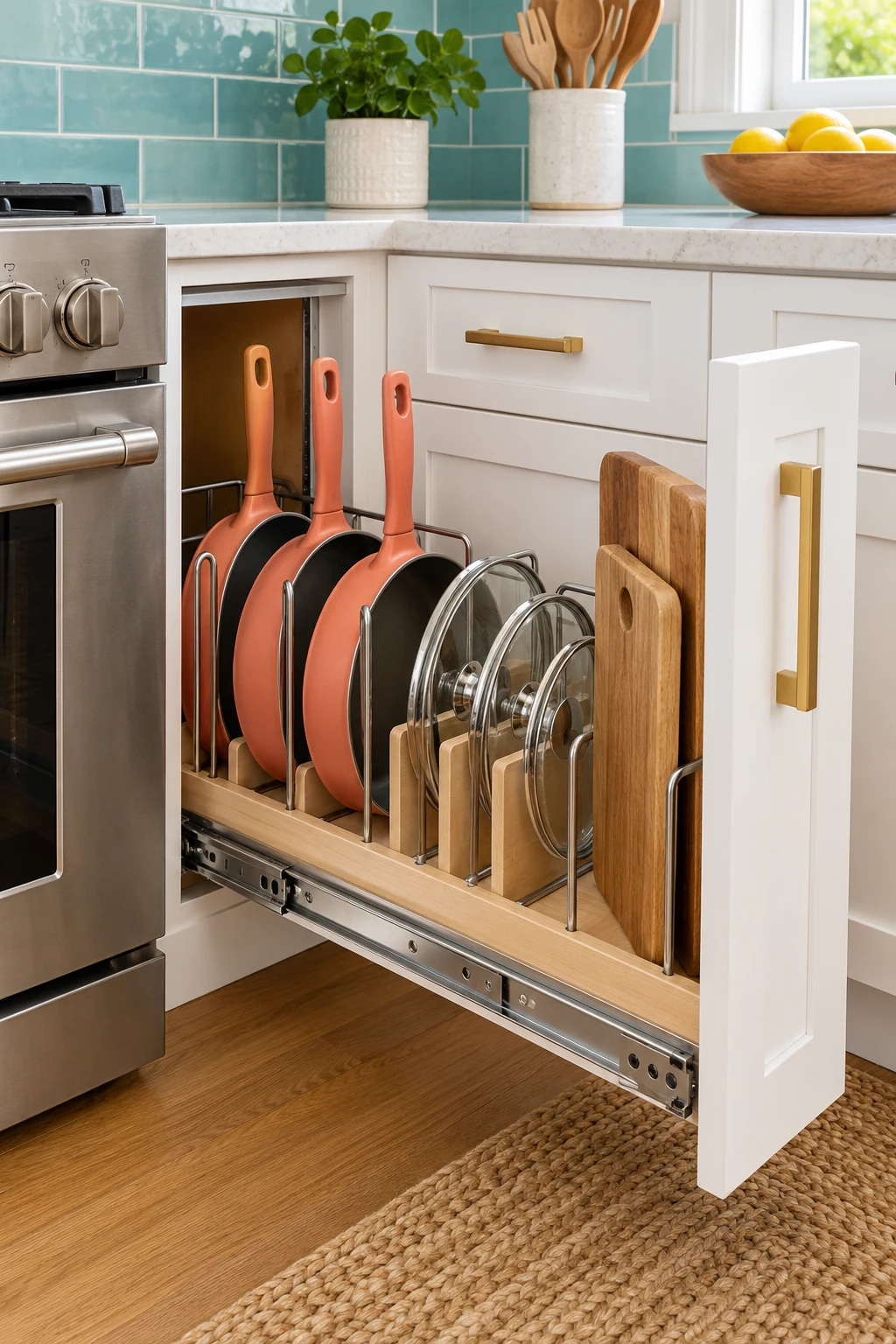
Measure the clear opening with the door fully open, accounting for hinges, a center stile, and any lip at the cabinet front. Interior width alone can be misleading because the moving shelf must pass through that narrower opening every time.
Compare your measurements with the exact model’s minimum-opening requirements and installation diagram. Face-frame and frameless cabinets may need different arrangements. Avoid removing a center stile or structural component to make a shelf fit without advice from a qualified cabinet professional.
3. Leave the handles a clear travel path
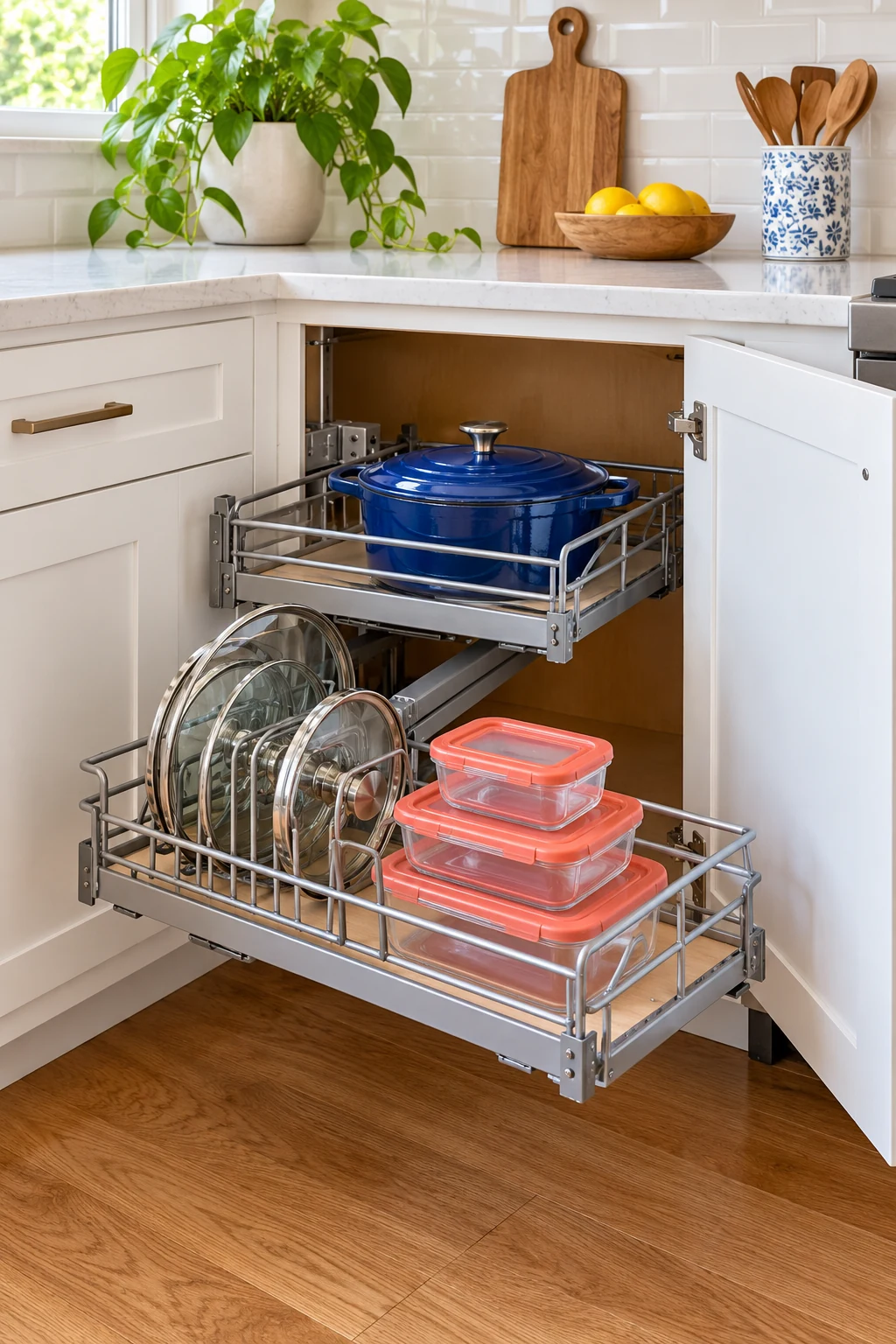
Place the largest pan on the planned shelf and check where its handles project. The shelf itself may fit perfectly while a handle catches a hinge, strikes the door, or pushes another pot into the side of the cabinet.
Test the full motion before deciding the arrangement. Turn handles inward only when the cookware remains easy to lift and does not become tangled. Keeping fewer pans on the shelf can give you better access than using every square inch of its base.
4. Stand cutting boards and trays in supported lanes
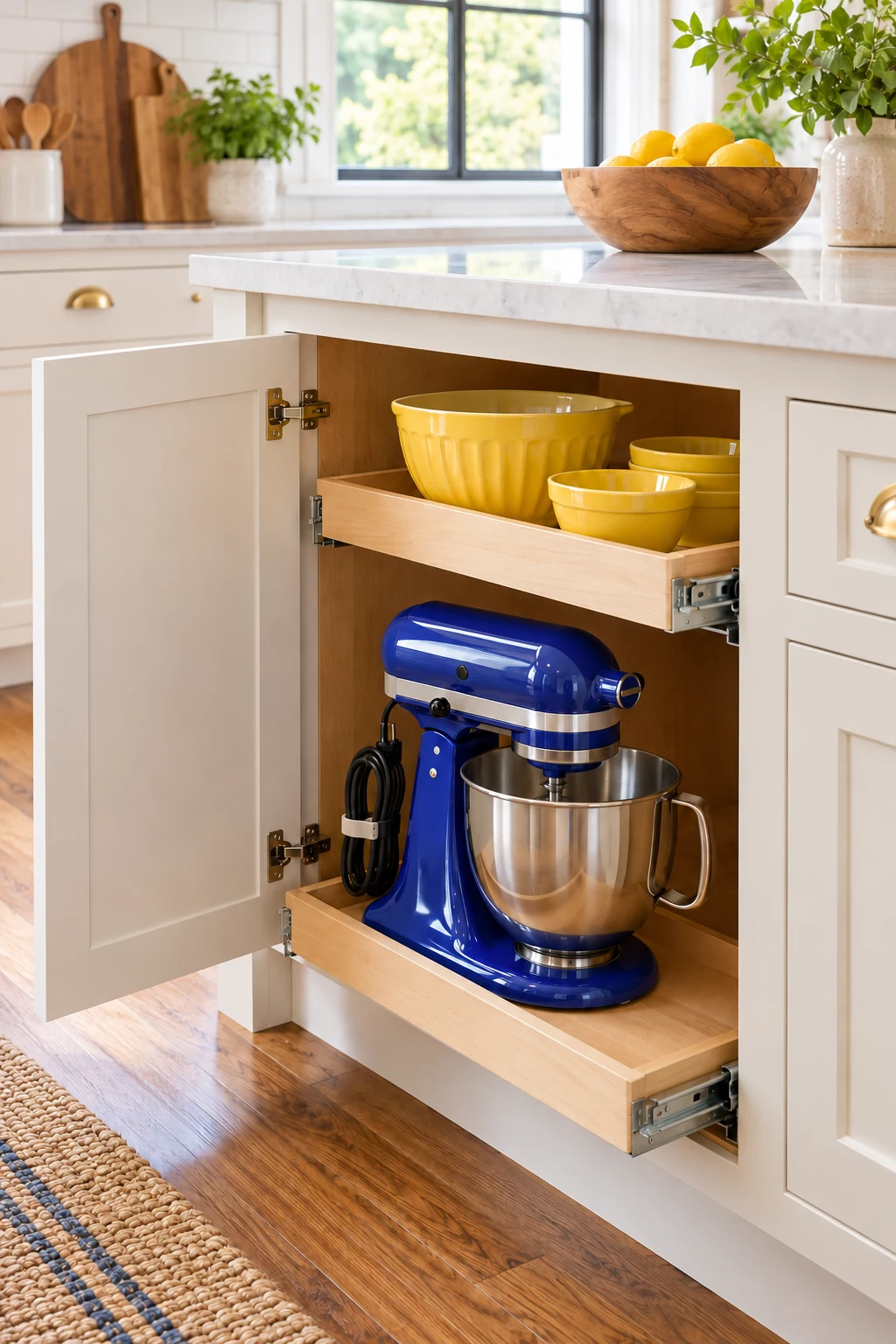
A rollout can make a deep vertical board bay easier to use when the pieces remain supported as it moves. Keep the boards and trays within the shelf’s usable footprint and below the opening’s height throughout the travel.
The YouCopia StoreMore Bakeware Rack, Organizing Hero edition, has seven adjustable dividers on a compact freestanding base. Check its stability on the particular rollout, the loaded board height, and total weight. Do not assume a freestanding rack is automatically suitable for every moving shelf. View on Amazon.
5. Keep pot lids beside their cookware
Dedicate a supported lid row on the same rollout as the pans it serves, or on a nearby shallow sliding level. Seeing both parts together makes it easier to take out a complete pair rather than searching a door rack across the kitchen.
The YouCopia StoreMore Expandable Cookware Rack, Premium Edition, adjusts from 12.5 to 21.5 inches wide. Check its actual fit and stability on the shelf, including lid knobs and handles. Keep the row light and supported; movement should not send loose covers leaning into the pans. View on Amazon.
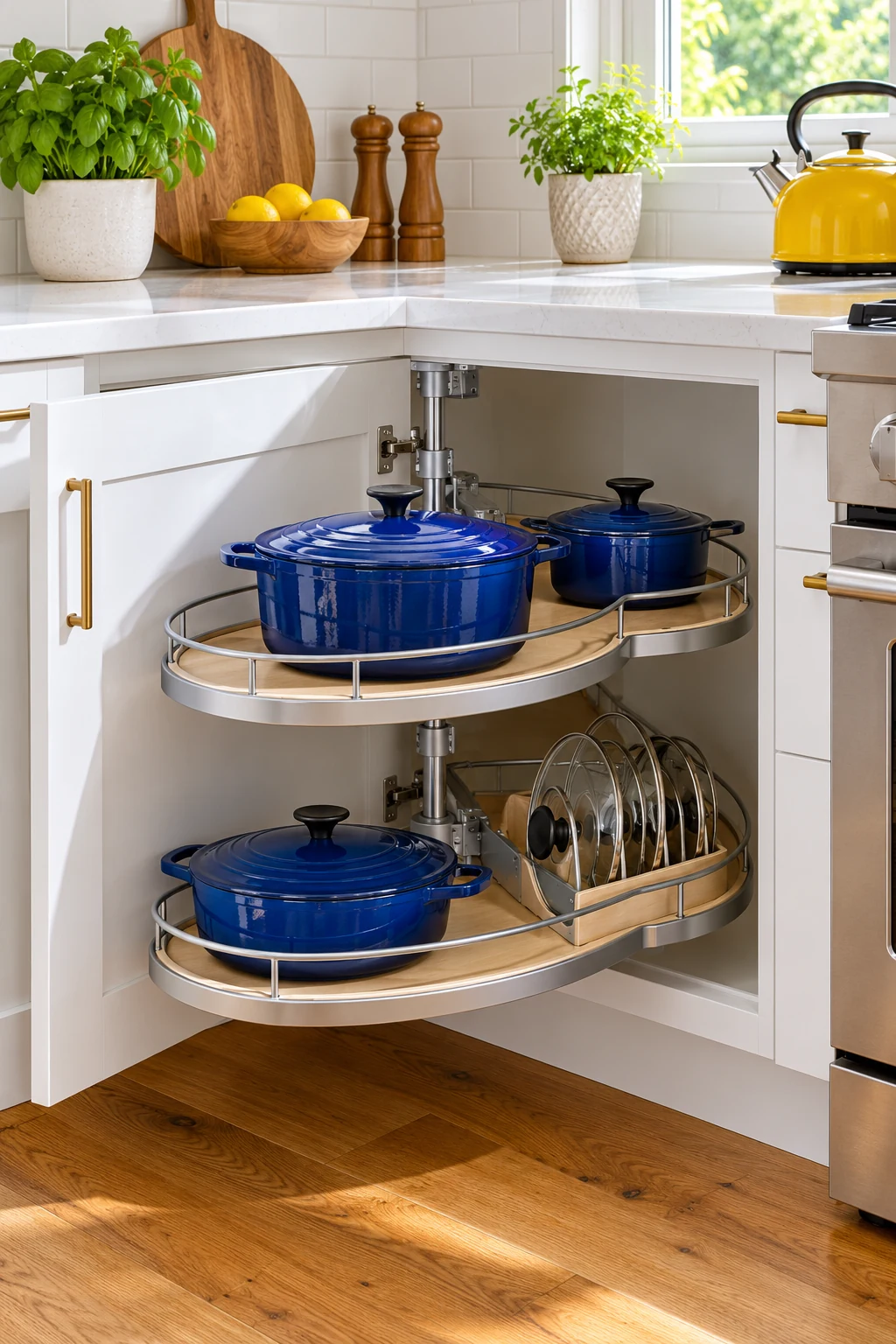
6. Create a container drawer inside a cabinet
A pullout shelf can function like a low drawer for food-storage containers when nested bases and lids have separate homes. Keep the stacks short enough to see and grasp, with nothing extending into the slide mechanism.
The YouCopia StoraLid 24 Organizing Hero organizer separates lids with five adjustable dividers and is listed for lids up to 9 inches wide. Check the organizer’s footprint and loaded height. Its name is not a guaranteed capacity for your collection of lids. View on Amazon.
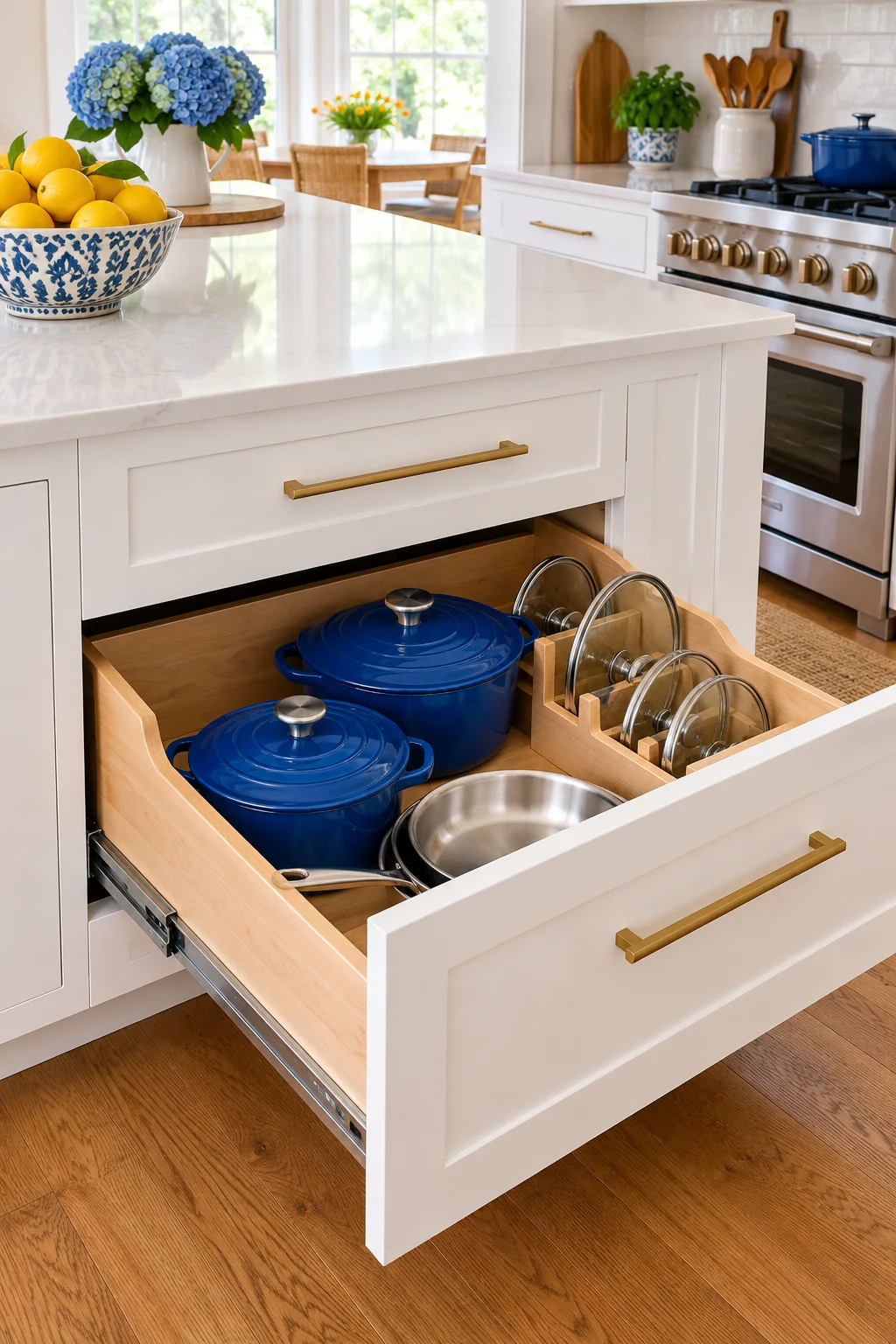
7. Use stepped compartments for loose packets
A pantry rollout can bring packets forward, but loose envelopes still disappear beneath boxes. Put a small stepped organizer on a suitably stable shelf so the tops remain visible and each category is easy to scan.
The YouCopia ShelfBin Packet Organizer has four stepped compartments and a handle. Its listed size is 10.7 inches deep, 6.5 wide, and 5.2 high. Check packet height and the shelf above, keeping original food packaging intact and the organizer clear of moving hardware. View on Amazon.
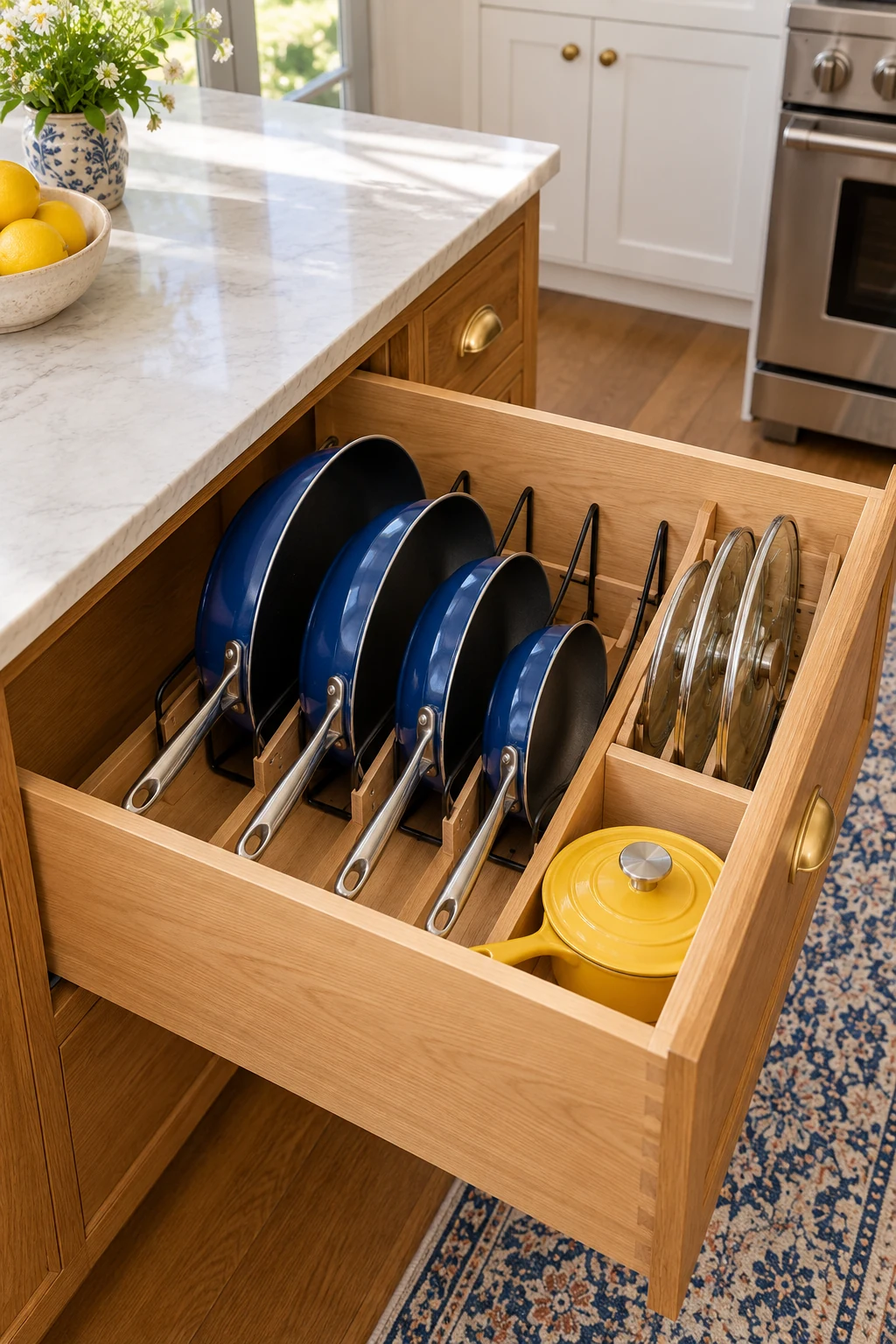
8. Use removable bins within a wider rollout
A wide sliding shelf can hold several modest category bins instead of one loose collection. The shelf brings everything forward, and the bins let you carry a small group to the counter without unloading the whole cabinet.
The clear iDesign 8-by-8-by-6-inch handled bin suits a compact group of appropriate supplies. Leave room around its handles and confirm the filled weight is comfortable to lift. Hand-wash as directed, and check that the bin stays stable through the shelf’s normal motion. View on Amazon.
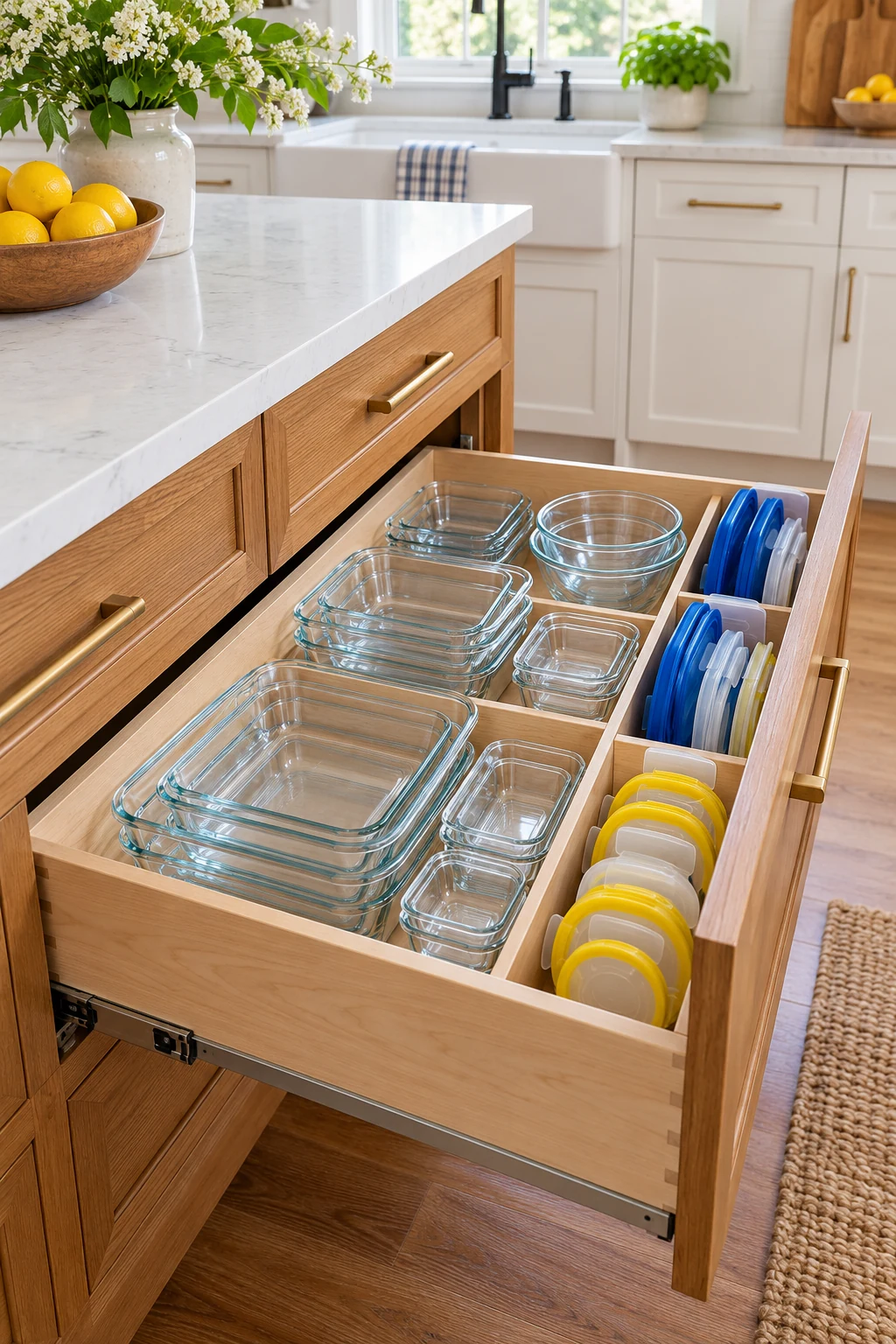
9. Give wrap boxes separate levels
Long foil and parchment boxes can slide into a jumble on a broad shelf. A compact box organizer may keep them in separate levels while the rollout gives access to the back, provided the combined arrangement fits the cabinet.
The small YouCopia UpSpace Cabinet Box Organizer, Organizing Hero edition, is listed at 10.9 inches deep, 8.9 wide, and 9.7 high. Include the full box lengths and retrieval space in your measurements. Confirm a stable placement and follow both organizers’ load guidance. View on Amazon.
10. Choose two levels only when both are usable
A two-tier pullout can work for shorter items when a cabinet has enough vertical room. Set the plan around the tallest stored piece on each level, leaving hand clearance and room for the frame or tray above it.
Check whether the levels move together or independently, because that changes access. A full-width upper basket can make tall items underneath difficult to remove. Sometimes one deep lower rollout and an ordinary upper shelf provide a more useful mix of storage.
11. Use an offset pullout around under-sink equipment
A sink cabinet needs a shape that clears the drain, valves, hoses, and any disposal or filter equipment. An offset upper shelf can use one side pocket without forcing a full-width rack into the plumbing area.
The LYNK PROFESSIONAL two-tier under-sink model 451118 has a reversible upper shelf and a listed 11.5-by-18-by-14-inch exterior size. Check the minimum opening, full travel, mounting instructions, and service clearances. Keep cleaning products separate from food and in appropriate secure storage. View on Amazon.
12. Use a low-sided shelf for tall bottles
Tall bottles may be easier to remove from a low-sided rollout than from a deep basket with a high front. Keep them upright and arranged so you can see the labels without reaching over a dense row.
Allow enough height for the tallest cap or dispenser through the whole opening. Use only an appropriate stable arrangement, and follow the items’ storage directions. A raised edge can help define the shelf, but it does not guarantee that bottles cannot tip while moving.
13. Make serving dishes accessible without tall stacks
A rollout can improve access to occasional serving bowls and casseroles stored in a lower cabinet. Arrange short stacks or individual pieces so you can lift the needed dish without supporting several others above it.
Check both the shelf and cabinet load limits, especially for ceramic or glass pieces. Follow the dishes’ care guidance for nesting or separators. Keep the heaviest shapes low and avoid a layout that requires a twisting lift over the extended shelf’s side.
14. Use a rollout for appliance storage only when it fits
A low sliding shelf can reveal an unplugged, cooled appliance that would otherwise sit at the back of a cupboard. Keep its cord loosely contained and clear of slides, and leave room to grasp the appliance securely.
Check the complete stored weight, including accessories, against the cabinet and hardware instructions. A storage rollout is not automatically an operating platform. Move the appliance to an appropriate location for use unless its manufacturer and the installed system explicitly permit the planned arrangement.
15. Consider a purpose-made corner mechanism
A blind or angled corner cabinet may need a swing-out or other dedicated corner system rather than a straight shelf. The mechanism can bring stored items through the opening, but its complete sweep needs more planning than its resting footprint.
Have an installer check cabinet type, handedness, door opening, mounting surfaces, load limits, and collisions with nearby cabinetry. Compare the usable tray shapes with your cookware. Keep the full moving path clear; a corner fitting’s capacity is not the same as the cabinet’s entire volume.
16. Give recycling a dedicated pullout frame
A purpose-made bin pullout can keep an appropriate recycling container accessible while using a lower cabinet. Choose a frame sized for the intended bin so the container stays supported during removal and does not rub against the door.
Account for the height needed to lift the bin out and clean around it. Keep waste storage separate from clean food-contact items, and follow local sorting guidance. Do not put a heavy bin on a loose improvised sliding tray that lacks the required mounting or load rating.
17. Use a shallow rollout for folded kitchen linens
A short sliding tray can make folded placemats, napkins, or clean kitchen towels easier to reach in a deep cabinet. Keep the stacks low enough that they stay visible and do not snag the underside of the shelf above.
Store only clean, fully dry linens in an appropriate kitchen zone, away from household cleaners and damp sink equipment. A smooth supported surface is helpful for small folded pieces. Keep fabric clear of slide tracks and any protruding hardware during the entire motion.
18. Set the most-used shelf at a comfortable reach
When you have a choice of mounting positions, prioritize the level that is easiest for the main user to reach and lift from. A shelf that moves outward still needs enough room in front for a comfortable stance or seated approach.
Test the proposed height and extension before installation, accounting for nearby doors and the aisle. Avoid putting heavy items where you must reach over another extended shelf. For a specific accessibility need, plan the complete cabinet arrangement with an appropriate professional rather than relying on a generic shelf height.
19. Treat the mounting surface as part of the system
A rollout depends on sound cabinet material, suitable fasteners, and the mounting method required by its maker. A hardware load figure alone does not prove that a thin shelf, damaged base, or unsupported panel can carry the same weight.
Use the current instructions for screw placement, length, alignment, and any required supports. Check for hidden wiring or plumbing before drilling. Have a qualified installer handle uncertain construction, and do not substitute adhesive for a screw-mounted system without explicit manufacturer approval.
20. Test the finished shelf with a modest load
After correct installation, add a modest amount of storage and check the motion before filling the shelf. Follow the manufacturer’s testing instructions and watch for rubbing, tilting, loose items, or a door that no longer opens far enough.
Increase the load only within the limits of the whole installed system. Keep weight balanced, close one shelf before opening another where instructed, and stop if anything binds or shifts. Do not lean, sit, or climb on a pullout to reach something higher.
Choose one cabinet, plan its most useful load, and test the complete opening and retrieval path before buying hardware. A well-supported shelf with room to move can make that cabinet much easier to use. Subscribe to the Havelyo email list for more practical small-space decorating and organization ideas.