
Closet Organization
30 Small Closet Organization Ideas to Fit More Without the Mess
A small closet has to leave room for your hands as well as your clothes. A shelf packed to its edges or a rail that will not let hangers slide may hold plenty, but it makes every morning and laundry day harder than they need to be.
These 30 small closet organization ideas help you make better use of limited space while keeping it easy to put things away. Begin with one crowded category and work with the storage you already have. Measure the usable opening, check support and load instructions before adding anything, and preserve a little working room instead of filling every gap.
This article contains affiliate links. If you buy through them, Havelyo may earn a commission. As an Amazon Associate I earn from qualifying purchases.
Find the space the closet can actually use
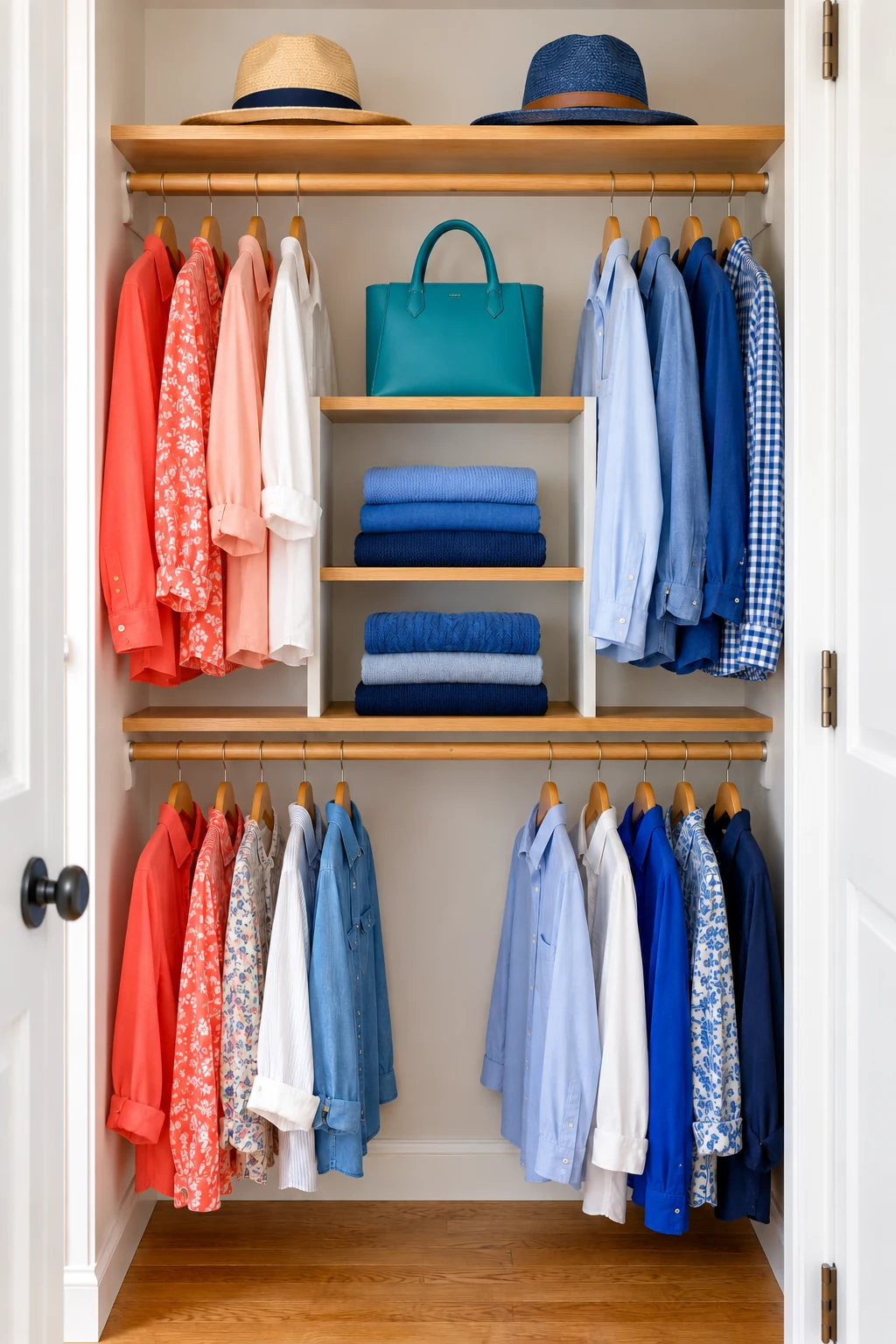
1. Measure the opening, not only the interior
Check the clear width with the door in its normal open position, then measure shelf depth and the obstacles inside. Sliding panels, hinges, and trim can make a container difficult to remove even when it fits within the closet walls.
Test a similar-sized empty box along the whole retrieval route before buying storage. Include hand clearance and any front shelf lip. A narrower bin you can pull out comfortably may give you more useful storage than a wider one trapped behind the door.
2. Assess the closet when the laundry is back
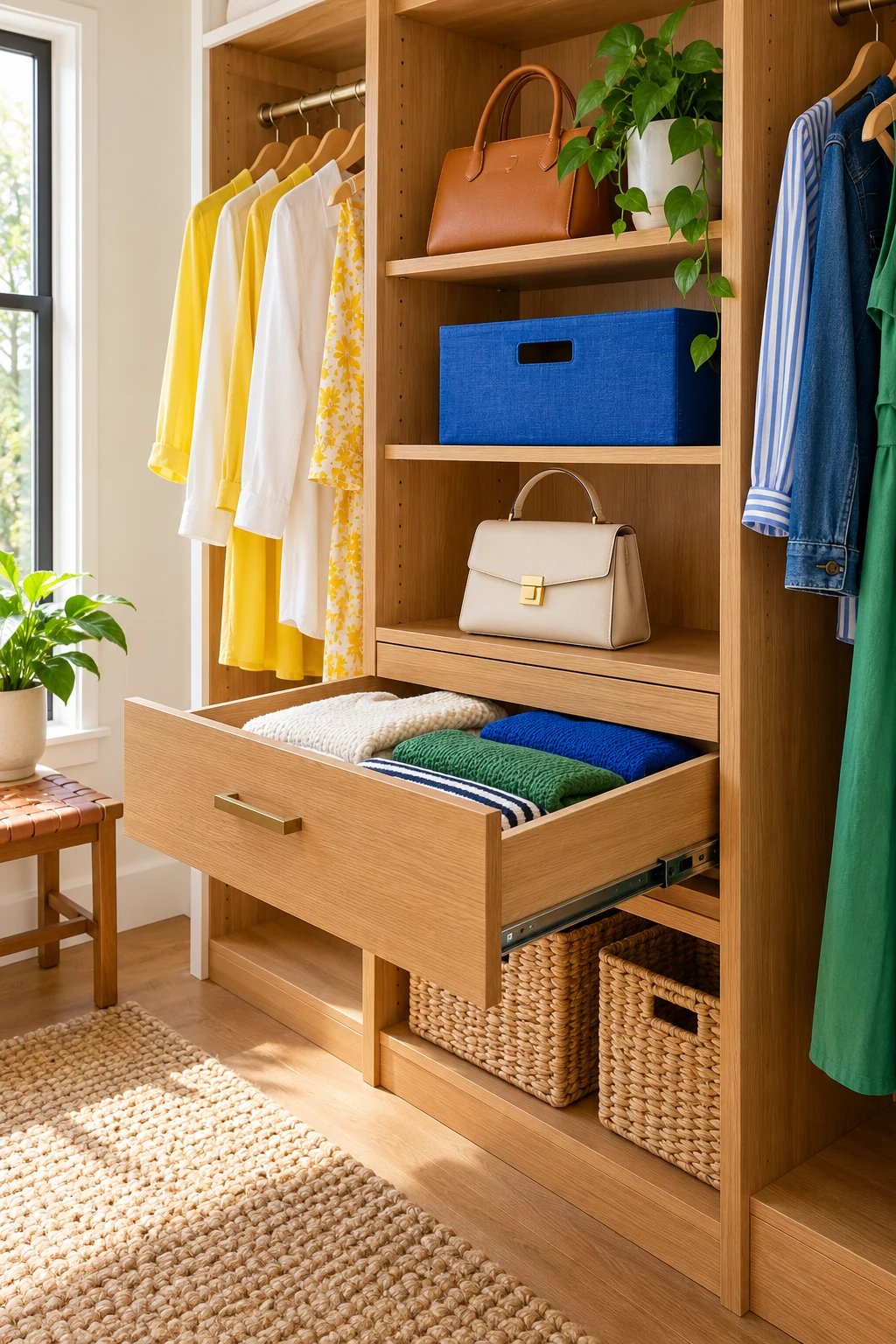
Make storage decisions after the clean laundry has returned, when the closet is carrying its normal full load. A layout that looks spacious while half the wardrobe is in the hamper may become impossible to maintain by evening.
Sort one category at a time into current use, repair, and items you are ready to let go. Check condition and fit before committing shelf space. Use the actual volume of the keepers to plan the layout instead of buying containers for clothing you no longer need.
3. Assign space according to category size
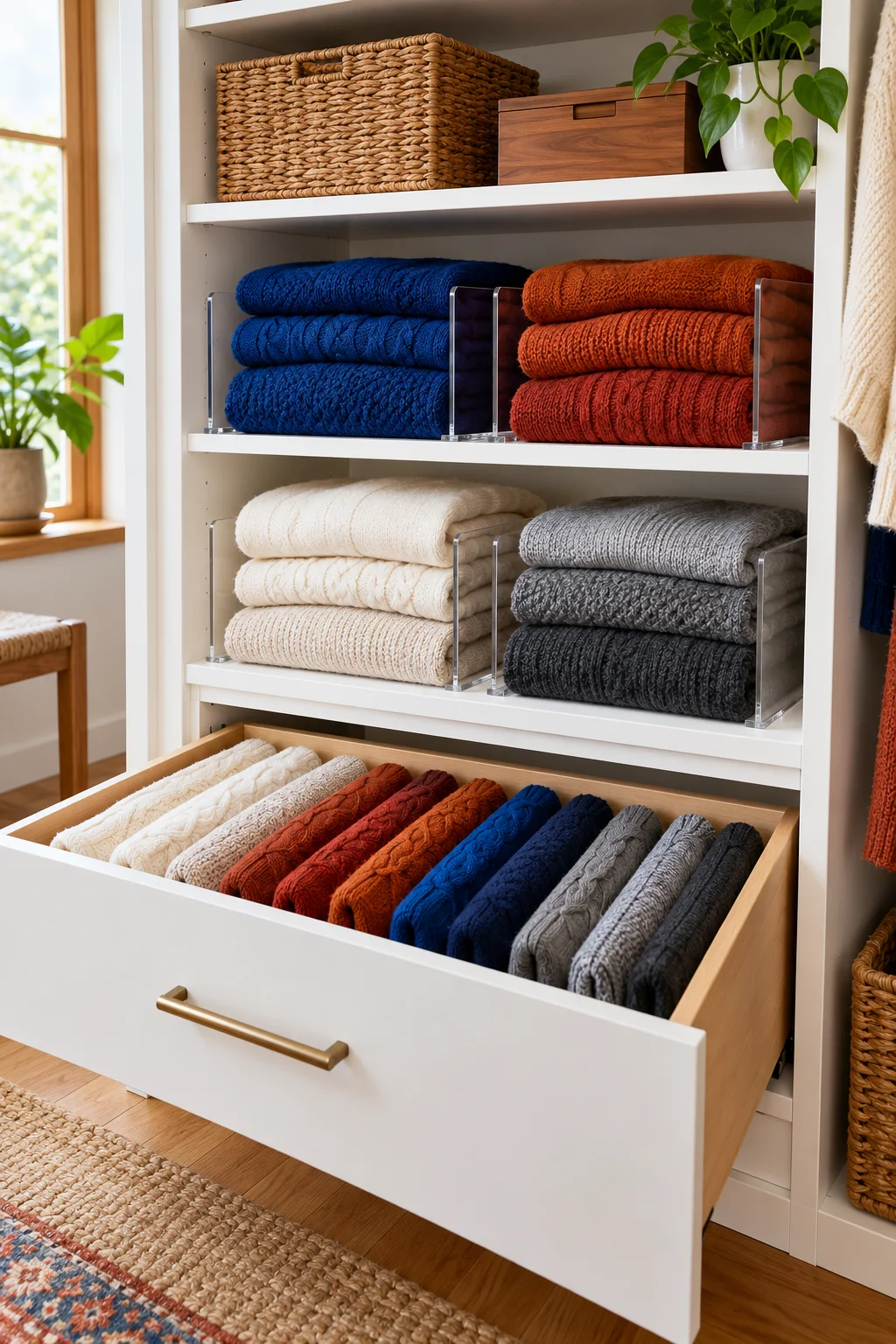
Give large categories more room and small ones less instead of dividing the closet into equal-looking sections. A collection of bulky sweaters needs a different footprint from a few workout tops, even if both count as one category.
Sketch the approximate share needed for hanging, folding, shoes, and accessories. If the plan exceeds the available space, move suitable occasional items elsewhere or edit the current rotation. Adding tiny organizers cannot solve a mismatch between the wardrobe volume and the closet's working capacity.
4. Put daily clothing at the clearest part of the opening
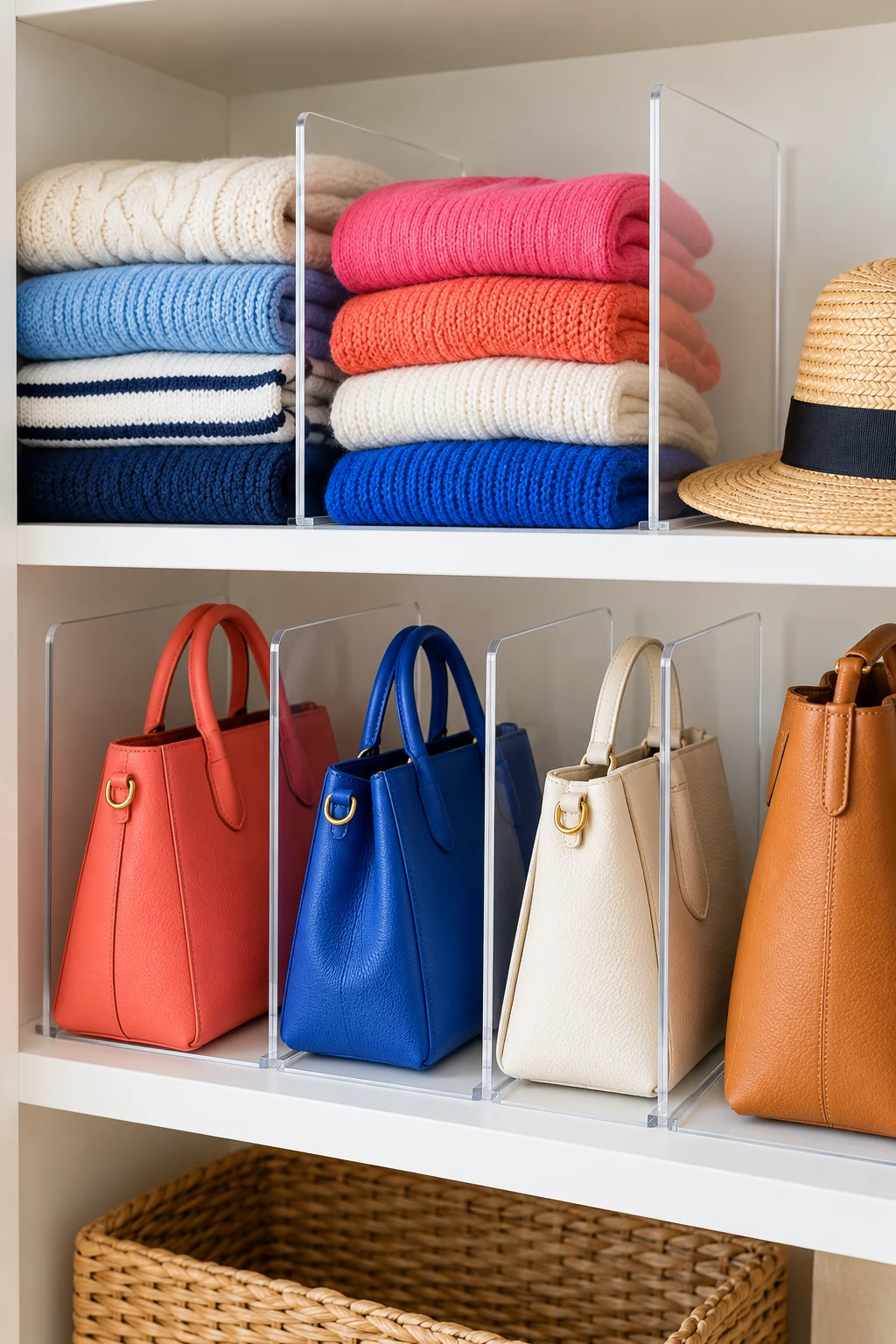
Place the pieces you use most in the area easiest to see and reach. In a small reach-in, the center opening may be much more convenient than the deep side spaces, particularly with sliding doors.
Use harder-to-reach positions for lighter occasional items that can be retrieved safely. Avoid burying daily socks or work shirts behind another category just to create visual symmetry. A layout suited to your reach and routine is more useful than a perfectly balanced photograph.
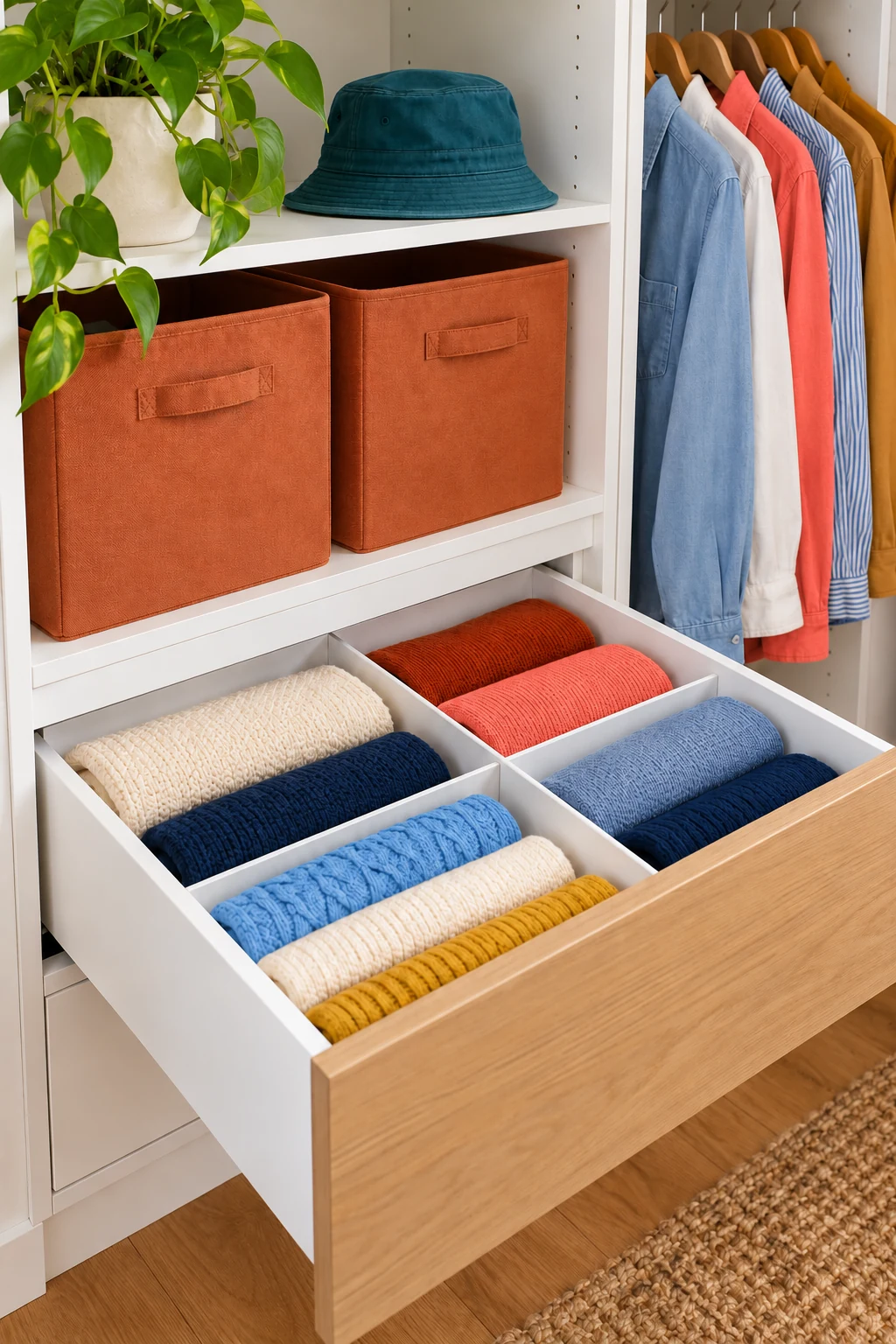
Make limited hanging width work harder
5. Replace bulky everyday hangers selectively
Use slimmer hangers for garments that suit them while keeping special supports for coats or tailored pieces. A consistent shape reduces the tangle of mixed hooks and makes it easier to see where each garment starts.
Amazon Basics Slim Velvet Suit Hangers in the Black/Silver 30-pack are one everyday option. Test a few with your actual clothing before replacing the whole collection. Leave enough room for hangers to slide, and do not treat a slimmer profile as permission to exceed the rod's load. View on Amazon.
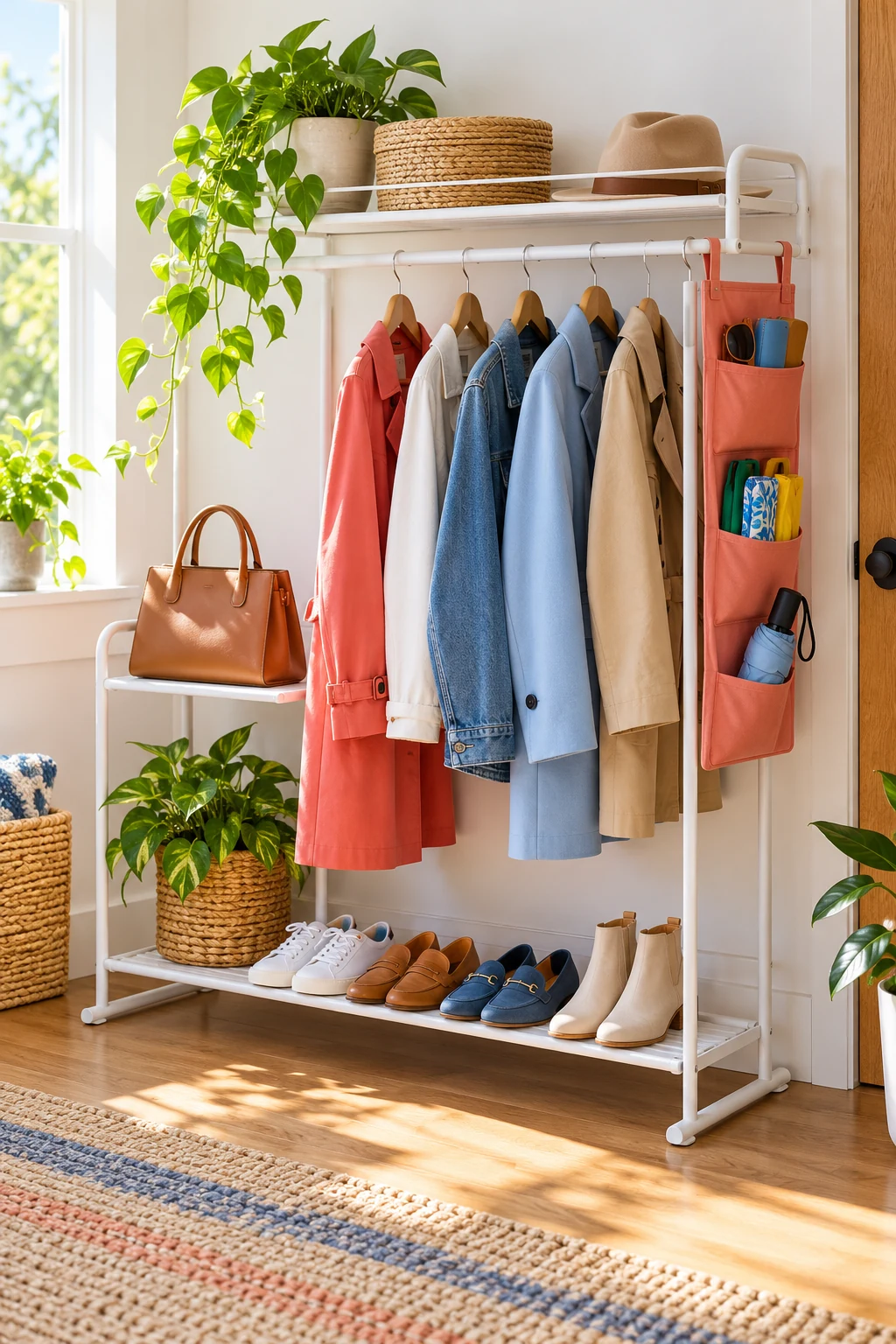
6. Give empty hangers a small fixed parking spot
Gather empty hangers at one end of the rail instead of leaving them between clothes. This keeps the daily row readable and makes clean laundry easier to hang without searching for a usable hanger.
Limit the reserve to what you need for the current wardrobe and ordinary laundry flow. Extra hangers can take surprising working width in a small closet. Remove unwanted styles from the closet rather than storing a large tangle on the floor or over another hanger.
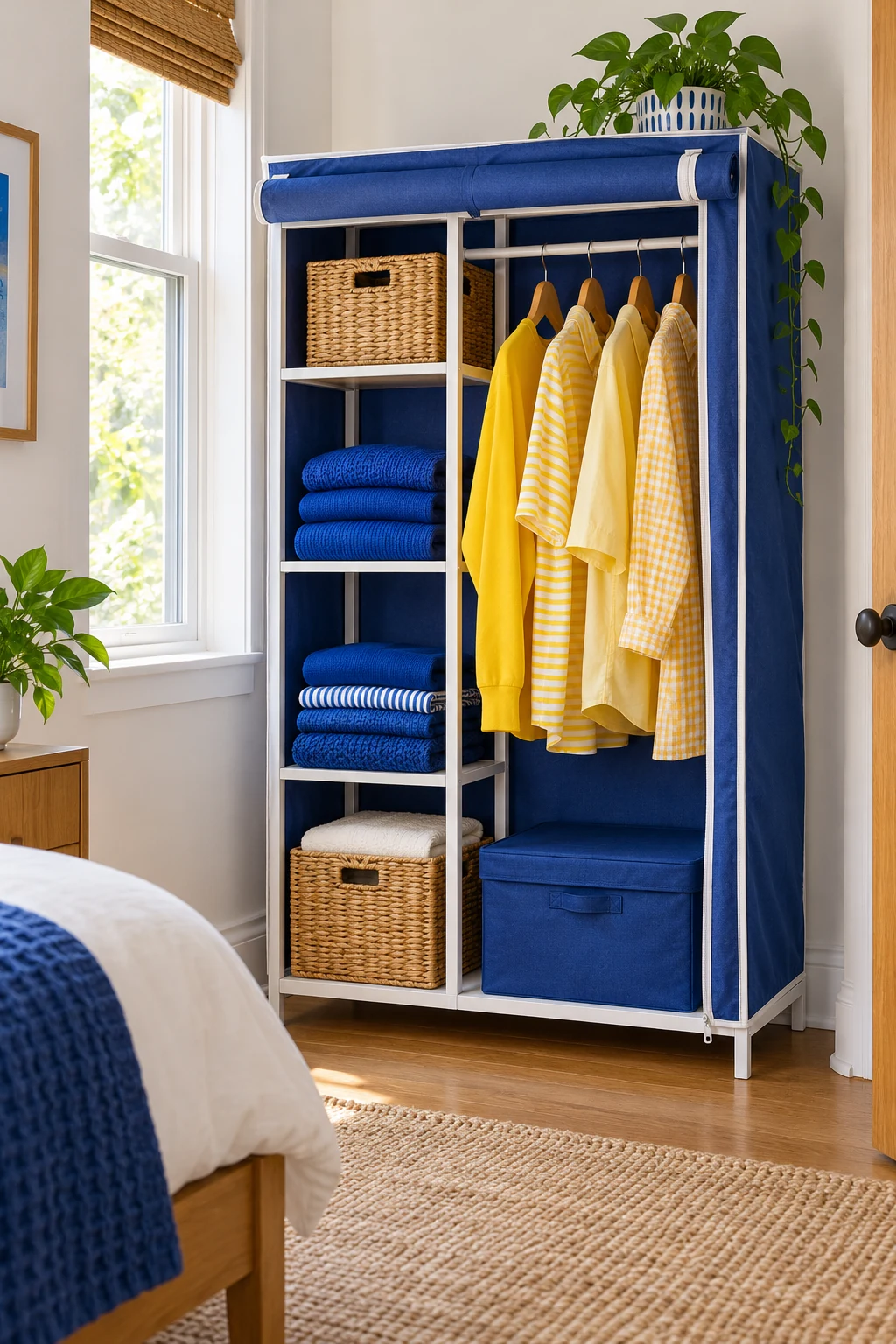
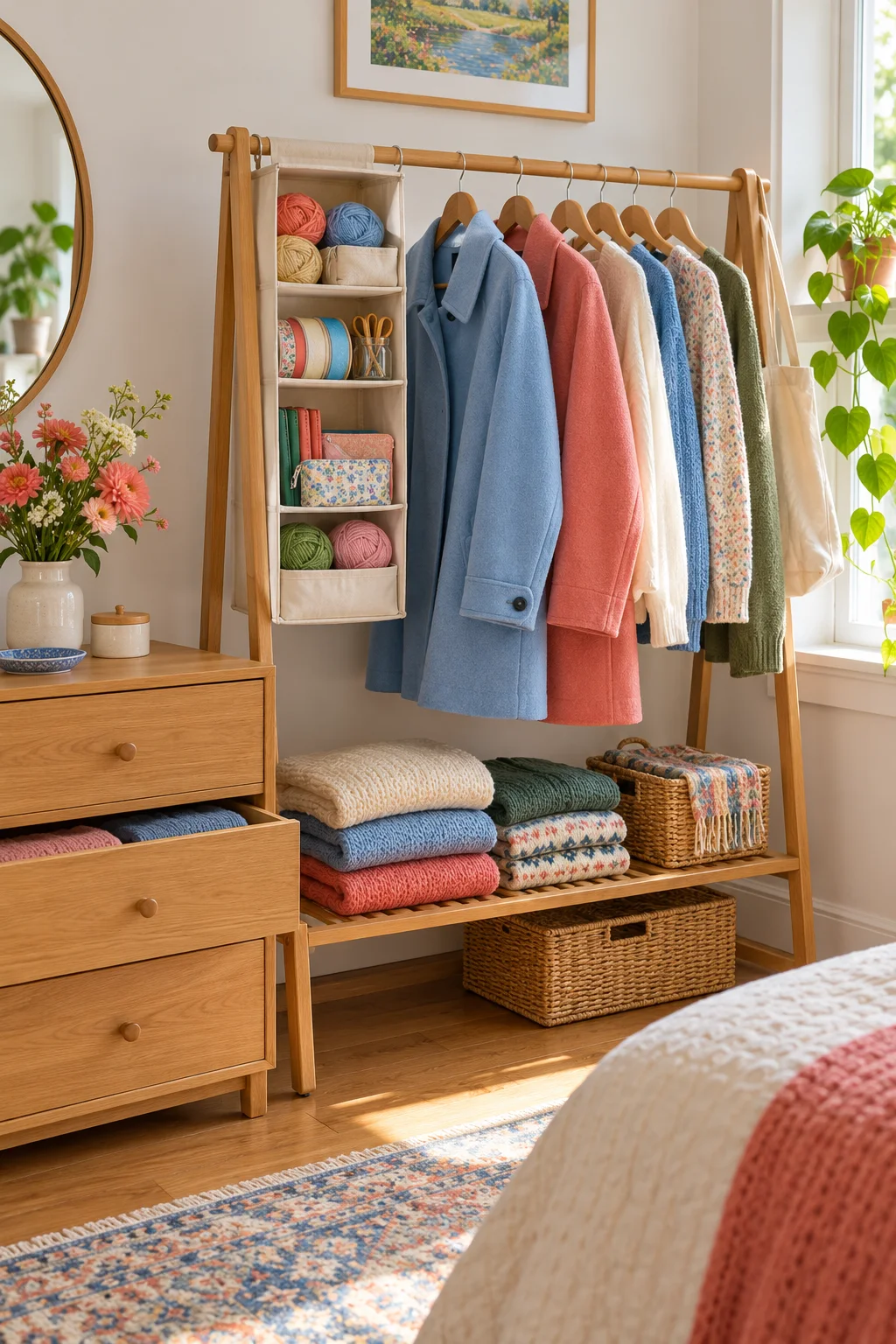
7. Use a second hanging level where garment length permits
If a section contains mostly short shirts, the space beneath may support a second hanging level. Assign the lower row a clear category and check that both rows remain visible rather than overlapping into a dense wall of fabric.
The Chrome Simple Houseware Adjustable Closet Hanging Rod spans 18 to 30 inches horizontally. Measure its installed drop and confirm the existing rod and supports allow the combined load. It adds storage positions, not strength to the original support, and will not suit a bay full of long clothing. View on Amazon.
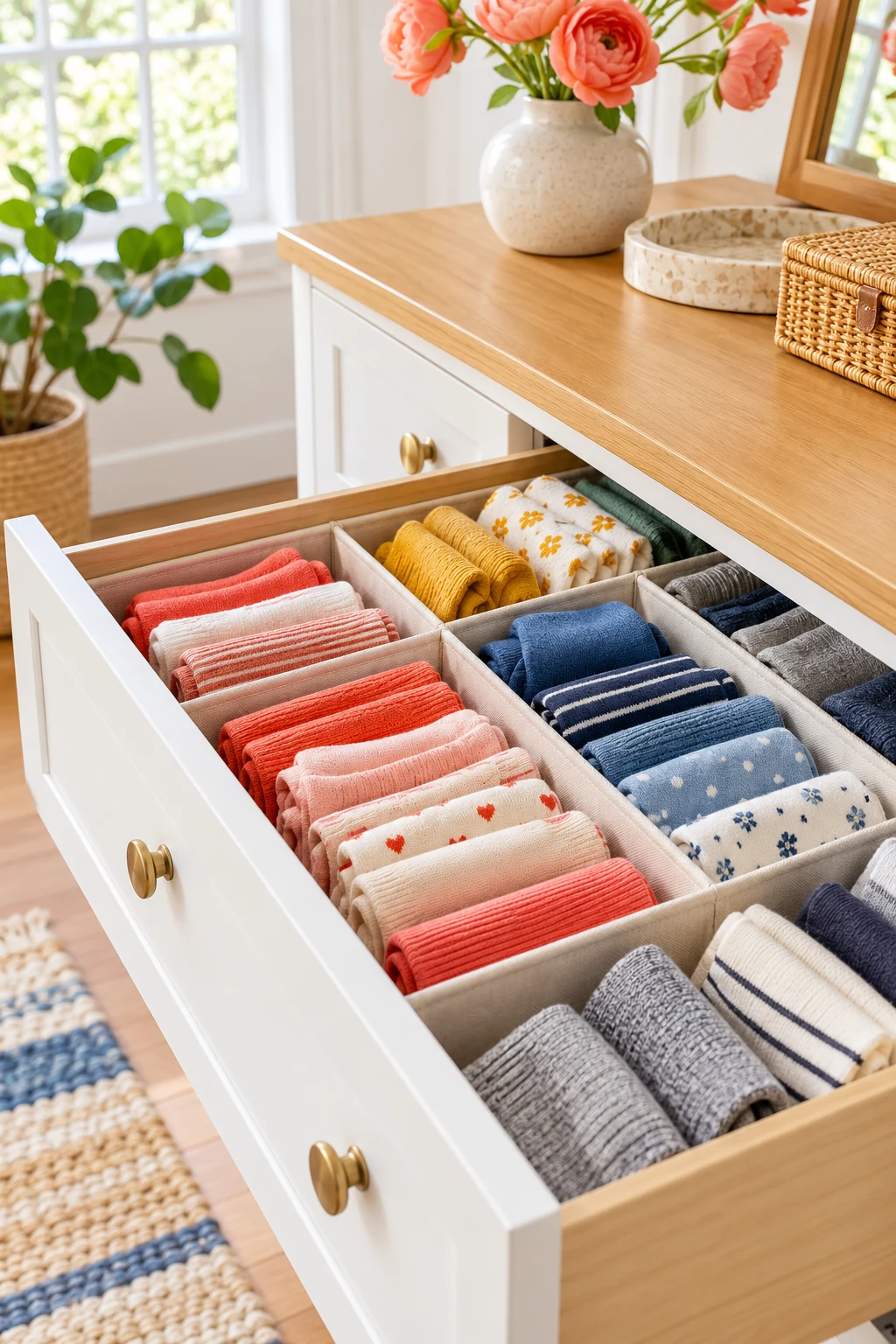
8. Protect one clear bay for long clothes
Group long dresses and coats where their full drop can remain clear. Keeping them together can free the floor under shorter clothes while preventing hems from landing on bins or shoe racks.
Measure with the actual hanger, and leave enough width to pull a long piece out without catching its neighbors. If most of the wardrobe is long, preserve more of this space. A double-hanging arrangement is not automatically more useful simply because it fits two rails.
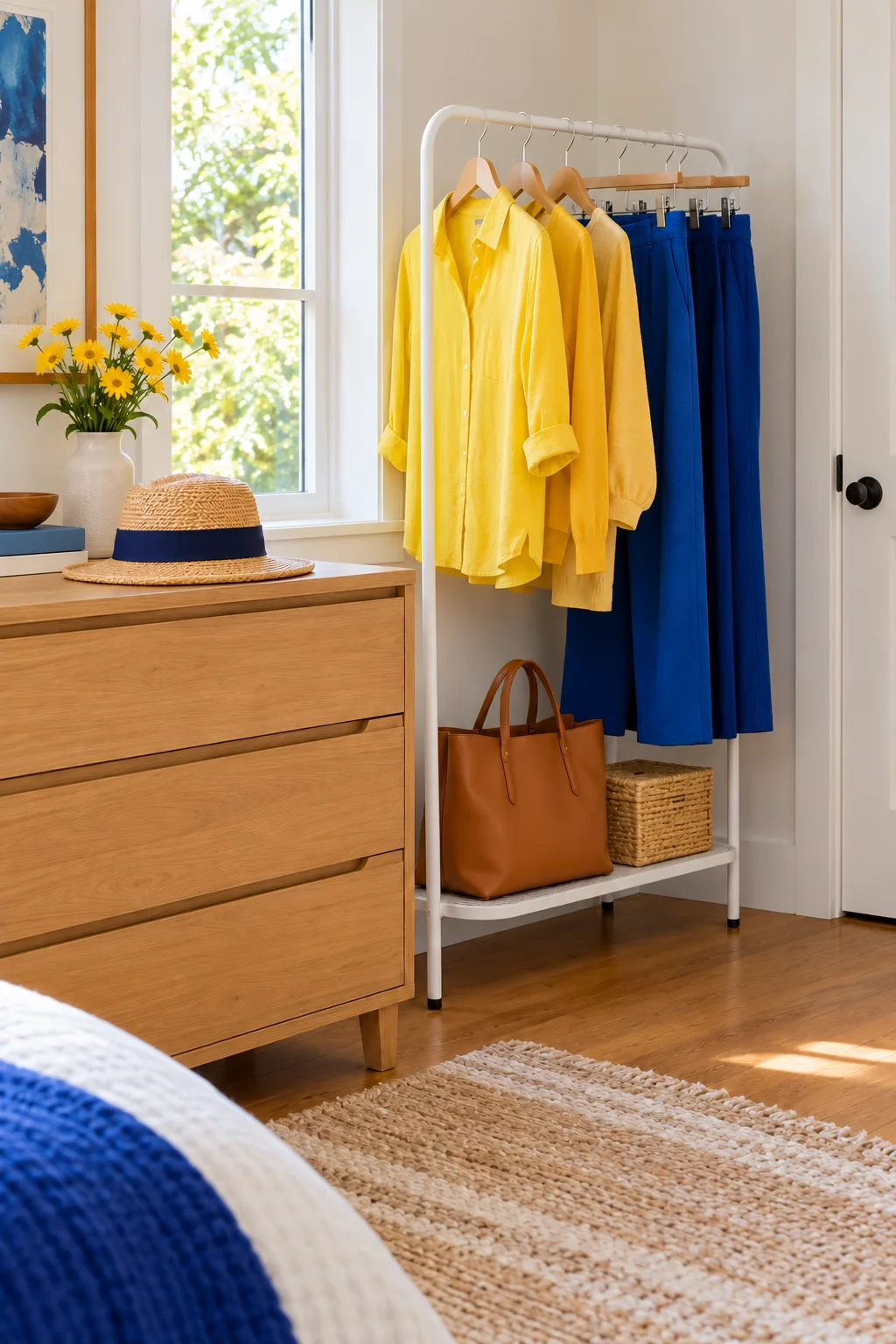
9. Fold suitable tees to recover rail space
Move suitable casual tees or sleepwear into drawers or shelf storage when they are using scarce hanger width. This reserves the rail for pieces whose care or shape makes hanging the better option.
Test the new home with one small group first. If folding creates an overflowing drawer, the problem has only moved. Follow garment-care guidance, and choose a method that makes the full category easy to see and return after laundry.
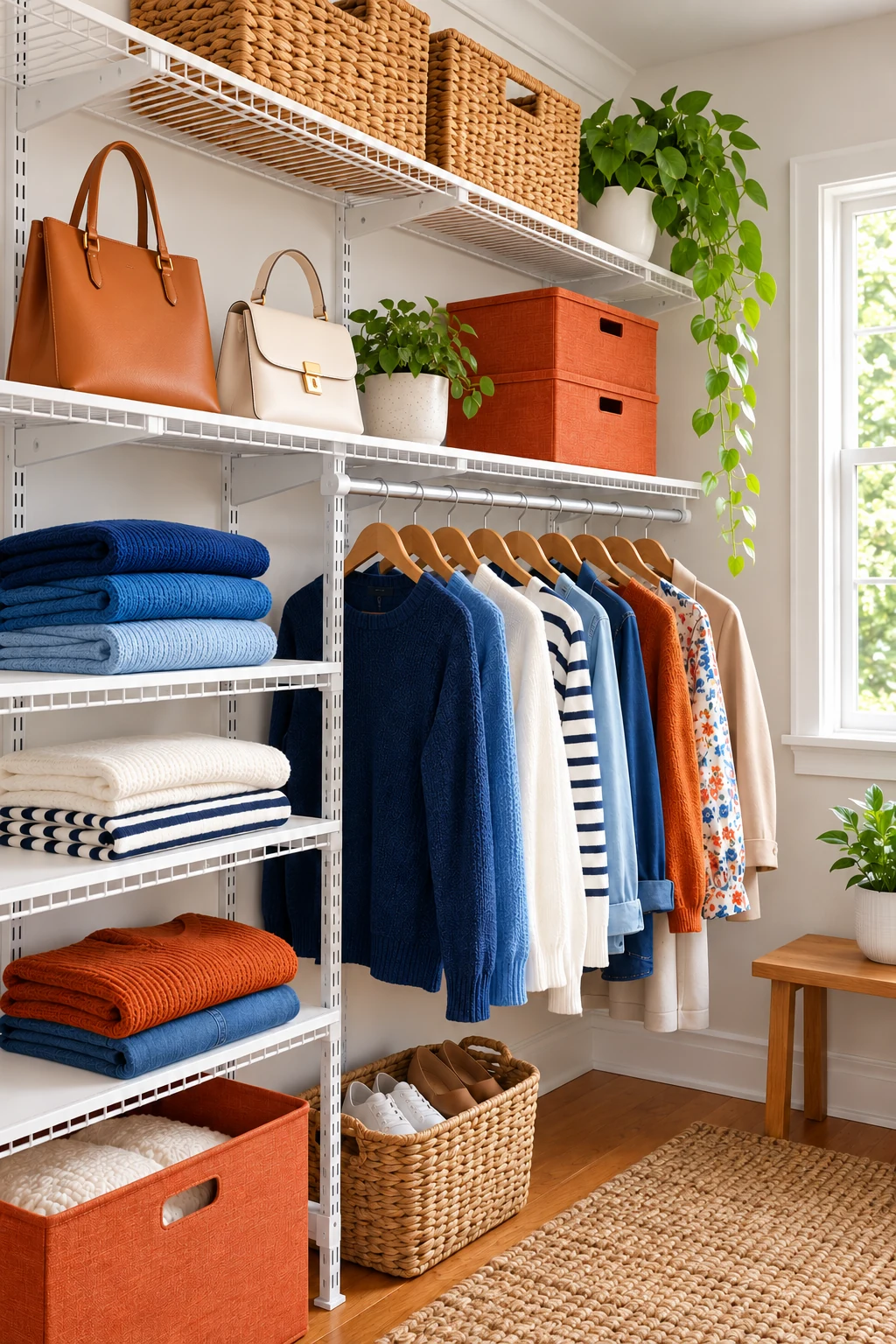
Use shelves without building unstable piles
10. Keep everyday shelf storage one row deep
Arrange daily folded categories where you can see the front of every stack or container. A second hidden row in a deep closet often becomes forgotten storage that requires taking everything else out to reach.
Use the rear only for clearly identified occasional items with a simple retrieval plan. If that means moving a heavy front container, choose another location. Leaving a little unused depth can be worthwhile when it makes the shelf comfortable to use every day.
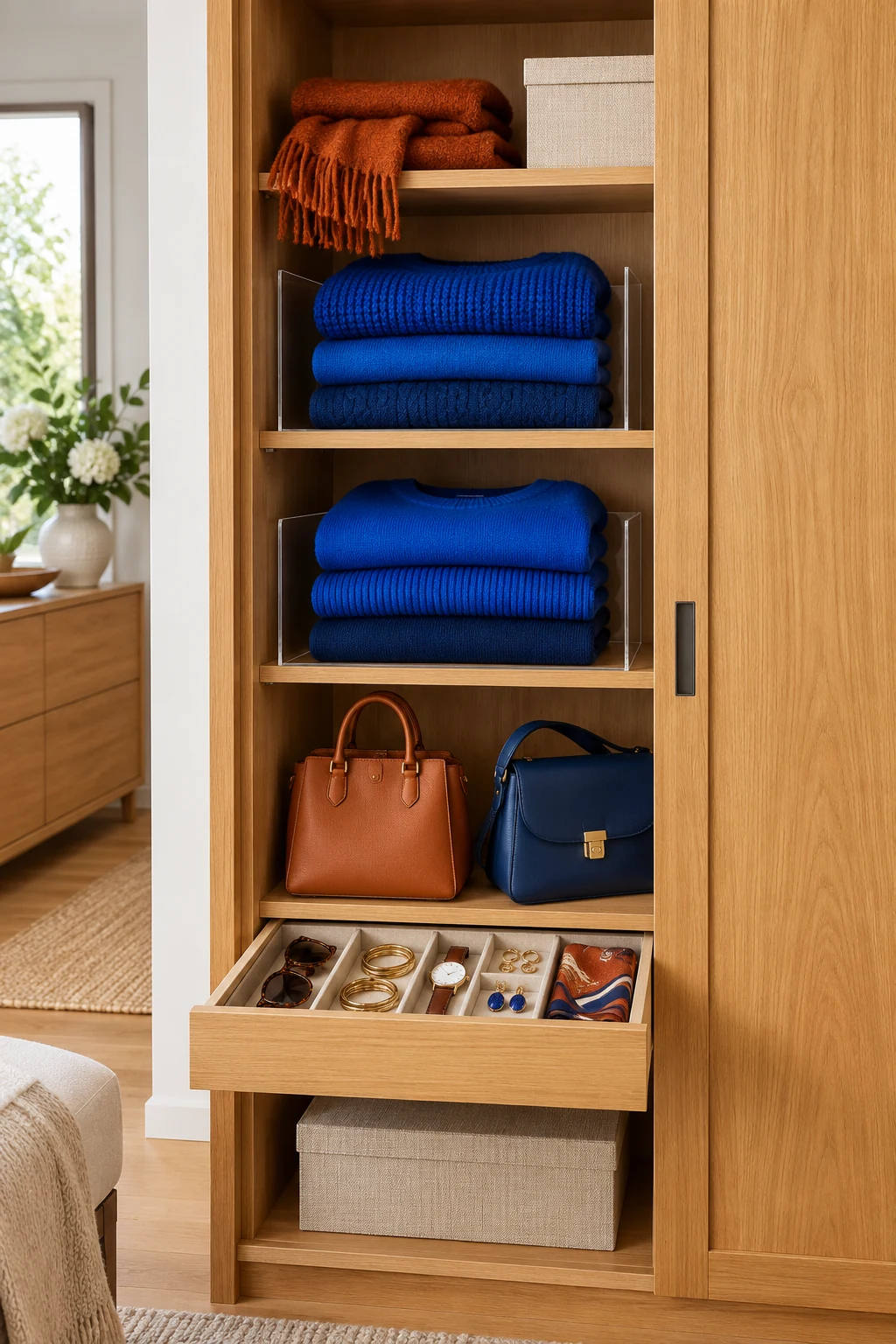
11. Separate neighboring stacks with suitable dividers
A divider can stop one folded category from spreading into another, helping a narrow shelf hold distinct groups. Place it at the real boundary of the clothes rather than using several dividers to create tiny impractical slots.
LYNK Professional Home Tall White Shelf Dividers come as a set of two for suitable solid wood shelves up to 7/8 inch thick. Check the shelf edge and thickness. They are not a wire-shelf solution, and the divider does not make a tall stack easier to lift from. View on Amazon.
12. Fold clothing to the available depth
Try one garment folded to the depth of the shelf, leaving its front edge easy to grasp. A fold that suits the storage can use space more neatly than a universal folding method that leaves clothes hanging over the edge.
Keep stacks low enough to remove a middle piece without bracing the pile. Adjust the fold for bulky knits instead of squeezing them into the same footprint as thin tees. Preserve hand space above the stack and check garment-care instructions for items that should not be folded tightly.
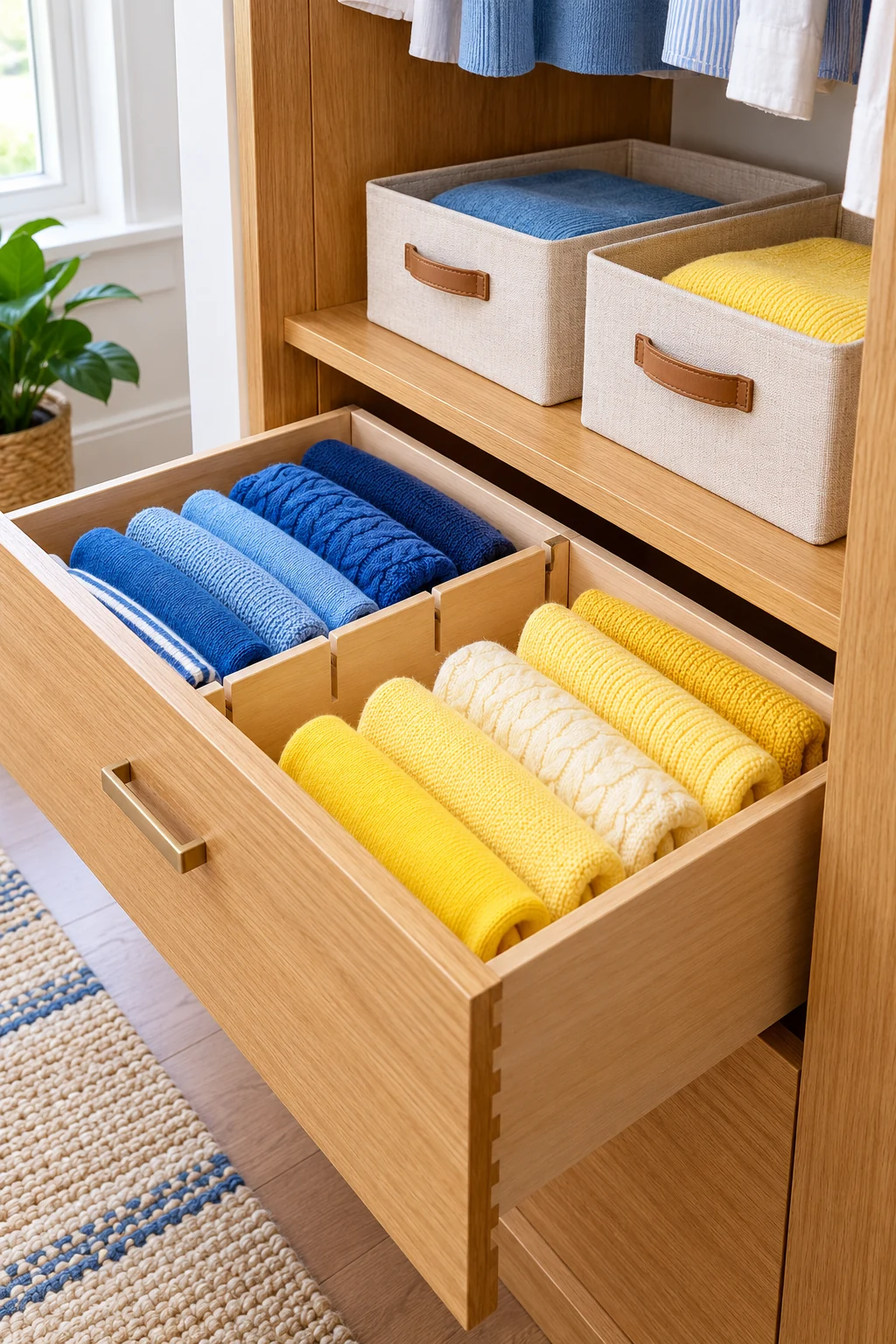
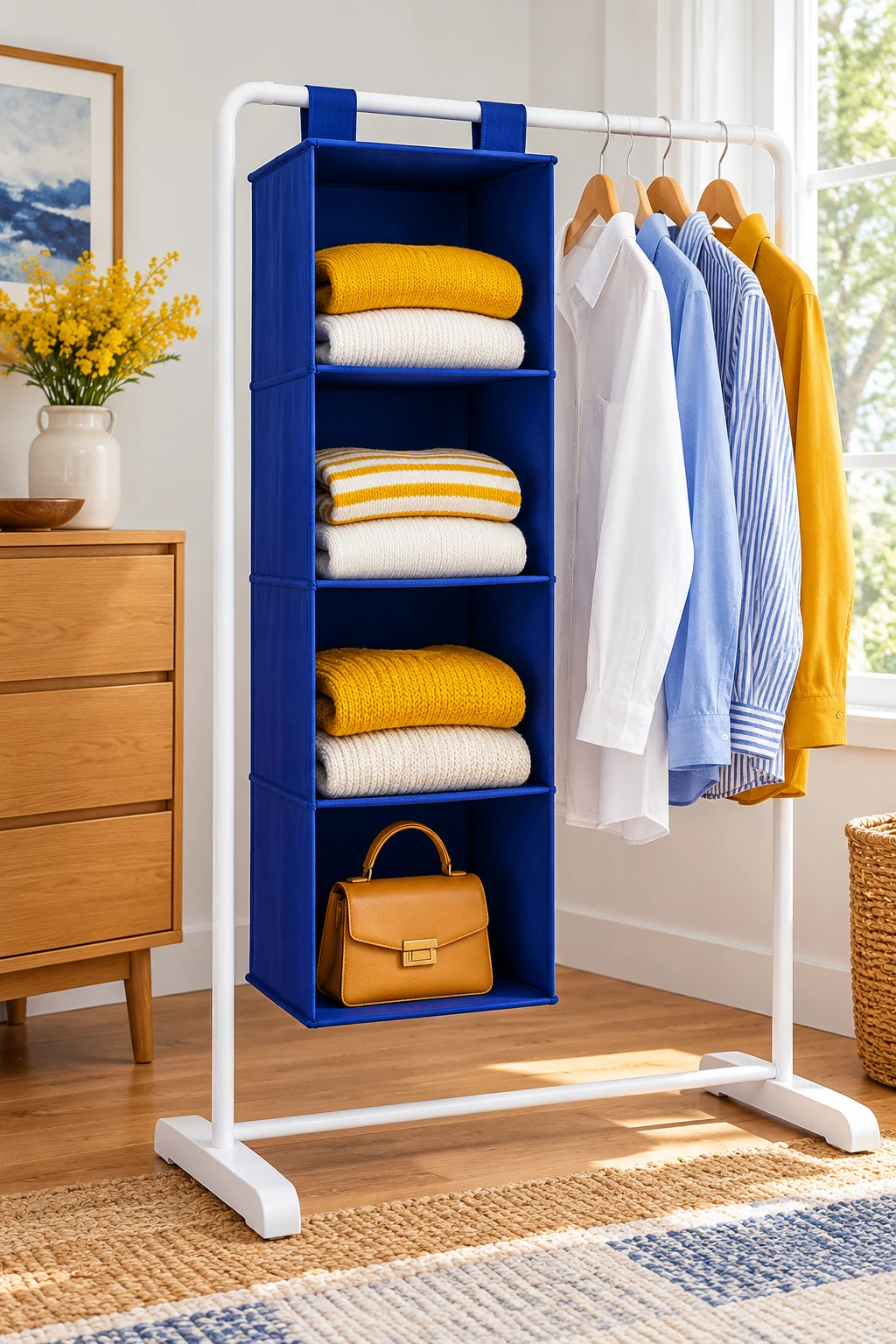
13. Use hanging cubbies only when they solve a real shortage
A fabric organizer can help when the closet has spare rail width but almost no shelves. Give it a few lightweight folded categories, and compare the space gained with the hangers that must move out of the way.
The StorageWorks 6-Shelf Hanging Closet Organizer offers open compartments and side pockets. Check the chosen variant's measurements and load instructions, along with the supporting rod. If the rod is already crowded or the cubbies block the lower bay, a drawer outside the closet may be more useful. View on Amazon.
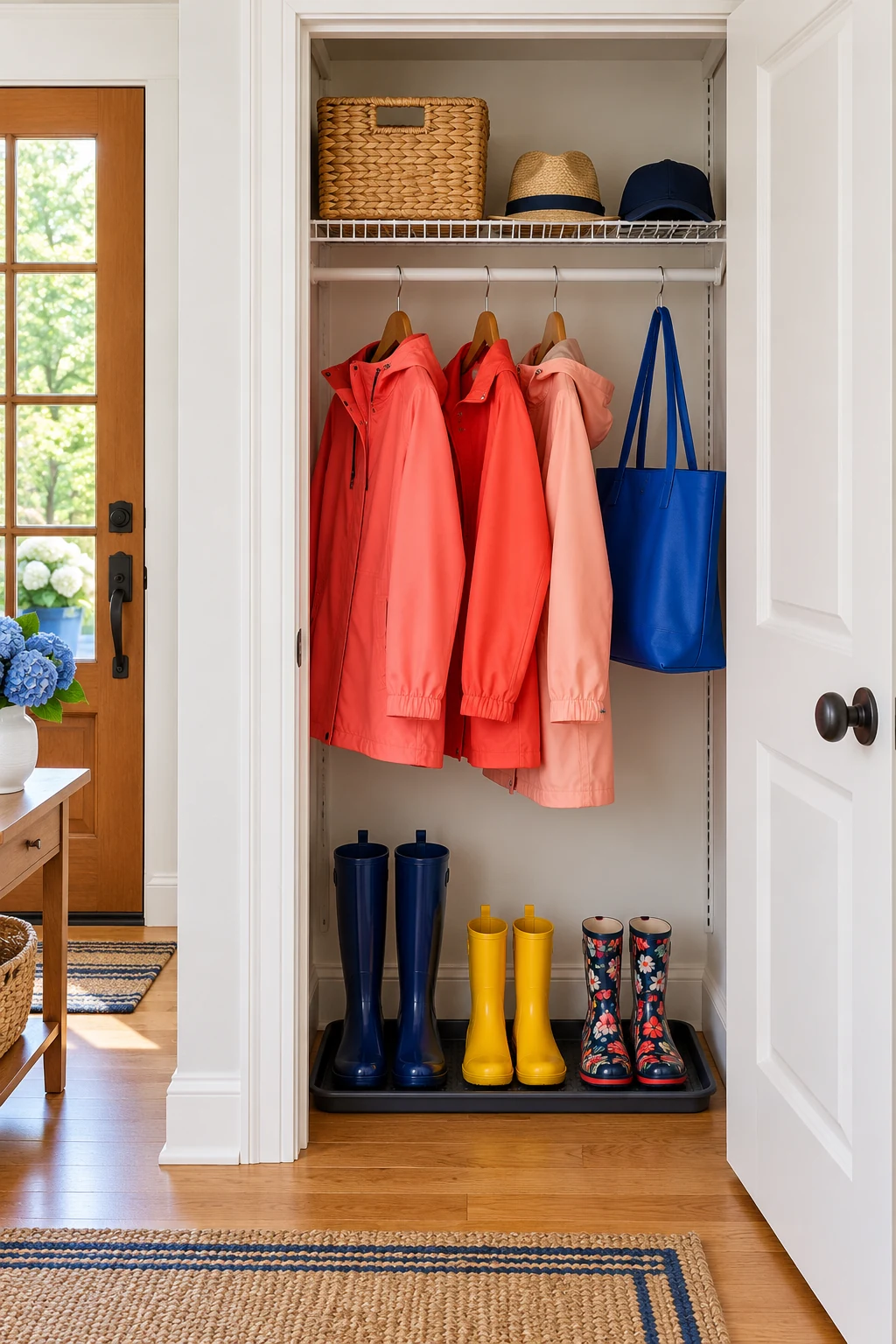
14. Use drawer inserts where small pieces drift
A divided drawer keeps little clothing categories from blending together, especially when the drawer doubles as accessory storage. Start with the group you search through most often instead of dividing every square inch.
The Gray Simple Houseware 4-Pack Drawer Organizer Set includes several compartment patterns with a listed 3.5-inch height. Measure the drawer interior, including closing clearance, and use only the pieces that fit well. Leave room for items too bulky or awkward for the small cells. View on Amazon.
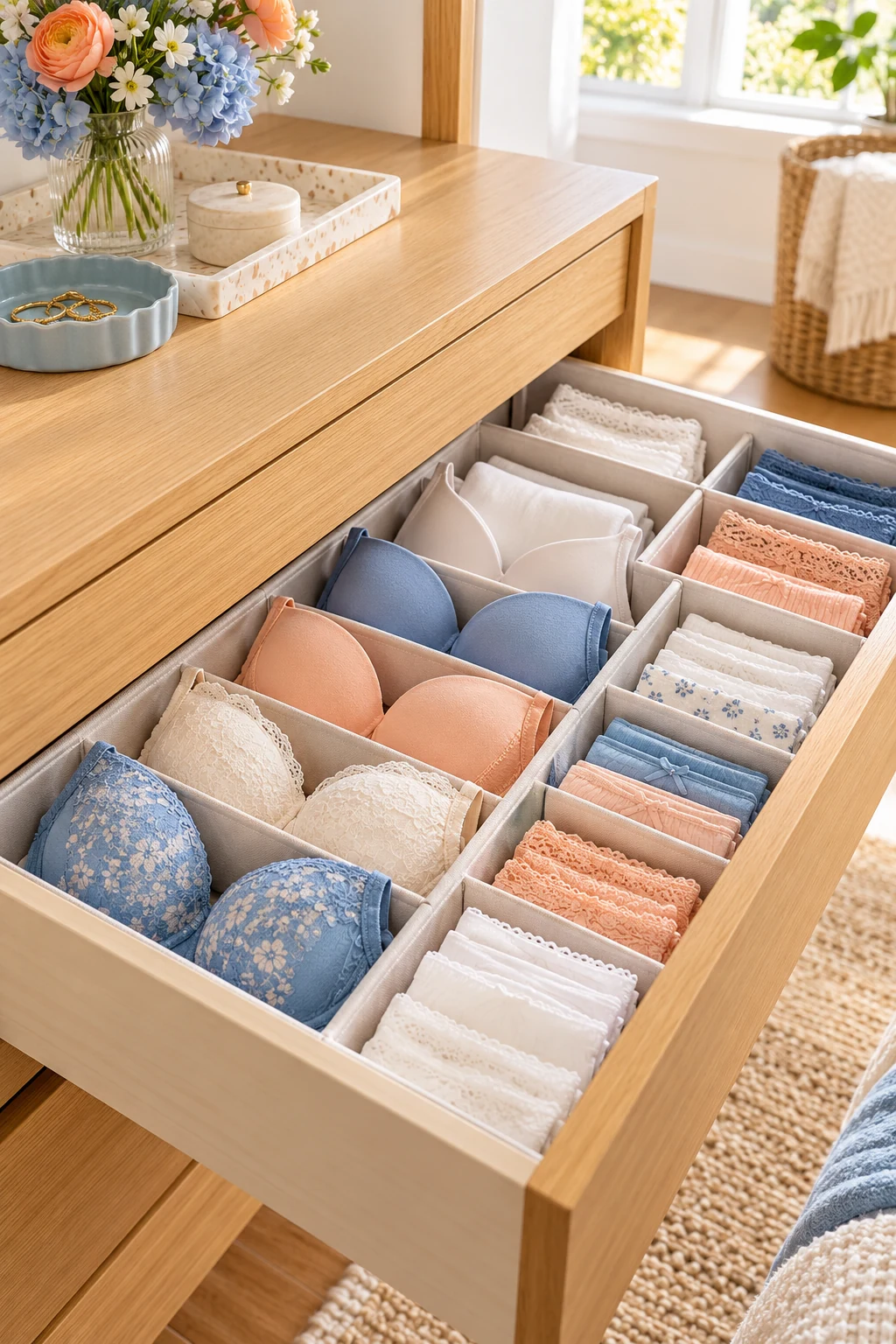
15. Keep a flexible section for irregular items
Leave part of a drawer or shelf undivided for clothing that does not suit a small compartment. Soft bras, bulky socks, and other irregular pieces can become harder to store when every inch is assigned to a rigid grid.
Use a small open box if the category needs a boundary, then adjust its footprint as the contents change. Avoid purchasing another organizer simply to fill a narrow leftover strip. A little flexible storage prevents the system from breaking when one item has a different shape.
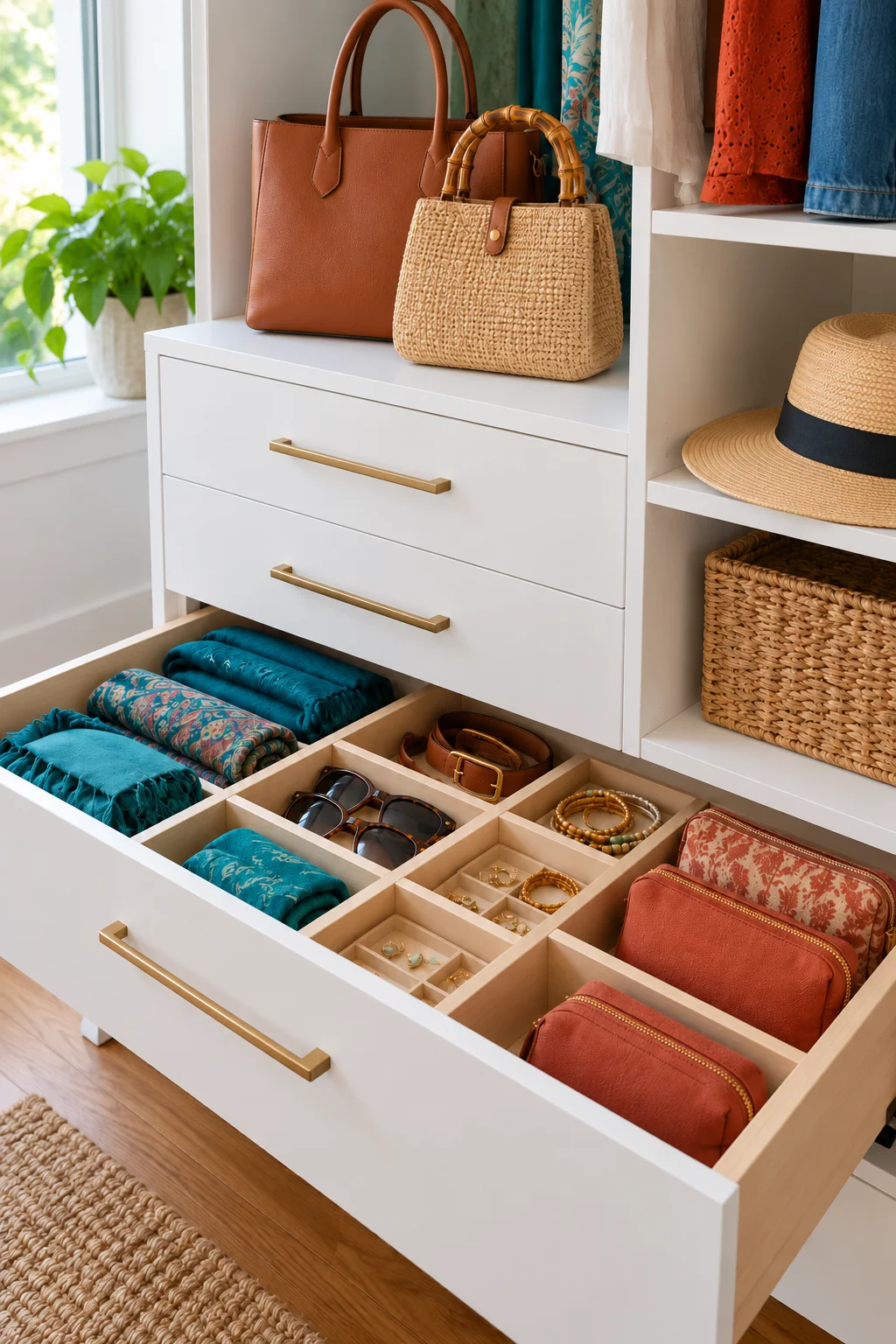
16. Keep accessories in a shallow removable tray
Put a few sturdy everyday accessories in a shallow tray where they remain visible. A small tray can prevent belts or watches from wandering across shelves without requiring another large drawer unit inside the closet.
Use a box lid to test the footprint and make sure the tray pulls out without tipping. Separate delicate jewelry from hard buckles and follow material-specific care guidance. Keep the tray limited to items used while dressing so it does not become a general catchall.
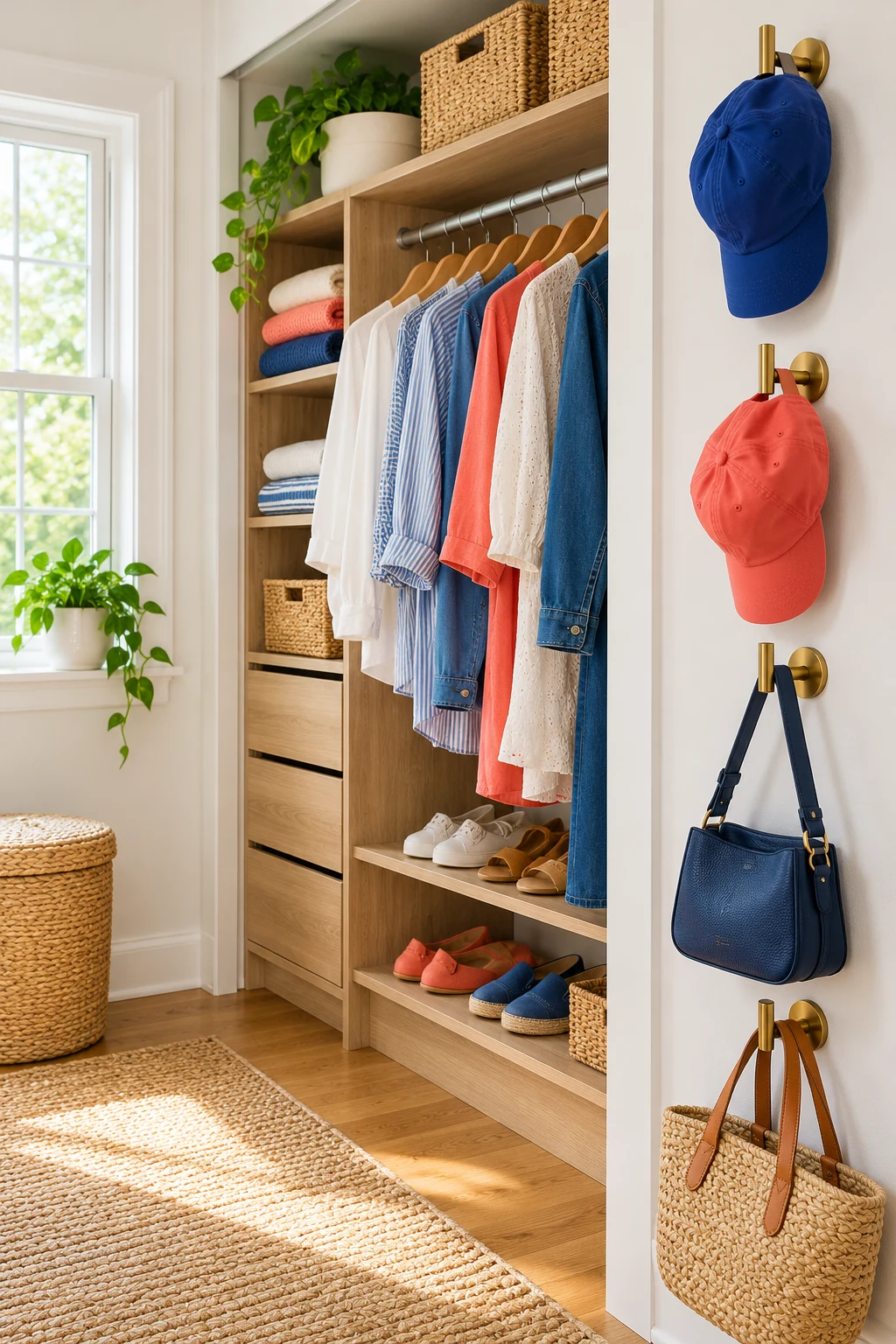
17. Choose two manageable bins over one awkward large bin
When a wide shelf holds a heavy mixed container, split it into smaller category bins if the opening and shelf allow. A manageable bin is easier to remove from a small closet and can make better use of the visible front edge.
Test the filled weight and grip space rather than choosing by matching appearance alone. Keep every base fully supported and the shelf within its rating. Two bins are useful only if each has a clear purpose; otherwise they simply divide the same mixed pile.
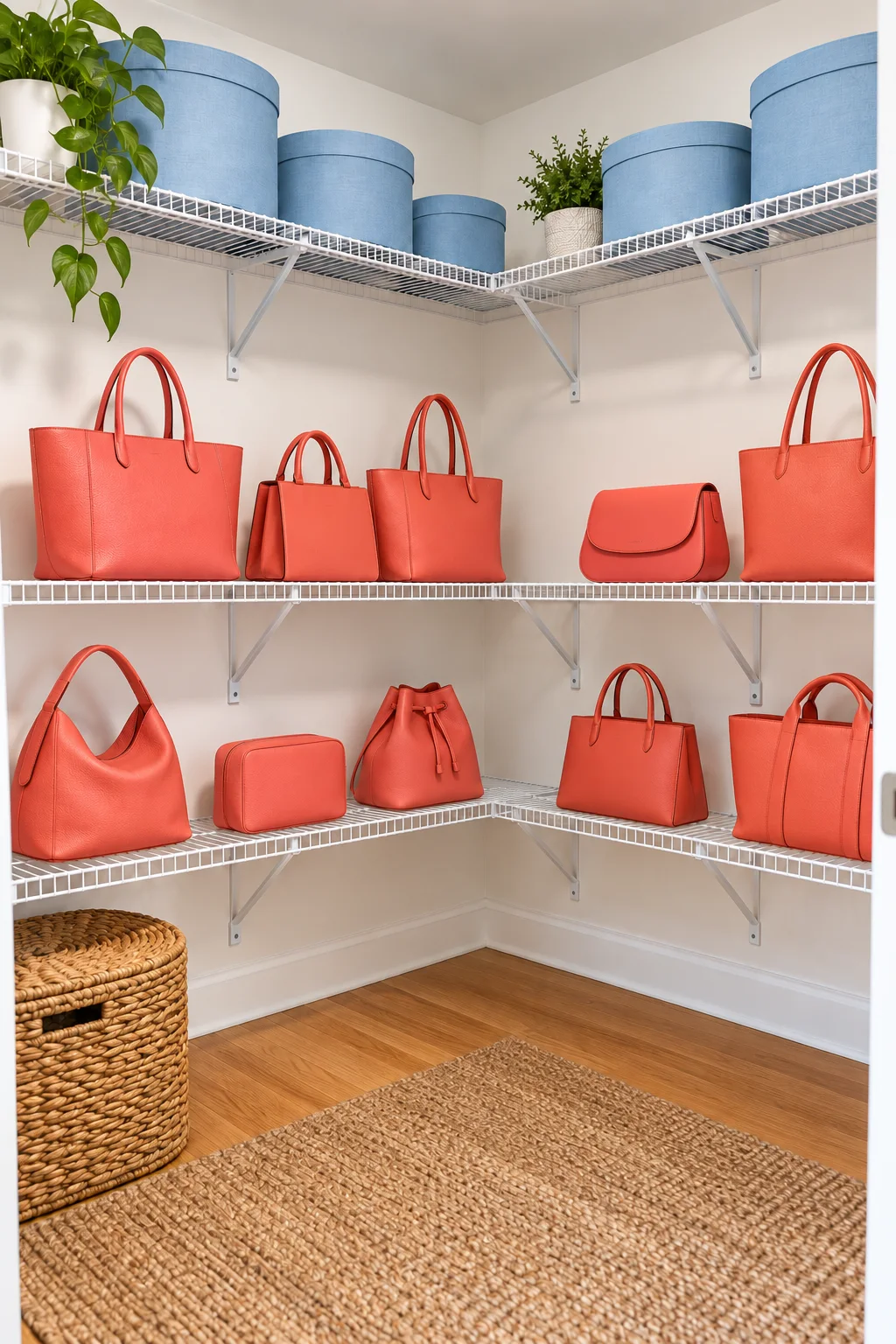
Give shoes and accessories just enough room
18. Fit a low shoe rack beneath short clothing
Use the open bay beneath short garments for everyday shoes when the dimensions work. Measure the rack height with clothing hanging above it and leave room to lift pairs out without brushing soles against hems.
The Simple Houseware 3-Tier Metal Panel Shoe Rack in Bronze is a freestanding option. Verify the current width because listing fields differ slightly, and judge capacity by your own footwear. A lower or narrower arrangement may work better than a packed rack that blocks the closet opening. View on Amazon.
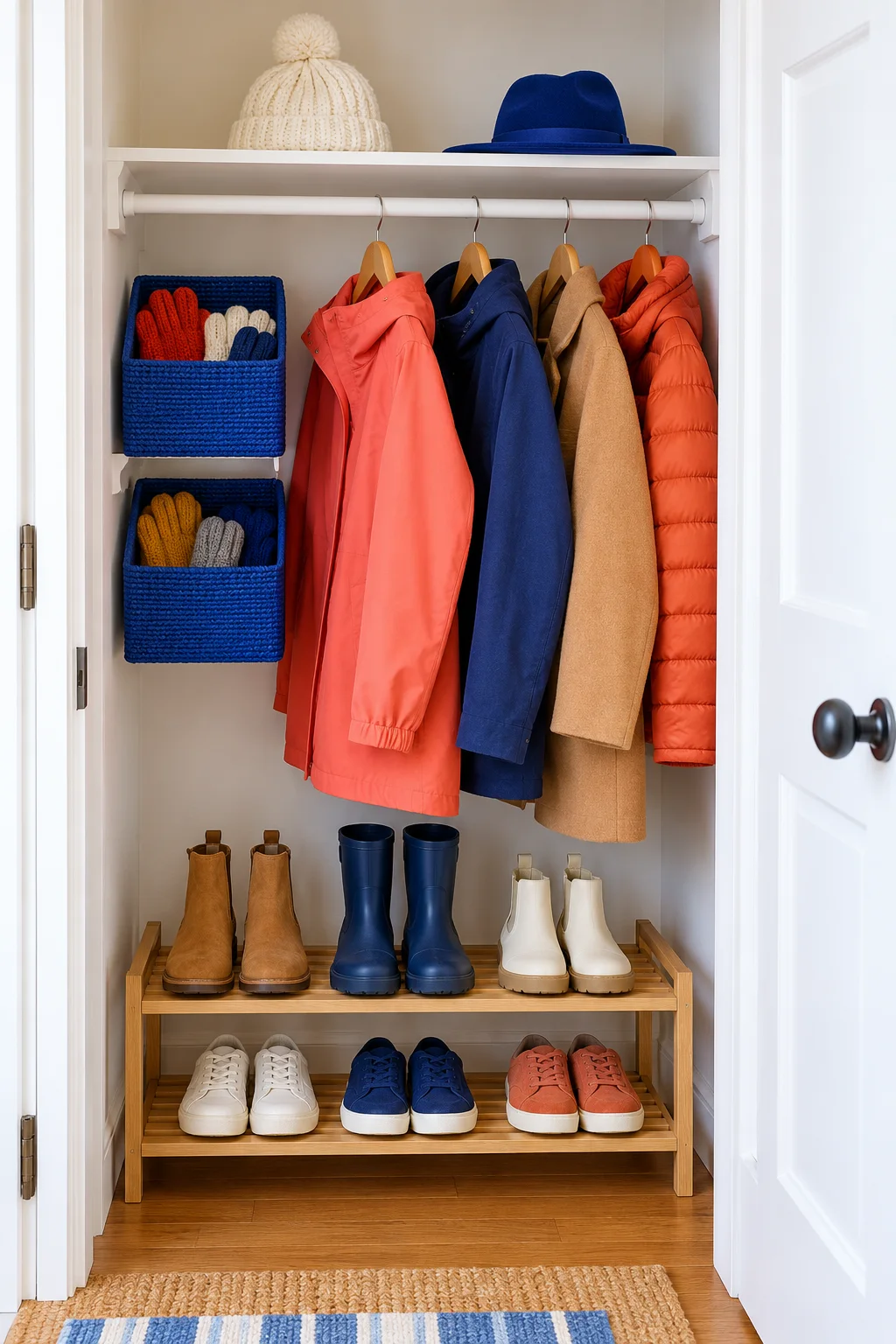
19. Leave a taller pocket of space for boots
Keep tall boots in a separate open bay instead of folding them under low shelves. Their vertical shape may fit beside a shoe rack or at one end of the closet while ordinary pairs use lower tiers.
Let footwear dry as directed before storage and use suitable supports when its care requires them. Keep shafts clear of hanging clothes and door tracks. Do not force more boots into the bay than you can lift out independently.
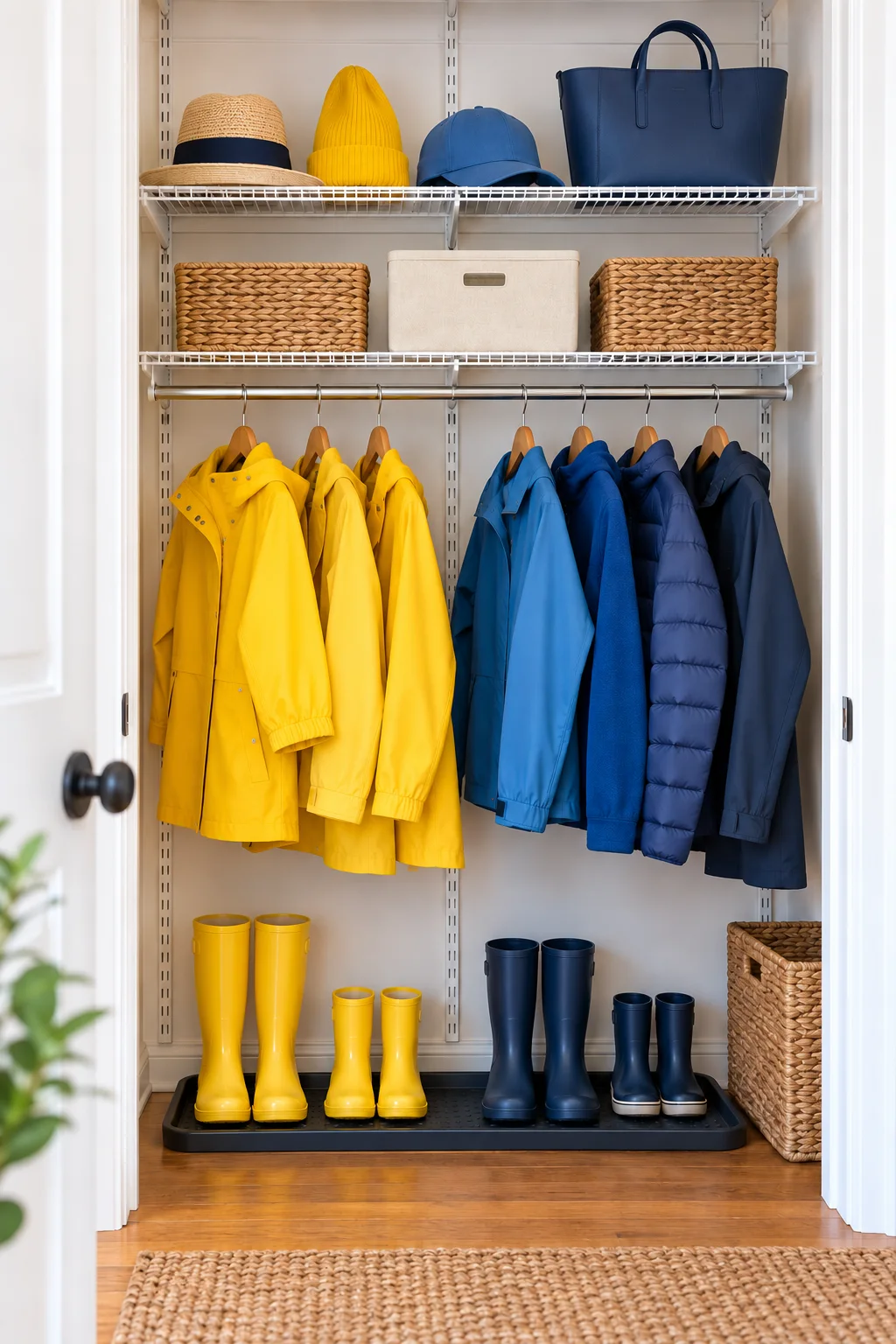
20. Move occasional shoes out of the daily row
Keep the pairs you actually use this season in the most accessible shoe space. Special-occasion footwear can go in suitable labeled storage elsewhere, leaving the daily row easier to scan and clean.
Store shoes according to their material and care needs, with enough support to preserve their shape. A photo or plain category label on an opaque box can help you identify the pair. Choose a secondary location you can retrieve from safely when the occasion arrives.
21. Use compatible door pockets for small categories
A hinged closet door may offer storage for lightweight accessories or smaller footwear without using shelf depth. Give each pocket group one job and check whether the contents remain visible when the door is partly open.
The Simple Houseware 24 Pockets Clear Over the Door Shoe Organizer in Gray uses hooks listed for doors up to 1-3/8 inches thick. Measure the top gap and check full closure before filling it. Pocket size and door clearance matter, and sliding or bifold doors need a different solution. View on Amazon.
22. Use a shallow side-wall hook zone
A few hooks can put light scarves or belts along an accessible side wall. Test the position with the actual items hanging so they do not brush the door track, cover a drawer, or disappear behind clothing.
Follow the hook manufacturer's load and surface instructions and check rental rules before mounting. Adhesive does not automatically mean damage-free, and removal needs care. Keep the zone shallow rather than layering several items on each hook until the first one is hidden.
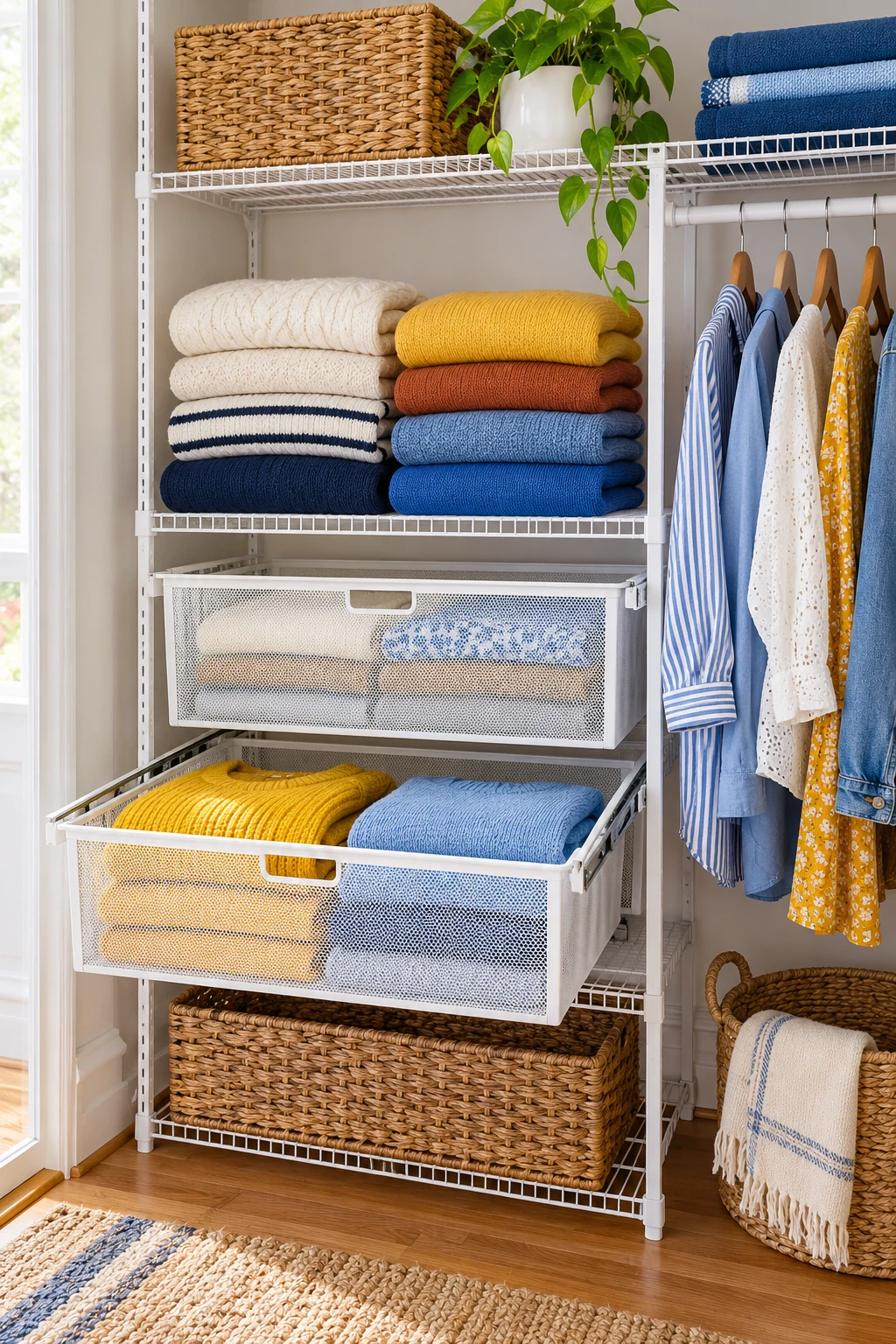
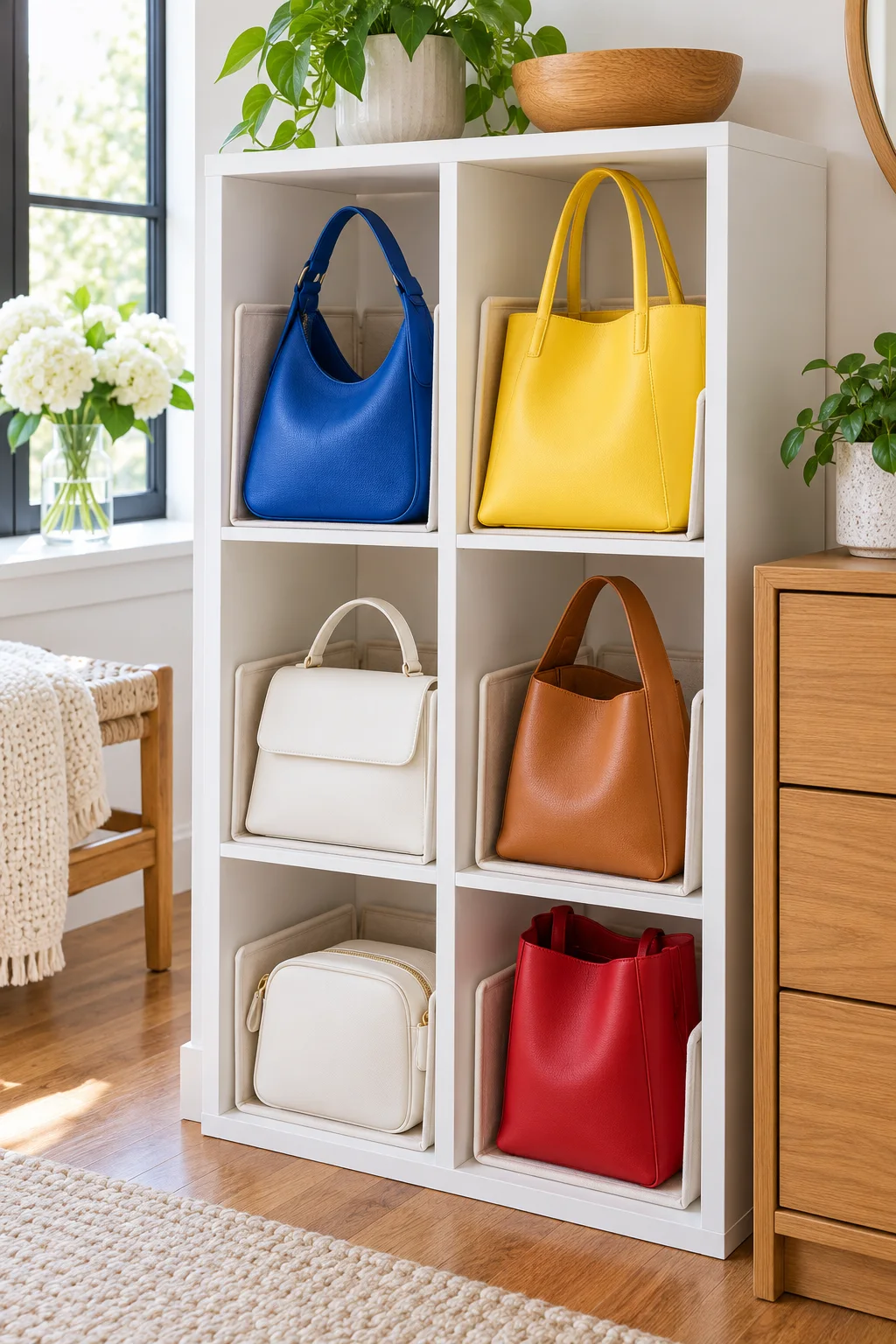
23. Give daily handbags individual shelf spaces
Stand frequently used bags separately on a suitable shelf so one can come out without unstacking the others. Use the bags' actual width to plan the row rather than compressing them into identical narrow slots.
Follow the maker's care guidance for shaping, dust covers, and longer storage. Keep heavy bags lower and avoid leaving them suspended by delicate handles. Move occasional bags out of the main row if the small closet cannot give each everyday bag a usable space.
24. Keep the highest shelf light and simple
Use the upper shelf for a few light occasional items rather than dense storage boxes. A small closet becomes frustrating when retrieving one thing overhead requires moving a tower of other containers first.
Leave room to lower each item with control and use a suitable stable step stool as directed. Never climb shelves or stand on an improvised box. If access is too awkward, moving the category to a lower location is a better use of the overall home.
Keep the closet easy to reset
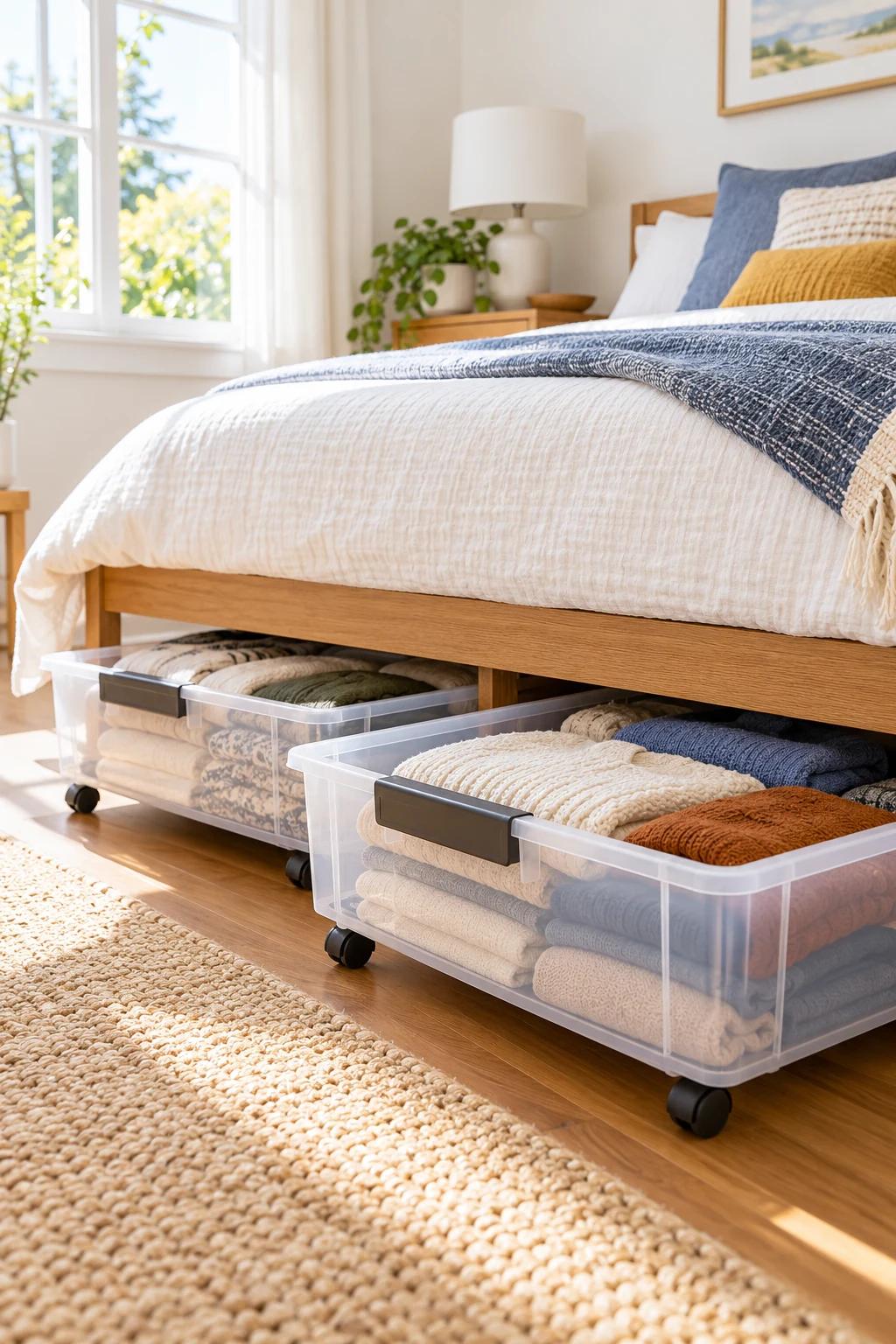
25. Store selected seasonal clothing outside the daily zone
Move clean, dry off-season soft goods to suitable secondary storage when the closet remains crowded after sorting. Keep the daily section focused on clothing you can use now, and label the stored group clearly.
Amazon Basics Under Bed Storage Bags in the Gray 2-pack are listed at 42 by 18 by 6 inches and have clear tops. Check the filled height and access around bed supports. Avoid overloading soft bags or treating them as sealed protection against moisture or pests. View on Amazon.
26. Put the hamper nearby when the floor is too valuable
A hamper outside the closet can free the only useful floor bay for shoes or long clothing. Choose a convenient spot in the room that keeps laundry easy to collect without blocking doors or the path beside the bed.
Measure the hamper when full and check that you can carry it out without moving furniture. Handle damp clothing appropriately and keep it separate from clean stored items. Do not force a hamper into the closet just to keep every clothing-related task behind one door.
27. Limit the rewear area to a few pieces
Give briefly worn clothes a small dedicated place instead of letting them spread across chairs and shelf edges. A couple of suitable hooks or hangers can make those pieces visible when you choose the next outfit.
Keep the area separate from fresh laundry, check garments before reuse, and move anything needing washing to the hamper. When the zone fills, decide what happens next rather than adding more hooks. Its small size helps keep the rest of the closet usable.
28. Prepare one outfit without creating an overflow rail
Set aside a small position for the next outfit you plan to wear. Keeping the pieces together can help on a busy morning, especially when the closet's categories are arranged in several separate zones.
Limit the station to what is genuinely upcoming and return unused choices when plans change. The rest of the rail still needs room for daily storage. An empty hanger can mark the position without adding another container or permanent accessory.
29. Keep outgoing clothes from reclaiming the closet
Put clothing chosen for donation or another destination in a clearly designated bag outside the daily storage zones. Leaving it on the closet floor can immediately consume the space recovered through organizing.
Move the bag onward using a realistic plan rather than treating it as permanent storage. Keep items needing repair separate so decisions do not become mixed together again. If there is no safe place for an outgoing bag, handle a smaller sorting session and remove that group promptly.
30. Test the put-away process every laundry day
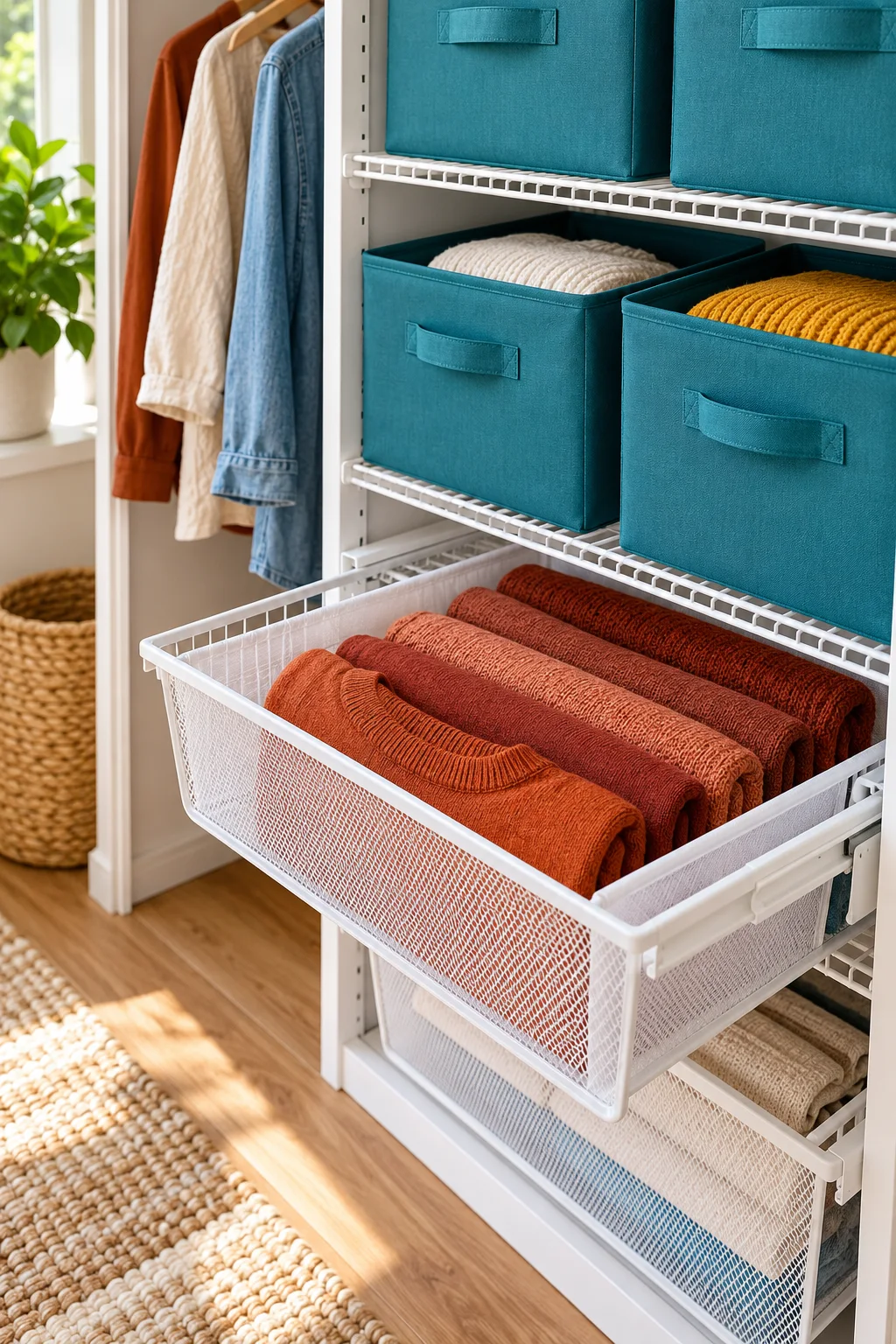
Return clean laundry and notice where you have to push, lift a stack, or move a bin to make room. Those repeated obstacles show which part of the small closet needs a simpler category or less crowded storage.
Gather empty hangers, return stray accessories, and clear the retrieval route during the same short reset. Keep only the organizing choices that are easy to repeat. More useful capacity comes from storage you can keep using, not from a closet that stays neat only when nothing moves.
Choose one crowded section and make both taking out and putting away easier. A small closet can work much better when every category has a clear home, the daily pieces stay reachable, and a little working room remains. Subscribe to the Havelyo email list for more practical small-space decorating and organization ideas.