
Closet Organization
25 Small Closet Layout Ideas to Make Awkward Spaces Work
A narrow doorway, an off-center wall, or a sloped ceiling can make a small closet feel harder to use than its measurements suggest. The goal is to arrange storage around the space you can actually reach, with a clear place for the clothes you wear most.
Start by measuring the opening and testing your longest garment. These 25 small closet layout ideas cover different shapes and everyday routines, so choose the few that solve your specific bottleneck. You do not need every feature in one closet, and a clear retrieval path is worth keeping.
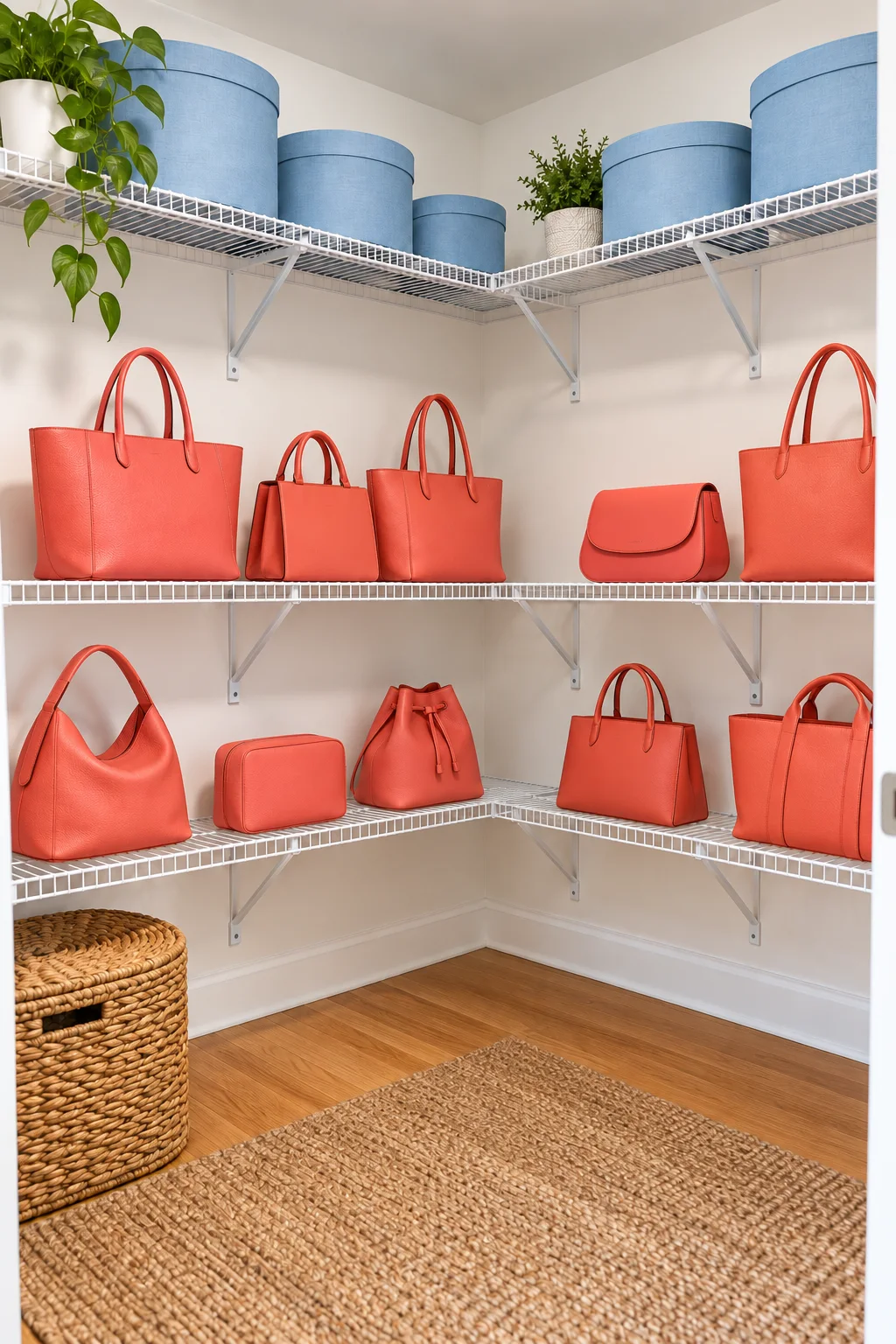
This article contains affiliate links. If you buy through them, Havelyo may earn a commission. As an Amazon Associate I earn from qualifying purchases.
1. Start with the space your doorway actually reveals
An awkward closet often has more space inside than you can comfortably reach from the doorway. Measure the opening with the doors in their normal position, then sketch the wall sections hidden at either side. Mark trim, tracks, hinges, and anything projecting into the opening.
Put the storage you open or pull out most often inside that visible window. A drawer can fit between two walls yet hit a door panel halfway out. Test its entire route, including where you will stand, before treating those interior inches as usable storage.
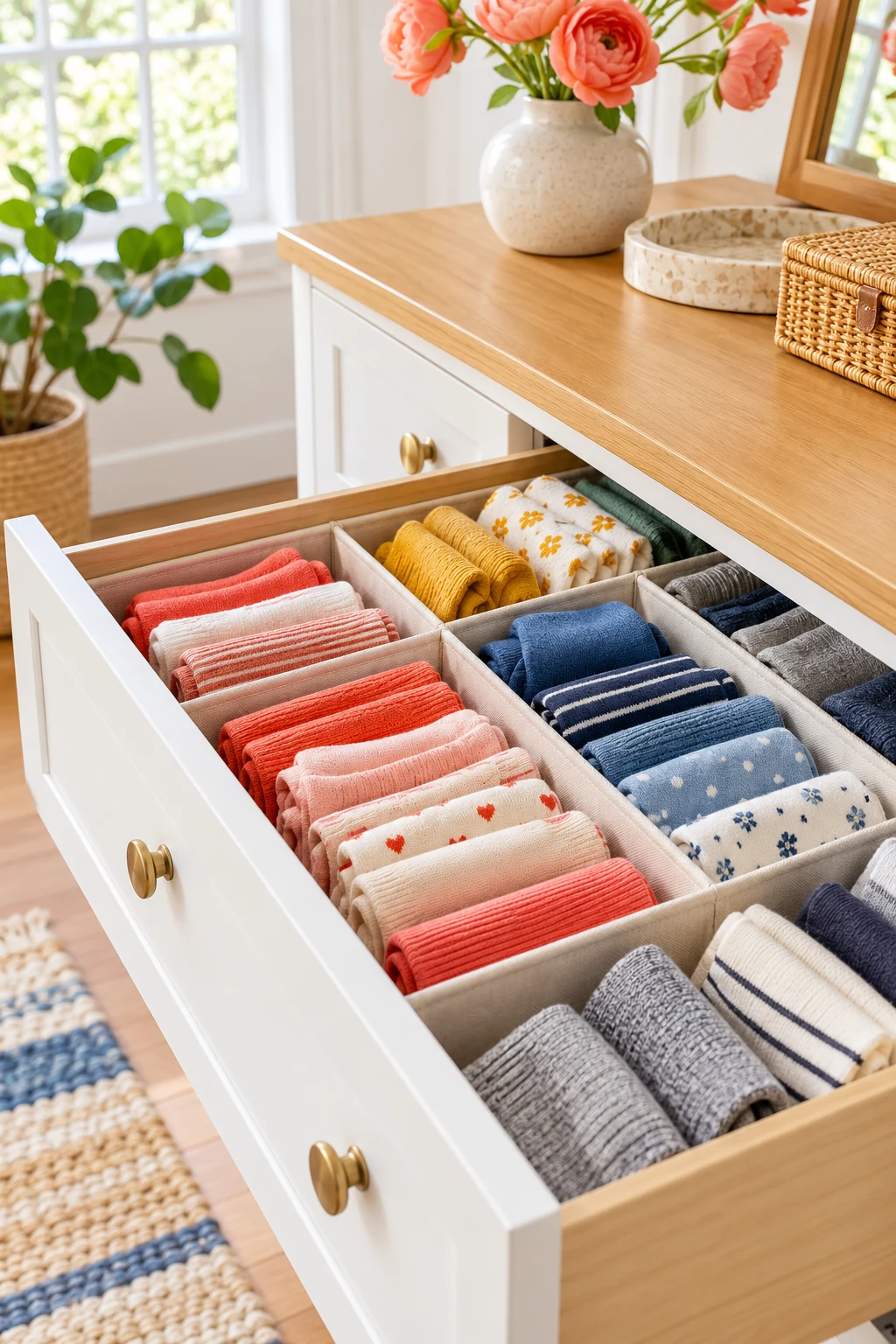
2. Keep a simple single-rod layout when long clothes dominate
A single rod with open space underneath can be the most useful arrangement for a collection of dresses, long coats, or jumpsuits. Hang a representative group first, including your longest piece, and use its real drop to plan the space below.
A second rod would create little benefit if half the wardrobe has to bend over it. Use the upper shelf for light extras and keep the bottom bay clear where hems need it. The right layout follows the clothing you own, even when a more elaborate system looks tempting.
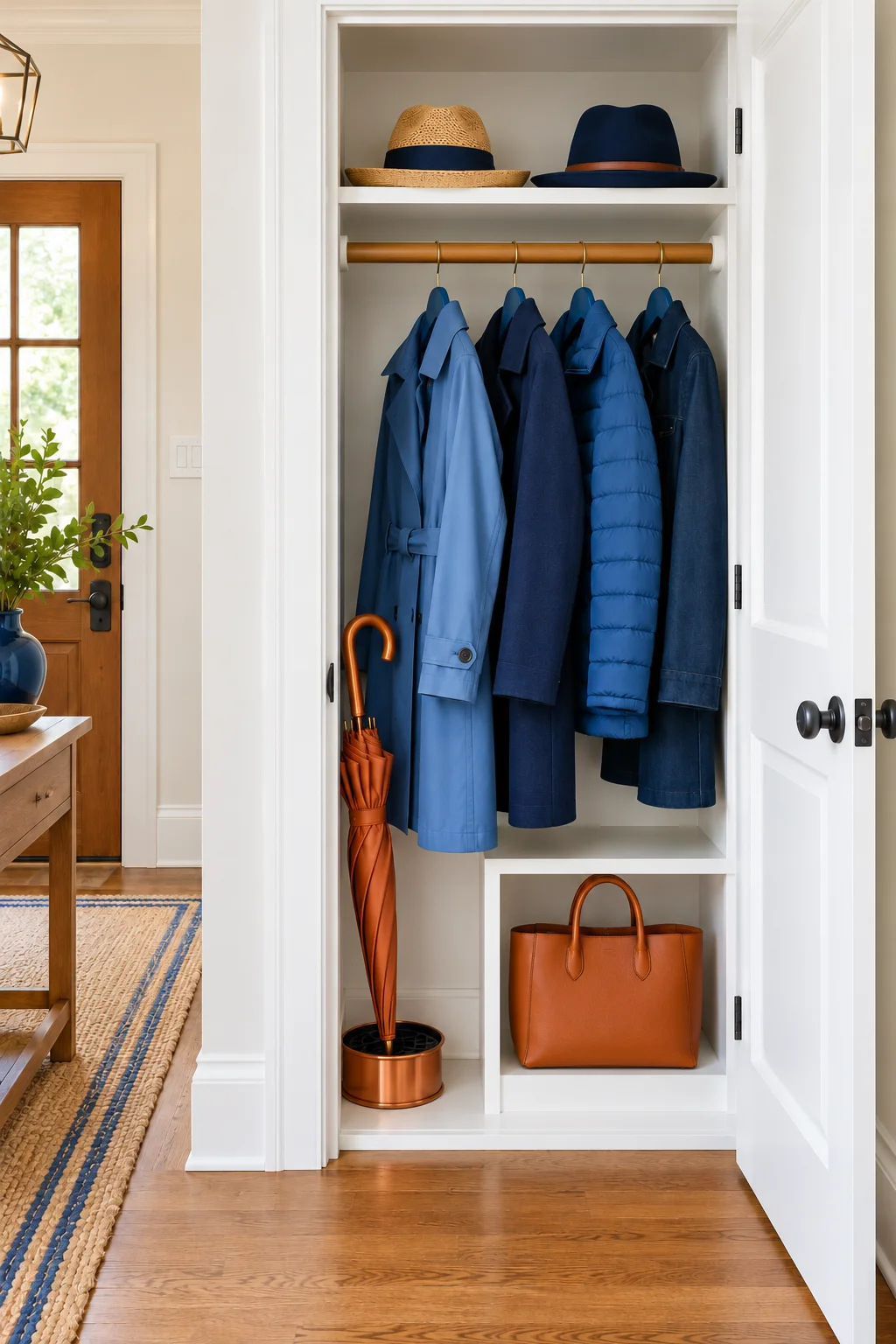
3. Combine one double-hang bay with one full-height bay
If shirts and folded trousers make up most of your wardrobe, group those short pieces into a two-level section. Keep dresses and longer layers together beside it. This arrangement can add another useful hanging level while preserving the clearance that full-length clothing needs.
The Simple Houseware Adjustable Closet Hanging Rod is one option for a lower tier; its listed horizontal range is 18 to 30 inches. Check the installed drop and the existing rod and supports before adding it. The combined clothing load must stay within all applicable instructions. View on Amazon.
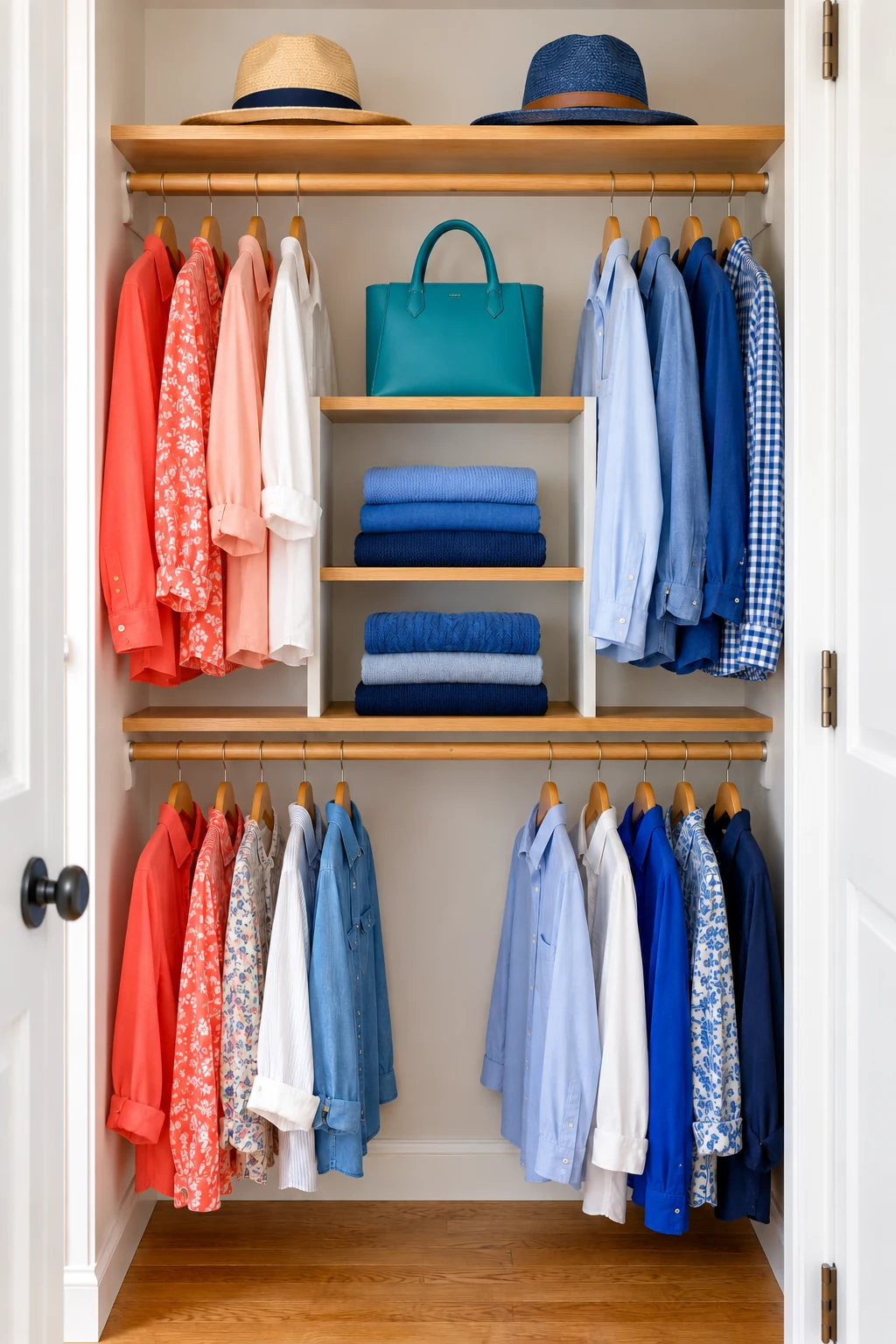
4. Place a narrow shelf column at one end
An end column keeps a broad stretch of hanging space together. It can suit a narrow reach-in when a central tower would divide the rail into two sections that are each too short for your clothes. Count how many folded categories actually need their own shelf.
Choose the end you can reach most easily through the door. If a sliding panel hides that side, put occasional-use containers there rather than daily drawers. Check the depth with garments hanging beside it so sleeves do not cover the shelves or snag each time you reach in.
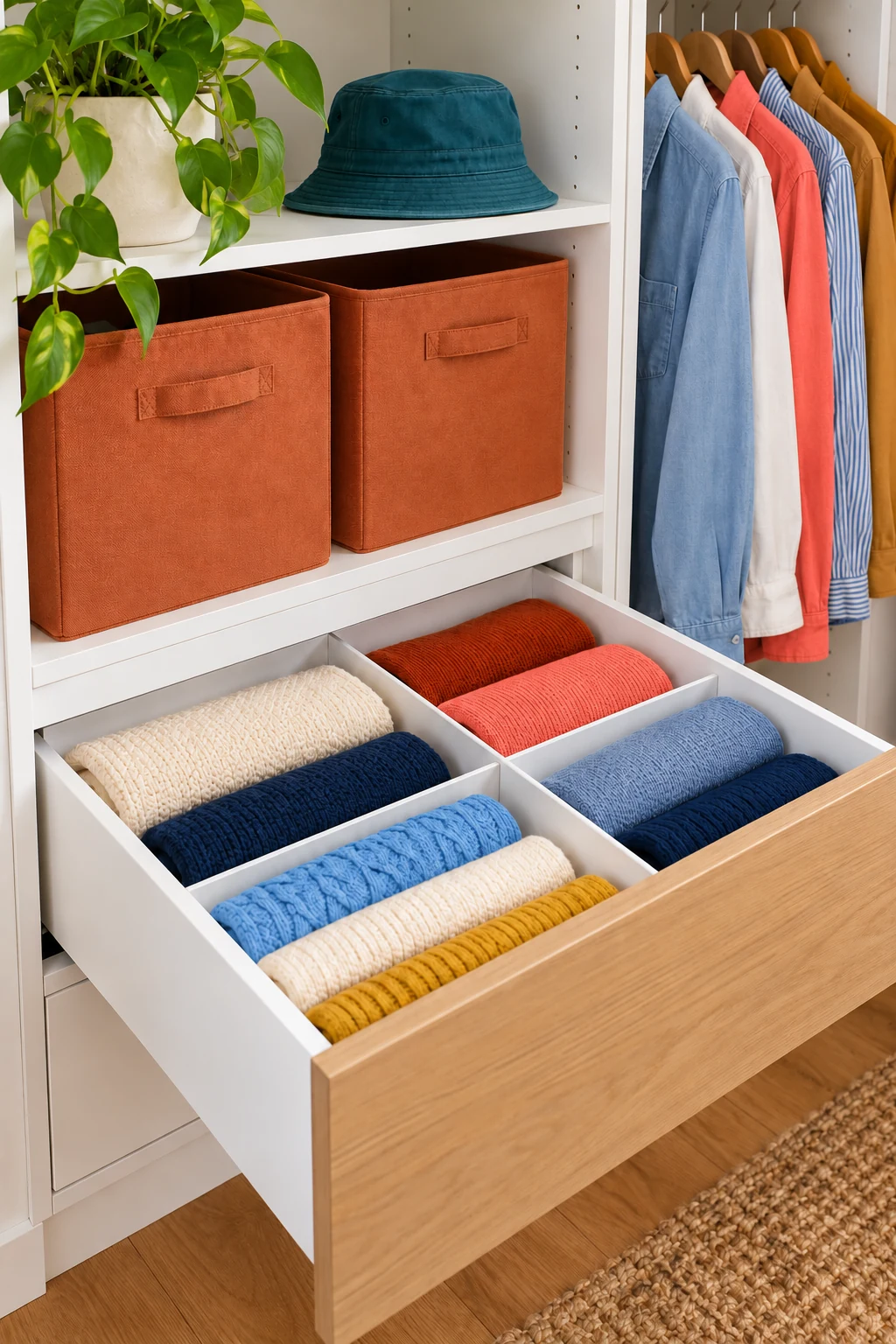
5. Use a central column to create two clear sides
A central shelf section can give two people a visible boundary without requiring identical storage on each side. One side might need two short hanging levels while the other needs a long bay. Shared accessories can live in the center if both people can reach them.
The column should leave practical hanging widths on either side, not two cramped slivers. Sketch the clothes as well as the furniture. If the doorway covers the central section when partly open, a side column may be more comfortable even though the symmetrical layout looks tidy.
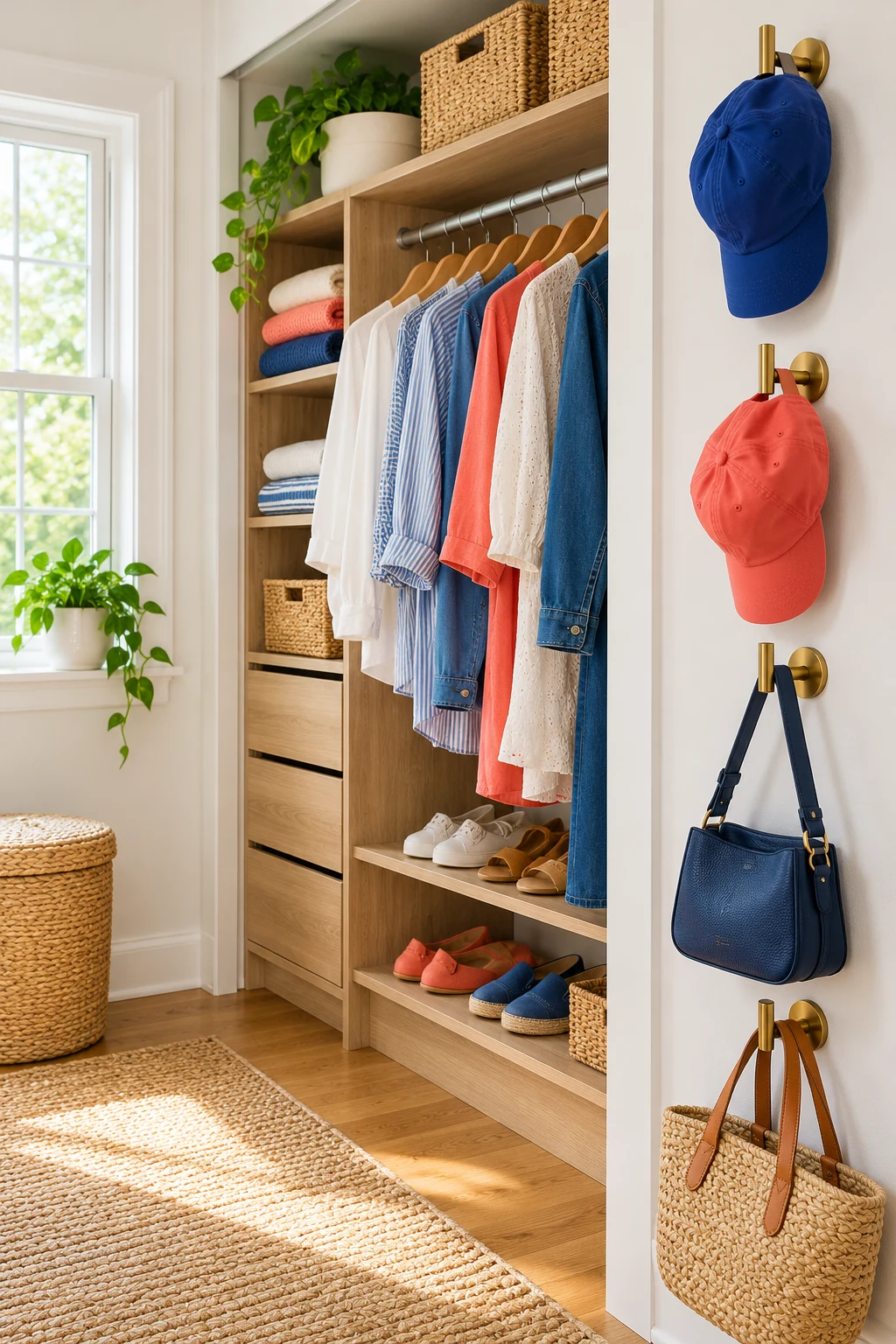
6. Align drawers with the clearest part of the opening
Drawers work best where the door can move fully out of their way. In a small closet, position the drawer bank according to the actual opening rather than automatically centering it on the back wall. Measure past handles, knobs, trim, and the drawer front.
Leave standing room for the drawer at full extension. Test a cardboard rectangle of the same depth on the floor before ordering a unit. Follow the furniture maker’s anchoring instructions, including for a floor-standing piece; a cabinet does not become stable simply because it fits neatly inside a closet.
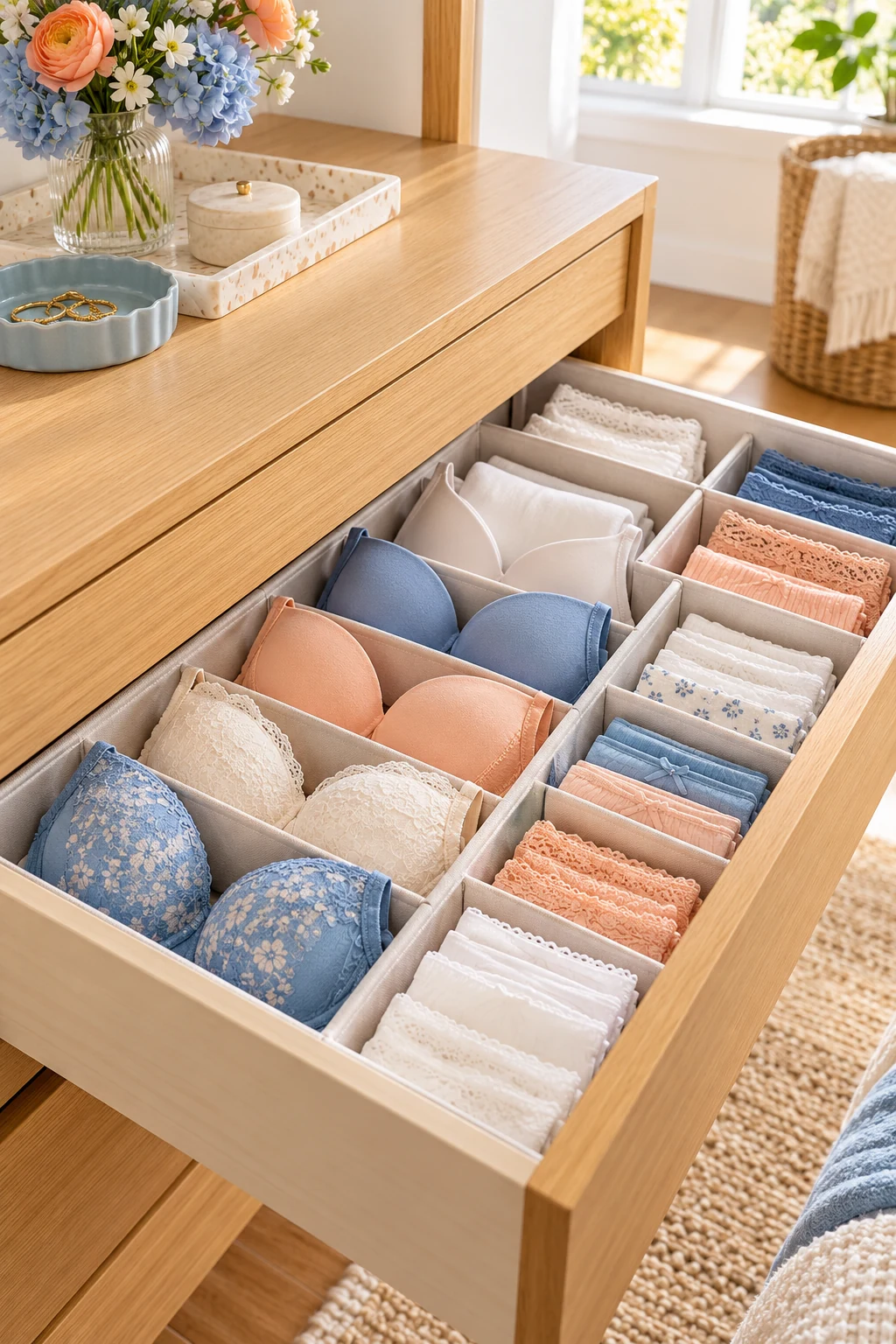
7. Let one storage run stop short of an inside corner
In an L-shaped closet, two deep storage runs can compete for the same corner. Give one run priority and end the other before its contents overlap. For example, keep a full-depth hanging section on the back wall and start shallow side storage beyond the garment sweep.
Hold a hanger with a jacket in the corner while you test the arrangement. Empty rails can look compatible even when sleeves collide. Avoid buying a special corner component until you know how you will reach its deepest point and retrieve a garment without moving a neighboring row.
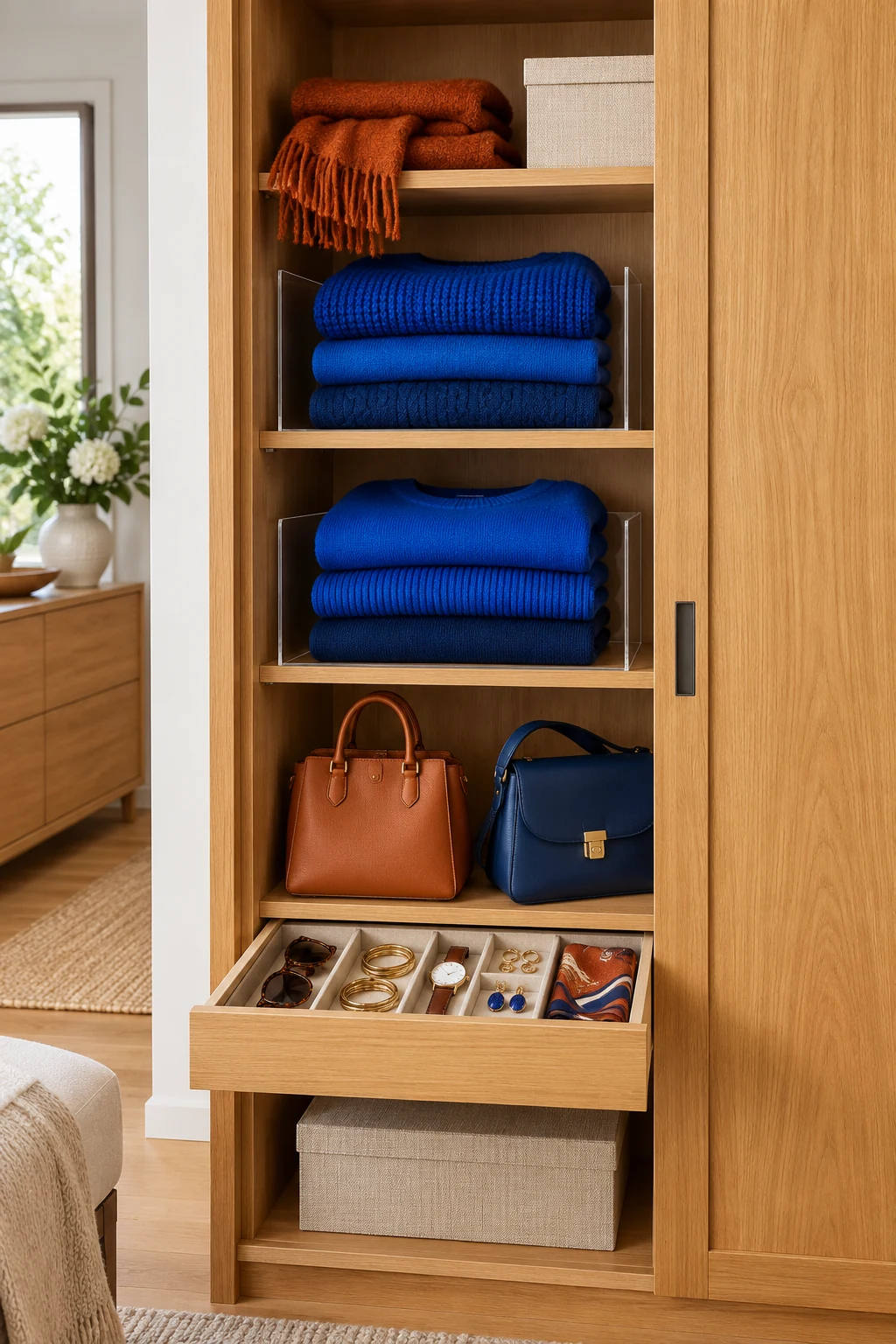
8. Treat a blind side return as one pull-forward zone
The short section behind a door jamb can hold a single category in a container you remove as a unit. Think spare scarves or occasional soft accessories. Keep the container narrow enough to turn through the opening rather than filling every inch of the hidden shelf.
Try a clean box you already own and pull it out several times. If you must unload the neighboring shelf to retrieve it, the location is too awkward for that category. Avoid creating several layers of bins behind one another; the back row will be easy to forget.
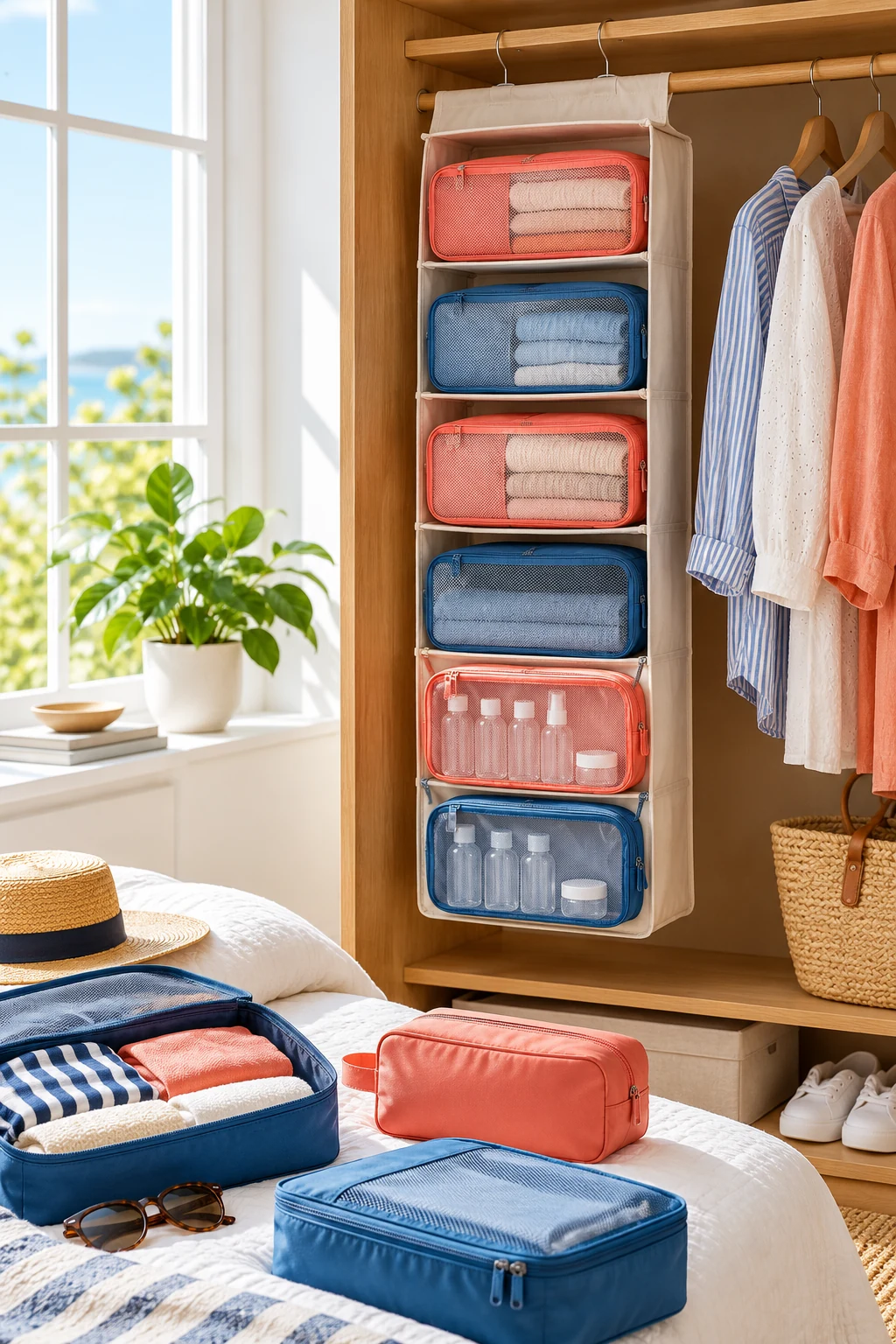
9. Give a shallow closet a folded-storage layout
A shallow recess may suit shelves better than conventional front-facing hangers. Measure from the back wall to the closed door and compare that depth with a hanger carrying your bulkiest everyday garment. Include the sleeves, not only the bare hanger.
Use shallow folded rows and small containers where hanging would push clothing against the door. Keep the most frequently worn pieces near the front edge. If you choose specialized front-to-back hanging hardware instead, verify its required depth, opening clearance, mounting method, and loaded capacity for the exact model.
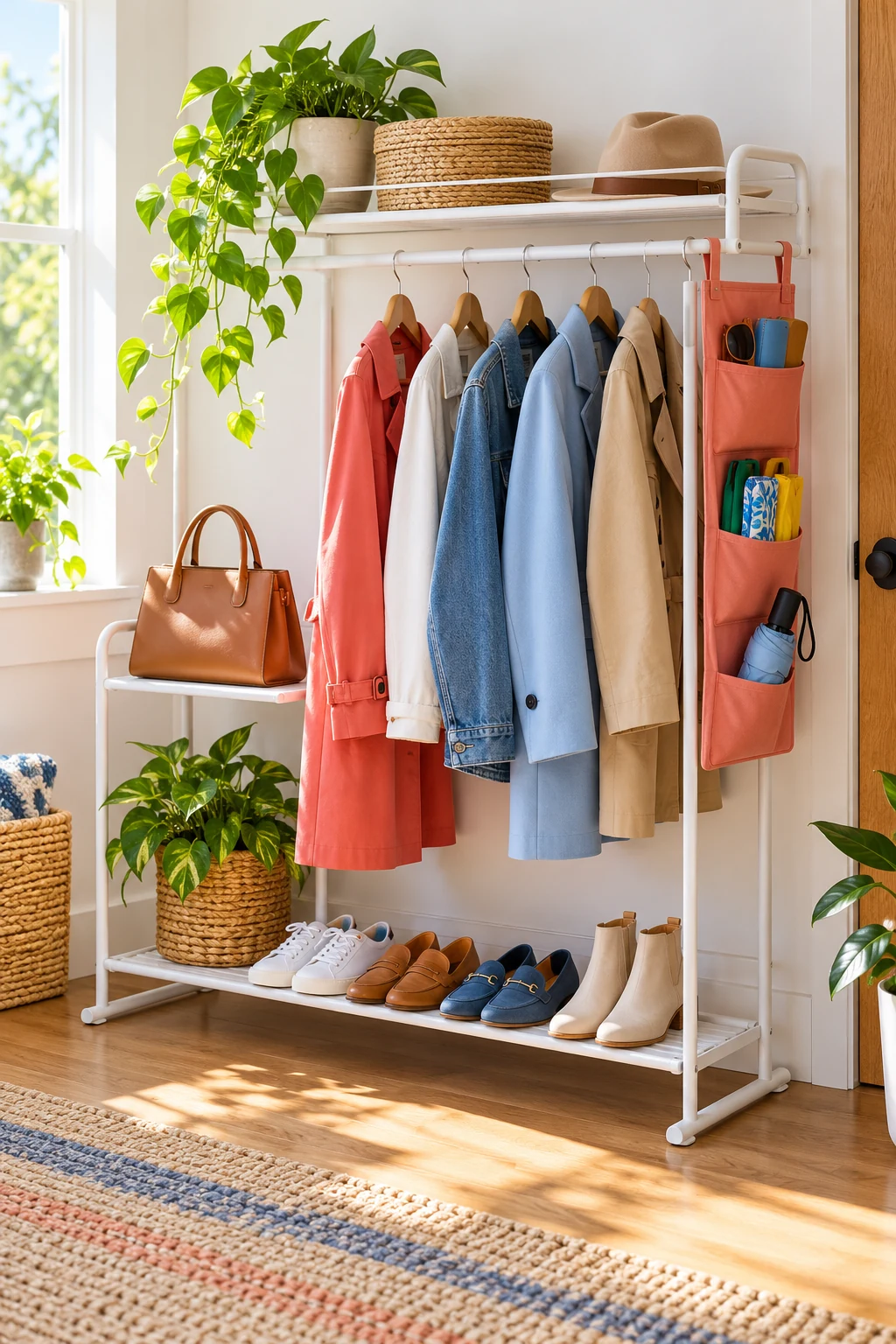
10. Use low storage where a ceiling slopes
Under an angled ceiling, place the tallest hanging section where the ceiling is highest and use the lower area for reachable folded storage. Draw the slope from the side before selecting units. A cabinet’s top corner can hit the ceiling even when its front edge appears to fit.
Leave space to bend and retrieve things without bumping your head. Low bins should slide into a clear aisle rather than into another cabinet. For a custom built-in or structural change, use qualified help and an installation plan suited to the room instead of guessing at support or wall construction.
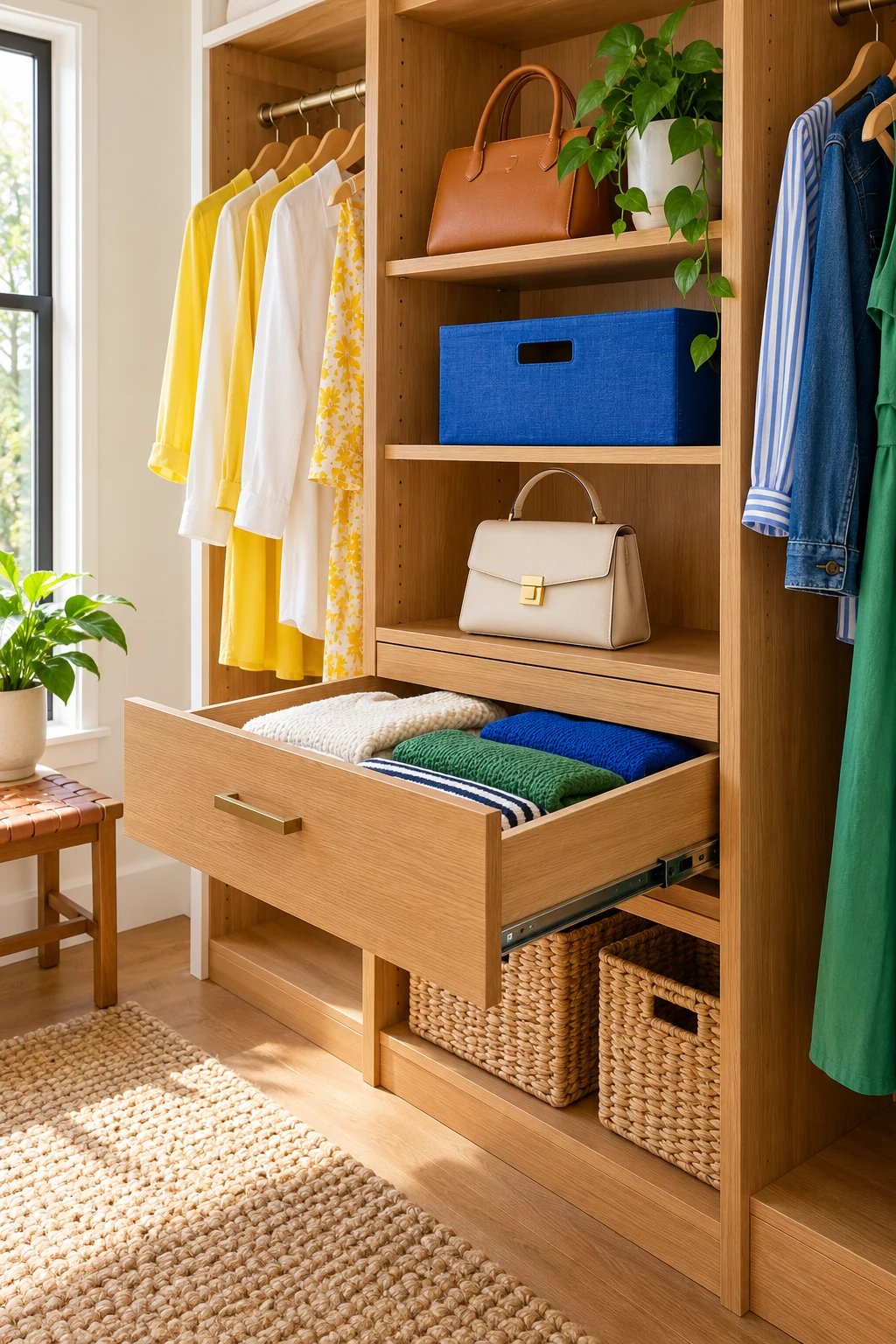
11. Run a low shoe rack beneath short hanging clothes
The space below shirts is often the easiest floor area to reuse. Keep the rack low enough that shoes can be lifted out without rubbing against hems. Arrange one row of pairs at each level so the pair you want is not hidden behind another.
The Simple Houseware 3-Tier Metal Panel Shoe Rack offers a freestanding floor arrangement. Measure its current listed footprint and your shoes before choosing it. Use the assembled rack according to its instructions; stacking another unit can change both the clearance and the stability requirements. View on Amazon.
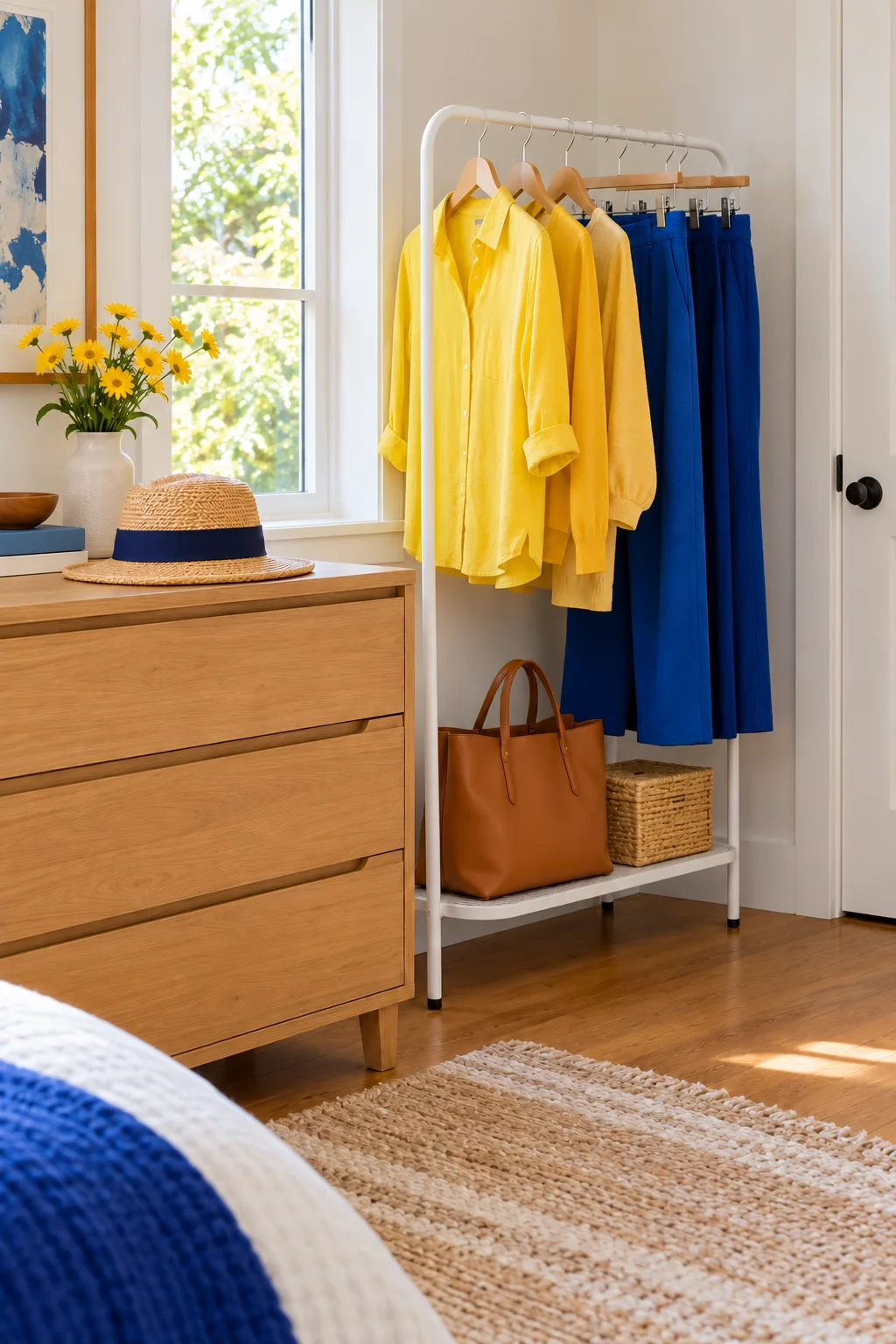
12. Leave one open floor bay for tall footwear
A low shoe shelf is useful for sneakers but can waste space if tall boots have to lean sideways on it. Reserve one taller bay for those pairs and position the short-shoe rack beside it. Keep the boot area accessible from the front.
A removable tray can define the footprint if it fits flat and stays out of the doorway. Check that hanging clothing above will remain clear of the boot tops. Store footwear according to its care directions, and move wet pairs to an appropriate drying spot before they return to the closet.
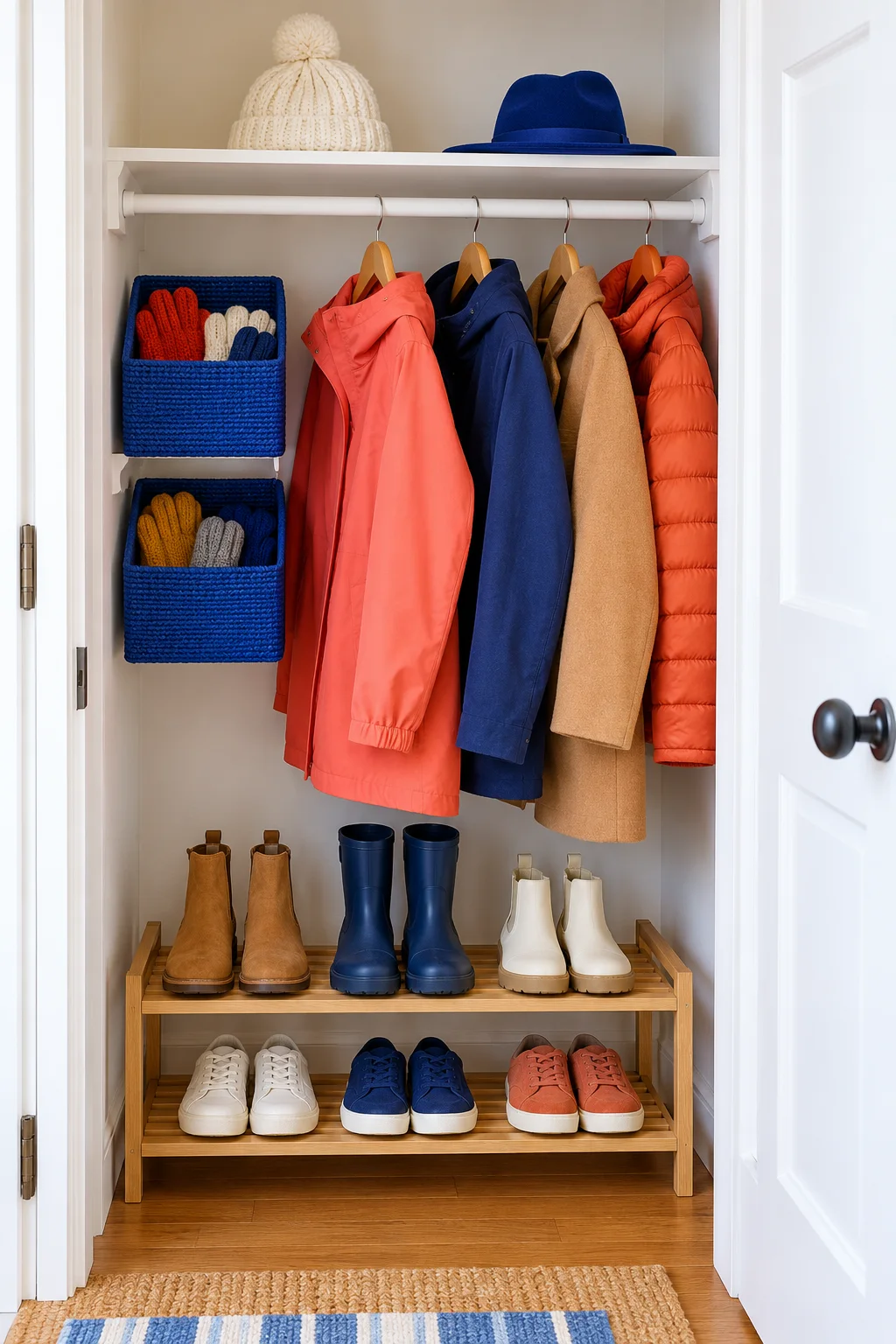
13. Give the hamper its own footprint
A hamper needs room for its opening as well as its base. Place it where you can drop in laundry without moving a hanging row, and where the filled container can be carried out. A slim shape helps only if it holds enough for your normal laundry rhythm.
If every usable floor inch belongs to shoes or long clothes, move the hamper just outside the closet. Preserve a clear walking path in the bedroom. Separating laundry from clothing storage can make a tiny closet work better without buying a more complicated organizer.
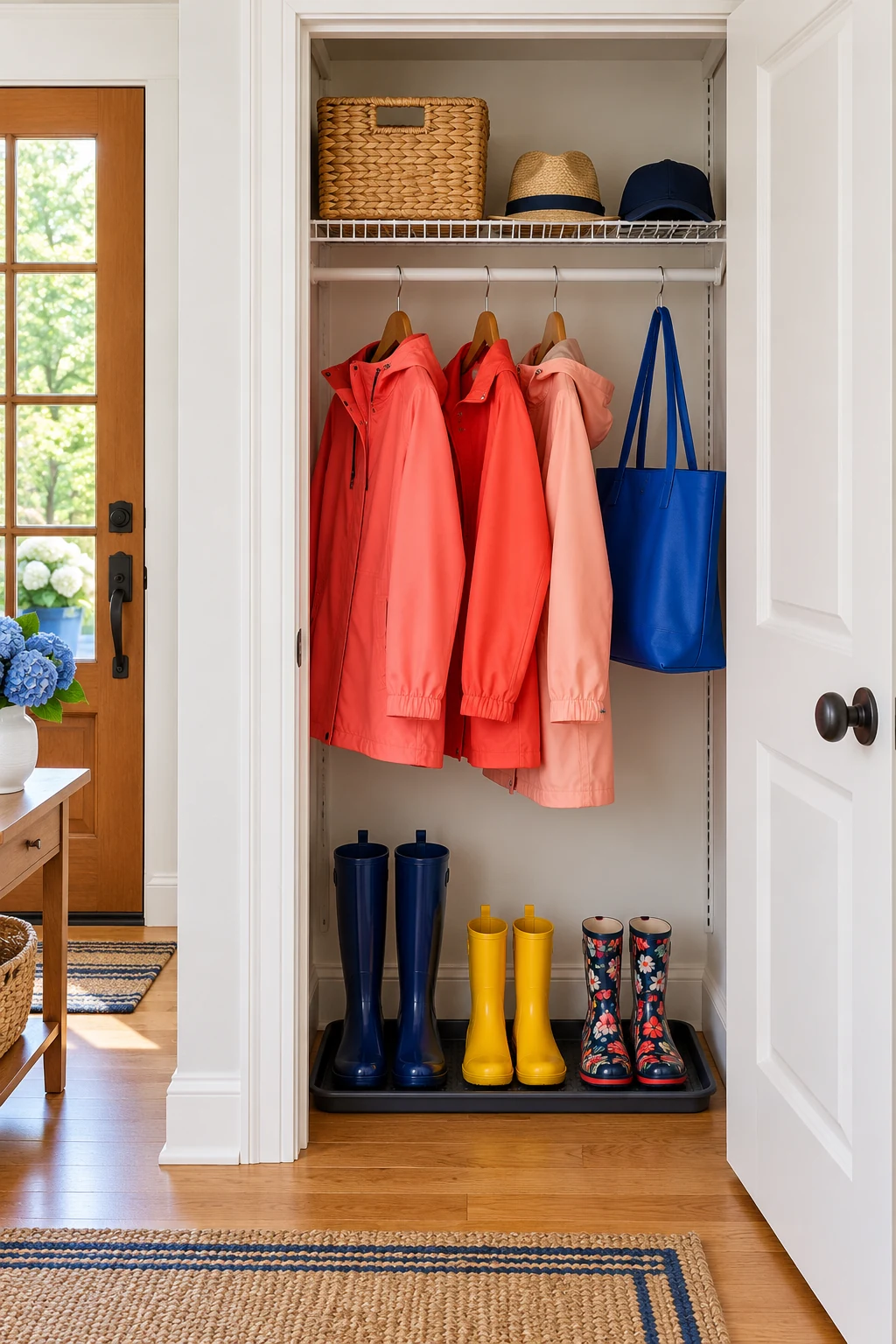
14. Use a hinged door for small-item storage
The back of a suitable hinged door can hold the small accessories that otherwise interrupt your shelf layout. Choose shallow pockets so you can see the contents, then test the door’s full travel with the organizer in place before loading it.
The Simple Houseware 24-Pocket Over-the-Door Organizer measures a listed 19 by 64 inches. Verify door thickness, the top gap, and clearance from interior shelves. Keep contents within the organizer’s instructions and do not assume an over-door design will work on a sliding or bifold door. View on Amazon.
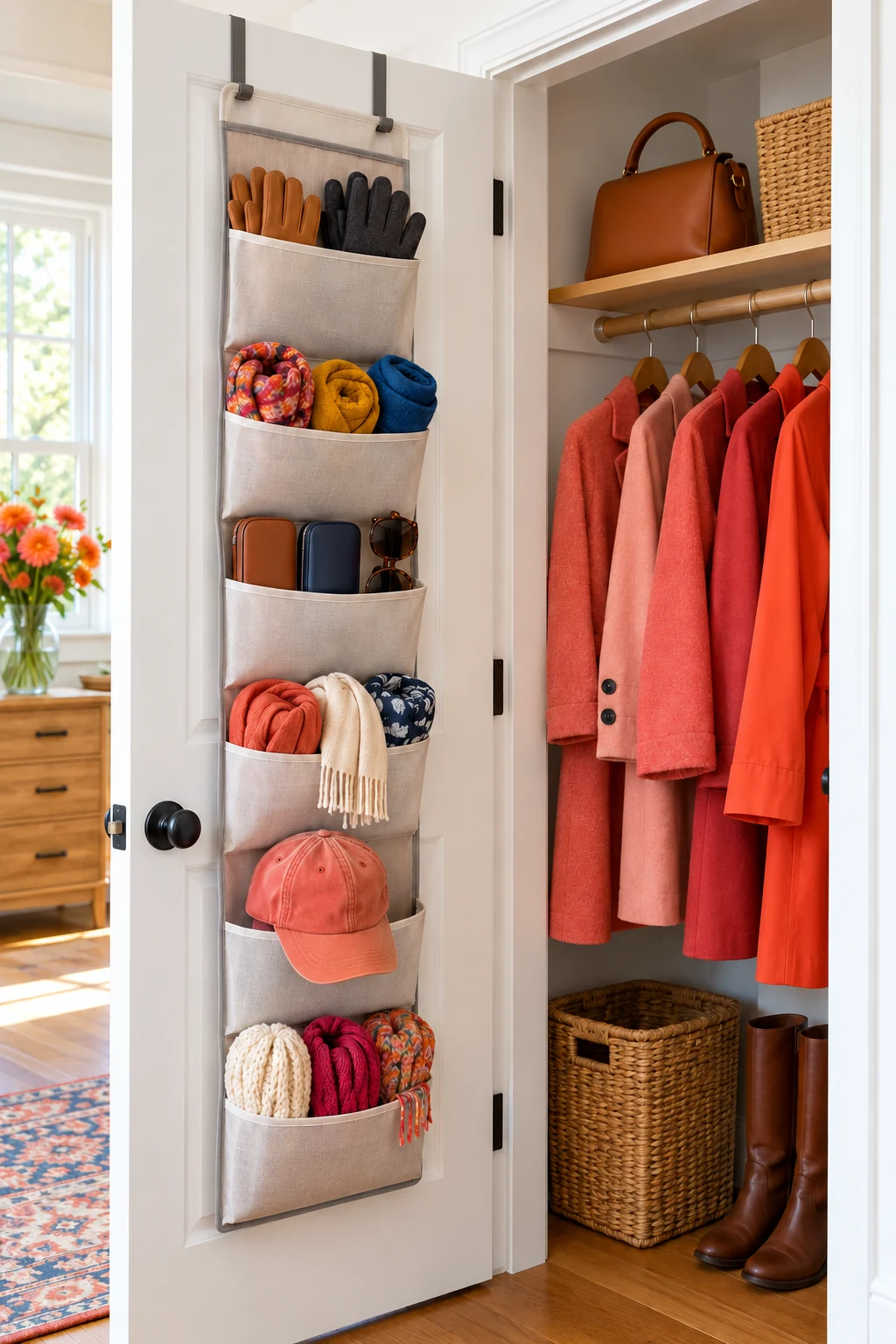
15. Keep side-wall hooks outside the garment sweep
A few side-wall hooks can create a useful narrow zone for scarves or a belt when the back wall is already occupied. Hold the intended items at that spot and open the door. They should hang where you can see them without brushing the rail or its clothing.
Match the hook and fixing method to the wall, load, and manufacturer’s directions. Renters should check what holes or adhesives are permitted before installation. Adhesive products still have surface and removal requirements, and a hook that looks small can put a concentrated load on a weak surface.
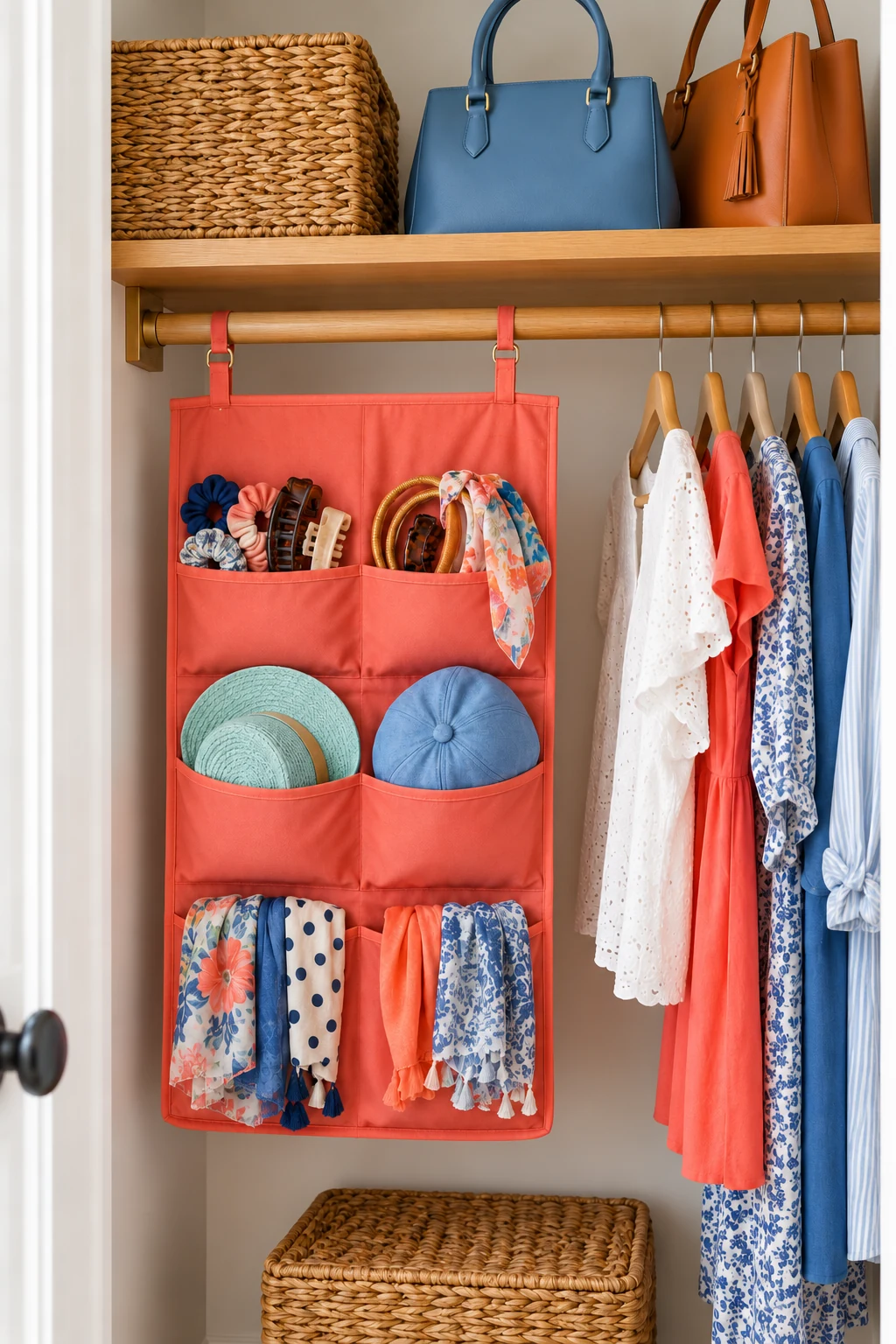
16. Split a shared closet by wardrobe needs
Divide a shared closet after each person groups what they hang and fold. Someone with many shirts may benefit from double hanging, while someone with bulky knitwear may need wider shelves. Equal-looking sections are less useful when one person’s clothes keep spilling into the other’s space.
Agree on a few clear boundaries and decide which areas are shared. Small open bins can give each person a separate accessories home; the Simple Houseware six-bin fabric set has mixed sizes for that purpose. Measure the available shelf and choose only the pieces that fit comfortably. View on Amazon.
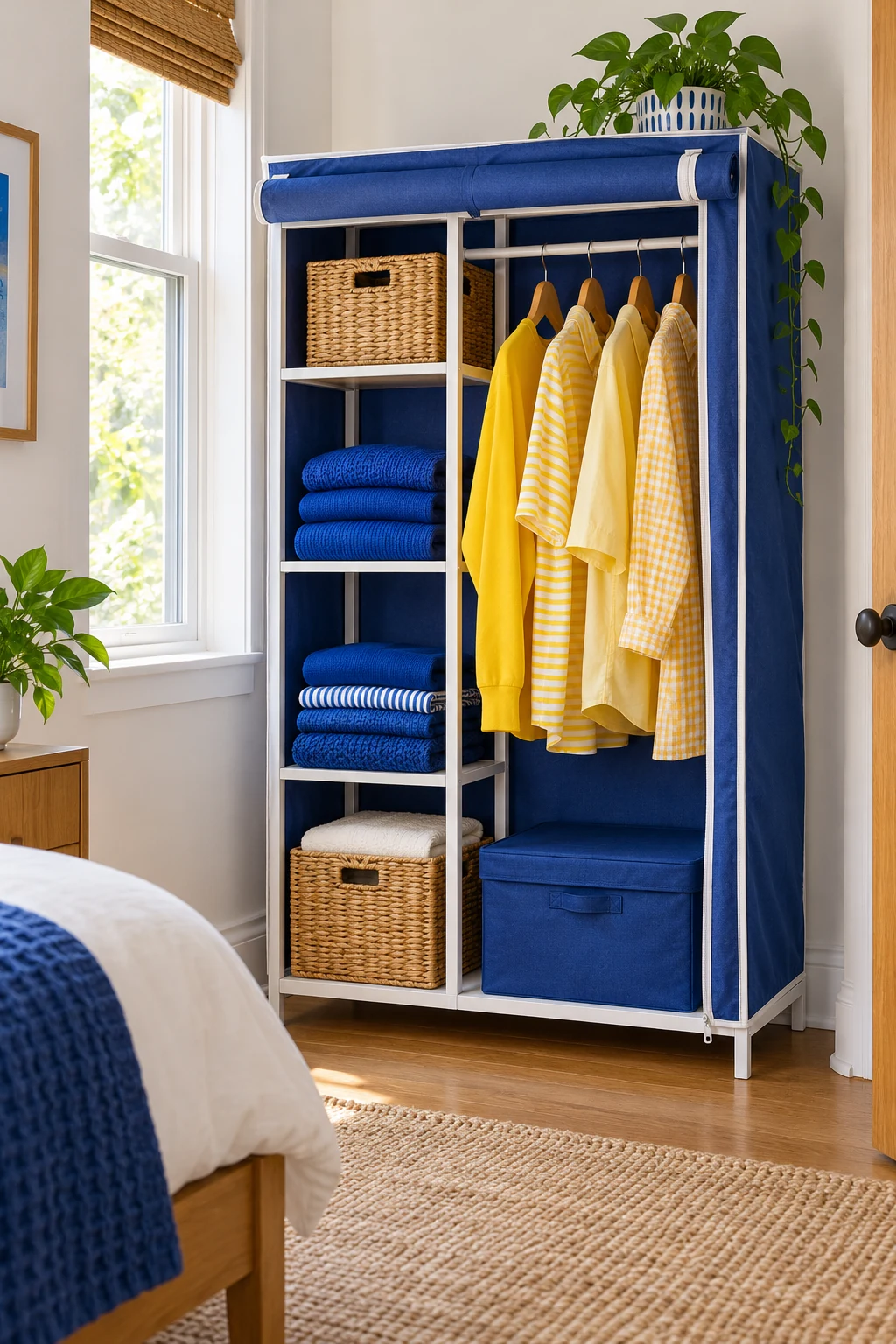
17. Create a comfortable everyday reach band
Keep your most-used clothes in the range you can reach comfortably without climbing, deep bending, or moving a heavy container. That range is personal. Test the layout in the way you normally get dressed, including seated access if that is part of your routine.
Use open shelves or easy-grip containers where complicated lids and clips slow you down. Reserve awkward areas for light, infrequent items, or leave them empty if access is unsafe. A plan that is comfortable to use every day is more valuable than one that fills every possible shelf.
18. Limit the highest shelf to light occasional items
The upper shelf is a useful home for a small seasonal capsule or an empty travel tote. Keep each container light enough to retrieve with control. Avoid tall stacks that require you to lower two or three other boxes before reaching the one you need.
Check the opening above the bin as well as the shelf depth. You need room to lift and tilt it clear. Use an appropriate stable step stool according to its instructions when required, and never climb the closet structure. Heavy belongings belong at a safer, lower height.
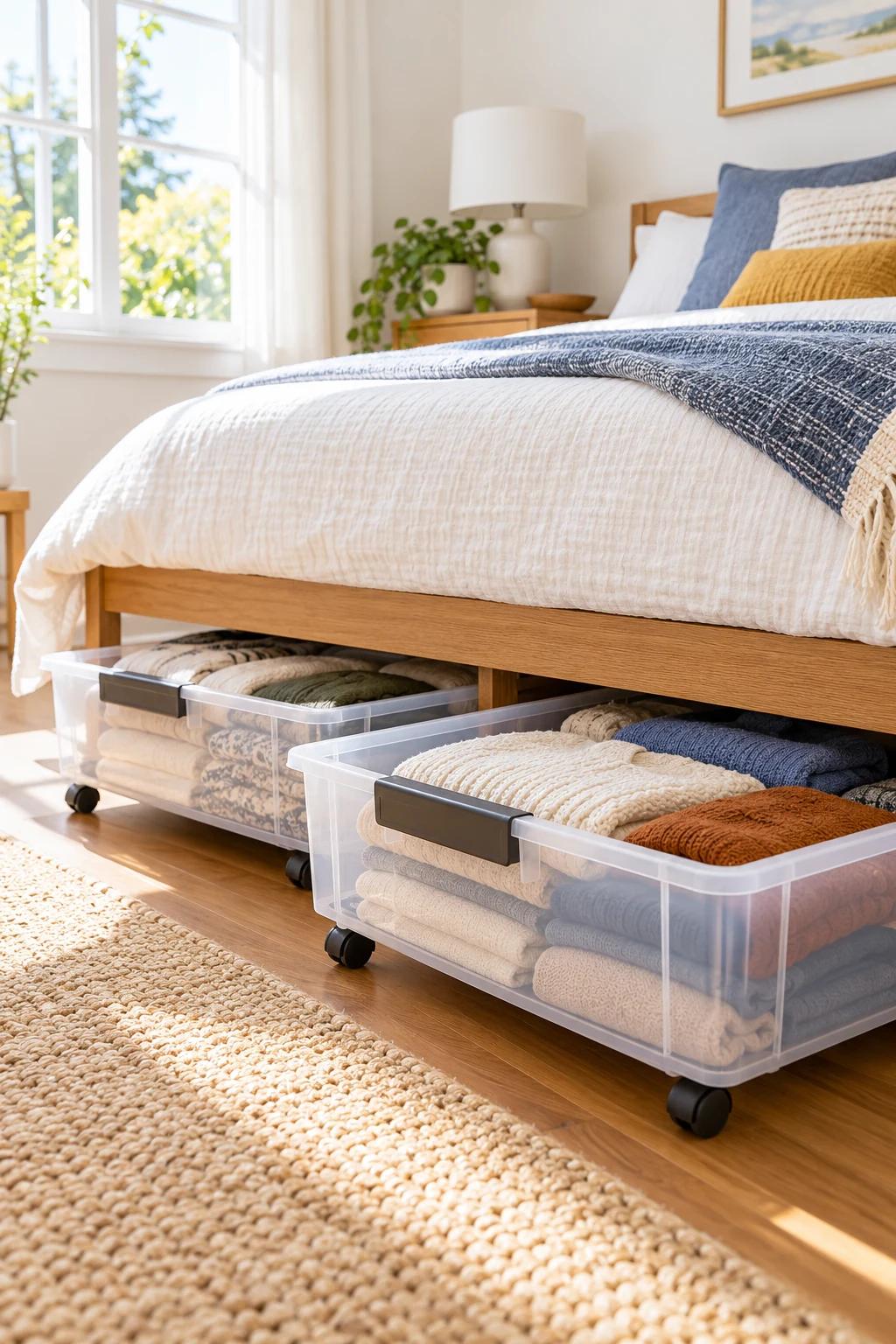
19. Preserve a small adjustable space for changing needs
Leave one section flexible instead of fixing every shelf tightly around the current collection. An adjustable shelf bay can change from folded shirts to a taller bag later. Existing adjustable supports should be repositioned only in ways allowed by the system’s instructions.
Choose one useful spare gap rather than leaving the entire closet unfinished. It might hold incoming laundry temporarily or accommodate a winter layer when the weather changes. If the gap stays full of random overflow, give those items a permanent category before expanding the system again.
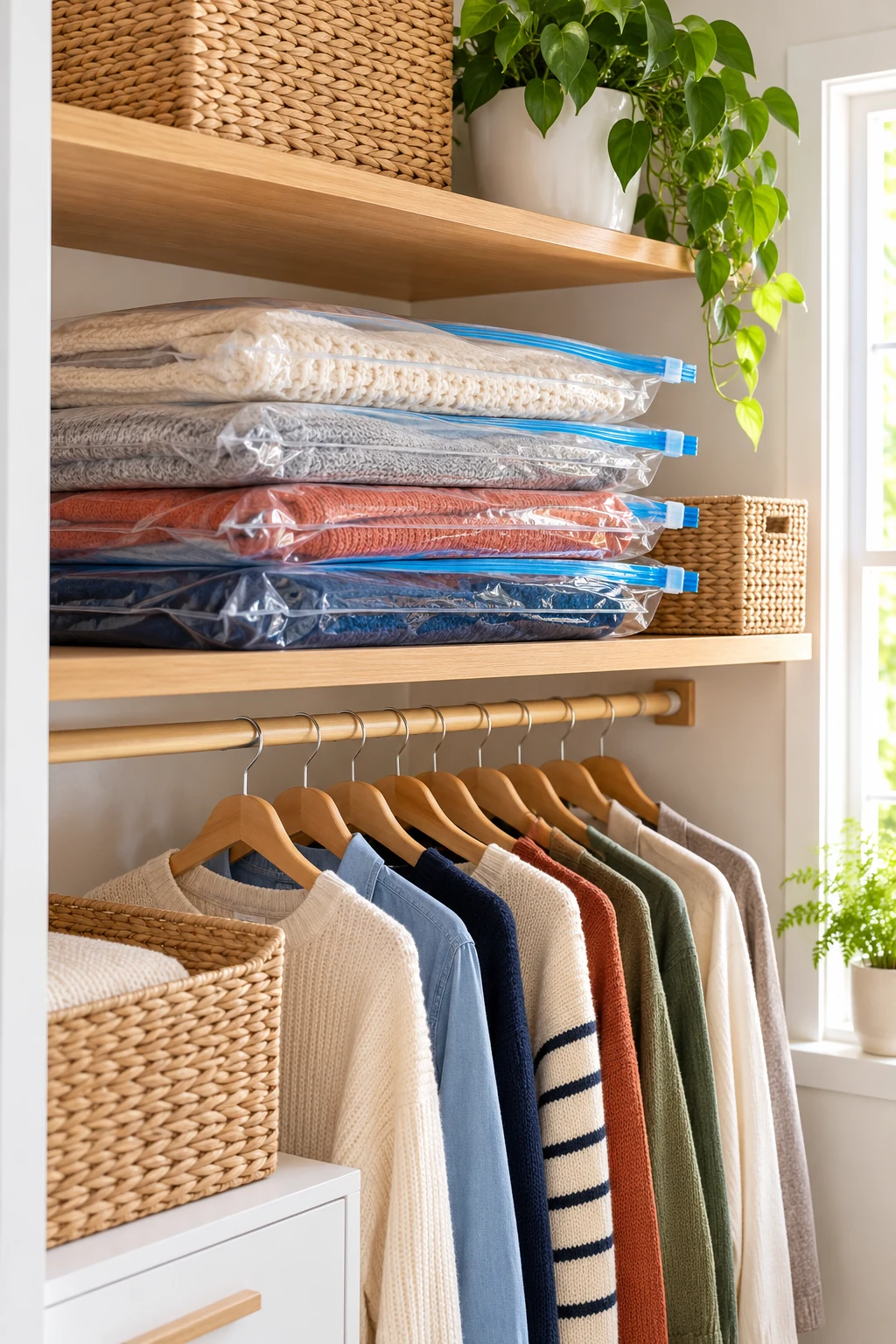
20. Plan rail width with your actual hangers
Hanger choice changes how a rail feels in use. Put a typical week’s clothing on the hangers you intend to keep, then slide the group along the rail. Include bulky jackets and textured sleeves rather than measuring a line of empty hooks.
Amazon Basics Slim Velvet Suit Hangers in the Black/Silver 30-pack can make everyday hanger shapes more consistent. Keep appropriate specialty support for garments that need it. Leave room to move hangers freely; forcing more clothing onto a narrow rod defeats the purpose of the layout. View on Amazon.
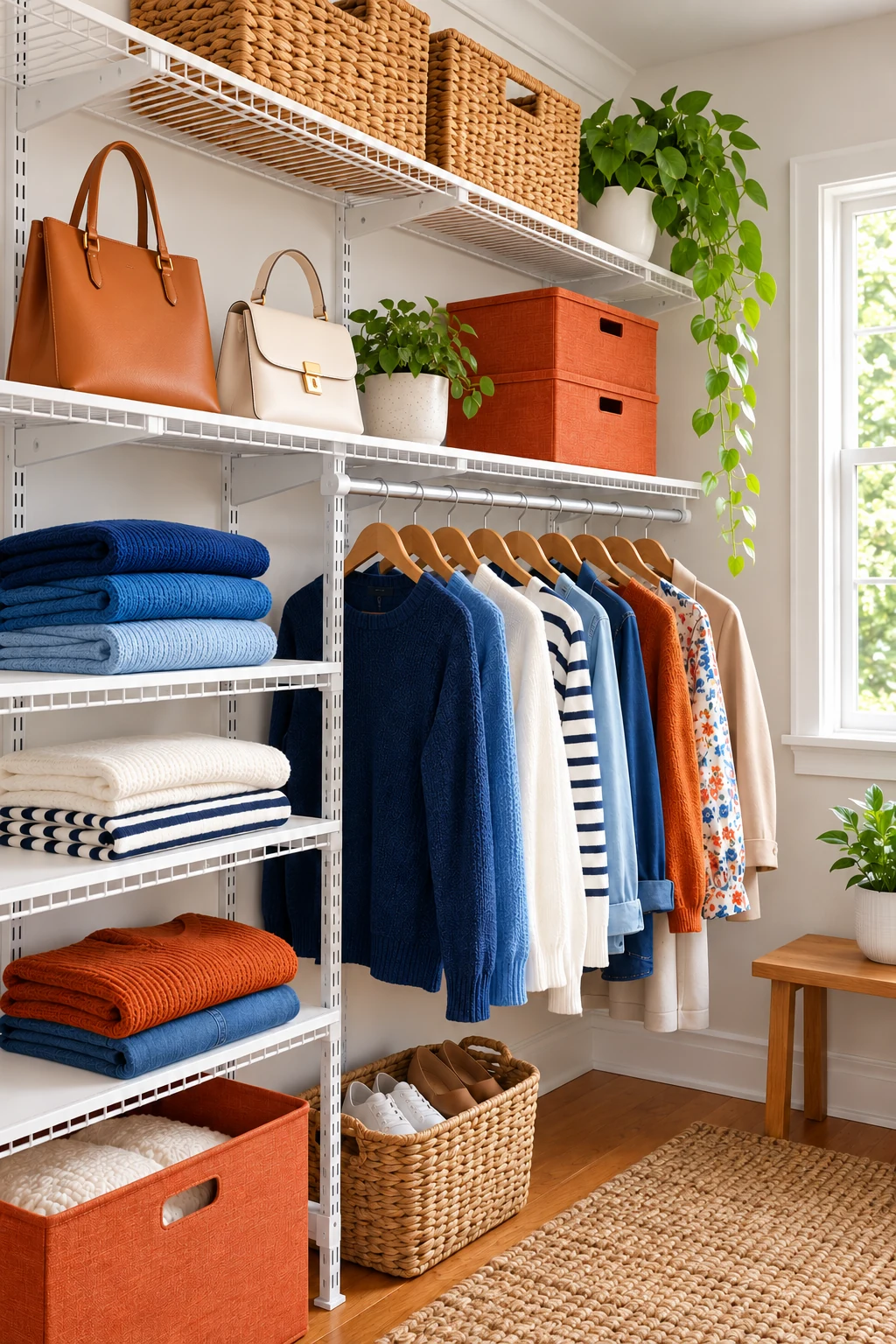
21. Trade one strip of rod for hanging cubbies
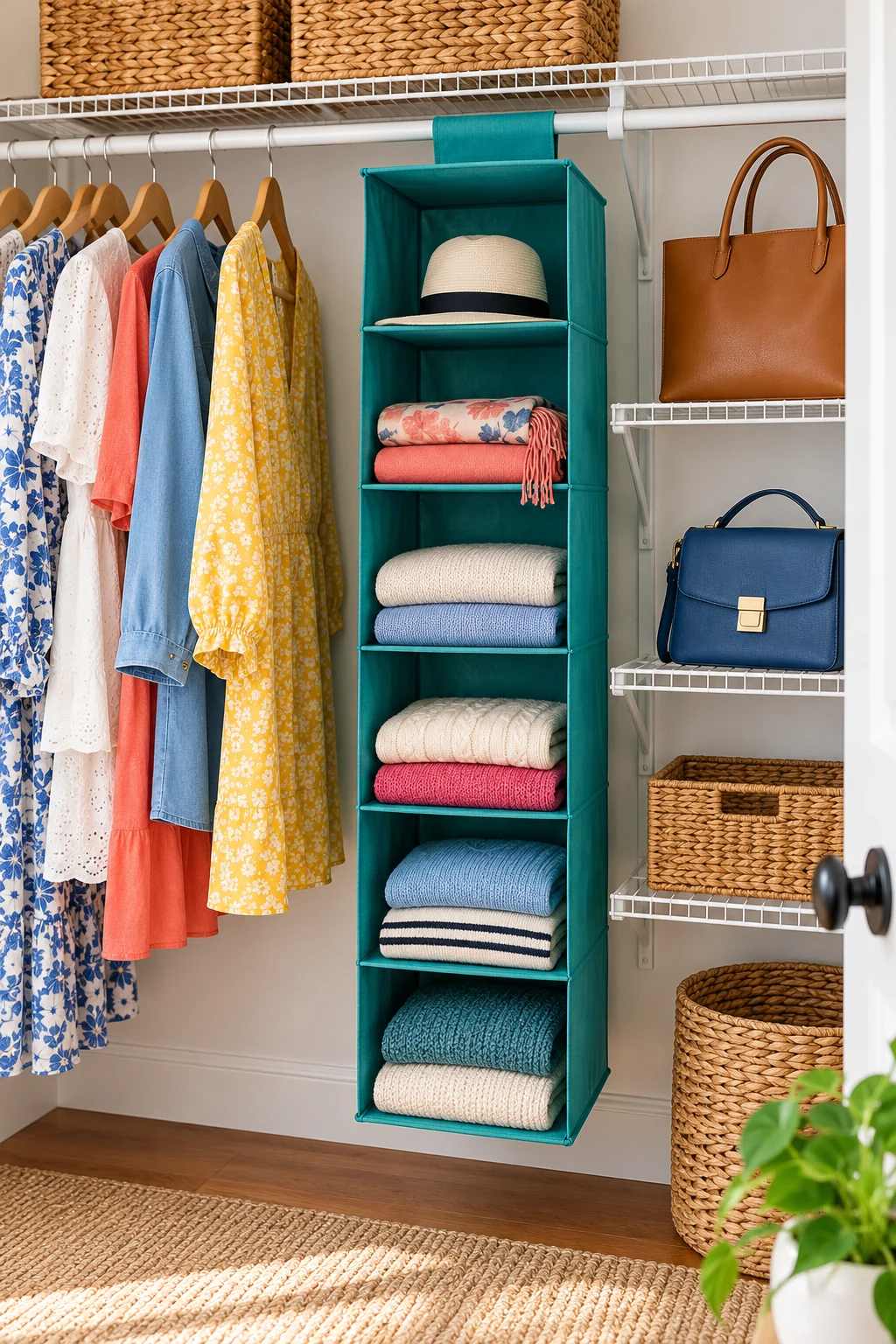
A closet with ample rail space but few shelves may work better with a hanging organizer at one end. Use its compartments for light folded items and keep the lowest section reachable. This changes the balance between hanging and folded storage without adding a floor cabinet.
The StorageWorks 6-Shelf Hanging Closet Organizer is a fabric-compartment option. Check its full drop, attachment instructions, and the load supported by the existing rod. Measure the hanging width you will give up first; the organizer is useful only if the remaining clothes still slide easily. View on Amazon.
22. Give bulky folded clothes broad, short stacks
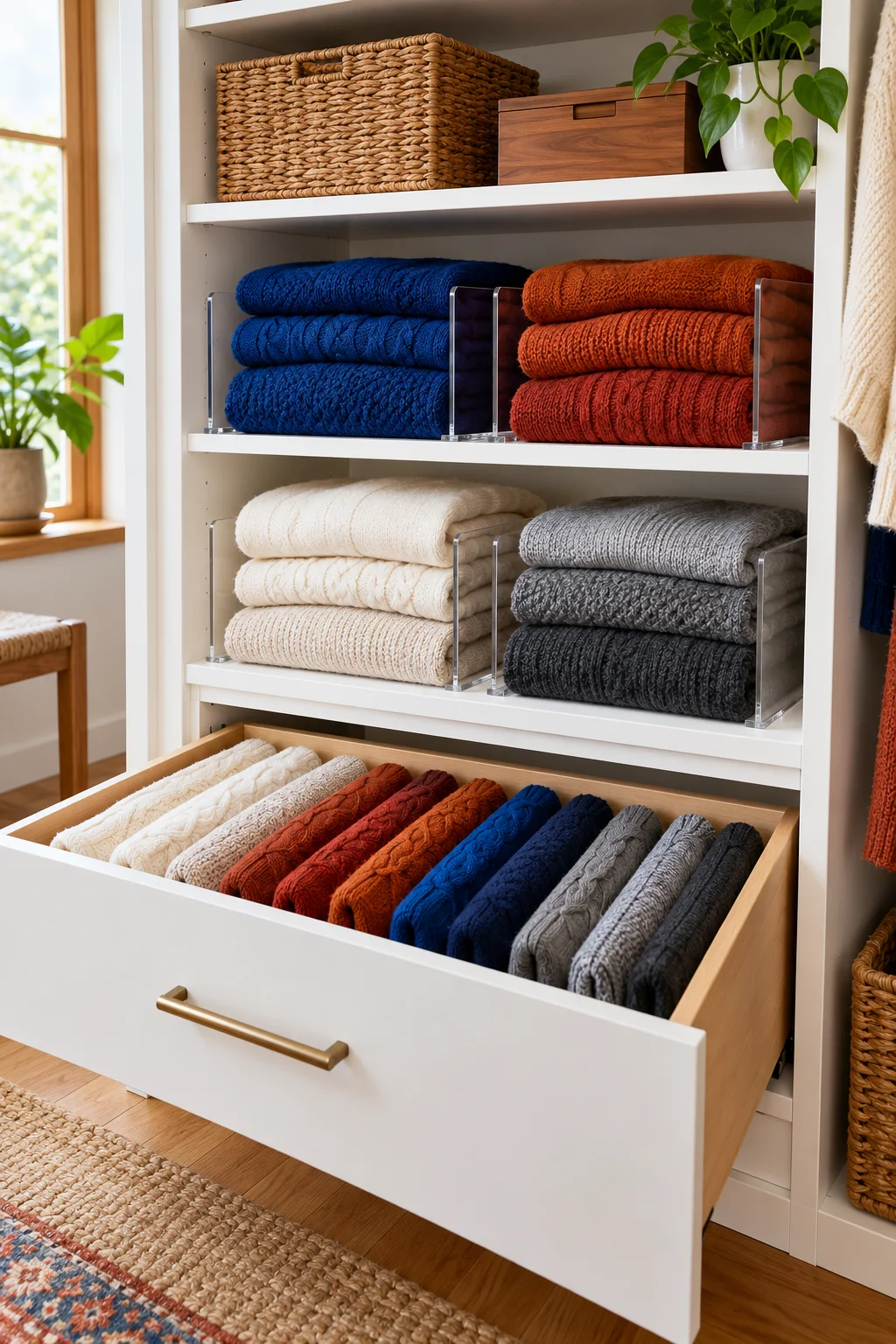
A wide shelf opening can be more practical for sweaters than a tall narrow cubby. Arrange short stacks across the shelf so you can lift the top few pieces without destabilizing a tower. Work out the fold with one actual sweater before spacing the sections.
LYNK Tall White Shelf Dividers can separate stacks on compatible solid wood shelves up to 7/8 inch thick. Check the shelf edge and the clearance above. Dividers define the width of a category; they do not increase the shelf’s load capacity or make an oversized pile easier to handle. View on Amazon.
23. Place bags on a shelf beside the daily clothes
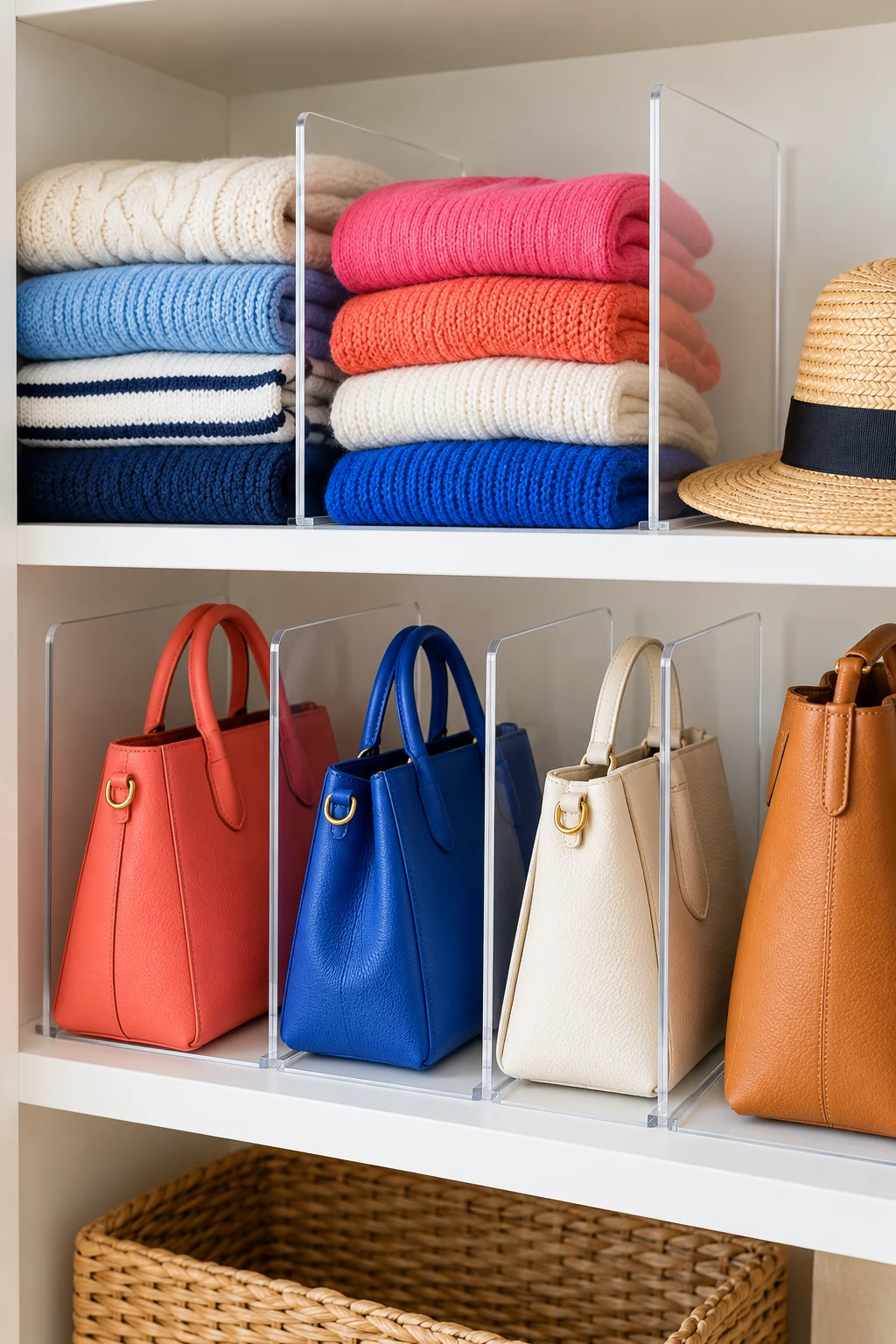
A dedicated bag row can make a small closet more useful even if it reduces hanging width slightly. Place frequently used bags where you can lift one out without unstacking others. Include the handles and any rigid shape when measuring the height and depth.
Keep each bag’s storage directions in mind, especially for longer-term placement. Avoid wedging a wide tote into a narrow gap or hanging a loaded bag just to save a shelf. A small, accessible row is usually easier to use than a deep pile spread across several hidden spots.
24. Move a seasonal soft-goods category under the bed
When the layout is sound but the closet is still crowded, remove a defined off-season category rather than adding another layer of storage inside. A shallow under-bed container can hold appropriate folded soft goods while the daily closet keeps the clothing you currently wear.
Amazon Basics Under Bed Storage Bags are listed at 42 by 18 by 6 inches. Measure the actual opening and pull-out path, including bed legs and nearby furniture. Follow clothing care instructions, avoid overfilling, and do not treat a zippered fabric bag as airtight or pest-proof storage. View on Amazon.
25. Try the whole layout before making it permanent
Use boxes and your existing hangers to test the arrangement before ordering fitted components. Walk through getting dressed, choosing shoes, and putting away laundry. A layout can look balanced in a sketch while making one everyday task surprisingly awkward.
Keep a short list of the places where you have to move something else first. Adjust those bottlenecks, then measure again before any installation. For new mounted components or furniture, follow the exact manufacturer’s support and anchoring requirements and get qualified help when the wall or installation is uncertain.
Choose one awkward area and test a new arrangement with what you already own. When you can reach, remove, and return everything comfortably, the layout is doing its job. Subscribe to the Havelyo email list for more practical small-space organization and decorating ideas.