
Closet Organization
25 Clothes Storage Ideas for Homes Short on Closet Space
A home with little closet space needs more than one place to put clothes. The useful arrangement is usually a small group of storage spots that work together: somewhere to hang crease-prone pieces, somewhere to fold everyday basics, and somewhere to keep seasonal overflow out of the way.
Start with the clothes you wear now and the furniture you already own. These 25 ideas help you distribute clothing without filling every walkway with storage. Measure the space with doors and drawers open, follow furniture anchoring instructions, and keep access to windows, exits, heaters, and vents clear.
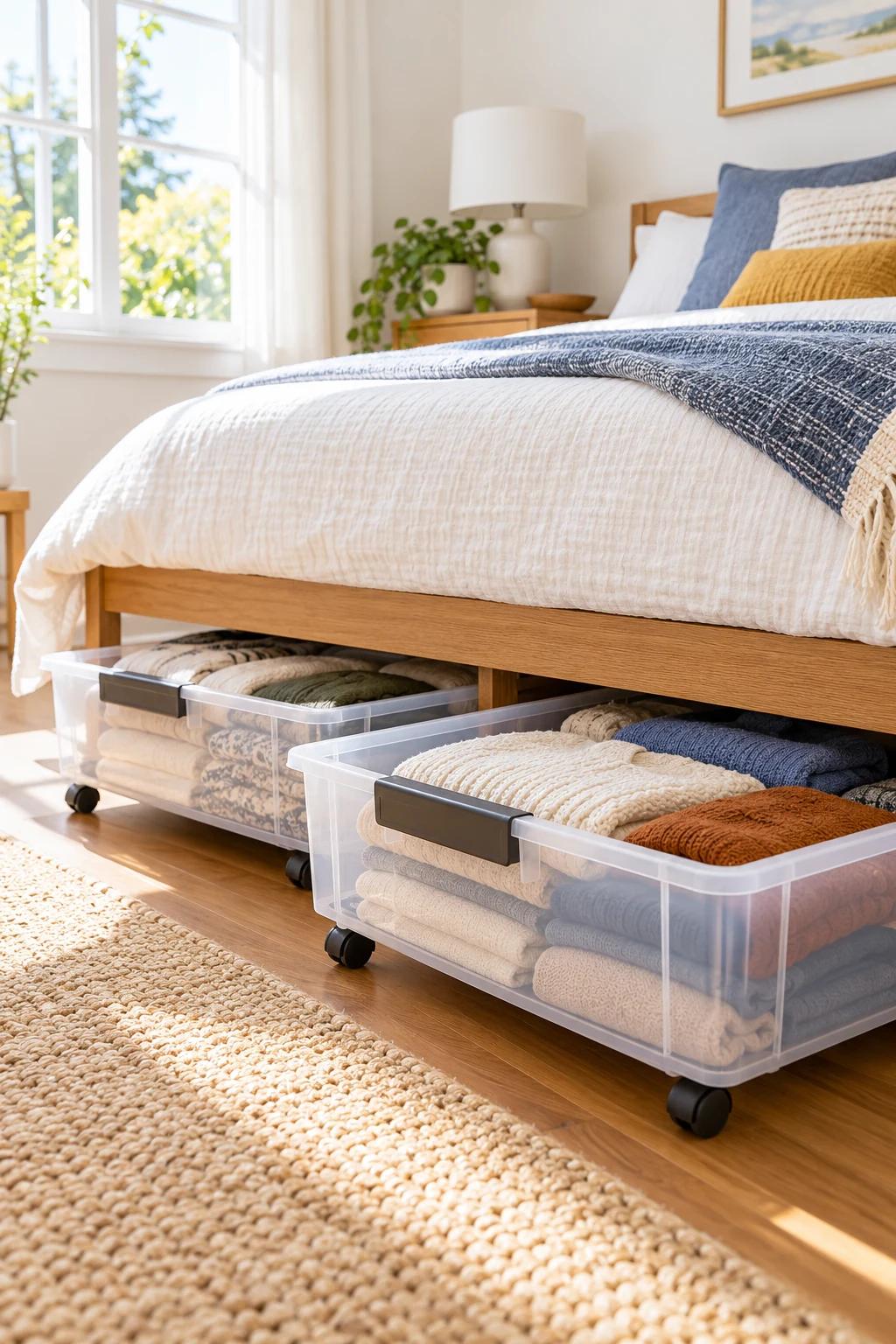
This article contains affiliate links. If you buy through them, Havelyo may earn a commission. As an Amazon Associate I earn from qualifying purchases.
Build a practical dressing area
1. Choose one main place to get dressed
Pick a wall or corner near your existing dresser as the main clothing zone. Keeping the daily wardrobe within a few steps makes scattered storage easier to manage and helps you notice which missing function needs attention.
Mark the footprint of a proposed rack or cabinet before moving furniture. Include garment overhang, drawer travel, and room to stand comfortably. If the space interrupts the path to the bedroom door, choose a smaller arrangement or split occasional clothing into another location.
2. Let a dresser hold the clothes that fold well
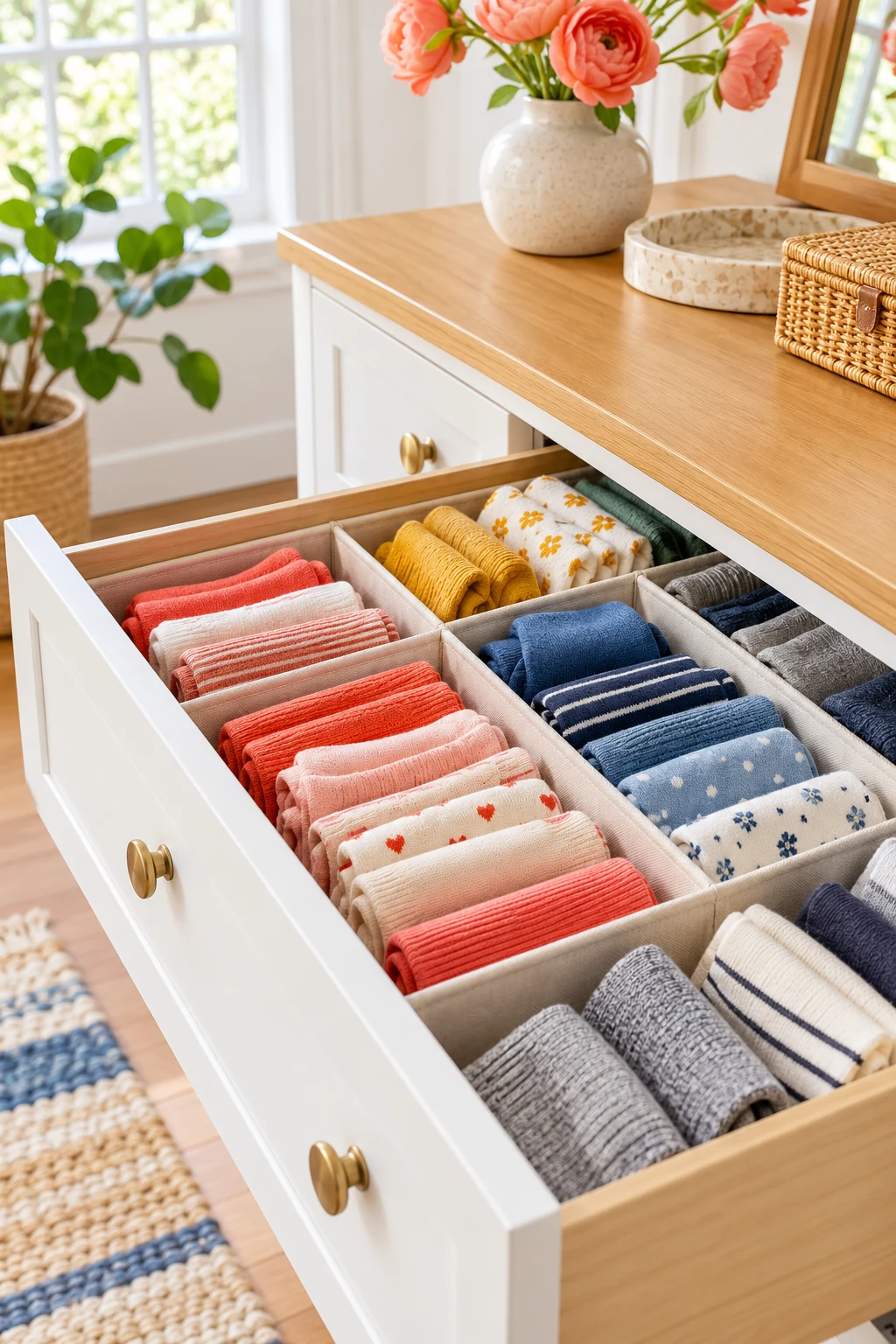
Use dresser drawers for pieces that do not require hanging, such as suitable tees, sleepwear, and casual knits. Moving these items out of a crowded rail can reserve scarce hanging space for the clothing that benefits from it.
Assign drawer space by the volume of the category rather than giving everything an equal-sized section. Keep heavy contents lower, follow the dresser's anchoring instructions, and use the drawer stops as intended. If drawers are difficult to open, reduce the load instead of pulling harder.
3. Stand folded basics in visible rows
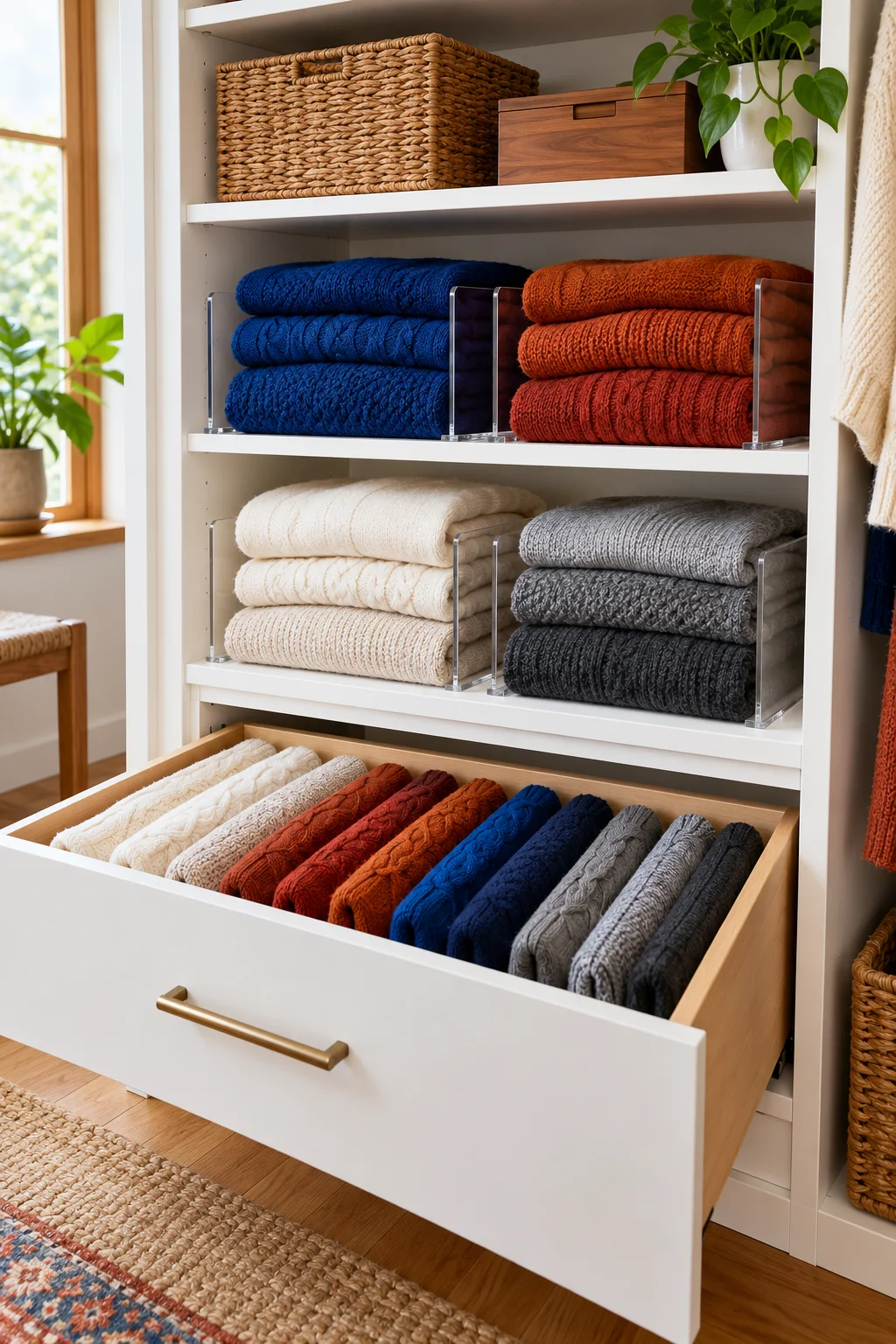
Try file folding in one accessible drawer so the edges of shirts or leggings show from above. This turns a drawer into a visible selection instead of a stack with only the top item apparent.
Check the folded height before refolding everything, and leave room to lift one piece out. Slippery fabrics may need a shallow support box, while thick sweaters often suit a shelf. Keep a consistent method within each category rather than forcing every garment into the same shape.
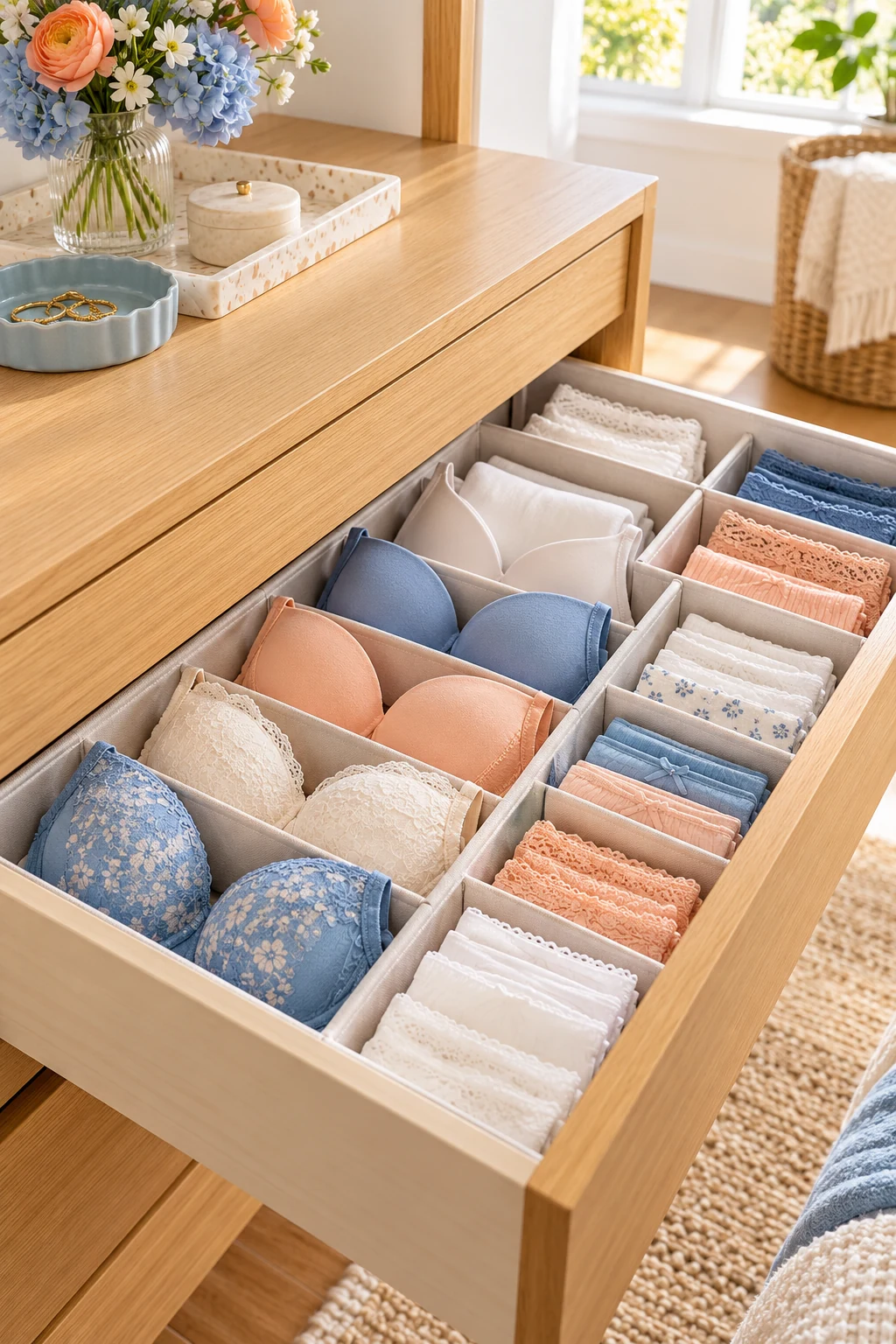
4. Divide the smallest clothing categories
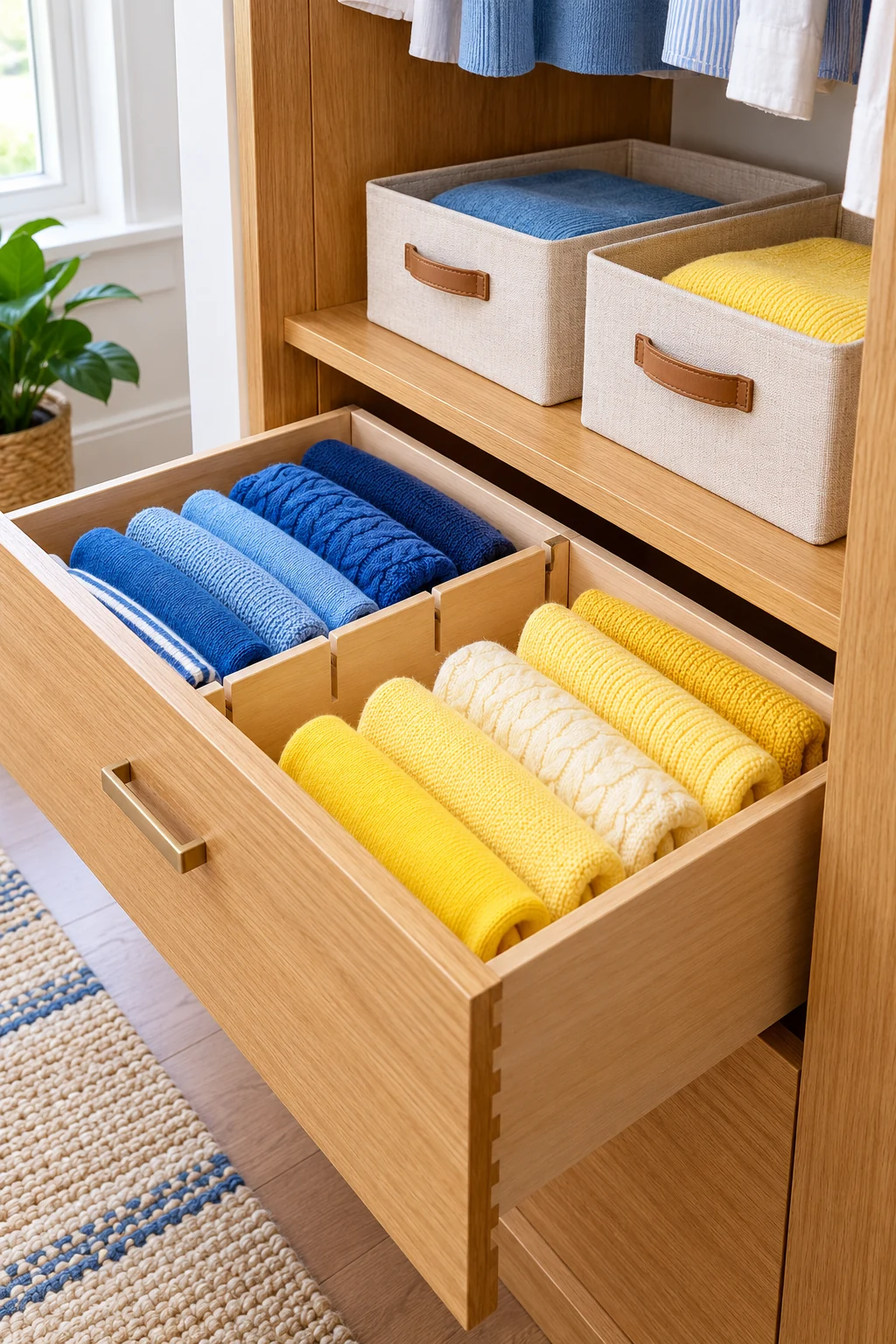
Keep socks, underwear, and lightweight accessories in defined sections so they cannot drift through a large drawer. Choose categories broad enough to maintain during normal laundry put-away, such as work socks and exercise socks.
The Simple Houseware 4-Pack Drawer Organizer Set in Gray offers mixed compartments and inserts listed as 3.5 inches high. Compare each insert with the drawer interior and closing clearance. Use the pieces separately if the full set would leave awkward gaps or crowd larger items. View on Amazon.
5. Repurpose a cabinet for folded clothing
An existing cabinet can hold folded clothing if its shelves are suitable for the load and its interior is clean and dry. Give each shelf a category and check that the doors reveal enough of the opening to remove a stack or bin.
Follow the cabinet's anchoring and intended-use instructions, and do not add a homemade hanging rod unless the manufacturer supports that conversion. A cabinet designed for shelving may not be built to carry a suspended load. Preserve ventilation and keep clothing away from heat sources.
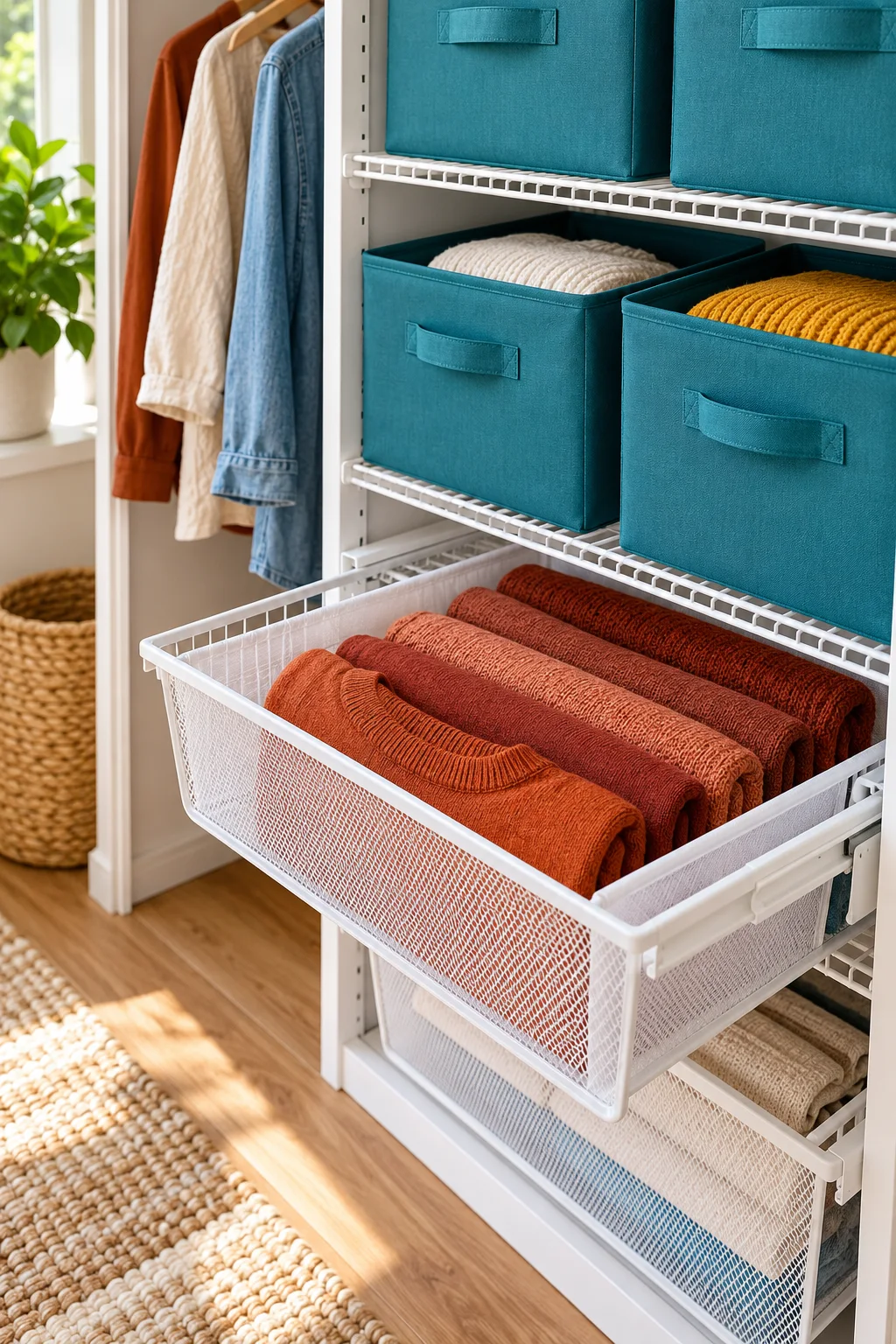
6. Use an existing bookcase for modest clothing stacks
A stable, appropriately anchored bookcase can provide shelf storage for folded pieces and small fabric bins. Put everyday clothing within easy reach, and use the visible edges or simple bin labels to distinguish the categories.
Check the furniture's shelf ratings and care guidance before repurposing it. Tall stacks and heavy bins near the top make access awkward, so keep the arrangement low and light where possible. Do not move a loaded bookcase or skip required wall anchoring because the contents are clothing.

7. Divide a wide shelf instead of adding another cabinet
When an existing solid shelf has enough room but piles keep spreading, use a divider to make category boundaries. This may solve the problem without introducing another floor-standing piece of furniture into a small bedroom.
LYNK Professional Home Tall White Shelf Dividers, set of two, fit suitable solid wood shelves up to 7/8 inch thick. Confirm the edge shape and thickness before using them. Leave space to grasp garments, and keep this particular model off wire shelving. View on Amazon.
Add the hanging storage your wardrobe needs
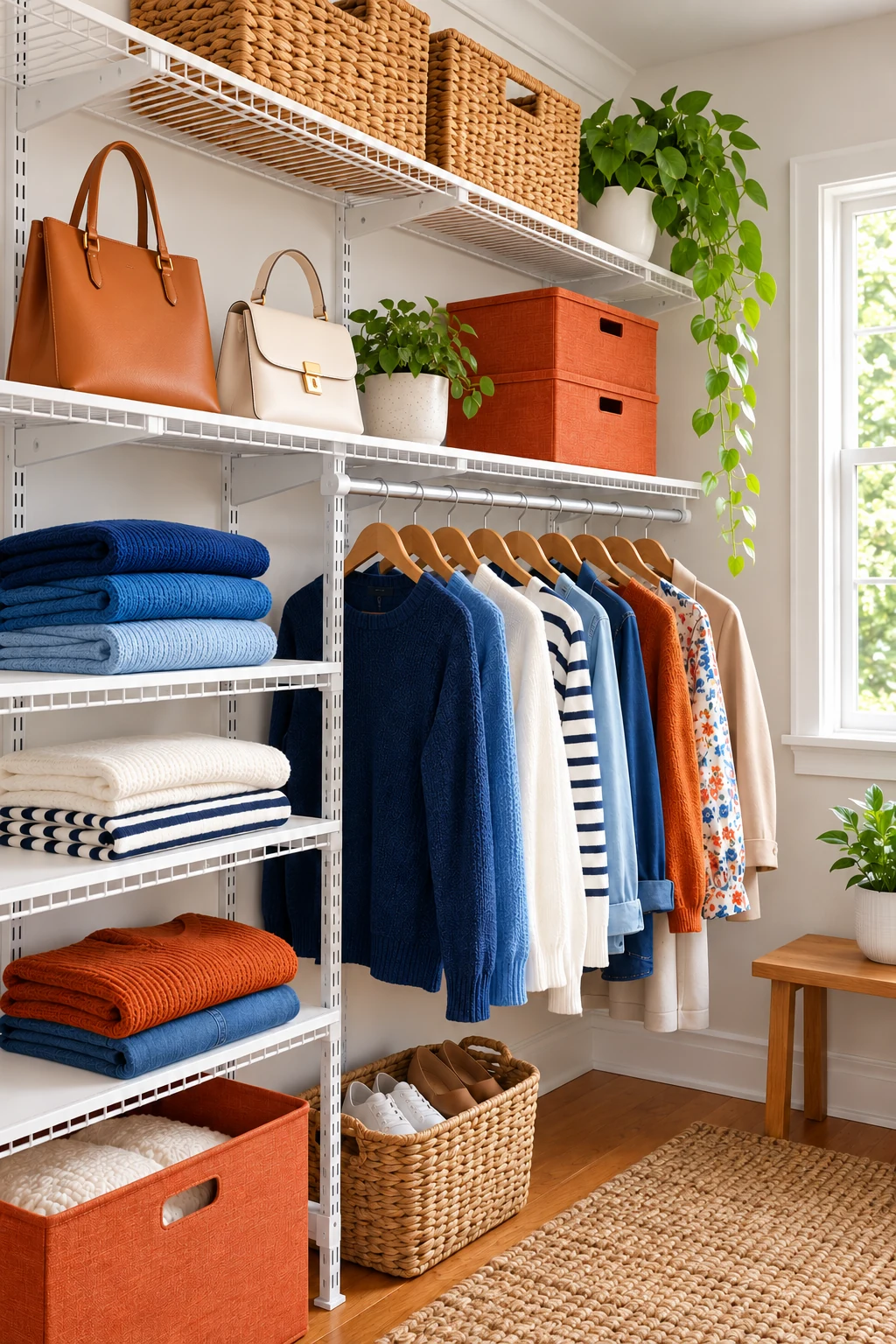
8. Combine shelves and rails in one freestanding unit
A freestanding closet unit can replace several scattered clothing spots by putting short hanging pieces and folded items together. Look at the actual balance of rails and shelves rather than choosing the largest frame that appears to fit.
The Whitmor Double Rod Freestanding Closet, model 6779-3044, combines five wire shelves with two rods and a removable lower rod. Check current assembled dimensions and instructions. Seat its connections fully, use any required securing measures, and remember that clothing may extend beyond the frame footprint. View on Amazon.
9. Choose a covered portable wardrobe for a quieter view
A fabric-covered wardrobe can gather visible clothing into one defined area when a bedroom lacks a built-in closet. Test how the front opens so using the wardrobe does not require moving a chair or standing behind the bed.
The black SONGMICS ULSF03H portable wardrobe is listed at 59 inches wide, 17.7 deep, and 69 high, with a hanging rail and shelves. Follow its assembly, securing, and load instructions. A fabric cover provides concealment; do not treat it as an airtight or waterproof enclosure. View on Amazon.
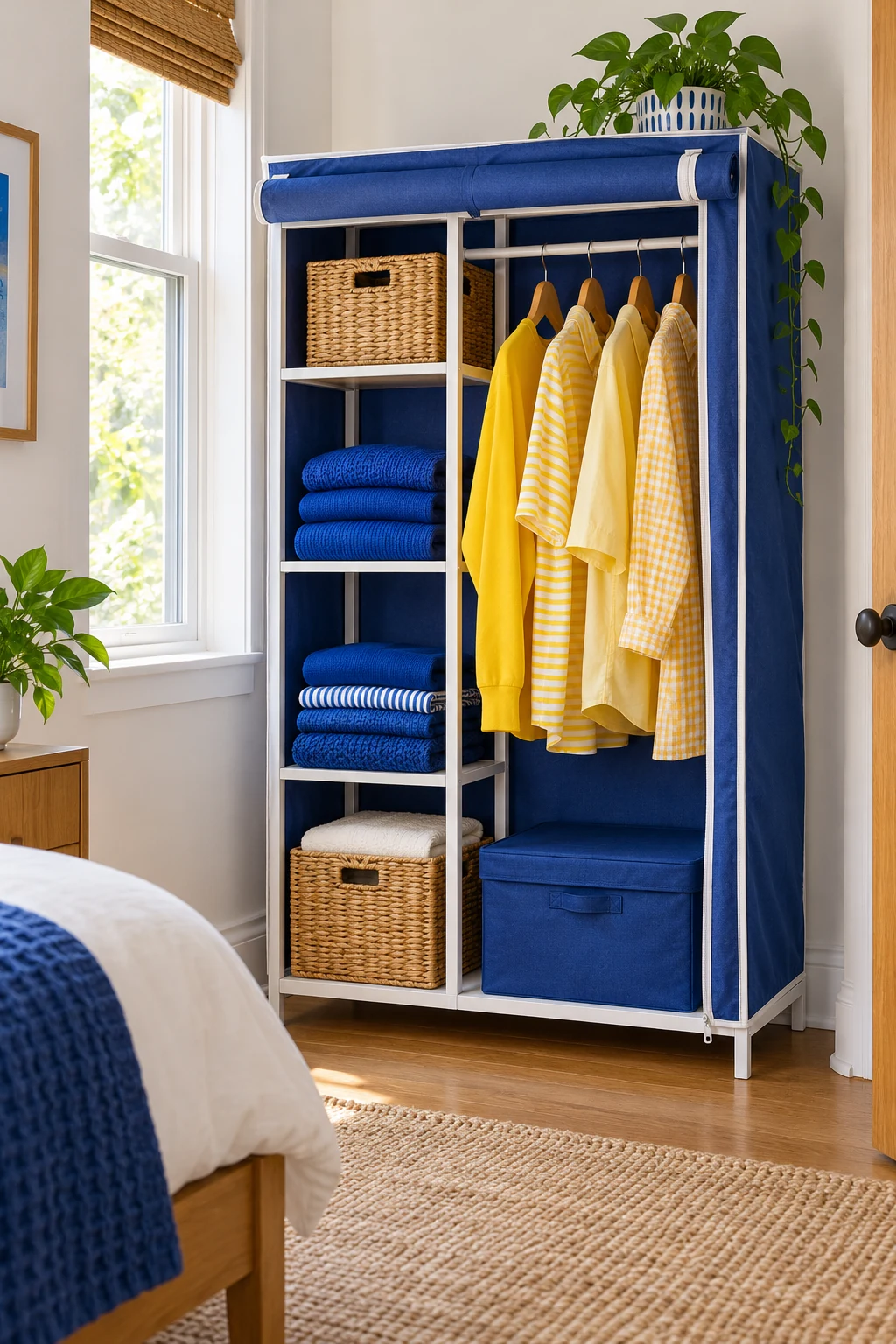
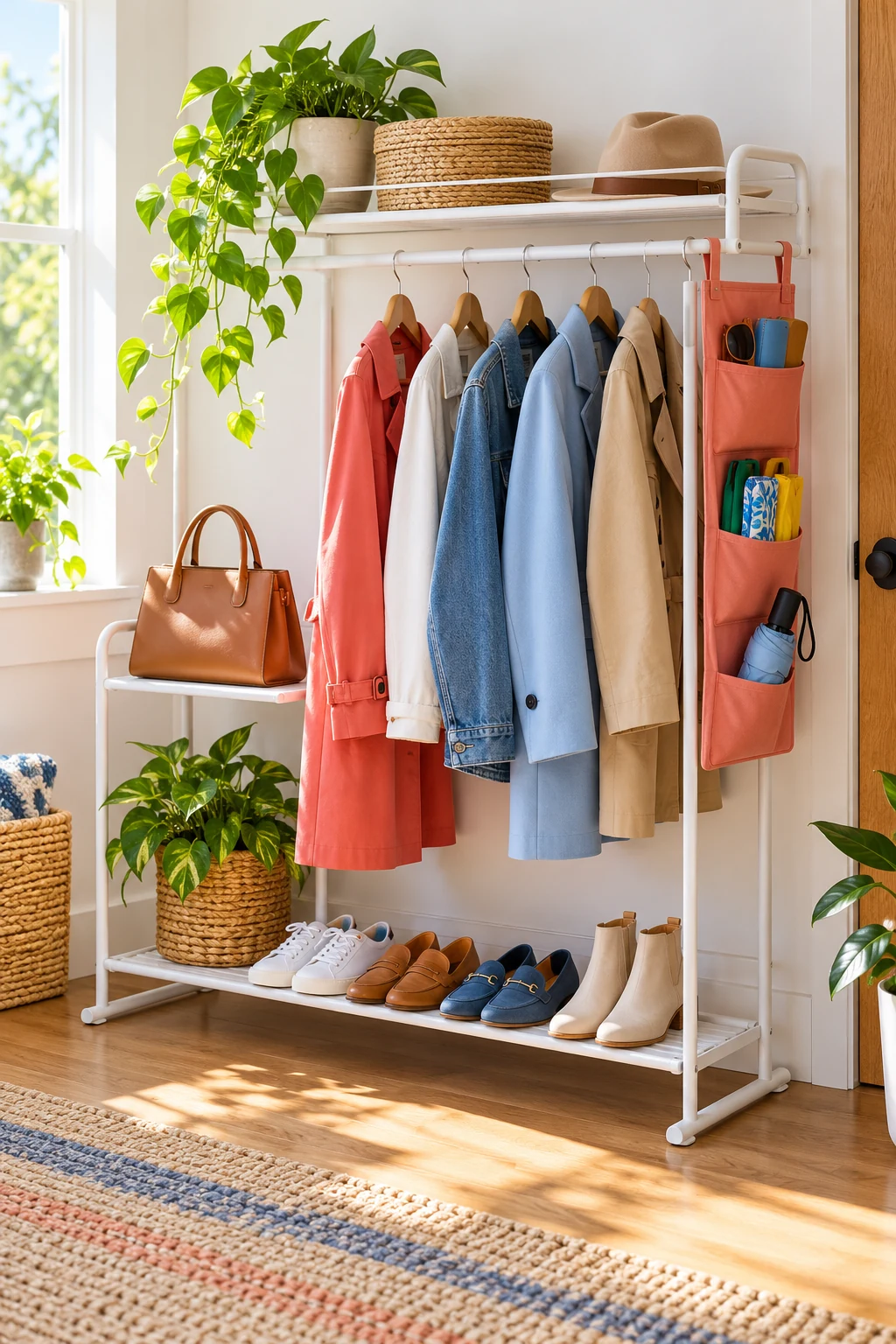
10. Keep a small open rack for the current rotation
Use a modest garment rack for the pieces you are wearing this season instead of trying to hang every item you own. A restrained selection is easier to see and gives open clothing storage a more intentional appearance.
Check the rack's load instructions and leave room to slide hangers without tugging the frame. Place it on a level surface away from doors and heat sources. If it has wheels, use the locks as directed and unload before moving unless the maker specifically permits loaded movement.
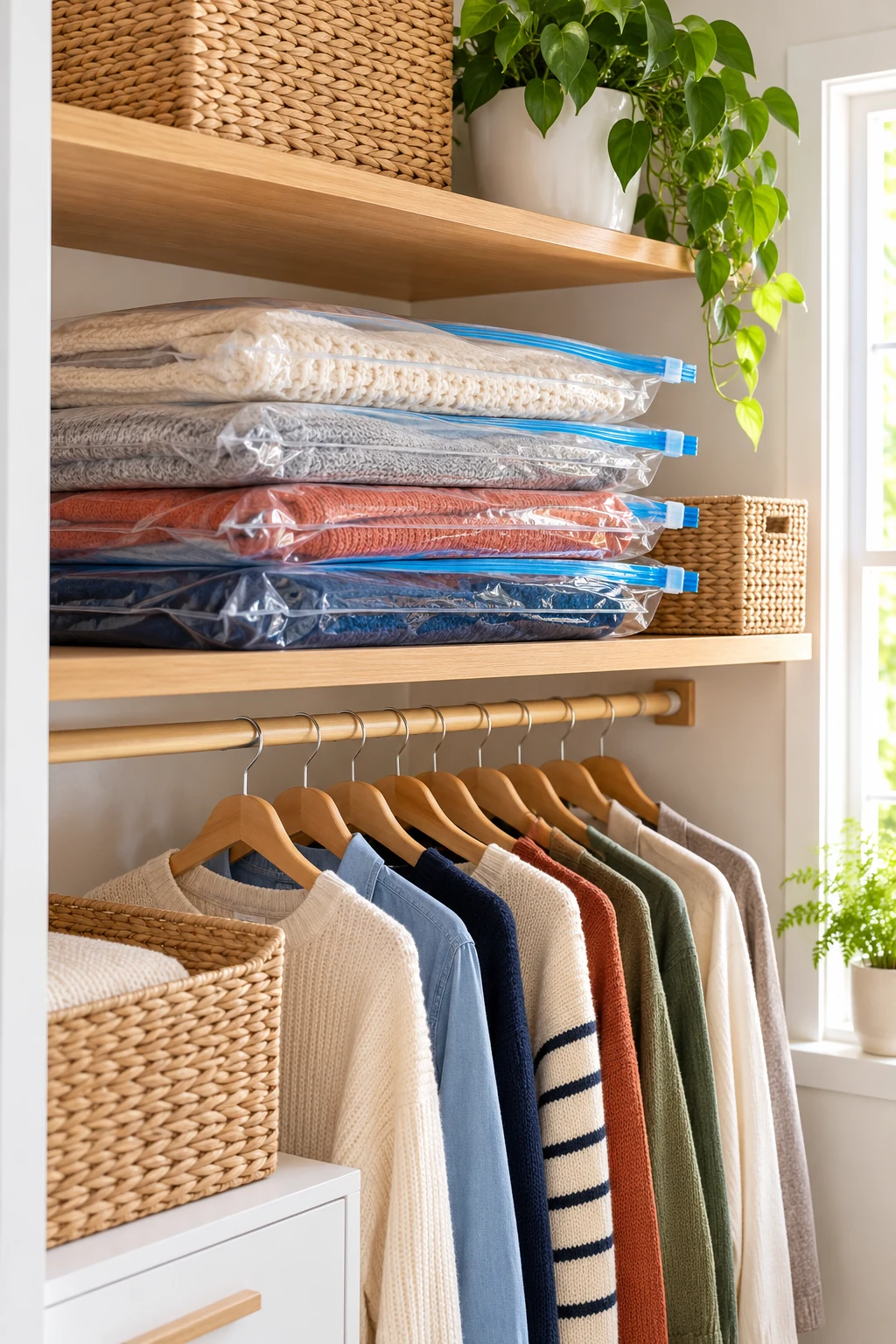
11. Use a consistent hanger shape on an exposed rail
Matching hanger shapes can make an open clothing rail easier to scan without requiring matching clothes. Choose a shape appropriate for the garment and keep hooks facing the same direction so neighboring sleeves and straps are easier to separate.
Amazon Basics Slim Velvet Suit Hangers in the Black/Silver 30-pack are an option for everyday pieces. Keep tailored coats and other garments on the support their care needs require. A slimmer hanger does not justify exceeding the rack's rating or compressing the clothes until they are difficult to remove. View on Amazon.
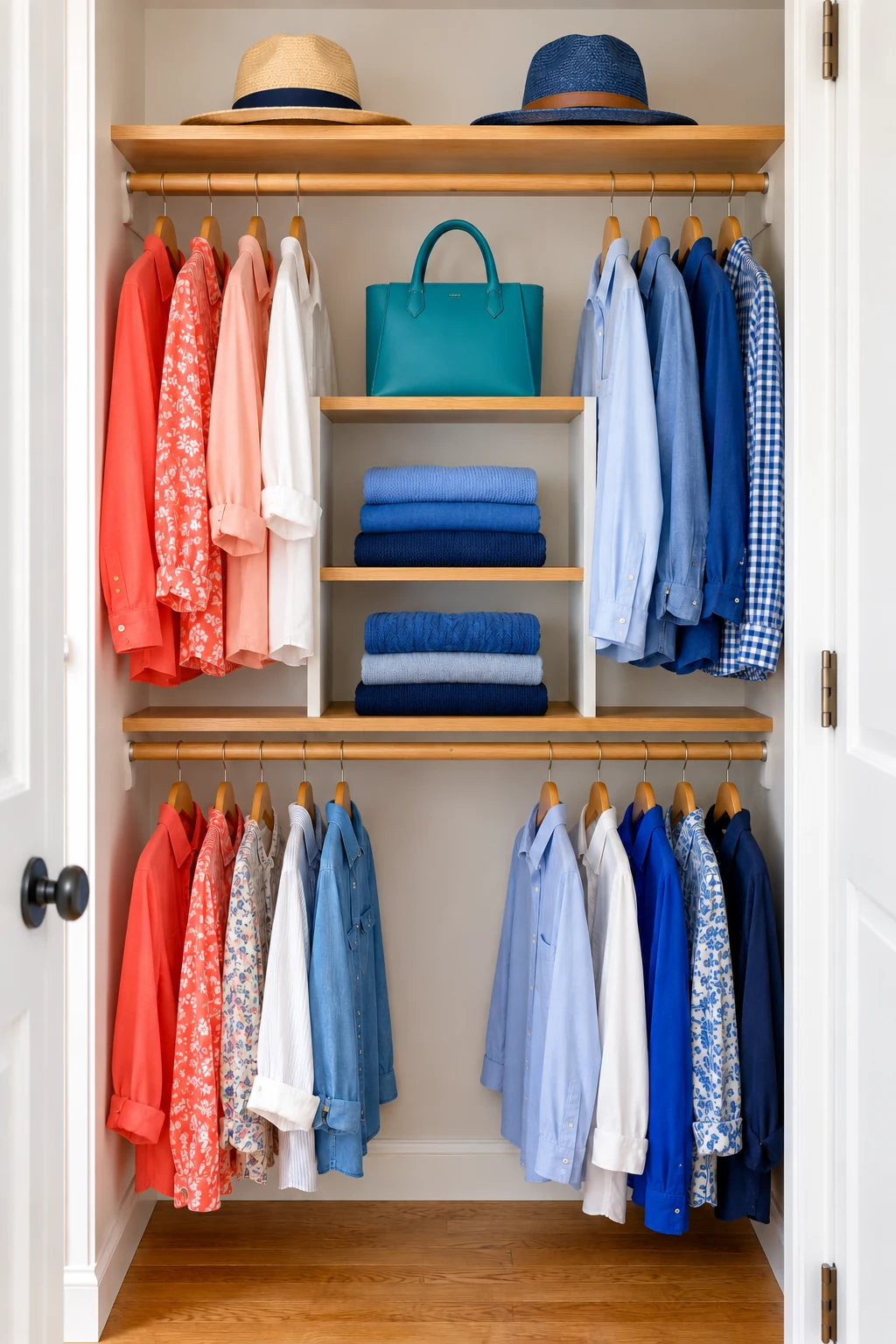
12. Preserve a clear drop for long garments
Measure the longest dress or coat on its usual hanger before choosing a rack height or placing storage underneath. A rail can look tall enough while still leaving hems resting on shoes, bins, or the floor.
Keep a dedicated long-garment portion if most of the rack holds shorter pieces. Do not raise a rack beyond its permitted adjustment range to force a fit. If the room lacks a suitable hanging spot, use a different unit or storage method that follows the garment's care needs.
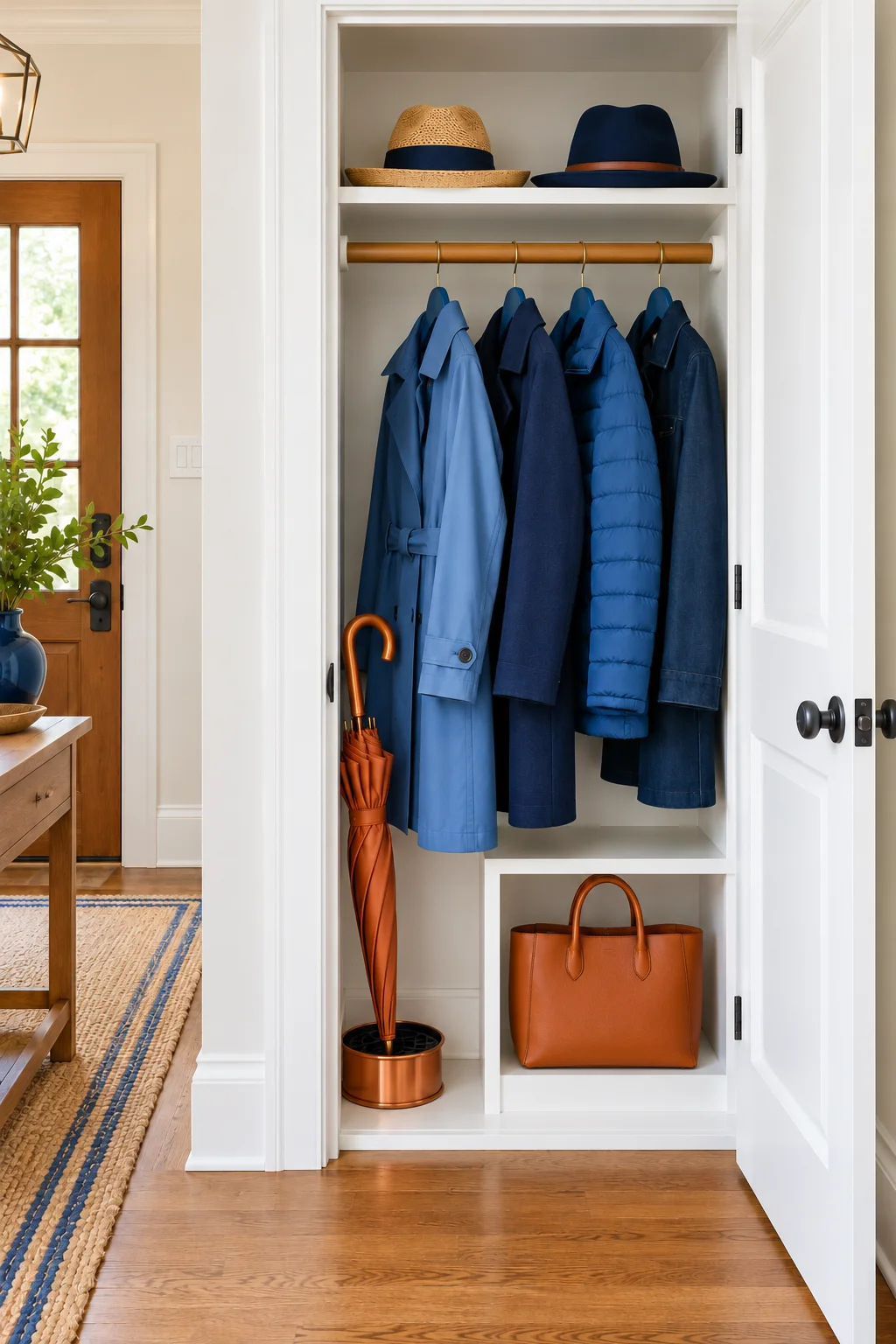
13. Trade spare rail width for light folded storage
If your rack has more hanging width than you need, a fabric organizer can add compartments for a few lightweight folded categories. It works best when those categories otherwise lack a drawer or reachable shelf.
The StorageWorks 6-Shelf Hanging Closet Organizer can provide that layout, but verify both the rack and organizer allow the installation and load. Its compartments take away rail width and may interfere with long clothes. Keep heavy bags and dense clothing piles on a suitable supported surface instead. View on Amazon.
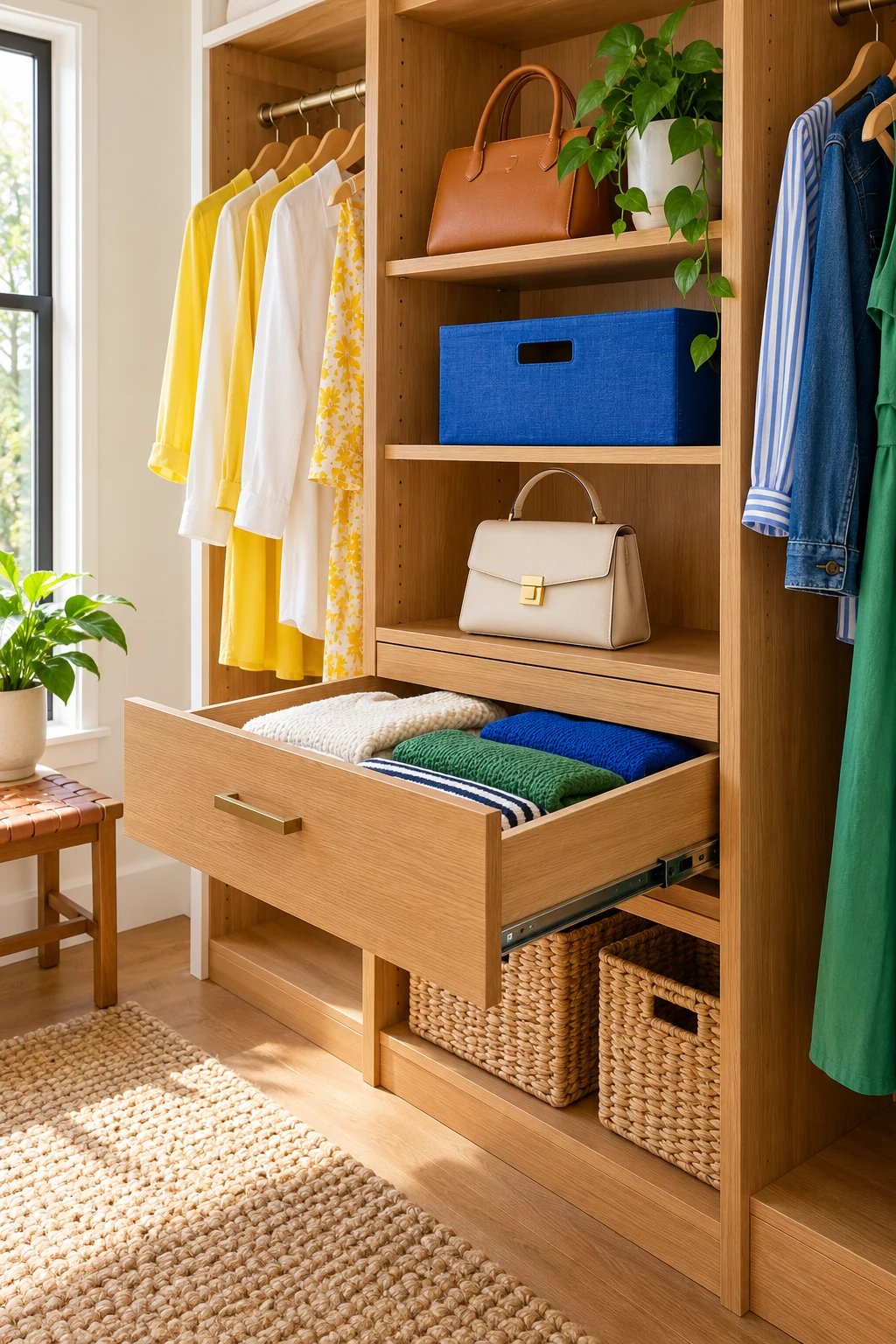
Use hidden storage selectively
14. Put clean seasonal clothing under the bed
Store selected off-season pieces under the bed when there is enough clearance to retrieve them easily. Keep the daily wardrobe elsewhere so you do not have to kneel and pull out a long bag every morning.
Amazon Basics Under Bed Storage Bags in the Gray 2-pack have clear tops and listed dimensions of 42 by 18 by 6 inches. Measure the filled height and route around bed legs and supports. Store only clean, dry clothing and avoid overloading the soft handles. View on Amazon.
15. Use built-in bed drawers with full opening room
If your bed already has drawers, assign them broad clothing categories that fit the shallow space. Check whether bedside furniture or a rug blocks the drawers before treating them as useful wardrobe capacity.
Follow the bed manufacturer's drawer load and assembly instructions, and leave structural supports unchanged. Keep heavy contents manageable and do not overfill above the drawer sides. If a drawer cannot open fully, reserve it for occasional items or adjust the room layout without blocking the walking route.
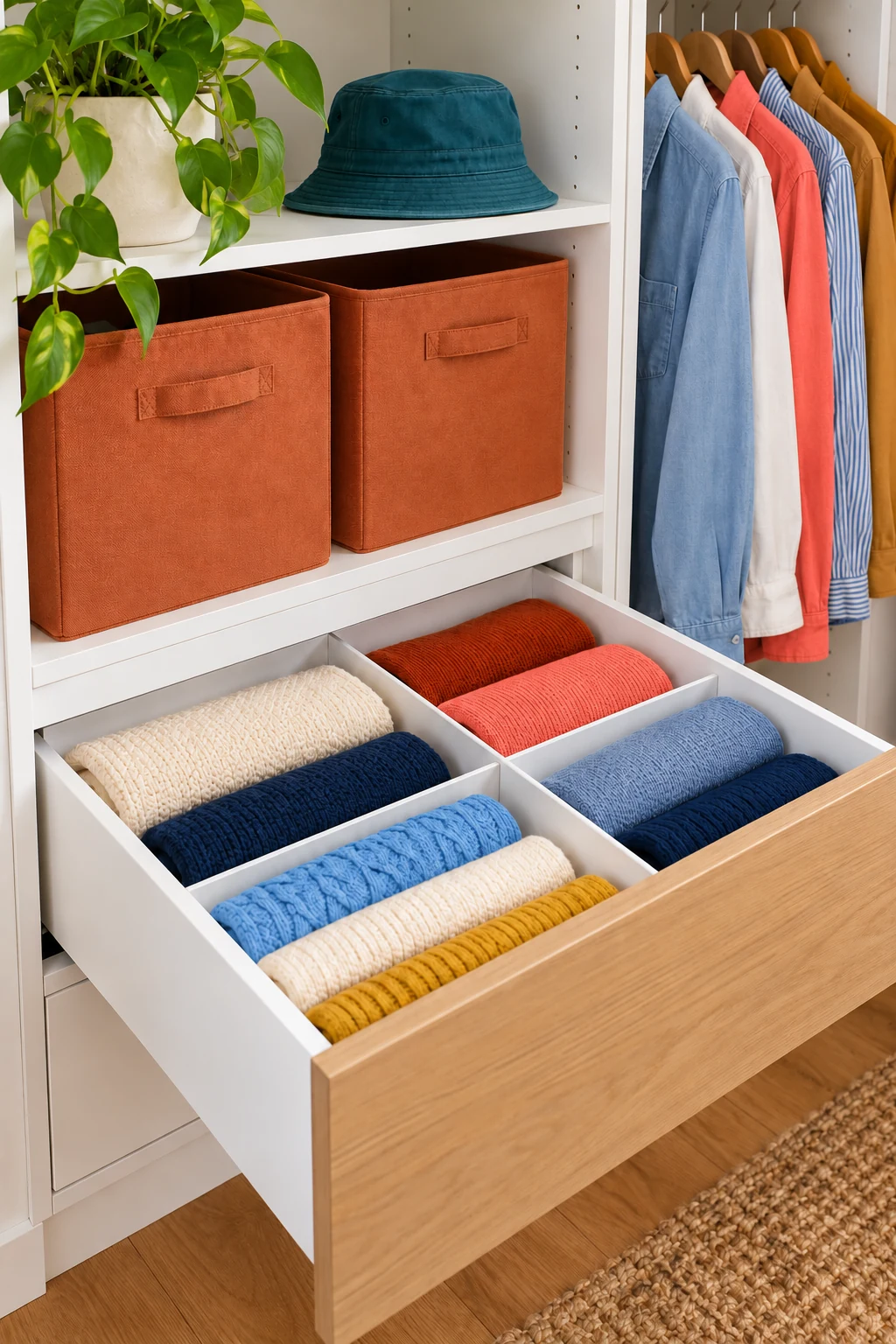
16. Use an empty suitcase for a clearly defined seasonal set
An empty suitcase can hold a small off-season clothing group if the case is clean, fully dry, and suitable for the textiles. Keep a short contents list so packing for travel does not reveal a forgotten mixed stash.
Store garments according to their care instructions and check them periodically. Do not crush structured items or describe ordinary luggage as moisture-proof storage. Choose a case you will not need weekly, and leave enough time to relocate the contents when a trip approaches.
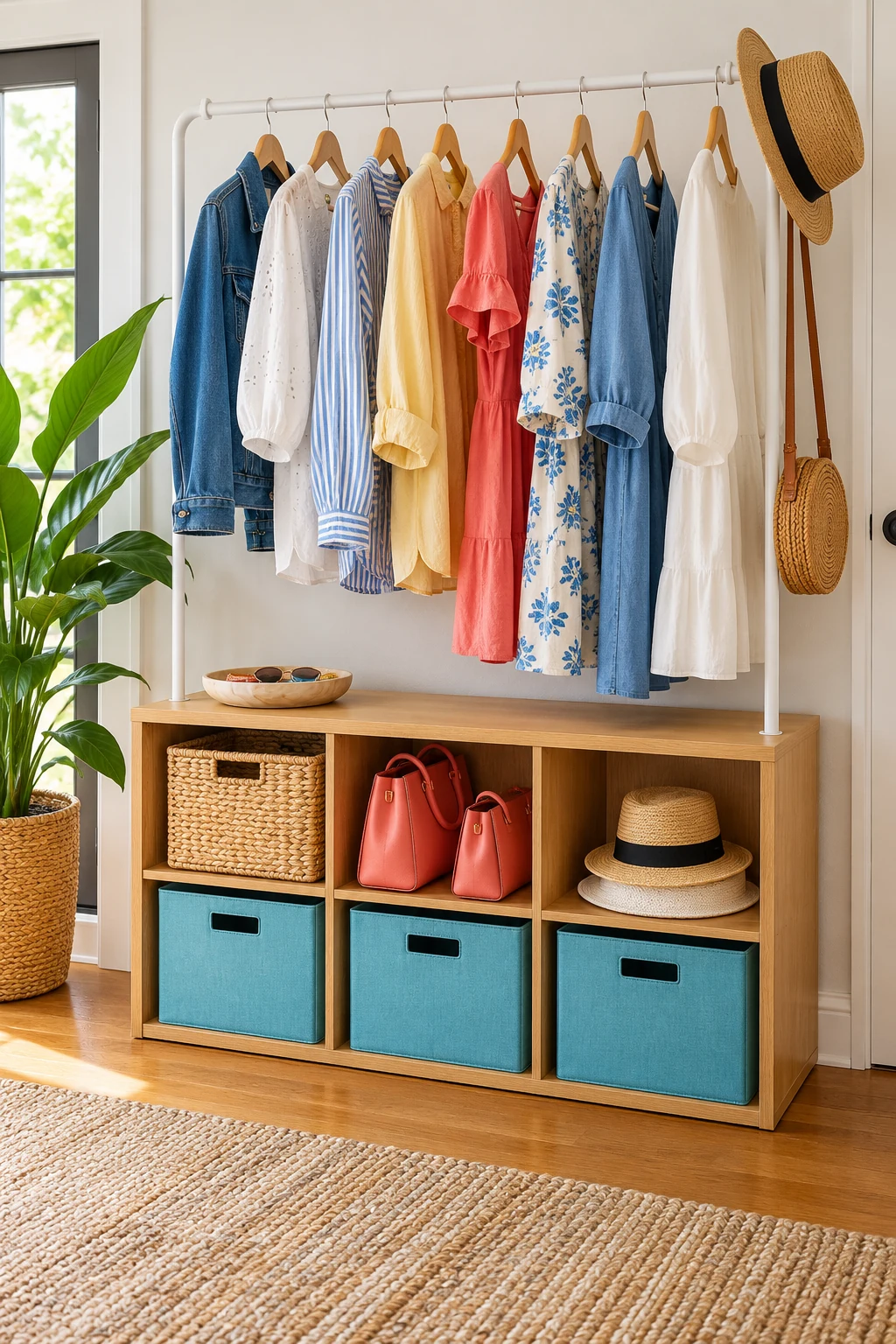
17. Keep light clothing in a suitable storage bench
A storage bench can hold soft occasional clothing when the manufacturer permits that use and the lid is easy to operate. Keep the contents in one or two light groups so you do not have to empty the bench for a scarf.
Use seating only if the unit is designed and rated for it, and follow lid-safety and placement instructions. Keep the bench away from routes that need to stay clear. Avoid filling it so tightly that the lid presses on garments or its hinges cannot close properly.
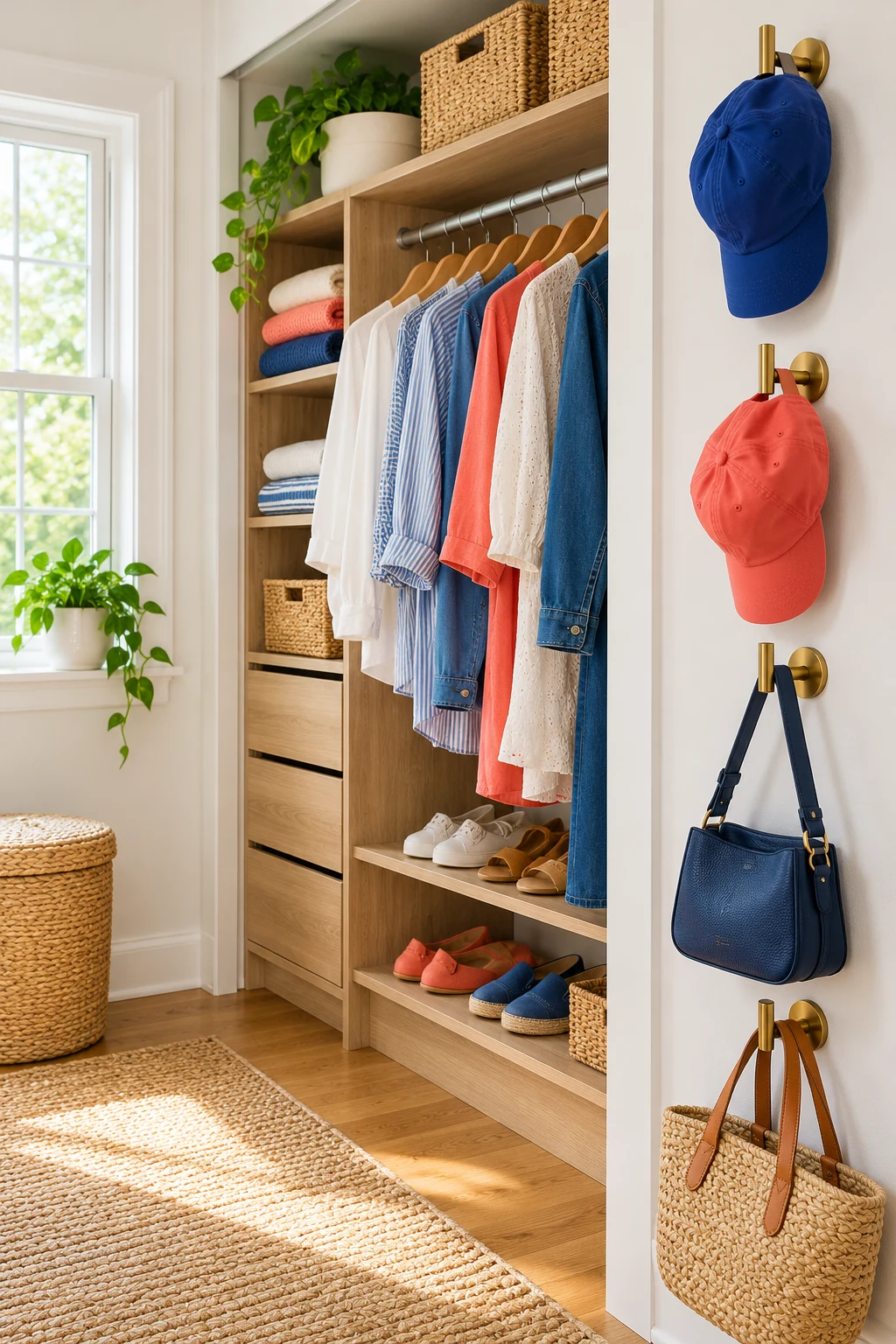
Keep accessories and everyday routines close
18. Give daily shoes a separate low rack
Move everyday shoes to a low rack near the dressing area instead of scattering them under every piece of furniture. A separate shoe zone protects folded clothing from dirty soles and leaves the garment rack easier to clean around.
The Simple Houseware 3-Tier Metal Panel Shoe Rack in Bronze offers freestanding shelves. Measure your footwear and the available floor bay; current listing fields disagree slightly about width. Keep the rack clear of exits and use a different open bay for tall boots that do not fit. View on Amazon.
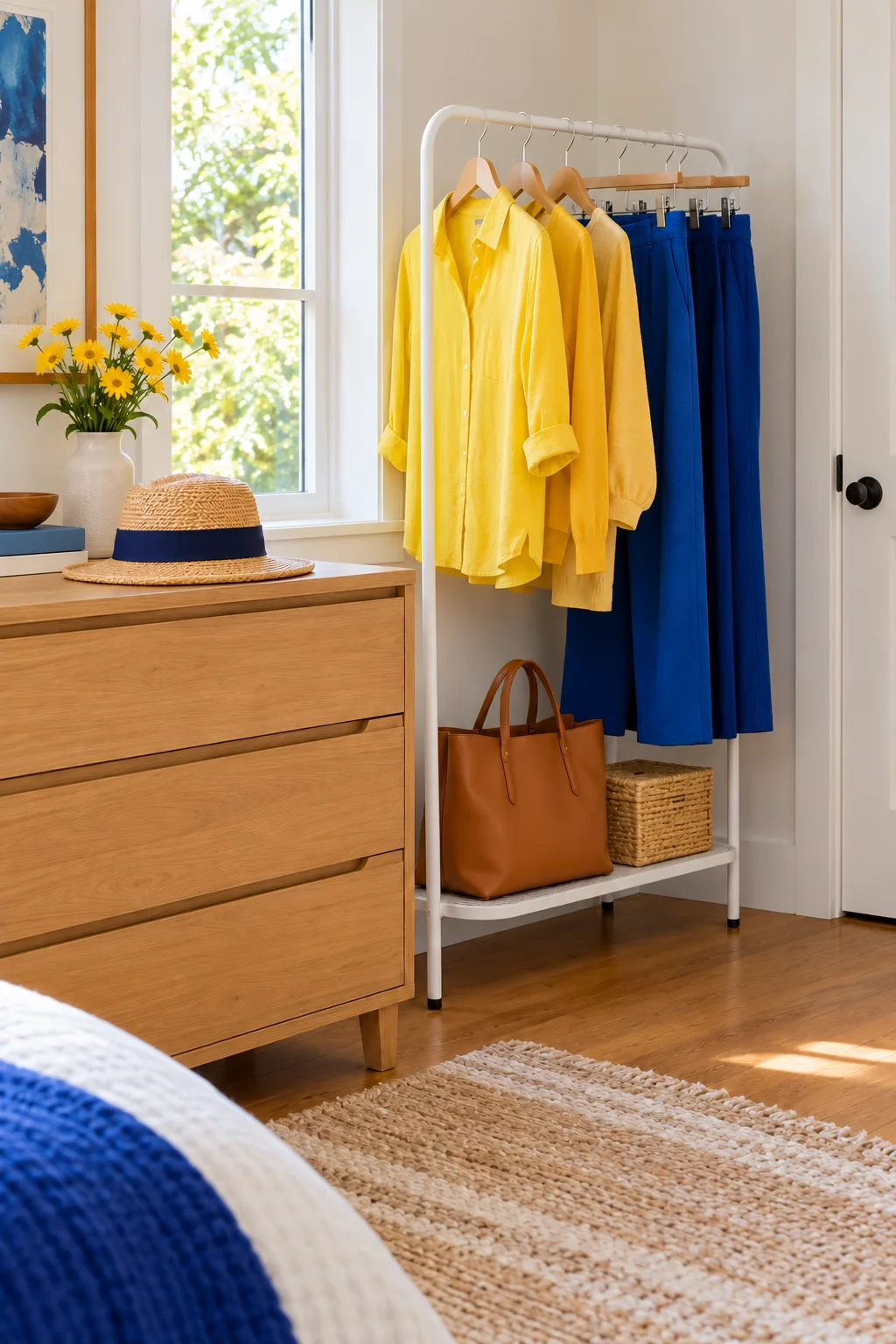
19. Use a suitable bedroom door for pocket storage
Clear over-door pockets can hold small accessories or light shoes when the room has a compatible hinged door. Test the full swing and closing action before assigning the pockets a daily role.
The Simple Houseware 24 Pockets Clear Over the Door Shoe Organizer in Gray lists hooks for doors up to 1-3/8 inches thick. That does not guarantee top-gap clearance or pocket fit. Avoid attaching it to a portable wardrobe frame, sliding door, or bifold door without explicit compatibility. View on Amazon.
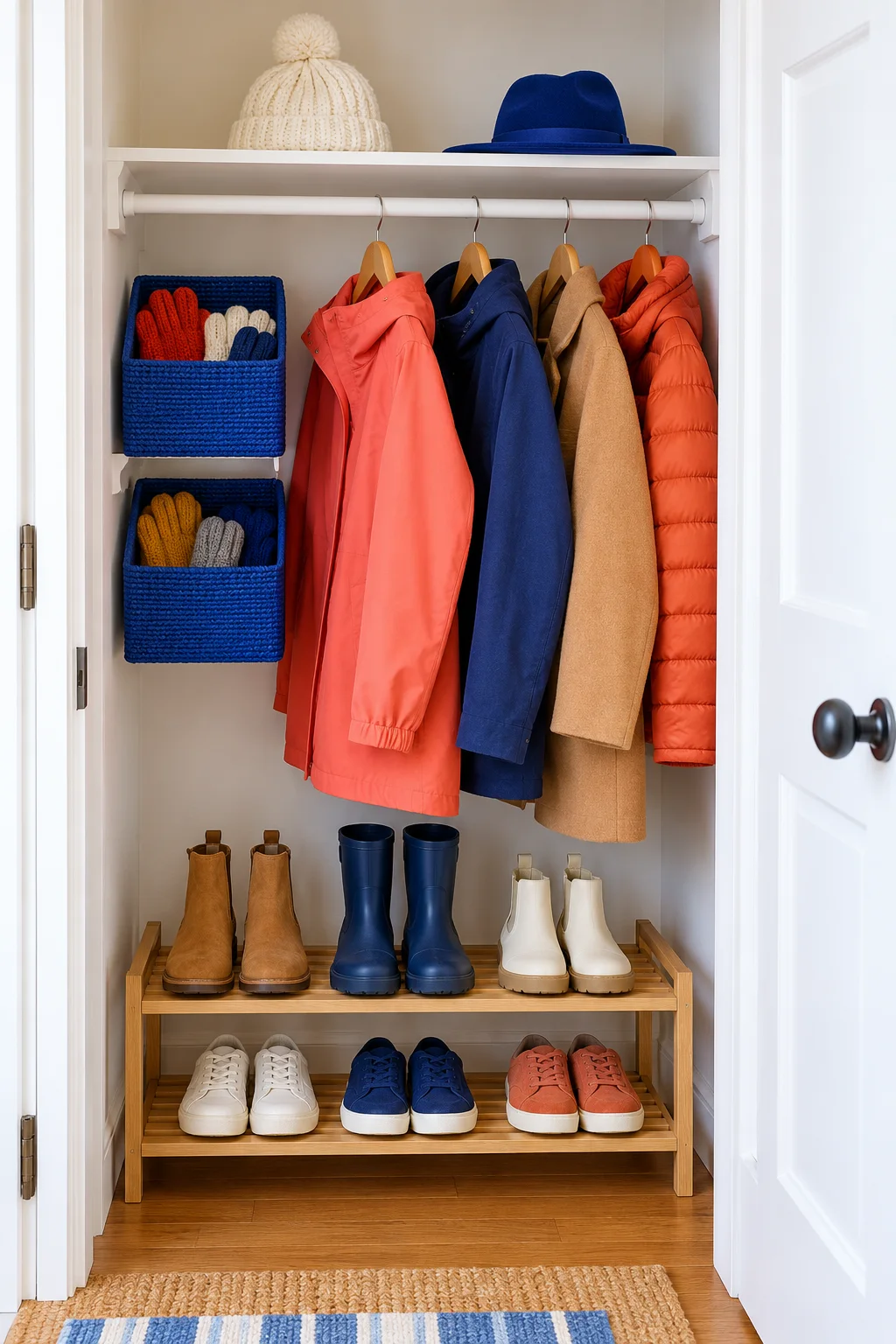
20. Keep handbags on a reachable shelf
Store frequently used handbags in a row on an appropriate shelf near the main dressing area. Standing each bag separately makes it easier to change bags without unpacking a bin or disturbing folded clothing.
Follow bag-care guidance for support and dust covers, and keep heavy bags from hanging by delicate handles for long periods. Use a lower shelf for heavier items. If a shelf is narrow, reduce the number displayed instead of squeezing bags until their sides deform.
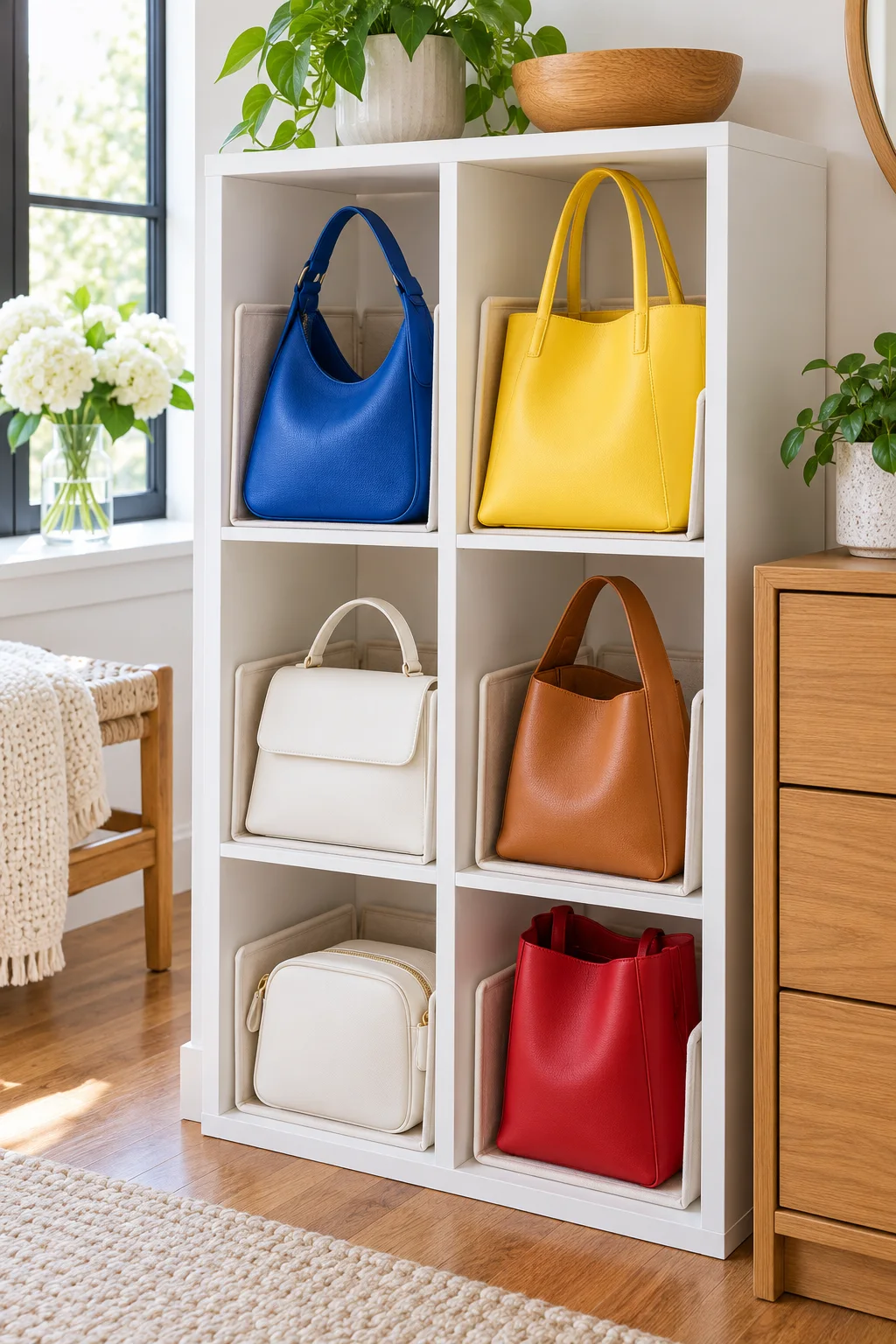
21. Use a few permitted wall hooks for light accessories
A small row of hooks can hold light scarves or a couple of tomorrow's accessories near the clothing zone. Check the hanging depth so the contents do not brush a doorway or narrow the space beside the bed.
Use manufacturer-approved fixings for the wall and load, and check rental restrictions before making holes. Adhesive hooks need compatible surfaces and careful removal; they are not automatically damage-free. Keep the arrangement limited, since layers on each hook quickly hide what is underneath.
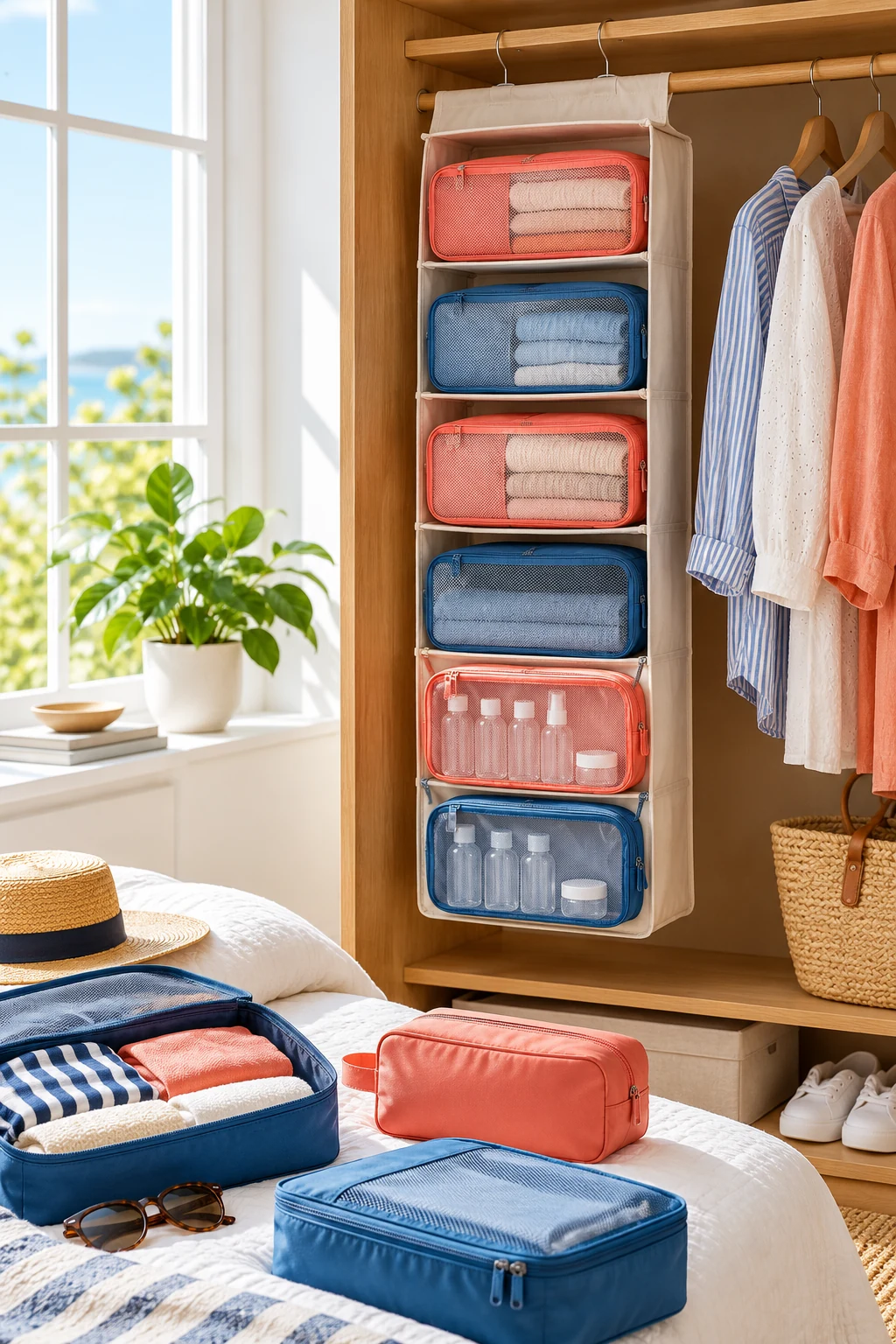
22. Keep the hamper out of scarce clean-clothes storage
Place laundry in a convenient measured spot that does not consume the only useful shelf or lower hanging bay. In a closet-short room, a hamper nearby may work better than forcing every clothing function into the same unit.
Check the route for carrying it out when full, including the bedroom door and space beside the bed. Deal with damp items appropriately before they sit with other laundry. A hamper should help clothing leave the room for washing rather than become another permanent storage bin.
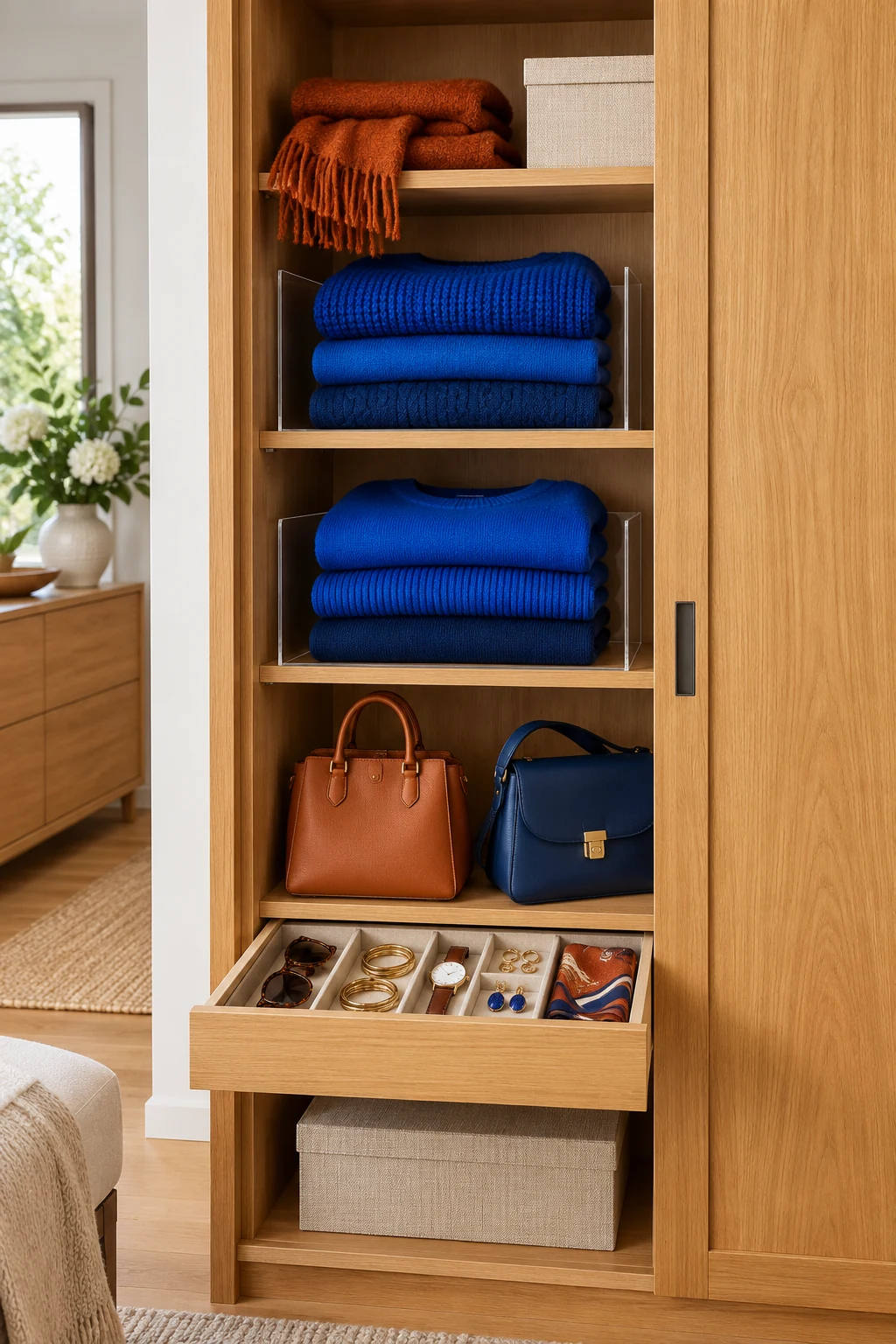
23. Create a small place for clothes you will rewear
Reserve a couple of hangers or appropriate hooks for garments worn briefly and still suitable for another wear. Giving them a defined place can keep the bed or chair from becoming the room's unofficial extra closet.
Inspect garments before reuse and move anything needing washing to laundry. Keep the zone separate from freshly washed clothes and small enough to review easily. When it fills, make decisions about its contents rather than expanding it onto another surface.
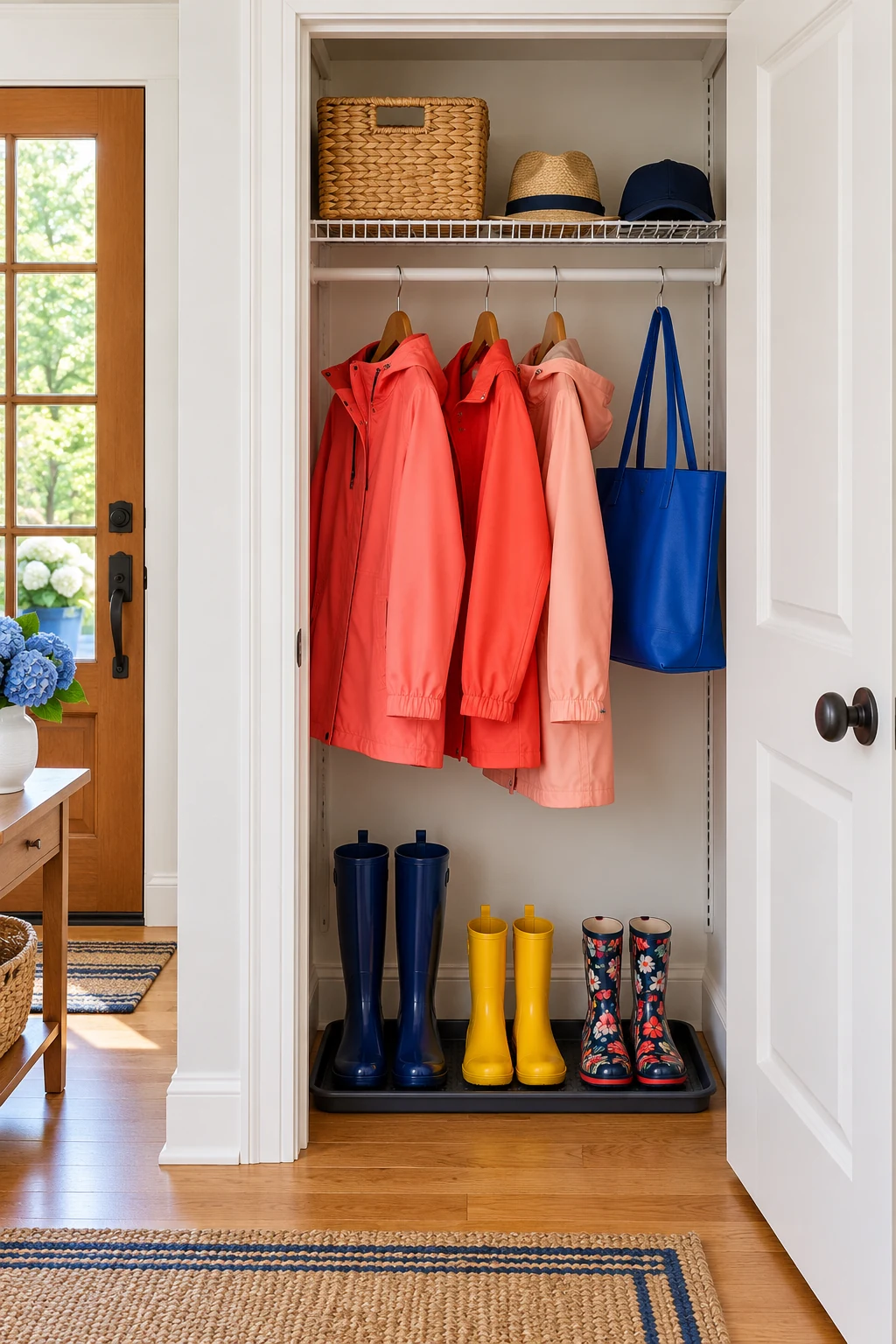
24. Rotate storage with your actual season
At a seasonal change, move the clothing you will use into the easiest drawers and rail positions. Put the outgoing group into its clearly labeled secondary storage only after cleaning and drying it appropriately.
Check that sizes, condition, and activities still match your life before storing another season's worth. A wardrobe spread across several furniture pieces needs clear destinations more than it needs extra containers. Use the rotation to reduce duplicates and recover working room in everyday storage.
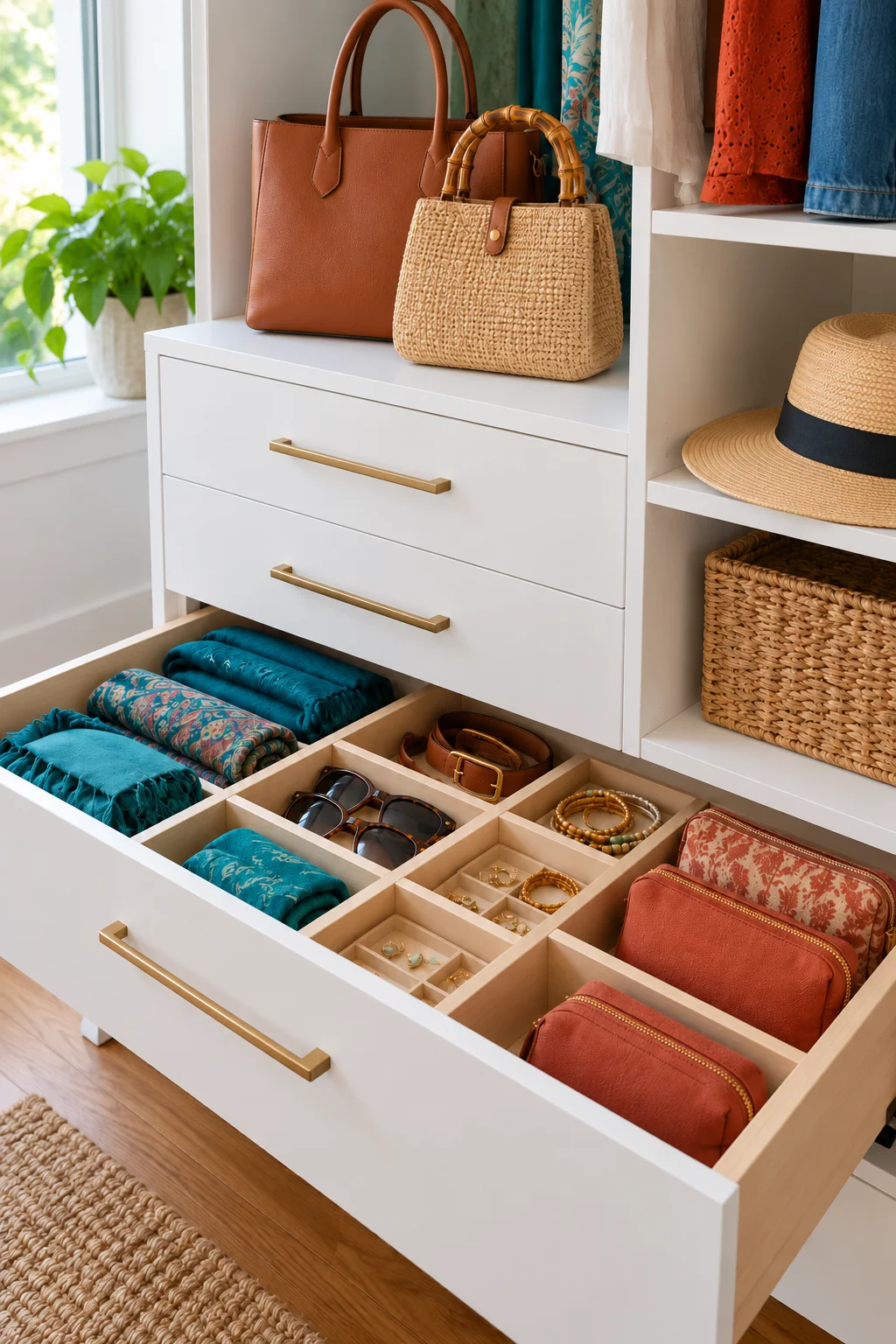
25. Return clean laundry to a fixed address
Give each category a stable home across the dresser, rack, and seasonal storage. Returning laundry is easier when you know where the last pair of socks belongs without surveying the whole room for an empty spot.
Notice the area that keeps overflowing and adjust that category's space or contents. Keep the reset brief: return strays, gather empty hangers, and clear the floor. Storage outside a closet works best when the bedroom still feels comfortable to live and move in.
Choose one main dressing area, then solve the most obvious missing function. A practical mix of hanging, folded, and occasional storage can support your wardrobe while keeping the rest of the room usable. Subscribe to the Havelyo email list for more practical small-space decorating and organization ideas.