
Closet Organization
21 Ways to Use a Hanging Closet Organizer Beyond Storing Clothes
A hanging closet organizer can do more than hold folded shirts. Its open compartments can separate the lightweight household things that disappear in a deep basket, from spare pillowcases and yarn to packing pouches and gift bags.
Start by checking the organizer's instructions, compartment size, attachment method, and the capacity of its supporting rod. Keep all of the uses below light and dry, spread the contents rather than loading one compartment, and leave the floor accessible. These are alternative ideas for a suitable organizer, not a suggestion to fit every category into one unit.
This article contains affiliate links. If you buy through them, Havelyo may earn a commission. As an Amazon Associate I earn from qualifying purchases.
Give household textiles their own cubbies
1. Separate spare pillowcases by bed
Fold spare pillowcases into small sets and place each set in its own compartment. Keeping related cases together makes changing a bed simpler, especially when several rooms use similar white linens that are difficult to distinguish in a mixed stack.
Use a removable category label on the compartment edge if the sets look alike. The StorageWorks 6-Shelf Hanging Closet Organizer provides open fabric compartments for light textiles. Check the selected size and support instructions; published dimensions differ, and the closet rod must carry the added load. View on Amazon.
2. Make a small guest-towel station
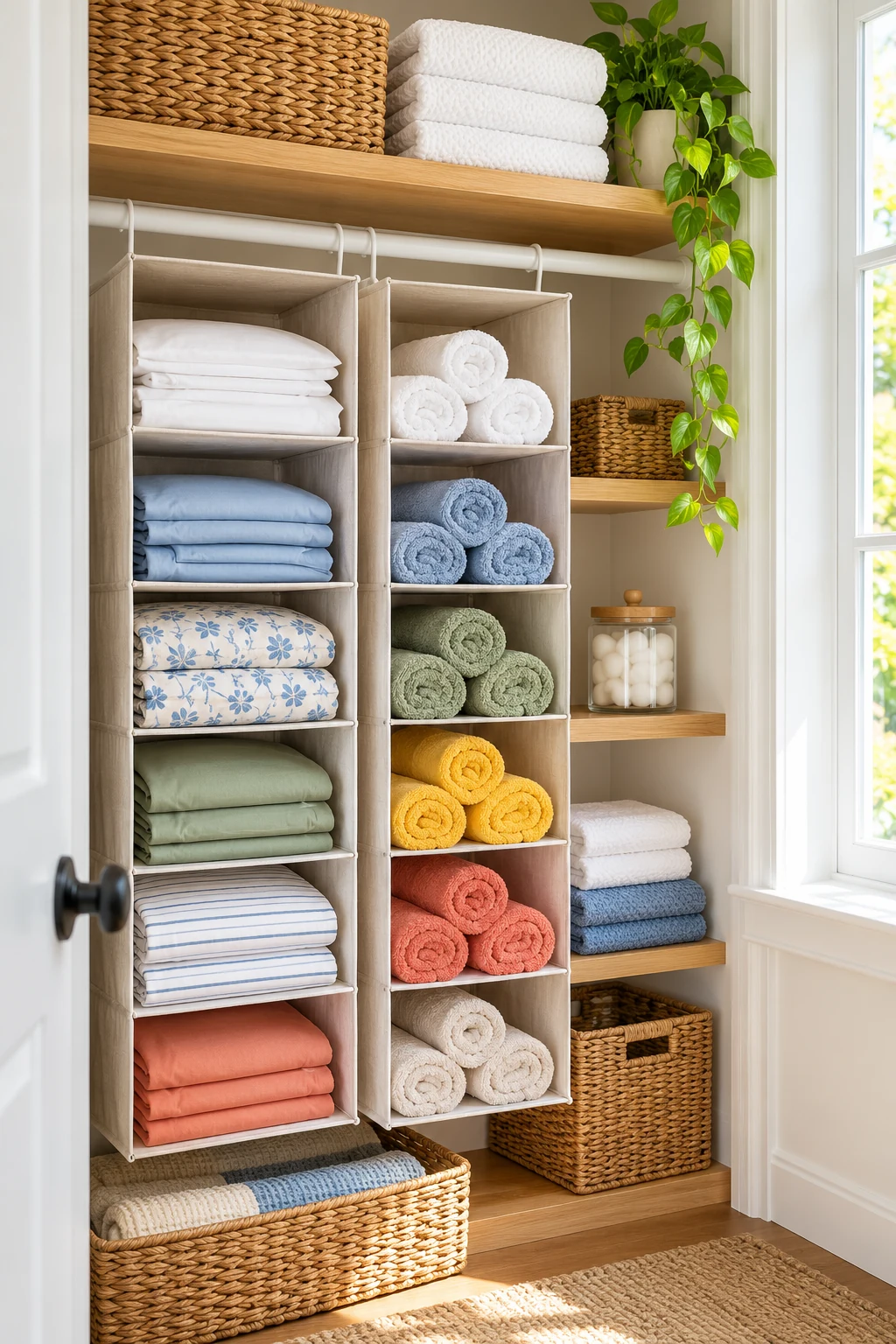
Set aside a compartment for a modest set of clean, fully dry hand towels and washcloths. Fold them to the shelf depth so a guest can take one without pulling the whole bundle onto the floor.
Keep bulky bath towels in storage designed for their weight instead of filling fabric cubbies tightly. A Honey-Can-Do 8-Shelf Hanging Closet Organizer in White offers more separate sections when several light categories need homes. Its listed height is 54 inches, so check the hanging drop and floor clearance. View on Amazon.
3. Group cloth napkins by occasion
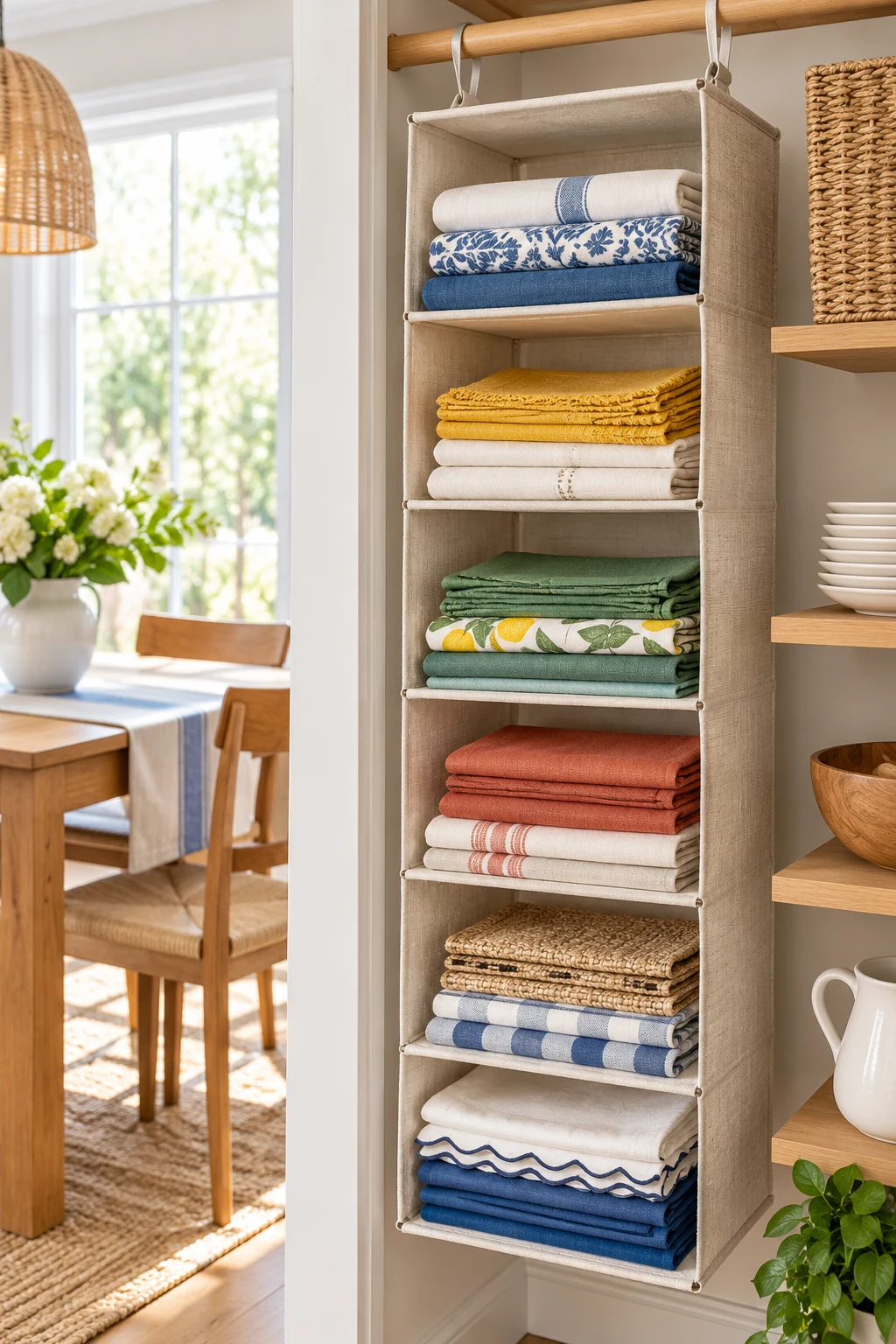
Fold a small set of everyday cloth napkins into one cubby and an occasional set into another. The separation helps you see what is ready for the table without searching through a stack of unrelated household linen.
Keep napkins completely dry and follow their care labels before storage. If a full set makes the compartment sag, split it or use a regular shelf instead. Use an open cubby for frequently reached items and a light fabric pouch when loose pieces keep slipping out.
4. Store lightweight table runners flat or loosely folded
A fabric cubby can hold a few lightweight table runners folded to fit without forcing sharp creases beyond their care guidance. Keep each runner visible at the front so you can choose a color or pattern easily.
Do not treat the compartment as storage for placemat stacks, serving trays, or other dense tableware. YOUDENOVA's Gray 6-Shelf Hanging Closet Organizer is another fabric-cubby option with side pockets. Verify its exact dimensions and load instructions before selecting it; measurements differ across listing fields. View on Amazon.
5. Keep spare fabric covers together
Place clean cushion covers, removable decorative pillow covers, or similar flat textiles in a dedicated compartment. Fold matching covers together so you do not need to open a large seasonal box for one small change.
Use only covers that fit comfortably; store bulky inserts elsewhere. Protect delicate trims from catching on the organizer and follow textile care instructions. If several sizes look alike, add a small removable label naming the room or cushion rather than trying to recognize the fold.
Prepare lightweight travel and bag storage
6. Nest empty packing cubes by set
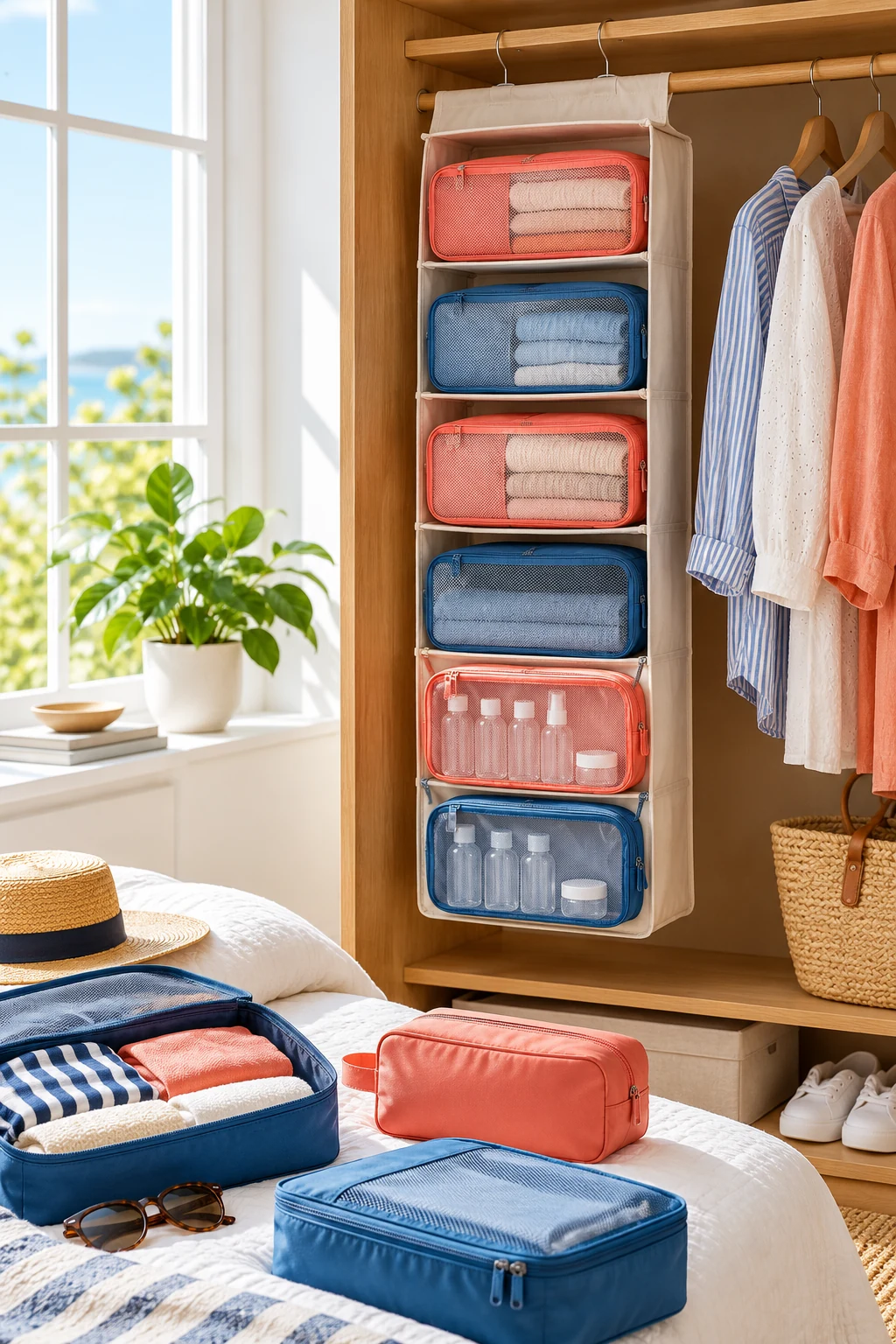
Keep clean, empty packing cubes nested inside the largest cube from the same set, then slide the bundle into a cubby. You can grab a complete set for a trip without hunting for small pieces in luggage pockets.
Leave the bundle uncompressed enough to remove easily, and confirm it does not extend into the walkway. This is a home for empty organizers, not a place to suspend packed luggage. Return the set only when the cubes are dry after cleaning.
7. Give small travel pouches separate homes
Use narrow compartments for empty toiletry bags, sleep-mask pouches, and other lightweight travel accessories. A visible group makes it easier to check what you already own before buying another organizer for the next trip.
The Honey-Can-Do 10-Shelf Hanging Shoe Organizer in Black offers separate open compartments for small bundles. Measure the pouch against the actual compartment before choosing it. Keep bottles, glass containers, and heavy packed toiletry kits on a suitable shelf instead of in fabric hanging storage. View on Amazon.
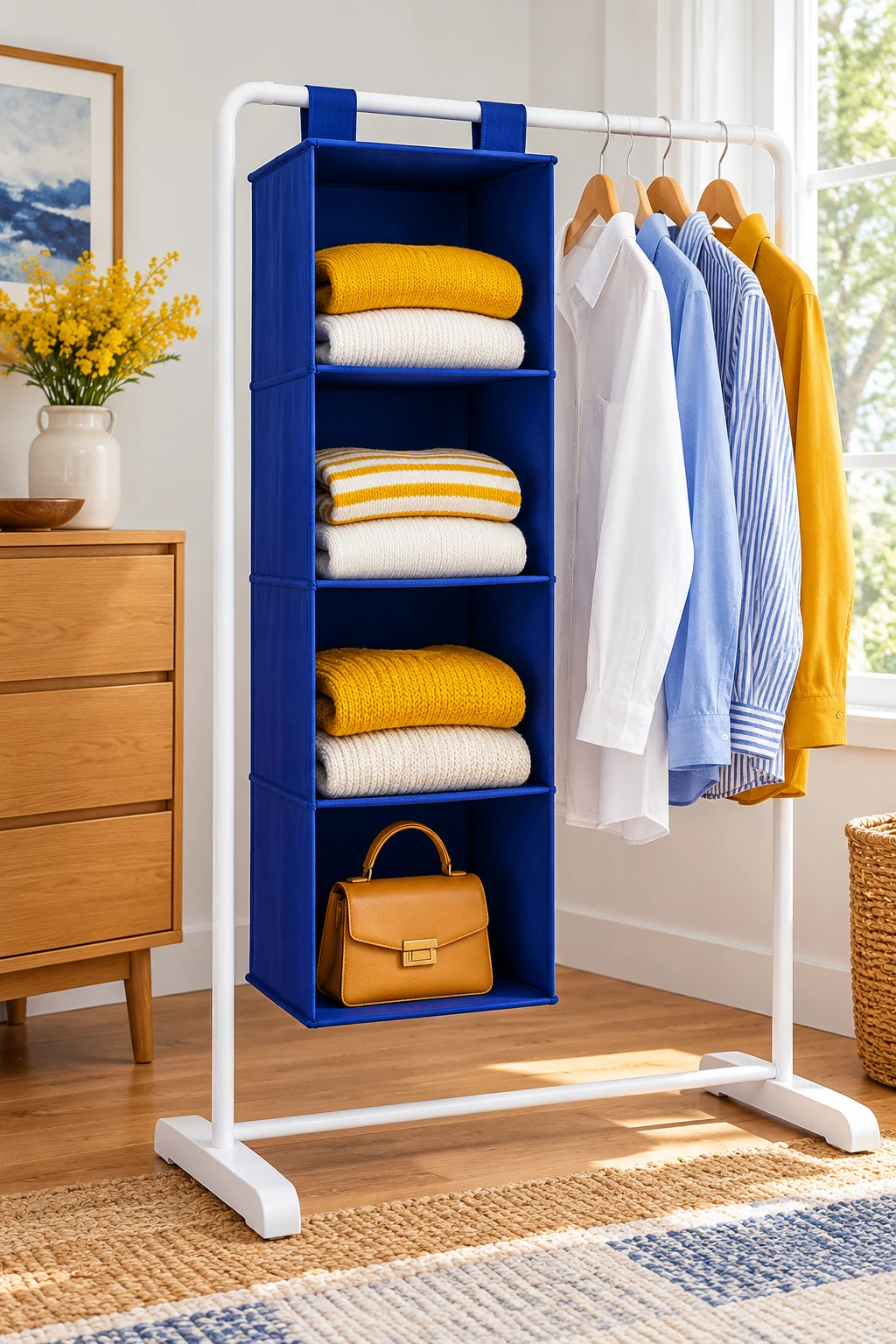
8. Fold reusable totes into one grab-and-go group
Fold a few clean reusable shopping totes and stand them together in a cubby near the closet opening. A single location prevents tote bags from spreading into drawers and makes it easier to take one before leaving home.
Keep the group small enough to remove without tugging the organizer. Heavy insulated bags may suit a regular shelf better, while damp shopping bags should dry elsewhere first. If totes keep accumulating, use the compartment size as a visible limit for the everyday collection.
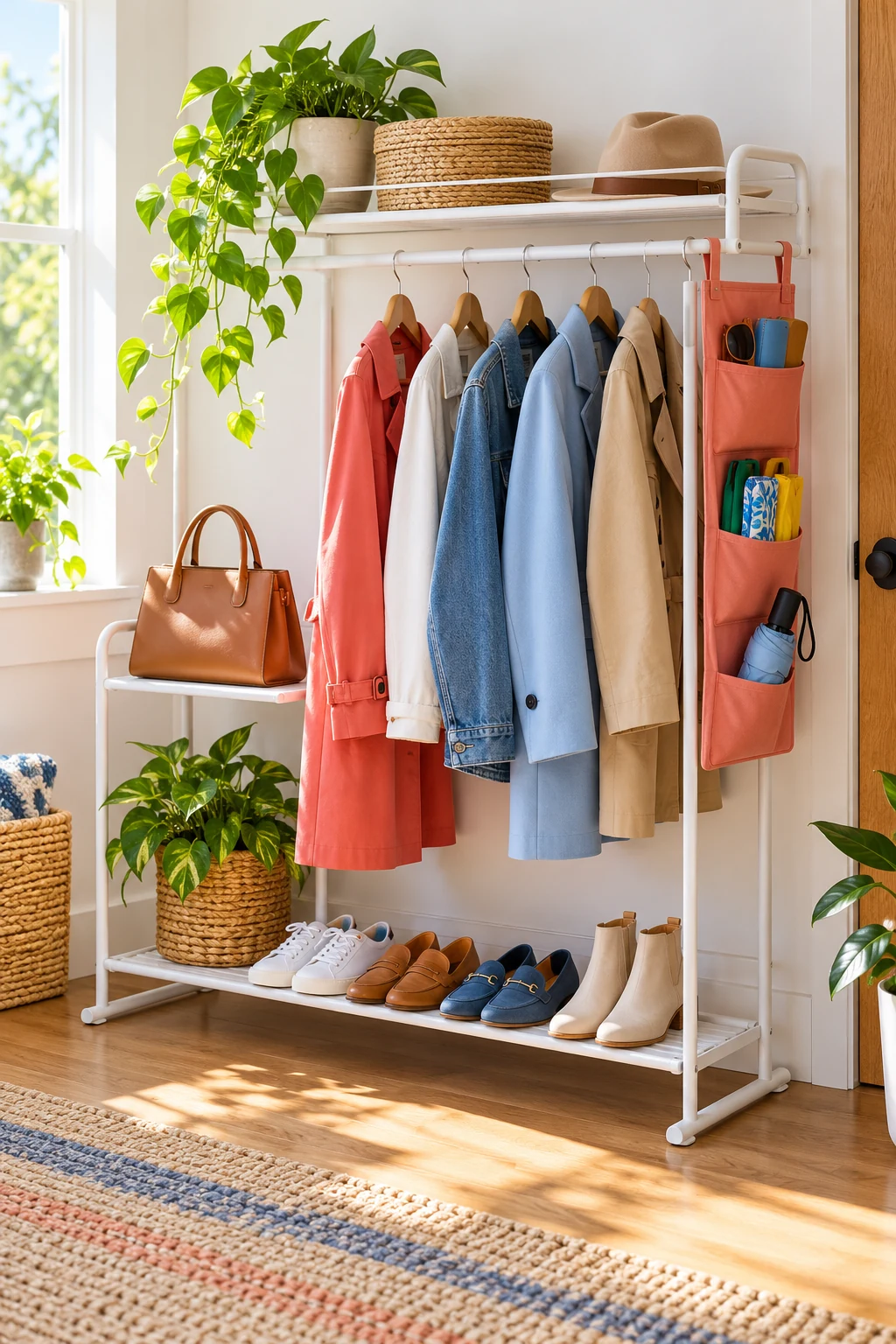
9. Keep small evening bags supported
Place lightweight empty evening bags in individual compartments when their care instructions allow shelf storage. The separate spaces can stop chain straps from tangling and keep embellishments from rubbing against a larger bag.
Use a soft dust pouch if the bag's maker recommends one, and support its shape without overstuffing. Do not hang heavy bags from the organizer's sides or hooks. Large structured bags need a wider, more stable surface that supports their whole base.
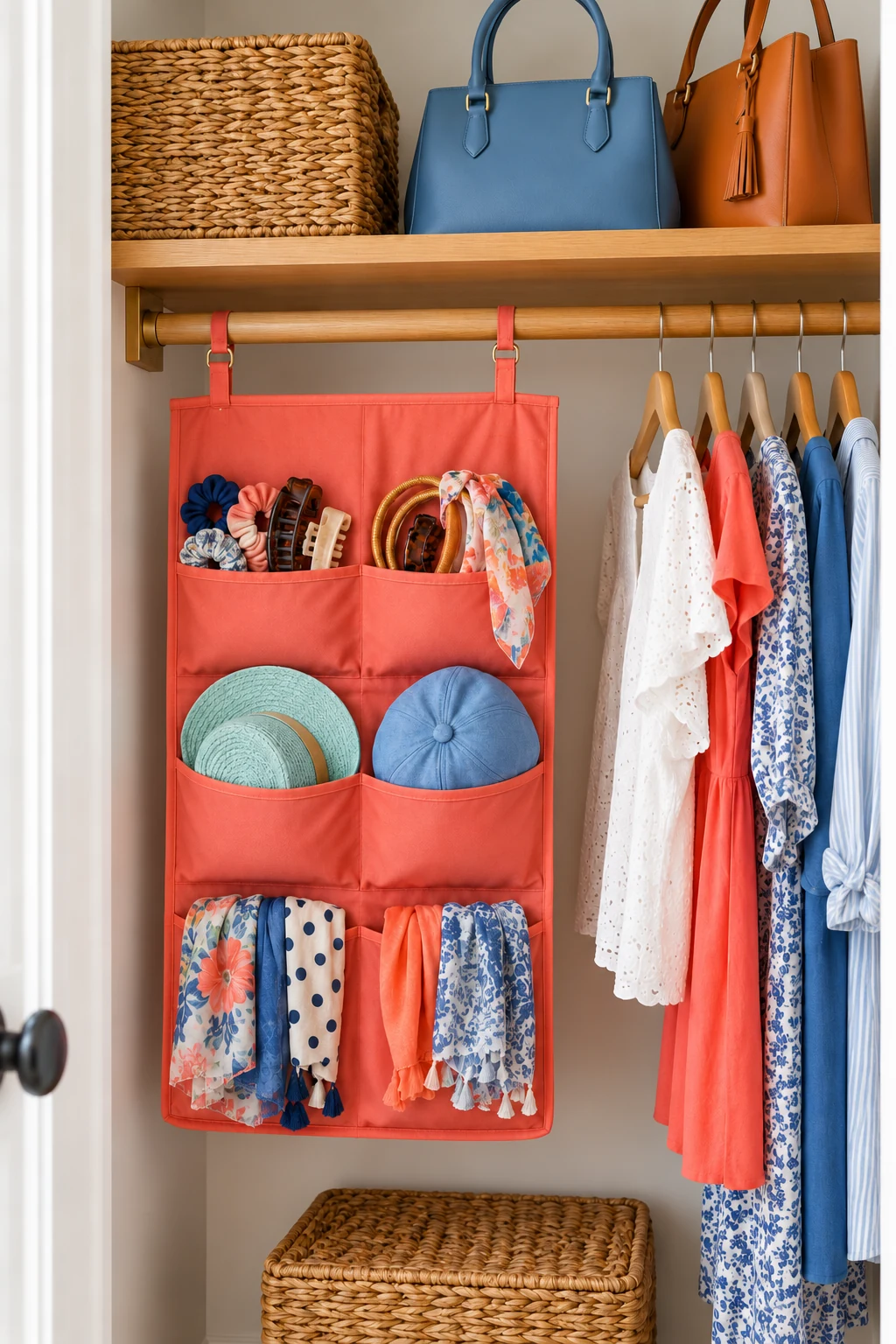
Organize soft craft supplies
10. Sort a small yarn project by color
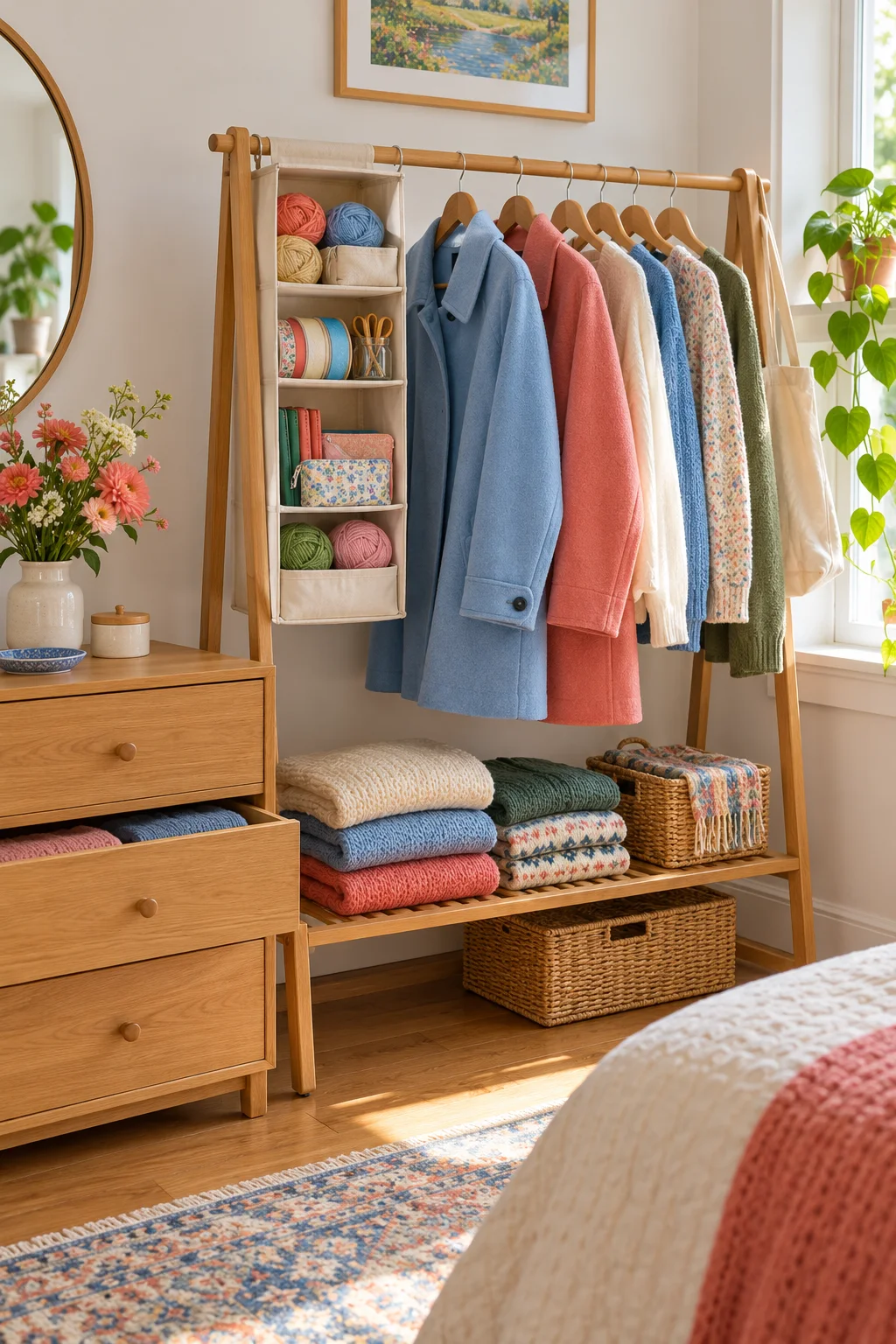
Put the yarn for one active project into a compartment, with a light project bag keeping loose ends contained. Being able to see the colors together makes it easier to continue the project without opening a deep storage tub.
Keep scissors, pointed needles, and other sharp tools in a separate closed container suited to them. Do not fill the organizer with dense bulk yarn reserves simply because there are empty cubbies. Move the project to your workspace for use rather than pulling repeatedly on the hanging unit.
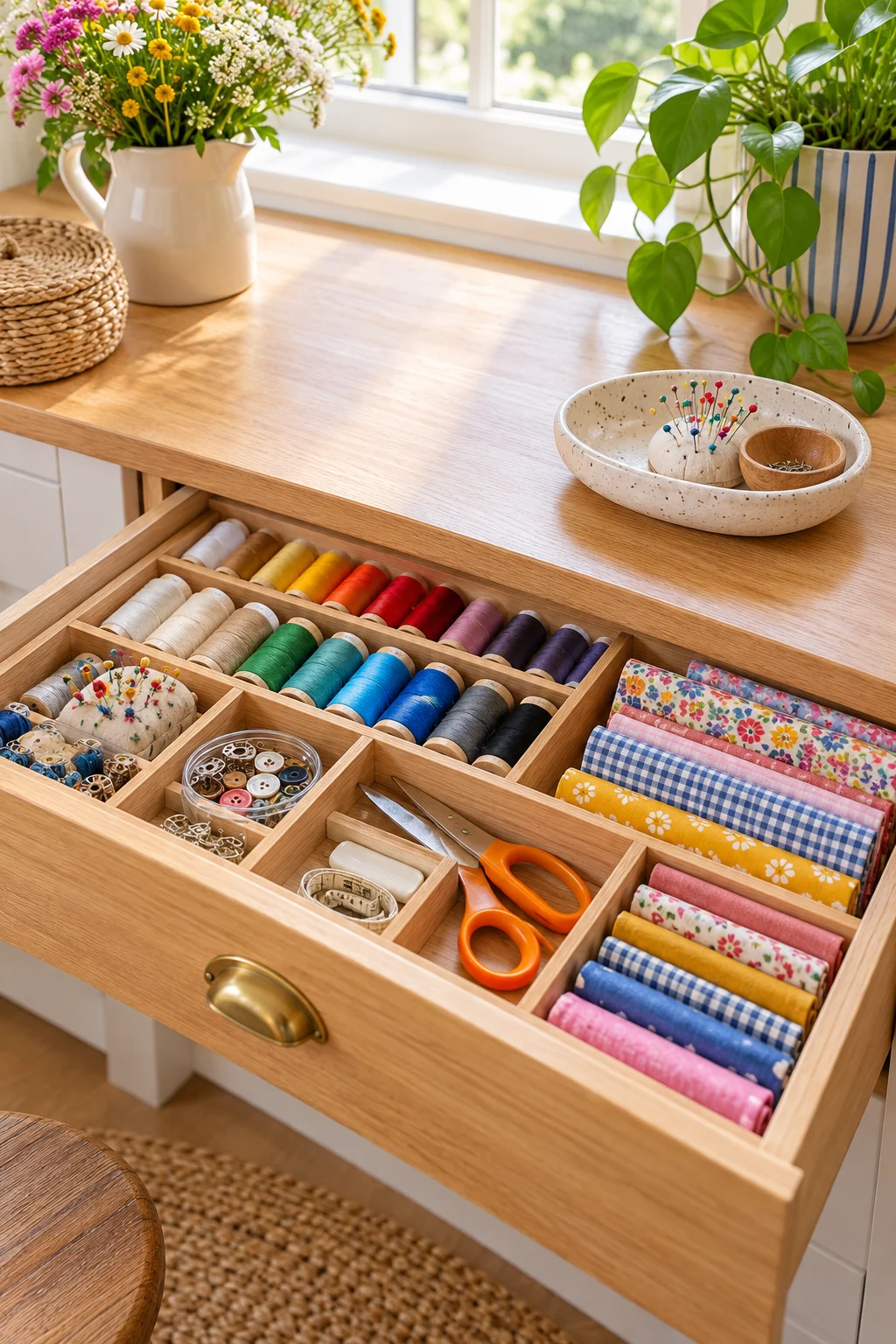
11. Keep embroidery projects in individual pouches
Store each small embroidery project in a lightweight pouch with its fabric and thread, then assign it a cubby. This keeps unfinished projects distinct and prevents loose thread from becoming mixed with neighboring supplies.
Use secure storage elsewhere for needles and sharp tools, especially where children or pets can reach. The organizer is a staging spot for light materials, not a full craft-tool cabinet. Label the pouch with the project name so it can move between the closet and a workbasket.
12. Sort small fabric cuts without making heavy stacks
Fold a limited group of lightweight fabric pieces to a similar depth and put each project or color family in its own cubby. Visible edges help you choose material without lifting a heavy storage bin.
Use shelf storage for substantial fabric yardage, denim, or other dense textiles. Short piles protect the organizer from concentrated loads and are easier to keep neat. Check the unit after returning materials; a sagging shelf is a cue to reduce weight and review the instructions.
13. Keep ribbon remnants in small compartments
Gather lightweight ribbon remnants and soft trims into small divided spaces so they do not become a tangled bundle. Wrap each length loosely around a suitable reusable card, avoiding tight folds that damage delicate ribbon.
A Simple Houseware 4-Pack Drawer Organizer Set in Gray offers mixed compartment layouts for a supported shelf or drawer next to the hanging organizer. Test individual insert dimensions before placing one inside a cubby; do not assume the set is a fitted accessory or force it into place. View on Amazon.
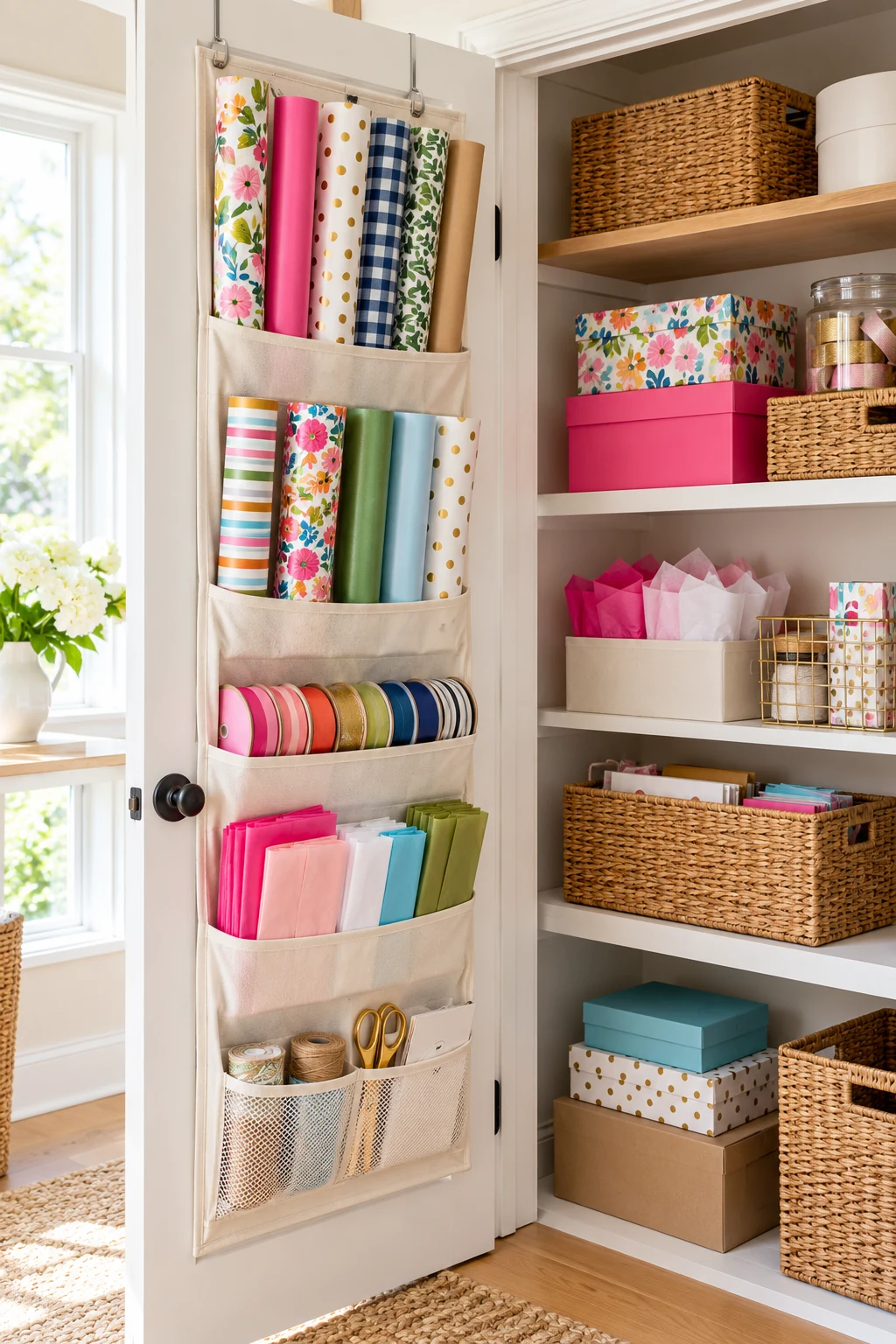
14. Keep gift bags standing together
Flatten small gift bags and group them by approximate size in a wide compartment. Fold handles inside where possible so they do not hook into neighboring compartments when you take one out.
For very small bags and tags, the Simple Houseware 24 Pockets Clear Over the Door Shoe Organizer in Gray is an alternative hanging format. Check pocket fit and the door's top clearance before use. Do not add it to a fabric wardrobe frame unless the manufacturer explicitly permits that mounting. View on Amazon.
15. Make a light tissue-paper and bow station
Fold reusable tissue paper loosely into one compartment and keep a few lightweight bows in a shallow open pouch beside it. Separating these fragile supplies from a crowded gift-wrap box can make it easier to reuse what remains in good condition.
Avoid stuffing the compartment or adding heavy rolls of wrapping paper that project into the room. Long rolls need a suitable separate holder. Keep sharp gift-wrap cutters and adhesives elsewhere; the soft cubbies work best for the light, dry pieces that are easily crushed.
Use cubbies for small household kits
16. Create a soft seasonal-decor cubby
Keep a small set of fabric bunting, felt ornaments, or other lightweight decorations together in a pouch. A visible seasonal group is easier to rotate than a mixed box full of breakable and soft decorations.
Store glass ornaments, metal display pieces, candles, and heavy decoration boxes elsewhere. Check that cords or ribbons cannot trail where children or pets can pull them. Label the pouch rather than hanging tags on long strings from the organizer.
17. Give a few small plush toys a visible home
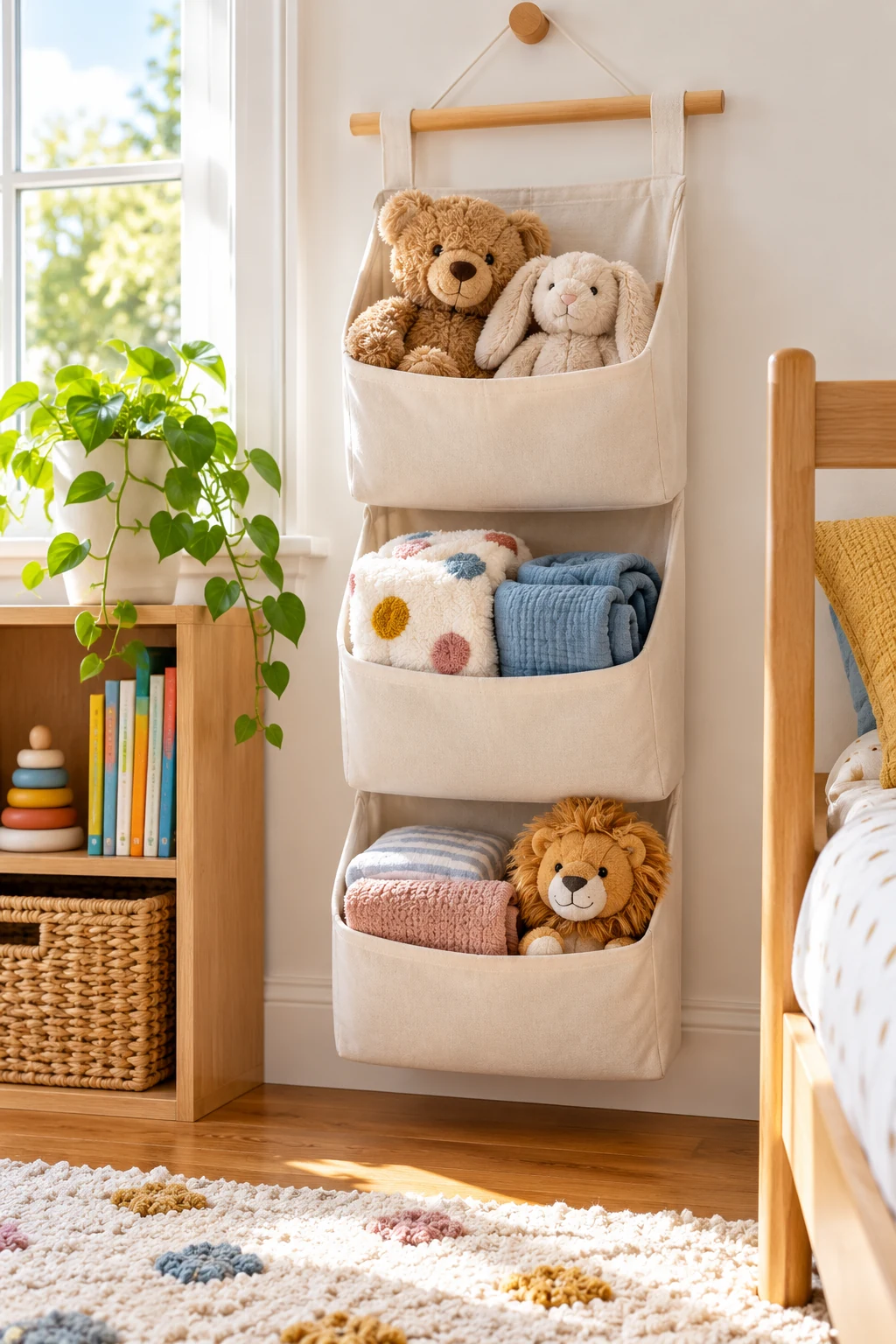
Use reachable compartments for a modest selection of small, lightweight plush toys where the organizer and support are appropriate for the room. An open front lets someone choose a toy without emptying a whole bin.
Keep the arrangement out of situations where a child might climb or pull on it, and follow all mounting and furniture-stability instructions. Do not use hanging fabric storage beside a crib or bed where it could fall into the sleep space. Larger collections belong in suitable floor-level storage.
18. Sort unplugged cables in lightweight pouches
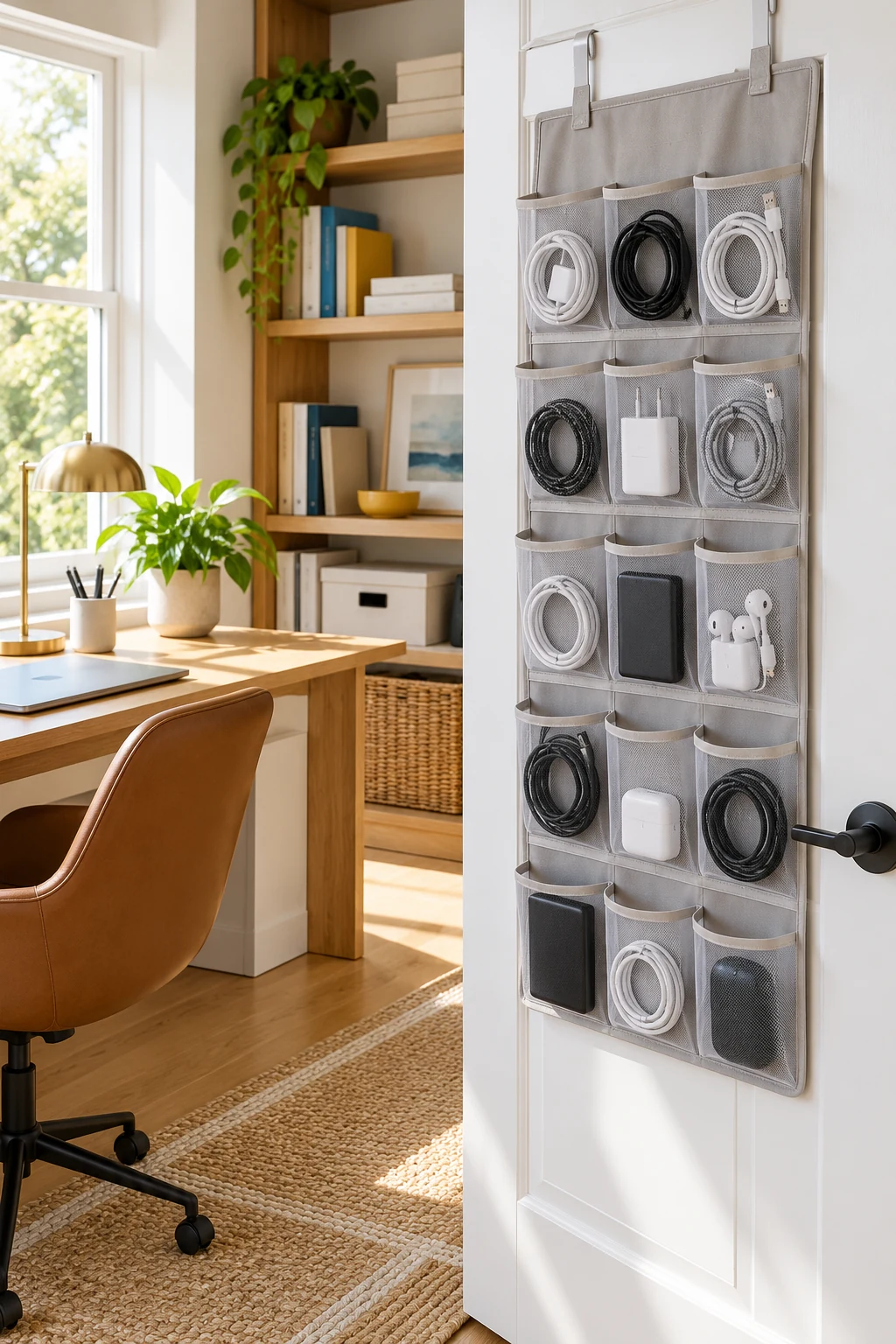
Coil a few spare cables loosely and place them in separate labeled pouches by device or purpose. A small hanging compartment can keep these light bundles from tangling with the items you reach for every day.
Store batteries and power banks according to their own instructions elsewhere, and do not charge devices inside fabric cubbies. Keep the grouping limited to unplugged cables and empty soft cases. If a cable is damaged or no longer useful, handle it appropriately instead of storing it indefinitely.
19. Keep lightweight stationery refills together
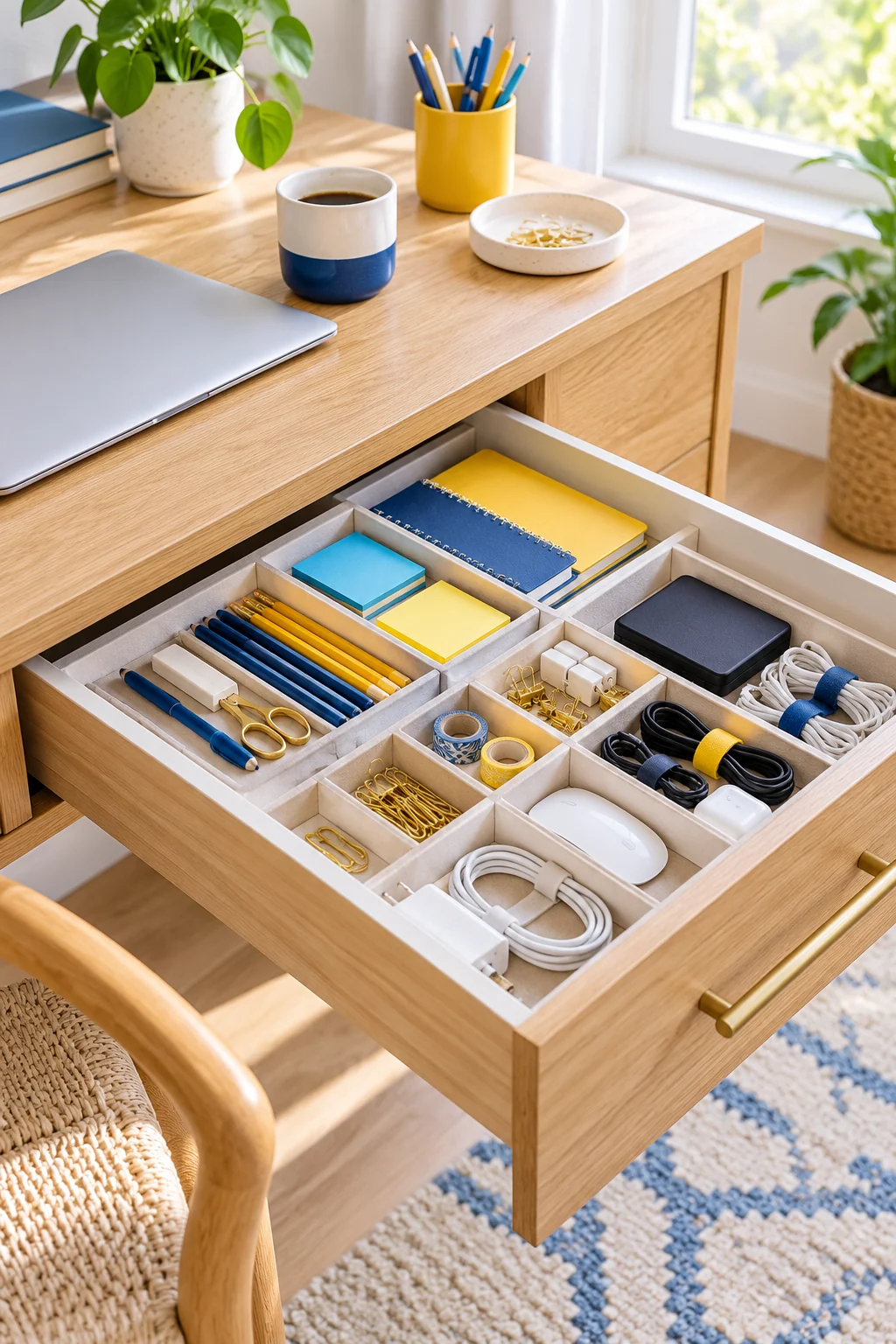
Give a cubby a few small stationery pouches for sticky notes, envelopes, and other light refills. Dividing by use keeps a home-office supply collection from becoming a mixed pile you have to empty onto the desk.
Keep reams of paper, books, staplers, and other dense supplies in storage designed for them. A hanging organizer's open space can look more substantial than its construction permits. Take a pouch to the desk for use, then return it rather than reaching into a swaying compartment repeatedly.
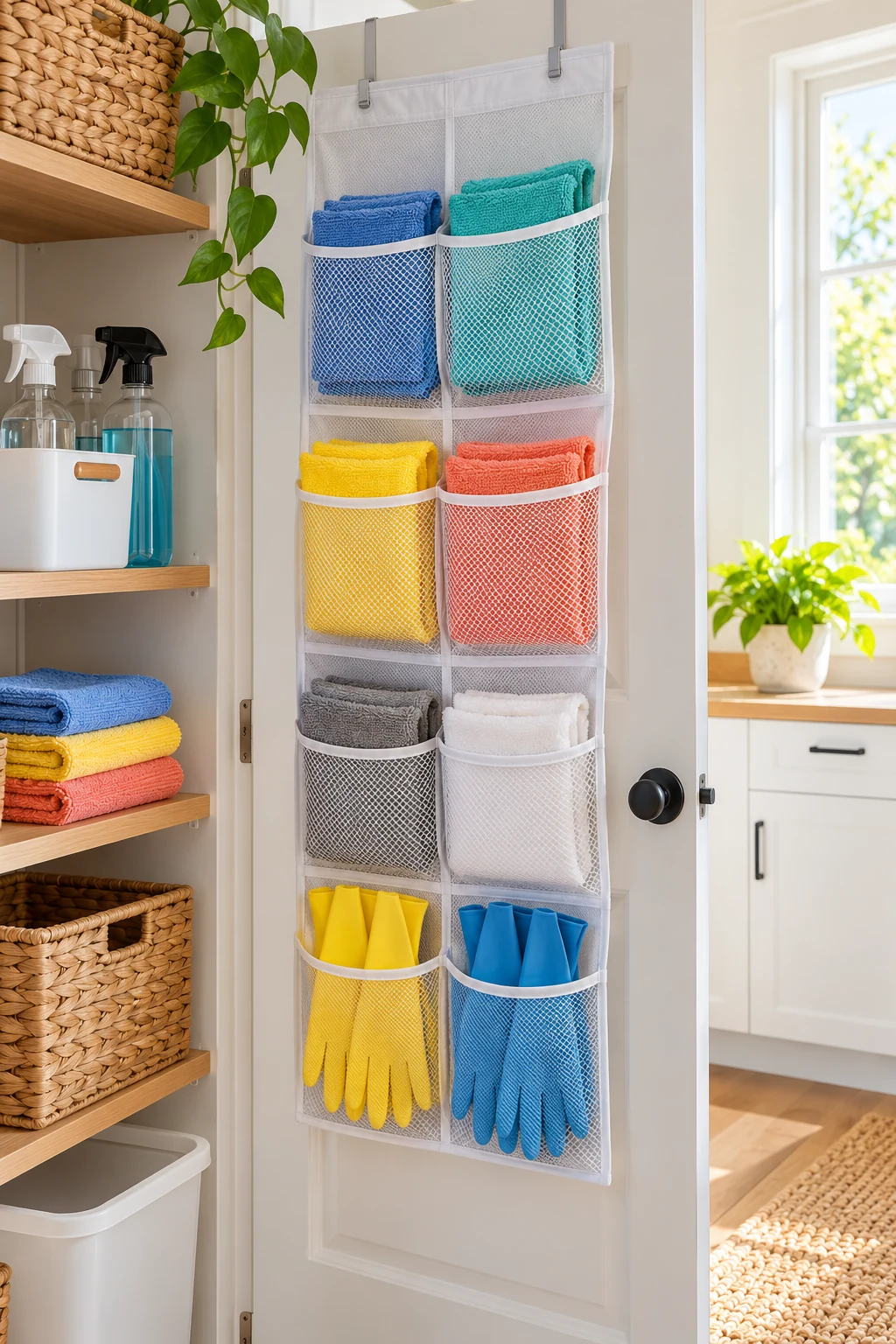
20. Separate clean, dry cleaning cloths
Put clean microfiber cloths or dusting mitts in a dedicated compartment, grouped by the task you use them for. Keeping them separate from household linens makes it easier to reach the right cloth without mixing categories.
Store only fully dry cloths and follow their laundering guidance. Keep cleaning liquids, aerosols, and chemical-soaked materials out of fabric cubbies and away from clothing. If the closet also stores textiles, use a clearly separate pouch so clean cloths do not get mistaken for guest washcloths.
21. Rotate occasional textiles out before adding another organizer
Use the cubbies for current projects and household sets, then move clean off-season soft goods to a labeled storage location. Rotation preserves easy access and avoids hanging a second loaded unit from a rod that may not be designed for it.
Amazon Basics Under Bed Storage Bags in the Gray 2-pack, listed at 42 by 18 by 6 inches, can hold suitable dry textiles outside the closet. Measure under-bed clearance with a bag filled, and keep a contents note. Do not overload the bag or drag a heavy load by its handles. View on Amazon.
Choose one lightweight category and try a single compartment first. If the contents stay visible, the organizer remains properly supported, and returning items is easy, add another small category within the manufacturer's limits. Subscribe to the Havelyo email list for more practical small-space decorating and organization ideas.